
NEW
Font size
 Worksheets
Chemical Kinetics
Total questions: 60
Worksheet time: 2hrs 38mins
Which of the following plots will show a linear relationship for a second order reaction?
[A] vs time
1/[A] vs time
ln[A] vs time
[A]2 vs time

The iodide ion reacts with hypochlorite ion in the following way:
OCl- + I- ⟶ OI- + Cl-.
This rapid reaction gives the rate data shown. What is the rate law?
rate = [OCl-]2[I-]
rate = [OCl-][I-]2
rate = [OCl-][I-]
rate = [OCl-]

The following data were measured for the reaction
BF3(g) + NH3(g) ⟶ F3BNH3(g)
What is the rate law for the reaction?
rate = k[NH3]
rate = k[BF3]2[NH3]
rate = k[BF3][NH3]
rate = k[BF3][NH3]2
The following data were measured for the reaction
BF3(g) + NH3(g) ⟶ F3BNH3(g)
What is the rate when [BF3] = 0.100 M and [NH3] = 0.500 M ?
.01704 M/s
.0852 M/s
.1704 M/s
.852 M/s
A reaction is found to be second order with respect to carbon monoxide. If the concentration of carbon monoxide is doubled, the rate of reaction __________.
doubles
remains unchanged
increases by a factor of 4
is reduced by a factor of 2
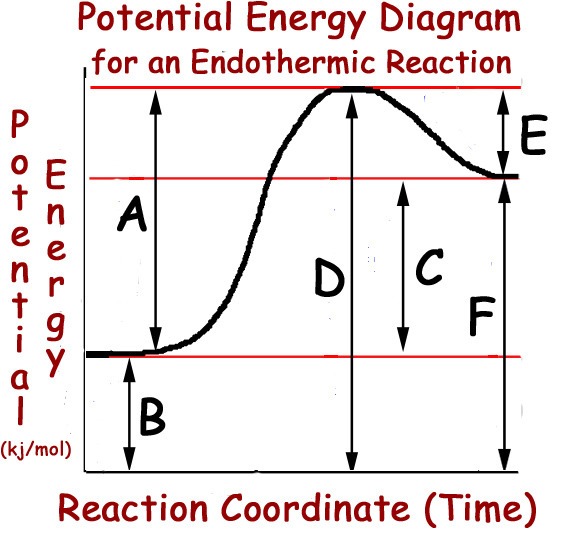
What letter represents the activation energy?
A
B
C
D
Given the following rate law,
rate = k[A]2[B]
if [A] were doubled, what must happen to [B] to keep the rate constant?
[B] must quadruple
[B] must double
[B] must be havled
[B] must be quartered
Which of the following best describes why increasing temperature increase reaction rate?
Activation energy is reduced.
Collisions become more frequent.
Collisions become more energetic.
Collisions become more frequent and more energetic.
rate = k[A]
The rate constant in the rate law above is 0.5 L/mol·s. If the initial concentration of A is 0.1 M, how long will it take for [A] to drop to 0.025 M?
0.7 s
1.4 s
2.8 s
There is not enough information given.

Which species is the catalyst in this reaction mechanism?
R
W
X
There is no catalyst.

What is the rate law for this mechanism?
rate = k[A][B]2
rate = [B][X]
rate = [A]0.5[B]1.5
rate = [W][Y][Z]

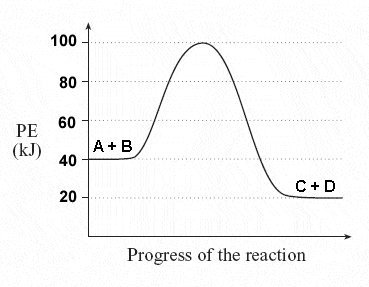
The addition of a catalyst to this reaction would cause a change in which of the indicated energy differences?
I
II
III
I and II
Which factors increase the rate of a reaction?
increasing temperature
increasing concentration
increasing surface area
all of the above

For second order reaction, the initial concentration of reactant A is 0.24 M. If the rate constant is 8.1 x 10⁻² M-1 s-1, what is the concentration of A after 29 seconds?
0.02 M
0.15 M
0.30 M
0.45 M
Given the following balanced equation :
2NO(g) + Cl2(g) → 2NOCl(g)
If the rate of disappearance of Cl2 is 4.84 x 10⁻² Ms-1, what is the rate of disappearance of NO?
1.45 x 10⁻² Ms-1
2.42 x 10⁻² Ms-1
3.67 x 10⁻² Ms-1
9.68 x 10⁻² Ms-1
The first order rate constant for the decomposition of 0.5 M compound A at 100oC is 0.03 min-1. Calculate the half-life of A.
1.5 min
8.3 min
23.1 min
66.7 min
How are the exponents n and m determined?
What does [ ] denote?
concentration, M
concentration, m
concentration, mass %
squared

A. is most exothermic
B. is most exothermic
C. is most exothermic
D. is most exothermic

Rate=[A]2[B]1


step 2: O3 + O → 2 O2
The oxygen atom (O) is considered to be a(n)...

(CH3)3CBr(aq) + OH-(aq) → (CH3)3COH(aq) + Br-(aq)
What will the initial rate (in mol/L*s) be in Experiment 4?


How does pressure affect reaction rate?
Increased pressure increases reaction rate because particles collide more frequently
Increased pressure increases reaction rate because particles collide less frequently
Decreased pressure increases reaction rate because particles collide more frequently
Decreased pressure increases reaction rate because particles collide less frequently.
How does concentration affect reaction rate
In all reactions, higher concentration increases the reaction rate because particles collide more frequently
In all reactions, lower concentration increases the reaction rate because particles collide more frequently
In a first order or higher reaction, higher concentration increases the reaction rate because particles collide more frequently
In a first order or higher reaction, lower concentration increases the reaction rate because particles collide more frequently.
In terms of collision theory, a reaction occurs when the molecules collide with sufficient energy to break the bonds already in place. What is this energy called?
activation energy
reaction mechanism
activity series
concentration gradient
Overall reaction order can be determined how?
Adding the powers to which reactant concentrations are raised in the rate law
Multiplying the powers to which reactant concentrations are raised in the rate law
Subtracting the powers to which reactant concentrations are raised in the rate law
Dividing the powers to which reactant concentrations are raised in the rate law.

Excess magnesium powder was added to a beaker containing hydrochloric acid, HCl (aq).
The mass of the beaker and its contents was recorded and plotted against time (line I).
Which change could give line II?
Doubling the mass of powdered Mg
Using the same mass of Mg ribbon
Increasing the temperature
Using the same volume of more concentrated HCl

The diagram represents the Maxwell‒Boltzmann energy distribution curve of the reactants for a chemical reaction with different activation energies, Ea1 and Ea2.
What is the reason why the rate of the reaction with activation energy Ea2 is greater?
More frequent collisions between the particles occur.
More energetic collisions between the particles occur.
A catalyst has been added.
The temperature is higher.

In which flask will the reaction between 2.0 g of magnesium carbonate and 25 mL 1.0 mol L–1 hydrochloric acid occur most rapidly?
A
B
C
D
Which one of the following is a second order, overall reaction
k1= 1.000 M s-1
k1= 5403.2 M½ s½
k1= 1.23 x 10⁻⁶ M-1 s-1
k1= 10.7 s-1
Which one of the following is a zero order, overall reaction
k1= 1.000 M s-1
k1= 5403.2 M½ s½
k1= 1.23 x 10⁻⁶ M-1 s-1
k1= 10.7 s-1

Which group of particles shows that increasing surface area increases collisions among particles?
Left side
Right side
Cannot be determined by either picture


Consider the reaction between solid CaCO3 and aqueous HCl. The reaction will be speeded up by an increase in which of the stated conditions?
I only
I and III only
II and III only
I, II and III

What would the rate constant of the reaction be given the following set of experiments?


Using the following data, which is the correct rate law of the sample reaction?
A + 5B + 6C → 3D + 3E


On a Maxwell-Boltzmann distribution curve, a suitable label for the y-axis is
Fraction of particles with Kinetic Energy (E)
Kinetic Energy (E)
Activation Energy (Ea)
Enthalpy

