wayground logo

Free Printable Worksheets

Font size

S
M
L
XL
Worksheets

General Chemistry Review

Total questions: 98

Worksheet time: 8hrs 31mins

Name
Class
Date
1.
What is the formula for copper(I) sulfate?
a)
Cu(SO3)
b)
Cu(SO4)
c)
Cu2(SO3)
d)
Cu2(SO4)
2.
The chemical formula for an ionic compound of potassium and oxygen is
a)
KO.
b)
K2O.
c)
K2O2.
d)
KO2.
3.
Name this compound: 
Ca(CO3)
a)
Calcium carbon oxide
b)
Calcium (II) carbonate
c)
Calcium carbonate
d)
Carbonate (I) calcide
4.
What is the name of the compound CoCl2
a)
cobalt (II) chloride
b)
monocobalt dichloride
c)
Chlorous cobalt
5.
Which of these combinations is an ionic compound made of?
a)
Metal and Metal
b)
Nonmetal and Nonmetal
c)
Metal and Nonmetal
d)
Cation and Cation
6.

Name this compound: P2O5

a)

Phosphorus Oxide

b)

Pentaphosphorus Dioxide

c)

Diphosphorous pentoxide

d)

Phosphoric Oxygen

7.
How many moles are in 225 g of CO?
a)
28.01 mole
b)
4.82 x 1024 mole
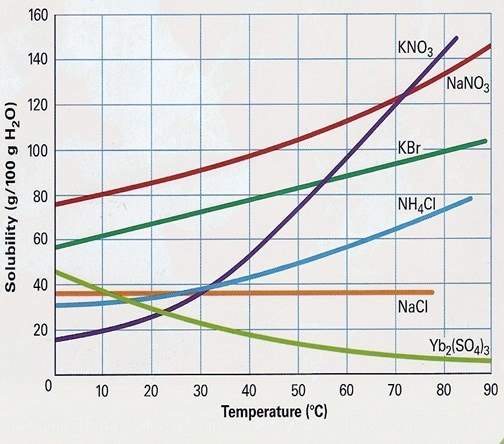
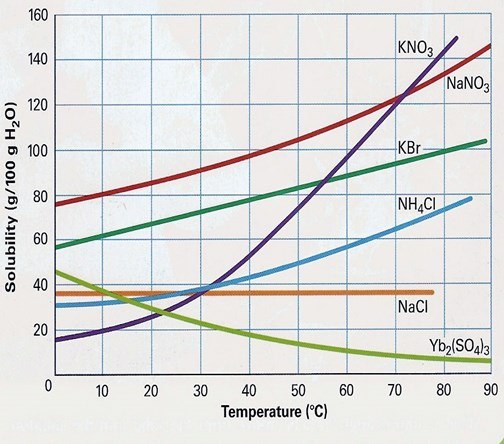
c)
6,302,25 mole
d)
8.03 mole
8.
How many moles are in 4.3 x 1024 molecules of H2O?
a)
6.02 x 10²³
b)
7.14
c)
18.02
d)
128.66 
9.
What is the molar mass of Fe?
a)
26 g/mole
b)
55.85 g/mole
c)
56 g/mole
d)
6.02 x 10²³ g/mole
10.
What coefficient should be used to make the following equation balanced?
N2+O2--> _NO 
a)
1
b)
2
c)
3
d)
4
11.
What is the part of the chemical equation in green called? 
Fe + S --> FeS
a)
products
b)
reactants
c)
yield
d)
chemical formula
12.
A reaction that gives off heat to its surroundings is...
a)
exothermic
b)
endothermic
c)
endergonic
d)
none of these
13.

Identify this type of reaction,

Cl2 + 2KI --> I2 + 2KCl

a)

Combination

b)

Single replacement

c)

Double replacement

d)

Decomposition

14.

What is a precipitate?

a)

A solid formed from a chemical reaction between two liquids

b)

A color change when a liquid freezes

c)

A smell produced from a chemical reaction

d)

A change in temperature from a solid changing to a liquid

15.

A reaction in which a substance breaks down into two or more new substances is called what type of reaction?

a)

Synthesis

b)

Decomposition

c)

Double replacement

d)

Combustion

16.

The arrow in between the reactants and products in a chemical equation is pronounced as what?

a)

"Arrow"

b)

"Yields"

c)

"Becomes"

d)

"Invects"

17.

2 RbNO3 + BeF2 --> Be(NO3)2 + 2 RbF is what kind of chemical reaction?

a)

single replacement

b)

double replacement

c)

decomposition

d)

combination

18.
Write a balanced reaction for this reaction
Zn(s) + H2SO4(aq) -->
a)
Zn(SO4)2 + H
b)
ZnSO4 + H2
c)
ZnSO4 + H
d)
Zn2SO4 + H2
19.
Write a balanced equation for this DR reactions
NaOH + Fe(NO3)3 -->
a)
NaFe + OH(NO3)3
b)
2NaNO3 + 3Fe(OH)3
c)
NaNO3 + FeOH
d)
3NaNO3 + Fe(OH)3
20.
Predict the products for the this reaction:
K + HCl --> 
a)
KCl + H2
b)
KHCl 
c)
KH + Cl2
d)
KCl + H
21.

To predict if a single replacement reaction will take place you should use a(n)

a)

Activity series

b)

Solubility Chart

c)

Periodic Table

d)

Electronegativity Chart

22.
Describe how particles in a gas behave.
a)
They don't move at all.
b)
They vibrate.
c)
They move rapidly.
d)
They move moderately and vibrate
23.
Which phase of matter is represented in A?
a)
Solid
b)
Liquid
c)
Gas
24.
Which letter represents the triple point?
a)
D
b)
B
c)
C
d)
G
25.
If the substance transitions from A to G, the phase transition is called:
a)
freezing
b)
sublimation
c)
melting
d)
vaporization
26.
Endothermic reactions feel
a)
hot
b)
cold
c)
nice
d)
sleepy
27.
What are the units of molarity?
a)
mol/L
b)
g/L
c)
mol/g
d)
g/mol
28.
N2 +  3H2 → 2NH3 
How many moles of hydrogen are needed to react with 2 moles of nitrogen?
a)
6
b)
2
c)
3
d)
1
29.
Using the following equation:
Fe2O3(s) + 3H2(g) → 2Fe(s) + 3H2O(l)
how many moles of iron can be made from 3 moles of Fe2O3?
a)
6 moles Fe
b)
4 moles Fe
c)
2 moles Fe
d)
1 moles Fe
30.
KNO3 --> KNO2 + O2
What coefficients are needed to balance the reaction?
a)
2, 2, 1
b)
2, 3, 2
c)
1, 2, 2
d)
1, 3, 1
31.
What is the theoretical yield?
a)
the maximum amount of product from a reaction
b)
the amount of product recovered from a lab experiment
c)
amount of product that causes the reaction to stop
d)
the amount of product needed to reverse the reaction
32.

In a lab, a scientist calculates that he should produce 12.3 grams of product in his experiment. When he is finished collecting his product it weighs 10.1 grams. What is his percent yield?

a)

82%

b)

0.82%

c)

10.1 %

d)

100%

33.
The limiting reactant
a)
slows the reaction down
b)
is used up first
c)
is the reactant that is left over
d)
controls the speed of the reaction
34.

Use the equation 2 Al + 3 Cl2 ---> 2 AlCl3. If 2 moles of aluminum and 2 moles of chlorine are reacted, identify the limiting reactant.

a)

AlCl3

b)

Cl2

c)

Al

35.
What is the limiting reactant if 10 moles of NH3  react  with 30.0 moles of NO?
4NH3+6NO --> 5N2 + 6H2O
a)
NH3
b)
NO
c)
N2
d)
water
36.
4NH+ 5O--> 4NO + 6H2O
How many grams of NO are formed if 6.30g of ammonia react with 1.80g of oxygen? 
a)
0.37g
b)
0.045g
c)
1.35g
d)
11.1g
37.
Boyle's law states that 
a)
when the pressure of a gas is decreased, volume increases
b)
when the temperature of a gas is increased, volume increases
c)
when the temperature of a gas is increased, pressure increases
d)
when the pressure of a gas is decreased, volume decreases
38.
An example of Charles's Law is
a)
When I push down on a ping pong ball I make a dent and the volume is decreased.
b)
When I blow up a balloon too much it pops.
c)
When I blow up a balloon inside and then take it outside in winter the balloon shrivels up.
d)
When I blow up a balloon inside and then take it outside in winter the balloon increases in volume and pops.
39.

The average kinetic energy of the molecules determines the _____.

a)

volume

b)

density

c)

pressure

d)

temperature

40.

Sublimation is the phase change between which two states of matter?

a)

a solid and a gas.

b)

a solid and a liquid.

c)

a liquid and a gas.

d)

two liquid.

41.

What is deposition?

a)

A gas becomes a solid.

b)

A gas becomes a liquid.

c)

A solid becomes a gas.

d)

A liquid becomes a gas.

42.

Which of the following statements is true?

a)

Vapor pressure increases with temperature.

b)

Inter molecular forces hold the atoms in molecules together.

c)

Hydrogen bonds are stronger than covalent bonds

d)

Dispersion forces are generally stronger than dipole-dipole forces.

43.
What is the normal boiling point of CO2?
a)
-78.5 °C
b)
-56.7 °C
c)
31 °C
d)
It doesn't have a normal boiling point.
44.
What section of the phase change graph would you find a solid being heated?
a)
A-B
b)
B-C
c)
C-D
d)
D-E
45.
What section of the phase change graph would you find a liquid being heated?
a)
A-B
b)
B-C
c)
C-D
d)
D-E
46.
According to this graph, what is the melting point temperature of this substance?   (in degrees)
a)
40
b)
70
c)
100
d)
140
47.
What happens to the temperature while a substance is changing phase? 
a)
increases
b)
decreases
c)
stays the same
48.
When the temperature of matter increases the particles...
a)
speed up and move closer
b)
speed up and move farther apart
c)
slow down and move closer together
d)
slow down and move farther apart
49.
Which of the following would increase the pressure on a system?
a)
Increase the Temperature
b)
Pump in more gas
c)
Decrease the volume
d)
All of these
50.
Real gases are like ideal gases at...
a)
Low pressures, high temperatures
b)
Low pressures, low temperatures
c)
High pressures, high temperatures
d)
High pressures, low temperatures
51.
Convert 123 degrees Celsius to Kelvin.  
a)
396 K
b)
486 K
c)
369 K
d)
458 K
52.
Convert 578 mm Hg to kPa. 
a)
0.760 kPa
b)
4335 kPa
c)
578 kPa
d)
77.1 kPa
53.
Calculate the volume of a 2.35 g sample of neon at 20.0 degree Celsius and 2.30 atm.
a)
1.68 L
b)
1.21 L
c)
14.8 L
d)
2.79 L
54.
Boyle's law : When _______ is held constant, the pressure and volume of a gas are ________  proportional
a)
temperature,  equally
b)
mass, inversely
c)
temperature, inversely
d)
mass, equally
55.
What is the equation for Charles' Law?
a)
P1V1=P2V2
b)
V1/T1=V2/T2
c)
V1/n1=V2/n2
d)
P1/T1=P2/T2
56.
You have a gas that has a pressure of 2 ATM and a volume of 10L.  What would be the new volume if the pressure was changed to 1 ATM?
a)
5 L
b)
20 L
c)
It would stay at 10L
d)
1 L
57.
When a sample of hydrogen gas is in a 4 L container at 47 degrees Celsius, it exerts a pressure of 800 mmHg. The sample is moved to a 2 L container and cooled to -113 degrees Celsius. What is the new pressure of the confined gas?
a)
800 mmHg
b)
1600 mmHg
c)
200 mmHg
d)
400 mmHg
58.
What is a solvent?
a)
The substance that does the dissolving in a solution.
b)
The substance that is being dissolved in a solution.
c)
The mixing of different substances.
d)
The process in which neutral molecules lose or gain electrons
59.
How many grams of sodium nitrate, NaNO3, are soluble in 100 g of water at 10 ºC?
a)
80 grams
b)
100 grams
c)
40 grams
d)
10 grams
60.
What is the molarity of 4 grams of sodium chloride in 3,800 mL of solution?
a)
0.018 M
b)
0.018 m
c)
1.052 M
d)
1.052 m
61.
How many grams of solute are dissolved in 125.0 mL of 5.00M NaCl?
a)
0.625 g NaCl
b)
36.52 g NaCl
c)
36.5 g NaCl
d)
0.625 mol NaCl
62.

This contains the maximum amount of dissolved solute, at a particular temperature.

a)

unsaturated solution

b)

supersaturated solution

c)

saturated solution

63.
At approximately what temperature does the solubility of sodium chloride, NaCl, match the solubility of potassium dichromate, K2Cr2O7?
a)
60 ºC
b)
30 ºC
c)
50 ºC
d)
83 ºC
64.
Which solute is the least soluble at 90 ⁰C?
a)
SO2
b)
KClO3
c)
KI
d)
HCl
65.
What is the molarity of a solution made by diluting 26.5 mL of 6.00M HNO3 to a volume of 250. mL?
a)
15.9 M
b)
0.636 M
c)
0.642 M
d)
1.59 M
66.

In which calculation is molarity being used as a conversion factor?

a)

(14 L ) (1.2 M) = 16.8 moles

b)

(14 L) (1.2M/ 1 L solution) = 16.8 mol-1

c)

(14 L) (1.2 mol/ 1 L solution) = 16.8 moles

d)

(1.2 mol/ 1 L solution) = (X / 14 L)

X = 16.8 moles

67.

What is the molarity of a 0.5L sample of a solution that contains 60.0 g of sodium hydroxide (NaOH)

a)

0.8 M

b)

1.5M

c)

3.0M

d)

6.0M

68.

Which of the following types of solutions has more room to dissolve solute?

a)

supersaturated

b)

saturated

c)

unsaturated

69.
What is a solvent?
a)
The substance that does the dissolving in a solution.
b)
The substance that is being dissolved in a solution.
c)
The mixing of different substances.
d)
The process in which neutral molecules lose or gain electrons
70.
The concentration of a mixture can be increased in which of the following ways?
a)
Heating the mixture
b)
Adding more water “solvent”
c)
Adding more powder “solute”
d)
Stirring the mixture
71.
What is the molarity of 4 grams of sodium chloride in 3,800 mL of solution?
a)
0.018 M
b)
0.018 mol
c)
1.052 M
d)
1.052 mol
72.
The ___ is the thing being dissolved
a)
solute
b)
solvent
73.

The definition of a stock solution is ...

a)

a highly concentrated solution that is meant to be diluted to some lower concentration.

b)

moles of solute divided by liters of solvent

c)

a solution used to make soup and is usually either chicken or beef flavor

d)

a solution with less dissolved solute than a dilute solution.

74.

What volume, in milliliters, of 10.0 M NaOH is needed to prepare 300 mL of 2.00 M NaOH by dilution?

a)

0.067 mL

b)

60.0 mL

c)

100 mL

d)

125 mL

75.

If 0.775 L of 1.00 M NaOH is diluted to 1.00 L, the resulting solution contains

a)

0.225 mol NaOH

b)

0.775 mol NaOH

c)

1.25 mol NaOH

d)

2.45 mol NaOH

76.
A 7.50 liter sealed jar at 18 °C contains 0.125 moles of oxygen and 0.125 moles of nitrogen gas. What is the pressure in the container?
a)
7.38 atm
b)
0.796 atm
c)
0.684 atm
d)
0.398 atm
77.
What is the percent yield if 0.856 g of NH3 is actually obtained in the lab during the following reaction:
4NH+ 5O--> 4NO + 6H2O
How many grams of NO are formed if 6.30g of ammonia react with 1.80g of oxygen? 
a)
63.4%
b)
53.5%
c)
89.4%
d)
20.1 %
78.
Fe + S --> FeS
If 7.62g Fe react with 8.67g S, what is the limiting reactant?
a)
Fe
b)
S
c)
FeS
d)
none 
79.

At 30oC, which substance has the lowest solubility

a)

KNO3

b)

KBr

c)

NaCl

d)

Yb2(SO4)3

80.

Determine the solubility for the substances at 55oC and arrange them in order from lowest to highest solubility.

a)

NaCl, NH4Cl, KBr, NaNO3

b)

NaCl, NH4Cl, NaNO3, KBr

c)

NH4Cl, NaCl, NaNO3, KBr

d)

NaNO3, KBr, NH4Cl, NaCl

81.

Predict the products of the following equation.

PbCl2 + AgNO3 ---->

a)

AgCl(s) + Pb(NO3)2(aq)

b)

No Reaction

c)

AgCl(aq) + Pb(NO3)2(s)

d)

AgCl(s) + PbNO3(aq)

82.

Predict the products:

NaOH + Fe(NO3)3

a)

NaFe(s) + OH(NO3)3(aq)

b)

NaNO3(s) + Fe(OH)3(s)

c)

No reaction

d)

NaNO3(aq) + Fe(OH)3(s)

83.
How do you determine the states of matter of the products in a double replacement reaction?
a)
Oxidation Number
b)
Activity Series on formula chart
c)
Solubility Rules on formula chart 
d)
Ionic Charges
84.
What is a precipitate?
a)
A solid formed from a single replacement reaction
b)
An aqueous compound formed from single replacement reaction 
c)
An aqueous compound formed from double replacement reaction
d)
A solid formed from a double replacement reaction
85.
N2 + 3H2 --> 2NH3
What is the total number of moles of NH3 produced when 10 moles of H2 reacts completely with N2?
a)
6.7
b)
2.0
c)
3.0
d)
15.0
86.
2Na + S -->Na2S
What is the total number of moles of S that reacts when 4.0 moles of Na were completely consumed?
a)
1
b)
2
c)
0.5
d)
4
87.

(0901) Avogadro’s number is:

a)

6.02 x 10²²

b)

6

c)

6.02 x 10²³

d)

3.01 x 10²³

88.

What is the molar mass of Ca(NO3)2?

a)

148.096 g

b)

164.086 g

c)

102.055 g

d)

70.084 g

89.

The mass of one mole of substance is called...

a)

molecular mass

b)

mole constant

c)

molar mass

d)

atomic weight

90.
Which of the following is an example of synthesis?
a)
Na + Br--> NaBr
b)
KClO--> KCl + O2
c)
HgO + Cl2-->HgCl + O2
d)
Cl2 + NaBr --> NaCl + Br2
91.
What two types of atoms make a covalent bond?
a)
2 Nonmetals
b)
1 Nonmetal and 1 Metal
c)
2 Metals
d)
2 Noble Gases
92.
According to the octet rule most elements need _______ valence electrons.
a)
2
b)
8
c)
6
d)
18
93.
Hydrogen needs _____ electrons in its valence shell to be stable.
a)
4
b)
6
c)
8
d)
2
94.
Is Hydrogen considered a metal or a non-metal?
a)
Metal
b)
Non-metal
95.

What is a valence electron?

a)

Electrons in the first energy shell

b)

Electrons in the second energy shell

c)

Electrons in the outer shell

d)

Total number of electrons

96.

If 2.00 L of a gas in a container at room temperature exerts a pressure of 4.00 atm. If the pressure doubles and the temperature remains the same, the volume would become ________.

a)

16.0 L

b)

2.00 L

c)

4.00 L

d)

1.00 L

97.

An ionic bond is between

a)

metal and metal

b)

metal and nonmetal

c)

nonmetal and nonmetal

98.

Is this the correct lewis dot for Chlorine?

a)

yes

b)

no