
 Worksheets
Blood Lymph Cardiovascular
Total questions: 103
Worksheet time: 1hrs 28mins
Name
Class
Date
1.

Identify
a)
Left atrium
b)
Right atrium
c)
Left ventricle
d)
Right ventricle
2.
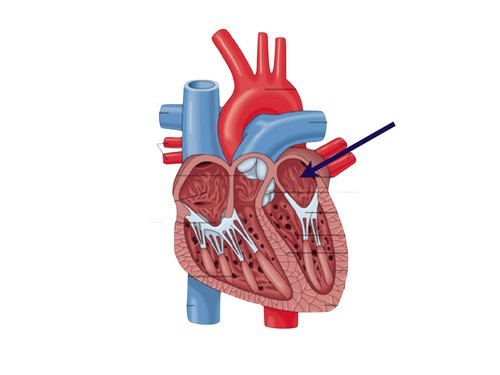
Identify
a)
Left atrium
b)
Right atrium
c)
Left ventricle
d)
Right ventricle
3.
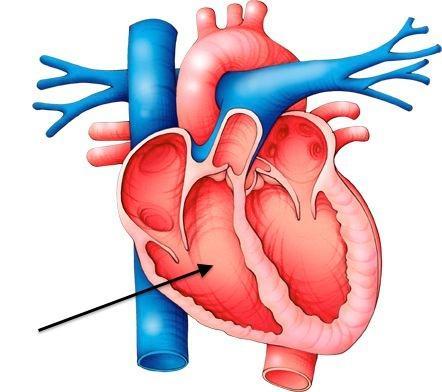
Identify
a)
Left atrium
b)
Right atrium
c)
Left ventricle
d)
Right ventricle
4.
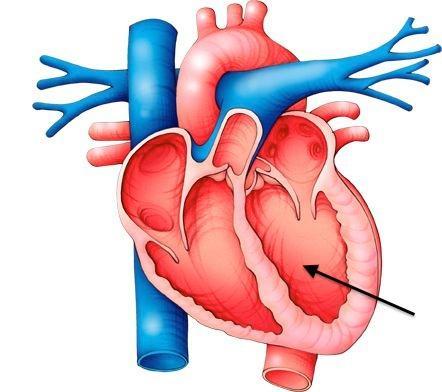
Identify
a)
Left atrium
b)
Right atrium
c)
Left ventricle
d)
Right ventricle
5.

What does Deoxygenated mean?
a)
Oxygen-rich
b)
Blood flow
c)
Oxygen-poor
d)
Water Flow
6.
Carry blood away from heart; mostly oxygen-rich
a)
Arteries
b)
Veins
c)
Capillaries
7.
arteries, veins, and capillaries are three types of __________
a)
heart valves
b)
blood vessels
c)
cells
d)
veins
8.
Arteries carry oxygen rich blood away from the heart.
a)
True
b)
False
9.
Blood vessels that carry oxygen poor blood to the heart are
a)
veins
b)
arteries
c)
capillaries
10.

What does blood transport?
a)
Oxygen
b)
All of the answers provided are transported in blood
c)
wastes
d)
nutrients
11.

What are the components of blood?
a)
Plasma, Red blood, cells, white blood cells, and platelets.
b)
Oxygen and nutrients.
c)
Minerals
d)
Water
12.

What is the main organ of the circulatory system?
a)
heart
b)
brain
c)
lungs
d)
fingers
13.

What is something both the arteries and veins do?
a)
Transport Blood
b)
have thicker walls
c)
Bring blood away from the heart
d)
Study for Science tests
14.
Solid part of the blood that contains hemoglobin and helps carry out oxygen.
a)
atria
b)
white blood cells
c)
red blood cells
d)
platelets
15.
The circulatory system carries _______ & ______ to cells.
a)
nutrients and oxygen
b)
waste and carbon dioxide
c)
stomach acid and blood
16.
Your right ventricle pushes blood to the:
a)
body
b)
lungs
c)
stomach
17.
The two upper chambers of the heart are called:
a)
ventricles
b)
atrium
c)
valves
18.
Arteries take blood _______ the heart.
a)
away from
b)
back to
19.
Veins take blood _______ the heart.
a)
away from
b)
back to
20.
Red blood represents blood
a)
with oxygen
b)
without oxygen
21.
The heart has _____ chambers
a)
1
b)
2
c)
3
d)
4
22.
White blood cells
a)
help fight disease
b)
take up oxygen and deliver to cells
c)
help form blood clots
d)
helps carries nutrients
23.
Platelets
a)
help fight disease
b)
take up oxygen and deliver to cells
c)
help form blood clots
d)
help carries nutrients
24.
Red blood cells
a)
help fight disease
b)
take up oxygen and deliver to cells
c)
help form blood clots
d)
help carries nutrients
25.
Where is the bicuspid valve located?
a)
between right atrium & right ventricle
b)
between left atrium & left ventricle
c)
between left ventricle & aorta
d)
between right ventricle & pulmonary trunk
26.
The bottom chambers of the heart are called
a)
ventricles
b)
atria
c)
vena cava
d)
valves
27.
What is the main function of the heart ?
a)
The heart circulates blood and oxygen throughout the body.
b)
The heart is the control centers for all body activities.
c)
The heart gets rid of the wastes in your body produced by homeostasis.
d)
The heart transports , protection and regulation. Blood transports the following substances:
28.
Which order is correct?
a)
Superior and inferior vena cavas into the right atrium through the tricuspid valve
b)
Superior and inferior vena cavas into the left atrium through the bicuspid valve
c)
right ventricle through the tricuspid valve into the right atrium
d)
body cells and tissues to the aorta through the aortic valve
29.
Which of the following cells are responsible for fighting diseases?
a)
thrombocytes
b)
erythrocytes
c)
leukocytes
d)
platelets
30.
What is the aorta?
a)
the large vein leading back to the heart
b)
the large artery leading away from the heart
c)
A chamber of the heart
d)
The artery leading from the heart to the lungs
31.
What type of muscle do you find in the heart?
a)
smooth muscle
b)
Skeletal muscle
c)
cardiac muscle
32.
How does regular exercise affect the blood?
a)
It is thinner so runs around the body more easily
b)
the blood is able to carry more oxygen
c)
it makes no difference to the blood
33.
Red blood cells are produced in the...
a)
pancreas
b)
Heart
c)
Muscles
d)
Bone marrow
34.
Blood flows from right atrium to right ventricle through which valve?
a)
semilunar valve
b)
tricuspid valve
c)
bicuspid valve
d)
pulmonary valve
35.
Bicuspid valve is also called __________
a)
tricuspid
b)
mitral
c)
pulmonary
d)
aortic
36.
_______starts in the heart and causes the heart muscle to contract and the heart to beat
a)
Enzymes
b)
Electrical impulses
c)
Hormones
d)
Neurons
37.
Types of blood vessels:
a)
arteries,veins,bronchioles
b)
arteries,veins,neurons
c)
arteries, veins, capillaries
d)
arteries,veins,aorta
38.
What is the function of a valve?
a)
Helps blood to clot
b)
Keeps blood flowing in all directions
c)
Keeps blood flowing in one direction
d)
Stops blood from flowing
39.
Which of the following blood groups is known as the universal acceptor?
a)
A
b)
B
c)
AB
d)
O
40.
Which of the following blood groups is known as the universal donor?
a)
A
b)
B
c)
AB
d)
O
41.
Which of the following helps form scabs?
a)
Red Blood cells
b)
White blood cells
c)
Platelets
d)
Plasma
42.
Which of the following are the blood vessels that helps blood flow to the cells?
a)
Veins
b)
Arteries
c)
Cappillaries
43.
Which of the following are the blood vessels that have a wall that is 1 cell thick?
a)
Veins
b)
Arteries
c)
Cappillaries
44.
Which of the following are the blood vessels that have the thickest walls?
a)
Veins
b)
Arteries
c)
Cappillaries
45.
Which of the following are the blood vessels that have valves?
a)
Veins
b)
Arteries
c)
Cappillaries
46.
What is the name of the circulation between the heart and lungs?
a)
Diastolic
b)
Systemic
c)
Pulmonary
d)
Coronary
47.
What is the name of the problem that causes a fatty build up in the walls of blood vessels?
a)
Atherosclerosis
b)
Heart failure
c)
Angina
d)
Stroke
48.
What is the name of the problem that causes the heart muscle cells to die?
a)
Atherosclerosis
b)
Heart failure
c)
Heart attack
d)
Stroke
49.
What is the name of the problem that happens when the heart cannot pump enough blood for the body's needs?
a)
Atherosclerosis
b)
Heart failure
c)
Heart attack
d)
Stroke
50.
What is the name of the problem that happens when brain cells are starved of oxygen and die?
a)
Atherosclerosis
b)
Heart failure
c)
Heart attack
d)
Stroke
51.
What is the another name for high blood pressure?
a)
Atherosclerosis
b)
Hypertension
c)
Heart attack
d)
Stroke
52.

Blood enters the heart at the ....
a)
Right Atrium
b)
Left Atrium
c)
Right Ventricle
d)
Left Ventricle
53.
When someone takes the blood of another person, it is called
a)
a retriever
b)
a donor
c)
an infusion
d)
a transfusion
54.
What gas is a waste product carried by the blood?
a)
Oxygen (O2)
b)
nutrients
c)
Water (H2O)
d)
Carbon Dioxide (CO2)
55.
The heart receives oxygen-rich blood from the lungs via the
a)
pulmonary vein
b)
pulmonary artery
c)
vena cava
d)
aorta
56.
The vessels with thick elastic walls made of smooth muscle tissue.
a)
arteries
b)
veins
c)
capillaries
d)
heart
57.
Muscular organ of the cardiovascular system that pumps blood to the body through blood vessels.
a)
Lungs
b)
Aorta
c)
Heart
d)
Muscle
58.
The dividing wall between the right and left sides of the heart.
a)
Ventricle
b)
Atrium
c)
Septum
d)
Aorta
59.
How is a person's blood type determined?
a)
Marker molecules on red blood cells
b)
Platelets
c)
Marker molecules on white blood cells
d)
Fibrog
60.

The structure of the heart circled in yellow is the _____
a)
Atrium
b)
Ventricle
c)
Aorta
d)
Vessel
61.
The protein molecule in red blood cells that carries oxygen from the lungs to the body's tissues and returns carbon dioxide from the tissues back to the lungs is
a)
Red blood cells
b)
Platelets
c)
Hemoglobin
d)
Homeostasis
62.
What are surface chemicals on RBC’s called?
a)
antibodies
b)
antidotes
c)
antigens
d)
antiblood
63.

A flap of tissue that prevents blood from flowing backward
a)
Aorta
b)
Atrium
c)
Septum
d)
Valve
64.
ANTIGENS on RBC for blood type B
a)
A
b)
B
c)
AB
d)
O
65.
ANTIGENS on RBC for blood type AB
a)
A
b)
B
c)
AB
d)
O
66.
ANTIGENS on RBC for blood type O
a)
A
b)
B
c)
AB
d)
None
67.
Antibodies in plasma for blood type B
a)
Anti A
b)
Anti B
c)
Anti O
d)
None
68.
Can receive all blood types
a)
O+
b)
O-
c)
AB+
d)
AB-
69.
Can receive blood all of the following types: O-, B-, A-, AB-
a)
A-
b)
B-
c)
AB+
d)
AB-
70.
Can receive all of the following blood types: O-,O+,A-,A+
a)
O+
b)
O-
c)
A+
d)
A-
71.
Blood type A- can receive blood types
a)
O-, A-
b)
O+, A+
c)
O+, A-
d)
O-, A+
72.
What blood type can accept all of the following: O-,O+,B-,B+
a)
B-
b)
B+
c)
O-
d)
A+
73.
Blood type B+ can donate to
a)
B+, AB+
b)
B-, AB+
c)
B-, AB-
d)
B+, AB-
74.
Blood type AB+ can donate to
a)
AB-
b)
AB+
c)
A+, B+, AB+
d)
B+, A+
75.
Sickle Cell Anemia is a ____________.
a)
a blood infection
b)
a shape problem with the Red Blood Cell
c)
To many blood cells
d)
To few blood cells
76.
The rH factor determines what part of the blood type?
a)
+ or -
b)
the number of antigens
c)
the number of antibodies
d)
aggulation
77.
A weakening of an artery wall can lead to a(n)
a)
aneurism
b)
blood clot
c)
higher blood pressure
d)
lower blood pressure
78.
Atherosclerosis is caused by
a)
a buildup of fat in the arteries
b)
a buildup of protein in the arteries
c)
a buildup of calcium in the arteries
d)
a buildup of sodium in the arteries
79.
In a myocardial infarction, the myocardium dies after a certain time because it has insufficient ______.
a)
protein
b)
carbon
c)
electrons
d)
oxygen
80.
A general term for irregular heartbeats caused by malfunctions of the electrical pacemaking is called an
a)
infarction
b)
arrhythmia
c)
bradycardia
d)
vasodilation
81.
Also known as a heart attack.
a)
myocardial ischemia
b)
myocardial infarction
c)
sinus bradycardia
d)
sinus tachycardia
82.
Congestive heart failure is when
a)
the heart swells to be too large to pump blood
b)
the heart is beating irreguarily
c)
the heart loses blood pressure
d)
the lungs fill with liquid
83.
Two main organs of the lymph system:
a)
Thymus & Pancreas
b)
Pancreas & Thyroid
c)
Spleen & Thymus
d)
Tonsils & Thyroid
84.
What is the purpose of antibodies?
a)
To pump lymph through the vessels
b)
To create lymph
c)
To fight infection
d)
To remove old red blood cells
85.
Which lymphatic organ filters blood?
a)
thymus
b)
spleen
c)
tonsils
d)
lymph nodes
86.
Where do T cells mature?
a)
blood
b)
bone marrow
c)
thymus
d)
tonsils
87.
Which type of cells make antibodies?
a)
A cells
b)
B cells
c)
M cells
d)
T cells
88.
Closely parallel veins located in almost all tissues and organs that have blood vessels
a)
lymph vessels
b)
Lymph fluid
c)
Lymphocytes
d)
Thrombocytes
89.
Tiny oval shaped size of pinhead to size of almond, located alone or grouped
a)
tonsils
b)
thoracuc duct
c)
Lymph nodes
d)
Lymph vessels
90.
Masses of lymphatic tissue that produce lymphocytes and filter bacteria;they get smaller in size as person gets older.
a)
adenoids
b)
thymus
c)
Lymph nodes
d)
tonsils
91.
-itis
a)
Condition
b)
Specialist
c)
Inflammation
d)
Study of
92.
The fluid that removes cellular waste products, pathogens and dead blood cells.
a)
lymphangi/o
b)
lymph/o
c)
splen/o
d)
myel/o
93.
What "happens" in the lymph nodes?
a)
Excess glucose in the lymph is stored in the liver
b)
Carbon dioxide is removed from the lymph and passed to the lungs for exhalation
c)
Lymph is oxgenated and pumped through the body
d)
Lymph is cleaned of foreign antigens and debris
94.
Which tissue produces lymphocytes and filters out impurities and harmful substances?
a)
spleen
b)
tonsils
c)
thymus
d)
lymph nodes
95.
Which of the following is true of lymphatic vessels?
a)
There are only two lymphatic vessels in the body.
b)
They have thick, muscular walls.
c)
They are located in organs and muscles that have blood vessels.
d)
Lymph flows along with blood through the same blood vessels.
96.
What is the medical term for watery fluid inside the lympathic vessels?
a)
Plasma
b)
Lymph
c)
Blood
97.
What is the function of the lymphatic system?
a)
Drains tissue fluids, waste products & flights against infection.
b)
Prevent swelling
c)
Removes toxins & waste
d)
Fights against infection
98.
A soft tissue inside the bone that produces blood cells
a)
immune cells
b)
lymph nodes
c)
spleen
d)
bone marrow
99.
Which of the following is NOT a function of the lymphatic system?
a)
removes excess fluid from around organs
b)
absorbs/transports fats
c)
circulates blood
d)
produces white blood cells
100.
Which of these cells can identify pathogens in the body
a)
B-cells
b)
T-cells
c)
skin cells
d)
nerve cells
101.
The following organs are all part of which body system?
Thymus, Tonsils, Spleen
Thymus, Tonsils, Spleen
a)
Cardiovascular
b)
Lymphatic
c)
Respiratory
102.
What "happens" in the lymph nodes?
a)
Excess glucose in the lymph is stored in the liver
b)
Carbon dioxide is removed from the lymph and passed to the lungs for exhalation
c)
Lymph is oxgenated and pumped through the body
d)
Lymph is cleaned of foreign antigens and debris
103.
Which term means that which produces fibers?
a)
Fibrogenic
b)
Fibrinogen
c)
Fibrinolysis
d)
Fibrotic
100 %

