wayground logo

Free Printable Worksheets

Font size

S
M
L
XL
Worksheets

IGCSE Chemistry

Total questions: 95

Worksheet time: 3610secs

Name
Class
Date
1.
Which form of matter has a definite shape like this picture?
a)
liquid
b)
solid
c)
gas
d)
clay
2.
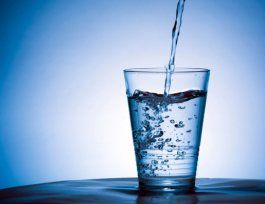
Which form of matter take the shape of a container like this juice?
a)
liquid
b)
solid
c)
glass
d)
gas
3.

Which form of matter fills the space like it does in the balloon?

a)

liquid

b)

string

c)

solid

d)

gas

4.
What is happening when my ice cream changes from a solid to a liquid?
a)
freezing
b)
melting
c)
burning
d)
evaporation
5.
Things that take up space are called?
a)
Toys
b)
Liquids
c)
Matter
d)
Space
6.
How do you change a solid chocolate bar to liquid chocolate?
a)
By freezing it
b)
heat energy
c)
light energy
7.
The steam coming off the pot of boiling water is an example of....
a)
a solid becoming a liquid
b)
a liquid becoming a solid
c)
a liquid becoming a gas
d)
a gas becoming a liquid
8.
Which state of matter does ice start as (before you cool it)?
a)
liquid
b)
solid
c)
gas
9.
On a hot summer day chocolate candy can melt in your pocket.  How can you get the chocolate to return to a solid?
a)
add heat
b)
leave it in your pocket
c)
cool it in the refrigerator
d)
leave it outside
10.
True or False: Matter can changes states by adding heat or cooling.
a)
True
b)
False
11.
In which state of matter do the particles spread apart and fill all the space available to them?
a)
crystal
b)
liquid
c)
gas
d)
solid
12.
Molecules are closest together in a 
a)
Solid
b)
Liquid
c)
Gas
13.
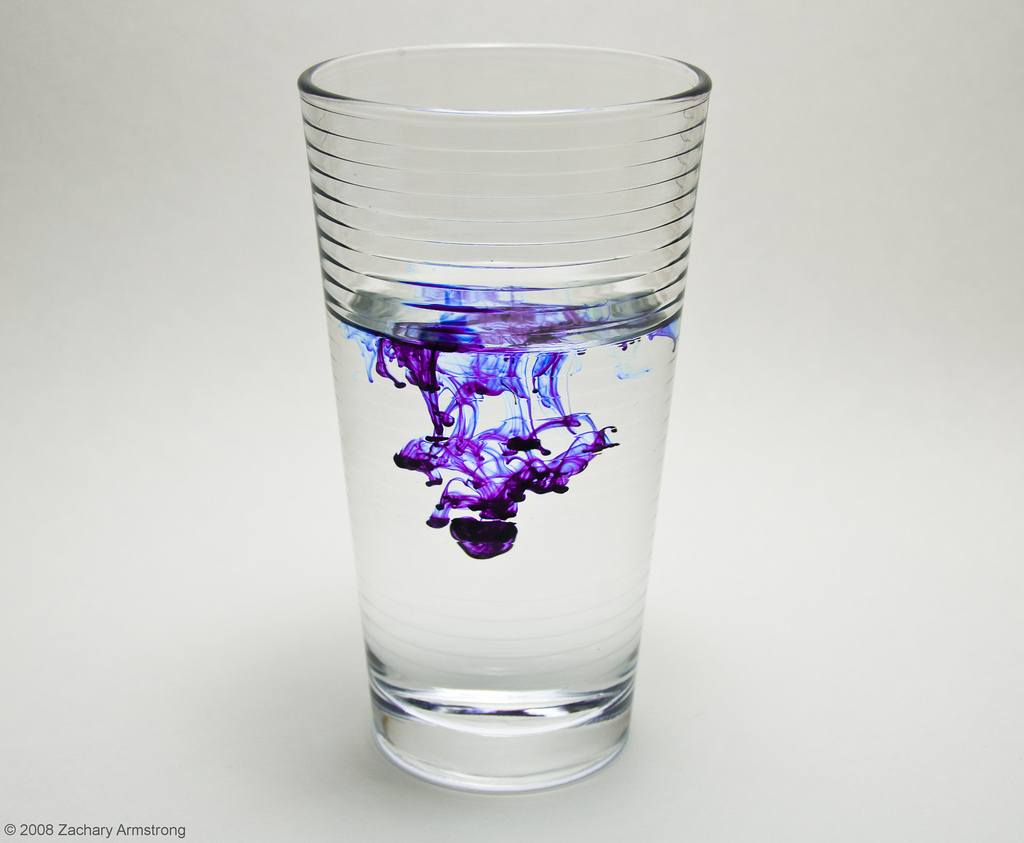
Where is there a low concentration of dye?
a)
at the bottom of cup
b)
in the color
c)
at the top of cup 
d)
no concenteraion gradient
14.
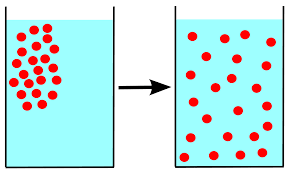
The picture below is an example of _________________.
a)
osmosis
b)
isotonic
c)
diffusion
d)
active transport
15.

What is diffusion?

a)

when molecules move

b)

when molecules move from a high concentration to a low concentration

c)

no movement

d)

molecules move everywhere

16.
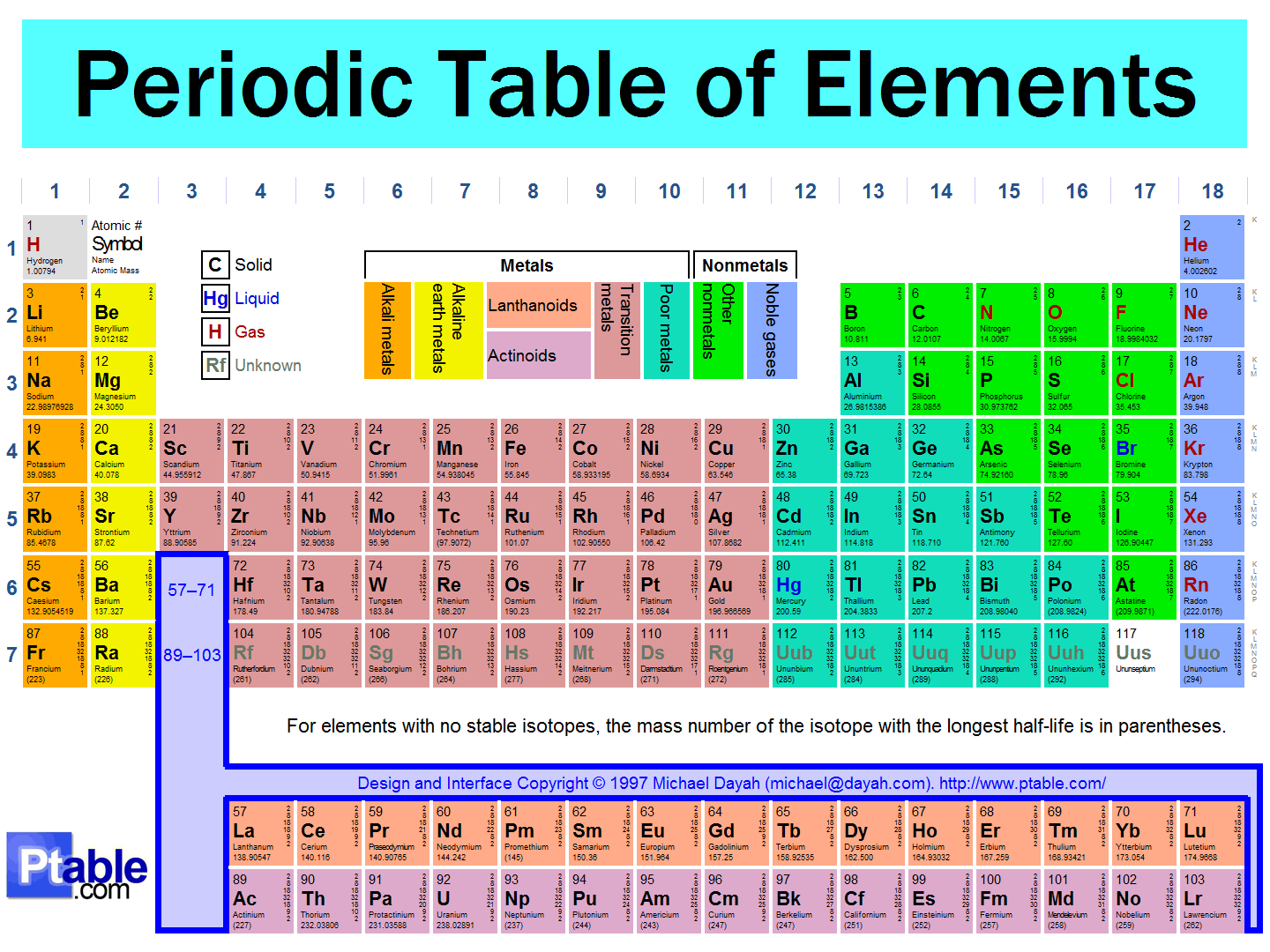
The horizontal row on the periodic table is called a
a)
group
b)
family
c)
period
d)
atomic number
17.
A vertical column is called...
a)
group
b)
tower
c)
period
d)
crew
18.

What is the chemical symbol for sodium?

a)

Na

b)

So

c)

NaCl

d)

S

19.
True or False? Neutrons have a negative charge
a)
True
b)
False
20.
A particle that moves around the nucleus is a(n)...
a)
Proton
b)
Neutron
c)
Electron
d)
Quark
21.
Atoms have no electric charge because they...
a)
have an equal number of charged and non charged particles
b)
have neutrons in their nuclei
c)
have an equal number of electrons and protons
d)
have an equal number of neutrons and protons
22.
Most of the mass in an atom is concentrated in the...
a)
electrons
b)
nucleus
c)
protons
d)
empty space
23.
What does the nucleus consist of?
a)
Protons + Electrons
b)
Neutrons + Electrons
c)
Atoms
d)
Protons + Neutrons
24.
What is the smallest?
a)
worm
b)
molecule
c)
galaxy
d)
atom
25.

Isotopes are the atoms of the same element with the same number of.............. but different number of............

a)

electrons/neutrons

b)

neutrons/protons

c)

protons/neutrons

d)

electrons/protons

26.

Elements contain only one type of atoms.

a)

True

b)

False

27.
What is a pure substance made of two or more elements that are chemically combined called?
a)
A. element
b)
B. compound     
c)
C. mixture
d)
D. solution
28.
silver spoon
a)
A. MIXTURE
b)
B. COMPOUND
c)
C. ELEMENT
29.
A pure substance...
a)
is an element or a compound
b)
is an element or a mixture
c)
is a compound or a mixture
d)
is a mixture
30.
NaHCO3 is an example of —
a)
an abbreviation
b)
a compound
c)
a mixture
d)
an element
31.
What is an example of an element?
a)
Oxygen
b)
Pure water
c)
Air
d)
Table salt
32.

How can you get salt from salty water?

a)

evaporate the water; then crystallisation

b)

condense the water; then crystallisation

c)

Filtration

33.

What separation method could you use to separate water from ink?

a)

filtration

b)

distillation

c)

electrolysis

34.

Mixtures can be separated using chromatography.

a)

True

b)

False

35.

Ink can be separated by a method of -----------------------------------------------

a)

distillation

b)

filtration

c)

chromatography

d)

sedimentation

36.
A pure substance shows ------------------ spot on chromat gram
a)
0
b)
1
c)
2
d)
3
37.
Which element has an electron configuration of 2.5?
a)
Oxygen
b)
Nitrogen
c)
Phosphorus
d)
Carbon
38.
What is the electron configuration of sodium?
a)
2.8
b)
2.8.2
c)
2.8.1
d)
11
39.
Which element has the electron configuration of 2.7?
a)
Krypton
b)
Iodine
c)
Flourine
d)
Barium
40.
When an atom loses an electron, it becomes a:
a)
positive ion
b)
negative ion
c)
neutral ion
d)
neutral atom
41.
Elements in Group 1 lose one electron to form ions with a _________________ charge.
a)
1+
b)
2+
c)
0
d)
1-
42.

Nitrogen will ____ electrons to become stable (hint: nitrogen is in group 5).

a)

gain 1

b)

lose 1

c)

gain 3

d)

lose 3

43.

NaCl

a)

ionic bonding

b)

covalent bonding

44.
Is Hydrogen considered a metal or a non-metal?
a)
Metal
b)
Non-metal
45.

What two types of atoms make a covalent bond?

a)

2 Non-metals

b)

1 Non-metal and 1 Metal

c)

2 Metals

d)

2 Noble Gases

46.
How are covalent bonds explained?
a)
When one atom takes the other atom's electron
b)
When the atom shares an electron with an another atom
c)
When the two nucleus merge
d)
When the neutrons leave the nucleus
47.
What region of the periodic table contains atoms that form covalent bonds?
a)
the left side
b)
the middle
c)
the right side
d)
top left
48.

What is the mass number of magnesium?

a)

2

b)

4

c)

12

d)

24

49.

What is the relative molecular mass of fluorine gas, F2?

F = 19

a)

19

b)

38

c)

9

d)

18

50.

What is the relative formula mass of NaOH?

Na = 23

O = 16

H = 1

a)

20

b)

39

c)

40

d)

45

51.

Which alkali metal is most reactive out of the following?

a)

lithium

b)

potassium

c)

sodium

52.

How many electrons do the alkali metals have in their outer shell? (hint: alkali metals are in group 1)

a)

1

b)

2

c)

8

d)

7

53.

What happens to the reactivity of the alkali metals as you move down the group?

a)

increases

b)

decreases

54.

Which alkali metal reacts with water to produce a violet flame?

a)

K

b)

Na

c)

Li

d)

DuNo

55.

Which gas is released when the alkali metals react with water?

a)

hydrogen

b)

oxygen

c)

hydroxide

d)

carbon dioxide

56.

Which of the "Halogens" is found in liquid state at room temperature?

a)

Flourine

b)

Astatine

c)

Iodine

d)

Bromine

57.

Which of the "Halogens" has yellowish green color?

a)

Chlorine

b)

Bromine

c)

Flourine

d)

Iodine

58.
Which gas in our atmosphere is most abundant?
a)
Argon
b)
Oxygen
c)
Nitrogen
d)
Carbon Dioxide
59.
What percentage of our atmosphere is made up of other gases such as argon, water vapor, and carbon dioxide?
a)
1%
b)
21%
c)
78%
d)
90%
60.
What is the percentage of oxygen in Earth's atmosphere?
a)
1%
b)
21%
c)
78%
d)
90%
61.
a)
A
b)
B
c)
C
d)
D
62.
The pH scale is a range from:
a)
1-7
b)
0-14
c)
1-14
d)
1-20
63.

A(n) ______ is a substance with a pH less than 7

a)

Acid

b)

Alkali

c)

Base

d)

Buffer

64.

A(n) _______ is a substance with a pH greater than 7.

a)

Alkali

b)

Acid

c)

Buffer

d)

Water

65.

When you add an universal indicator to an acid, it will change its colour to

a)

Red

b)

Blue

c)

Yellow

d)

Green

66.

HCl, Sprite & Lemon Juice are all...

a)

Acidic

b)

Alkaline

c)

Neutral

67.

Which is an alkali?

a)

sodium hydroxide

b)

HCl

c)

H2SO4

d)

kerosene

68.

Adding a few drops of an universal indicator to an alkali will change its colour to

a)

Red

b)

Purple

c)

Yellow

d)

Green

69.

The laboratory test for oxygen is that

a)

it relights a glowing splint

b)

it relights a burning splint

c)

it changes lime water to milky

d)

it makes a glowing splint go out

70.

Bleaches damp litmus paper

a)

Chlorine

b)

Oxygen

c)

Hydrogen

d)

Water

71.

Turns limewater milky

a)

Hydrogen

b)

Oxygen

c)

Ammonia

d)

Carbon dioxide

72.

Makes a squeaky pop sound when lit

a)

Hydrogen

b)

Oxygen

c)

Chlorine

d)

Ammonia

73.

Crude oil is a a mixture of hydrocarbons

a)

True

b)

False

74.

Bitumen

a)

jet fuel

b)

fuel for cars

c)

for surfacing roads

d)

fuel for lorries

75.

kerosene

a)

jet fuel

b)

fuel for cars

c)

for surfacing roads

d)

fuel for lorries

76.

Fuel oil

a)

jet fuel

b)

fuel for cars

c)

for surfacing roads

d)

fuel for lorries

77.

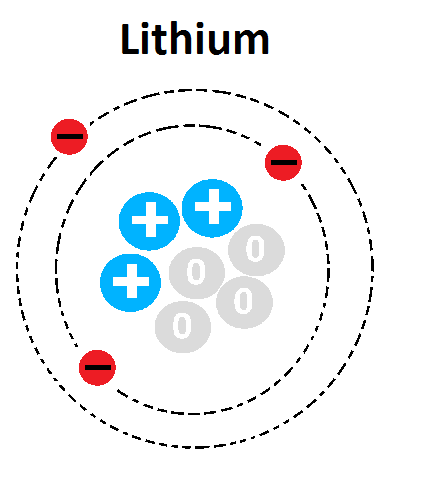
What is the electron configuration of the ion that this atom would form?

a)

2,8,2

b)

2,8,1

c)

2,8

d)

2,8,8

78.

What is the correct description of this atom?

a)

It has an atomic number of 3, and an atomic mass of 5

b)

It has an atomic mass of 6, and an atomic number of 6

c)

It has an atomic number of 3, and an atomic mass of 6

d)

It has an atomic mass of 6, and an atomic number of 9

79.

Which of these equations is correctly balanced?

a)

Mg + O2 → 2MgO

b)

2Mg + O2 → MgO

c)

2Mg + O2 → 2MgO

d)

Mg + O2 → MgO

80.

What is the atomic number of this atom?

a)

1

b)

3

c)

4

d)

7

81.

What is the mass number of this atom?

a)

1

b)

3

c)

4

d)

7

82.

What is the atomic number of this atom?

a)

1

b)

3

c)

4

d)

7

83.

What is the mass number of this atom?

a)

1

b)

2

c)

3

d)

4

84.

What is the relative molecular mass of CO2?

C= 12

O= 16

a)

12

b)

16

c)

32

d)

44

85.

What is the RFM of K2S?

K= 39

S= 32

a)

110

b)

120

c)

78

d)

140

86.
The picture below is an example of _________________.
a)
osmosis
b)
isotonic
c)
diffusion
d)
active transport
87.
Name this alkane
a)
Methane
b)
Ethane
c)
Propane
d)
Butane
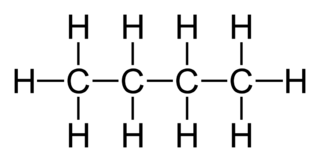
88.
Name this alkane
a)
Methane
b)
Ethane
c)
Propane
d)
Butane
89.
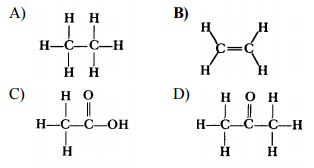
Which formula represents an unsaturated hydrocarbon?
a)
A
b)
B
c)
C
d)
D
90.
The longer the hydrocarbon, the _______ the boiling point
a)
Lower
b)
Higher
91.

You add bromine water to a saturated hydrocarbon. The bromine water:

a)

stays the same (remains orange/brown)

b)

goes colourless

92.
This picture represents which of the following?
a)
element
b)
compound
c)
mixture
93.
This picture represents which of the following?
a)
element
b)
compound
c)
mixture
94.

What type of elements will form an ionic bond?

a)

Metal + Metal

b)

Non-metal + Non-metal

c)

Metal + Non-metal

d)

None of the above

95.

Which picture is a mixture?

a)

A

b)

B

c)

C

d)

D