
 Worksheets
Nervous system
Total questions: 170
Worksheet time: 2hrs 20mins
Which body system coordinates all of the systems by controlling every activity that takes place?
The Nervous System
The Digestive System
The Endocrine System
The Circulatory System
The Immune System
The Nervous System is divided into two parts called
The Central Nervous System & The Peripheral Nervous System
The Central Nervous System & The Paradigm Nervous System
The Corollary Nervous System & The Paradigm Nervous System
The Corollary Nervous System & The Peripheral Nervous System
This is the control center of the nervous system controlling both voluntary and involuntary processes.
Central Nervous System
Peripheral Nervous System
Anything that occurs as a result of the organism thinking about it.
Voluntary Processes
Involuntary Processes
Anything that occurs automatically and without thought.
Voluntary Processes
Involuntary Processes
Digestion, Heartbeat, and Reflexes are examples of
Voluntary Processes
Involuntary Processes
Speaking, Running, and Karate Chopping are examples of
Voluntary Processes
Involuntary Processes
The Brain is made of a large mass of
Muscular Tissue
Neurons
Red Blood Cells
While Blood Cells
Glands
Which brain structure is responsible for balance and is involved with movement?
Cerebellum
Cerebrum
Medulla
Which brain structure controls all involuntary processes such as breathing, heartbeat, peristalsis
Cerebellum
Cerebrum
Medulla
Which brain structure controls all voluntary activities and is responsible for thought, memory, emotions, and reasoning?
Cerebellum
Cerebrum
Medulla
Which structure connects the Brain to the Peripheral Nervous System, while also directing some of the body's reflexes?
Spinal Cord
Esophagus
Pharynx
Larynx
Trachea
Function of nervous system is ____________.
Digestion only
Circulation only
Control and coordination of the body
Breathing only
What will happen if all the sensory nerves stop working in any human's body?
Messages will not reach to the brain or spinal cord.
Brain is not able to process the received information.
Nothing will happen as motor nerves will perform the functions.

Blinking when something enters your eye
A reflex action
Not a reflex action
Function of spinal cord
controls all voluntary actions of the body
to transmit impulses from the sensory organ through central nervous system to the effector to respond accordingly
controls the reflex actions
Select the VOLUNTARY action.


Select the INVOLUNTARY action.


Two divisions of the nervous system.
brain and spinal cord
central nervous system and peripheral nervous system
cerebrum and cerebellum


This part of the neuron receives chemical messages from the neurotransmitters of other neurons. It is labeled A in the diagram.
Dendrite
Axon
Axon Terminal
Cell Body
Branches extend from the axon and connected with other neuron forming synapse.
Axon
Dendrite
Myelin Sheath
Axon Terminal
Fatty layer that insulates and covore the axon and increases the speed of the neural message within the neuron.
Synapse
Dendrite
Myelin Sheath
Axon Terminal Button
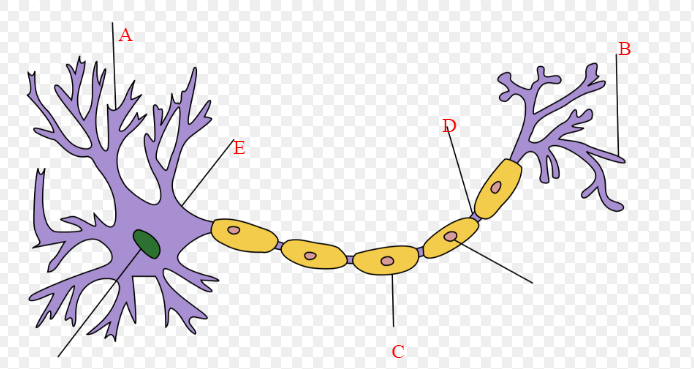
Which part sends nerve impulse to the next cell and connected with muscles?
Dendrite
Axon
Axon Terminal
Cell Body

The long cylindrical fiber like part of a neuron which the cell sends information to other neurons. Labelled D in diagram.
Synapse
Axon
Axon Terminal
Dendrite

What is this part in red color? It keeps the body balance during movements.
Cerebrum
Cerebellum
Brain Stem
Diencephalon
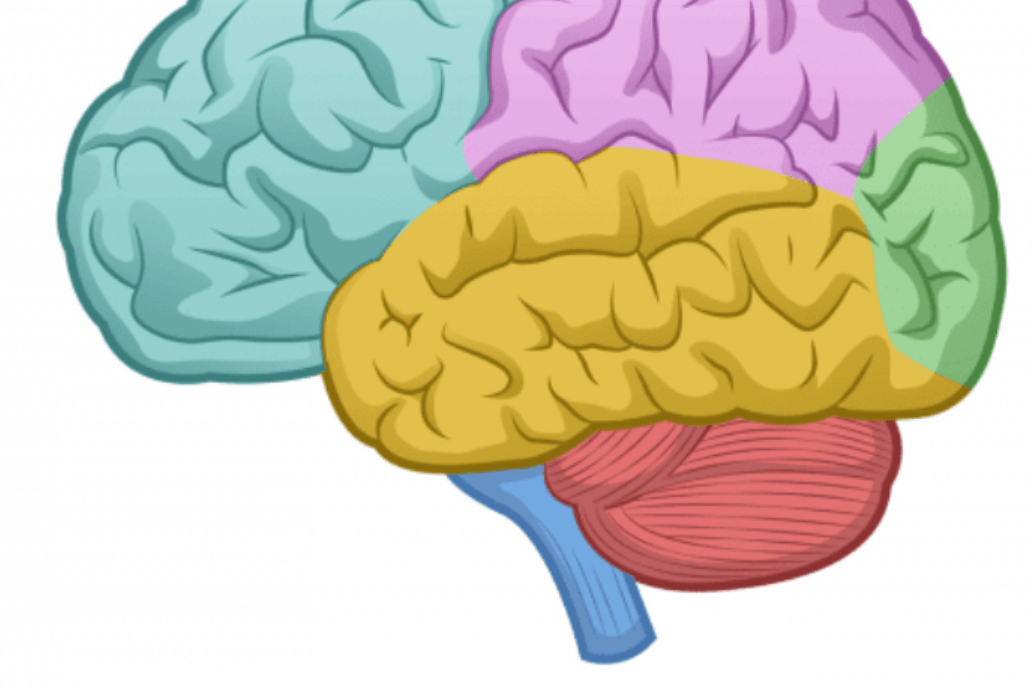
What structure is bright blue and located at bottom of the brain and connects the brain and the spinal cord?
Cerebrum
Cerebellum
medulla oblongata
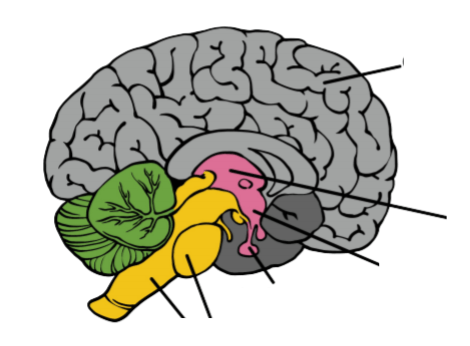
What structure is grey in this picture. It controls thinking and memory?
Cerebrum
Cerebellum
Brain Stem
What is the gap between two neurons called?
Impulse
Synapse
CNS
Inter neuron


The nerves that extend from the brain called .............. nerve and it consists of ..............pair of nerves
peripheral --43
spinal ---31
cranial---12

The nerves that extend from the spinal cord called .............. nerve and it consists of ..............pair of nerves
peripheral --43
spinal ---31
cranial---12
which part of the brain controls voluntary movement ?
Cerebrum
Cerebellum
medulla oblongata
Structure in the neuron that carries impulses toward the cell body:
axon
dendrite
nucleus
myelin sheath
A single fiber in the neuron that carries impulses away from the cell body:
axon
dendrite
myelin sheath
nucleus
Type of neuron that carries messages from the brain/spinal cord to the body
Choose more than 1
Afferent
Efferent
Sensory
Motor
The part of the neuron that receives messages from adjacent neurons
axon
axon terminal
dendrite
neuron
Gaps between Schwann cells that increase the speed of the transmission of the signal down the neuron are called
axon terminals
dendrites
myelin
nodes of Ranvier
If you picked up a hot coal, the signal from the sensory neurons in your fingertips would travel to ____________ in your spinal cord.
Sensory Neurons
Motor Neurons
Connector neuron
Neuroglia
............ is connected with the dendrites of the motor neuron.
Muscles
Axon terminals of connector neuron
Dendrites of the sensory neurons
axon terminals of sensory neurons
Which statement is correct?
The axons form the nerve
Nerve fibers form the nerve sheath
The nerve forms the nerve bundle
Axons with their surrounding sheaths form the nerve fiber
The nerve impulse flowing in one fibre and they do not share it to neighbour neuron because of _____________
Myelin sheath
Epidermal
Glial cell
All
Which of the following is a connective tissue?
Connector neurons
Neuroglial cells
Motor and sensory neurons
The basic structure unit of nervous system is .....
Axon
Neuron
Brain
Spinal cord
The axon surrounded by fatty layer called....
Mylein sheath
Neuron
Cerebrum
Cerebellum
The number of cranial nerves is ... Pairs
31
12
21
13
The number of spinal nerves is ...
12
31
13
21
The central nervous system consists of ........
Brain and spinal cord
Cerebrum and cerebellum
Cranial nerves
Spinal nerves
The part of brain responsible for receive information from five sense organs is .....
Cerebellum
Cerebrum
Nerve cell axon
Medulla oblongata
The part of nervous system responsible for the reflex action is ...
Brain
Cerebrum
Cerebellum
Spinal cord
The brain exist in the bony box called .....
Spinal cord
Cerebellum
Skull
Backbone
The spinal cord exist in .....
Vertebral column
Skull
Cerebrum
Cerebellum
The part that responsible for balance of the body is ....
Cerebrum
Medulla oblongata
Axon
Cerebellum

This part of the brain helps with balance and coordination by controlling how the the muscles work together.
cerebrum
cerebellum
brain stem

This part of the brain is the center of conscious thought. It controls our voluntary muscle movements like running and talking as well as our senses (hearing and tasting).
cerebrum
brain stem
cerebellum

Several important involuntary functions, such as breathing and heartbeat, digestion, and sleep are controlled by the
Hippocampus
cerebellum
brain stem or medulla
Cerebrum

A nerve cell is called a
cardiac cell
neurons

An example of voluntary movement would be:
Dancing
heart beat
digestion
breathing

TRUE or FALSE: All nerves have the same job. For example, they all carry messages to the brain
TRUE
FALSE


The nerves in your fingertips are part of the ___ nervous system
central
peripheral

Select all that apply: The function of the nervous system is to control
voluntary movement
our senses (sight, hearing, touch, taste..)
our memories and thoughts
Involuntary actions likes breathing and heart beat

Two major branches of the nervous system
central and peripheral
peripheral and motor
motor and sensory

The nervous system is composed of the ___, ___, and ___.
heart, brain, kidneys
lungs, liver, stomach
brain, spinal cord, nerves

The brain is part of the ____ nervous system.
central
peripheral


This is part of our central nervous system and is responsible for connecting the brain to the rest of the body.
Brain
Spinal Cord
Neurons
This is part of our central nervous system and is the "control center" of the body. It controls body functions.
Brain
Spinal Cord
Neurons

The cerebrum contains the prefrontal cortex which is responsible for...
our heart beat
our breathing
our short term memories
movements

The hippocampus is the part of the brain that
our heart beat
our breathing
Stores our short term memories
processes memories and stores them long term.

The brain stem or medulla is the part of the brain that controls
involuntary processes like breathing, heart rate, digestion, and sleep
processes memories and stores them long term.
our short term memories
Nerves are made up of nerve cells called
cardiac cell
neurons
What is true about nerves?
Nerves all have the same job - to send messages TO the brain and spinal cord.
Nerves all have the same job - to send messages AWAY the brain and spinal cord.
Nerves all have different jobs -some only send messages TO to the brain and spinal cord with other only send messages AWAY from the brain and spinal cord.
What is the function of the nervous system?
to control and coordinate body functions and systems.
to protect the body from harm.
to identify pain and begin healing.
to break down food.
Select all of the organs of the nervous system:
Brain
Heart
Spinal Cord
Nerves
Stomach
Which of the following is the nervous system?


Which of the following is the nervous system?
Which system controls all other body systems?
Muscular
Excretory
Nervous
Digestive
The basic unit of structure and function in the nervous system is a nerve cell. Nerve cells are also called-
Osteocytes
Dendrites
Neurons
Spinal Cords
What is the function of a nerve?
To transport needed food around the body
To control body movement for reflexes.
To carry messages (impulses) to and form the Central Nervous System
All of the above
The Central Nervous system includes what two organs?
Brain and Nerves
Brain and Spinal Cord
Spinal cord and Nerves
Nerves and Neurons
What controls the nervous system and all decision-making?
Brain
Spinal Cord
Nerves
Neurons
The column of tissue connecting the brain to nerves is...
spinal cord
central nervous system
peripheral nervous system
All of the above
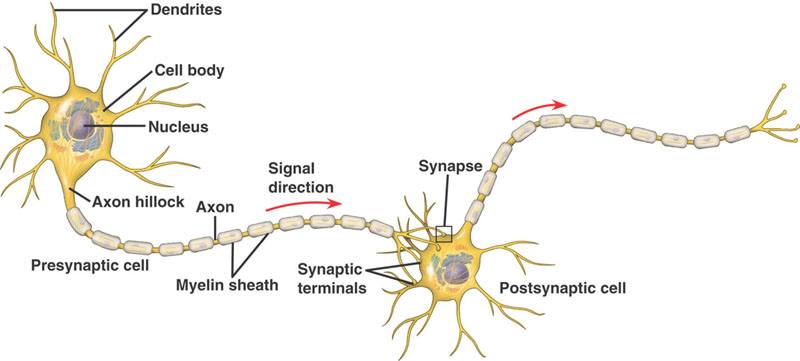
What contains the nucleus of the neuron?
Terminal Bouton
Cell Body
Axon Hillock
Myelin Sheath


Which of the following uses ACTIVE transport?
sodium-potassium pump
sodium channel
potassium channel
diffusion
What number(s) on the graph represents the THRESHOLD level of stimulus?
1 and 5
2
3
6
What number on the graph represents the repolarization phase?
1
2
3
4


What are the three parts of the nervous system?
brain, spinal cord, neurons
brain, lungs, spinal cord
heart, brain, nerves
brain, nerves, neurons
What is the function of the nervous system?
sensory inputs, process information, motor output
to protect the body from harm.
Sensory input and motor output
Make decisions and process information

Identify the stimulus
Thirsty
drinking water
blinking
eating

Identify the response
hunger
thirst
drinking water
smelling
What part of your body carries signals from your brain to your muscles (you can choose more than one)
Motor neurons
Spinal cord
Sensory neurons
Blood vessels
How many sense do humans have?
4
5
6
more than 6
What kind of neuron carries information from our eyes to our brain?
Motor neuron
Sensory neuron
Nerve
Spinal neuron
Which has more potential energy helicopter hovering high in the air or a helicopter falling quickly
Hovering helicopter
Fast falling helicopter

What type of energy does a soccer ball rolling on the ground have?
Kinetic Energy
Potential Energy
Just plain energy
No Energy

What type of energy does a person standing at the top of a ladder have?
Kinetic Energy
Gravitational Potential
Elastic Potential
Chemical Potential
No Energy
Conservation of energy means that
energy can be created but not destroyed
energy can be destroyed but not created
energy can be both created and destroyed
energy can be neither created nor destroyed
Kinetic energy can be described as
energy in motion
stored energy
a chemical reaction
connected energy
As a boulder rolls from the top of a hill to the bottom, how does its potential and kinetic energy change?
Potential and kinetic energy both increase.
Potential energy increases and kinetic energy decreases.
Potential energy decreases and kinetic energy increases.
Potential and kinetic energy both increase.
What is it called when one type of energy changes to another type of energy?
Energy transfer
a Joule
energy transformation
total energy
What is it called when one type of energy moves from one object to another ?
Energy transfer
a Joule
energy transformation
total energy
Potential energy can be described as
energy in motion
stored energy
a chemical reaction
connected energy


Which body system coordinates all of the systems by controlling every activity that takes place?
The Nervous System
The Digestive System
The Endocrine System
The Circulatory System
The Immune System

Which organ is represented by letter B?
Brain
Spinal Cord
Nerves
Which organ is represented by letter A?
Brain
Spinal Cord
Nerves
Which organ is represented by letter C?
Brain
Spinal Cord
Nerves
The Nervous System is divided into two parts called
The Central Nervous System & The Peripheral Nervous System
The Central Nervous System & The Paradigm Nervous System
The Corollary Nervous System & The Paradigm Nervous System
The Corollary Nervous System & The Peripheral Nervous System
This is the control center of the nervous system controlling both voluntary and involuntary processes.
Central Nervous System
Peripheral Nervous System
The nerves that coordinate messages from the brain and spine to all other parts of the body.
Central Nervous System
Peripheral Nervous System
Digestion, Heartbeat, and Reflexes are examples of
Voluntary Processes
Involuntary Processes
Speaking, Running, and Karate Chopping are examples of
Voluntary Processes
Involuntary Processes
The Brain is made of a large mass of
Muscular Tissue
Neurons
Red Blood Cells
While Blood Cells
Glands

Letter B represents the
Cerebrum
Cerebellum
Medula
Letter C represents the
Cerebrum
Cerebellum
Medula
Which brain structure is responsible for balance and is involved with movement?
Cerebellum
Cerebrum
Medulla
Which brain structure controls all voluntary activities and is responsible for thought, memory, emotions, and reasoning?
Cerebellum
Cerebrum
Medulla
A nerve cell is called
an axon
a dendrite
A Neuron
A synapse
A neuron that connects the ear to the central nervous system is called
A motor neuron
A relay neuron
A sensory neuron
The spinal cord
A neuron that connects the central nervous system and a muscle is called:
A motor neuron
A relay neuron
A sensory neuron
The spinal cord
The capillaries equivalent in the nervous systems are:
Motor neurons
Relay neurons
sensory neurons
Spinal cord
In the event of a voluntary response, the message for the response originates from
The brain
The spinal cord
In the event of a reflex response, the message for the response originates from
The brain
The spinal cord
Aidan hears the fire alarm and gets up to leave the room.
In this situation, the fire alarm is:
A stimulus
A sensory neuron
A motor neuron
A relay neuron
Blinking is an example of
A reflex response
A voluntary response
Writing when you hear a word is an example of
A voluntary response
A reflex response
The optic nerve is a
Motor nerve
Relay nerve
Sensory nerve

