
 Worksheets
EXAM 1 - Review (HW 1 - 5)
Total questions: 70
Worksheet time: 57mins
Which of the following terms is defined as a single-celled organism?
Unicellular
Multicellular
Autotrophic
Heterotrophic by absorption
Which of the following describes some of the general characteristics of organisms in Domain Eukarya?
They lack membrane-bound organelles and reproduce only by binary fission.
They have cells with true nucleus and membrane-bound organelles.
They are exclusively unicellular and always prokaryotic.
They include only autotrophic organisms that perform photosynthesis.
Why is the “Kingdom” Protista considered an “artificial kingdom”?
Because it includes organisms that do not fit into other kingdoms
Because it is the most ancient kingdom
Because it is the most diverse kingdom
Because it is the smallest kingdom
The main three groups of protists are:
Algae, Protozoa, and Slime Molds
Bacteria, Viruses, and Fungi
Plants, Animals, and Fungi
Insects, Arachnids, and Crustaceans
Which of the following are examples of animal-like protozoans?
Amoeba and Paramecium
Euglena and Chlamydomonas
Plasmodium and Dinoflagellates
Seaweed and Diatoms
Life in the water is considered "comfortable" because:
Water provides buoyancy and support, reducing the need for strong skeletal structures.
Water environments have more stable temperatures compared to land.
Aquatic life forms have less exposure to UV radiation.
All of the above.
The structure produced by gymnosperms and angiosperms that carries the male gametes is called:
Pollen grain
Ovule
Seed
Fruit
Which of the following describes the major characteristics of each of the four major groups of plants?
Bryophytes are non-vascular, Seedless Vascular Plants have vascular tissue and rely on spores, Gymnosperms produce seeds, Angiosperms have flowers and fruits.
Bryophytes have flowers, Seedless Vascular Plants produce seeds, Gymnosperms are non-vascular, Angiosperms have vascular tissue.
Bryophytes produce seeds, Seedless Vascular Plants have flowers, Gymnosperms have fruits, Angiosperms are non-vascular.
Bryophytes have vascular tissue, Seedless Vascular Plants are non-vascular, Gymnosperms have flowers, Angiosperms produce seeds.
All fungi are multicellular.
True
False
Fungi share characteristics with animals and plants. Which of the following is a characteristic fungi share with animals?
Photosynthesis
Cell walls made of chitin
Chlorophyll
Roots
Differentiate between parasites, saprobes, and mutualists.
Parasites harm their host, saprobes feed on dead matter, mutualists benefit both organisms involved.
Parasites benefit both organisms, saprobes harm their host, mutualists feed on dead matter.
Parasites feed on dead matter, saprobes benefit both organisms, mutualists harm their host.
Parasites and saprobes both benefit their host, mutualists harm their host.
Which of the following explains some of the relevance of fungi to the world?
Fungi are only harmful and cause diseases.
Fungi play a crucial role in decomposition and nutrient cycling.
Fungi are used solely for food production.
Fungi have no impact on the environment.
Which of the following lists includes only reproductive parts of a flower?
Stamens, pistil, stigma, style, and ovary
Sepals, petals, and filaments
Petals, sepals, and anthers
Filaments, petals, and sepals
Monocots and Dicots (=Eudicots) differ in several ways. Which of the following is a characteristic of Monocots?
Monocots have a single cotyledon.
Monocots have net-like veins in their leaves.
Monocots have flower parts in multiples of four or five.
Monocots have a taproot system.
Which of the following is a function of the mitochondria in an animal cell?
Energy production
Protein synthesis
Photosynthesis
Cell division
Which of the following terms refers to the organization of body parts in a balanced way?
Body symmetry
Cephalization
Vertebrate
Invertebrate
Which is the most diverse group of organisms in the world?
Plants
Animals
Fungi
Insects
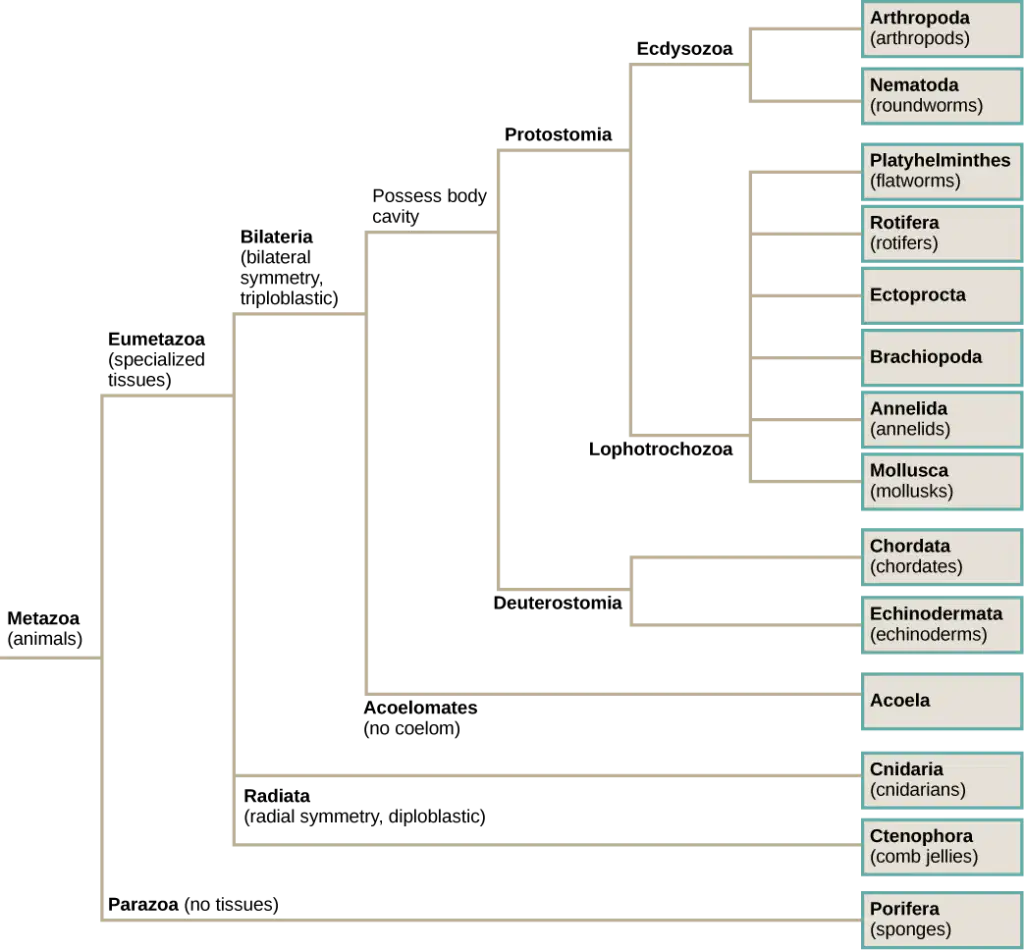
Which animal has true tissues, is protostome and has tentacles?
Jellyfish
Octopus
Sea Anemone
Starfish
Which animal does not have true tissues?
Porifera
Cnidaria
Platyhelminthes
Annelida
Name the 4 characteristics that all chordates have.
Notochord, dorsal nerve cord, pharyngeal slits, post-anal tail
Notochord, ventral nerve cord, pharyngeal slits, pre-anal tail
Notochord, dorsal nerve cord, gill slits, post-anal tail
Notochord, dorsal nerve cord, pharyngeal slits, pre-anal tail
The distinguishing features of the following groups of chordates: non-avian reptiles, birds, mammals are:
Non-avian reptiles have scales, birds have feathers, and mammals have hair or fur.
Non-avian reptiles have feathers, birds have scales, and mammals have hair or fur.
Non-avian reptiles have hair or fur, birds have scales, and mammals have feathers.
Non-avian reptiles have scales, birds have hair or fur, and mammals have feathers.
The 3 major groups of mammals are distinguished by their reproductive methods. Which of the following correctly lists these groups?
Monotremes, Marsupials, and Placentals
Reptiles, Amphibians, and Birds
Insects, Arachnids, and Crustaceans
Fish, Amphibians, and Reptiles
Which of the following correctly defines and contrasts asymmetry, radial symmetry, and bilateral symmetry?
Asymmetry refers to organisms with no symmetry, radial symmetry refers to organisms with body parts arranged around a central axis, and bilateral symmetry refers to organisms with a left and right side that are mirror images.
Asymmetry refers to organisms with body parts arranged around a central axis, radial symmetry refers to organisms with a left and right side that are mirror images, and bilateral symmetry refers to organisms with no symmetry.
Asymmetry refers to organisms with a left and right side that are mirror images, radial symmetry refers to organisms with no symmetry, and bilateral symmetry refers to organisms with body parts arranged around a central axis.
Which of the following best contrasts a prokaryotic cell with a eukaryotic cell?
Prokaryotic cells have a nucleus, while eukaryotic cells do not.
Prokaryotic cells are generally larger than eukaryotic cells.
Prokaryotic cells lack membrane-bound organelles, while eukaryotic cells have them.
Prokaryotic cells have linear DNA, while eukaryotic cells have circular DNA.
Which part of a compound light microscope is responsible for holding the slide in place?
Stage
Ocular lenses
Objective lenses
Revolving nose piece
What is the total magnification of your sample when viewing it using a compound light microscope if the eyepiece magnification is 10x and the objective lens magnification is 40x?
400x
40x
10x
50x
Which of the following describes the proper way to prepare a wet mount?
Place the specimen on the slide, add a drop of water, and cover with a cover slip.
Place the specimen on the slide and cover with a cover slip without water.
Add a drop of water on the slide, place the specimen, and cover with a cover slip.
Cover the specimen with a cover slip and then add a drop of water.
Which of the following describes the most efficient way to search for a sample on a slide?
Using a systematic grid pattern
Randomly scanning the slide
Focusing only on the edges
Using a magnifying glass
Which structures do all cells have in common?
Nucleus and mitochondria
Cell membrane and cytoplasm
Chloroplast and cell wall
Ribosomes and endoplasmic reticulum
Which of the following describes the proper way to carry, care, and put away the compound light microscope?
Always carry the microscope with both hands, clean the lenses with lens paper, and store it with the cover on.
Carry the microscope with one hand, clean the lenses with any cloth, and leave it uncovered.
Carry the microscope with both hands, clean the lenses with water, and store it without the cover.
Always carry the microscope with one hand, clean the lenses with lens paper, and store it with the cover on.
Which of the following defines the term 'dependent variable'?
A variable that is manipulated to observe its effect on another variable.
A variable that is measured and affected in an experiment.
A variable that is kept constant to ensure the validity of an experiment.
A group in an experiment that does not receive the treatment.
What is the basic unit of an organism?
Cell
Tissue
Organ
Organism
Which of the following lists the levels of biological organization in the correct order?
Molecule, Cell, Tissue, Organ, Organ System, Organism, Population, Community, Ecosystem, Biosphere
Cell, Molecule, Tissue, Organ, Organ System, Organism, Population, Community, Ecosystem, Biosphere
Organism, Organ System, Organ, Tissue, Cell, Molecule, Population, Community, Ecosystem, Biosphere
Biosphere, Ecosystem, Community, Population, Organism, Organ System, Organ, Tissue, Cell, Molecule
What are the properties (characteristics) of life?
Growth and development
Reproduction
Response to stimuli
All of the above
Which of the following are the major steps of the scientific method?
Observation, Hypothesis, Experiment, Conclusion
Question, Research, Hypothesis, Experiment, Analysis, Conclusion
Problem Identification, Data Collection, Hypothesis, Experimentation, Conclusion
Research, Hypothesis, Experiment, Observation, Conclusion
Which of the following terms refers to organisms that consist of a single cell?
Unicellular
Multicellular
Autotrophic
Heterotrophic by absorption
Which of the following describes the general characteristics of the different kingdoms in the Domain Eukarya in terms of cell type, cellular structure, nutrition mode, and presence or absence of cell wall?
Eukaryotic, unicellular or multicellular, autotrophic or heterotrophic, cell wall present or absent
Prokaryotic, unicellular, autotrophic, cell wall absent
Eukaryotic, multicellular, heterotrophic, cell wall present
Prokaryotic, multicellular, autotrophic, cell wall present
Which of the following are examples of photosynthetic protists (algae)?
Diatoms
Amoebas
Paramecia
Euglena
Which of the following are examples of protozoan?
Amoeba, Paramecium, and Plasmodium
E. coli, Salmonella, and Streptococcus
Yeast, Mold, and Mushroom
Algae, Seaweed, and Kelp
Fungi are such an unknown group of organisms because:
they are not visible to the naked eye
they are not studied extensively
they are not important to ecosystems
they are not found in diverse environments
The only fungi that are unicellular are:
Mushrooms
Yeasts
Molds
Lichens
Which of the following is a relevance of fungi to the world?
Decomposition and nutrient cycling
Causing diseases only
Producing oxygen
None of the above

Euglena are unicellular organisms that live in pond water. They move around using a flagella and can perform photosynthesis when needed. They contain many membrane bound organelles . What type of cells are they?
Prokaryotic Cell
Eukaryotic Cell
Which of the following is a characteristic of fungi?
They perform photosynthesis.
They have chlorophyll.
They have a cell wall made of chitin.
They are mostly autotrophic.
Is a slime mold plant-like, fungus-like, or animal-like?
Fungus-like
Plant-like
Animal-like
What domain are protists in?
Eukarya
Archaea
Bacteria
Which of the following terms is defined as the process by which a single organism divides into two parts, each of which becomes a separate organism?
Autotrophic
Binary fission
Aerobic
Prokaryote
Heterotrophic
Name the 3 Domains of life.
Bacteria, Archaea, Eukarya
Animalia, Plantae, Fungi
Protista, Monera, Plantae
Eukaryota, Prokaryota, Archaea
In what kinds of environments would you find bacteria and archaea?
Extreme environments such as hot springs and salt lakes
Only in human bodies
Only in freshwater lakes
Only in deserts
Which of the following best describes the general characteristics of bacteria and archaea?
Both are prokaryotic and lack a nucleus.
Both have a complex cellular structure with a nucleus.
Bacteria are prokaryotic, while archaea are eukaryotic.
Archaea have a nucleus, while bacteria do not.
Bacteria are classified in terms of shape as:
Cocci, Bacilli, and Spirilla
Cocci, Bacilli, and Fungi
Cocci, Viruses, and Spirilla
Cocci, Bacilli, and Algae
How do bacteria reproduce?
Sexually
Asexually
Both sexually and asexually
None of the above
Which of the following describes how bacteria increase their genetic diversity?
Through binary fission
By acquiring genetic material from other bacteria
By remaining genetically identical
Through mitosis
Which of the following describes some economic and ecological importance of bacteria?
Bacteria are used in the production of antibiotics and help in nutrient cycling.
Bacteria are harmful pathogens that cause diseases.
Bacteria have no role in the environment.
Bacteria are only found in extreme environments.
Most bacteria are:
harmful to humans
harmless to humans
Which of the following steps is involved in preparing a bacterial culture based on our Bacterial Culture exercise?
Inoculating the bacteria into a growth medium
Heating the bacteria to 100 degrees Celsius
Freezing the bacteria
Exposing the bacteria to direct sunlight

What is the name of the instrument pictured?
Beaker
Erlenmeyer Flask
Graduated Cylinder
Pipette
In the metric system, the basic unit of volume is:
Liters
Meters
Grams
Kelvin
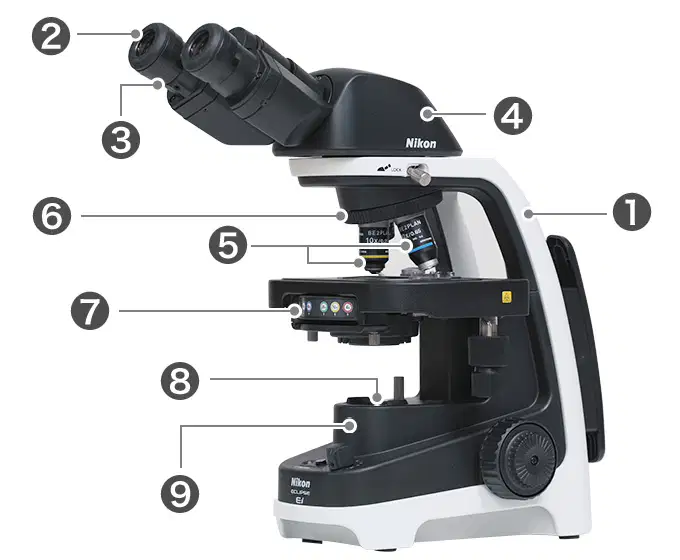
Identify the part of the microscope numbered #5 in the image.
Objective Lens
Ocular Lens
Stage
Course Objective Lens
Identify the part of the microscope numbered #6 in the image.
Revolving Nosepiece
Stage
Arm
Course Objective Lens
Identify the part of the microscope numbered #1 in the image.
Arm
Stage
Base
Light Source
An experiment is performed on plants to see how different liquids affect plant growth. Each plant in the experiment is given a different liquid; water, apple juice, or milk. Each plant has the same amount of soil, sunlight, and listens to the same music. In this investigation, the independent variable is ...
The type of plant
The amount of sunlight
The type of music
The type of liquid
What is the Scientific Theory of the Unity of Life is about?
This scientific theory says that all life is related and traces its ancestry to a universal ancestor. This theory is well supported with multiple lines of evidence such as that all life is made from cells.
This scientific theory speculates that possibly all life is related even though there is no evidence for this (yet).
This scientific theory theorizes that all life could get along if people tried a little harder.
All life is united!
An example of a Cnidarian with radial symmetry with tentacles is:
Sponges
Jellyfish
Octopus
Squid
Sea stars and sea urchin are Echinodermata and have the following characteristics:
Bilateral symmetry; foot, visceral mass, mantle; and open circulatory system
Head, thorax, and abdomen; jointed appendages; exoskeleton made of chitin; brain and ventral nerve cords
5-part body and water vascular system; adults have radial symmetry and larvae have bilateral symmetry
Notochord; post-anal tail; pharyngeal pouches (slits); dorsal, hollow nerve cord

Many hyphae are called..
caps
roots
mycelium
In a hypothesis the ______ variable is what is being tested, while the ______ variable is the one being measured in response.
independent; dependent
independent; control
dependent; independent
control; dependent

Which of the following statements is true about living things?
All living things are made of cells.
All living things are made of water.
All living things are made of air.
All living things are made of minerals.

Prokaryotic cells are usually _______ and do not contain a ______
Multicellular, Nucleus
Unicellular, Nucleus

What organelle is present and what process takes place in it?
chloroplast- cellular respiration
chloroplast- photosynthesis
mitochondria- photosynthesis
mitochondria- cellular respiration

