
 Worksheets
Unit One Review
Total questions: 66
Worksheet time: 1hrs 3mins
Which level of biological organization includes all living and nonliving components in an area?
Population
Community
Ecosystem
Organism
What do multiple populations living together in one area form?
Ecosystem
Biosphere
Community
Habitat
Which of the following is the largest level of biological organization?
Biosphere
Community
Ecosystem
Population
What is a biotic factor in an ecosystem?
Water
Temperature
Plants
Sunlight
Which of these is an example of a population?
A) A herd of deer in a forest
B) All the animals in a rainforest
C) An oak tree
D) A pond and the organisms living in it
Which statement about energy in an ecosystem is correct?
A) Energy is created by producers.
B) Energy cycles through the ecosystem.
C) Energy flows in one direction and is lost as heat.
D) Energy is never lost.
What percentage of energy is transferred from one trophic level to the next?
90%
10%
Which law states that energy cannot be created or destroyed, only transferred?
Law of Conservation of Mass
First Law of Thermodynamics
Second Law of Thermodynamics
Law of Conservation of Energy
What happens to energy as it moves up a food chain?
It increases.
It stays the same.
It decreases due to heat loss.
It is recycled.
Which organisms convert sunlight into chemical energy?
Primary consumers
Decomposers
Producers
Secondary consumers
What type of organism is always at the bottom of a food chain?
Herbivore
Producer
Carnivore
Omnivore
What type of consumer eats both plants and animals?
Herbivore
Carnivore
Omnivore
Producer
What is the role of decomposers in an ecosystem?
They produce energy.
They recycle nutrients.
They consume primary producers.
They absorb sunlight.
Which organism is a primary consumer?
A) Grass
B) Deer
C) Wolf
D) Rabbit
What is the main source of energy for most ecosystems?
Water
Sunlight
Soil
Wind
Which biome receives the most sunlight and rainfall?
Desert
Tundra
Tropical Rainforest
Grassland
What abiotic factor most influences plant growth in an ecosystem?
Soil type
Wind speed
Amount of sunlight
Animal activity
How does proximity to the ocean affect a terrestrial biome?
It makes the climate more extreme.
It moderates temperature and increases moisture.
It has no impact.
It decreases biodiversity.
What is an example of primary succession?
A) A field regrowing after a wildfire.
B) A new volcanic island forming.
What is the role of pioneer species in succession?
They break down rock and establish soil.
They grow best in nutrient-rich soil.
They are the final stage of succession.
They prevent other species from growing.
Drag and drop the levels of biological organization from smallest to largest.
Organism
Single living entity
Population
Group of individuals of the same species
Community
All populations in a given area
Ecosystem
Interactions between communities and their environment
Biosphere
Global sum of all ecosystems
Drag and drop the correct definitions to these terms:
Makes its own food using sunlight.
Producer
Eats other organisms for energy.
Consumer
Breaks down dead matter.
Decomposer
Drag and drop the following into the correct category (Abiotic vs. Biotic Factors).
Trees
Biotic
bacteria
Biotic
fungi
Biotic
Sunlight
Abiotic
water
Abiotic
Drag and drop the correct trophic levels into their positions.
Grass
Primary Producer
Rabbit
Primary Consumer
Snake
Secondary Consumer
Hawk
Tertiary Consumer
Drag and drop the correct energy percentages into the trophic pyramid.
100%
Producer
10%
Primary Consumer
1%
Secondary Consumer
0.1%
Tertiary Consumer
What is the climate and vegetation like in the Tundra?
The climate in the Tundra is characterized by cold temperatures, strong winds, and low precipitation. Vegetation is sparse, consisting mainly of mosses, lichens, low shrubs, and grasses.
The Tundra has a warm climate with abundant rainfall and dense forests.
The Tundra experiences hot summers and mild winters with a variety of flowering plants.
The Tundra is known for its tropical climate and diverse wildlife.
Which biome is described as warm, wet, and having high biodiversity?
Label the biological levels of organization.
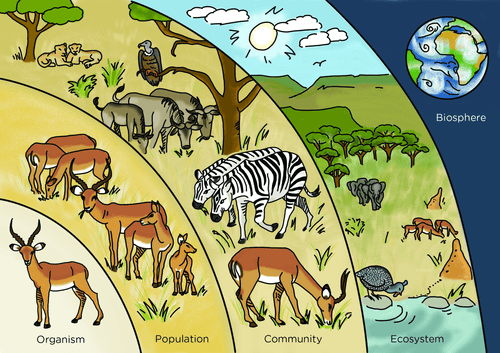
The living world is organized in levels. Biotic and abiotic factors also can be arranged into levels of biological organization. Put the words below in order from the least complex to the most complex
Community, Organism, Biome, Population, Biosphere, Ecosystem
Organism, Population, Community, Ecosystem, Biome, Biosphere
Organism, Biome, Population, Community Biosphere, Ecosystem
Label the energy pyramid
Listed in the Item Bank are some important labels for sections of the image below. Drag and drop each label to the corresponding area it identifies in the image
0.1%
1%
Producer
Consumer
100%
10%

Match the following trophic levels with their correct representation in a food pyramid.
A
Primary producers at the base
B
Primary consumers above producers
C
Secondary consumers above primary consumers
D
Tertiary consumers at the top
Drag and drop the amount of calories that will be available to organisms at each level in the pyramid.
Which biome is characterized by low temperatures and low amounts of rainfall?
Tundra
Desert
Temperate Deciduous Forest
Tropical Rainforest

One characteristic feature of the tundra is that only the surface thaws in the summer and refreezes in the winter, leaving a permanently frozen subsoil. This characteristic is known as
Condensation
Glaciation
Permafrost
Crystallization

Which biome covers most of the land mass near Earth's equator?
Desert
Grassland
Tropical rainforest
Temperate forest
Tropical Rainforest
Boreal forest

Plants with spines and waxy leaves are well suited for life in which environment?
Desert
Temperate Deciduous forest
Grassland
Tropical Rainfroest
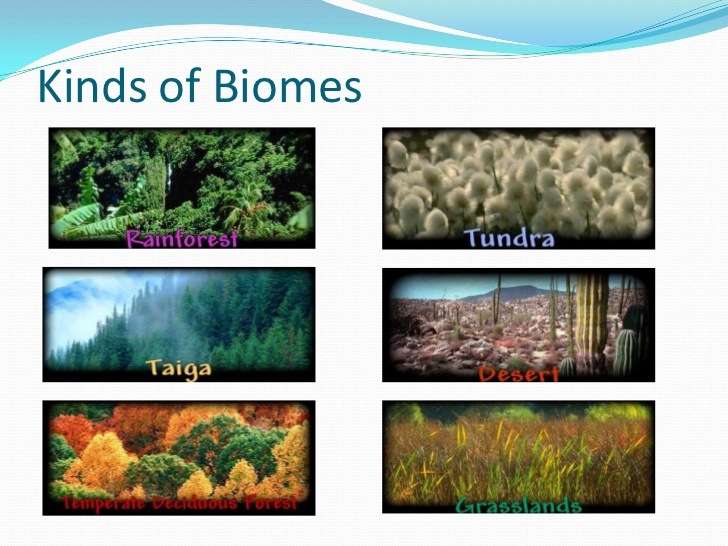
Which biome has the least amount of biodiversity? (the least different kinds of organisms)
tropical rain forest
savanna
grassland
desert

In which biome would you find the best soil for agriculture?
grassland
tundra
desert
tropical rainforest


This climatogram is likely for which biome?
desert
rainforest
temperate seasonal forest
grassland
The desert and tundra are alike because
Both have very low temperatures
sandy soils
limited available water
large seasonal variation
One adaptation of animals living in the desert is:
nocturnal behavior
water storage
heat resistance
______ is the amount of solar radiation received by a specific area.
Insolation
Reflection
Absorption
Transmission
Proximity to coastlines can lead to increased ______ due to high humidity levels.
precipitation
temperature
wind speed
salinity
Which of these adaptations would most likely be found in desert plants?
Broad leaves
Deep root systems
High transpiration rates
Deciduous behavior
a gradual process of change and replacement of some or all of the species in a community.
ecological succession
biomass
pioneer species
climax community
a species that colonizes an uninhabited area and that starts an ecological cycle in which many other species are established.
ecological succession
biomass
pioneer species
climax community
a final, stable community in equilibrium with the environment.
ecological succession
biomass
pioneer species
climax community
the total mass of organisms in a given area.
insolation
biomass
pioneer species
climax community
the distance from the equator measured in degrees.
biome
altitude
latitude
climate
the average weather conditions in an area over a long period of time.
biome
altitude
latitude
climate
a large region characterized by a specific type of climate and certain types of plant and animal communities.
biome
altitude
latitude
climate
How are plants in a tropical rainforest typically adapted to their environment?
Wide, broad leaves
Spiny or thorn-covered surfaces
Thick, water-storing stems
Deep, vertical roots
1. Drag and drop the correct consumer type into each category.
- Lion (a)
- Bear (b)
- Rabbit (c)
In a food chain, energy flows from (a) to consumers and is lost as heat at each trophic level.
An organism that feeds on dead or decaying animals but does not hunt for its own prey is called a (a) .
An organism that breaks down dead plants and animals, returning nutrients to the soil, is called a (a) .
Drag and drop each biome into its correct description.
Biomes:
Desert (a)
Tundra (b)
Rainforest (c)
Grassland (d)
Taiga (e)
Drag and drop the correct adaptations into the appropriate biome.
Desert (a)
Tundra (b)
Rainforest (c)
Match the following correct locations into the corresponding biome.
Biomes:
Tropical Rainforest
Amazon Basin (South America)
Savanna
Serengeti (Africa)
Taiga
Siberia (Russia, Canada)
Desert
Sahara (Africa)
Match each organism to its correct role in the food web.
Grass
Producer
Rabbit
Primary Consumer
Snake
Secondary Consumer
Hawk
Tertiary Consumer
Mushroom
Decomposer

