
 Worksheets
11PES Functional Anatomy POP Quiz
Total questions: 49
Worksheet time: 25mins

What is the name of this bone in red?
Tibia
Ulna
Femur
Radius

What is the name of these bones in red?
Radius
Ulna
Humerus
Femur

What is the name of this bone?
Femur
Radius
Vertebra
Tibia

What is the name for the group of bones in colour?
Phalanges
Carpals
Lincoln Tunnel
Patella

This bone, in red, is called? They protect the ligaments in the knee joint.
Nutella
Gallbladder
Elbow
Patella

What is the name of the bones in red? These are one half of the bones that make up the hip joint.
Elvis
Shoulder
Knee Cap
Pelvis

What is the name of the bone in red? this bone sits over the heart and helps protect the heart.
Breastbone
Chest Plate
Sternum
Skull

Name this bone in red. They also are one of three bones that make up the shoulder joint.
Humerus
Deltoid
Clavicle
Scapula

Name the bones colored green. These are the bones the make up the middle of your foot and arch of the foot.
Meta Carpal
Meta Tarsal
Foot Bone
Phalanges


Identify the muscle labeled A
Hamstring
Quadriceps femoris
Latissimus dorsi
Sternocleidomastoid

Name the highlighted muscles
deltoid
latissimus dorsi
pectorals
trapezius

Name the highlighted muscle
tricpes
biceps
rectus femoris
trapezius

When kicking a football, _____________________ joint is one of the main movements required.
Extension at the elbow
Extension at the Knee
Abduction at the hip
Circumduction at the hip
What term is given to the point where 2 or more bones meet?
Joint
Ligament
Cartilage

The place where a tendon attaches the muscle to the moveable end of the bone is known as
the origin
the insertion
a joint
an articulation
What is the origin of a muscle?
place where a tendon attaches the muscle to the moveable end of a bone
the tissue from which a muscle develops
place where a tendon attaches the muscle to the immoveable end of a bone
the thickest part of a muscle
How many chambers does the heart have?
1
2
3
4
Which of the following carries blood out of the heart?
Arteries
Veins
Muscles
Nerves
How thick are capillaries walls?
5 cells
3 cells
1 cell
10 cells
What is the function of the heart?
Pump blood through the body
Supply oxygen and nutrients to the tissues
Removing carbon dioxide and other wastes
All of the above

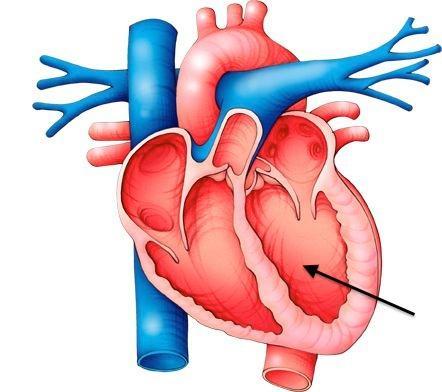
What is number 6?
Pulmonary Vein
Pulmonary Artery
Aorta
Super Vena Cava
What are the four valves of the heart
Aorta, pulmonary, atrium, ventricle valves
Bicuspid, tricuspid, pulmonary, atrium valves
Aortic, pulmonary, bicuspid, tricuspid valves
Aortic, pulmonary, tricuspid, vena cava valves

What is blood pressure?
Pressure of the blood against the walls of the veins.
Pressure of the heart pushing the blood out.
Pressure of the heart receiving blood.
Pressure of the blood against the walls of the arteries.

Which type of blood vessel carries blood TO the heart?
Arteries
Capillaries
Veins
Venules
In the heart, Each side has an upper chamber (called _____
and a lower chamber (called_______).
atrium, ventricle
artery, vein
atrium, vein
ventricle, atrium
As the blood reaches the lungs, what is removed from the blood?
Oxygen
Carbon dioxide
Red blood cells
White blood cells
What are platelets?
Very small plates used by woodland creatures and fairies
The blood cells that form clots when you are cut to stop bleeding.
They make your blood thinner when you are out of breath
the take oxygen back to the heart
What component of blood is responsible for carrying blood cells, wastes, glucose, and minerals?
What component of blood is responsible for fighting infections?

What is the name for the circulatory system that moves blood to and from the lungs?
Pulmonary
Systemic
Hemolymph
Cardiovascular
What is the name for the circulatory system that moves blood to and from the body?
Pulmonary
Systemic
Hemolymph
Cardiovascular

Blood vessels carrying blood into tissues where materials can be exchanged by diffusion are:
Arteries
Veins
Capillaries
The ability of a muscle to return to its original length when relaxed is known as:
(a)

The ability of a muscle to respond to a stimulus is known as:
(a)
Blood pressure is recorded as
Hydrostatic /diastolic
Diastolic/ hydrostatic
Systolic/diastolic
Diastolic/systolic
The pressure of blood against arterial walls when the heart contracts is known as: _ _ _ _ _ _ _ _ pressure
(a)

