
 Worksheets
T2- Final Revision Quiz
Total questions: 85
Worksheet time: 1hrs 10mins
What are chemical reactions that absorb energy?
endothermic
fast
slow
exothermic
What is the study of heat changes that accompany chemical reactions and phase changes?
energy
chemistry
work
thermochemistry
What is the formula for calculating heat?
q = mcΔT
H = ΔH x moles
H = ΔH x grams
products - reactants

Convert 42 kJ into joules
0.042 J
175.73 J
42000 J
10.04 J
What are the two main types of energy?
endothermic and exothermic
spontaneous and nonspontaneous
potential and kinetic
entropy and enthalpy
Consider the reaction: 2 H2O + energy --> 2H2 + O2
exothermic because releasing energy
exothermic because absorbing energy
endothermic because absorbing energy
endothermic because releasing energy

A 500g piece of aluminum has a temperature of 7°C. What is the heat energy produced? Specific heat of Aluminum is 0.900 J/gºC.
3000 J
3000 g
3150 J
3150 g
What does temperature measure?
heat
average kinetic energy
space
time

How much heat does an aluminum block absorb if 10.00 grams is heated from 25.0oC to 50.0oC? *Specific heat of aluminum is 0.900 J/goC
450 J
-450 J
225 J
-225 J

A 24.0 gram sample of copper was heated from 25.0oC to 500.0oC, 4378 J of heat were absorbed, what is the specific heat of copper?
0.384 J/g°C
49909200 J/g°C
2.60 J/g°C
8.77 J/g°C

The specific heat of platinum is 0.133 J/g°C. How much heat is released when a 10 g piece of platinum cools from 100°C to 50°C?
66.5 J
665 J
0.0266 J
0.665 J

Releasing heat into the surroundings occurs during an ___________________ reaction.
Exothermic
Endothermic
Kinetic Energy
Thermal Energy
A sample of iron receives 50 J of heat energy that raises the temperature of the iron 25.0°C. If iron has a specific heat of 0.10 J/g°C, what is the mass of the iron sample?
25g
30g
20g
50g
If 238 J of heat is absorbed by a sample of metal with a mass of 40.7 g, and it raises the temperature from 20.0°C to 32.4°C, what is the specific heat capacity of the metal?
2.34 J/g°C
0.472 J/g°C
6.13 J/g°C
0.163 J/g°C
Which of the following values would represent the pH of a strong base?
1
8
7
13
Complete the definition below:
Acids are....
hydrogen donors.
hydrogen acceptors.
proton donors.
proton acceptors.
Acids which dissociate almost completely in aqueous solutions are known as:
Dilute acids
Strong acids
Weak acids
Concentrated acids
Acids react with active metals to liberate:
Oxygen
Carbon dioxide
Nitrogen
Hydrogen
If a solution is basic which ion will be more present?
H+
K+
OH-
H-
This ion is responsible for the properties of acids
Sodium ion
Hydrogen ion
Hydroxide ion
Oxide ion
Predict the products for the following reaction: LiOH + H2SO4 -->
(Hint: it is a neutralization reaction)
LiSO4 + H2O
Li2SO4 + H2O
--sulfuric acid--
--nitric acid--
do not dissociate into ions (non-electrolyte)
partially dissociate into ions (weak electrolyte)
completely dissociate into ions (non-electrolyte)
completely dissociate into ions (strong electrolyte)
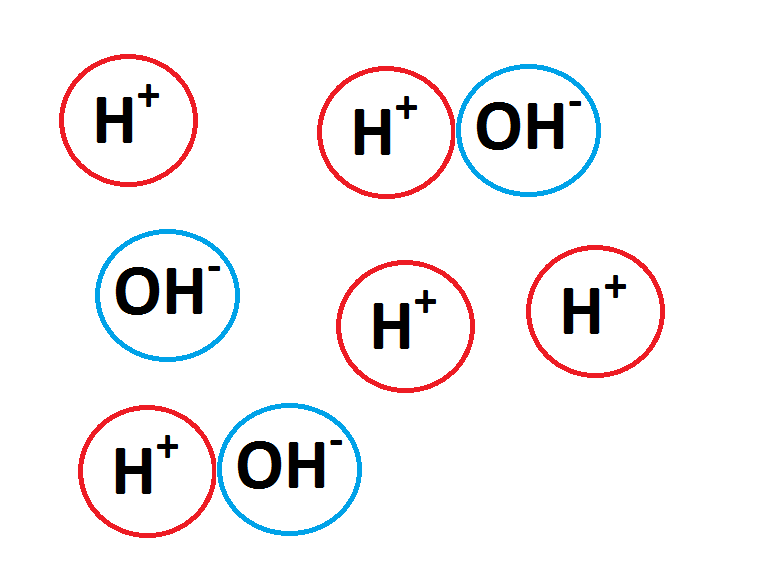
A substance that does not dissociate completely. Ranges from 4-7 on the pH scale.
Hydrochloric (HCl) is a
Weak Acid
Weak Base
Strong Acid
Strong base
Sodium hydroxide (NaOH) is a
Weak Acid
Weak Base
Strong Acid
Strong base
Methanoic (HCOOH) is a
Weak Acid
Weak Base
Strong Acid
Strong base
Ammonia (NH3) is a
Weak Acid
Weak Base
Strong Acid
Strong base
When a metal carbonate reacts with an acid, what will the products always be?
A salt, water and oxygen
A salt, water and carbon dioxide
Water and hydrogen
A salt and water
When comparing a strong and weak acid of the same concentration, the strong acid will have...(choose 2 answers)
A higher conductivity
A lower conductivity
A faster rate of reaction
A slower rate of reaction
When comparing a strong and weak acid of the same concentration, the strong acid will have...(choose 2 answers)
A higher pH
A lower pH
a smaller temperature change on neutralisation with a strong base
a bigger temperature change on neutralisation with a strong base
For a solution at 25oC, pH + pOH =
7
14
1.0 x 10⁻¹⁴
-log (1.0 x 10 -14)
If the pH of a solution is 4.0, what is the pOH?
4.0
10.0
1.0 x 10 -4
cannot be determined from the information
If the [H3O+] of a solution is 1 x 10⁻³ M, the pH is
11
-3
3
1
If the pH of a solution is 8 the [H3O+] is
1.0 x 10⁶ M
8.0 x 101 M
1.0 x 10⁸ M
1.0 x 10⁻⁸ M

When the hydrogen ion concentration goes up, the pH ___
gets lower
stays the same
gets higher
goes toward 7
If the [OH-] of a solution is 2.7 x 10⁻⁴ M, the pOH of the solution is
10.44
1.00
3.57
-4.43
The pH of a solution is 8.43. What is the [H3O+] concentration?
3.7 x 10 -9
1.0 x 10-8.43
2.7 x 10⁻⁶
1.0 x 10⁻¹⁴

What is the numerical value of Kw, the water dissociation constant?
14.0 x 10⁻¹
7.0 x 10⁻²
2.0 x 10⁻⁷
1.0 x 10⁻¹⁴
If a solution has a pOH of 1 what is the pH? Is it an acid or base? (pick 2)
acid
base
13
1
neutral
If the [H3O+] of a solution is 6.8 x 10⁻⁸ M, the pH is
7.17
3.2 x 10⁻⁵
7.2
7.62
If the [H3O+] of a solution is 9.3 x 10⁻³ M, the pOH of the solution will be
2.03
1.02
11.97
12.98

When a water molecule loses a hydrogen ion, or proton, it becomes ___
a hydronium ion, H3O+
a hydroxide ion, OH-
a hydronium ion, OH-
a hydroxide ion, H3O+
If a solution has a pH of 1 what is the pOH? Is it an acid or base? (pick 2)
acid
base
13
15
neutral
If a solution has a pOH of 3.7, the [OH-] of the solution is
5.0 x 10⁻¹¹
2.0 x 10⁻⁴
10.3
14

When a hydrogen ion, or proton, attaches to a water molecule it forms ___
a hydronium ion, H3O+
a hydroxide ion, OH-
a hydronium ion, OH-
a hydroxide ion, H3O+
Oranges have a [H3O+] of 1.7 x 10⁻² M. Their pOH is
1.77
12.23
10.91
3.09
Find the pH of a solution with [OH-] = 8.41 x 10⁻⁴.
3.08
10.92
9.88
11.23
What is the pOH of a solution where the [OH-] is 7.3 x 10⁻² M?
-1.14
1.14
2.01
11.99
A solution of KOH is 2.5 x 10⁻⁵ M. What is the [H+] concentration? (Hint: Find pOH, then pH, then [H+].)
4.60
9.40
3.98 x 10⁻¹⁰
1.0 x 10-4.60
Using the equations below:
C(s) + O2(g) → CO2(g) ∆H = –390 kJ
Mn(s) + O2(g) → MnO2(s) ∆H = –520 kJ
what is ∆H (in kJ) for the following reaction?
MnO2(s) + C(s) → Mn(s) + CO2(g)
910
130
-130
-910
Using the equations below
Cu(s) + 1/2O2(g) → CuO(s) ∆H = –156 kJ
2Cu(s) + O2(g) → Cu2O(s) ∆H = –170 kJ
what is the value of ∆H (in kJ) for the following reaction?
2CuO(s) → Cu2O(s) + 1/2O2(g)
142
15
-15
-142
Consider the following equations.
Mg(s) + O2(g) → MgO(s) ∆H = –602 kJ
H2(g) + O2(g) → H2O(g) ∆H = –242 kJ
What is the ∆H value (in kJ) for the following reaction?
MgO(s) + H2(g) → Mg(s) + H2O(g)
-844
-360
+360
+844
The following equations show the oxidation of carbon and carbon monoxide to carbon dioxide.
C(s) +O2(g) → CO2(g) ΔH = –x kJ mol–1
CO(g) + O2(g) → CO2(g) ΔH = –y kJ mol–1
What is the enthalpy change, in kJ mol–1, for the oxidation of carbon to carbon monoxide?
C(s) + O2(g) → CO(g)
x + y
-x - y
y - x
x - y
The standard enthalpy change of formation values of two oxides of phosphorus are:
P4(s) + 3O2(g) → P4O6(s) ΔHf = –1600 kJ mol–1
P4(s) + 5O2(g) → P4O10(s) ΔHf = –3000 kJ mol–1
What is the enthalpy change, in kJ mol–1, for the reaction below?
P4O6(s) + 2O2(g) → P4O10(s)
+4600
+1400
–1400
–4600
A chemical reaction that requires energy is a(n)
If N2 (g) + 2O2 (g) ⟶ 2NO2(g) has a ΔHrxn = 68, then what is the ΔHrxn if you reverse the reaction?
86 kJ
- 86 kJ
68 kJ
-68 kJ

What is the oxidation number of chlorine in ClO3- ?
-1
+1
-1
+5
Oxidation is....
Gain of electrons
Loss of electrons
Both the loss and gain of electrons
None of these
Reduction is....
Gain of electrons
Loss of electrons
Both the loss and gain of electrons
None of these
Which of the following elements is the strongest oxidizing agent?
Chlorine
Aluminium
Hydrogen
Lithium
What is the oxidation state of sulphur in SO42- (aq)?
4
6
2
0
What is the oxidation state of Nitrogen in N2 (g)?
4
6
2
0
4Fe + 3O2 --> 2Fe2O3
Substance that oxidizes another substance by accepting its electrons.
reducing agent
oxidation number
combustion
oxidizing agent
2Ca(s) + O2(g) --> 2CaO(s), calcium is __________
What is the oxidation number of Nitrogen in HNO3
-7
-5
+5
+7
+2
The below reaction is an example of _________reaction.
F2 → 2 F- + 2 e-
Oxidation
Reduction
Neutralization
decomposition
combustion
Find the oxidation number of Ca in CaH2
-2
-4
+2
+4
0
Identify the substance that is reduced in the reaction between copper(II) ion and magnesium.
Cu2+ + Mg → Cu + Mg2+
Cu2+
Mg
Cu
Mg2+
In a redox reaction, the species reduced
gains electrons and is the oxidizing agent
loses electrons and is the oxidizing agent
loses electrons and is the reducing agent
gains electrons and is the reducing agent
Mg → Mg2+ + 2e–
4Fe + 3O2 --> 2Fe2O3

