
 Worksheets
Cells Review
Total questions: 100
Worksheet time: 1hrs 22mins
Which of the following is a prokaryote?
A cell with no nucleus
A cell with a nucleus
An animal cell
A plant cell
Which organelle selects what enters and leaves the cell?
Nucleus
Cell membrane
Golgi
Ribosome
___________ are internal structures inside a cell that carry out a specific function.
Organelles
Organs
Lipids
Proteins
Which of the following is an example of a prokaryotic cell?
Bacteria
Animal cell
Plant cell
Red blood cell
What does the chloroplast do?
Makes food for the animal cell
Makes food for the plant cell
Makes lipids
Ships proteins
Which of the following organelles are in plant cells but NOT in animal cells? SELECT ALL THAT APPLY
Chloroplast
Mitochondria
Cell Wall
Cell membrane
A ________ is the basic unit of structure and function in a living thing.
Tissue
Organ
Cell
Organelle
SELECT ALL of the following organisms that are made of eukaryotic cells.
Plants
Animals
Bacteria
Fungi
What does the Golgi do in the cell?
Packages and ships proteins
Holds the DNA
Makes energy
Does photosynthesis
Which organelle has the very important job of making proteins?
Nulceus
Cell Membrane
Mitochondria
Ribosomes
What does the mitochondria do for the cell?
Converts food into energy
Photosynthesis to make food
Makes proteins
Tells the other organelles what to do
"Small organs" of the cell that carry out specific functions
Organelles
Organs
Cell Wall
Cell
supports and protects the cell; only in plant cells
Cell Window
Cell Wall
Cell Membrane
Cover
protective layer around all cells, allows nutrients in and waste out
Cell Wall
Cell Membrane
Endoplasmic Reticulum
Ribosomes
Where photosynthesis occurs; in plant cells only
Chloroplast
Cell Wall
Endoplasmic Reticulum
Mitochondria
breaks down food for energy, called powerhouse
Cytoplasm
Cell Wall
Endoplasmic Reticulum
Mitochondria
Control center of cell, contains instructions for everything the cell does.
Ribosomes
Nucleus
Endoplasmic Reticulum
Mitochondria
stores materials such as food, water, sugar, and minerals
Ribosomes
Nucleus
Vacuole
Mitochondria
builds proteins, each cell contains thousands, found on ER and floating throughout cell
Ribosomes
Nucleus
Vacuole
Golgi Body
gel-like material, where organelles are located
Cytoplasm
Nucleus
Vacuole
Mitochondria
moves materials around in the cell, two types: smooth and rough
Cytoplasm
Nucleus
Vacuole
Endoplasmic Reticulum
packages proteins and moves them throughout the cell
Cell Theory
Golgi Body
Vacuole
Endoplasmic Reticulum
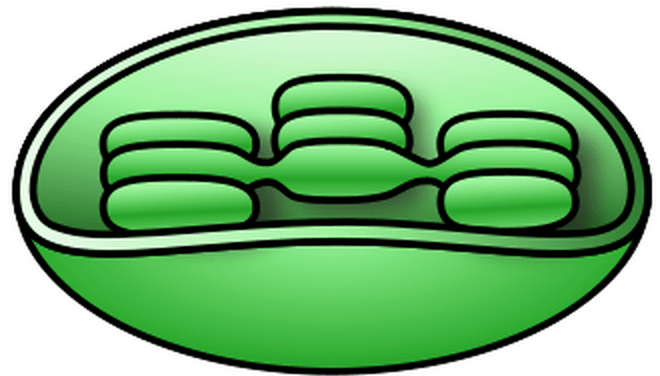
Provides extra support for the plant cell and gives it shape
chlorophyll
chloroplast
cell wall
vacuole

Consists of a jellylike substance that holds/suspends many organelles.
ribosomes
cytoplasm
chloroplasts
cell wall
What is the function of mitochondria in a cell?
Store water and food
Convert energy stored in food
Help ribosomes make proteins
Control cell activities
What is the role of ribosomes in a cell?
Produce proteins
Store energy
Break down food particles
Capture sunlight
What is the function of lysosomes in animal cells?
Produce proteins
Break down food particles and old cell parts
Store water and food
Convert energy stored in food
What is the golgi apparatus?
Looks like flattened sacs and tubes that receives proteins, packages them, and sends them to other parts of the cell.
What is cytoplasm?
Cytoplasm is the material that fills the space between the cell membrane and the nucleus.


The structure labeled "D" has the function of
Controls all activity in the cell (the brain) and stores DNA.
Fluid that fills the cell and keeps the organelles in place.
Stores water and nutrients for the cell to survive.
Breakdown and detoxify waste material within the cell.

The structure labeled "A" has the function of
A rigid exterior which protects and supports the cell.
Outer lining the cells. Controls what goes in and out.
Power plant of the cell. They create energy called ATP
Fluid that fills the cell and keeps the organelles in place.

The structure labeled "H" has the function of
Power plant of the cell. They create energy called ATP.
Converts sunlight, water, and carbon dioxide into glucose and oxygen in a process called photosynthesis.
Breakdown and detoxify waste material within the cell.
Controls all activity in the cell (the brain) and stores DNA.

The structure labeled "I" has the function of
Packaging plant. They group items together and pack them into vesicles.
Breakdown and detoxify waste material within the cell.
Prepares the proteins for transfer to the Golgi Bodies.
Power plant of the cell. They create energy called ATP.

The structure labeled "B" has the function of
A rigid exterior which protects and supports the cell.
Outer lining the cells. Controls what goes in and out.
Fluid that fills the cell and keeps the organelles in place.
Stores water and nutrients for the cell to survive.

The structure labeled "C" has the function of
Controls all activity in the cell and stores DNA.
Stores water and nutrients for the cell to survive.
Fluid that fills the cell and keeps the organelles in place.
Prepares the proteins for transfer to the Golgi Bodies.

The structure labeled "E" has the function of
Power plant of the cell. They create energy called ATP.
Stores water and nutrients for the cell to survive.
Prepares the proteins for transfer to the Golgi Bodies.
Controls all activity in the cell (the brain) and stores DNA.

According to the information in the given chart, what type of cell is cell X?
bacteria cell
plant cell
animal cell
prokaryotic cell

These are
plant cells
animal cells
bacteria cells

These are
plant cells
animal cells
bacteria cells


Stores food and water like a refrigerator for the cell
Chloroplast
Vacuole
Lysosome
Cytoplasm
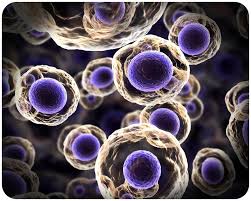


What is the name of the starred organelle?
(a)
The cell membrane is located...
underneath the cell wall of a plant cell.
outside of the cell wall of a plant cell.
A protein is a macromolecule that is used to...
give cells/systems energy.
build cell parts.
give cells/systems long term energy storage.
help cells with chemical processes.
A carbohydrate is a macromolecule that is used to...
give cells/systems energy.
build cell parts.
give cells/systems long term energy storage.
help cells with chemical processes.
A lipid is a macromolecule that is used to...
give cells/systems energy.
build cell parts.
give cells/systems long term energy storage.
help cells with chemical processes.
When reading the nutrition facts on food packaging total fats is a measure of...
Carbohydrate
Lipids
Water
Protein
When reading the ingredients on a nutrition facts label carbohydrates are written as a type of
food additive
enzyme
sugar
protein
Example(s) of proteins are...
Sugar
Nuts
Beans
Fish
Example(s) of Lipids are...
Sugar
Olive Oil
Corn Oil
Jolly Ranchers
What are the building blocks of proteins?
Amino acids
Nucleic acids
DNA
RNA
Fats are examples of what macromolecule?
Lipids
ATP
DNA
Carbohydrates
Which macromolecule is used for long-term energy storage?
Lipids
ATP
Carbohydrates
Proteins
Which molecule is responsible for short-term energy storage?
ATP
Fats
Lipids
Cells
Which molecule stores genetic information?
DNA
Amino acids
Proteins
Nucleotides
What is the function of carbohydrates?
Provides quick/short-term energy storage
Provides slow, long-term energy storage
A structure used to create proteins
A structure used to create amino acids

What is the function of carbohydrates?
Short term energy
Long term energy
Storing genetic information
Speeding up chemical reactions
What element if the building block of life?
Carbon
Hydrogen
Oxygen
Nitrogen
Nucleic acids make up which of the two molecules listed below?
FDA
RNA
DNA
FDR
Which macromolecule includes P, phosphorus?
Carbohydrates
Lipids
Proteins
Nucleic Acids
Why are diffusion and osmosis important to cells?
It allows them to take in materials/substances without using energy.
It allows them to reproduce.
It allows them to absorb sunlight.
It allows cells to use all energy.
What does selectively-permeable mean?
Allow certain things to enter and leave the cell
Nothing gets through
The cell lets only large substances through

Passive transport requires ________________
concentration gradients
no energy
motion
energy
The diffusion of particles through the cell membrane from high to low concentration is called ....
exocytosis
active transport
passive transport
osmosis
Which of the following is the BEST definition for passive transport?
Movement of substances through a cell membrane from a high to low concentration without the use of energy
Movement of substances through a cell membrane from a low to high concentration requiring the use of energy
Movement of substances through a cell membrane from a low to high concentration without the use of energy
Movement of substance through a cell membrane from a high to low concentration requiring the use of energy
Select the correct definition for "Osmosis":
A molecule is too large to pass through a cell membrane and therefore uses a transport protein
The movement of substances from a low to high concentration; cell energy is used
The movement of water from a high to low concentration through a selectively permeable membrane
The movement of substances from a high to low concentration
What is the main difference between passive and active transport?
Passive transport requires energy; active transport does not require energy.
Active transport requires energy; passive transport does not require energy.
Both passive and active transport require energy
Neither passive or active transport require energy.
Which of the following transport methods moves substances from a high to low concentration?
Diffusion
Endocytosis
Exocytosis
Active Transport
Which of the following transport methods moves substances from a low to high concentration?
Active Transport
Facilitated Diffusion
Osmosis
Passive Transport
A cell must expend energy to transport substances using ___________
diffusion
osmosis
active transport
passive transport

What type of cell transport is being show in the picture.
Active transport
Diffusion
Osmosis
Endocytosis

