wayground logo

Free Printable Worksheets

Font size

S
M
L
XL
Worksheets

Muscle Fibres and Motor Unit

Total questions: 18

Worksheet time: 12mins

Name
Class
Date
1.

A muscle fibre type that would be used for an 800 metre run is known as...

a)

...type 1

b)

...type 2a

c)

...type 2b

d)

...type 2x

2.

A muscle fibre type that has a high aerobic capacity is known as...

a)

...type 1

b)

...type 2a

c)

...type 2b

d)

...type 2x

3.

Which one of the following is a key characteristic of Fast Twitch X muscle fibers?

a)

They are Red in color, meaning they contain a lot of mitochondria

b)

They contract rapidly with great force but fatigue fast

c)

They are recruited for long duration activities

d)

They contain high numbers of Mitochondria

4.
Which one of the following is a key characteristic of slow twitch muscle fibers? 
a)
They contain large amounts of Mitochondria
b)
They are fast to fatigue
c)
They are recruited last
d)
They contain low numbers of Mitochondria
5.
Long distance runners have large proportion of ___________ fibers.
a)
slow oxidative
b)
fast oxidative
c)
fast glycolytic
6.
Type IIa Muscle Fibres are linked to which activity?
a)
400m
b)
100m
c)
1500m
d)
10,000m
7.
Which muscle fibre produces the lowest force when in contracts?
a)
Type 1
b)
Type 2a
c)
Type 2b
d)
Type 3
8.
Region where a motor neuron comes in close contact with a muscle cell.
a)
neurotransmitter
b)
muscular dystrophy
c)
muscle tension
d)
neuromuscular junction
9.

The neurotransmitter that signals muscle contraction is called...

a)

Acetylcholine

b)

Myosin

c)

Actin

d)

Calcium

10.

The space between the motor neuron and a muscle fiber at a neuromuscular junction

a)

synaptic knob

b)

motor end plate

c)

synaptic cleft

d)

motor neural termination

11.

An electrical impulse within a single neuron is called a

a)

synapse

b)

membrane potential

c)

action potential

d)

cell body

12.

What is the function of type 11a muscle fiber?

a)

Type 11a muscle fibers are only used during high-intensity exercise.

b)

Type 11a muscle fibers are responsible for muscle contraction.

c)

Type 11a muscle fibers have a high capacity for both aerobic and anaerobic metabolism.

d)

Type 11a muscle fibers are primarily used for endurance activities.

13.

What is the all or none law in muscles?

a)
The all or none law in muscles states that when a muscle fiber is stimulated, it will contract slowly.
b)
The all or none law in muscles states that when a muscle fiber is stimulated, it will contract partially.
c)
The all or none law in muscles states that when a muscle fiber is stimulated, it will contract fully or not at all.
d)
The all or none law in muscles states that when a muscle fiber is stimulated, it will contract intermittently.
14.

What are the features of type 1 muscles fibres?

a)
Type 1 muscle fibers are slow-twitch fibers with high endurance capacity.
b)
Type 1 muscle fibers have a high glycolytic capacity.
c)
Type 1 muscle fibers are responsible for explosive movements.
d)
Type 1 muscle fibers are fast-twitch fibers with low endurance capacity.
15.

Slow twitch muscle fibres have:

a)

More mitochondria and more myoglobin than fast twitch

b)

More mitochondria and less myoglobin than fast twitch

c)

Less mitochondria and more myoglobin than fast twitch

d)

Less mitochondria and less myoglobin than fast twitch

16.

Select all of the correct statements for fast twitch fibres

a)

Are more aerobic

b)

Are often used to maintain posture

c)

Fatigue more quickly

d)

fatigue more slowly

e)

Are more anaerobic

17.
What would the predominant muscle fibre type be for this athlete?
a)
Slow Twitch
b)
Fast Twitch A
c)
Fast Twitch B
d)
Combination of Fast A and Fast B
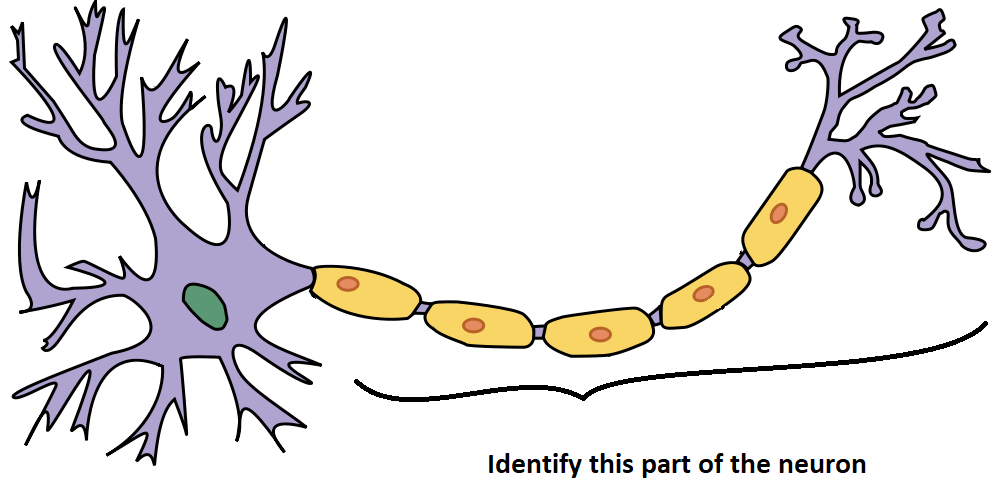
18.
a)

Nucleus

b)

Cell Body

c)

Axon

d)

Node of Ranvier