
 Worksheets
Review Questions
Total questions: 50
Worksheet time: 25mins

Which of the following statements is TRUE of enzymes?.
Enzymes are not found in living organisms
Enzymes help to speed up chemical reactions
Enzymes are made carbohydrates
Enzymes increase the activation energy of a chemical reaction

Enzymes are also considered to be biological ____________
catalysts
organisms
life
denatures

CH4 and O2

CH4 and O2
What term is used to describe the process of an enzyme changing shape due to extreme heat or pH levels?
catalyze

Thermal Energy


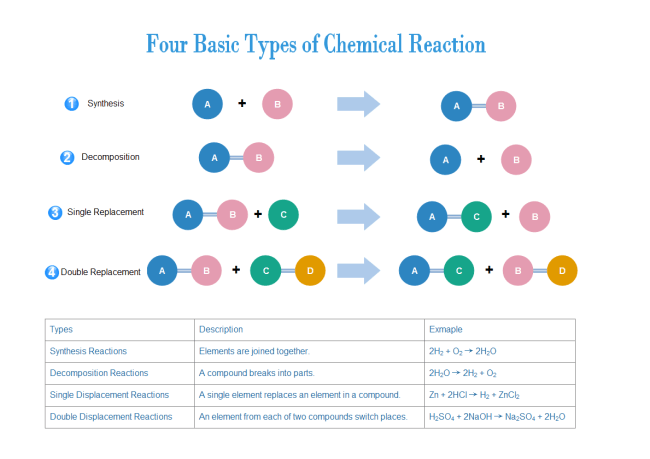
In the picture below, C and D represent the __________.
reactants
products
catalysts
inhibitors
Pepsin, a common enzyme found in the stomach, is most active at pH values between 0.5 and 2.5. It works slowly between pH values of 2.6 and 3.4. Beyond a pH of about 3.5, it becomes completely inactive. Why does this happen?
The enzyme is denatured, changing its active site needed for binding to specific substrates.
The enzyme is enhanced, increasing its active site for binding to specific substrates.
The enzyme is stabilized, maintaining its active site for binding to specific substrates.
The enzyme is replicated, doubling its active site for binding to specific substrates.

In this picture, which letter represents the enzyme?
A
B
C
D
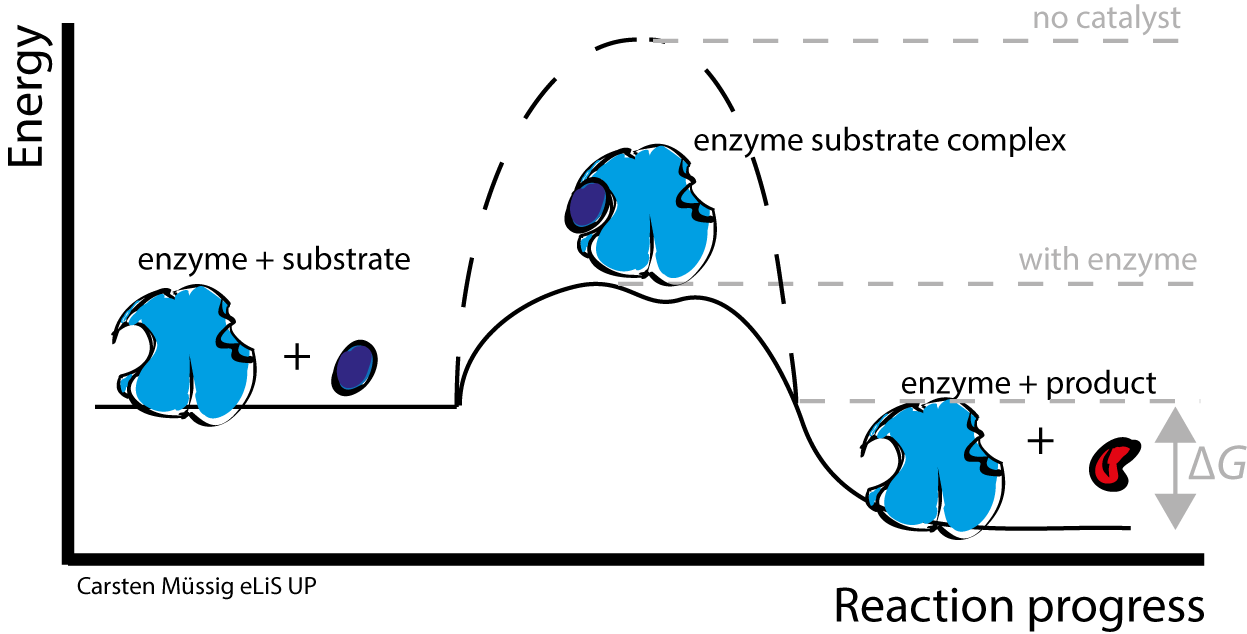
What is the final step in the enzyme-substrate interaction?
Products leaving the active site of the enzyme.
Substrate entering the active site of the enzyme.
Enzyme changing shape.
Enzyme releasing energy.
What is the effect of a pH level that is too low or too high on an enzyme?
The enzyme becomes more active.
The enzyme denatures and no longer works.
The enzyme changes its substrate.
The enzyme's activity remains unchanged.
What happens when enzymes are heated to a high temperature?
The enzymes die.
The shape of the enzyme are changed and it denatures
The enzymes' amino acid sequence changes.
The enzymes remain the same

What are reactants of cell respiration?
Glucose and Oxygen
Glucose and Carbon Dioxide
Carbon Dioxide and water
ATP and Water
Which organelle does cellular respiration occur in?
Nucleus
Mitochondria
Chloroplast
Cytoplasm
What is the main goal of cell respiration?
to break down glucose in the form of ATP
to make ATP that we use for energy
to create CO2 for plants
Respiration is a byproduct of photosynthesis


A common cycle in biology is represented above.
The ATP molecule above is commonly used to
diffuse water across a membrane
actively transport molecules in an organism
move molecules from a high to a low concentration
balance the nutrients in an ecosystem

Organisms that must consume nutrients
Autotroph
Chloroplasts
Heterotroph
ATP
What type of organism makes it's own food?
Autotroph
Heterotroph
Consumer
Omnivore
What is the chemical equation for photosynthesis?
6CO2+6H2O+light→C6H12O6+6O2
C6H12O6+6O2→6CO2+6H2O+ATP
6O2+6H2O→C6H12O6+6CO2
C6H12O6+ATP→6CO2+6H2O
Which of the following statements is true about plant cells?
They only have mitochondria.
They only have chloroplasts.
They have both chloroplasts and mitochondria.
They have neither chloroplasts nor mitochondria.
What are the reactants in the process of cellular respiration?
Glucose and Oxygen
Carbon Dioxide and Water
ATP and Oxygen
Glucose and Water
How does ATP provide energy for the cell?
The bond between the first and second phosphate is broken to release energy.
The bond between the adenine and the sugar is broken to release energy.
The bond between the sugar and phosphates are broken and release energy.
The bond between the second and third phosphate are broken to release energy.

Where is the site of photosynthesis
chlorophyll
chloroplast
chromosome
chlorine

What type of respiration requires oxygen?
Aerobic
Anaerobic
Which organism go through cellular respiration?
animals
plants
both animals and plants
none
Which of the following is the correct equation for PHOTOSYNTHESIS?
light + carbon dioxide + water --> glucose + oxygen
carbon dioxide + sugar + water --> oxygen + light
oxygen + light + water --> carbon dioxide + sugar
carbon dioxide + oxygen + water --> Light+ Sugar

What is the overall effect that plants have on the environment when it comes to the concentration levels of CO2 and O2?
CO2 increases and O2 decreases
O2 increases and CO2 remains constant
CO2 increases and O2 remains constant
O2 increases and CO2 decreases
If carbon dioxide is removed from a plant's environment, what would you expect to happen to its production of sugar (glucose)?
More sugars would be produced
No sugars would be produced
The same number of sugars would be produced, but without carbon dioxide
Carbon dioxide does not affect the production of sugars in plants

