wayground logo

Free Printable Worksheets

Font size

S
M
L
XL
Worksheets

Exam 3 Chemistry

Total questions: 85

Worksheet time: 4hrs 21mins

Name
Class
Date
1.
Mole ratios are obtained from the
a)
balanced chemical equation
b)
periodic table
c)
molar mass
2.
What is the mole ratio of H2O to H3PO4 in the following chemical equation?   P4O10 + 6 H2O --> 4 H3PO
a)
6:4
b)
4:6
c)
1:3
d)
3:1
3.
When does a chemical reaction stop?
a)
When the lab is finished
b)
When the excess reactant is used up
c)
When the limiting reactant is used up
d)
Chemical reactions never stop
4.
How many grams are in 7.8 moles of NaCl?
a)
476grams
b)
460 grams
c)
452 grams
d)
462 grams
5.
Balance the following reaction :
 
CaC₂(s)   +   H₂O(l)   -->   C₂H₂(g)   +   Ca(OH)₂(aq)
a)
1,2,2,2
b)
1,2,1,1
c)
2,1,1,1
d)
2,1,2,1
6.
Using the following equation:
Fe2O3(s) + 3H2(g) → 2Fe(s) + 3H2O(l)
How many moles of iron can be made from  6 moles H2
a)
4 moles Fe
b)
6 moles Fe
c)
9 moles Fe
d)
2 moles Fe
7.
Identify the limiting reagent when 6.00 moles HCl combines with 5.00 moles Mg to form MgCl2.
 
1 Mg +  2 HCl --> 1 MgCl2  +  1 H2   
 
a)
Mg
b)
H2
c)
MgCl2
d)
HCl
8.
9. Complete the equation for the percent yield of a chemical reaction:
Percent yield=(________)
÷(________)×100%
a)
actual yield; theoretical yield
b)
theoretical yield; actual yield
9.
2H2   +   O2  →  2H2O
How many moles of water can be produced if 8 moles H2 are used?
a)
4 moles
b)
8 moles
c)
16 moles
d)
2 moles
10.
N2 +  3H2 → 2NH3 
How many moles of hydrogen are needed to react with 2 moles of nitrogen?
a)
6
b)
2
c)
3
d)
1
11.
For the Balanced Reaction: 3 Mg + 1 Fe2O3 → 3 MgO + 2 Fe; What is the Ratio of moles of MgO to moles Fe?
a)
3mol Mg / 2 mol Fe
b)
2 mol Mg/ 3 mol Fe
c)
1 mol Fe/ 2 mol Fe
d)
3 mol MgO / 2 mol Fe
12.

What is Avogadro's number?

a)

6.02 x 10²³

b)

1 mole

c)

600 million

d)

6.02

13.

How many moles are in 6.02 x 10²³ molecules of H2O?

a)

1 mole

b)

2 moles

c)

6.02 moles

d)

602000000000000000000000 moles

14.

One mole of carbon dioxide (CO2) contains 6.02 x 10²³ _____.

a)

atoms

b)

formula units

c)

ions

d)

molecules

15.

A mole is:

a)

The SI unit for mass

b)

The SI unit for the amount of a substance

c)

The SI unit for volume

d)

The SI unit for area

16.

Why is the mole used in chemistry?

a)

The mass of atoms is in AMUs which is too hard to convert to grams.

b)

A dozen is not a scientific amount.

c)

Chemists needed to make chemistry easier to understand.

d)

It makes counting large numbers of small particles easier.

17.

How is moles abbreviated?

a)

M

b)

m

c)

mol

d)

ml

18.

How do you find the molar mass for an element?

a)

Molar mass is the same as atomic mass, only in grams

b)

You convert into molar mass from a mass given to you

c)

You can only be given molar mass, it can't be calculated

d)

It is equal to Avogadro's Number

19.

How many grams is one mole of Sodium?

a)

32.07

b)

118.71

c)

150.36

d)

22.99

20.

How many grams is 2 moles of Helium?

a)

4.00

b)

8.00

c)

2.02

d)

4.04

21.
What is essential for a combustion reaction to begin?
a)
Carbon dioxide
b)
Fuel 
c)
Fuel, oxygen and heat
d)
Water and oxygen
22.

In reactions, products must be equal to..

a)

Products

b)

Reactants

c)

Starters

d)

Enders

23.
Which of the following is an example of a chemical change?
a)
rusting of a bicycle
b)
painting a house
c)
washing a dog
d)
tearing up a newspaper
24.
In any chemical reaction, the mass of the products is always:
a)
slightly less than the mass of the reactants
b)
much less than the mass of the reactants
c)
the same as the mass of the reactants
d)
greater than the mass of the reactants
25.
Your mother used pancake mix, eggs, and milk to make pancakes.  Which of these is the product?
a)
the pancake mix
b)
the eggs
c)
the milk
d)
the pancakes
26.
The following is what type of reaction:
PbCl2 + AgNO3 → Pb(NO3)2 + AgCl
a)

Synthesis/ Combination

b)
Decomposition
c)
Single Replacement
d)
Double Replacement
27.
The following is what type of reaction:
NH3 + HCl  → NH4Cl
a)

Synthesis/ Combination

b)
Decomposition
c)
Single Replacement Replacement
d)
Double Replacement Replacement
28.
What type of chemical reaction is this?
Al(OH)3 → Al2O3  + H2O
a)
Decomposition
b)
Combustion
c)

Synthesis/ Combination

d)
Single Replacement 
29.
Ions in two compounds switch. 
a)

Synthesis/ Combination

b)
Combustion
c)
Single Replacement
d)
Double Replacement
30.
3Ca + 2AlCl3 --> 3CaCl2 + 2Al
a)

Synthesis/ Combination

b)
Decomposition
c)
Single Displacement
d)
Double Displacement
31.
One reactant into several products.
a)
Decomposition
b)

Synthesis/ Combination

c)
Combustion
d)
Single Replacement
32.
Always starts with a Hydrocarbon that reacts with oxygen and produces carbon dioxide and water. 
a)
Decomposition
b)

Synthesis/ Combination

c)
Combustion
d)
Single Replacement
33.
Two Reactants and One Product
a)
Decomposition
b)

Synthesis/ Combination

c)
Combustion
d)
Single Replacement
34.
4Si   + S8   -->   2Si2S4
a)

Synthesis/ Combination

b)
Decomposition
c)
Single Displacement
d)
Double Displacement
35.
C4H12 + O2 → CO2 + H2O
a)

Synthesis/ Combination

b)
Combustion
c)
Single Replacement
d)
Double Replacement
36.
2Pb(NO3)2   -->   2PbO +  4NO2  +  O2
a)

Synthesis/ Combination

b)
Decomposition
c)
Single Displacement
d)
Combustion
37.
3Mg + N2 --> Mg3N2
a)

Synthesis/ Combination

b)
Decomposition
c)
Single displacement
d)
Combustion
38.
2NO2 --> N2 + 2O2
a)

Synthesis/ Combination

b)
Decomposition
c)
Single displacement
d)
Combustion
39.
P4 + 3O--> 2P2O3
a)

Synthesis/ Combination

b)
Decomposition
c)
Single displacement
d)
Combustion
40.
4Si   + S8   -->   2Si2S4
a)

Synthesis/ Combination

b)
Decomposition
c)
Single Displacement
d)
Double Displacement
41.
3KOH + H3PO4 --> K3PO4 + 3H2O
a)

Synthesis/ Combination

b)
Decomposition
c)
Single displacement
d)
Double displacement
42.

What reaction has the following general formula:

AB --> A + B

a)

Combination

b)

Decomposition

c)

Single Replacement

d)

Double Replacement

e)

Combustion

43.

What reaction has the following general formula:

A + CD --> C + AD

a)

Combination

b)

Decomposition

c)

Single Replacement

d)

Double Replacement

e)

Combustion

44.

What reaction has the following general formula:

AB + CD --> CB + AD

a)

Combination

b)

Decomposition

c)

Single Replacement

d)

Double Replacement

e)

Combustion

45.

What reaction has the following general formula:

A + B --> AB

a)

Combination

b)

Decomposition

c)

Single Replacement

d)

Double Replacement

e)

Combustion

46.

What is matter?

a)

All objects, people, and animals

b)

All living and nonliving things in the universe.

c)

anything that has mass and takes up space

d)

All of the above.

47.

What state of matter is pictured above?

a)

solid

b)

liquid

c)

gas

48.

What state of matter is pictured above?

a)

solid

b)

liquid

c)

gas

49.

What state of matter is pictured above

a)

solid

b)

liquid

c)

gas

50.

Freezing changes a ________ to a _____________.

(a)  

51.

Melting changes a ____________ to a _____________.

(a)  

52.

Evaporation changes a __________ to a _____________.

(a)  

53.

An ice cream melting on a counter is an example of a

a)

physical change

b)

chemical change

c)

no change

d)

both a physical and a chemical change

54.
The state of matter that has no definite size or shape is
a)
Solid
b)
Liquid
c)
Gas
55.
Particles (molecules) in a ______________________ have more energy than the other states of matter.
a)
gas
b)
solid
c)
liquid
56.
Particles of a liquid
a)
are tightly packed together and stay in a fixed position.
b)
have no viscosity.
c)
decrease in volume with increasing temperature.
d)
are free to move around one another but still touch.
57.
What term describes a solid changing to a gas?
a)
Deposition
b)
Sublimation
c)
Evaporation
d)
Freezing
58.
Particles (molecules) in a ______________________ have more energy than the other states of matter.
a)
gas
b)
solid
c)
liquid
59.
What is condensation?
a)
gas to solid
b)
gas to liquid
c)
liquid to solid 
d)
solid to liquid 
60.
The speed of the molecules determines the _____.
a)
volume
b)
density
c)
pressure
d)
temperature
61.
Which has a greater distance between particles?
a)
Solid
b)
Liquid
62.
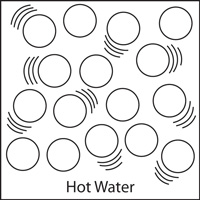
The slower the particles in a substance move,
a)
the colder it is.
b)
the warmer it is.
c)
the more energy it has.
d)
the less energy it has.
63.
Thermal energy is...
a)
heat energy.
b)
the energy of motion
c)
energy of nuclear processes.
d)
an indication of physical change.
64.
What about gasses can be measured?
a)
Pressure and Volume
b)
Temperature, Volume, and Pressure
c)
Volume and Temperature
d)
Pressure, Temperature, Volume, and Moles
65.
In order to solve gas law calculations, temperature must be measured in:
a)
Fahrenheit
b)
Celsius
c)
Kelvin
d)
It doesn't matter 
66.
As number of moles goes up, volume 
a)
goes down.
b)
goes up.
c)
stays the same
67.
At STP, what is pressure in atmospheres?
a)
1 atm
b)
10 atm
c)
0 atm
d)
100 atm
68.
Three gases, Ar, N2 and H2 are mixed in a 500L container. Ar has a pressure of 255 torr, N2 has a pressure of 228torr and H2 has pressure of 752torr. What is the total pressure in the container?
a)
483torr
b)
270torr
c)
1235torr
69.

Gas Particles are....

a)

Small

b)

Medium

c)

Large

d)

Extra Large

70.

Gas Particles are

a)

Closer than liquid particles

b)

Far Apart

c)

As close as metal particles

d)

Close Together

71.

Gas Particles

a)

Stop and Go

b)

Stay in one place

c)

Some move, Some don't

d)

Are Constantly Moving

72.

The average energy of a gas can be measured by

a)

Temperature

b)

Velocity

c)

Mass

d)

Gravity

73.

Compression is when a gas is

a)

Pressed into a larger container

b)

Pressed into a Smaller container

c)

Transfered into another container

d)

Lit on Fire

74.

Expansion is when a gas is

a)

Mixed with another gas

b)

Pushed into a smaller container

c)

Pushed into a larger container

d)

Escaping a container

75.

Gas pressure is caused by

a)

Particles hitting an object

b)

Particles running into each other

c)

Gravity

d)

Large particles

76.

A Barometer measures

a)

Water Pressure

b)

Air Pressure

c)

Weight of solids

d)

Mass or an object

77.
Which is a quality that only gasses display
a)
Spread out to fill all available space
b)
Take the shape of their container
c)
Can't be compressed
d)
All of these
78.
If you increase the pressure of a constant volume of gas, what will happen to the temperature?
a)
Increase
b)
Decrease
c)
Stay the same
d)
It will Blow Up
79.
What will happen to the volume of a gas under constant temperature if the pressure increases?
a)
Increase
b)
Decrease
c)
Nothing
d)
Explosion!
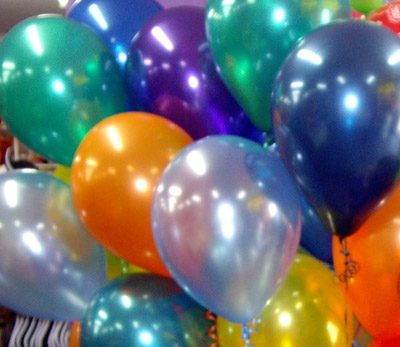
80.
If a balloon is cooled what will happen to the volume?
a)
Volume will increase
b)
Volume will decrease
c)
Volume will not change
81.
Gas molecules can easily be compressed  because ___________. 
a)
gas molecules are soft
b)
gas molecules are far apart
c)
gas molecules follow the shape of the container
82.
Which container will have lower pressure?
a)
left
b)
right
c)
they both have the same pressure
83.
How could you "re-inflate" the balloon?
a)
Heat the balloon up 
b)
Cool the balloon down
c)
Remove some helium
d)
Ask the balloon to re-inflate
84.

What variable is held constant in the diagram?

a)

Volume

b)

Moles

c)

Pressure

d)

No constant

85.
What happens to the average kinetic energy of matter when it is heated?
a)
It increases
b)
It decreases 
c)
It doesn't change
d)
It cannot be determined