
NEW
Font size
 Worksheets
KS3 Y8 Topic 6 Reactions quiz
Total questions: 72
Worksheet time: 1hrs 8mins
The smallest particle of an element; made of electrons, protons, and neutrons
Atoms
Elements
Molecules
Products
The process by which one or more substances change to produce one or more different substances
Chemical Process
Reactant
Chemical Reaction
The simplest unit of a chemical compound that can exist; formed when two or more atoms join together chemically
Atom
Compound
Molecule
A substance produced during a chemical reaction
Product
Reactant
Properties
A substance that takes part in and undergoes change during a reaction
Product
Molecule
Reactant
A new substance with unique chemical and physical properties that is formed when two or more elements are chemically bonded during a chemical reaction
Product
Compound
Molecule
Atom
A chemical reaction or process that absorbs heat from the surroundings
Endothermic
Exothermic
A chemical reaction or process that releases heat.
Endothermic
Exothermic
What is a chemical reaction?
a change in matter when the molecules rearrange to make new molecules
a change in matter when matter changes its form or appearance
a change in matter when the physical appearance changes
a very boring change in matter

The reactants in the image above are:
CH4 and 2 O2
2 H2O and CO2
All of these are reactants
All of these are products
The products in the image above are:
CH4 and 2 O2
2 H2O and CO2
All of these are reactants
All of these are products
When energy like heat and light are given off in a chemical reaction it is called
exothermic
endothermic
eccentric
ectomorphic
When energy is absorbed and taken in during a chemical reaction it is called
exothermic
endothermic
eccentric
ectomorphic
How is a chemical change different from a physical change?
there is no difference
a physical change creates a new substance
a chemical change creates a new substance
What does the Law of Conservation of Mass state
The mass of the reactants must be close to the mass of the products
The atoms in the reactants will be different than the atoms in the products
Matter is neither created or destroyed, therefore the number of atoms in reactants will be identical to the number of atoms in the products
Atoms of the reactants are not rearranged, therefore the number of atoms will be different.
If the mass of one reactant of a chemical reaction was 32grams and the mass of the second reactant of the same chemical reaction was 8 grams then what would be the mass of the products?
40 grams
32 grams
42 grams
8 grams
What are the atoms of each element in this chemical formula 2Na2SO4
2 Na, 0 S, 4 O
2 Na, 1 S, 4 O
4 Na, 1 S, 4 O
4 Na, 2 S, 8 O

How many atoms of each element on the reactant side of the equation?
4 C, 6 H, 14 O
2 C, 6 H, 2 O
4 C, 12 H, 7 O
4 C, 12 H, 14 O
What is produced when a fuel burns in a very good supply of oxygen?
Carbon monoxide and water
Carbon and water
Carbon dioxide and water
Oxygen and water
Copper oxide and carbon dioxide are made when copper carbonate is heated strongly. Which is a product?
Heat
Copper carbonate
Copper oxide
Oxygen
What is another name for combustion?
Reduction
Burning
James
Displacement
What is a chemical reaction?
a change in matter when the molecules rearrange to make new molecules
a change in matter when matter changes its form or appearance
a change in matter when the physical appearance changes
a very boring change in matter
Balancing this reaction:
____ CH4 + ____ O2 ---> ___ CO2 + ____ H2O
2,1,3,1
1,2,1,2
1,2,2,1
2,1,1,2

What type of reaction involves the breaking down of a substance into simpler substances?
Single Displacement Reaction
Double Displacement Reaction
Synthesis Reaction
Decomposition Reaction
Which is an example of a chemical change?
water freezing to form ice
sugar dissolving in water
petrol burning in a car engine
a piece of metal expanding when it is heated
rusting of metal
Which one shows that a chemical reaction has occurred?
dissolving
melting
releasing gas
bending

Which contains only elements?
A
B
C
D
Which contains a mixture?
A
B
C
D

Sodium reacts with chlorine to produce sodium chloride. Choose the correct word equation.
sodium chloride → chlorine + sodium
sodium + carbon dioxide → sodium carbonate
sodium + chlorine → sodium chloride

Magnesium burns in oxygen to produce magnesium oxide.
Choose the correct word equation.
magnesium + oxygen → magnesium oxide
magnesium + carbon dioxide → oxygen
magnesium + oxygen → carbon dioxide
What does reactivity mean?
Reactivity is how angry someone is
Reactivity is a measure of how quickly a substance melts
Reactivity is the tendency of something to take part in a chemical reaction
H2SO4
three hydrogen (H)
one sulfur (S)
four oxygen (O)
During a chemical reaction, atoms ____________ to form new substances.
Change
Switch
Turn into new atoms
Rearrange
Which symbol in a chemical equation separates the reactants from the products?
=
→
>
+
30 grams of lead oxide and 15 grams of ammonia react completely to produce solid lead, nitrogen gas, and liquid water. What will be approximate mass of all three products?
10 g
15 g
45 g
450 g
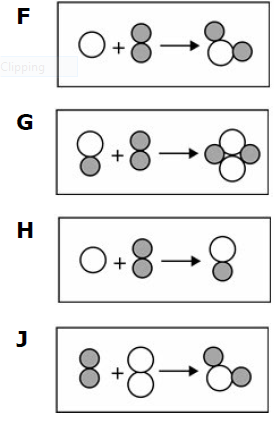
Which metal reacts vigorously with water, producing hydrogen gas and forming a hydroxide?
Sodium
Copper
Zinc
Gold
When metal reacts with oxygen, what type of compound is typically formed?
Oxide
Chloride
Sulfide
Nitrate
Select the keyword that matches the description below.
"A reaction involving a more reactive metal removing a less reactive metal from a compound"
Displacement
Reduction
Oxidation
Reactivity Series
Select the keyword that matches the description below.
"A reaction involving a metal reacting with oxygen to produce a metal oxide"
Displacement
Reduction
Oxidation
Reactivity Series
Select the keyword that matches the description below.
"A list showing the arrangement of metals in order of reactivity"
Displacement
Reduction
Oxidation
Reactivity Series
Pick the odd one out
Hydrogen
Potassium
Gold
Iron
Pick the odd one out
Gold
Silver
Copper
Potassium
Pick the odd one out
Gold
Potassium
Lithium
Magnesium
Reaction or no reaction?
Lead + copper sulphate ==>
Reaction
No reaction
Reaction or no reaction?
Lead + iron sulphate ==>
Reaction
No reaction
Reaction or no reaction?
Zinc + copper sulphate ==>
Reaction
No reaction
Reaction or no reaction?
Copper + copper sulphate ==>
Reaction
No reaction

How are metals found below Hydrogen in the reactivity series extracted?
Reduction
Oxidation
No reaction

How are metals below carbon extracted?
Oxidation
Reduction
Displacement
Using your understanding of the reactivity, why is gold used to make jewellery?
Unreactive
Shiny
Malleable
High m.p.

Put the metals in order of their reactivity from most reactive to least reactive.
Magnesium> Iron> Tin> Silver
Magnesium> Iron> Silver> Tin
Iron> Magnesium> Silver> Tin
Magnesium> Silver> Iron> Tin

What is the order of reactivity of these metals from most to least reactive?
V>W>Y>X>Z
W>X>Z>V>Y
Z>X>V>W>Y
Z>X>Y>W>V
Predict the products of this reaction.
HCl + Ca(OH)2
NaCl
CaCl2
CaCl2 + H2O
H2O
Complete the following reaction:
Hydrochloric acid + magnesium hydroxide -->
Magnesium chloride + water
Magnesium + water
Magnesium chloride + hydrogen
Magnesium chloride + water + carbon dioxide
.............................. + sodium hydroxide --> sodium chloride + water
Nitric acid
Sulphuric acid
Hydrochloric acid
Ethanoic acid
nitric acid + magnesium --> ?
magnesium nitrate + carbon dioxide gas + water
magnesium nitrate + water
magnesium nitrate + hydrogen gas
sulfuric acid + sodium hydroxide --> ?
sodium sulfate + carbon dioxide gas + water
sodium sulfate + water
sodium sulfate + hydrogen gas
nitric acid + magnesium hydroxide --> ?
magnesium nitrate + carbon dioxide gas + water
magnesium nitrate + water
magnesium nitrate + hydrogen gas
What are the products of the reaction of: Potassium + Hydrochloric acid
Potassium chloric + hydrogen
Potassium chloride + water
Potassium chloride + hydrogen
Potassium chloric + water
What are the products of the reaction of: Lithium + Sulfuric acid
Lithium sulfate + hydrogen
Lithium chloride + water
Lithium chloride + hydrogen
Lithium sulfate + water
What are the products of the reaction of: Sodium carbonate + Nitric acid
Sodium nitrate + hydrogen + water
Sodium nitrate + water
Sodium nitrate + hydrogen
Sodium nitrate + water + carbon dioxide
What are the products of the reaction of: Sodium carbonate + Sulfuric acid
Sodium sulfate + hydrogen + water
Sodium sulfate + water
Sodium sulfate + hydrogen
Sodium sulfate + water + carbon dioxide
When 10g of metal reacts with oxygen, how much will the product weigh?
Less than 10g
10g
More than 10g

