
 Worksheets
DRHS-ANAT-Practice EOC #2
Total questions: 75
Worksheet time: 4hrs 45mins
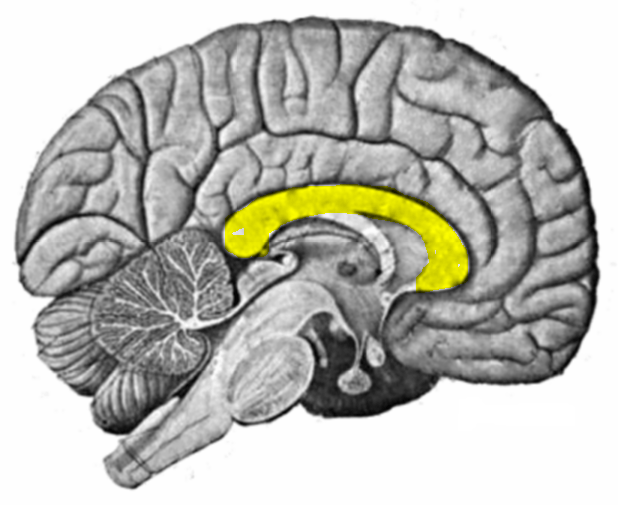
What is the inner most meningeal layer of the brain?
Arachnoid
Dura mater
Pia mater
Ventricles
What part of the brain deals with appetite and temperature control?
Cerebellum
Cerebrum
Hypothalamus
Brain stem


What is the name of a motor nerve that conducts impulses to muscles that move the eyes and other muscles?
trigeminal (V)
vagus (X)
accessory (XI)
trochlear (IV)
Which mixed nerve includes sensory nerves that lead to the eyes, scalp, forehead, teeth, and jaws, and motor nerves that lead to the jaw and mouth?
facial (VII)
abducens (VI)
trochlear (IV)
trigeminal (V)
Which of the following is a motor nerve with fibers conducting impulses to muscles that move the tongue?
vestibulocochlear (VII)
glossopharyngeal (IX)
facial (VII)
hypoglossal (XII)
Which sensory nerve has fibers the conduct impulses associated with hearing and equilibrium?
vestibulocochlear (VIII)
facial (VII)
oculomotor (III)
trochlear (IV)
Which mixed nerve has sensory fibers conducting impulses to the pharynx, larynx, esophagus, and viscera of the chest and abdomen, and motor fibers associated with speech, swallowing, and conducting impulses to the heart?
accessory (XI)
vagus (X)
hypoglossal (XII)
trigeminal (V)


TV + IRV + ERV =
residual vol
tidal vol
vital capacity
heart rate
What is tidal volume
normal breath in and out
additional air to breath in
air that isnt used
the entire volume of air in the lungs and tubes

The flap of skin that prevents food and water to enter the trachea.
vocal cords
pharynx
larynx
epiglottis
The trachea branches off into two large tubes in the lungs called.....
Valve between the left atrium and the left ventricle.
tricuspid valve
mitral valve
pulmonary valve
aortic valve
Thickest walled chamber of the heart.
left atrium
right ventricle
left ventricle
right atrium
Valve between the right atrium and the right ventricle.
mitral valve
pulmonary valve
aortic valve
tricuspid valve
Blood in the pulmonary artery:
Oxygenated
Deoxygenated
Blood in the pulmonary veins:
Oxygenated
Deoxygenated
This initiates the action potential that causes the heart to beat
Inferior vena cava
Atrioventricular node (AV node)
Superior vena cava
Sinoatrial node (SA node)
Which best explains why capillary walls are so thin?
because they do not need to pump blood
because they are found only in the smallest organs and tissues
because they maximize diffusion of nutrients
because blood only travels through them slowly

What is labeled A?
Left common carotid artery
Left subclavian artery
Arch of aorta
Brachiocephalic artery
Right subclavian artery
What is labeled B?
Left common carotid artery
Left subclavian artery
Arch of aorta
Brachiocephalic artery
Right subclavian artery
What is labeled D?
Left common carotid artery
Left subclavian artery
Arch of aorta
Brachiocephalic artery
Right subclavian artery
What is labeled E?
Left common carotid artery
Left subclavian artery
Arch of aorta
Brachiocephalic artery
Right subclavian artery
What is labeled H?
Descending aorta
Ascending aorta
Right coronary artery
Left coronary artery
Right common carotid artery
If a person has type A- blood, then they have _____.
Only the B antigen
Both the A and the Rh antigen
Only the A antigen
Only the Rh antigen
Jenna has been in an accident and needs a blood transfusion. She has been identified as having type B blood. Which of the following BEST describes who Jenna can receive blood from?
1 - Someone with type O blood
2 - Someone with type B blood
3 - Someone with type A blood
4 - Both choices 1 & 2 are correct
Which blood type would only have Rh antigens on the surface of red blood cells?
A+
AB+
B+
B-
O+
Which blood type would only have anti-B antibodies flowing through blood plasma?
A
B
AB
O
How many types of muscles are there?
2
4
3
1
The connective tissue sheath that surrounds a muscle fasciculus is the
epimysium
endomysium
perimysium

What is section 7 called?
A Band
Z Disc
H Zone
I band

Is number 3 the...
Myosin
Titin
Myofibril
Actin

what does #4 represent?
Myosin
Actin
I Band
H Zone

#1 Represents one whole...
Actin Filament
Z Disc
Sarcomere
Myosin Filament

Which stage is the muscle fully relaxed
2
3
None of the above
1

What's the name of this muscle?
Pectoral
Deltoid
Bicep
Abdominal

Name this muscle
Gastrocnemius
Gluteus Maximus
Hamstring
Quadricep

Name the highlighted muscle
transvers abdominals
rectus abdominals
external obliques
internal obliques

Name the highlighted muscle
pectorals
deltoid
trapezius
latissimus dorsi

Name the highlighted muscle
latissimus dorsi
obliques
rhomboids
deltoid

Name the highlighted muscle
rectus abdominals
transverse abdominals
Obliques
None of the above
What is the anatomical term for bending a joint and decreasing the angle between two bones?
Abduction
Rotation
Flexion
Extension
Give an example of a ball-and-socket joint in the body.
Elbow joint
Hip joint
Shoulder joint
Knee joint
What is the term for moving a body part towards the midline of the body?
Flexion
Abduction
Rotation
Adduction
What type of joint is the elbow joint?
Hinge joint
Gliding joint
Pivot joint
Ball joint
What type of joint is the hip joint?
Ball-and-socket joint
Gliding joint
Pivot joint
Hinge joint

The blue bone(s) on the posterior end of the skull are called
maxillary bones
parietal bones
nasal bones
temporal bones

The green bone(s) inferior to the parietal bones are called
temporal bones
frontal bones
ethmoid bones
sphenoid bones

The parietal and frontal bones are separated by the
squamous suture
lambdoid suture
coronal suture
maxillary bones

The yellow bone which spans the entire bottom, interior region of the skull is called the
sphenoid bone
the vomer
the nasal bone
the mandilbe

Which suture borders the occipital and the parietal bones?
the lamboid suture
the squamous suture
the coronal suture

Identify 2
Proximal Epiphysis
Diaphysis
Distal Epiphysis
Epiphyseal Line

Identify 5
Spongy Bone
Compact Bone
Articular Cartilage
Epiphyseal Line
Identify 7
Medullary Cavity
Compact Bone
Yellow Marrow
Periosteum
Identify 9
Medullary Cavity
Compact Bone
Yellow Marrow
Periosteum
The carpals could be classified as
What is the main function of a Sesamoid bone?
To protect your internal organs.
To protect tendons and joints, and improve their movement.
To provide strength and structure.
Which of the following is NOT an example of a long bone?
Sphenoid
Tibia
Fibula
Femur
What is the first layer of the skin?
Epidermis
Dermis
Hypodermis
Locodermis
Which skin layer is only present in thick skin?
stratum corneum
stratum lucidum
stratum spinosum
stratum granulosum
stratum basale (aka: germinativum)
Which skin layer is most deep?
stratum corneum
stratum lucidum
stratum spinosum
stratum granulosum
stratum basale
The pigment that gives skin its color and protects from UV radiation is
keratin
melanin
chromatin
dermatin

