
 Worksheets
Y7 Chapter 2 Materials and their structure
Total questions: 65
Worksheet time: 57mins
What is a matter?
Anything that can fill up a space and has mass.
Something that can be measure by weight.
What are the three states of matter? Choose 3 answers.
Solid
Liquid
Gas
Water
Solid has a __________ shape.
Fixed
Not fixed
Take up space
Liquid has ________shape.
No fixed
Closed
Fixed
Particles in solid have these properties.
close together, weak force of attraction, move slowly and flow over each other.
very far apart, very weak force of attraction and move quickly.
close together, has a strong force of attraction and vibrate.
Particles in liquid have these properties.
close together, has a strong force of attraction and vibrate.
very far apart, very weak force of attraction and move quickly.
close together, weak force of attraction,
move slowly and flow over each other.
Particles in gas have these properties.
very far apart, very weak force of attraction and move quickly.
closely together, has a strong force of attraction and vibrate.
close together, weak force of attraction,
move slowly and flow over each other.
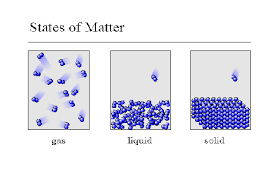
Matter is made up of particles. Which of the following statements is true about these particles?
The particles that make up solids do not move
The particles that make up liquids do not move
The particles that make up all matter are constantly in motion
Only the particles that make up gases are constantly in motion
A compound consists of two or more ____________.
Molecules
Atoms
Elements
Pieces of matter

What state of matter does this picture show?
Liquid
Matter
Gas
Solid
A process that creates new substances from existing substances and can absorb or release thermal energy is ___________
Chemical reaction
Gas
Melting
Thermal energy
Water in gas form is (a)
Particles in a ______________________ move quickly and are far apart.
Solid
Liquid
Gas

What is happening when my ice cream changes from a solid to a liquid?
Freezing
Boiling
Melting
Erosion

The diagram shows arrangement of particles in a
Solid
Liquid
Gas

What state is represented in the gif?
Solid
Liquid
Gas

What state of matter does the picture below represent?
solid
liquid
gas

water run-off
water run-off
water run-off
As water evaporates it enters the air as
clouds
rain
water vapor
The water that moves along the surface of the earth is called
groundwater
open water
water run-off
Precipitation that enters the soil is called
groundwater
open water
water run-off

The image shows various stages in the water cycle. During which stage does water flow back towards the sea as water run-off?
W
X
Y
Z

Name the 2 processes that have take place for water to be collected in the cup.
melting and boiling
freezing and condensation
boiling and evaporation
evaporation and condensation
Boiling takes place _____________________.
at the surface of the liquid
throughout the liquid
Which of the following involves heat loss?
condensation
melting
evaporation
Copper - Cu
Element
Compound
Mixture
Chalk - CaCO3
Element
Compound
Mixture
Water - H2O
Element
Compound
Mixture
Aluminum - Al
Element
Compound
Mixture

What is CO2 and example of?
element
mixture
compound
mixture
2 or more different elements that are bonded together is called...
A. element
B. compound
C. mixture
D. solution
In the following diagrams, the spheres represent particles. Different shadings represent different particles. Which of the following contains only one pure substance?


The diagrams show three containers of gas. Which list correctly describes the gases in containers R, S and T?
R = element,
S = compound,
T = mixture
R = compound,
S = element,
T = mixture
R = element,
S = mixture,
T = compound
R = mixture,
S = element,
T = compound

Given the diagrams X, Y and Z: Which diagram or diagrams represent a mixture of elements A and B?
X only
Z only
X and Y
X and Z

These diagrams show three examples of matter. Which list correctly describes the matter in each picture?
X = mixture,
Y = element,
Z = compound
X = element,
Y = mixture,
Z = compound
X = compound,
Y = element,
Z = mixture
X = element,
Y = compound,
Z = mixture


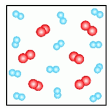
Brass is a metal that is bright red and gold. It is formed by combining, not chemically, two elements, zinc and copper. Based on the information, how would brass be classified?
an element
compound
mixture
suspension


Periodic Table is an orderly arranged table of __________?
compounds
mixture
atoms
elements
Tick examples of compounds


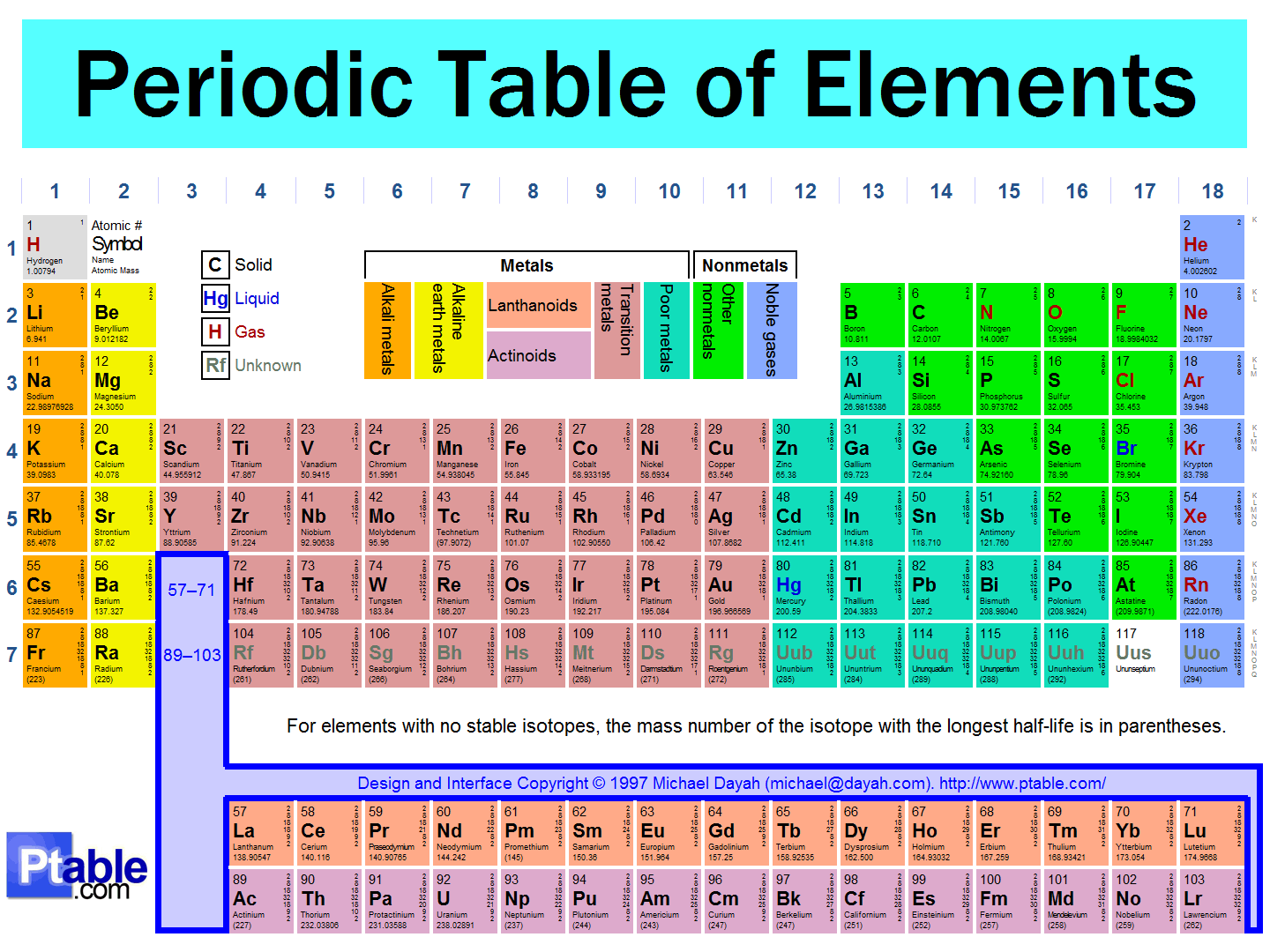
The vertical (up and down) columns in the Periodic Table are called
groups
towers
periods
atomic numbers

Element
Compound
Mixture
Give an examples of mixture: a _ _
(a)
Give an examples of mixture: a _ _ _ _
(a)
Na2SO4- name?
sulfur sulfate
sodium sulfide
sodium sulfate
sodium oxygenate
MgO- name?
oxygen magnesium
magnesium oxide
magnesium oxate
magnesium oxygenate
LiOH- name?
hydrogen lithium
lithium oxyhydride
lithium oxide
lithium hydroxide
HI - name?
iodine hydrogenide
hydrogen iodine
hydrogen iodide
hydrogen iodate
H2SO4
-ide
-ate
KOH
Carbon oxide
potassium oxide
potassium hydride
potassium hydroxide
What is the correct name of the compound with the formula CaCO₃?
calcium carbonate
monocalcium trioxide

