wayground logo

Free Printable Worksheets

Font size

S
M
L
XL
Worksheets

SAM-IS-4TH QUARTER

Total questions: 160

Worksheet time: 4hrs 40mins

Name
Class
Date
1.

What happens to the temperature of an object when the particles are moving faster?

a)

A. reduces

b)

B. increases

c)

C. remains constant

d)

D. increases then reduces

2.

The boiling point of water is 100 ºC. What is this in Kelvin?

a)

A. 173 K

b)

B. 212 K

c)

C. 373 K

d)

D. 512 K

3.

Which of the following happens when ice changes into a liquid at 0 ºC?

a)

A. The molecules move slower than before.

b)

B. The temperature of the substance increases.

c)

C. The potential energy of the molecules increases.

d)

D. The average movement of the molecules increases.

4.

Which of the following is NOT a unit of temperature?

a)

A. Calorie

b)

B. Celsius

c)

C. Fahrenheit

d)

D. Kelvin

5.

The decrease in temperature of a substance indicates that the _______.

a)

A. number of particles in it decreases

b)

B. average velocity of its particles increases

c)

C. average potential energy of particles decreases

d)

D. average kinetic energy of its particles decreases

6.

An average measure of the warmth or coldness of an object.

a)

Heat

b)

Energy

c)

Temperature

d)

Transfer

7.

heat always travels from _____ to ______ objects

a)

hot to cold

b)

cold to cold

c)

cold to hot

d)

hot to hot

8.

As the kinetic energy of the molecules in a substance increases, the temperature of the substance __________.

a)

decreases

b)

increases

9.

Convert 30°C into Kelvin.

a)

252K

b)

316°C

c)

303K

d)

-163°C

10.

Substances with high heat capacities heat up more slowly because they can absorb more heat before their temperature rises.

a)

TRUE

b)

FALSE

11.
What kind of heat transfer happens when the sun is heating your body?
a)
Conduction
b)
Radiation
c)
Convection
d)
Density
12.
What heat transfer happens when you burn your hand by touching a fire?
a)
Radiation
b)
Conduction
c)
Convection
d)
I don't know!!!!!!!!!!!
13.
Warm air rises and the cool air sinks demonstrates this type of heat transfer. 
a)
conduction
b)
convection
c)
radiation
d)
Insolation 
14.
Ironing a shirt is an example of...
a)
condensation
b)
conduction
c)
convection
d)
radiation
15.
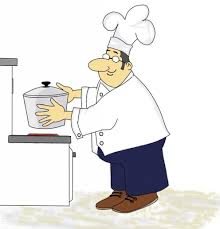
The man goes to take the hot pot off the stove with his bare hands.
a)
conduction
b)
convection
c)
radiation
16.
Johnny accidentally grabbed the handle of the hot pot.
a)
conduction
b)
convection
c)
radiation
17.
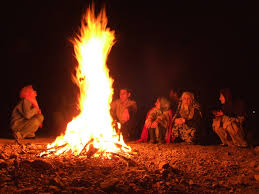
A group of friends gather around a fire to stay warm.
a)
conduction
b)
convection
c)
radiation
18.
Transfer of thermal energy through "space"
a)
conduction
b)
convection
c)
radiation
19.
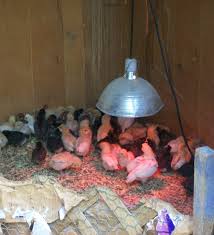
The baby chickens are kept warm from the heat lamps demonstrates this type of heat transfer. 
a)
conduction
b)
convection
c)
radiation
20.
Near the ceiling of a room the air is warmer; the warm air rises because of
a)
conduction
b)
convection
c)
radiation
21.
A house burns down. The vinyl siding of the house next door warps due to
a)
conduction
b)
convection
c)
radiation
22.
In what way does the Sun warm Earth? 
a)
radiation
b)
convection
c)
conduction
d)
condensation
23.
You are stirring a bowl of hot soup with a metal spoon. The spoon starts to feel warmer because of _?_.
a)
conduction
b)
convection
c)
radiation
24.
You buy a lava lamp from the store. As the lamp heats up, blobs of liquid rise to the top then sink back down to the bottom. This process continues because of _?_.
a)
conduction
b)
convection
c)
radiation
25.
You are doing your homework at a desk that is underneath a lamp. You start to feel hotter because of _?_ from the lamp.
a)
conduction
b)
convection
c)
radiation
26.
objects that prevent heat transfer
a)
insulator
b)
conductor
c)
kinetic energy
d)
potential energy
27.
energy in motion
a)
kinetic energy
b)
potential energy
c)
heat
d)
transfer
28.
A ______________ is a material that transfers thermal energy well.
a)
insulator
b)
protector
c)
conductor
d)
reflector
29.
Wood, straw, and wool are materials that are good __________________.
a)
insulators
b)
conductors
c)
reflectors
d)
generators
30.
Silver, stainless steel, and copper are materials that are good _________________.
a)
insulators
b)
radiators
c)
currents
d)
conductors
31.

Hot water rising and cold water sinking. This is an example of:

a)

Convection

b)

Conduction

c)

Radiation

32.

A raw egg begins to fry as it hits a heated frying pan. This is an example of:

a)

Convection

b)

Conduction

c)

Radiation

33.

A group of friends gather around a fire to stay warm. This is an example of:

a)

conduction

b)

convection

c)

radiation

34.

The Gulf Stream is a current that brings warm ocean water from the south to the north. This is an example of:

a)

conduction

b)

convection

c)

radiation

35.

Walking on the warm sand sand with your bare feet. This is an example of:

a)

conduction

b)

convection

c)

radiation

36.

The measure of average kinetic energy of all the particles within an object is called ____________.

a)

temperature

b)

conduction

c)

radiation

d)

heat

37.

The total energy of all the particles in a sample of matter is called —————

a)

Total Energy

b)

Thermal Energy

c)

Kinetic Energy

d)

Particle Energy

38.

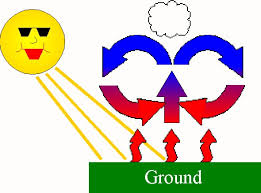
In the image of atmospheric heating, which type of heat transfer is happening at location A?

a)

Radiation

b)

Conduction

c)

Convection

39.

In the image of atmospheric heating, which type of heat transfer is happening at location B?

a)

Radiation

b)

Conduction

c)

Convection

40.

In the image of atmospheric heating, which type of heat transfer is happening at location C?

a)

Radiation

b)

Conduction

c)

Convection

41.
The amount of energy required to raise the temperature 1ºC for every kilogram is called____?
a)
Thermal Energy
b)
Specific Heat
c)
Temperature
d)
Kinetic Energy
42.
What is the equation to measure change in Thermal Energy?
a)
Q=mc∆t
b)
Q=mc
c)
Q= ∆mct
d)
m=QC
43.
What is the symbol for Thermal Energy in the specific heat formula?
a)
Q
b)
t
c)
m
d)
C
44.
There are four cups of hot cocoa. The cup sizes are shown. The temperature of the cocoa in each cup is 25 degrees celsius. Which cup has the MOST thermal energy?
a)
Large cup (Trenta)
b)
Small cup (Tall)
c)
Medium cup (Venti)
d)
All three are the same temperature so they have the same thermal energy
45.
What unit do you use to measure Thermal Energy?
a)
J/Kg ºC
b)
Kg
c)
ºC
d)
J
46.
Copper, Stainless Steel, Carbon Steel, and Zinc were all heated using 10,000 JOULES of thermal energy.  What material would be have the LARGEST change in temperature?
a)
Copper
b)
Carbon Steel
c)
Zinc
d)
Stainless Steel
47.
A high specific heat means...
a)
It requires less energy to change temperature
b)
It requires more energy to change temperature
c)
It heats up very quickly
48.
When a  piece of aluminum foil is taken out of the oven and cools from 100° C to 50°C, What is the change in temperature?
a)
50°
b)
c)
100°
d)
150°
49.
If 200 grams of water is to be heated from 24.0° C to  100.0° C to make a cup of tea, what is the mass and what is the change in temperature?
a)
m=100g,  ∆t= 224 C
b)
m=200g,  ∆t=124 C
c)
m=100g,  ∆t=24 C
d)
m=200g,  ∆t=76 C
50.
There are 2 pans of water, one has 100 mL in it and one has 1000mL. You add 4000 joules of energy,  which one has the bigger change in temperature?
a)
100 mL
b)
1000 mL
c)
They the same material so they both heat to the same temperature
d)
They both will cool down.
51.
If I have 2 blocks of Aluminium (one of 1kg and one of 10 kg) and heat them up with 6,000 Joules of energy.
Which one will have the SMALLEST change in temperature?
a)
1 kg
b)
10 kg
c)
They both heat up  to the same temperature
d)
It depends on the temperature of the room
52.
20 g of water. specific heat of water is 4.18 J/g°C.  temperature changes from 25° C to 20° Chow much heat energy (Q) moves from the water to the surroundings?
a)
418 Joules
b)
209 J
c)
83 J
d)
4.18 J
53.
The specific heat(c) of copper is 0.39 J/g °C. What is the temperature change(∆t) when 100 Joules of heat(Q) is added to 20 grams of copper?
a)
12.82 °C
b)
24.12°C
c)
351 °C
54.
lowest possible temperature on the Kelvin scale
a)
boiling point
b)
insulation
c)
absolute zero
d)
heat
55.

What letter is used to represent specific heat capacity?

a)

H

b)

P

c)

C

d)

T

56.

The specific heat of platinum is 0.133 J/g°C. How much heat(Q) is released when a 10 g piece of platinum cools from 100°C to 50°C?

a)

66.5 J

b)

665 J

c)

0.0266 J

d)

0.665 J

57.
The temperature of an unknown piece of metal with a mass of 30.00 g changes from 25.0 °C to 35.0 °C when the metal absorbs 350.0 J of energy. What is the specific heat of the metal?
a)
1.17 J/g°C
b)
-1.17 J/g°C
c)
0.857 J/g°C
d)
-0.857 J/g°C
58.
Specific heat of water is  4.18 J/g°C. Specific heat of wood is 1.760 J/g°What material needs more heat energy to raise the temperature?
a)
Water
b)
Wood
c)
Both are same
59.
A pot of 2400g of water at a temperature of 25˚C is heated on a stove until the water boils (100˚C).  The specific heat of water is 4.18 J/(g˚C).
Determine the heat energy needed to heat the water in the pot to boiling.
a)
133.76J
b)
43,062.2J
c)
752,400J
d)
1,003,200J
60.

The specific heat(c) of copper is 0.39 J/g °C. What is the temperature change(∆t) when 100 Joules of heat(Q) is added to 20 grams?

a)

12.82 °C

b)

24.12°C

c)

1.95 °C

d)

5128 °C

61.

Which will heat up faster?

a)

copper

b)

granite

c)

iron

d)

basalt

62.

Which of the following best explains why the sand at the beach is hotter than the water?

a)

Sand has a higher specific heat than water.

b)

Sand has a lower specific heat than water.

c)

There is more water than sand at the beach.

d)

There is more sand than water at the beach.

63.
How does heat flow?
a)
Always from cold to warm
b)
Always from warm to cold
c)
Both warm to cold & cold to warm
d)
It depends on the temperature
64.
What would be the effect on the particles if more heat is supplied to the system?
a)
They would slow down
b)
They would stop moving
c)
They would speed up
d)
There would be no effect
65.
If you place some Gatorade in a cooler with ice...
a)
It's particles will speed up.
b)
It's particles will slow down.
66.
A measure of the average kinetic energy of the individual particles in an object is called:
a)
thermal energy
b)
conduction
c)
convection
d)
temperature
67.

If  Q=mcΔTQ=mc\Delta T  , what is ΔT\Delta T   

a)

ΔT=Qmc\Delta T=\frac{Q}{mc}  

b)

ΔT=mcQ\Delta T=\frac{mc}{Q}  

c)

ΔT=Qmc\Delta T=Qmc  

d)

ΔT=mQc\Delta T=\frac{m}{Qc}  

e)

c=QmΔTc=\frac{Q}{m\Delta T}  

68.
 How many joules of heat are needed to raise the temperature of 10.0 g of aluminum from 22°C to 55°C, if the specific heat of aluminum is 0.90 J/gx°C?    
a)
297 Joules
b)
0.003 Joules
c)
297 J/gx°C
d)
0.003 J/gx°C
69.
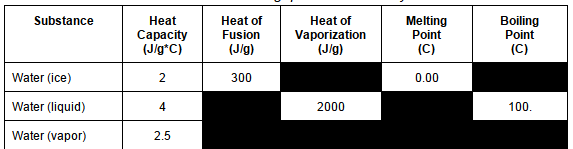
How many Joules of energy are required to change 10 gram of ice at -2 C to water at 20 C?
a)
440 J
b)
880 J
c)
10,140 J
d)
66,000 J
70.
How many Joules of energy are required to change 10 gram of water from 20 C to 90 C?
a)
1400 J
b)
2800 J
c)
210,000 J
d)
1,400,000 J
71.

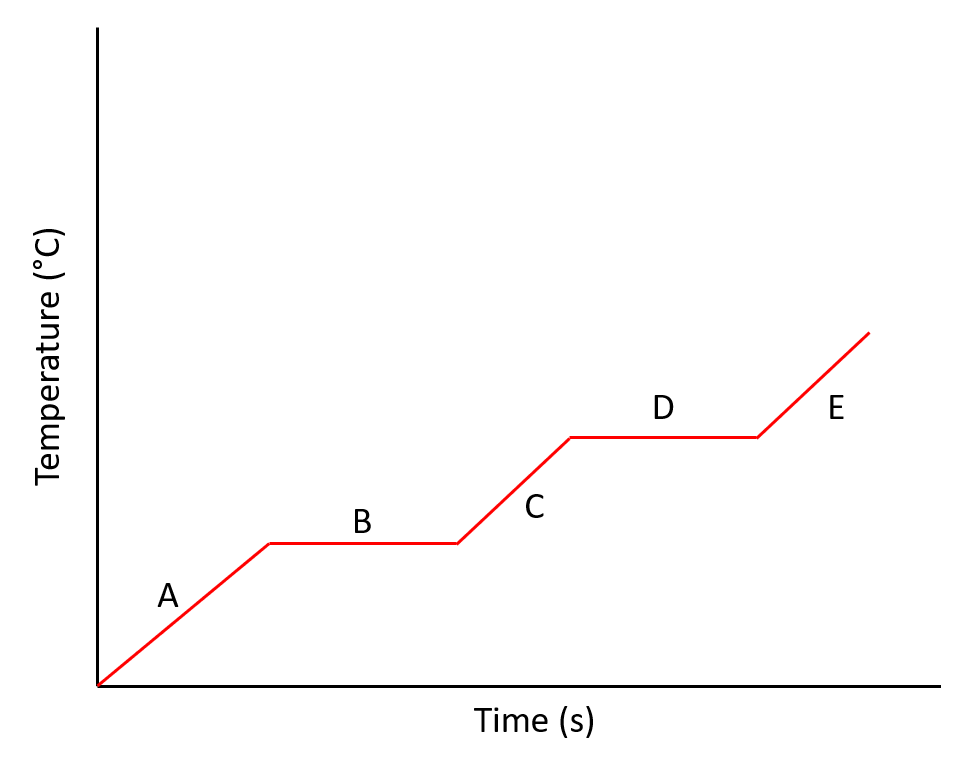
The diagram shows a heating curve for ice. Which line represents the ice melting?

a)

A

b)

B

c)

C

d)

D

e)

E

72.

Why are lines B and D flat?

a)

The ice is melting

b)

The ice is freezing

c)

All of the thermal energy is used to break the bonds

d)

They stopped the stopwatch

e)

They stopped heating the ice.

73.

The diagram shows a heating curve for ice. Which line represents the ice in a liquid state (water)?

a)

A

b)

B

c)

C

d)

D

e)

E

74.

The diagram shows a cooling curve for ice. Which line represents the ice in a liquid state (water)?

a)

A

b)

B

c)

C

d)

D

e)

E

75.

The diagram shows a cooling curve for ice. Which line represents the ice freezing?

a)

A

b)

B

c)

C

d)

D

e)

E

76.

Removing energy (cooling) causes the atoms to

a)

spread apart

b)

move closer together

c)

get larger

d)

get smaller

77.
Adding heat energy causes the atoms to...
a)
move slower
b)
move faster
c)
get bigger
d)
get smaller
78.

The water droplets on the outside of this glass of water is showing the following phase change

a)
melting
b)
evaporation
c)
freezing 
d)
condensation
79.
The water leaving the ocean in the water cycle is representing this phase change
a)
melting
b)
evaporation
c)
freezing 
d)
condensation
80.
What two phase changes require heat energy to be absorbed?  
a)
melting and freezing
b)
melting and boiling
c)
freezing and boiling
d)
freezing and condensation
81.

Which of the following processes requires thermal energy?

a)

condensation

b)

evaporation

c)

cooling

d)

freezing

82.

In which state of matter do particles have the most energy and move freely in all directions?

a)

solid

b)

liquid

c)

gas

d)

plasma

83.

At what temperature does water boil at standard atmospheric pressure?

a)

0°C

b)

100°C

c)

-273°C

d)

212°F

84.

In an isolated system, the amount of heat gained by one substance is exactly equal to the amount of heat lost by the second substance.

a)

work equals change in kinetic energy

b)

The law of conservation of energy

c)

internal energy

d)

Hubble's Law

85.

On the Kelvin scale 0 degrees Celsius is,

(a)  

86.

One calorie is equal to

a)

the amount of energy required to change the temperature of one gram of water by one degree Celsius.

b)

4.186 Joules

c)

0.001 kilocalories

d)

all of the above

87.

When 100 grams of water at 20 degrees Celsius is mixed with 100 grams of water at 50 degrees Celsius, the final temperature is

(a)  

88.

In the calorimetry simulation, did the 20 degree sample of water change more in temperature than the 50 degree sample of water?

a)

yes

b)

no, the 20 degree sample changed less in temperature than the 50 degree sample

c)

No, the change in temperature for both samples was the same.

89.
The specific heat is the amount of energy needed to raise the temperature one degree Celsius of a substance.
a)
True
b)
False
90.
As a reaction is taken place,  the student notices that the temperature has dropped. This indicates that the system has increased in energy. What type of process is this?
a)
Endothermic
b)
Exothermic
91.
A sample of iron receives 50.J of heat energy that raises the temperature of the iron 25.0°C. If iron has a specific heat of .10 J/g°C, what is the mass of the iron sample?
a)
25g
b)
30g
c)
20g
d)
50g
92.
A reaction is performed in a beaker with a temperature probe recording the temperature changes of the reaction.  If the temperature began at 15.0 degrees Celsius and ended at 27.5 degrees Celsius.  If the reaction is our system, is the system endothermic or exothermic?
a)
Exothermic
b)
Endothermic
93.
Calorimetry Question:
A piece of metal with a mass of 32.8 g is heated to 100.5°C and dropped into 138.2 g of water at 20.0°C.  The final temperature of the system is 30.2°C.  What is the specific heat capacity of the metal? (show your work)
a)
2.56 J/g°C
b)
0.391 J/g°C
c)
5.29 J/g°C
d)
3.50 J/g°C
94.
In an exothermic process, the surroundings are are gaining energy.
a)
True
b)
False
95.

The average kinetic energy of the particles in a substance

a)

internal energy

b)

temperature

c)

heat

d)

thermodynamics

96.

Which term or phase best describes the cell membrane?

a)

impermeable

b)

semi-permeable

c)

completely permeable

d)

solid

97.

Which best describes the function of the cell membrane?

a)

protects and supports the cell and also controls everything that enters and leaves the cell

b)

provides structural support for cells to keep them from shrinking and expanding too much

c)

is the control center of the cell

d)

is the site of protein synthesis in cells

98.

True/False: The cell membrane allows only certain substances to enter or cell a cell.

a)

True

b)

False

99.

The foundation of the cell membrane is made of primarily which molecule?

a)

phospholipid

b)

cellulose

c)

cholesterol

d)

protein

e)

water

100.

What is the function of proteins embedded in the cell membrane? Select all that apply.

a)

to act as receptors, helping to identify the cell

b)

to help to transport material into and out of the cell

c)

t0 provide the foundation of the cell membrane

d)

to produce sugars needed for cellular respiration

101.

Because the molecules of the cell membrane are in constant motion and because of the different molecules that make up the membrane, it is frequently described as a...

a)

fluid mosaic

b)

semi-permeable barrier

c)

a transparent entity

d)

a drop of oil

102.

True/False: Cell membranes and the membranes that bound organelles (known as plasma membranes) are structurally very different.

a)

True

b)

False

103.

A hydrophobic substance...

a)

is attracted to water

b)

repels from water

c)

will mix easily with water

d)

can dissolve in water

104.

A hydrophilic substance...

a)

is attracted to water

b)

is repelled by water

c)

will not dissolve in water

d)

hates water

105.

The phospholipids that make up plasma membranes are arranged in a ____________ structure.

a)

bi-layer

b)

cubic

c)

single-layer

d)

triple-layer

106.

If you dropped 2 phospholipid molecules into a petri dish of water right next to each other, what do you expect to happen? (you have 2 min. for this question)

a)

The hydrophilic side of the molecules will turn towards each other and away from the water. The hydrophobic sides of the molecules will turn away from each other and towards the water (see picture A)

b)

The hydrophobic side of the molecules will turn towards each other and away from the water. The hydrophilic sides of the molecules will turn away from each other and towards the water (see picture B)

c)

The molecules will be broken apart by the water

d)

The molecules will explosively react with the water.

107.

Which of the following is NOT considered a lipid? More than one answer MAY be selected.

a)

vegetable oil

b)

animal fat

c)

table sugar

d)

water

108.

Diffusion requires the use of energy from a cell.

a)

True

b)

False

109.

Diffusion only happens in cells.

a)

True

b)

False

110.

Active transport requires __________ in order to work.

a)

carbohydrates

b)

homeostatis

c)

ATP

d)

none of the above

111.

________ and ___________ pass easily through the phospholipid bilayer.

a)

sugar

b)

carbon dioxide

c)

salt

d)

oxygen

112.

Proteins create various channels to assist molecules to pass through the membrane.

a)

true

b)

false

113.

Cell membranes are __________________which means they control what enters and leaves the cell.

a)

permeable

b)

hypotonic

c)

isotonic

d)

selectively permeable

114.
"Water Loving"
a)
Hydrophobic
b)
Hydrophilic 
c)
Hydroelectric 
d)
Hydroloric
115.
"Water Fearing" 
a)
Hydrophobic
b)
Hydrophilic 
c)
Hydroelectric 
d)
Hydroloric
116.
The process of engulfing food or liquid particles into the cell.
a)
Osmosis
b)
Exocytosis
c)
Endocytosis
d)
Diffusion
117.
The release of large particles, often waste materials from the inside of the cell to the outside of the cell.
a)
Osmosis
b)
Exocytosis
c)
Endocytosis
d)
Diffusion
118.
Which of the following modes of cellular transport does NOT require energy?
a)
Facilitated Diffusion
b)
Protein Pumps
c)
Endocytosis
d)
Exocytosis
119.
What type of transport involves the movement of water from high to low concentrations?
a)
Diffusion
b)
Active Transport
c)
Facilitated Diffusion
d)
Osmosis
120.
When cells take in a liquid through active transport, what is it called?
a)
Exocytosis
b)
Phagocytosis
c)
Pinocytosis
d)
Osmosis
121.
Which way will the water molecules move during osmosis?
a)
Out of the cell, so the cell shrinks.
b)
Out of the cell, so the cell swells.
c)
Into the cell, so the cell shrinks.
d)
Into the cell, so the cell swells.
122.
A cell with a 5% salt solution is placed into a beaker with a 10% salt solution.  What will happen to the cell?
a)
It will shrink
b)
It will swell
c)
No change
d)
Cytolysis
123.
A cell with a 5% salt solution is placed into a beaker with a 10% salt solution.  This solution is considered to be _____ to the cell.
a)
Isotonic
b)
Hypertonic
c)
Hypotonic
d)
None of the Above
124.

A cell with a 20% salt solution is placed into a beaker of pure water. What will happen to the cell?

a)

It will shrink

b)

Plasmolysis

c)

No change

d)

It will expand

125.
A cell with a 10% salt solution is placed into a beaker with a 40% salt solution.  How will water move?
a)
It will leave the cell
b)
It will enter the cell
c)
It will move in and out equally
d)
There will be no movement
126.

The main purpose for the process cellular respiration is ATP.

a)

true

b)

false

127.

What are the products of cellular respiration? Choose 3.

a)

water

b)

ATP

c)

Oxygen

d)

Sunlight

e)

Carbon Dioxide

128.

The process in which a cell harvests energy from glucose and makes it into usable energy for the body is called-----

a)

cellular fermentation

b)

anaerobic respiration

c)

aerobic fermentaion

d)

cellular respiration

129.

Cellular respiration occurs in

a)

chloroplasts

b)

mitochondria

c)

golgi aparatus

d)

thylakoid

130.
The main source of energy for all life comes from ____.
a)
the Earth
b)
the moon
c)
the sun
d)
the food we eat/make
131.

A plant's goal for photosynthesis is to:

a)

make food (glucose)

b)

make carbon dioxide

c)

make oxygen

d)

make water

132.
What gas is released into the air during cellular respiration?
a)
oxygen
b)
carbon dioxide
c)
water 
d)
glucose
133.

What gas is released into the air during photosynthesis?

a)

oxygen

b)

carbon dioxide

c)

water

d)

glucose

134.

What are the reactants of cellular respiration? (Mark all of them!)

a)

oxygen

b)

glucose

c)

carbon dioxide

d)

water

e)

energy

135.

What are the products of cellular respiration? (Mark all of them!)

a)

oxygen

b)

glucose

c)

carbon dioxide

d)

water

e)

energy

136.

What are the reactants of photosynthesis? (Mark all of them!)

a)

oxygen

b)

glucose

c)

carbon dioxide

d)

water

e)

sunlight

137.

What are the products of photosynthesis? (Mark all of them!)

a)

oxygen

b)

glucose

c)

carbon dioxide

d)

water

e)

sunlight

138.
What three things are needed for a plant to do photosynthesis?
a)
Glucose, Oxygen, Sunlight
b)
CO2, Oxygen, Sunlight
c)
CO2, Water, Sunlight
d)
Oxygen, Water, Sunlight
139.

Both ___ are leftover as waste products after cellular respiration.

a)

water & carbon dioxide

b)

oxygen & glucose

c)

carbon dioxide & oxygen

d)

water & oxygen

140.

Cellular Respiration involves the chemical breakdown of _____ to form ATP Energy

a)

Fats

b)

Fructose

c)

Glucose

d)

Proteins

141.
Which gas is removed from the atmosphere during photosynthesis?
a)
hydrogen
b)
oxygen
c)
nitrogen
d)
carbon dioxide
142.
In what part of the cell does photosynthesis occur?
a)
Nucleus
b)
Chloroplast
c)
Epidermis
d)
Vacuole
143.

What is cellular respiration?

a)

the breakdown of glucose to release ATP

b)

the breakdown of glucose to release carbon

144.
What is the correct equation for cellular respiration?
a)
6O2 + C6H12O6 -> 6CO2 + 6H2O + Energy
b)
6O2 + C6H12O6 + Energy -> 6CO2 + 6H2O
c)
6CO2 + 6H2O -> 6O2 + C6H12O6 + Energy
d)
6CO2 + 6H2O + Energy -> 6O2 + C6H12O6
145.

Which statement about photosynthesis is correct?

a)

Plants get the energy they need for photosynthesis from water.

b)

Plants get the energy they need for photosynthesis from soil.

c)

Plants get the energy they need for photosynthesis from sunlight.

d)

Plants do not require energy to perform photosynthesis.

146.

Which of the following is the correct equation for PHOTOSYNTHESIS?

a)

6CO2 + 6H2O → 6O2 + C6H12O6

b)

6CO2 + C6H12O6 + 6H2O → O2

c)

6O2 +6H2O → 6CO2 +C6H12O6

d)

C6H12O6 + 6O2 → 6H2O + 6CO2

147.

What gas is released by plants during photosynthesis?

a)

nitrogen

b)

carbon dioxide

c)

oxygen

d)

hydrogen

148.
What is the purpose of photosynthesis?
a)
make glucose
b)
make ATP
c)
make light
d)
release carbon dioxide
149.
In which way are photosynthesis and cellular respiration different?
a)
Cellular respiration stores ATP, while photosynthesis releases ATP.
b)
Cellular respiration produces oxygen, while photosynthesis uses oxygen.
c)
Photosynthesis releases energy, while cellular respiration stores energy.
d)
Photosynthesis used carbon dioxide, while cellular respiration produces carbon dioxide.
150.
Cellular Respiration's goal is to
a)
make water
b)
make ATP
c)
make glucose
d)
make  oxygen
151.
The first step in getting energy in the cell by breaking down glucose is known as
a)
the Krebs cycle
b)
electron transport
c)
fermentation
d)
glycolysis
152.

Select all that are inputs for Photosynthesis.

a)

Water

b)

Carbon Dioxide

c)

Oxygen

d)

Sunlight (Light Energy)

e)

Glucose (Sugar/food)

153.

Select all that are outputs of Photosynthesis.

a)

Water

b)

Carbon Dioxide

c)

Oxygen

d)

Sunlight (Light Energy)

e)

Glucose (Sugar/food)

154.

Select all that are outputs of Cellular Respiration.

a)

Water

b)

Carbon Dioxide

c)

Oxygen

d)

ATP (Cellular Energy)

e)

Glucose (Sugar/food)

155.

Select all that are inputs for Cellular Respiration.

a)

Water

b)

Carbon Dioxide

c)

Oxygen

d)

Sunlight (Light Energy)

e)

Glucose (Sugar/food)

156.

What is the best prediction of the relationship between light intensity and the rate of photosynthesis?

a)

There is no relationship between light distance and the rate of photosynthesis.

b)

Distance between the light and the algae does not affect the rate of photosynthesis

c)

The more distance between the light and the algae the greater the rate of photosynthesis.

d)

The less distance between the light and the algae the greater the rate of photosynthesis.

157.

What do cells need to perform the process of cellular respiration?

a)

Sunlight, water (H2O) + carbon dioxide (CO2)

b)

Proteins, lipids, carbohydrates, and nucleic acids

c)

Lactose (C12H22O11) + soil

d)

Glucose (C6H12O6) + Oxygen (O2)

158.

What is created as a result of cellular respiration?

a)

Glucose (C6H12O6) + Carbon dioxide (CO2)

b)

Water (H2O) + Carbon dioxide (CO2) + ATP Energy

c)

Proteins and lipids

d)

Chloroplasts

159.

How are photosynthesis and cellular respiration related?

a)

They're not, they are completely different processes and neither the products nor reactants of either process are related

b)

Both require sunlight to take place

c)

The products of photosynthesis (C6H12O6 + O2) are the same as the reactants of cellular respiration. The products of cellular respiration (CO2 + H2O) are the same as the reactants of photosynthesis

d)

They both take place in animal cells

160.

True or False: The main purpose of photosynthesis is to create ATP for plants. 

a)

True

b)

False