
 Worksheets
Nutrients, food groups, and Food Labels
Total questions: 22
Worksheet time: 11mins
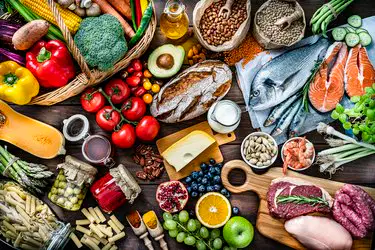
What are the six essential nutrients?
Calcium, Iron, Fiber, Antioxidants
Sugars, Fiber, Antioxidants, Enzymes
Fats, Sugars, Fiber, Enzymes
Carbohydrates, Proteins, Fats, Vitamins, Minerals, Water
Which food group includes fruits and vegetables?
Grains
Proteins
Dairy
Fruits and Vegetables
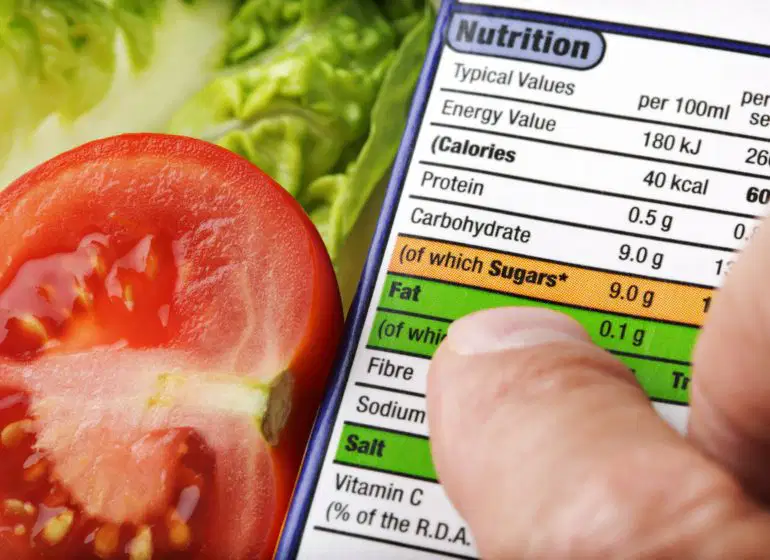
How can you identify serving size on a food label?
Serving size is always the same as the portion size.
Check the ingredients list for serving size information.
Look for the calorie count to determine serving size.
Look for the 'Serving Size' section on the nutrition facts panel.
Name a nutrient that helps build strong bones.
Protein
Calcium
Iron
Vitamin C
What food group is primarily made up of grains?
Dairy
Fruits
Vegetables
Grains
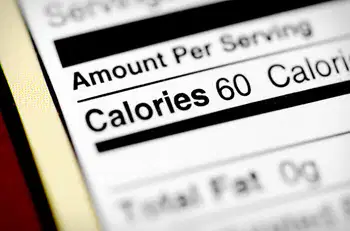
What does 'calories' on a food label indicate?
Calories measure the weight of the food.
Calories show the expiration date of the food.
Calories indicate the energy content of the food.
Calories indicate the amount of protein in the food.

Why is fiber important in our diet?
Fiber is a source of protein for muscle growth.
Fiber is important for digestive health, blood sugar control, and weight management.
Fiber is primarily used for energy production.
Fiber helps in increasing cholesterol levels.

What is the purpose of vitamins in the body?
Vitamins are only necessary for children and not adults.
Vitamins are a type of protein that builds muscle.
Vitamins support various bodily functions and are essential for overall health.
Vitamins are primarily used for energy production.

How can you tell if a food is high in sugar?
A food is high in sugar if it contains artificial flavors.
A food is high in sugar if it is sweet to taste.
A food is high in sugar if it has a low glycemic index.
A food is high in sugar if it contains more than 10g of total sugars per serving.
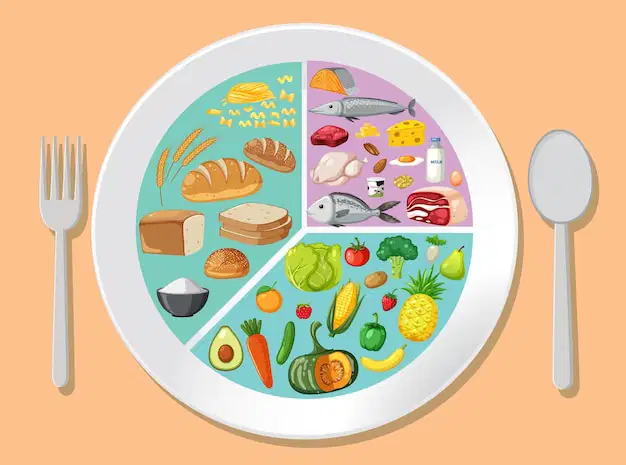
What is a balanced diet?
A balanced diet excludes all carbohydrates.
A balanced diet is high in sugar and fats.
A balanced diet consists only of fruits and vegetables.
A balanced diet is one that provides all essential nutrients in the right proportions.

Which nutrient is the main source of energy for the body?
Vitamins
Fats
Carbohydrates
Proteins
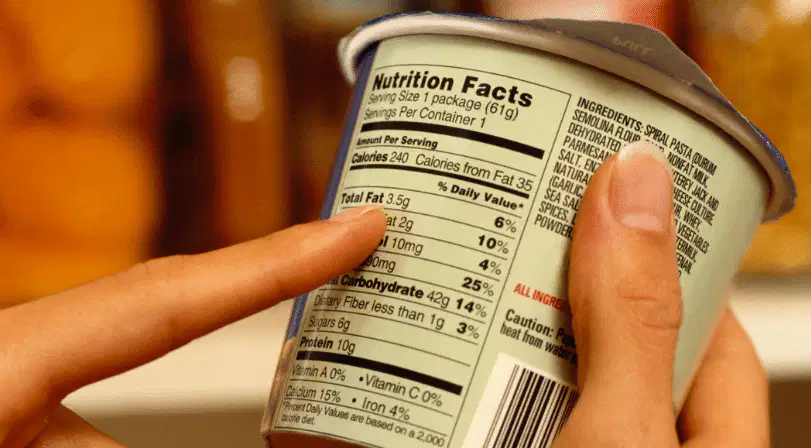
What does the % Daily Value on a food label represent?
The % Daily Value indicates the total calories in a serving.
The % Daily Value represents the percentage of a nutrient that a serving of food contributes to a daily diet.
The % Daily Value reflects the price of the food item.
The % Daily Value shows the amount of sugar in a food item.

Why should we limit saturated fats in our diet?
Saturated fats help improve digestion.
Limiting saturated fats increases energy levels.
We should limit saturated fats to reduce the risk of heart disease and maintain healthy cholesterol levels.
Saturated fats are essential for muscle growth.
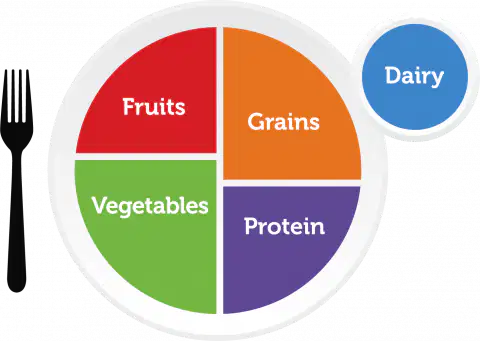
What food groups should make up the largest portion of your plate?
Grains and cereals
Vegetables and fruits
Dairy products
Meat and poultry
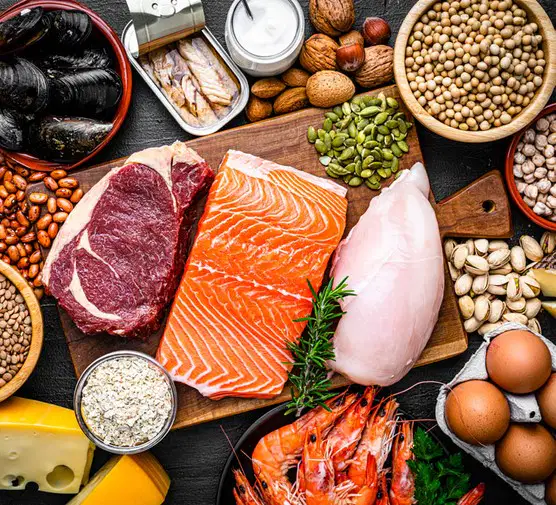
How can you tell if a food is a good source of protein?
A food is a good source of protein if it has a strong flavor.
A food is a good source of protein if it is high in carbohydrates.
A food is a good source of protein if it has a high protein content per serving and a favorable amino acid profile.
A food is a good source of protein if it is low in calories.
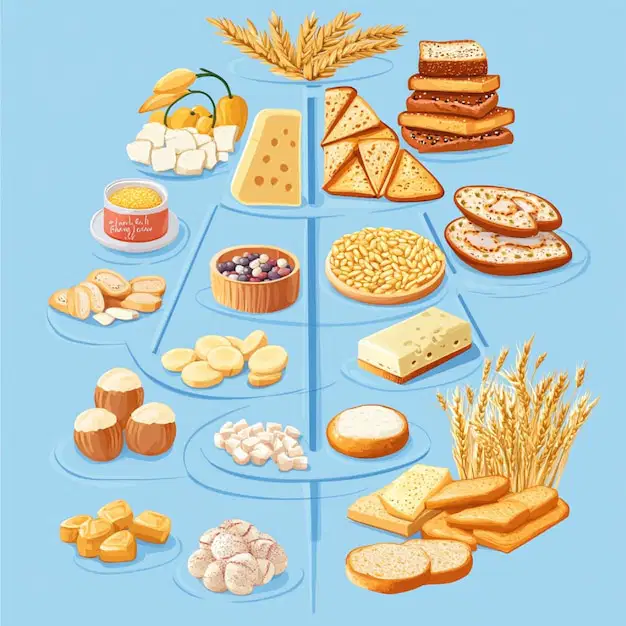
What is the role of carbohydrates in the body?
Carbohydrates provide energy, support brain function, and aid in energy storage.
Carbohydrates are not necessary for brain function.
Carbohydrates are mainly responsible for hormone production.
Carbohydrates are primarily used for muscle building.
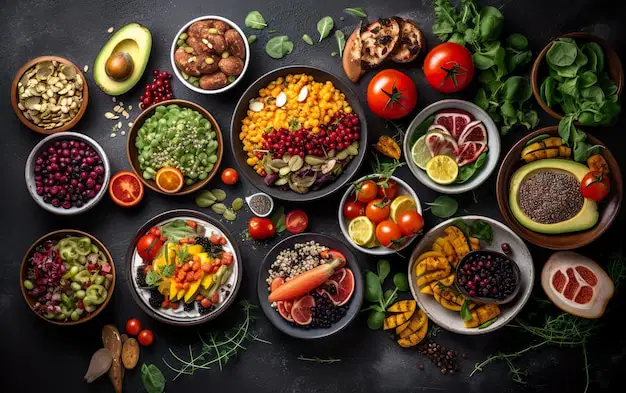
Why is it important to eat a variety of foods?
It is important to eat a variety of foods to obtain a balanced intake of essential nutrients.
Eating only fruits and vegetables is sufficient for nutrition.
Variety in food can lead to digestive issues.
Eating the same food every day is healthier.
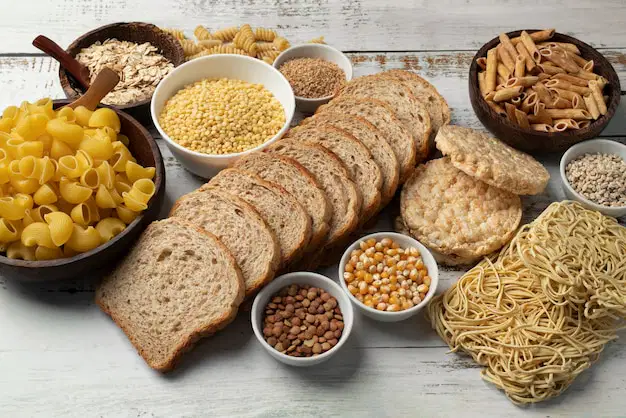
What does 'whole grain' mean?
Whole grain means grains that include all parts of the grain kernel.
Only grains that are brown in color.
Grains that are mixed with artificial additives.
Grains that have been processed to remove the bran and germ.

How can reading food labels help you make healthier choices?
Food labels are only for calorie counting.
Nutrition information is always misleading.
Reading food labels helps you make healthier choices by providing information on nutritional content, ingredients, and serving sizes.
Reading labels is unnecessary if you eat organic.
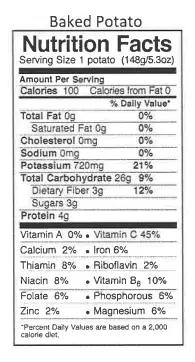
What is the serving size of the baked potato?
half the potato
3 potatoes
one potato
2 potatoes

What is the Vitamin C in the baked potato?
100%
0%
45%
8%

What is the total fat in French fries?
22g
100g
0g
453 calories

