
Font size
 Worksheets
Nervous System Test Review
Total questions: 107
Worksheet time: 1hrs 14mins


The two major parts of the nervous system are the
brain and spinal cord
central and somatic nervous systems
sympathetic and parasympathetic systems.
peripheral and central nervous systems
The speed of neural conduction between neurons will result in difficulties in speaking, vision, and balance if the ________________ insulating the axons is damaged or removed.
Axon
Myelin Sheath
Nucleus
Brain
Dr. Vazquez is examining a cell from the nervous system of an animal. He notices that at one end of the cell body is a long, fibrous strand of tissue. He immediately recognizes this as an axon that is responsible for
carrying signals away from the cell body
receiving signals from other cells and carrying them toward the cell body.
determining the speed at which an action potential will travel
determining whether the cell inhibits or excites neighboring neurons
Which of the following is regulated by the autonomic nervous system
Breathing
Kicking a soccer ball
Balancing on one foot
Raising your hand
Dopamine and Serotonin are examples of _______________
Axon
Neurotransmitters
Somatic Nerves
Autonomic Nerves
Neurotransmitters are ______________ that travel across the ______________ to another cell.
electrical signals; receptors
electrical signals; synapse
chemicals; receptors
chemicals; synapse
The branch like figures that receive impulses & conducts them to the cell body
Dendrite
Axon
Cell Body
Myelin Sheath
The two parts of the Peripheral Nervous System
Brain and Spinal Cord
Somatic and Autonomic
Systematic and Brain
Spinal cord and Autonomic
The ____________ is part of the peripheral nervous system and controls our senses.
Systemic
Autonomic
Somatic
Autonomous

What is number 3 pointing at on the neuron?
Dendrite
Axon
Myelin Sheath
Soma

What part of the neuron is number 4 pointing at?
Dendrite
Axon Terminal
Axon
Myelin Sheath

Which part of the Neuron is number 1 pointing at?
Dendrite
Cell body
Axon
Nucleus
Controls your heart as well as coughing, sneezing, vomiting, and swallowing.
Spinal Cord
Medulla Oblongata
Pons
Midbrain


The function of the thalamus is
a balance center
a thermostat
a relay station to other brain parts
to regulate sleep
The area of the brain that regulates hunger, thirst and other drives.
thalamus
hypothalamus
amygdala
cerebellum
What is the function of the FRONTAL LOBE?
Processes your hearing
processes your vision
Contains your personality
Processes sense of touch
What is the function of the TEMPORAL LOBE?
Processes movement
Contains memory and planning
Processes your hearing and smell
Processes visual information
What is the function of the PARIETAL LOBE?
Processes memory
Processes sense of touch and pain
Processes your hearing
Processes your vision
Which part of the brain connects to the spinal cord?
Brain Stem
Cerebrum
Cerebellum
Occipital Lobe
If you were having trouble balancing, what part of your brain might be affected?
Occipital Lobe
Brain Stem
Cerebellum
Frontal Lobe
You actually do 'have eyes in the back of your head' because this region of the brain responsible for visual processing is right above the cerebellum!
temporal lobe
parietal lobe
occipital lobe
frontal lobe
Controls breathing
Spinal Cord
Medulla Oblongata
Pons
Midbrain
Controls your heart as well as coughing, sneezing, vomiting, and swallowing.
Spinal Cord
Medulla Oblongata
Pons
Midbrain
Controls eyeball movement and pupil size
Spinal Cord
Medulla Oblongata
Pons
Midbrain
Which lobe of the brain is the main decision maker of the brain and controls voluntary movement?
Frontal
Temporal
Parietal
Occipital
Which lobe of the brain primarily processes auditory information?
Frontal
Temporal
Parietal
Occipital
Which lobe of the brain processes somatosensory information such as touch, pain, temperature, and limb location?
Frontal
Temporal
Parietal
Occipital
Which lobe of the brain is primarily responsible for visual information?
Frontal
Temporal
Parietal
Occipital
In which lobe of the brain is Broca's area located?
Frontal
Temporal
Parietal
Occipital
In which lobe of the brain is Wernicke's area located?
Frontal
Temporal
Parietal
Occipital
Which of the following is not a component of the diencephalon?
Midbrain
Thalamus
Hypothalamus
Epithalamus
Which part of the diencephalon relays sensory impulses to the sensory cortex and helps with memory?
Thalamus
Hypothalamus
Epithalamus
Which part of the diencephalon is the chief integration center for the autonomic NS?
Thalamus
Hypothalamus
Epithalamus
Which part of the diencephalon forms the posterior side of the diencephalon and is composed of the pineal gland?
Thalamus
Hypothalamus
Epithalamus
Which of the following is not a component of the brain stem?
Midbrain
Pons
Medulla oblongata
Thalamus
Which part of the brain stem contains visual and auditory reflex centers?
Midbrain
Pons
Medulla oblongata
Thalamus
Which part of the brain stem relays information from the cerebrum to the cerebellum and is also called the bridge?
Midbrain
Pons
Medulla oblongata
Thalamus
Which part of the brain stem merges into the spinal cord?
Midbrain
Pons
Medulla oblongata
Which major part of the brain controls balance and equilibrium?
Cerebrum
Cerebellum
Diencephalon
Brain Stem
Which part of the brain is known as the language comprehension center?
Broca's
Wernicke's
Which part of the brain controls the physical ability to speak?
Broca's
Wernicke's

Hippocampus
Thalamus
Amygdala
Corpus Callosum
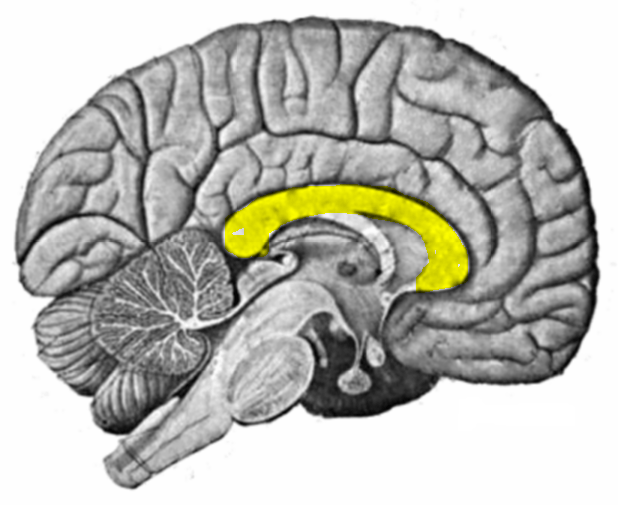


The function of the thalamus is
a balance center
a thermostat
a relay station to other brain parts
to regulate sleep
Balance and coordination are most associated with the
thalamus
frontal cortex
hippocampus
cerebellum
If a neurosurgeon were to stimulate your left motor cortex, what would likely happen?
you would move your right leg
you would feel tingling on the right side of your body
you would not be able to speak
you would lose your memory
Language is most associated with the
left hemisphere
right hemisphere
temporal lobe
parietal lobe
Logical decision making is processed here.
occipital lobe
visual cortex
frontal lobe
thalamus
The area of the brain that regulates hunger, thirst and other drives.
thalamus
hypothalamus
amygdala
cerebellum
Very important in sustaining life.
medulla
cerebellum
hippocampus
frontal cortex
This structure allows the left and right hemisphere of the brain to communicate.
hippocampus
cerebral cortex
hypothalamus
corpus callosum

Identify the structure labeled as A.
Cerebrum
Frontal Lobes
Parietal Lobes
Occipital Lobes

Identify the structure labeled as B.
Parietal Lobes
Occipital Lobes
Cerebrum
Frontal Lobes

Identify the structure labeled as C.
Occipital Lobes
Cerebrum
Frontal Lobes
Parietal Lobes

Identify the structure labeled as D.
Frontal Lobes
Occipital Lobes
Parietal Lobes
Cerebrum

Identify the structure labeled as A.
Pons
Temporal Lobes
Parietal Lobes
Cerebellum

Identify the structure labeled as B.
Brain Stem
Frontal Lobes
Occipital Lobes
Pons

Identify the structure labeled as C.
Cerebellum
Occipital Lobes
Brain Stem
Temporal Lobes

Identify the structure labeled as D.
Medulla Oblongata
Temporal Lobes
Frontal Lobes
Brain Stem

Identify the structure labeled as E.
Temporal Lobes
Brain Stem
Parietal Lobes
Cerebellum

Identify the structure labeled as H.
Cerebellum
Frontal Lobes
Temporal Lobes
Brain Stem

Which letter represents the Frontal Lobes?
A
G
F
E

Which letter represents the Cerebellum?
D
A
B
C

Which letter represents the Occipital Lobes?
F
D
E
G

Which letter represents the Temporal Lobes?
F
E
B
A

Which letter represents the Medulla Oblongata?
A
B
C
D

Which letter represents the Pons?
A
B
C
D

Which letter represents the Parietal Lobes?
D
E
F
G

Which letter represents the Cerebellum?
A
B
C
D

Which letter represents the Occipital Lobes?
A
B
C
D

Which letter represents the Medulla Oblongata?
A
B
C
D

Which letter represents the Pons?
A
B
C
D

