wayground logo

Free Printable Worksheets

Font size

S
M
L
XL
Worksheets

Unit 2 Optics Review

Total questions: 37

Worksheet time: 53mins

Name
Class
Date
1.

Which of these statements about light rays are true?

a)

Light travels in a straight line

b)

Light travels forward

c)

A bundle of light rays is called a beam of light

2.

An example of a luminous object is _______

a)

the moon

b)

the star

c)

the sun

d)

the sky

3.

The bouncing of light off an object is ....

a)

a mirror

b)

absorption

c)

reflection

d)

refraction

4.
Which has the LONGEST wavelength and, therefore, the lowest frequency/energy
a)
Gamma Rays
b)
Radio Waves
c)
Visible Light
d)
Infrared rays
5.
Which has the SHORTEST wavelength and, therefore, the highest frequency/most energy
a)
Radio waves
b)
Ultraviolet Rays
c)
Gamma Rays
d)
X-rays
6.
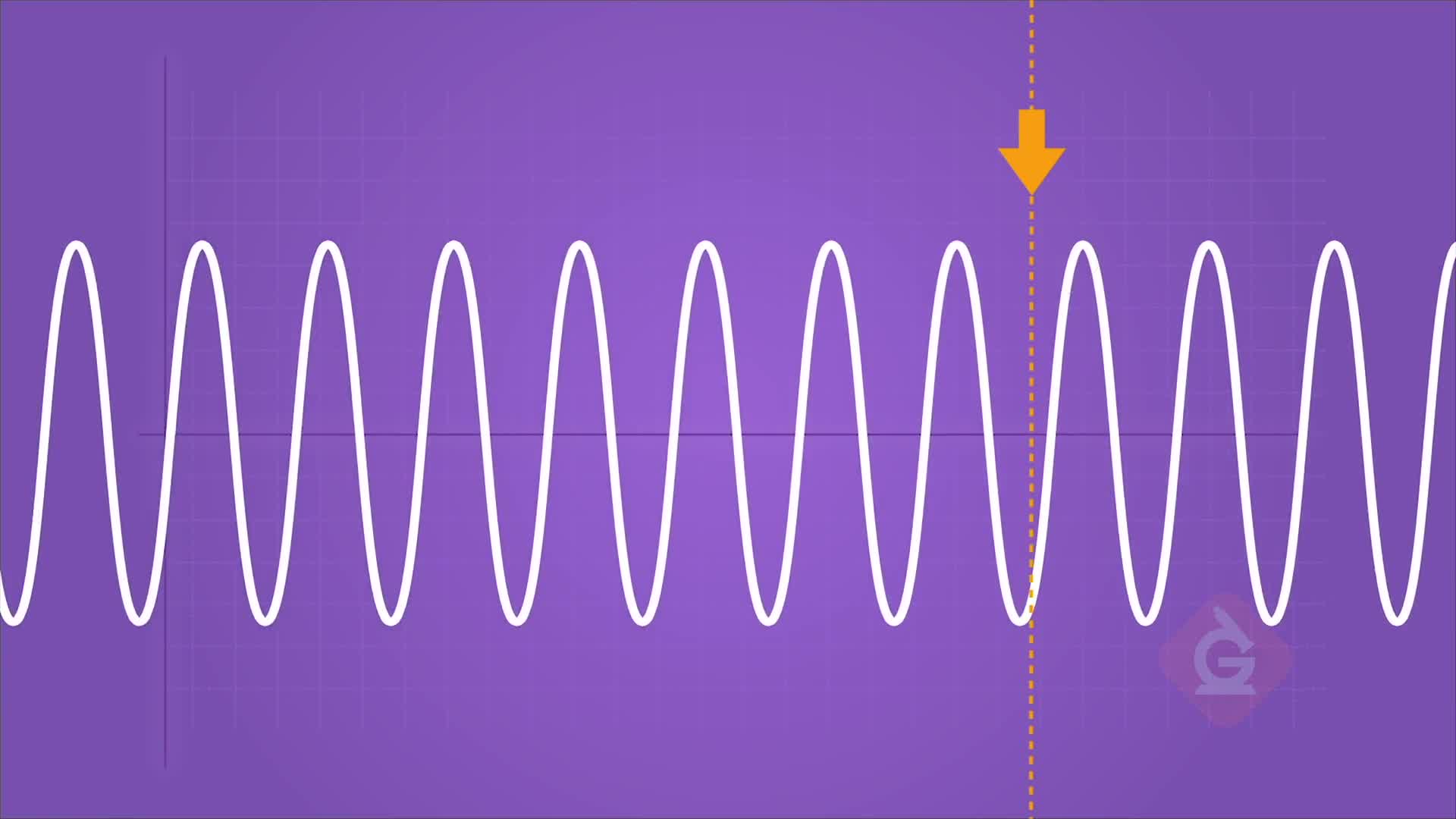
The height of the wave from the rest position is known as the _____________.
a)
amplitude
b)
crest
c)
trough
d)
wavelength
7.
What is the number of waves that pass a point in one second?
a)
Amplitude
b)
Frequency
c)
Period
d)
Wavelength
8.

What is a spectrum?

a)

White light refracted to form many colours

b)

White light refracted to form three primary colours

c)

Red light refracted to form many colours

9.
Which type of mirror magnifies a close up image, like a make-up mirror.
a)
Concave
b)
Convex
c)
Specular
d)
Plane
10.

What is the scientific principle that states light can be bent when it passes through a translucent medium?

a)

Reflection

b)

Refraction

c)

Diffusion

d)

Absorption

11.

What is the term applied to light as it bounces off internal surfaces of our built environment?

a)

Reflection

b)

Refraction

c)

Diffusion

d)

Absorption

12.

The highest point on a wave, F on the diagram.

a)

trough

b)

amplitude

c)

crest

d)

wavelength

13.
Light is a form of 
a)
energy
b)
radiation
c)
reflection
14.
Material that allows light to pass through allowing you to see "clearly" to the other side
a)
opaque
b)
translucent
c)
transparent
15.
How does light energy move?
a)

In a straight line

b)
In different directions
16.
A red bird appears red because it REFLECTS what color
a)
Magenta
b)
Red
c)
Cyan
d)
Doesn't reflect any light
17.
This is an example of...
a)
Reflection
b)
Refraction
c)
Polarization
d)
Spectrum
18.

The angle of incidence is equal to the angle of reflection

a)

Law of Reflection

b)

Law of Light

c)

Incidence Ray

d)

The Normal

19.
Opaque means...
a)
No light passes through it
b)
All light passes through it
c)
Some light passes through it
20.

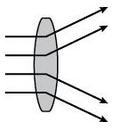
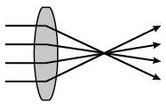
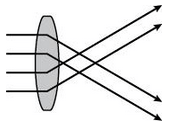
Which lens represents the path light takes through a diverging lens?

a)
b)
c)
d)
21.

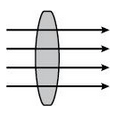
Which figure represents the path light takes through a converging lens?
a)
b)
c)
d)
22.

A lens that is thicker in the middle than on the outside is called ___.

a)

diverging

b)

concave

c)

convex

d)

achromatic

23.

Which optical technology do we use to observe small things?

a)

Telescope

b)

Microscope

c)

Camera

d)

ALL of them

24.

What do all optical technologies need?

a)

Light

b)

Something to focus

c)

A machine

d)

A magnifying glass

25.
Which part of the eye opens in dark places and closes in bright places?  
a)
Cornea
b)
Retina
c)
Pupil
d)
Lens
26.
Which part of the eye is where images are converted to nerve impulses?  
a)
Retina
b)
Cornea
c)
Optic Nerve
d)
Lens
27.
True
a)
Cone cells detect light and dark
b)
Rods focus light
c)
Cones detect color
d)
Rods detect color
28.

Which statement is true?

a)

Rods detect light.

b)

Rods detect colour.

c)

Rods are the material which colours the eye.

d)

All of the above

29.
What is letter B
a)
Optic nerve
b)
Lens
c)
Cornea
d)
Retina
30.
What is letter E?
a)
Vitreous humor
b)
Retina
c)
Cornea
d)
Optic nerve
31.
What is letter F?
a)
Retina
b)
Pupil
c)
Vitreous humor
d)
Iris
32.
What is letter G?
a)
Sclera
b)
Retina
c)
Lens
d)
Vitreous humor
33.
What is letter I?
a)
Cornea
b)
Lens
c)
Vitreous humor
d)
Optic nerve
34.
When you enter a dark room, what does the pupil do
a)
get larger
b)
get smaller
35.
what is the iris
a)
the colored part of the eye that controls the size of the pupil
b)
Transparent jellylike fluid that fills the eye and refracts light.
c)
Sends messages picked up by the retina to the brain 
d)
Hole passes different amounts of light
36.
This part of the eye has photoreceptors called rods and cones.  They help us to see color and see at night.  It is called:
a)
optic nerve
b)
brain
c)
retina
d)
cornea
37.
The outer layer of the eye is the ________.
a)
Sclera
b)
Retina
c)
Choroid
d)
Cornea