wayground logo

Free Printable Worksheets

Font size

S
M
L
XL
Worksheets

Physical Science Complete Review

Total questions: 70

Worksheet time: 36mins

Name
Class
Date
1.
Energy transformations occur when...
a)
energy is created through conduction
b)
energy changes from one form to another
c)
two forces slide together that are touching
d)
a chemical reaction takes place
2.
What does the Law of Conservation of Energy state?
a)
That energy is the movement of electrons within an atom.
b)
That energy is a means to an end.
c)
That energy can be created when needed.
d)
That energy cannot be created or destroyed.
3.

Gravitational potential energy depends on the______ and ______ of the object.

a)

force, energy

b)

speed, height

c)

mass, speed

d)

height, mass

4.

Match the following

a)
1.

lots of attraction and only virates

b)
2.

attracted to each other and move past each other

c)
3.

very little attraction but lots of energy

5.

When a liquid is cooled the molecules

a)

spread out

b)

get closer together

c)

become one

d)

take a vaction

6.
Kinetic energy is the energy of ______.
a)
Motion
b)
Position
c)
Reaction
d)
Sound
7.

Which is energy that is transferred between objects due to a temperature difference between those objects?

a)

heat

b)

radiation

c)

conduction

d)

insulation

8.

Which term means the transfer of energy by electromagnetic waves, such as light and microwaves?

a)

Conduction

b)

Radiation

c)

Convection

d)

heat

9.

Which item is an example of conduction?

a)

Sun

b)

a metal spoon in a hot pot of soup

c)

weather patterns

d)

fire pit

10.

Which will heat up slower?

a)

water

b)

lead

c)

granite

d)

iron

11.

Which will heat up faster?

a)

copper

b)

granite

c)

iron

d)

basalt

12.
What would be the effect on the particles if more heat is supplied to the system?
a)
They would slow down
b)
They would stop moving
c)
They would speed up
d)
There would be no effect
13.

What type of wave is this?

a)

Transverse

b)

Longitudinal

14.
A wave transfers:
a)
matter
b)
water
c)
energy
d)
particles
15.

How would you describe the movement of matter in a transverse wave?

a)

perpendicular to direction of energy

b)

parallel to the direction of energy

c)

In zigzags

d)

Linear

16.
What type of wave moves by pushing together and spreading apart in a parallel direction to the way the wave travels?
a)
longitudinal
b)
transverse
c)
ocean 
d)
radio 
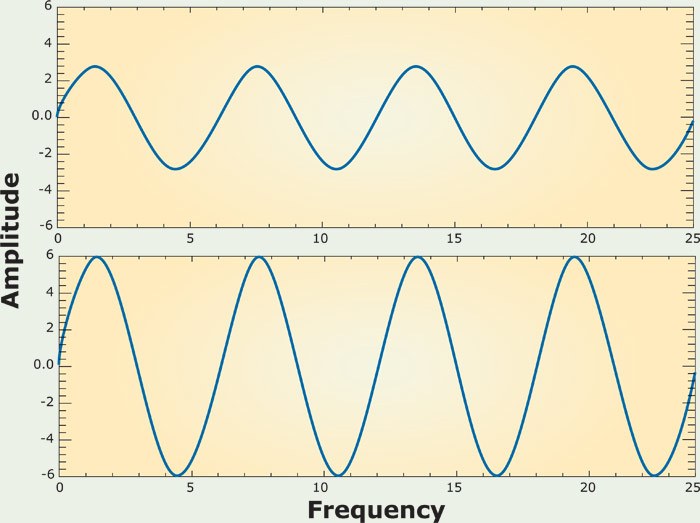
17.
Which property of these waves differs?
a)
Frequency
b)
Wavelength
c)
Amplitude
d)
Pitch
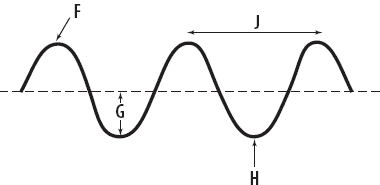
18.
Which letter is a crest?
a)
F
b)
G
c)
H
d)
J
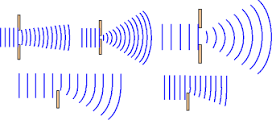
19.
a)

Diffraction

b)

Interference

c)

Refraction

d)

Reflection

e)

Absorption

20.
A wave that does not require a medium
a)
A. electromagnetic  wave
b)
B. surface wave
c)
C. medium
d)
D. transverse wave
21.
a)

Constructive Interference

b)

Destructive Interference

c)

Reflection

d)

Refraction

22.
a)

absorption

b)

diffraction

c)

reflection

d)

refraction

e)

interference

23.
When the car moves AWAY from you, its horn seems...
a)
Low pitched
b)
High pitched
c)
Normal
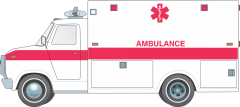
24.
When an ambulance move TOWARD you it sounds ________ pitched. 
a)
high
b)
low
c)
medium
25.
This is an example of a _______ circuit
a)
open
b)
series
c)
parallel
d)
square
26.
This circuit has more than one loop. When one light goes out, the others stay on. 
a)
closed circuit
b)
series circuit
c)
parallel circuit
d)
open circuit
27.
In a parallel circuit if one of the light bulbs burns out the rest _________.
a)
stop the flow of electricity
b)
 can still light up
c)
 will go out
d)
of the light bulbs burn out also
28.

A bulb draws 0.5 amperes from a 120-volt supply. What is the resistance of the bulb?

a)

200 Ω

b)

240 Ω

c)

250 Ω

d)

300 Ω

29.

A current of 2 amperes is flowing through a resistor of 15 ohms. What is the voltage across the resistor?

(a)  

30.

What does this image show?

a)

Parallel circuit

b)

Series circuit

c)

Magnet

d)

Electromagnet

31.

Increasing the number of coils in an electromagnet will _________ the power of the magnet.

a)

decrease

b)

increase

c)

not affect

32.

Identify which law applies.

a)

Newton's 1st law of motion

b)

Newton's 2nd law of motion

c)

Newton's 3rd law of motion

33.

Identify which law applies.

a)

Newton's 1st law of motion

b)

Newton's 2nd law of motion

c)

Newton's 3rd law of motion

34.

What does a flat, horizontal line represent on a speed graph?

a)

Constant speed

b)

No motion

c)

Acceleration

d)

Returning to start

35.

Describe the motion between 20 and 30 seconds.

a)

Accelerating

b)

Stopped

c)

Constant speed

d)

Coming back to start

36.

The center of an atom is called the ________________.

a)

electron cloud

b)

nucleus

c)

neutrion

d)

nuetron

37.

The vertical (up and down) columns that contain elements with similar properties in the Periodic Table are called

a)

groups

b)

towers

c)

periods

d)

atomic numbers

38.

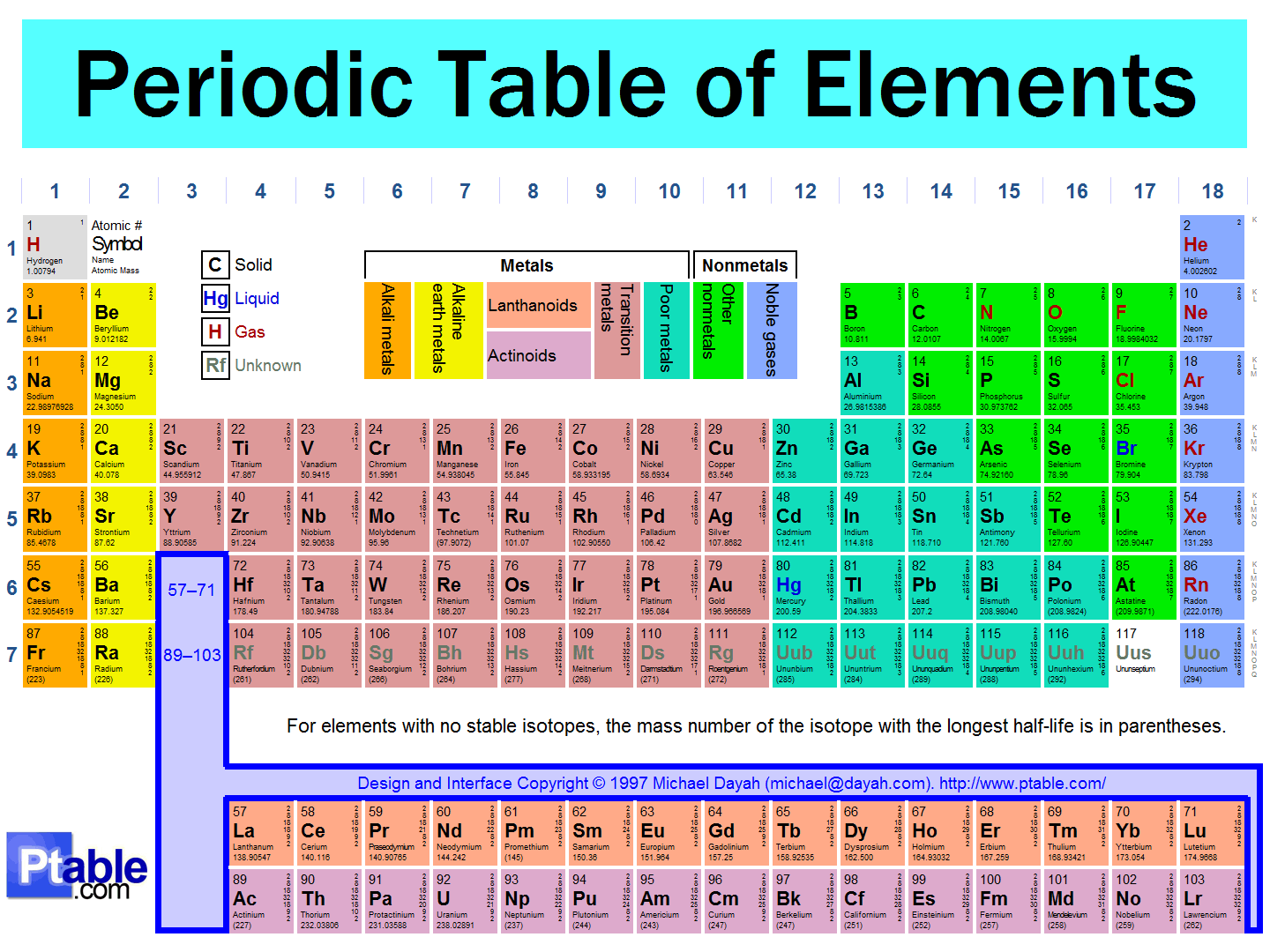
What element is located in Group 18 & Period 5?

a)

Xenon

b)

Krypton

c)

Radon

d)

Helium

39.
One disadvantage of nuclear energy is ___.
a)
it is a fossil fuel
b)
it leaves behind radioactive waste
c)
it emits large amounts of pollution into the atmosphere
d)
there are no disadvantages
40.
The splitting of a nucleus into smaller nuclei is
a)
fusion
b)
fission
c)
decay
d)
gamma radiation
41.
What is Half-life?
a)
The amount of time it takes for some of the nuclei in a sample of the isotope to decay
b)
The amount of time it takes for half the electrons in a sample of the isotope to decay
c)
The amount of time it takes for half the nuclei in a sample of the isotope to decay
d)
the amount of time it takes to double the nuclei in a sample of the isotope to decay
42.
The half-life of Zn-71 is 2.4 minutes. If one had 100.0 g at the beginning, how many grams would be left after 7.2 minutes has elapsed?
a)
100.0g
b)
50.0g
c)
12.5g
d)
8.5g
43.

CH4

a)

Ionic Bond

b)

Covalent Bond

44.

Al2O3

a)

Ionic Bond

b)

Covalent Bond

45.
 Li2O
a)
Dilithium oxideDilithium oxide
b)
Lithium oxide
c)
Lithium dioxide
46.
A covalent compound made of one sulfur and two oxygen atoms would be named
a)
sulfur dioxide.
b)
sulfur oxide.
c)
disulfur oxide.
d)
sulfide oxygen.
47.
The name of P₄S₁₀ is
a)
phosphorous sulfide
b)
phosphorus sulfide
c)
tetraphosphorus decasulfide
d)
phosphorus (X) sulfide
48.

Balance the following:

____ Fe + ____ Cl2 → ____ FeCl3

a)
1,1,2
b)
1,3,1
c)
2,2,3
d)
2,3,2
49.

Which type of reaction is:

3 Pb + 2 H3PO4 → 3 H2 + Pb3(PO4)2

a)
Synthesis
b)
Single Displacement
c)
Double Displacement
d)
Combustion
50.

In the equation, 2Mg + O2 ---> 2MgO, which are the reactants?

a)

Mg and O2

b)

MgO

c)

Mg and MgO

d)

O and MgO

51.

You are given a 40 mL solution in a beaker. You add solute to the beaker and you observed some particles did not dissolve. What solutions is it?

a)

Saturated

b)

Unsaturated

c)

Concentrated

d)

Supersaturated

52.

How does a solution become supersaturated?

a)

dissolve lots of solute in it.

b)

dissolve a little solute in it. 

c)

dissolve more solute than you should be able to. 

d)

dissolve a solvent in it. 

53.

Which factor does NOT affect the solubility of a solid in a liquid?

a)

Temperature

b)

Pressure

c)

Nature of the solute and solvent

d)

Stirring

54.

Boyles Law Tells That

a)

The More The Volume The Less The Temperature

b)

The More The Temperature The Less The Pressure

c)

The More The Volume The More The Pressure

d)

The More The Pressure The Less The Volume

55.
Charles' Law States...
a)
As Pressure goes up volume goes down
b)
As Pressure goes up temperature goes up
c)
As Volume goes up temperature goes up 
d)
As Pressure goes down volume goes down 
56.

What is the pH range of an acid?

a)

4-6

b)

1-7

c)

1-6

d)

8-14

57.

What would happen to blue litmus paper if it came into contact with an acid?

a)

It would turn red

b)

It would turn green

c)

It would stay blue

d)

It would turn pink

58.

What would happen to red litmus paper when it encounters a base?

a)

It turns blue

b)

It stays red

c)

It turns purple

d)

It turns green

59.
What would be considered the weakest base? 
a)
8
b)
14
c)

7

d)

11

60.
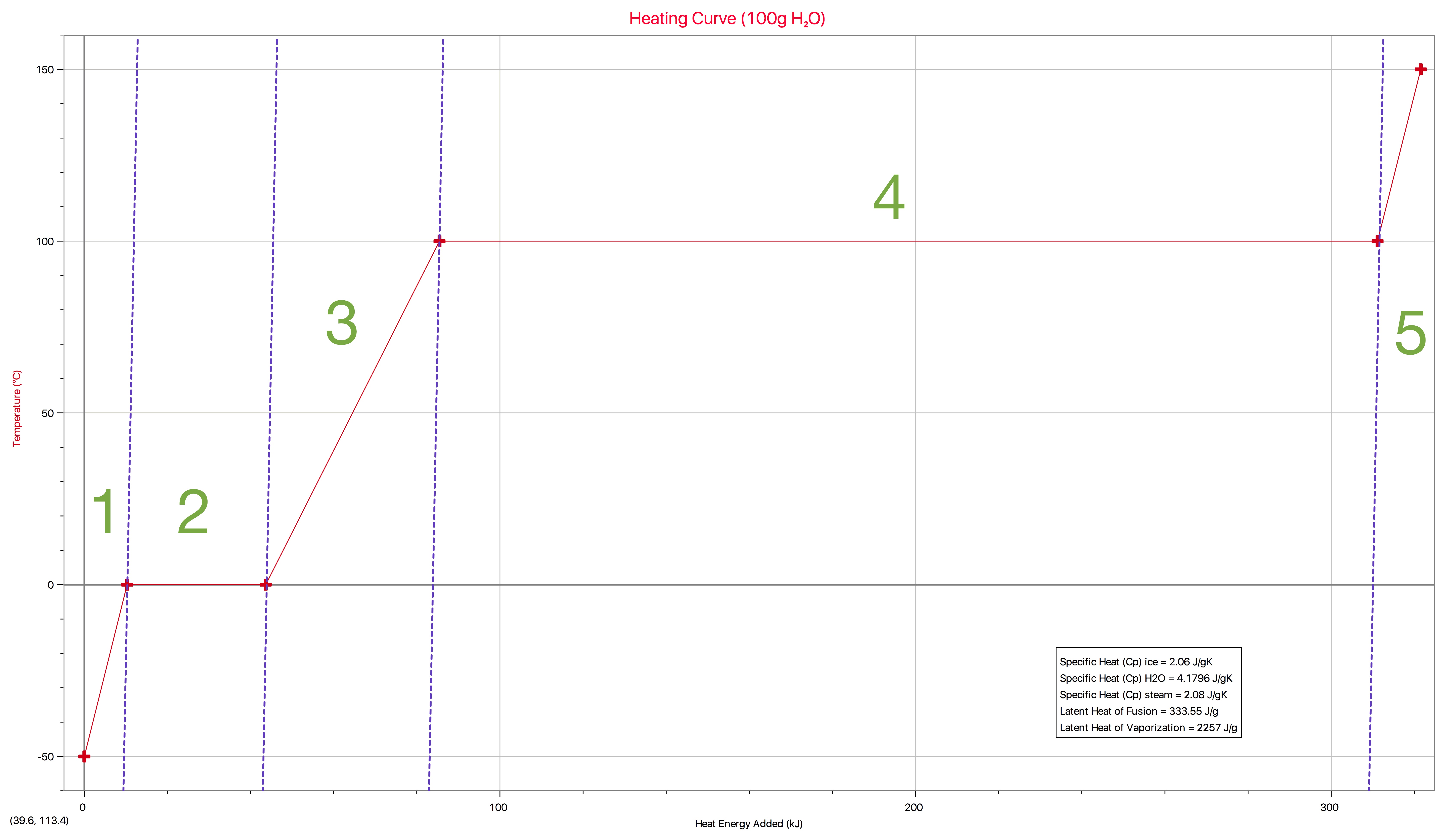
In which region(s) does temperature remain constant?
a)
Region 1, 3, & 5
b)
Region 2 & 4
c)
Region 1 only
d)
Region 1 & 2
61.
In which region(s) of the graph would the substance be a solid only?
a)
Region 1
b)
Region 2
c)
Region 3
d)
Region 4
62.
In which region(s) of the graph would the substance be a solid and a liquid?
a)
Region 1
b)
Region 2
c)
Region 3
d)
Region 4
63.

How many grams of K2Cr2O7, are soluble in 100 g of water at 95 ºC?

a)

83 grams

b)

75 grams

c)

40 grams

d)

12 grams

64.
Which solute is the least soluble at 90 ⁰C?
a)
SO2
b)
KClO3
c)
KI
d)
HCl
65.
Negative ions are called
a)
Cations
b)
Electrons
c)
Anions
d)
Neutrons
66.
What is the number of neutrons?
a)
34
b)
79
c)
45
d)
35
67.
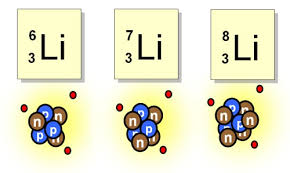
Which atom has  4 neutrons?
a)
Li-6
b)
Li-7
c)
Li-8
d)
they have the same # of neutrons
68.

Match each definition with the correct term

a)

An atom that has lost or gained an electron

1.

Ion

b)

An atom of an element with a different amount of neutrons

2.

Isotope

c)

A positively charged atom

3.

Cation

d)

A negatively charged atom

4.

Anion

69.

What color does red litmus paper turn when exposed to a base?

a)

Blue

b)

Red

c)

Green

d)

Yellow

70.

What happens to the pitch of a sound as the source moves toward you?

a)

It becomes higher

b)

It disappears

c)

It stays the same

d)

It becomes lower