wayground logo

Free Printable Worksheets

Font size

S
M
L
XL
Worksheets

Physical Science Spring Final Question Pool

Total questions: 210

Worksheet time: 18hrs 30mins

Name
Class
Date
1.
Which of the following is a statement of the law of conservation of mass?
a)
Mass is created but not destroyed.
b)
Mass is destroyed but not created.
c)
Mass is neither created nor destroyed.
d)
Mass is both created and destroyed, depending on the chemical reaction.
2.
In what type of reaction does one reactant form two or or more products?
a)
Synthesis
b)
Decomposition
c)
Single replacement
d)
Double replacement
3.
What particle is transferred from one atom to another in a redox reaction?
a)
Electron
b)
Neutron
c)
Proton
d)
Nucleus
4.
How are reactions related to chemical bonds?
a)
Bonds in the reactants are broken, and bonds in the products are formed.
b)
Bonds in the products are broken, and bonds in the reactants are formed.
c)
Bonds in both the reactants and products are broken.
d)
Bonds are formed in both the reactants and the products.
5.
What type of reaction always releases energy?
a)
Endothermic
b)
Exothermic
c)
Decomposition
d)
Oxidation-reduction
6.
In general, an increase in temperature
a)
increases reaction rate.
b)
decreases reaction rate.
c)
does not affect reaction rate.
d)
acts as a catalyst.
7.
How do I calculate the molar mass of an element?
a)
Google
b)
By copying the atomic weight/mass of the element from the periodic table
c)
By copying the atomic number of the element
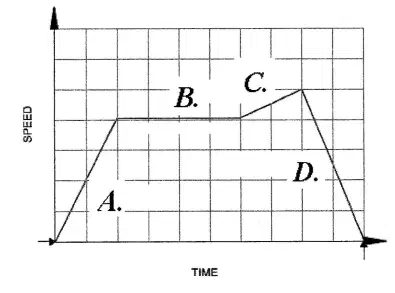
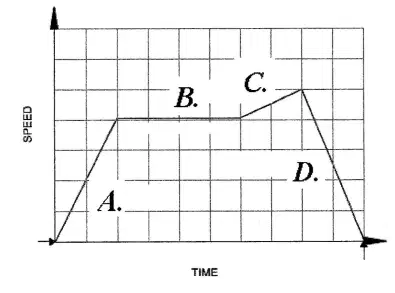
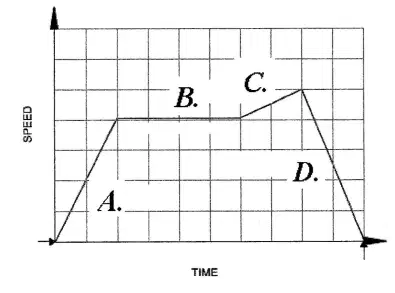
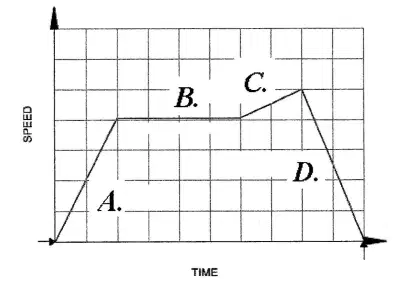
d)
By copying the number of neutrons that element has
8.
How do I calculate the molar mass of a molecule/compound?
a)
Google
b)
By copying the atomic weight/mass of the compound from the periodic table
c)
By multiplying the atomic weight of each element in the molecule/compound by its subscript in the chemical formula, then adding all the products together.
d)
By adding together the atomic numbers of each element in the molecule/compound
9.
What law are we trying to follow when we balance chemical equations?
a)
Law of conservation of energy
b)
Law of conservation of momentum
c)
Law of conservation of mass
d)
Law of gravity
e)
Law of balanced chemical equations
10.
What is the molar mass of elemental fluorine?
a)
9 grams per mole
b)
18.998 grams per mole
c)
2.111 grams per mole
d)
170.982 grams per mole
11.
What is the molar mass of water?
a)
17.007 g/mol
b)
18.015 g/mol
c)
13.983 g/mol
d)
10.000 g/mol
12.
How many moles of oxygen gas, O2, is 287.982 grams of oxygen gas?
a)
0.056 mol
b)
0.111 mol
c)
9 mol
d)
18 mol
13.
How many grams are present in 5.66 mol of CaCO3?
a)
0.06 g CaCO3
b)
17.68 g CaCO3
c)
385.38 g CaCO3
d)
566.49 g CaCO3
14.
Find the number of moles in 508 grams of ethanol (C2H6O).
a)
11.03 mol C2H6O
b)
17.51 mol C2H6O
c)
14741.144 mol C2H6O
d)
23403.05 mol C2H6O
15.
Identify 5 general types of reactions.
a)
Synthesis
b)
Decomposition
c)
Single-replacement
d)
Double-replacement
e)
Combustion
16.
How do chemical reactions involve energy?
a)
Energy is either released or absorbed.
b)
Energy is always absorbed.
c)
Energy is always released.
d)
Energy isn't involved at all.
17.
Is combustion of propane endothermic or exothermic?
a)
Endothermic
b)
Exothermic
18.
Why won't methane react with oxygen at room temperature?
a)
Methane is a liquid at room temperature; therefore, it won't react with oxygen.
b)
The collisions between the methane and oxygen molecules don't have enough energy to cause a reaction.
c)
Methane and oxygen are not able to release enough energy at room temperature to start reacting.
d)
The collisions between the methane and oxygen molecule have too much energy to cause a reaction.
19.
What do we call the energy stored in the chemical bonds of a substance?
a)
Potential energy
b)
Substance energy
c)
Chemical energy
d)
Stored energy
e)
Bond energy
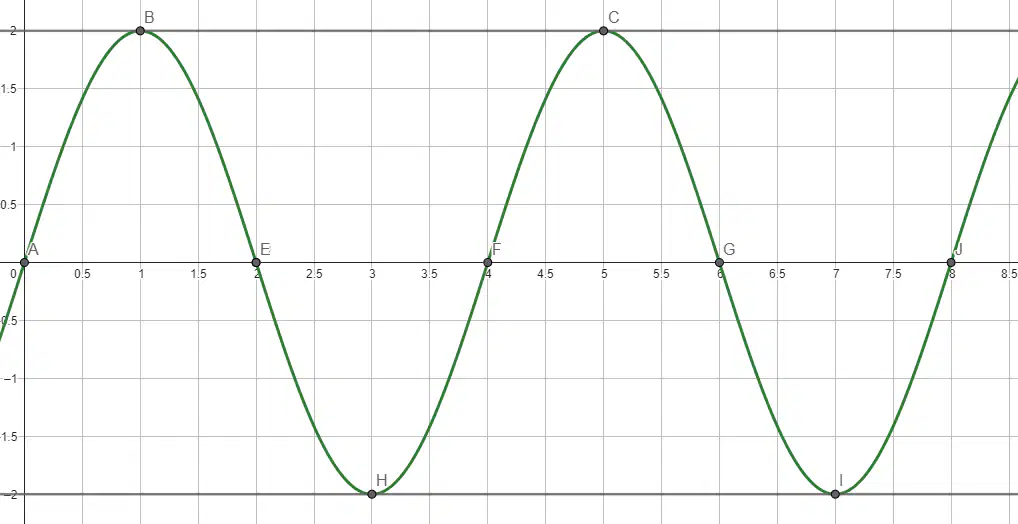
20.
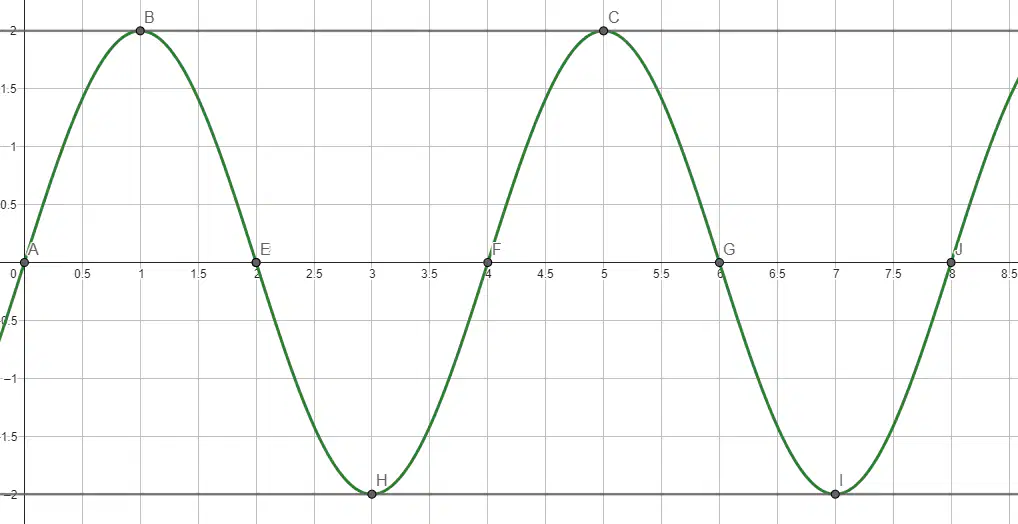
What is a reaction rate?
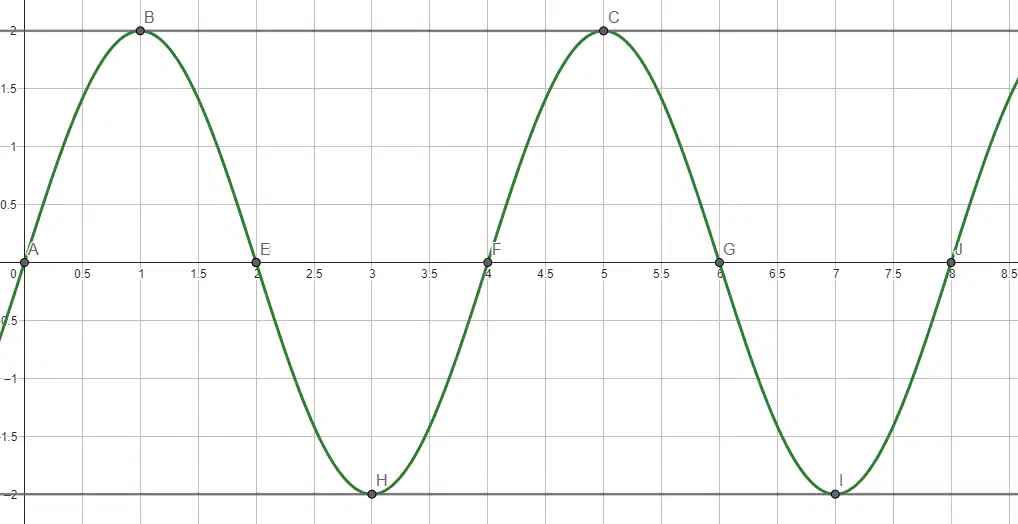
a)
The rate at which the products change into reactants over time
b)
The rate at which the reactants change into products over time
c)
The rate at which the reactants change into products over basil.
d)
The rate at which the reactants dissolve into the products over time.
21.
When you add baking soda to vinegar, the mixture fizzes as CO2 gas is produced. Now, if you were to add water to the vinegar before you mixed in the baking soda, what would happen to the rate of CO2 production? Why?
a)
It would increase since there are more particles to react.
b)
It would decrease since the concentration of the vinegar has decreased.
c)
It would increase since adding water will cause the surface area of the baking soda clumps to increase.
d)
It would decrease since it would lower the temperature of the vinegar.
22.
The reaction between magnesium and hydrochloric acid produces hydrogen. If you increase the concentration of the hydrochloric acid, the reaction takes place faster. Could the acid be considered a catalyst for this reaction reaction? Explain.
a)
No, it isn't since the hydrochloric acid will be used up in the reaction.
b)
Yes, it is since the hydrochloric acid will be used up in the reaction.
c)
No, it isn't since the hydrochloric acid is a product of the reaction.
d)
Yes, it is since the reaction will take place faster.
23.
Identify the following chemical reactions as synthesis, decomposition, single-replacement, double-replacement, or combustion. Pb(NO3)2 + 2HCl ---> PbCl2 +2HNO3
a)
Synthesis
b)
Decomposition
c)
Single-replacement
d)
Double-replacement
e)
Combustion
24.
Identify the following chemical reactions as synthesis, decomposition, single-replacement, double-replacement, or combustion. 2C2H6 + 7O2 ---> 4CO2 + 6H2O
a)
Synthesis
b)
Decomposition
c)
Single-replacement
d)
Double-replacement
e)
Combustion
25.
Identify the following chemical reactions as synthesis, decomposition, single-replacement, double-replacement, or combustion. Ca + 2HCl ---> CaCl2 + H2
a)
Synthesis
b)
Decomposition
c)
Single-replacement
d)
Double-replacement
e)
Combustion
26.
Identify the following chemical reactions as synthesis, decomposition, single-replacement, double-replacement, or combustion. 2 KI --> 2 K + I2
a)
Synthesis
b)
Decomposition
c)
Single-replacement
d)
Double-replacement
e)
Combustion
27.

Balance the following chemical equation: C2H8 + O2 --> CO2 + H2O What should the coefficient of C2H8 be?

(a)  

28.

Balance the following chemical equation: C2H8 + O2 --> CO2 + H2O What should the coefficient of O2 be?

(a)  

29.

Balance the following chemical equation: C2H8 + O2 --> CO2 + H2O What should the coefficient of CO2 be?

(a)  

30.

Balance the following chemical equation: C2H8 + O2 --> CO2 + H2O What should the coefficient of H2O be?

(a)  

31.
The parts of a solution are the
a)
salt and vapor.
b)
solvent and solid.
c)
solute and water.
d)
solute and solvent.
32.
In a solution, the solute is the substance that
a)
dissolves in the solvent.
b)
is in the greatest quantity.
c)
is the liquid.
d)
is a solid.
33.
Sugar dissolves in water through
a)
ionization.
b)
dissocation.
c)
neutralization.
d)
dispersion.
34.
A solution of sodium hydroxide in water is most likely to have a pH close to
a)
14.
b)
7.
c)
5.
d)
3.
35.
Substances that form ions when dissolved in water are called
a)
solutions.
b)
molecules.
c)
polar.
d)
electrolytes.
36.
You have 3.5 L of solution that contains 90.0 grams of sodium chloride. What is the molarity of that solution?
a)
0.44 M
b)
5.39 M
c)
0.44 m
d)
25.71 M
37.
You have 0.8 L of a 0.5 M hydrochloric acid solution. How many moles of HCl does the solution contain?
a)
0.4 mol
b)
0.4 M
c)
40 M
d)
40 mol
e)
0.625 M
38.
What is the concentration as a percent by volume of a liquid solution that had 9.81 L of liquid solute dissolved in 145.6 kL of liquid solvent?
a)
6.74 x 10^-5 %
b)
6.74 x 10^3 %
c)
6.74 x 10^-3 %
d)
6.74 x 10^5 %
39.
What is the concentration as a percent by mass of a 500 gram solution that has 45 grams of solute dissolved in it?
a)
12.5%
b)
11.11%
c)
9%
d)
0.09%
40.
What physical properties of a solution differ from those of its solutes and solvent?
a)
Conductivity
b)
Boiling point
c)
Melting point
d)
Composition
e)
Polarity
41.
Identify the factors that affect dissolving rate.
a)
Temperature
b)
Surface area
c)
Stirring
d)
Kind of solvent
e)
Kind of solute
42.
How does sodium chloride dissolve in water?
a)
Dissociation
b)
Dispersion
c)
Ionization
43.
How do dissociation and ionization differ?
a)
Dissociation keeps the ions that already exist; ionization forms new ions.
b)
Dissociation forms new ions; ionization keeps the ions that already exist.
c)
Dissociation causes the crystals to break into small pieces; ionization forms new ions.
d)
Dissociation causes the crystals to break into small pieces; ionization separates them into ions.
44.
Which of the following is not a term used to describe solutions with different amounts of solute?
a)
Unsaturated
b)
Saturated
c)
Supersaturated
d)
Undersaturated
45.
Identify the three factors that affect solubility of a solute.
a)
Polarity of solvent
b)
Stirring
c)
Temperature
d)
Pressure
e)
Concentration
46.
What is the molarity of a solution of hydrogen chloride and water if 109.374 g of hydrogen chloride was dissolved in 1 liter of water?
a)
3M
b)
.333M
c)
109.374M
d)
3.085M
47.
How much potassium nitrate is needed to make 5 liters of 3-molar solution?
a)
15 grams KNO3
b)
0.1483 grams KNO3
c)
1516.53 grams KNO3
d)
60.6612 grams KNO3
48.
Despite the name, dry cleaning does involve the use of liquid solvents. Which solvent(s) should a dry cleaner use to remove stains?
a)
Polar
b)
Nonpolar
c)
Ionic
d)
Acids/bases
49.
Identify the three general properties of acids.
a)
Taste bitter
b)
Taste sour
c)
Reactive with metals
d)
Slippery
e)
Ability to produce color changes in indicators
50.
Identify the three general properties of bases.
a)
Taste bitter
b)
Taste sour
c)
Ability to produce color changes in indicators
d)
Reactive with metals
e)
Slippery
51.
Identify the two general products of a neutralization reaction.
a)
A solution
b)
A salt
c)
Covalent compound
d)
Water
e)
Pepper
52.
Which would be called a proton donor?
a)
Acid
b)
Base
c)
Neutral
53.
If you needed to take a medicine to handle heartburn (the corrosion of your esophagus by stomach acid), what kind of compound should it be?
a)
An acid
b)
A base
c)
A neutral compound
54.
What are the products of reacting hydrochloric acid, HCl, and sodium hydroxide, NaOH?
a)
Sodium chloride
b)
Water
c)
Sodiochloric acid
d)
Metal salt
e)
Hydrogen gas
55.
What is the hydronium ion?
a)
H3O+
b)
H3O-
c)
OH-
d)
OH+
56.
How is pH related to the concentration of hydronium ions in solution?
a)
The more concentrated the hydronium ions, the higher the pH.
b)
The more concentrated the hydronium ions, the lower the pH.
c)
They aren't related.
57.
What determines the strength of acids and bases?
a)
The degree to which they ionize.
b)
The degree to which they dissociate.
c)
The degree to which they ionize or dissociate.
d)
The concentration of the acid or base.
58.
Suppose that you add another liter of water to a 1-molar solutions of hydrochloric acid, weakening the concentration. How would the pH of the solution change?
a)
The pH would be raised.
b)
The pH would be lowered.
c)
The pH would not be changed.
59.
A solution has a pH of 9. What kind of solution is it?
a)
An acid.
b)
A base.
c)
Neutral.
60.
What is a buffer?
a)
A solution that resist large changes in pH.
b)
A solution that contains a random salt.
c)
A solution that allows for large changes in pH.
d)
A solution that tells us the pH of a solution.
61.
What do we need in order to determine if something is moving?
a)
Frame of reference
b)
Motion
c)
Eyes
d)
Reference point
62.
Displacement is distance combined with
a)
direction.
b)
speed.
c)
velocity.
d)
magnitude.
63.
How is distance and displacement different? (Remember: scalar means that it is a "regular" number. No direction attached.)
a)
Distance is a vector quantity; displacement is a scalar.
b)
Distance is a number; displacement is a direction.
c)
Distance is a scalar quantity; displacement is a vector.
d)
Distance is a direction; displacement is a number.
64.
What is the distance traveled of a person who walks 15 units to the left, 9 units up, 5 units left, and 9 units downwards?
a)
20 units
b)
-20 units
c)
-38 units
d)
38 units
65.
Displacement vectors of 3 m and 5 m in the same direction combine to make a displacement vector with a magnitude of
a)
2 m.
b)
0 m.
c)
8 m.
d)
15 m.
66.
What is the displacement of a person who walks 4 blocks east, 9 blocks north, 1 block west, and 10 blocks south?
a)
About 2.83 blocks south and east
b)
About 3.16 blocks south and east
c)
24 blocks south and east
d)
About 1.41 blocks south and east
67.
What is the distance of a person who travels around a square with a side length of 4 inches?
a)
0 inches
b)
12 inches
c)
16 feet
d)
16 inches
68.
What is the approximate distance traveled of someone who travels 270 degrees around a circle with a radius of 4 m? (Remember, C = 2*pi*r, and there is 360 degrees for a full circle.)
a)
6.283 m
b)
12.566 m
c)
18.850 m
d)
25.133 m
69.
If a boat is currently traveling north on a river at 45 km/h, and the river flows south at a rate of 45 km/h, what is the speed of the boat relative to the riverbank?
a)
0 km/h
b)
90 km/h
c)
About 63.64 km/h
d)
About 9.49 km/h
e)
About 63.64 m/s
70.
The slope of a distance-time graph is equal to the
a)
acceleration.
b)
displacement.
c)
motion.
d)
speed.
71.
What is the average speed from 0 seconds to 5 seconds?
a)
0.8 m/s
b)
2 m/s
c)
-2 m/s
d)
-0.8 m/s
e)
0.8 km/h
72.
On a distance vs time graph, the line of an object at rest is a
a)
curved line with a slope of zero.
b)
flat line with a slope of zero.
c)
jagged line with a negative slope.
d)
curved line with a positive slope.
73.
A bus is traveling north at 20.0 m/s. A child then stands up and walks toward the front of the bus at 1.3 m/s. What is the child's resultant velocity?
a)
18.7 m/s south
b)
18.7 m/s north
c)
21.3 m/s north
d)
21.3 m/s south
74.
Velocity is a vector composed of
a)
Distance
b)
Speed
c)
Displacement
d)
Acceleration
e)
Direction
75.
The average speed of a runner who runs 250 m in 3.2 min is
a)
78.1 m/s.
b)
1.3 m/s.
c)
800 m/s.
d)
13.3 m/s.
76.
Which of the following is not a vector quantity?
a)
Velocity
b)
Displacement
c)
Distance
d)
Acceleration
e)
All are vector quantities.
77.
A race car drives around a circular race track at a constant speed. Which of the following statements is TRUE?
a)
All given statements are true.
b)
A speed-time graph of the car's motion would be a horizontal line.
c)
A distance-time graph of the car's motion would be a straight line with a positive slope.
d)
The velocity of the car is constantly changing.
e)
The car is constantly accelerating.
78.
A girl moves at 2 m/s east delivering newspapers. She throws a newspaper directly behind her at 2 m/s. In the frame of reference of someone standing still nearby, what is the motion of the newspaper?
a)
The paper drops vertically to the ground.
b)
The paper drops but moves eastwards for a little bit of time.
c)
The paper drops but moves westwards for a little bit of time.
d)
The paper doesn't move at all.
79.
What is the magnitude of acceleration due to gravity during free fall?
a)
9.81 m/s
b)
9.81 m/s^2
c)
8.91 m/s^2
d)
8.91 m/s
80.
Which situation, if any, does not involve any acceleration?
a)
A car slows down on a straight section of a highway.
b)
A car takes a right turn down a road, keeping its speed constant.
c)
A car takes a left turn at a stop sign.
d)
A car travels down a straight road at 70 mph.
e)
All situations have acceleration.
81.
Two trains leave a station at the same time. Train A travels at a constant speed of 16 m/s. Train B starts at 5.0 m/s but accelerates constantly at 1.0 m/s^2. After 10 seconds, which train has the greater speed?
a)
Train A
b)
Train B
82.
Describe Region A's motion.
a)
Steady acceleration
b)
Steady deceleration
c)
Steady speed
83.
Describe Region B's motion.
a)
Steady acceleration
b)
Steady deceleration
c)
Steady speed
84.
Describe Region C's motion.
a)
Steady acceleration
b)
Steady deceleration
c)
Steady speed
85.
Describe Region D's motion.
a)
Steady acceleration
b)
Steady deceleration
c)
Steady speed
86.
A person riding a bike accelerates at a rate of 2.0 m/s over 3 seconds. If the person's final velocity was 10.0 m/s, what was the person's initial velocity?
a)
-6.67 m/s
b)
6.67 m/s
c)
-4 m/s
d)
4 m/s
87.
How can you find acceleration on a speed-time graph?
a)
The slope of a line on the graph
b)
The position of a line on the graph
c)
The dots on the graph
d)
The curviness of the graph
88.
The rate at which velocity is changing at a given instant is described by
a)
instantaneous acceleration.
b)
average speed.
c)
constant speed.
d)
average acceleration.
e)
deceleration.
89.
A ball just dropped is an example of
a)
constant speed.
b)
instantaneous speed.
c)
combining displacements.
d)
free fall.
90.
Moving from 0 m/s to 25 m/s in 8.0 s equals an average acceleration of
a)
0.32 m/s.
b)
0.32 m/s^2.
c)
3.1 m/s.
d)
3.1 m/s^2.
91.
Which is not a force?
a)
Friction
b)
Gravity
c)
Momentum
d)
Weight
92.
You push on a box and are unable to move it. What force opposes your push?
a)
Static friction
b)
Rolling friction
c)
Sliding friction
d)
Air resistance
93.
Air resistance depends on
a)
the velocity of a moving object.
b)
the weight of a moving object.
c)
the mass of a moving object.
d)
the inertia of a moving object.
94.
What force besides gravity acts on a projectile that is moving?
a)
Weak nuclear
b)
Electrical
c)
Magnetic
d)
Air resistance
95.
Newton's first law of motion is sometimes called the law of
a)
inertia.
b)
conservation.
c)
momentum.
d)
air resistance.
96.
The SI unit of force is the
a)
joule.
b)
kilogram.
c)
meter.
d)
newton.
97.
Which of the following relationships is correct?
a)
1 N = 1 kg
b)
1 N = 1 kg * m
c)
1 N = 1 kg * m/s
d)
1 N = 1 kg * m/s^2
98.
When a pair of balanced forces acts on an object, the net force that results is
a)
greater in size than both forces combined.
b)
greater in size than one of the forces.
c)
equal in size to one of the forces.
d)
equal to zero.
99.
How is the motion of an object affected when a force acts on it?
a)
It moves in the direction that the force is being applied.
b)
It accelerates in the direction that the force is being applied.
c)
It stops a moving object.
d)
It isn't; forces don't affect the motion of an object.
100.
Suppose that Charlie and David are pulling on a car in opposite directions. Charlie pulls on the car with 400 N of force, and David pulls on the car with 450 N of force. What's the net force on the car, ignoring static friction?
a)
50 N towards Charlie
b)
50 N towards David
c)
950 N towards Charlie
d)
950 N towards David
101.
Two identical coins are knocked off a table at the same time by different forces. Which coin will hit the floor first?
a)
The coin with the lighter force applied
b)
The coin with the heavier force applied
c)
Both will hit the floor at the same time
d)
The heavier coin
102.
Inertia is
a)
an object's tendency to resist changes in motion.
b)
an object's tendency to resist moving.
c)
an object's tendency to keep moving.
d)
an object's mass.
103.
(Remember, we've redefined this!) Mass is
a)
a measure of the inertia of an object.
b)
a measure of the force of gravity acting on an object.
c)
the amount of matter in an object.
d)
measured in Newtons.
104.
What does Newton's third law of motion state?
a)
The state of motion of an object does not change as long as the net force acting on the object is zero.
b)
Whenever one object exerts a force on a second object, the second object exerts an equal and opposite force on the first object
c)
The acceleration of an object is equal to the net force acting on it divided by the object’s mass.
d)
If no net force acts on a system, then the total amount of momentum of the system does not change.
105.
A book rests on a table. Identify the action force.
a)
Book's weight pushing on table.
b)
Book's weight acting on book.
c)
Book itself pulling on table.
d)
Table pushing on book.
e)
Table pushing on the table.
106.
A book rests on a table. Identify the reaction force.
a)
Table pushing on book.
b)
Book's weight acting on book.
c)
Book itself pulling on table.
d)
Book's weight pushing on table.
e)
Table pushing on the table.
107.
Which force is able to act over the longest distance?
a)
Electromagnetic force
b)
Strong nuclear force
c)
Weak nuclear force
d)
Gravitational force
108.
Which force is the strongest at its appropriate distances?
a)
Electromagnetic force
b)
Strong nuclear force
c)
Weak nuclear force
d)
Gravitational force
109.
The gravitational attraction between two objects is determined by:
a)
The mass of the two objects
b)
The distance between the objects
c)
The diameter of the objects
d)
The density of the objects
e)
The weight of the objects
110.
Objects are able to orbit others (not necessarily planets) due to
a)
centrifugal force.
b)
centripetal force.
c)
gravity.
d)
inertia.
e)
friction.
111.
Which force is able to attract and repel?
a)
Weak nuclear force
b)
Strong nuclear force
c)
Electromagnetic force
d)
Gravitational force
112.

If a force of 10 N is applied to an object with a mass of 2 kg, the object will accelerate at (a)   m/s^2.

113.
The acceleration due to gravity on the surface of Earth's moon is about one sixth (1/6) the acceleration due to gravity on Earth's surface. The weight of a space probe on the surface of the moon is about
a)
12 times greater than its weight on Earth's surface.
b)
six times greater than its weight on Earth's surface.
c)
one sixth its weight on Earth's surface.
d)
the same as its weight on Earth's surface.
114.

The momentum of a 30-kilogram ice skate gliding across the ice at a speed of 10 m/s is (a)   kg*m/s.

115.
Three forces act on a wooden crate that is initially at rest. Force A acts with 3 N to the right. Force B acts with 8 N to the right. Force C acts with 5 N to the right. What is the net force acting on the crate?
a)
16 N to the right
b)
16 N to the left
c)
0 N
d)
6 N to the right
e)
6 N to the left
116.

Suppose a 20 kg object is pushed from 1 m/s to 6 m/s forwards in 5 seconds. The force acting on the object was (a)   N.

117.

The acceleration of a 10-kilogram toy car acted on by a net force of 250 N was (a)   m/s^2.

118.
The velocity of a 15-gram object that has a momentum of -20 kg*m/s is ________________ .
a)
-1333.33 m/s.
b)
-1.33 m/s
c)
1333.33 m/s
d)
1.33 m/s
119.
The weight of a 150-kilogram book on Earth is _____________ .
a)
1471.5 N
b)
15.29 N
c)
15.29 lb
d)
1471.5 lb
e)
0.07 N
120.
Which list of friction forces without fluid friction is from strongest to weakest?
a)
Sliding, rolling, static
b)
Static, sliding, rolling
c)
Static, rolling, sliding
d)
Rolling, static, sliding
121.
What conditions must exist in order for a force to do work on an object?
a)
All of the force must act in the same direction as the object moves.
b)
Some of the force must act in the opposite direction as the object moves.
c)
Some of the force must act in the same direction as the object moves.
d)
All of the force must act in the opposite direction as the object moves.
122.

Dwight pulls an object with a net force of 450 N across 3 meters. The work he did was (a)   J.

123.
Which of the following relationships is true?
a)
1 J = 1 W/s
b)
1 W = 1 J/s
c)
1 s = 1 W/J
d)
1 W = 1 s/J
124.
How much work is done when a vertical force acts on an object moving horizontally?
a)
No work is done.
b)
Some work is done, depending on the mass of the object.
c)
As much work as the product of force expressed in newtons and distance in meters.
d)
Some work is done, depending on the distance of the object.
125.

If a truck pulls a trailer at a constant velocity over (a)   meters while exerting a force of 480 N for 1 minute, then the power output is 800 W.

126.
What is a machine?
a)
An object that makes lives easier
b)
An apparatus using or applying mechanical power and having several parts, each with a definite function and together performing a particular task.
c)
A device that changes a force
d)
A thing that changes distance traveled
127.
How do machines make a task easier to perform?
a)
They can alter the force needed.
b)
They can alter the direction a force is applied.
c)
They can alter the distance that a force is acting.
d)
All of these.
128.
Identify the two ways to increase the work output of a machine.
a)
Increase friction
b)
Reduce friction
c)
Increase work input
d)
Decrease work input
129.
A machine produces a larger force than you exert to operate the machine. How does the input distance of the machine compare to its output distance?
a)
Input distance < output distance
b)
Input distance = output distance
c)
Input distance > output distance
130.
An advertisement for a new type of wrench claims it reduces the force needed to tighten a bolt. If the advertisement is correct, what do you know to be true about the input distance?
a)
If the input force is decreased, then the input distance must be increased.
b)
If the input force is decreased, then the input distance is unaffected.
c)
If the input force is decreased, then the input distance must be decreased.
131.
Why is the actual mechanical advantage of a machine always less than its ideal mechanical advantage?
a)
Life's not perfect
b)
Gravity
c)
Friction
d)
Machine inefficiency
132.
You test a machine and find that it exerts a force of 9 N for each 3 N of force you exert for operating the machine. What is the actual mechanical advantage for the machine?
a)
1/3
b)
12
c)
3
d)
6
133.
What is the ideal mechanical advantage of a 7-m-long ramp that rises 3 m off the ground at its end?
a)
3/7
b)
7/3
c)
21
d)
4
e)
10
134.
How do you calculate efficiency of a machine?
a)
(Work input/Work output) * 100%
b)
(Work output/Work input) * 100%
c)
Work input/(Work output * 100%)
d)
Work input * work output * 100%
135.
Which of the following is not a type of simple machine?
a)
Nail
b)
Lever
c)
Inclined plane
d)
Pulley
e)
Wheel and axle
136.
The fixed point that a bar rotates around for a lever is called
a)
the fulcrum.
b)
the center of rotation.
c)
the axle.
d)
the thread.
137.

What is the ideal mechanical advantage of a ramp if its length is 3 m and its higher end is 0.5 m above its lower end?

(a)  

138.
Tightening a screw with a large spacing between its threads requires fewer turns of a screwdriver than tightening a screw with a smaller thread spacing. What's the disadvantage of a screw with a larger thread spacing?
a)
You need a bigger screwdriver.
b)
You'll twist it the screwdriver more often.
c)
You need more force to turn the screw.
d)
You'll need a bigger surface in which to tighten the screw.
139.
If you turn the axle of a wheel and axle machine, what happens to the output force and distance?
a)
The output force gets reduced, and the output distance decreases.
b)
The output force gets reduced, but the output distance increases.
c)
The output force gets increased, but the output distance decreases.
d)
The output forces gets increased, and the output distance increases.
140.
A screwdriver used for tightening a screw is an example of what kind of simple machine?
a)
Lever
b)
Wheel and axle
c)
Inclined plane
d)
Pulley
141.
Power is equal to work divided by
a)
time.
b)
force.
c)
distance.
d)
mechanical advantage.
142.
If a machine has a mechanical advantage much larger than 1, its output force is
a)
in the same direction as its input force.
b)
about the same as its input force.
c)
much less than its input force.
d)
much larger than its input force.
143.
The mechanical advantage of a pulley system depends on
a)
the diameter of the pulley wheels.
b)
the length of the rope.
c)
the number of sections of rope.
d)
the direction of the input force.
144.
A screw has a __________________________ wrapped around a cylinder.
a)
lever
b)
inclined plane
c)
pulley
d)
compound machine
145.
Suppose a machine has a 60% efficiency. What happens to 40% of the input work?
a)
It's lost due to gravity.
b)
It's lost due to friction.
c)
It's lost due to mechanical advantage.
d)
It's lost due to user error.
146.
A machine is used to lift boxes in a warehouse. Which change will increase the power of the machine?
a)
Decreasing the distance the boxes are lifted.
b)
Decreasing the force exerted by the machine.
c)
Increase the friction inside the machine.
d)
Decreasing the time it takes to lift the boxes.
e)
Decreasing the work done by the machine.
147.

­Your family is moving to a new apartment. While lifting a box 2 m straight up to put it on a truck, you exert an upward force of 200 N for 4.0 s. The power required to do this is (a)   W.

148.
What determines the class of a lever?
a)
The location of the fulcrum
b)
The location of the output force
c)
The location of the input force
d)
All of these.
149.
Which of the following is a unit of work?
a)
joule
b)
watt
c)
horsepower
d)
newton
150.
Which class of lever always have a mechanical advantage of greater than 1?
a)
First-class
b)
Second-class
c)
Third-class
d)
Fourth-class
151.
Which of the following is not a major form (not type) of energy?
a)
All of these are major forms of energy
b)
Mechanical energy
c)
Thermal energy
d)
Chemical energy
e)
Electrical energy
152.
What kind of energy is represented by an archer stretching a bow string?
a)
Thermal
b)
Elastic potential
c)
Gravitational potential
d)
Kinetic
153.
Light is what kind of energy?
a)
Thermal
b)
Electromagnetic
c)
Nuclear
d)
Electrical
154.
A 50.0-kg person walks from the ground to the roof of a 74.8-m-tall building. How much gravitational potential energy do they have at the top of the building?
a)
44027.28 J
b)
36689.4 J
c)
6.56 J
d)
381.24 J
155.

A pitcher throws a 0.145 kg-baseball at a velocity of 60.0 m/s. The ball has (a)   J of kinetic energy.

156.
What does the law of conservation of energy state?
a)
Energy cannot be created.
b)
Energy cannot be destroyed.
c)
Energy can neither be created nor destroyed.
d)
Mass and energy are equivalent and can be converted to each other.
157.
As an object is in free fall without any friction, what energy conversion is taking place?
a)
Kinetic energy is being converted to gravitational potential energy.
b)
Gravitational potential energy is being converted to kinetic energy.
c)
Gravitational potential energy is being converted to thermal energy.
d)
Elastic potential energy is being converted to kinetic energy.
158.
What did Einstein conclude about the relationship between energy and mass?
a)
Mass and energy are equivalent.
b)
Mass and energy can be converted to one another.
c)
Mass and energy are equivalent and can be converted to each other.
d)
None of these.
159.
Why does a bouncing ball rise to a lower height with each bounce?
a)
Friction is converting the thermal energy of the ball to kinetic energy.
b)
Friction is converting the kinetic energy of the ground to thermal energy.
c)
Friction is converting the kinetic energy of the ball to thermal energy.
d)
Friction is converting the potential energy of the ball to thermal energy.
160.
A 125-g steel ball with a kinetic energy of 0.5 J rolls along a horizontal track. How high up an inclined track will the ball roll, ignoring friction? (Consider how the kinetic and potential energies are at the beginning and at the end of the scenario.)
a)
0.41 m
b)
0.41 inches
c)
0.0004 m
d)
0.0004 inches
161.
In what direction does heat flow on its own?
a)
From cold objects to hot object
b)
From hot objects to cold objects
c)
It doesn't flow on its own.
d)
From the bottom of the object to the top of an object
162.
What gives the temperature of an object?
a)
The average potential energy of the object's particles.
b)
The average kinetic energy of the object's particles.
c)
The median kinetic energy of the object's particles.
d)
The mode kinetic energy of the object's particles.
163.
Identify the two variables in the following list that affect the thermal energy of an object.
a)
Shape
b)
Mass
c)
Volume
d)
Temperature
e)
Color
164.

If it takes 90.0 joules of energy to raise the temperature of a 1-gram material by 10 degrees C, then the amount of energy needed to cause an increase of 20 degrees C is (a)   joules.

165.
Why is it necessary to have regularly spaced gaps between sections of a concrete sidewalk?
a)
The gaps provide space for the concrete to shrink into to prevent breaking or warping the concrete.
b)
The gaps provide space for the grout to hold the concrete sidewalk together.
c)
The gaps provide space for the concrete to expand into to prevent breaking or warping the concrete.
d)
It's not needed: it's there to occasionally trip passersby.
166.
Why is conduction in gases slower than conduction in liquid and solids?
a)
The particles collide much more in gases compared to liquids and solids.
b)
The electrons in a gas are able to freely move, reducing transfer of energy.
c)
The particles don't collide as much in gases compared to liquids and solids.
d)
The forces of attraction in a gas much weaker than liquids or solids.
167.
What happens to radiation from an object as its temperature increases?
a)
Its shape of radiation changes.
b)
Its direction of radiation changes.
c)
Its rate of radiation increases.
d)
Its rate of radiation decreases.
168.
The first law of thermodynamics says the same thing as
a)
the law of conservation of energy.
b)
the law of conservation of mass.
c)
the law of conservation of momentum.
d)
the law of conservation of natural resources.
169.
How is solar energy transferred to Earth?
a)
Conduction
b)
Convection
c)
Radiation
d)
Magic
170.
What does the third law of thermodynamics state?
a)
Thermal energy can flow from colder objects to hotter objects if work is done on the system.
b)
Energy is conserved.
c)
As work is being done, some work is always lost as thermal energy.
d)
Absolute zero cannot be reached.
171.
If every object is radiating energy constantly, why aren't all objects getting colder?
a)
If an object is warmer than its surroundings, then it will absorb more energy than it radiates, warming it.
b)
If an object is warmer than its surroundings, then it will release more energy than it radiates, warming it.
c)
If an object is colder than its surroundings, then it will release more energy than it radiates, warming it.
d)
If an object is colder than its surroundings, then it will absorb more energy than it radiates, warming it.
172.
The energy of a moving object is
a)
kinetic energy.
b)
potential energy.
c)
chemical energy.
d)
nuclear energy.
173.
If the speed of an object doubles, its kinetic energy
a)
doubles.
b)
quadruples.
c)
stays the same.
d)
is halved.
174.
An example of the conversion of gravitational potential energy into kinetic energy is
a)
a falling raindrop.
b)
a gasoline-powered engine.
c)
striking a match.
d)
a hockey puck sliding on ice.
175.
Mechanical energy is
a)
found in machines only.
b)
usually measured at the atomic level.
c)
the sum of the chemical and thermal energy of an object.
d)
the sum of kinetic and potential energy of an object.
176.
When a drill is used to bore a hole in an object,
a)
no useful work is done.
b)
no energy is lost due to friction.
c)
the drill is 100 percent efficient.
d)
friction causes the object to heat up.
177.
Why does liquid rise in a thermometer?
a)
Convection
b)
Thermal expansion
c)
Condensation
d)
Radiation
178.
A mass of air will transfer thermal energy through itself mainly by
a)
conduction.
b)
convection.
c)
radiation.
d)
specific heat.
179.
Energy added to a system
a)
does work or increases thermal energy.
b)
cannot heat the environment.
c)
is converted to radiation.
d)
reduces the kinetic energy of the system.
180.
The best thermal insulators
a)
conduct heat well.
b)
are gases.
c)
are metals.
d)
have free electrons.
181.
Which of the following is not true about mechanical waves?
a)
They carry energy.
b)
They transfer matter.
c)
They can be longitudinal.
d)
They require a medium.
182.
In a transverse wave, the medium vibrates
a)
at right angles to the wave direction.
b)
in the same direction as the wave.
c)
in a direction opposite that of the wave.
d)
at a 45 degree angle to the wave direction.
183.
The height of a wave crest is called
a)
wavelength.
b)
frequency.
c)
amplitude.
d)
energy.
184.
For waves moving at a constant speed, if wavelength is doubled, then frequency is
a)
doubled.
b)
halved.
c)
unchanged.
d)
quadrupled.
185.
When a wave bends around an obstacle, it is called
a)
reflection.
b)
refraction.
c)
diffraction.
d)
interference.
186.
If two waves have their troughs meet, what kind of behavior will the waves exhibit?
a)
Constructive interference
b)
Reflection
c)
Refraction
d)
Destructive interference
e)
Diffraction
187.
When a wave is reflected, its speed
a)
increases.
b)
decreases.
c)
increases or decreases.
d)
is unchanged.
188.
A large speaker is better than a small speaker for producing sounds with
a)
low frequency.
b)
high frequency.
c)
low intensity.
d)
high intensity.
189.
The highest-frequency sound human ears can usually hear is about
a)
20 Hz.
b)
10,000 Hz.
c)
20,000 Hz.
d)
30,000 Hz.
190.
Sonar can make use of
a)
the Doppler effect.
b)
ultrasound.
c)
infrasound.
d)
resonance.
191.
Which of the following is not a type of mechanical wave?
a)
Transverse
b)
Longitudinal
c)
Surface
d)
Light
192.
What do we call the area in a longitudinal wave where the particles in the medium are spread out?
a)
Rarefaction
b)
Refraction
c)
Reflection
d)
Compression
e)
Expansion
193.
How is the vibration of the source related to a wave's frequency?
a)
They vibrate at the same rate.
b)
The source vibrates more compared to the wave.
c)
The wave vibrates more compared to the source.
d)
They aren't related.
194.
Wave A has an amplitude of 3 meters, and Wave B has an amplitude of 4 meters. Both move at the same speed and frequency through the same medium. Which carries more energy?
a)
Wave A
b)
Wave B
c)
Both carry the same amount of energy.
d)
There's not enough given information to answer this question.
195.

A wave on a rope has a frequency of 6 Hz and a wavelength of 1.2 m. The wave's speed is (a)   m/s.

196.
A spring toy vibrates at 200 Hz to produce a wave. What is the period of the wave?
a)
0.005 s
b)
200 s
c)
0.005 m
d)
5 m
e)
5 s
197.
When one side of a wave front enters a new medium, changing speed, before the other, this causes the wave to _________.
a)
reflect.
b)
refract.
c)
interfere with itself.
d)
diffract.
198.
Why do we call standing waves, standing waves?
a)
The wave appears to be standing still.
b)
They only appear to vertical waves not horizontal ones.
c)
The wave appears to continuously vibrating.
d)
The wave appears to be vibrating at a fixed rate.
199.
How is diffraction related to wavelength?
a)
The larger the wavelength, the more diffraction.
b)
The larger the wavelength, the less diffraction.
c)
They aren't related.
200.
Which of the following properties isn't used to explain the behavior of sound waves?
a)
Source
b)
Frequency
c)
Intensity
d)
Speed
e)
Loudness
201.
Which situation does not illustrate the Doppler Effect?
a)
A train's whistle gets lower as the train moves away.
b)
A submarine's klaxon (horn) gets fainter as it submerges underwater.
c)
A trumpet's note change pitch as a marching walks by.
d)
An ambulance's siren gets higher at is speeds towards you.
202.
How does the inner ear help with hearing?
a)
It gathers and focuses sound.
b)
It amplifies the vibrations.
c)
It senses vibrations and sends signals to the brain.
203.
How does the intensity of a 50-decibel sound compare to a 20-decibel sound?
a)
The intensity of a 50-dB sound is 100 times greater than a 20-dB sound.
b)
The intensity of a 50-dB sound is 100 times smaller than a 20-dB sound.
c)
The intensity of a 50-dB sound is 1000 times greater than a 20-dB sound.
d)
The intensity of a 50-dB sound is 1000 times smaller than a 20-dB sound.
204.

The frequency of a wave traveling at 80 m/s with a wavelength of .4 is (a)   Hz.

205.

A wave has a speed of 30 km /s and a period of 90 seconds. Then, the wave's wavelength is (a)   km.
206.

The amplitude of this wave is (a)   units.
207.

The wavelength of this wave is (a)   units.
208.

The length of 3/2 of a cycle (or 1 cycle and 1/2 cycle put together) is (a)   units.
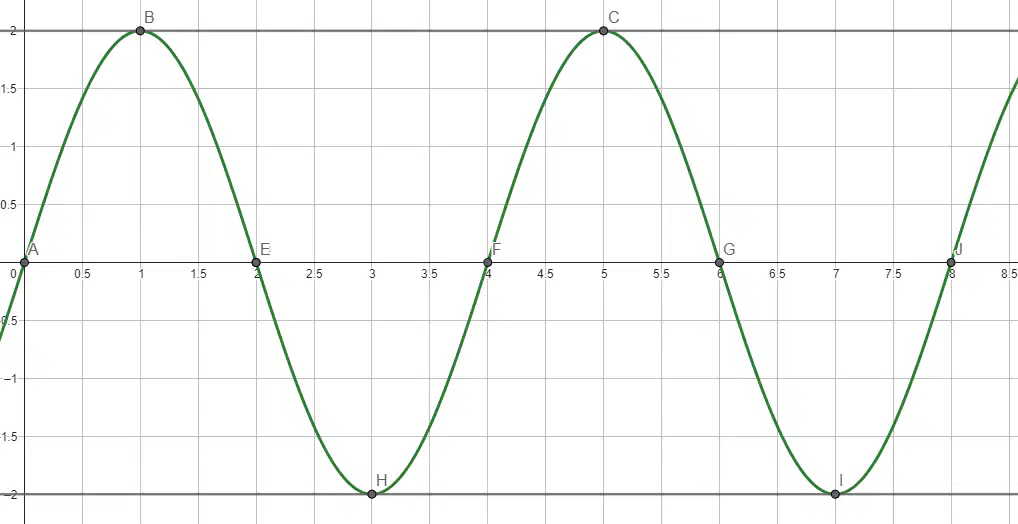
209.
To calculate the wavelength of this wave, you can measure from point E to J and divide by 2/3.
a)
True
b)
False
210.

If the period of this wave is 4 seconds, the speed of the wave is (a)   units/second.