Wayground logo

Free Printable Worksheets

Font size

S
M
L
XL
Worksheets

Grade78 revision

Total questions: 194

Worksheet time: 7hrs 48mins

Name
Class
Date
1.
Which particle has a positive charge?
a)
electron
b)
orbital
c)
proton
d)
neutron
2.
Choose the particle that has no charge.
a)
nucleus
b)
neutron
c)
proton
d)
electron
3.
This particle determines what element you have - the elements identity.
a)
electron
b)
proton
c)
neutron
d)
valence shell
4.
An electron has a _____ charge.
a)
negative
b)
positive
c)
neutral
5.
Describe an Electron Cloud?
a)
the mist outside of an atom
b)
home of the protons
c)
where electrons are located
d)
nucleus
6.
What are the maximum number of electrons that go on the first 3 energy levels?
a)
2,4,16
b)
2,8,18
c)
4,8,12
d)
3,4,6
7.
What are valence electrons?
a)
electrons on the first orbital always
b)
nucleus
c)
the outermost shell
d)
the number of electrons on the outermost orbital
8.
Which particles make up the nucleus of an atom?
a)
protons and neutrons
b)
electrons and protons
c)
electrons, protons, and neutrons
d)
electrons and neutrons
9.
The subatomic particle that determines the identity of an element.
a)
neutron
b)
proton
c)
electron
d)
outer shell
10.
What is the mass number and name of an element with 8 protons and 8 neutrons?
a)
16 - Carbon
b)
16 - Oxygen
c)
24 - Oxygen
d)
8 - Neon
11.
An element with a mass number of 10 and an atomic number of 6 has how many protons?
a)
5
b)
8
c)
6
d)
10
12.
What is the atomic mass of the atom pictured? 
a)
11
b)
12
c)
22
d)
23
13.
What is the atomic number of the atom pictured? 
a)
11
b)
12
c)
22
d)
23
14.
How many electrons are in the atom pictured? 
a)
1
b)
2
c)
3
d)
0
15.
What is the number of protons that the element in this image contain?
a)
14
b)
7
c)
15
d)
18
16.
What does the nucleus of an atom contain?
a)
Electrons and neutrons
b)
Protons and neutrons
c)
Neutrinos and positrons
d)
Electrons and megatrons
17.
How many protons, electrons and neutrons does an neutral atom of Calcium have?  Its atomic number is 20 and the mass number is 40.
a)
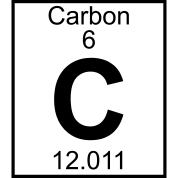
20 protons, 18 electrons and 40 neutrons
b)
20 protons, 20 electrons and 20 neutrons
c)
40 protons, 40 electrons and 20 neutrons
d)
20 protons, 18 electrons and 20 neutrons
18.
Which of the following people said the atom was a solid sphere?
a)
Dalton
b)
Thompson
c)
Rutherford
d)
Bohr
19.
Which of the following is a substance that can not be broken down into a simpler substance?
a)
Isotope
b)
Element
c)
Compound
d)
Atomic Number
20.
Ag--110 and Ag--112 are two forms of silver with different mass # so they are
a)
compounds
b)
isotopes
c)
orbitals
d)
neutrons
21.

What is the mass of sodium (Na) atom that has 11 neutrons?

a)

11

b)

23

c)

22

d)

12

22.

how many electrons are found on the first shell of an atom?

a)

1

b)

2

c)

3

d)

4

e)

we can't say exact number

23.

Rutherford discovered

a)

electrons

b)

protons

c)

neutrons

24.

thomson discovered

a)

electrons

b)

protons

c)

neutrons

25.
What are the 3 subatomic particles that make-up the atom?
a)
protons, neutrons, and isotopes
b)
neutrons, isotopes, and electrons
c)
positives, negatives, and electrons
d)
protons, neutrons, and electrons
26.
Neutrons have this type of charge
a)
positive
b)
negative
c)
neutral - no charge
27.
All matter is made of what?
a)
energy 
b)
atoms 
c)
volume
d)
compounds 
28.
Electrons have this type of charge
a)
positive
b)
negative
c)
neutral - no charge
29.
Which letter represents a proton?
a)
A
b)
B
c)
C
d)
D
30.

Each neutron has an electrically _________________ charge.

a)

positive

b)

neutral

c)

negative

d)

shocking

31.

What does the Greek word for atoms mean?

a)

unbelievable

b)

uncuttable/indivisible

c)

unstoppable

d)

interchangable

32.

Who discovered the electron?

a)

J.J. Thomson

b)

Marie Curie

c)

Isaac Newton

d)

Albert Einstein

33.
Who believed that all matter is made up of small particles called atoms?
a)
Dalton
b)
Rutherford
c)
Bohr
d)
Chadwick
34.
His atomic model was depicted similar to a planetary/solar system
a)
Bohr
b)
Thomson
c)
Rutherford
d)
Dalton
35.
The word atom comes from a Greek word "atomos" that means
a)
Invisible
b)
Indivisible
c)
Undivided
d)
Indestructable 
36.
Who stated that all atoms of the same element are exactly alike?
a)
Democritus
b)
Dalton
c)
Thomson
d)
Borh
37.
What scientist is best known for his "Plum Pudding" model of the atom?
a)
J.J. Thomson
b)
Ernest Rutherford
c)
John Dalton
d)
Democritus
38.
What scientist first developed 4 rules for atomic theory, and helped kick start modern chemistry?
a)
J.J. Thomson
b)
Ernest Rutherford
c)
John Dalton
d)
Democritus
39.

This Scientist model is the most common. They said electrons orbit nucleus at fixed energy levels

a)

Ernest Rutherford

b)

Niels Bohr

c)

John Dalton

d)

JJ. Thompson

40.

Which Scientist said, Uniform spheres of positive charges surrounded by electrons.

a)

Democritus

b)

Aristotle

c)

John Dalton

d)

JJ. Thompson

41.

Which Scientist said, matter made of atoms that can not be created or destroyed

a)

Democritus

b)

Aristotle

c)

John Dalton

d)

JJ. Thompson

42.

Which Scientist said, Everything is made of tiny particles surrounded by empty space

a)

Democritus

b)

Aristotle

c)

John Dalton

d)

JJ. Thompson

43.

What does Rutherford's model look like

a)
b)
c)
d)
44.
all matter is made of what 
a)
energy 
b)
atoms 
c)
electrons 
d)
compounds 
45.
Discovered electrons
a)
Chadwick
b)
Bohr
c)
Chadwick
d)
Thomson
46.
Who discovered the neutron?
a)
Dalton
b)
Chadwick
c)
Thomson
d)
Bohr
47.
How many elements are in C6H12O6?
a)
1
b)
2
c)
3
d)
4
48.
How many atoms of carbon (C) are in C6H12O6?
a)
3
b)
6
c)
12
d)
24
49.
Element or compound?
H2O
a)
element
b)
compound
50.
Which of the following is a compound?
a)
Co
b)
O2
c)
C
d)
CO2
51.
The red numbers in the image below represent ________
a)
subscripts
b)
coefficients
c)
I don't know, and don't want to try
d)
None of the answers are correct
52.
The blue numbers in the image below represent ________
a)
I don't know, and don't want to try
b)
coefficients
c)
subscripts
d)
none of the answers are correct
53.
How many atoms are there TOTAL in:
H2SO4
a)
6
b)
5
c)
7
d)
3
54.
How many Sodium (Na) are in 6NaCl?
a)
1
b)
12
c)
6
55.
The substances at the beginning of a chemical equation are called the ____
a)
product
b)
yield
c)
chemical symbol
d)
reactants
56.
In this image, the symbols to the right of the arrow (in black) are called the_______.
a)
Products
b)
Reactants
c)
Subscripts
d)
Coefficients
57.
Na + MgF2 -->  NaF + Mg
What are the reactants?
a)
Na + MgF2
b)
Na
c)
NaF + Mg
d)
NaF
58.
NH3 ---> N2 + H2
What are the products?
a)
N2 + H2
b)
N2
c)
H2
d)
NH3
59.

How many different kinds of elements are there?

a)

4

b)

3

c)

2

d)

1

60.

How many molecules of caffeine are there?

a)

2

b)

5

c)

10

d)

24

61.

How many different kinds of elements are there?

a)

1

b)

3

c)

5

d)

8

62.

How many carbon atoms are there?

a)

2

b)

3

c)

8

d)

16

63.

How many atoms of carbon are there?

a)

2

b)

4

c)

12

64.

How many atoms of oxygen are there?

a)

4

b)

3

c)

2

d)

1

65.

How many molecules of fungicide are there?

a)

6

b)

4

c)

3

d)

1

66.

How many different kinds of elements are there?

a)

3

b)

4

c)

5

d)

6

67.

How many atoms of oxygen are there?

a)

0

b)

1

c)

2

d)

3

68.

How many total atoms are there?

a)

8

b)

5

c)

3

d)

1

69.
Total mass before a chemical reaction is the same as the mass after the chemical reaction is
a)
law of conservation of mass
b)
reactant
c)
product
d)
yield
70.
a chemical substance present at the start of a chemical reaction
a)
product
b)
reactant
c)
yield
d)
chemical formula
71.
unexpected color-change is a sign of a
a)
physical change
b)
reactant
c)
chemical change
d)
yield
72.
example of physical change
a)
mixing paint together
b)
making pancakes
c)
breaking glow sticks
d)
fireworks
73.
FeNa is a
a)
yield
b)
compound
c)
chemical change
d)
law of conservation of mass
74.
6CO2 contains
a)
6 carbon atoms, 2 oxygen atoms
b)
12 carbon atoms, 12 oxygen atoms
c)
6 carbon atoms, 12 oxygen atoms
d)
12 carbon atoms, 6 oxygen atoms
75.
Fe2O3 has
a)
2 Iron atoms, 3 oxygen atoms
b)
6 iron atoms, 6 oxygen atoms
c)
3 iron atoms, 2 oxygen atoms
d)
1 iron atom, 6 oxygen atoms
76.
6CO2 + 6H2O contains how many elements
a)
4
b)
36
c)
3
d)
2
77.
Example of physical change
a)
putting an object in a box
b)
rusting cans
c)
lighting a match
d)
putting acid on copper
78.
evidence of a chemical reaction
a)
boiling water
b)
folded clothes
c)
gas is released
d)
tearing paper
79.

How many elements are in C6H12O6?

a)

24

b)

2

c)

3

d)

4

80.

Which of the following chemical formulas contains exactly 4 hydrogen atoms?

a)

CH3COONa

b)

NH4OH

c)

CH3CH2Cl

d)

CH3CHO

81.

How many different elements are in the formula CH3CH2Br?

a)

3

b)

5

c)

6

d)

2

82.

How many atoms of carbon are in the formula CH3CH2CH2OH?

a)

3

b)

1

c)

7

d)

4

83.

How many atoms of Aluminum (Al) are found in 1 molecule of Aluminum Sulfide? Al2S3

a)

3

b)

2

c)

5

d)

16

84.
How many atoms of lead (Pb) are in Pb(NO₃)₂?
a)
1
b)
2
c)
3
d)
6
85.

A ___________________ is the smallest unit of a compound.

a)

atom

b)

proton

c)

electron

d)

molecule

86.

The smallest unit of a compound is

a)

an element.

b)

a molecule.

c)

an atom.

d)

a mixture.

87.

Carbon Dioxide (CO2) is a ______ 

a)
compound 
b)
element 
c)
mixtures 
d)

atom

88.
How many carbon atoms (C) are in a CO2 molecule?
a)
1
b)
2
c)
3
d)
0
89.
How many Oxygen atoms (O) are in a  molecule  of CO2
a)
1
b)
2
c)
3
d)
0
90.

How many Hydrogen atoms (H) are in a molecule of H2O?

a)

1

b)

2

c)

3

d)

0

91.
The small number to the right of an elemental symbol  ( H2) is called?
a)
 a subscript 
b)
a coefficient 
c)
a variable 
d)
a divisor 
92.

How many atoms of sulfur are in each molecule of H2SO4?

a)

1

b)

4

c)

2

d)

7

93.

How many atoms of hydrogen are in a molecule of glucose (C6H12O6)?

a)

12

b)

6

c)

18

d)

4

94.
How many Aluminum are in Al2O3?
a)
3
b)
2
c)
5
95.
How many Sodium (Na) are in 6NaCl?
a)
1
b)
12
c)
6
96.
How many Chlorine are in MgCl2?
a)
2
b)
1
c)
3
97.
Is burning wood a chemical or physical change?
a)
chemical
b)
physical
98.
Is this balanced?
Al + O2 → 2Al2O3
a)
Yes
b)
No
99.
Is this balanced?
2HgO → 2Hg + O2
a)
Yes
b)
No
100.
The right side of the equation below is called the
a)
products
b)
reactants
101.
The left side of the equation below is called
a)
Products
b)
Reactants
102.

Look at the chemical equation.


Is it written correctly to show the Law of Conservation of Mass?

a)

Yes

b)

No

103.

___________________ are the elements or compounds that leave (are formed in) a chemical

reaction.

a)

Polymers

b)

Bonds

c)

Reactants

d)

Products

104.
How many F atoms are in this compound?
6MgF2 
a)
2
b)
6
c)
8
d)
12
105.
How many Al atoms are in this compound?         4Al2O3
a)
2
b)
8
c)
6
d)
4
106.

A substance that is formed as the result of a chemical reaction is a __________________

a)

Product

b)

Reactant

c)

Starters

d)

Enders

107.
The substances listed on the right side of a chemical equation are the
a)
Yields
b)
Reactants
c)
Products
d)
Precipitates
108.
the starting materials in a chemical reaction
a)
Products
b)
Reactants
c)
Starters
d)
Enders
109.

The process by which one or more substances change to produce one or more different substances

a)

Chemical Process

b)

Reactant

c)

Chemical Reaction

110.
In the equation,          2Mg + O2 ---> 2MgO, which are the reactants?
a)
Mg and O
b)
MgO
c)
Mg and MgO
d)
O and MgO
111.

6CO2+ 6H2O → C6H12O6 + 6O26CO_2+\ 6H_2O\ \rightarrow\ C_6H_{12}O_{6\ }+\ 6O_2  

The carbon atoms are balanced with ____ on each side of the reaction.

a)

1

b)

6

c)

2

112.

Determined whether the following equation is balanced or unbalanced. Ag + O2 ---> 2Ag2O

a)

Balanced

b)

Unbalanced

113.

Determine whether the following equations is balanced or unbalanced. H4 + O2 ---> 2H2O

a)

Balanced

b)

Unbalanced

114.

Determine whether the following equation is balanced or unbalanced. H2 + Br2 ---> 2HBr

a)

Balanced

b)

Unbalanced

115.

Determine whether the following equation is balanced or unbalanced. 2Fe + 3Cl2 ---> FeCl3

a)

Balanced

b)

Unbalanced

116.

In order for an equation to be balanced, there must be ...

a)

an equal amount of atoms on both sides

b)

a greater mass on the product side

c)

a greater mass on the reactant side

d)

elements with the same atomic # on both sides

117.
In this image, what are the information in red is called the_______.
a)
Product
b)
Reactant
c)
Chemical Subscript
d)
Coefficient
118.
Is the following equation balanced or unbalanced?
Fe + S --> FeS
a)
balanced
b)
unbalanced
119.

The part of the equation circled is an example of

a)

products

b)

reactants

120.

The part of the equation that is circles represents

a)

a reactant

b)

a product

c)

React to form

121.

The formation of a new substance is an example of

a)

a chemical reaction

b)

a physical change

122.

What type of chemical reactions take place when electricity is passed through water?

a)

Displacement

b)

Combination

c)

Decomposition

d)

Double displacement

123.
What is the arrow in a chemical equation...
H2 + O --> H2O
a)
Reactants
b)
Products 
c)
Yields 
d)
Chemical Equation 
124.

Indicates the number of atoms of an element that are in that molecule.

a)

coefficients

b)

superscripts

c)

exponents

d)

subscripts

125.

The big numbers that indicate how many molecules take part in the reaction.

a)

reactants

b)

subscripts

c)

coefficients

d)

products

126.

Which of the following symbols separates the reactants from the products in a chemical equation?

a)
b)
c)
d)
127.

What type of chemical reaction involves replacing one element in a compound with another element?

a)

Synthesis

b)

Decomposition

c)

Combustion

d)

Single Replacement

128.

What type of chemical reaction involves a hydrocarbon reacting with oxygen to produce carbon dioxide and water?

a)

Synthesis

b)

Decomposition

c)

Combustion

d)

Single Replacement

129.

What type of chemical reaction involves breaking down a compound into its individual elements?

a)

Synthesis

b)

Decomposition

c)

Combustion

d)

Single Replacement

130.

In a decomposition reaction of H2O2, what could be the result of breaking down this compound?

a)

H2O

b)

H2

c)

O2

d)

NH3

131.
_AgNO3 + _Cu →_Cu(NO3)2 + _Ag
a)
2 AgNO3 + 2 Cu → 3 Cu(NO3)2 + 1 Ag
b)
2 AgNO3 + 1 Cu → 1 Cu(NO3)2 + 2 Ag
c)
1 AgNO3 + 2 Cu → 2 Cu(NO3)2 + 1 Ag
d)
3 AgNO3 + 2 Cu → 3 Cu(NO3)2 + 2 Ag
132.
_P4+_O2 →  _P2O3
a)
3 P4+1 O2 → 2 P2O3
b)
1 P4+1 O2 → 2 P2O3
c)
1 P4+ 3 O2 → 2 P2O3
d)
1 P4+ 2 O2 → 3 P2O3
133.
_Al + _HCl →_H2 + _AlCl3
a)
2 Al + 2 HCl → 2 H2 + 6 AlCl3
b)
3 Al + 3 HCl → 6 H2 + 2 AlCl3
c)
1 Al + 1 HCl → 3 H2 + 1 AlCl3
d)
2 Al + 6 HCl → 3 H2 + 2 AlCl3
134.
_K + _Cl2 →_KCl
a)
2 K + 16 Cl2 → 8 KCl
b)
2 K + 1 Cl2 → 2 KCl
c)
3 K + 4 Cl2 → 3 KCl
d)
1 K + 1 Cl2 →1 KCl
135.
Balance this equation,            Al2O3 ---> Al + O2 
a)
Cannot be balanced
b)
2Al2O3 ---> 2Al + 3O2 
c)
2Al2O3 ---> 4Al + 3O2 
d)
3Al2O3 ---> 2Al + O2 
136.
Balance this equation:  H2 + N2 → NH3
a)
 H2 + 4N2 → NH3
b)
 H2 + 3N2 → 2NH3
c)
 3H2 + N2 → 2NH3
d)
 2H2 + 2N2 → 2NH3
137.

Balance this reaction:

____ Na3PO4 + ____ KOH ---> ____ NaOH + ____ K3PO4

a)

1,3,3,1

b)

1,3,2,1

c)

2,3,3,1

d)

1,1,3,1

138.

Balancing this reaction:

____ CH4 + ____ O2 ---> ___ CO2 + ____ H2O

a)

2,1,3,1

b)

1,2,1,2

c)

1,2,2,1

d)

2,1,1,2

139.
_AgNO3 + _Cu →_Cu(NO3)2 + _Ag
a)

2 AgNO3 + 2 Cu → 3 Cu(NO3)2 + Ag

b)

2 AgNO3 + Cu → Cu(NO3)2 + 2 Ag

c)

AgNO3 + 2 Cu → 2 Cu(NO3)2 + Ag

d)
3 AgNO3 + 2 Cu → 3 Cu(NO3)2 + 2 Ag
140.
Fill in the blanks with coefficient:
PCl5+_ H2O→_ HCl+H3PO4
a)
4, 5
b)
1, 6
c)
3, 8
d)
2,2
141.

This unbalanced equation represents a chemical reaction:

Pb(NO3)2 + NaI → NaNO3 + PbI2

What is the coefficient for NaI once the equation is balanced?

a)

1

b)

2

c)

3

d)

4

142.

Which of the following is the balanced chemical equation that represents the chemical reaction of potassium and oxygen to produce potassium oxide?

a)
b)
c)
d)
143.
Balance this equation.
_Mg + _Cl2 --> _MgCl2
a)
1, 2,1
b)
already balanced
c)
2,1,1
d)
1,1,2
144.
Which problem is balanced?
a)
PbO2 + 2H2
b)
SO2 + H20 --> H2SO4
c)
2Na + 2H2O --> 2NaOH + H2
145.

Balance the following chemical reaction:

SnO2 + H2 --> Sn + H2O

a)

2 SnO2 + 2 H2 --> 2 Sn + 2 H2O

b)

SnO2 + 2 H2 --> Sn + 2 H2O

c)

2 SnO2 + 3 H2 --> 1 Sn + 2 H2O

d)

SnO2 + H2 --> Sn + H2O

146.
___C3H8 +___O2 --> ___CO2 + ___H2O
a)
1,5,3,4
b)
2,10,6,8
c)
already balanced
d)
1,5,5,4
147.
__Al + __Fe3N2 -->__AlN + __Fe
a)
already balanced
b)
4,2,4,6
c)
2,1,2,3
d)
1,2,1,3
148.

Balance this reaction:

____ Na3PO4 + ____ KOH ---> ____ NaOH + ____ K3PO4

a)

1,3,3,1

b)

1,3,2,1

c)

2,3,3,1

d)

1,1,3,1

149.
__Na + __Cl2 --> __NaCl
a)
1,1,2
b)
2,1,2
c)
2,1,1
d)
already balanced
150.
Which problem is balanced?
a)
PbO2 + 2H2
b)
SO2 + H20 --> H2SO4
c)
2Na + 2H2O --> 2NaOH + H2
151.

Identify the reactants in the following equation.

3HFe2O →H+2FEH+O

a)

H+2FEH+O

b)

3HFe2O

152.

Identify the products in the following equation.

3HFe2O →H+2FEH+O

a)

H+2FEH+O

b)

3HFe2O

153.

What does the → represent in an equation?

K4P3→3KP+K

a)

Stop

b)

Multiply

c)

Yields

d)

Minus

154.

How many Carbon atoms on the Reactant side of the equation?

5C4O8→10C+2C5O20

a)

4

b)

5

c)

10

d)

20

155.

How many Carbon atoms on the Product side of the equation?

5C4O8→2C5O20

a)

4

b)

5

c)

10

d)

20

156.

Identify if the following equation is unbalanced or balanced.

4K+P3→3KP+K

a)

Unbalanced

b)

Balanced

157.

Identify if the following equation is unbalanced or balanced.

O3+2C→3OC

a)

Unbalanced

b)

Balanced

158.

Identify if the following equation is unbalanced or balanced.

2(N)2→4N

a)

Unbalanced

b)

Balanced

159.

Identify if the following equation is unbalanced or balanced.

5C4O8→10C+2C5O20

a)

Unbalanced

b)

Balanced

160.

Identify if the following equation is unbalanced or balanced.

HeC4O8→C4+2HeO

a)

Unbalanced

b)

Balanced

161.

name of the positively charged particle in an atom

(a)  

162.

name of the neutral particle in an atom

(a)  

163.

the collective name of proton and neutron

(a)  

164.

name of the center of an atom which contains protons and neutrons

(a)  

165.

name of the negatively charged particle in an atom

(a)  

166.

the number of protons and electrons in an atom are (a)  

167.

name of an layer of electrons in an atom

(a)  

168.

name of the outermost shell of an atom

(a)  

169.

name of the electrons in the valence cell

(a)  

170.

the maximum number of electrons in the first shell

(a)  

171.

maximum number of electrons in the second shell

(a)  

172.

maximum number of electrons in the third shell

(a)  

173.

relative mass of an electron

(a)  

174.

relative mass of a neutron

(a)  

175.
What does the 6 represent?
a)
atomic mass
b)
atomic number
c)
element name
d)
chemical symbol 
176.

What does 12.011 represent?

a)

atomic mass

b)

atomic number

c)

element name

d)

chemical symbol

177.
What is the atomic mass of the atom pictured? 
a)
9
b)
10
c)
18
d)
19
178.
Which subatomic particle has a positive (+) charge?
a)
Neutron
b)
Proton
c)
Electron
179.

What charge does a proton have?

a)

negative

b)

positive

c)

neutral

180.

What charge does an electron have?

a)

negative

b)

positive

c)

neutral

181.

What charge does a neutron have?

a)

negative

b)

positive

c)

neutral

182.

How many electrons can the first energy level hold?

a)

2

b)

4

c)

6

d)

8

183.

How many electrons can the first shell hold?

a)

2

b)

4

c)

6

d)

8

184.

How many electrons can the first orbit hold?

a)

2

b)

4

c)

6

d)

8

185.

The mass number is determined by which two particles?

a)

protons and neutrons

b)

protons and electrons

c)

neutrons and electrons

186.

The atomic number is the same as this number of particles.

a)

protons

b)

neutrons

187.

Number 2 is?

a)

a proton

b)

an neutron

c)

an electron

d)

the nucleus

188.

Number 3 is?

a)

a proton

b)

an neutron

c)

an electron

d)

the nucleus

189.

Number 4 is?

a)

a proton

b)

an neutron

c)

an electron

d)

the nucleus

190.

Number 5 is?

a)

a proton

b)

a neutron

c)

an electron

d)

the nucleus

191.

What charge does an neutron have?

a)

negative

b)

positive

c)

no charge

192.

How many electrons can be held in the second energy level (orbit or shell)?

a)

2

b)

4

c)

6

d)

8

193.

What would be the atomic number of this atom?

a)

4

b)

6

c)

8

d)

12

194.

What would the mass number be of this atom?

a)

9

b)

6

c)

8

d)

12