
 Worksheets
Secondary SummerAP Chem Topics
Total questions: 106
Worksheet time: 5hrs 1mins
What would be the pH of a solution with an [H+] of 0.001?
3
1
-3
-1
What would be the pH of a solution with an [H+] of 0.010?
2
12
-2
0.98
What would be the pOH of a solution with [H+] of 0.024?
1.6
-1.6
12.4
0.95
What would be the pOH of a solution with [H+] of 0.00034?
1.0
-3.47
10.53
3.47
What would be the pOH of a solution with [OH-] of 0.00054?
3.26
-3.26
10.74
What would be the pOH of a solution with [OH-] of 0.06?
1.22
-1.22
12.78
0.06
What is the pH if the pOH is 5.3?
(a)
What is the pH if the pOH is 10.0?
(a)
What is the pOH if the pH is 11.0?
(a)
What is the [H+] if the pH is 6.5?
3.16 x 10⁷
3.16 x 10⁻⁷
8.13 x 10⁻¹
What is the [OH-] if the pH is 1.0?
0.1
0
1 x 10-13
13
What is the [OH-] if the pOH is 8.2
6.3 x 10⁻⁹
1.6 x 10⁸
9.1 x 10⁻¹
What is the [OH-] if the [H+] is 8.5 x 10⁻⁴?
3.07
9.9 x 10⁻¹
1.2 x 10⁻¹¹
What is the pH if the [OH-] is 7.5 x 10⁻⁵?
4.12
9.88
9.9 x 10⁻¹
What is the pH if the [OH-] is 1.3 x 10⁻³?
11.1
2.89
9.9 x 10⁻¹
Which of the following is an intramolecular force?
hydrogen bonding
polar covalent bonding
London dispersion forces
dipole-dipole interaction
Which intermolecular force requires hydrogen and one of the following: nitrogen, oxygen, fluorine?
Dipole-dipole
Hydrogen bonding
London dispersion forces
Intramolecular forces are the forces
within molecules
between molecules

What kind of force is the arrow pointing to?
Intramolecular Force
Intermolecular Force

What kind of force is the arrow pointing to?
Intramolecular force
Intermolecular force
Which sample has hydrogen bonding?
H2S
CH4
NH3
HI
Which of the following will NOT have hydrogen bonding?


What type of intermolecular forces do nonpolar molecules exhibit?
Hydrogen bonding
Dipole-dipole interactions
Only London dispersion forces.
Ionic bonding
What type of intermolecular forces does a polar molecule exhibit?
Hydrogen bonding and ionic interactions.
Dipole-dipole interactions and London dispersion forces.
Covalent bonding and metallic bonding.
Van der Waals forces and hydrogen bonding.
Define electronegativity.
The ability of an atom to lose electrons easily.
The tendency of an atom to attract shared electrons to itself.
The measure of an atom's size in a molecule.
The energy required to remove an electron from an atom.
What is the relationship between molecular weight and London dispersion forces?
London dispersion forces decrease with molecular weight.
London dispersion forces remain constant regardless of molecular weight.
London dispersion forces increase with molecular weight.
London dispersion forces are unrelated to molecular weight.
Which molecule has the strongest London forces: F2, Br2, I2, or Cl2?
F2
Br2
I2
Cl2
Which of the following has the highest boiling point: H2, NH3, N2, or O2?
H2
N2
O2
NH3
What is the difference between ionic bonding and covalent bonding?
Ionic bonding involves the sharing of electrons, while covalent bonding involves the transfer of electrons.
Ionic bonding involves the transfer of protons, while covalent bonding involves the sharing of neutrons.
Ionic bonding involves the transfer of electrons, while covalent bonding involves the sharing of electrons.
Ionic bonding occurs only in metals, while covalent bonding occurs only in non-metals.
What is hydrogen bonding?
A weak interaction between nonpolar molecules.
A strong type of dipole-dipole interaction that occurs between molecules containing hydrogen bonded to highly electronegative atoms like N, O, or F.
A type of covalent bond formed between hydrogen and carbon.
An ionic bond formed between hydrogen and metals.
What is the effect of intermolecular forces on boiling points?
Stronger intermolecular forces result in higher boiling points.
Weaker intermolecular forces result in higher boiling points.
Intermolecular forces have no effect on boiling points.
Stronger intermolecular forces result in lower boiling points.
What are dipole-dipole interactions?
Attractive forces between the positive end of one polar molecule and the negative end of another.
Repulsive forces between two non-polar molecules.
Attractive forces between two identical non-polar molecules.
Interactions that occur between ions and polar molecules.
What is the role of intermolecular forces in solubility?
Intermolecular forces have no effect on solubility.
Intermolecular forces determine how well substances dissolve in each other, with similar forces promoting solubility.
Intermolecular forces only affect the boiling point of substances.
Intermolecular forces are irrelevant in the context of solubility.
How do intermolecular forces affect the state of matter?
Stronger intermolecular forces generally lead to gases, while weaker forces lead to solids.
Stronger intermolecular forces generally lead to liquids, while weaker forces lead to gases.
Stronger intermolecular forces generally lead to solids, while weaker forces lead to gases.
Intermolecular forces do not affect the state of matter.
Hydrogen being an exception to the octet rule, needs _____ electrons in its outer energy level to be stable.
4
6
8
2

Draw the lewis dot structure for F2. Which of the following is the correct Lewis dot structure for the molecule F2?
A
B
C
D
How many electrons are shared in each bonding line?
1
2
3
4
How many valence electrons does phosphorus have?
15
4
5
31

Which of these is the correct Lewis structure for NH3?


How many total valence electrons are participating in bonding in the molecule above?
8
4
2
3
When drawing Lewis structures, only __________ electrons are used.
inner shell
core
valence
stable

CCl4 has how many double bonds?
0
1
2
3
In HCN (Carbon is usually the central atom) what kind of bond is between the C and N
Single
Double
Triple
CH2O has which of the following?
Multiple double bonds
Multiple single bonds
One double bond
One single bond
A lone pair

Look at the picture and determine if it is accurate
The structure is correct because Nitrogen has 8 electrons
The structure is correct because Nitrogen needs 8 Valence electrons to fulfill octet
The structure is incorrect because Nitrogen needs 10 valence electrons and the image has 8 valence electrons
The structure is incorrect because there is no lone pairs on nitrogen
Which of the following elements can have an incomplete octet?
B
P
N
O
Which atom will never be in the middle of a Lewis Dot structure?
N
C
H


Is this molecule polar or nonpolar?
Polar
Nonpolar

Is this molecule polar or nonpolar?
Polar
Nonpolar
Is this molecule polar or nonpolar?
Polar
Nonpolar
Is this molecule polar or nonpolar?
Polar
Nonpolar

Is this molecule polar or nonpolar?
Polar
Nonpolar

Is this molecule polar or nonpolar?
Polar
Nonpolar

Is this molecule polar or nonpolar?
Polar
Nonpolar

Is this molecule polar or nonpolar?
Polar
Nonpolar

Is this molecule polar or nonpolar?
Polar
Nonpolar

Is this molecule polar or nonpolar?
Polar
Nonpolar

Is this molecule polar or nonpolar?
Polar
Nonpolar

Is this molecule polar or nonpolar?
Polar
Nonpolar

Is this molecule polar or nonpolar?
Polar
Nonpolar

Is this molecule polar or nonpolar?
Polar
Nonpolar
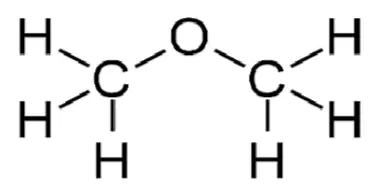
Is this molecule polar or nonpolar?
Polar
Nonpolar

Is this molecule polar or nonpolar?
Polar
Nonpolar

Is this molecule polar or nonpolar?
Polar
Nonpolar

Is this molecule polar or nonpolar?
Polar
Nonpolar

Is this molecule polar or nonpolar?
Polar
Nonpolar

Gas Laws involve what three factors?
Solid, Liquid, and Gas
Speed, Velocity, and Acceleration
Elements, Compounds, and Mixtures
Pressure, Temperature, and Volume
Directly proportional means that as one value increases ...
the other stays the same
the other increases as well
the other decereases
the other goes to zero
Inversely proportional means as one value increases the other...
increases
decreases
stays the same
goes to zero
If the temperature of a gas increase, the pressure... (volume is constant)
Decreases
Increases
Does not change


A student inflates a balloon with helium then places it in the freezer. The student should expect
the balloon's volume to increase
the balloon's volume to decrease
If a hairspray can is heated, what can be expected of the pressure of the gas inside the can?
The pressure will increase
The pressure will decrease
The pressure will remain constant
The pressure will equalize
Pressure is
defined as the mass that an object exerts when at rest.
not a measurable in gases.
defined as the number of moles of substance divided by the mass of the substance.
created by the force of the gas particles impacting the walls of the container.


Metals have the largest...
atomic radius and electronegativity
electronegativity and ionization energy
ionization and atomic radius
atomic radius only
Which has a lower ionization energy: Lithium or Potassium?
Lithium
Potassium
Which atom has the most valence electrons
Ca
C
Cl
Si
Which atom has the largest radius
Mg
B
S
Br
Vertical columns of elements (families) on the periodic table with similar properties
period
row
groups
quadrants
What does molarity (M) measure in a solution?
The volume of solute
The number of moles of solute per liter of solution
The mass of solvent per liter
The density of the solution
What must you do *before* adding a solute when preparing a solution from a solid?
Heat the container
Measure the total mass of the container
Zero the balance and measure the correct mass of solute
Add solvent
When making a solution by dilution, what is being changed?
The total mass of solute
The identity of the solute
The concentration of the solution
The temperature of the solvent
What happens to the concentration of a solution if you add more solvent without adding solute?
The concentration increases
The concentration decreases
The concentration stays the same
The solution becomes saturated
What does it mean if a solution is *saturated*?
No solute is present
No more solute can dissolve at that temperature
The solution has evaporated
Only a small amount of solute has been added
Why must you stir or swirl a solution after adding solute?
To cool the solution
To increase the pressure
To evenly distribute the solute particles
To change the identity of the solute
What of these is always soluble?
Nitrates
Phosphates
Carbonates
Hydroxides

