
 Worksheets
Chapter 2 Review Assignment
Total questions: 90
Worksheet time: 48mins
The essential elements that make up the key molecules in living organisms are carbon, hydrogen, nitrogen, oxygen, sulfur, and ________.
phosphorus
calcium
magnesium
potassium
Which of the following is NOT one of the macromolecules found in living organisms?
Carbohydrates
Nucleic acids
Proteins
Vitamins
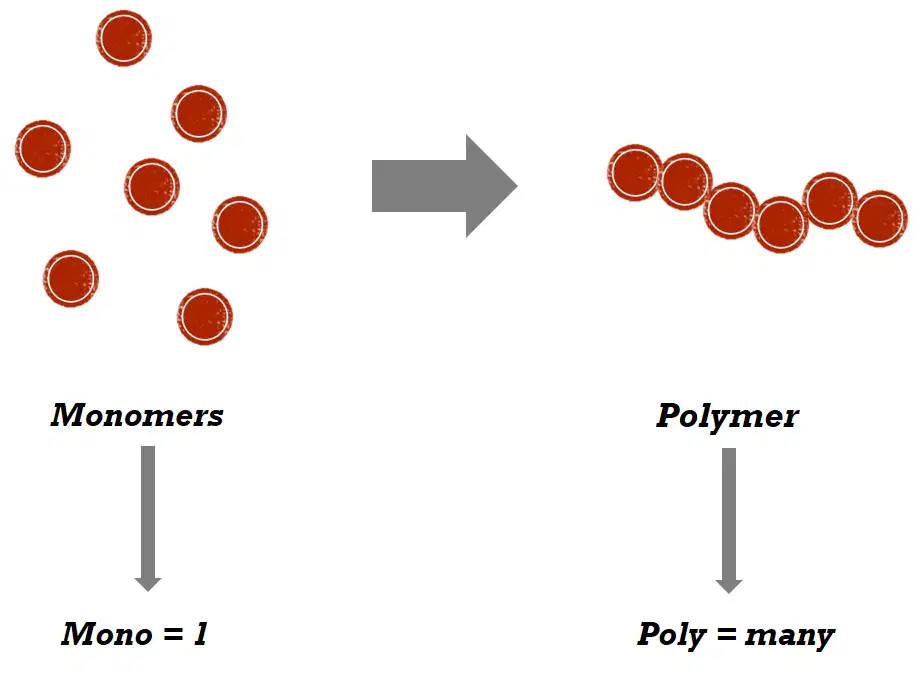
Biological macromolecules are built from smaller organic units called ________.
monomers
polymers
ions
atoms
The four key types of molecules in living organisms mentioned are carbohydrates, nucleic acids, proteins, and ________.
lipids
minerals
vitamins
salts
What is matter? Matter occupies ______ and has ______.
space; mass
energy; weight
air; volume
light; density
All matter is composed of ______, substances that cannot be broken down or transformed chemically into other substances.
elements
compounds
mixtures
molecules
Elements are ______ that consist of only one type of atom.
pure substances
mixtures
compounds
solutions
Which of the following statements is TRUE about elements? Select the correct option.
Elements can be broken down into simpler substances by chemical means.
Elements are composed of only one type of atom.
Elements are mixtures of different atoms.
Elements are always found as compounds. atmosphere isn't made of only one kind of element, and it is not always found as compounds in its elemental (non-compounded) form, either
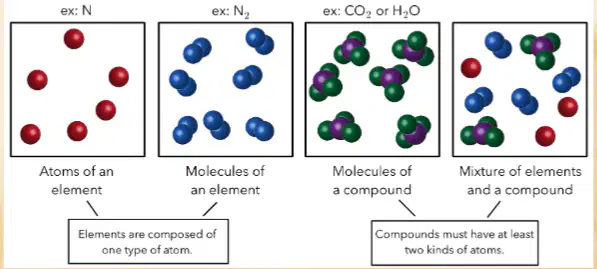
Refer to the diagram showing atoms, molecules, compounds, and mixtures. Which box represents a mixture of elements and a compound?
First box
Second box
Third box
Fourth box
What are the three main subatomic particles that make up an atom?
Protons, neutrons, and electrons
Protons, photons, and electrons
Neutrons, electrons, and positrons
Protons, neutrons, and photons
Atoms are the smallest units of matter and are composed of _______, _______, and _______.
protons, neutrons, and electrons
protons, photons, and electrons
neutrons, electrons, and positrons
protons, neutrons, and quarks
Protons and neutrons both have mass, but only protons have a positive electrical charge.
True
False
Which subatomic particle does NOT have mass but has a negative electrical charge?
Proton
Neutron
Electron
Positron
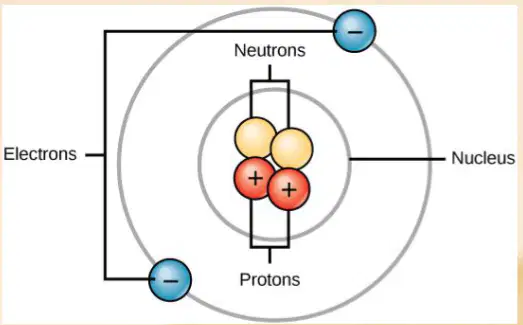
Which particles are located within the nucleus of an atom?
Protons and electrons
Neutrons and electrons
Protons and neutrons
Electrons only
The unique properties of atoms allow elements to combine (_____) with each other in specific ways.
bond
float
evaporate
dissolve
What is the atomic number of an element equal to?
The number of protons that element contains.
The number of neutrons that element contains.
The number of electrons in the outer shell.
The total mass of the element.
The mass number, or atomic mass, is the number of protons plus the number of _______ of that element.
neutrons
electrons
atoms
molecules
Isotopes are different forms of the same element that have the same number of protons, but a different number of _______.
neutrons
electrons
atoms
molecules
Which of the following statements is true about isotopes?
Isotopes have the same number of protons and neutrons.
Isotopes have the same number of protons but a different number of neutrons.
Isotopes have a different number of protons but the same number of neutrons.
Isotopes have a different number of protons and neutrons.
What does the periodic table of elements include for each element?
The atomic number and relative atomic mass of each element.
The melting and boiling points of each element.
The color and taste of each element.
The number of isotopes for each element.
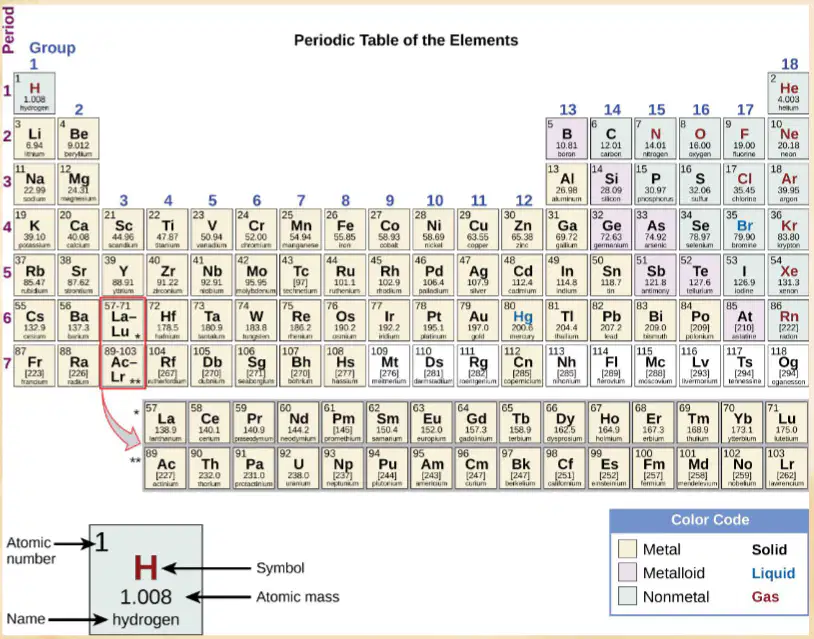
What information does the periodic table provide about elements?
Their color and taste
Their atomic number, symbol, atomic mass, and name
Their melting and boiling points
Their uses in industry
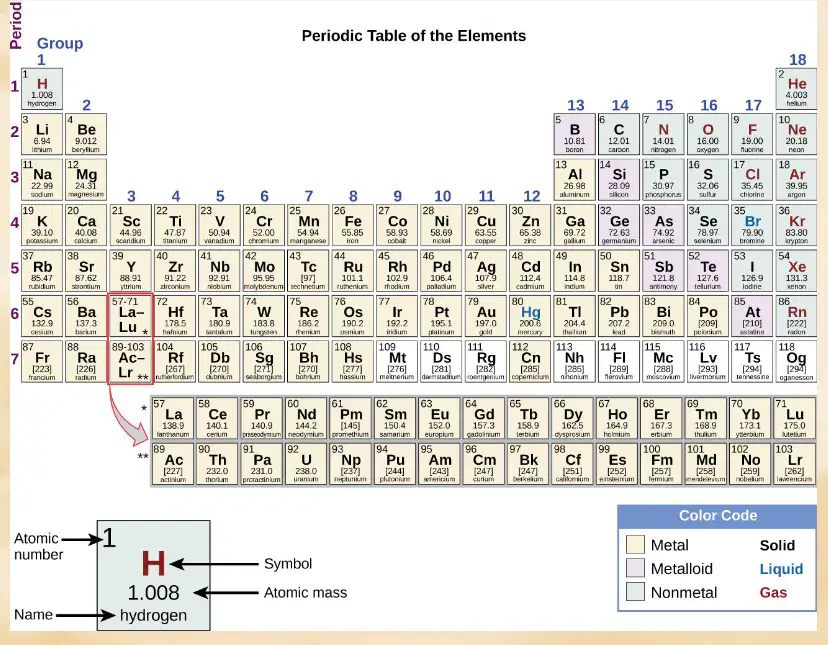
According to the color code in the periodic table, what does a blue box represent?
Metal
Metalloid
Nonmetal
Gas
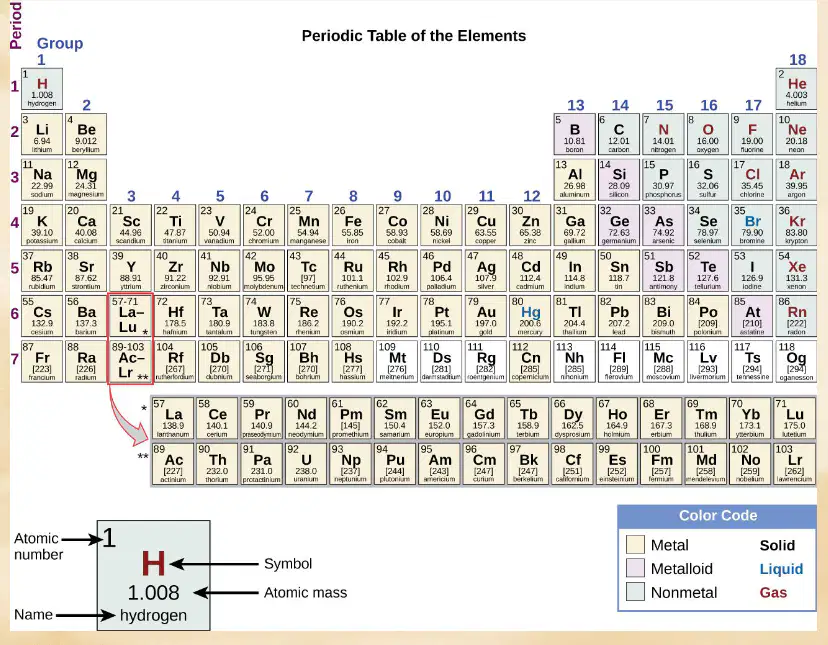
The atomic number of hydrogen is ___.
1
2
6
8
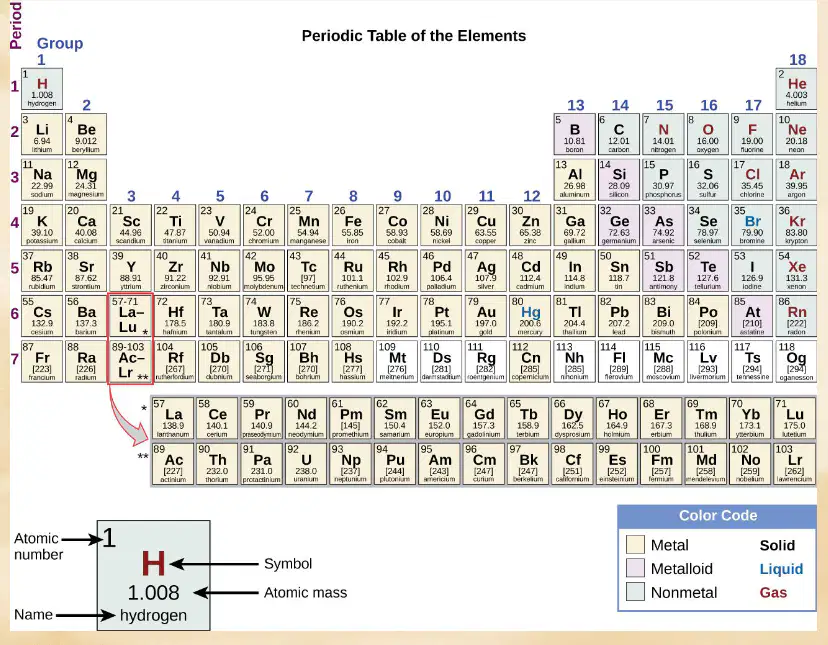
In the periodic table, elements are arranged in columns and rows based on their characteristics.
True
False
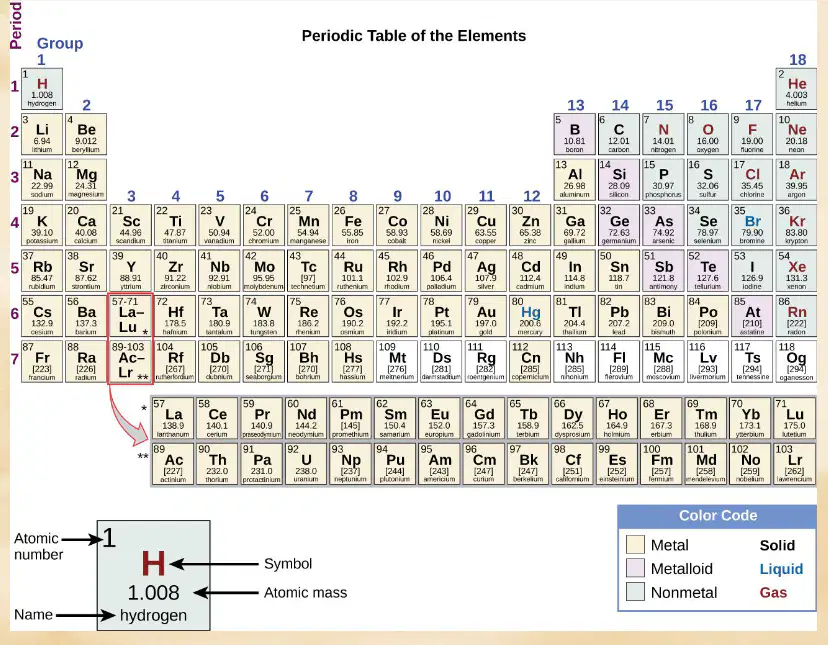
What is the symbol for the element with atomic number 8?
O (Oxygen)
N (Nitrogen)
C (Carbon)
Ne (Neon)
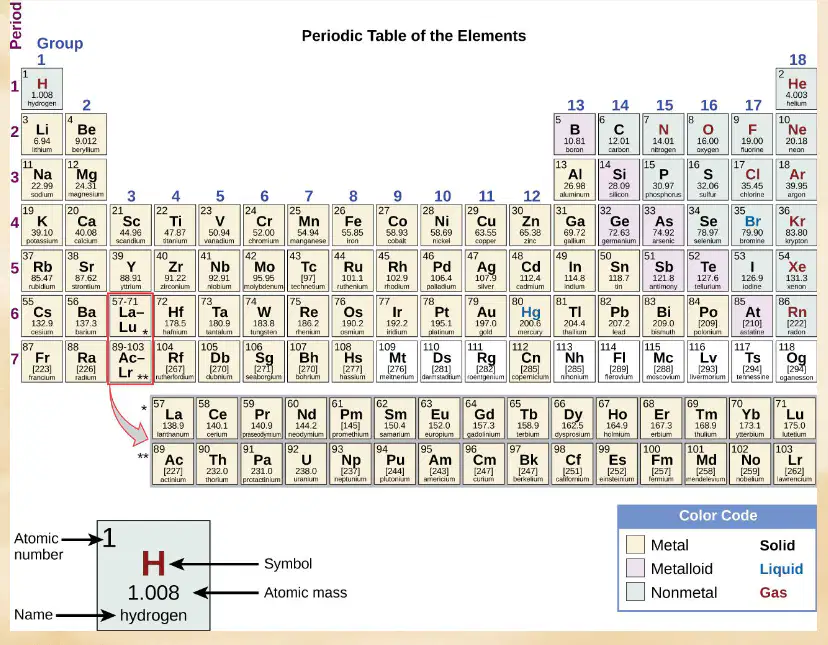
The atomic mass of carbon (C) is ___
12.01
14.00
10.00
16.04
The octet rule describes the tendency of most atoms (except for hydrogen and helium) to bond so that they have how many electrons in their valence shell?
8
2
6
10
Which of the following best describes chemical bonds?
The process by which atoms lose electrons
The process by which atoms combine to form molecules
The process by which atoms split apart
The process by which atoms become radioactive
Which type of bond is formed when electrons are transferred from one atom to another, creating charged ions that attract each other?
Ionic Bonds
Covalent Bonds
Hydrogen Bonds
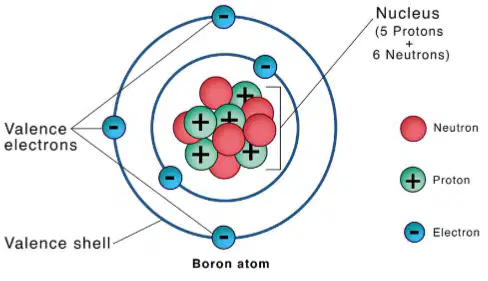
What is the outermost electron shell of an atom called?
Valence shell
Core shell
Inner shell
Nucleus shell
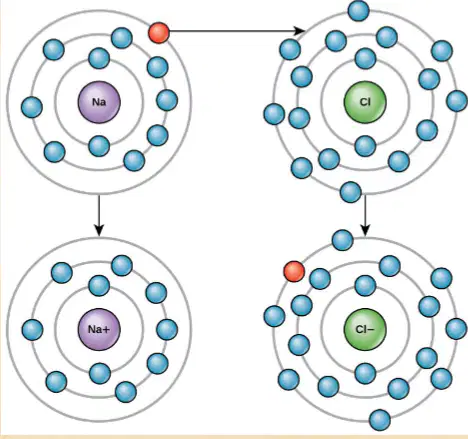
What type of bond is formed when positive and negative ions attract and stay together?
Covalent bond
Hydrogen bond
Ionic bond
Metallic bond
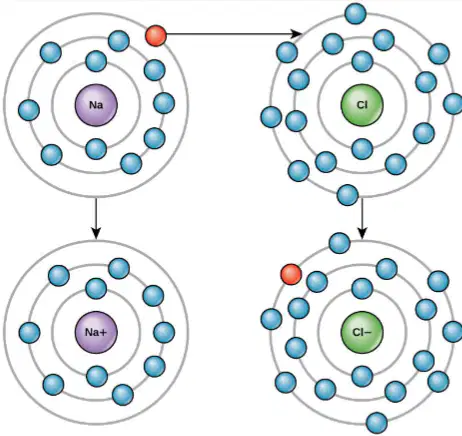
Fill in the blank: When an atom donates an electron, it becomes a (a) ion. (Use the diagram showing Na becoming Na+ as a reference.)
Because positive and negative charges attract, ions stay together and form an ionic bond.
True
False
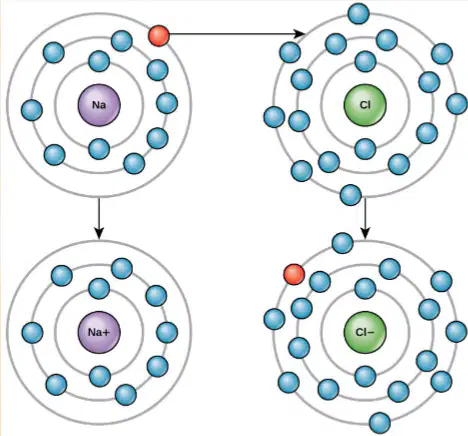
In the diagram, which element donates an electron to form an ionic bond?
Sodium (Na)
Chlorine (Cl)
Both donate electrons
Neither donates electrons
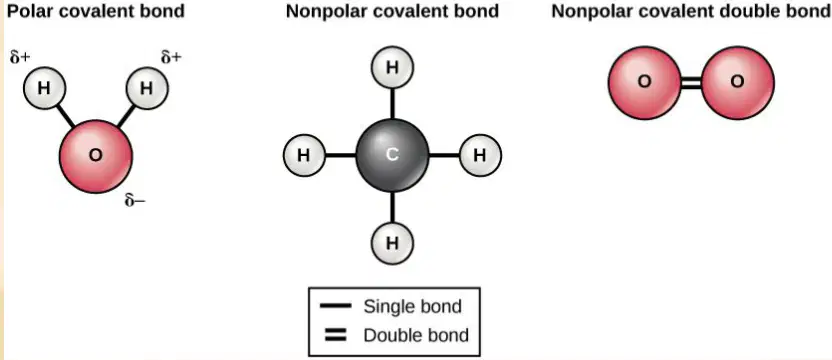
Which type of covalent bond is depicted by the water molecule (left) with a slightly positive charge on the hydrogen atoms and a slightly negative charge on the oxygen atom?
Polar covalent bond
Nonpolar covalent bond
Nonpolar covalent double bond
Ionic bond
Refer to the passage: Covalent bonds are the ________ and most common form of chemical bond in living organisms.
strongest
weakest
least common
most unstable
Refer to the passage: Unlike ionic bonds, covalent bonds do not ________ in water.
dissociate
evaporate
freeze
condense
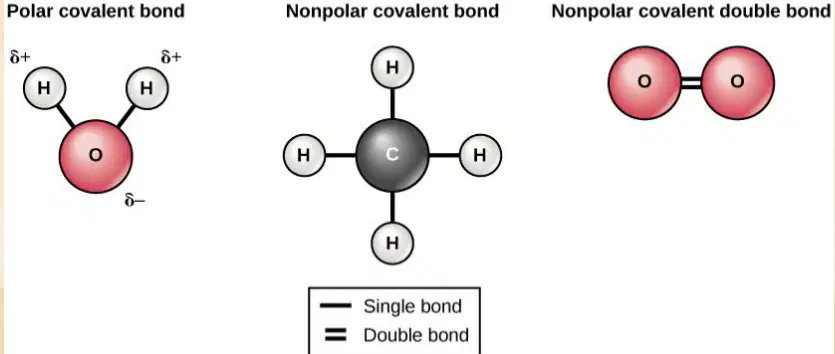
Which molecule is an example of a nonpolar covalent bond?
Water (H2O)
Methane (CH4)
Oxygen (O2)
Sodium chloride (NaCl)
Covalent bonds form between the elements that make up the biological molecules in our cells.
True
False
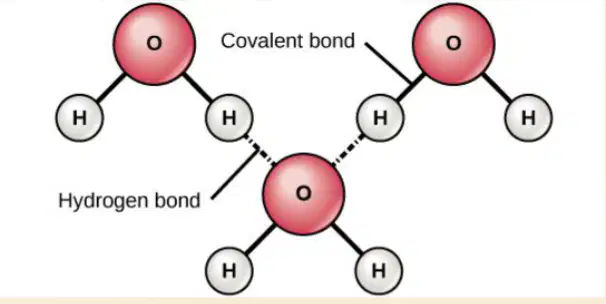
What type of bond forms between slightly positive (δ+) and slightly negative (δ−) charges of polar covalent molecules, such as water?
Ionic bond
Covalent bond
Hydrogen bond
Metallic bond
Hydrogen bonds can form between different molecules and do not always have to include a ________ molecule.
water
carbon dioxide
oxygen
methane
Which of the following is held together by hydrogen bonds to give it a double-stranded structure?
Protein
DNA
Carbohydrate
Lipid
Hydrogen bonds are responsible for some of the three-dimensional structure of proteins.
True
False
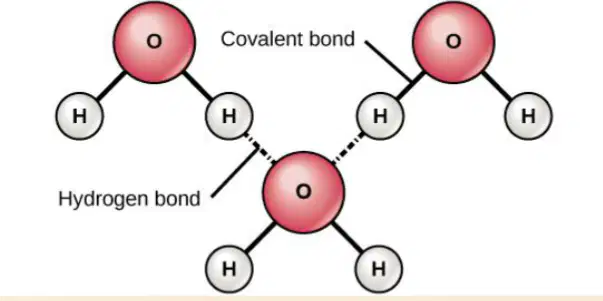
In the provided diagram, what type of bond is represented by the dashed line between the hydrogen atom of one water molecule and the oxygen atom of another water molecule?
Covalent bond
Hydrogen bond
Ionic bond
Metallic bond
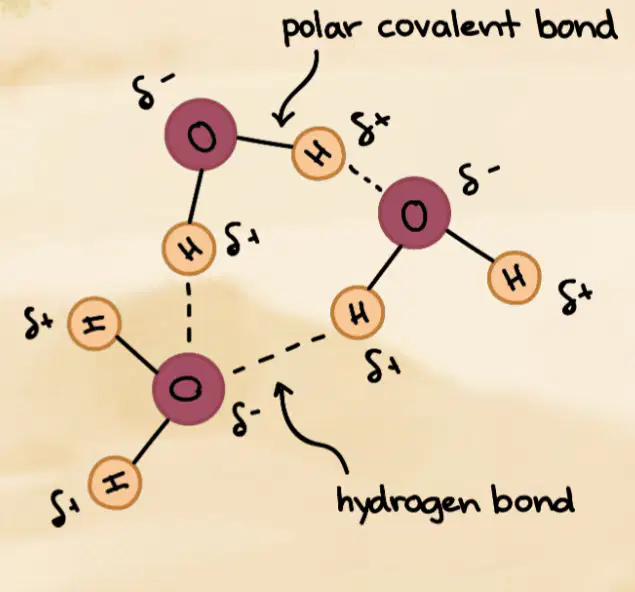
According to the passage and diagram, what type of bond is formed between the hydrogen and oxygen atoms within a water molecule?
Ionic bond
Polar covalent bond
Metallic bond
Nonpolar covalent bond
The shared electrons in a water molecule spend more time associated with the ______ atom than with the hydrogen atoms.
oxygen
carbon
nitrogen
helium
Each water molecule attracts other water molecules because of the positive and negative charges in different parts of the molecule.
True
False
What is the difference between hydrophilic and hydrophobic substances as described in the passage?
Hydrophilic substances attract water, while hydrophobic substances repel water.
Hydrophilic substances repel water, while hydrophobic substances attract water.
Both hydrophilic and hydrophobic substances attract water.
Both hydrophilic and hydrophobic substances repel water.
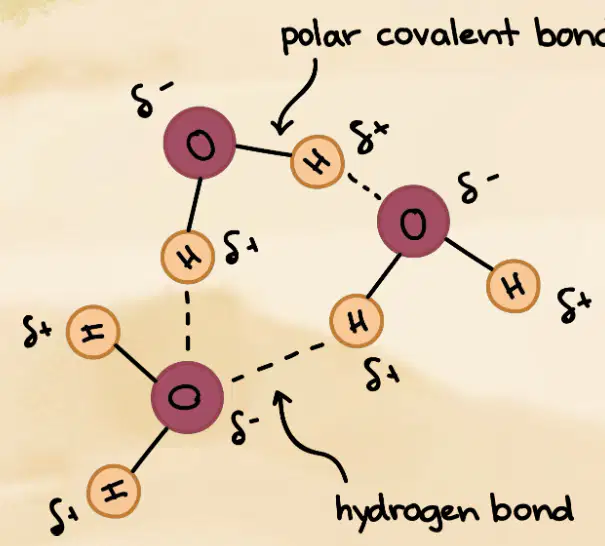
Based on the diagram, what type of bond is labeled between two water molecules?
Polar covalent bond
Hydrogen bond
Ionic bond
Metallic bond
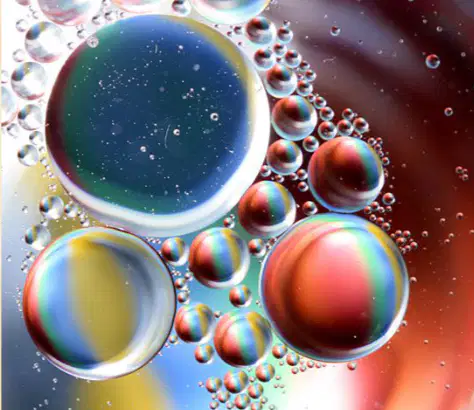
What property does oil have that prevents it from dissolving in water?
It is polar
It is nonpolar
It is acidic
It is basic
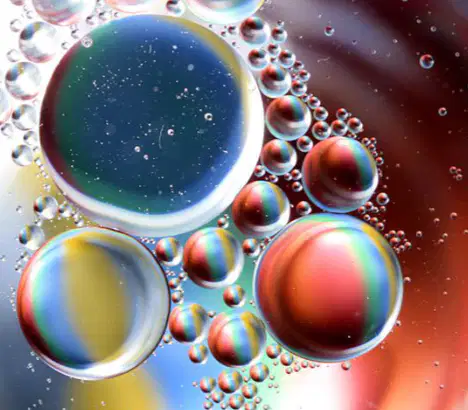
As this macroscopic image of oil and water shows, oil is a nonpolar compound and therefore hydrophobic (it will not dissolve in water). Fill in the blank: Oil and water do not mix because oil is (a) and hydrophobic.
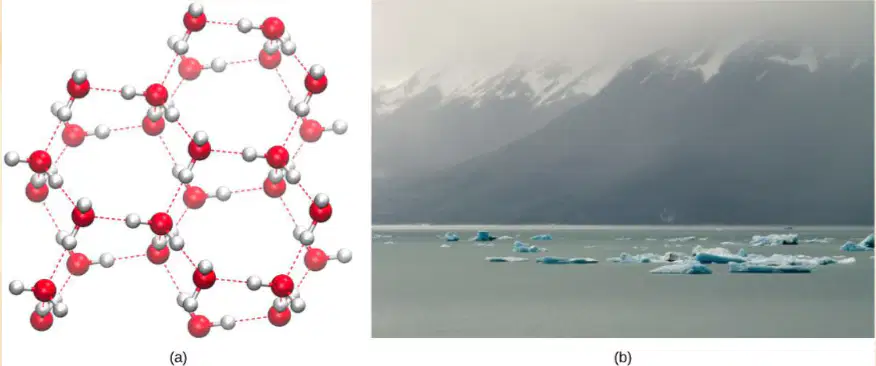
Which of the following statements best explains why ice floats on water?
Ice is more dense than liquid water
Ice is less dense than liquid water
Ice and liquid water have the same density
Ice is heavier than liquid water
Water absorbs a great deal of energy before its temperature rises. Increased energy disrupts the hydrogen bonds between water molecules leading to _________.
evaporation
condensation
freezing
sublimation
Water moderates temperature changes within organisms and in the environment because:
Water absorbs energy and temperature changes only minimally
Water heats up very quickly
Water does not absorb energy
Water is always colder than its surroundings
When frozen, ice is _______ dense than liquid water (the molecules are further apart).
less
more
equally
randomly
What is a solvent?
A substance that is dissolved by another substance
A substance capable of dissolving another substance
A type of ionic compound
A type of polar molecule
Water is an excellent ______ because it can dissolve ionic compounds and polar molecules.
solvent
element
acid
metal
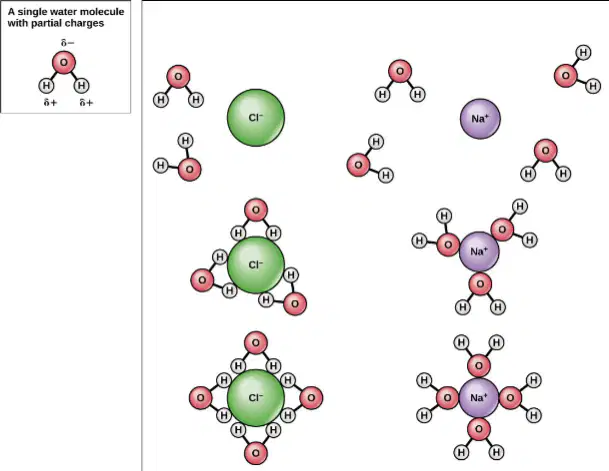
What forms around ions when table salt (NaCl) is mixed in water?
Spheres of hydration form around the ions.
Bubbles of oxygen form around the ions.
Salt crystals form around the ions.
Layers of oil form around the ions.
The charged particles from dissolved substances in water will form hydrogen bonds with a surrounding layer of water molecules.
True
False
What is cohesion?
The attraction between water molecules and other polar molecules
The property when water molecules are attracted to each other (because of hydrogen bonding), keeping the molecules together at the liquid-air (gas) interface
The capacity of a substance to withstand rupture when placed under tension or stress
The process of water evaporating
Surface tension is the capacity of a substance to withstand ______ when placed under tension or stress.
rupture
expansion
compression
evaporation
Adhesion is the attraction between water molecules and other ________ molecules.
polar
nonpolar
metallic
ionic
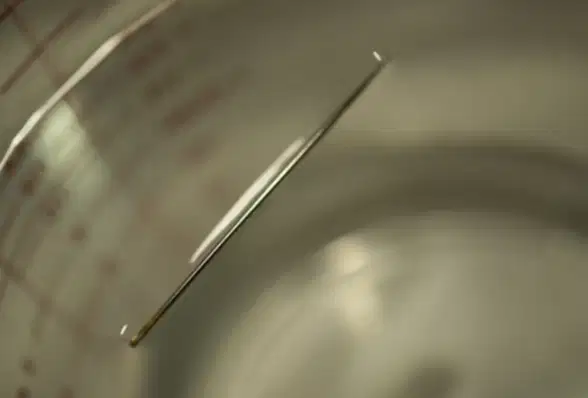
According to Figure 2.11, what keeps the needle from sinking on the surface of the water?
The weight of the needle
The surface tension of the water pulling it up
The density of the needle
The temperature of the water
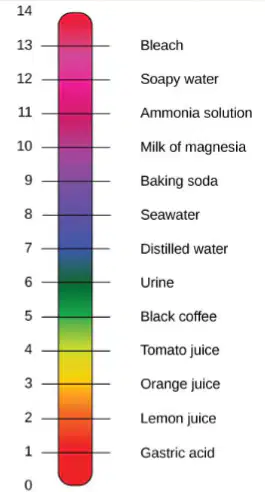
What does the pH scale measure?
The amount of oxygen ions in a substance
The amount of hydrogen ions (H⁺) in a substance
The amount of sodium ions in a substance
The amount of carbon dioxide in a substance
Acids are substances that provide ______ and lower pH.
hydrogen ions (H⁺)
hydroxide ions (OH⁻)
oxygen molecules (O₂)
sodium ions (Na⁺)
Bases produce ______ and raise pH.
hydroxide ions (OH⁻)
hydrogen ions (H⁺)
carbon dioxide (CO₂)
sodium ions (Na⁺)
Buffers readily absorb excess H⁺ or OH⁻, keeping the pH of the body carefully maintained (homeostasis).
True
False
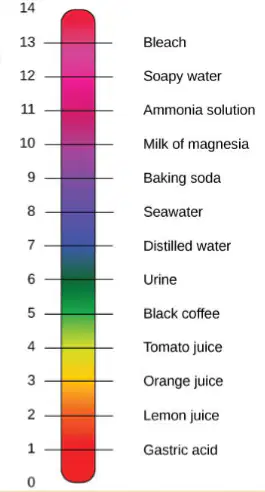
Which of the following substances is most acidic according to the pH scale shown?
Black coffee
Lemon juice
Seawater
Soapy water
Which of the following are types of biological macromolecules that support life?
Carbohydrates, Lipids, Proteins, and Nucleic Acids
Water, Salt, Sugar, and Oxygen
Metals, Plastics, Glass, and Rubber
Vitamins, Minerals, Fats, and Oils
The simplest organic carbon molecule is ________ (CH4).
methane
ethane
propane
butane
Carbon can form four covalent bonds with other atoms or molecules.
True
False
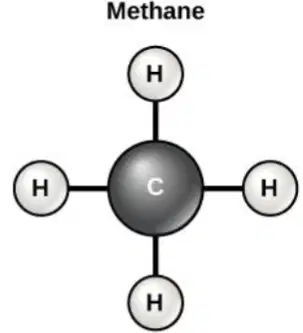
How many hydrogen atoms are bonded to the central carbon atom in a methane molecule?
Four hydrogen atoms
Two hydrogen atoms
One hydrogen atom
Three hydrogen atoms
What does it mean for a molecule to be organic in the context of biological macromolecules?
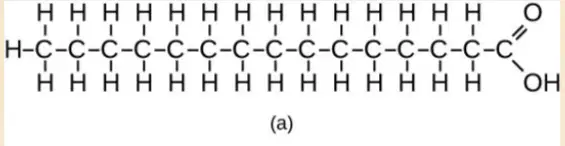
Refer to the diagram labeled (a). Stearic acid has a long chain of ______ atoms.
carbon
hydrogen
oxygen
hydrogen and carbon
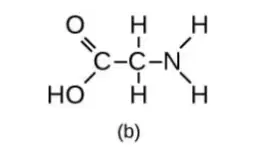
Refer to the diagram labeled (b). Glycine, a component of proteins, contains carbon, nitrogen, oxygen, and ______ atoms.
hydrogen
sulfur
phosphorus
calcium
The ratio of carbon to hydrogen to oxygen in carbohydrates is _______.
1:2:1
2:1:2
1:1:2
2:2:1
Carbohydrates are classified into three subtypes. Which of the following is NOT a subtype of carbohydrate?
Monosaccharides
Disaccharides
Polysaccharides
Lipids
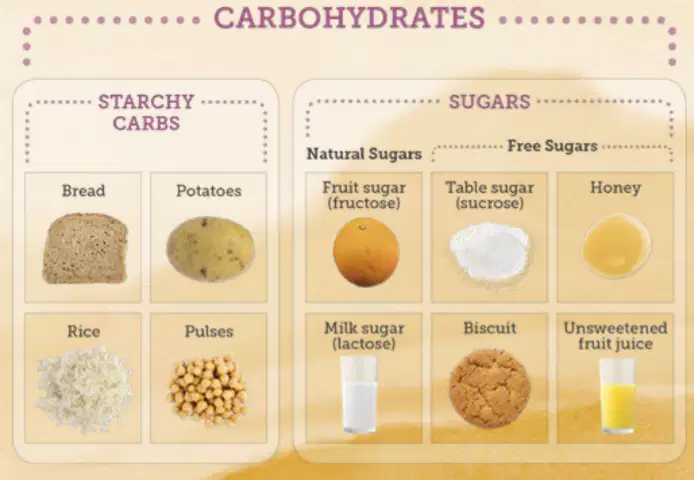
Which of the following is an example of a starchy carbohydrate?
Bread
Honey
Biscuit
Unsweetened fruit juice
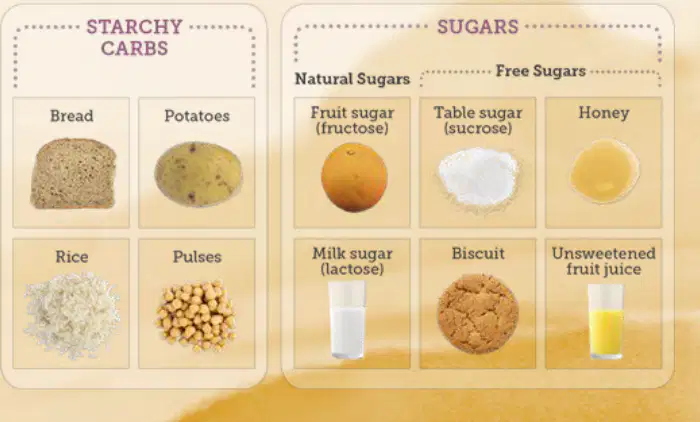
Which of the following is a natural sugar?
Fruit sugar (fructose)
Table sugar (sucrose)
Biscuit
Pulses
What are monosaccharides?
Complex sugars
Simple sugars
Proteins
Fats
What is the chemical formula for glucose?
C6H12O6
C12H22O11
C5H10O5
C2H6O
Glucose is an important source of ________.
energy
protein
vitamin
fiber
Galactose and fructose have the same chemical formula as glucose but differ structurally and chemically. What are they called?
Isomers
Polymers
Enzymes
Lipids
Which element is the building block of life?
Carbon
Hydrogen
Oxygen
Nitrogen
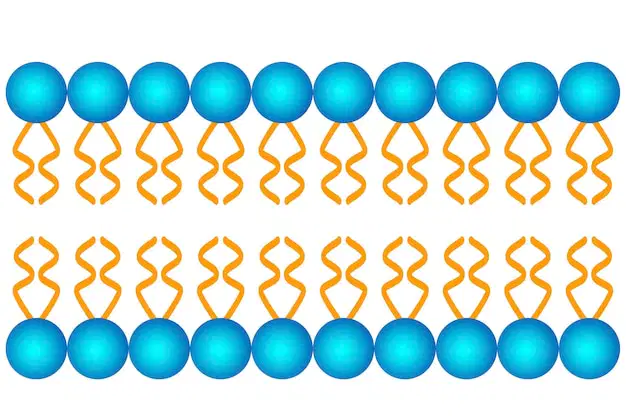
Which macromolecule stores energy, insulates us, and makes up our plasma membranes?
Hydrogen bonds occur between a slightly positive hydrogen atom and ____.
Another hydrogen atom in the same molecule
Another hydrogen atom in a different molecule
A slightly negative atom in the same molecule
A slightly negative atom in a different molecule
What are ALL of the Elements of Life?
Carbon, Hydrogen, Oxygen, Nitrogen
Carbohydrates, Proteins, Lipids, Nucleic Acids
Carbon, Hydrogen, Oxygen
Polymers and Monomers

