wayground logo

Free Printable Worksheets

Font size

S
M
L
XL
Worksheets

Physics 2nd Semester concept review

Total questions: 178

Worksheet time: 2hrs 10mins
Name
Class
Date
1.
Planets orbit the Sun in a shape called a(n)
a)
circle
b)
ellipse
c)
focus
d)
perihelion
2.
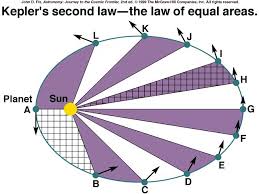
Where is the planet moving faster
a)
Position A to B
b)
Position B to C
c)
Position H to I
d)
Position I to J
3.
What is true about the area between points A, B and the Sun, and the area between points H, I and the Sun?
a)
The area between A, B and the Sun is the largest.
b)
The area between H, I and the Sun is the largest
c)
Both areas are equal in size
d)
There is not enough information to determine the areas
4.
Kepler's 2nd Law deals with 
a)
the shape of the planets' orbits
b)
the speed/area the planet travels 
c)
the length of time it takes the planet to orbit the sun
5.
A planet moves __________ when it is farthest from the sun.
a)
faster
b)
slower
6.
The farther away a planet is from the sun, the _______ it takes it to orbit the sun once. 
a)
longer
b)
shorter
7.
In simplest terms, what does Kepler's 3rd law state? 
a)
planets take a long time to orbit the sun
b)
there is no relationship between the distance of planet from the sun and the time it takes to orbit the sun
c)
there is a mathematical relationship between the distance of a planet from the sun and the time it takes to orbit the sun
d)
every planet has the same orbital period
8.

The square of a planet’s period is directly proportional to the cube of its ____.

a)

a. mass

b)

b. orbital velocity

c)

c. distance from the sun

d)

d. acceleration

9.
Why do astronauts in space appear weightless? 
a)
There is no gravity in space. 
b)
Air resistance opposes gravity. 
c)
They have no mass in space.
d)
They are in free fall. 
10.
How are mass and weight different?
a)
Mass is the amount of matter in an object;Weight is the amount of gravitational force acting on the object
b)
Mass is the amount of gravitational force acting on an object;Weight is the amount of matter in an object
c)
Mass is a thing;Weight is a place
d)
Mass is an animal;weight is a human
11.
Which of the following depict the speed of the bowling ball?
a)
A
b)
B
c)
C
d)
D
12.

•Kepler found that a planet moves slower at aphelion, sweeping out a narrow sector on the ellipse, conversely, a planet moves faster at perihelion, sweeping out a thick sector on the ellipse.

a)

Kepler's first law

b)

Kepler's second law

c)

Kepler's third law

13.

Kepler then proposed that each of the planets has an elliptical orbit, with the sun at one focus of the ellipse

a)

Kepler's first law

b)

Kepler's second law

c)

Kepler's third law

14.

the square of the orbital period is proportional to the cube of the planet’s distance from the sun

a)

Kepler's first law

b)

Kepler's second law

c)

Kepler's third law

d)

Beyoncé is the law

15.
Which scientist helped explain that gravity is why all the planets orbit the Sun?
a)
Kepler
b)
Galileo
c)
Copernicus
d)
Newton
16.

What prevents planets from pulled into and crash into the Sun?

a)

Gravity

b)

Weight

c)

Friction

d)

Inertia

17.

Which of the following is required for planets to stay in orbit around the Sun? (choose all that apply)

a)


Gravitational force

b)

Weight

c)

Friction

d)

Tangential velocity

18.

What would happen to the planets in the solar system if the Sun's gravitation force disappeared?

a)

They would stay still

b)

They would fly away in straight lines

c)

They would explode

d)

They would stop rotating

19.

The diagram shows forces that keep the planets and other bodies in orbit in the solar system. What should number 3 be labeled?

a)

moon

b)

earth

c)

gravitational force

d)

tangential velocity

e)

orbit

20.

The diagram shows forces that keep the planets and other bodies in orbit in the solar system. What should number 4 be labeled?

a)

moon

b)

earth

c)

gravitational force

d)

tangential velocity

e)

orbit

21.
What is the value of g on Earth?
a)
9.81 m/s^2
b)
9.81 N
c)
9.81 m
d)
9.81 s/m^2
22.
Two factors effecting the magnitude of the force of gravity between 2 objects are...
a)
mass and distance 
b)
mass and matter
c)
distance and weight 
d)
weight and mass
23.
Any object with mass is surrounded by a gravitational field.
a)
True
b)
Fallse
c)
False
d)
Tru
24.
Force of gravity is directly proportional to
a)
Mass
b)
Weight
c)
Distance
d)
Time
25.
Force of gravity is inversely proportional to
a)
Mass
b)
Weight
c)
Distance
d)
Time
26.
As distance separating the objects increases the force
a)
increases
b)
decreases
c)
stays the same
27.
What states that "every object in the universe attracts every other object"?
a)
Law of Universal Gravitation
b)
Newton's First Law of Motion
c)
My mother
d)
Inertia & gravity
28.

Which two particles are attracted to each other?

a)

Two neutrons

b)

A proton and an electron

c)

Two protons

d)

An electron and a neutron

29.

A repulsive force exists between which two particles?

a)

Two neutrons

b)

An electron and a neutron

c)

An electron and a proton

d)

Two electrons

30.

How is the electric force between two charges affected when both of the charges are cut in half?

a)

decreases four times

b)

no change

c)

increase four times

d)

increases 2 times

31.

If the distance is reduced by 1/4, what happens to the force?

a)

16 times

b)

Reduces by a fourth

c)

no change

d)

Reduces by half

32.
The Electric Force is strongest when charges are...
a)
close together
b)
far apart
c)
the electric force is constant everywhere
33.

Electric field lines go from _________________ charged particles to __________________ charged particles

a)

positive;negative

b)

negative;positive

c)

positive;positive

d)

negative;neutral

34.

As two oppositely charged particles approach each other, what happens to the electrical force between them?

a)

The attractive force increases

b)

The magnitude of the electric force decreases

c)

The repulsive force increases

d)

The magnitude of their charges increases

35.

Coulomb's law says that the force between any two charges depends

a)

directly on the size of the charges

b)

inversely on the square of the distance between the charges

c)

both are correct

36.
When distance increases, electrostatic force ____________; we call this relationship ____________ proportional
a)
decreases;directly
b)
decreases;inversely
c)
increases;inversely
d)
increases;directly
37.
Insulators are different than conductors in that insulators ____.
a)
do not contain electrons or protons 
b)
 do not contain any charge
c)
have a weaker affinity for electrons 
d)
do not allow charge to freely move 
38.
During a physics lab, a plastic strip was rubbed with cotton and became positively charged. The correct explanation for why the plastic strip becomes positively charged is that ...
a)
the plastic strip acquired extra protons from the cotton.
b)
the plastic strip acquired extra protons from the charging process 
c)
protons were created as the result of the charging process
d)
the plastic strip lost electrons to the cotton during the charging process 
39.
assume a rubber rod is rubbed against a rabbit fur and gains 5 electrons.  which of the following is true?
a)
The fur lost 5 electrons
b)
the fur gained 5 electrons
c)
the fur gained 5 protons
d)
The fur lost 2 electrons
40.
Two like charges
a)
 neutralize each other.
b)
repel each other. 
c)
must be neutrons. 
d)
attract each other.
41.

An atom of oxygen has 8 protons and 10 electrons, this means the atom is ____________

a)

positively charged because it has excess electrons

b)

negatively charged because it has excess electrons

c)

positively charged because it has a deficiency of electrons

d)

negatively charged because it has a deficiency of electrons

42.

When an object gains electrons it becomes __________

a)

Neutral

b)

Positively charged

c)

Negatively charged

43.
The elementary charge in nature is equal to ..........
a)
1.6x10⁻¹⁶C
b)
1.6x10⁻¹⁹C
c)
1.9x10⁻¹⁶C
d)
1.9x10⁻¹⁹C
44.

The law of conservation of charge states that...

a)

all atoms have more protons than electrons

b)

only protons can be rubbed off of an atom

c)

the net charge before an interaction is equal to the net charge after.

d)

charge cannot be transferred

45.
If an atom has 12 positively charged subatomic particles, which of the following must it also have to be considered a neutral atom?
a)
12 neutrons
b)
12 electrons
c)
12 protons
d)
24 protons and neutrons
46.
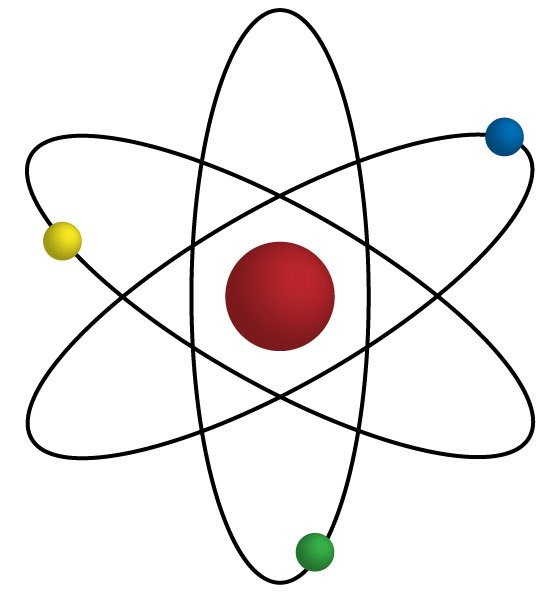
What are the 3 particles that make-up the atom?
a)
protons, neutrons, and isotopes
b)
neutrons, isotopes, and electrons
c)
positives, negatives, and electrons
d)
protons, neutrons, and electrons
47.
Where are electrons of an atom found?
a)
Nucleus
b)
Electron Cloud
c)
Some are in the nucleus and some in the electron cloud.
d)
They are moving everywhere.
48.
An atom with an unequal number of protons and electrons is said to have (a) ___.
a)
no charge
b)
balance
c)
charge
d)
unbalance
49.
The subatomic particle with a negative charge is the
a)
electron
b)
proton
c)
neutron
d)
nucleus 
50.
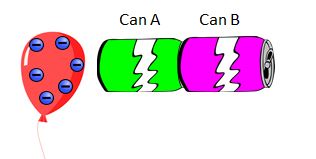
The negatively charged balloon is brought near the two cans. What happens?
a)
The negative charges in Can B move towards the balloon
b)
The negative charges in Can A move away from the balloon
c)
The positive charges in Can B move towards the balloon
d)
The positive charges in Can A move away from the balloon
51.
When you charge a balloon by rubbing it on your hair this is an example of what method of charging?
a)
Friction
b)
Conduction
c)
Grounding
d)
Induction
52.
Where do electrons go when you rub a balloon on your hair?
a)
Onto the balloon
b)
Into your hair
c)
Nowhere
53.

If a negatively charged balloon is held near can A, then the cans are separated while the balloon is still near Can A. What charge does each can have?

a)

Can A and Can B are neutral

b)

Can A is negative while Can B is positive

c)

Can A is positive while Can B is negative

d)

Both cans are positive

54.
___ are good conductors because they have loose electrons.
a)
copper
b)
aluminum 
c)
metals
d)
all of the above
55.
Materials through which electrons move easily__.
a)
insulator
b)
conductor
56.
The process of transferring charge between objects by touching or rubbing
a)
charging by induction
b)
static discharge
c)
charging by contact
d)
proton
57.
If a negatively charged rod touches a conductor, the conductor will be charged by what method? 
a)
Friction
b)
Conduction
c)
Induction
d)
Convection
58.
A negatively charged rod is touched to the top of an electroscope
a)
A
b)
B
c)
C
d)
D
59.
Which of these is the best definition of polarization?
a)
The object gains a positive or negative charge from another object.
b)
The charges in a neutral object separate due to a nearby charged object.
c)
Charges on a neutral object jump off onto a charged object due to attraction of opposite charges.
d)
Two objects attract each other because they are both charged.
60.
Consider the conduction charging shown. 
a)
Electrons move from the insulating stand into the sphere.
b)
Protons move from the bar into the sphere.
c)
Electrons move from the charged metal bar into the sphere.
d)
Protons move from the sphere into the negatively charged bar.
61.
A glass rod becomes positively charged when it is rubbed with silk. This net positive charge accumulates because the glass rod
a)
gains electrons
b)
loses electrons
c)
gains protons
d)
loses protons
62.
A negatively charged plastic comb is brought close to, but does not touch, a small piece of paper. If the comb and the paper are attracted to each other, the charge on the paper
a)
must be positive
b)
must be negative
c)
may be neutral or negative
d)
may be neutral or positive 
63.
When a plastic rod is rubbed with wool, the wool acquires a positive charge because
a)
protons are transferred from the wool to the rod
b)
protons are transferred from the rod to the wool
c)
electrons are transferred from the rod to the wool
d)
electrons are transferred from the wool to the rod
64.
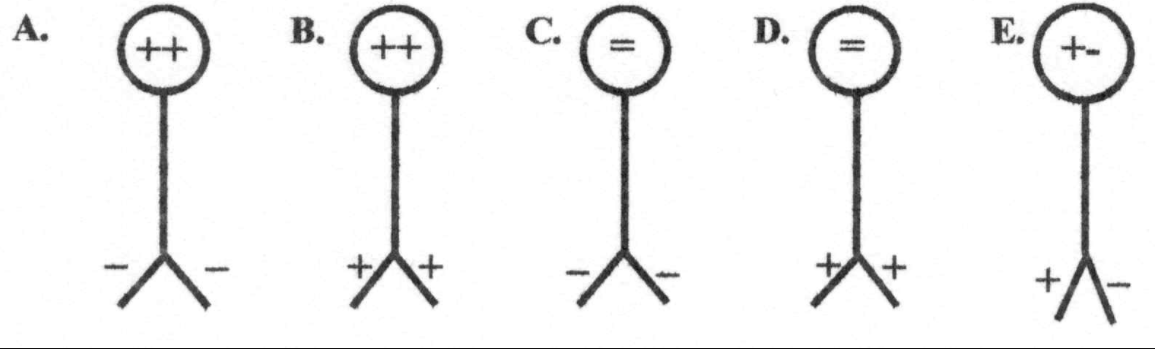
A positively charged rod is held near the knob of a neutral electroscope. What best describes what will happen to the leaves?
a)
the leaves will spread apart and be positive
b)
the leaves will spread apart and be negative
c)
the leaves will stay closed and be positive
d)
the leaves will stay closed and be negative
65.
Two electrically neutral metal spheres, A and B, on insulating stands are placed in contact with each other. A negatively charged rod is brought near, but does not touch the spheres, as shown in the diagram below. How are the spheres now charged?
a)
A is positive and B is positive.
b)
A is negative and B is positive.
c)
A is positive and B is negative.
d)
A is negative and B is negative.
66.
Metal sphere A has a charge of +12 elementary charges and identical sphere B has a charge of +16 elementary charges. After the two spheres are brought into contact and separated, the charge on sphere A is
a)
+14 elementary charges
b)
+28 elementary charges
c)
+2 elementary charges
d)
-2 elementary charges
67.
A negatively charged rod touches the knob of a neutral electroscope. Which  best represents the distribution of charge on the electroscope.
a)
both the knob and leaves become positive
b)
both the knob and leaves become negative
c)
the knob becomes negative and the leaves become positive
d)
the knob becomes positive and the leaves become negative
68.
Electromagnetic (EM) or light waves travel as what type of waves
a)
Longitudinal Waves
b)
Transverse Waves
69.
When light hits a medium 
a)
it does not change.
b)
will speed up. 
c)
can reflect, refract, transmit, absorb or scatter
d)
diffract around the medium
70.
Which can travel in the vacuum of space?
a)
EM (light) waves
b)
Sound waves
71.
The EM wave with frequency higher than infrared and lower than UV.
a)
radio
b)
visible light
c)
xray
d)
gamma
72.
7 is 
a)
Radio
b)
UV
c)
Infrared
d)
Gamma
73.
4 is 
a)
radio
b)
UV 
c)
Visible Light
d)
X-ray
74.
EM waves  
a)
Must travel through a vacuum
b)
Can travel through a medium or a vacuum
c)
Are the same type of wave as mechanical waves
d)
Can only travel through a vacuum
75.
All EM waves travel at  
a)
different speeds
b)
the speed of sound
c)
the speed of light
d)
the speed of a vacuum
76.
Predict which EM wave could cause more damage 
a)
Radio wave
b)
UV wave
c)
X-ray
d)
Gamma ray
77.
Infrared rays are important for
a)
Warming the Earth
b)
Providing visible light for plants
c)
Taking X-rays
78.
Which section of the spectrum is the ONLY one we can see?
a)
X-rays
b)
Visible Light
c)
Gamma Rays
d)
Ultraviolet Rays
79.
Which color has the least amount of energy?
a)
red
b)
orange
c)
green
d)
blue
80.

Which type of electromagnetic radiation is used extensively in communications?

a)

radio waves

b)

gamma rays

c)

infrared rays

d)

X-rays

81.
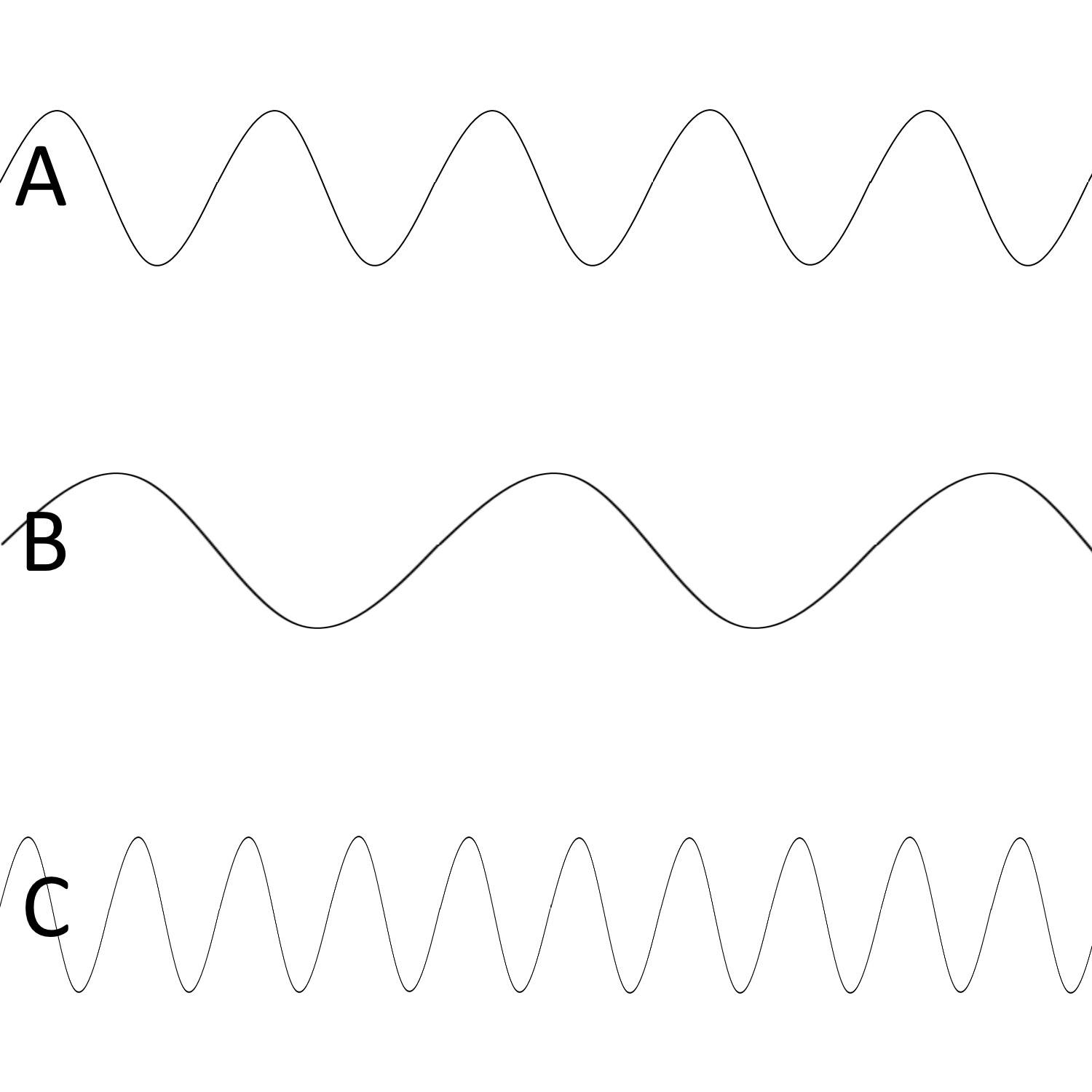
Which wave has the largest wavelength?
a)
A
b)
B
c)
C
d)
None (same wavelength)
82.
           In a longitudinal wave moving along a spring, areas where the coils are farthest apart are called ____________________.
a)
interference
b)
Compression
c)
Rarefraction
d)
Diffraction
83.
Waves that move the particles of the medium parallel to the direction in which the waves are traveling are called
a)
Surface Waves
b)
Combination Waves
c)
Longitudinal Waves
d)
Transverse Waves
84.

#4 refers to the

a)

wavelength

b)

amplitude

c)

crest

d)

trough

85.

#3 refers to the

a)

wavelength

b)

amplitude

c)

crest

d)

trough

86.

#2 refers to the

a)

wavelength

b)

amplitude

c)

crest

d)

trough

87.

#1 refers to the

a)

wavelength

b)

amplitude

c)

crest

d)

trough

88.

What does a wave carry from place to place?

a)

energy

b)

matter

c)

people

89.

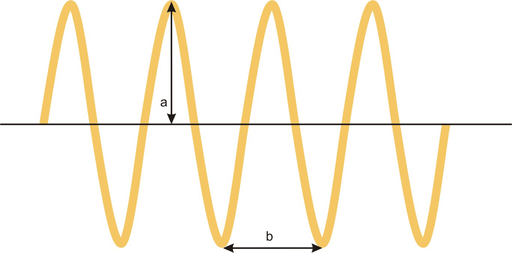
What is the wavelength of this wave?

a)

3

b)

10

c)

4

d)

8

90.

What is the amplitude of this wave?

a)

3

b)

-1

c)

6

d)

4

91.

How often a wave occurs is the wave's

a)

frequency

b)

amplitude

c)

wavelength

d)

velocity

92.

Longitudinal waves have:

a)

crests and troughs

b)

crests and compressions

c)

compressions and rarefactions

d)

troughs and rarefactions

93.

The height of the wave from its resting point is called its

a)

wavelength

b)

amplitude

c)

velocity

d)

frequency

94.

The distance between two corresponding parts of a wave is its

a)

amplitude

b)

frequency

c)

wavelength

d)

velocity

95.

The lowest part of a transverse wave are the

a)

crests

b)

troughs

c)

wave points

d)

low nodules

96.
High energy waves have a ____. 
a)
high frequency
b)
low frequency
c)
small amplitude
d)
big wavelength
97.
What is a medium?
a)
something between a small and a large?
b)
the substance through which a wave can travel
c)
a pattern of vibration that simulates when a wave is standing still
d)
the distance from any point on a wave to an identical point on the next wave
98.
How many waves are in this wave chain?
a)
6
b)
3
c)
4
d)
5
99.
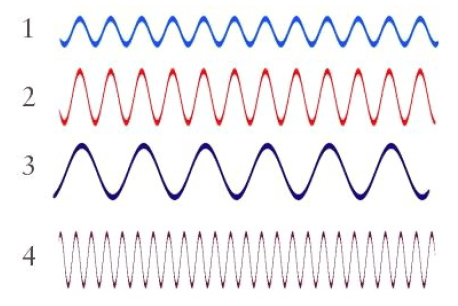
Which wave in the diagram has the greatest frequency?
a)
1
b)
2
c)
3
d)
4
100.
Which wave in the diagram has the greatest wavelength?
a)
1
b)
2
c)
3
d)
4
101.

Which of the following affects the period of a pendulum?

a)

mass

b)

length of the string

c)

tension of the string

d)

shape of the mass on the string

102.
Pendulum "A" is on Jupiter Pendulum "B" is on the Moon.  The Moon has less gravity than  Jupiter the pendulums have the same mass and length.  Which Pendulum has the greater period?
a)
A
b)
B
c)
Same
103.

Which of the following affects the period of a pendulum?

a)

What planet you're on

b)

What material is used to make the pendulum

c)

Which direction the pendulum starts swinging

d)

The frequency of the mass weight force grams

104.

As a pendulum gets longer, what happens to the period?

a)

doesn't change

b)

decreases

c)

increases

105.

What is the unit for the period of a pendulum?

a)

second

b)

meter

c)

m/s/s

d)

Newton

106.

When we're talking about a pendulum, what does T stand for?

a)

pi

b)

period

c)

length

d)

gravity

107.

At which point is this pendulum swinging the fastest?

a)

A

b)

B

c)

O

d)

A and B

e)

Same speed at all points

108.
The period of a pendulum may be decreased by
a)
Increasing the mass of the bob
b)
moving the equilibrium point
c)
decreasing the mass of the bob
d)
shortening the length of pendulum
109.

Which of the following is not an example of SHM?

a)

A simple pendulum

b)

A vibrating spring

c)

A planet orbiting the sun

d)

Bouncing on a trampoline

110.
For a system in simple harmonic motion, which of the following is the time required to complete a cycle of motion?
a)
amplitude
b)
period
c)
frequency
d)
revolution
111.

Standing waves are created by

a)

Two identical waves reflecting off each other

b)

Two identical waves being diffracted together

c)

Two identical waves move through each other in opposite directions

d)

Two identical waves are diffracted from two identical sources

112.

In the diagram which letters represent the nodes

a)

A B C

b)

A C E

c)

B D

d)

B D E

e)

A C D

113.
The moving black dot is called:
a)
a node
b)
an anti-node
c)
an anti-amplitude
d)
the wangy bit
114.
The stationary dot is called:
a)
a node.
b)
an anti-node.
c)
the amplitude.
d)
the not moving bit.
115.

How many antinodes does this standing wave have?

a)

5

b)

6

c)

7

d)

8

116.
When two waves combine to form a new wave with a smaller amplitude, it is called 
a)
Refraction
b)
Constructive Interference
c)
Resonance
d)
Destructive Interference
117.

The distance between two corresponding parts of a wave is its

a)

amplitude

b)

frequency

c)

wavelength

d)

velocity

118.

The height of the wave from its resting point is called its

a)

wavelength

b)

amplitude

c)

velocity

d)

frequency

119.

What is the wavelength of this wave?

a)

3

b)

10

c)

4

d)

8

120.

What does the solid line represent?

a)

refracted wave

b)

diffracted wave

c)

original wave

d)

dispersed wave

121.

How many complete waves are there?

a)

0.5

b)

1.5

c)

3

d)

4

e)

6

122.

How many nodes are present?

a)

2

b)

3

c)

4

d)

8

123.

What does the dotted line represent?

a)

refracted wave

b)

diffracted wave

c)

reflected wave

d)

dispersed wave

124.

Two wave pulses one with a positive amplitude the other with equal negative amplitude travel on a cord approaching each other. What is the result of the oscillations when the pulses reach the same point?

a)

It is constructive interference with twice the amplitude

b)

It is destructive interference with zero amplitude

c)

It is constructive interference with slightly greater amplitude

d)

It is constructive interference with the negative amplitude

e)

The standing wave is produced

125.

Two wave pulses with equal positive amplitudes travel on a cord approaching each other. What is the result of the oscillations when the pulses reach the same point?

a)

It is constructive interference with twice the amplitude

b)

It is destructive interference with zero amplitude

c)

It is constructive interference with slightly greater amplitude

d)

It is constructive interference with the negative amplitude

e)

The standing wave is produced

126.
This is an example of which type of wave behavior?
a)
Reflection
b)
Diffraction
c)
Constructive Interference
d)
Destructive Interference
127.

Sound waves are _______ waves.

a)

Transverse

b)

Seismic

c)

Longitudinal

d)

Slow

128.

Pitch is _____.

a)

How often a sound wave occurs

b)

How high or low a sound seems to be

c)

The energy behind a wave

129.

True or False: According to the Doppler Effect, if an sound source is moving TOWARDS you, the pitch should be getting higher.

a)

True

b)

False

130.

Human perception of sound volume

a)

Amplitude

b)

Loudness

c)

Intensity

d)

Decibel

131.

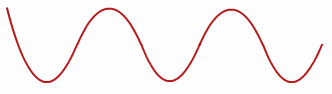
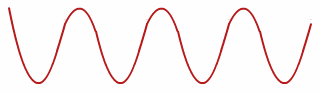
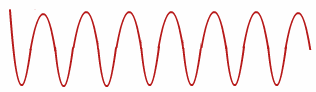
Which sound wave has the lowest pitch?
a)
b)
c)
132.
Sound that is reflected is called an ___________ .
a)
echo
b)
refraction
c)
decibel
d)
transmission
133.
What type of wave do musical instruments use to create sound?
a)
Standing Wave
b)
Pulse Wave
c)
Transverse Wave
d)
Compressional Wave
134.
What is created when two waves at nearly the same frequency interfere with each other?
a)
Resonance
b)
Wave Reflection
c)
Standing Wave
d)
Beats
135.

What is the Doppler effect?

a)

When a wave meets and interferes with its own reflection

b)

When a wave is shifted when a body pushes the wave

c)

The change in frequency due to the motion of the wave source or the observer

d)

When a wave changes direction because it passes into a new medium at some oblique angle

136.

When you tap various objects they produce characteristic sounds that are related to

a)

wavelength

b)

amplitude

c)

period

d)

natural frequency

137.

When the surface of a guitar is made to vibrate we say it undergoes

a)

forced vibration

b)

resonance

c)

refraction

d)

amplitude reduction

138.

When an object is set into vibration by a wave having a frequency that matches the natural frequency of the object, what occurs is

a)

forced vibration

b)

resonance

c)

refraction

d)

amplitude reduction

139.

Noise-canceling devices such as jackhammer earphones make use of sound

a)

destruction

b)

interference

c)

resonance

d)

amplification

140.

The phenomenon of beats is the result of sound

a)

destruction

b)

interference

c)

resonance

d)

amplification

141.

Constructive interference results in

a)

an increased amplitude

b)

a decreased amplitude

c)

no change in amplitude

142.

A standing wave is likely produced when

a)

two waves overlap

b)

a wave reflects upon itself

c)

the speed of the wave is zero or near zero

d)

the amplitude of a wave exceeds its wavelength

143.

As a supersonic aircraft increases in speed, the angle of its V-shaped shock wave becomes

a)

wider

b)

narrower

c)

neither of these

d)

closer to you

144.

An ambulance is driving towards you as you stand on the sidewalk. What happens to the pitch of the siren as it comes towards you?

a)

It increases

b)

It decreases

145.

You are driving in a car and honk the horn at a person standing in the street. As you approach the person, what happens to the pitch of the horn according to you in the car?

a)

It increases

b)

It decreases

c)

It stays the same because you are in the car moving with the sound.

146.

A car is not moving but the horn is on. You run towards the car to investigate what's going on. As you approach the car, what happens to the frequency of the sound waves from the horn?

a)

They increase

b)

They decrease

147.

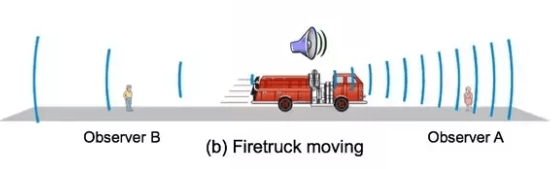
Look at the picture. Who is experiencing a lower pitched sound?

a)

Observer A

b)

Observer B

c)

There is no difference

148.

The purpose of the body of a guitar is

a)

to vibrate as the source of a wave

b)

to be a pendulum

c)

to act as a sounding board

d)

to create analog signals

149.

A Ruben's tube is a pipe filled with natural gas with small holes cut evenly along the top. When excited by a resonant frequency, the pattern is most closely modeled by the standing waves formed in ___________ because __________.

a)

string instruments, it has nodes on both ends

b)

open tube instruments, it has antinodes on both ends

c)

neither

150.

What do we call the loud noise made by airplanes when they exceed the speed of sound?

a)

Mach 1

b)

Sound boom

c)

Mach sound

d)

Sound blast

e)

Sonic boom

151.
What is a vacuum? 
a)
A space with only air in it
b)
A space with NO matter at all present
c)
A machine you use to do your chores
152.
Which of these lists the EM waves from Highest to lowest frequency?
a)
Radio -  Micro - Gamma - Visible light - UV - Xrays - Infrared - Xrays
b)
Radio - Micro - Infrared - Visible light - UV - X - Gamma waves
c)
Gamma - Xray - UV - Visible light - Infrared - Micro - radio
153.
Whats happens when nonpolarized light goes through a vertical polarized lenses?
a)
No Light Comes Out
b)
Only horizontal polarized lights comes out
c)
Only vertical polarized lights comes out
d)
Nonpolarized light comes out
154.
What type polarization light comes of glare from horizontal surface?
a)
Horizontal
b)
Vertical
c)
None
d)
All
155.
There are two different types of polarization lenses for 3D glasses
a)
False
b)
True
156.
Which of the following is NOT an electromagnetic wave? 
a)
ultraviolet
b)
infrared
c)
radio waves
d)
sound waves
157.
Compared to the average speed of light in air,  the average speed of light in water is _____ .
a)
slower
b)
faster
c)
the same 
d)
unknown
158.
Which electromagnetic wave carries the most energy?
a)
gamma waves
b)
microwaves
c)
radio waves
d)
light waves
159.
What is the name of a material in which waves, like sound waves, seismic waves, and waves in a slinky 
a)
Vacuum
b)
Medium
c)
Mechanical
d)
Space
160.
According to the Law of reflection, a light ray striking a mirror
a)
continues moving through the mirror in the same direction
b)
moves into the mirror at a slightly different angle
c)
bounces off the mirror toward the direction it came from
d)
bounces off the mirror at the same angle it hits.
161.
The combination of two or more waves that result in a single wave
a)
diffraction
b)
refraction
c)
reflection
d)
 interference
162.
Light bending as it passes from one medium to another is...
a)
Refraction
b)
Reflection
c)
Diffraction
d)
Interference
163.
A prism separating white light is an example of...
a)
Refraction
b)
Reflection
c)
Diffraction
d)
Interference
164.

? If the polarizing axis of the second filter is parallel to

that of the first, the light will .............

a)

pass through it

b)

block

c)

reflect

165.

Approximately how much light is blocked by two polarizing filters that are perpendicular to each other?

a)

0%

b)

50%

c)

75%

d)

100%

166.
Light has the highest velocity in which medium?
flint glass n=1.70
barium glass n=1.60
crown glass n=1.523
water n=1.33
diamond n=2.45
a)
diamond
b)
water
c)
flint glass
d)
barium glass
167.

The optical phenomena, twinkling of stars, is due to

a)

Atmospheric reflection

b)

Total reflection

c)

Atmospheric refraction

d)

Total refraction

168.

Total internal reflection is

a)

When lateral inversion occurs

b)

When the angle of reflection increases up to a critical point where all the light is reflected

c)

When the angle of incidence increases up to a critical point where all the light is reflected

d)

Used in surgery where a light is connected to an optical fibre

169.

The above image is an example of a ____________. They happen because cool and hot air have a different ___________________________.

a)

Mirage; angle of incidence

b)

Optical fibre; refractive index

c)

Lateral inversion; angle of reflection

d)

Mirage; refractive index

170.

What is the angle of reflection equal to?

a)

The angle of refraction

b)

The angle of incidence

c)

The angle of absorption

d)

The angle of light

171.

What happens when light hits a shiny or smooth surface?

a)

It disappears.

b)

It is refracted.

c)

It is absorbed.

d)

It is reflected.

172.
How is light affected by an increase in the index of refraction?
a)
Its frequency increases
b)
Its frequency decreases
c)
Its speed increases
d)
Its speed decreases
173.
Glass has a _____________ index of refraction than air.
a)
Equal
b)
Greater
c)
Less
d)
Impossible to say
174.

When the light passes out of the glass, back into the air

a)

It bends away from the normal

b)

It does not bend

c)

It bends towards the normal

d)

It continues to be the normal

175.
Light has the lowest velocity in which medium?
flint glass n=1.70
barium glass n=1.60
crown glass n=1.523
water n=1.33
diamond n=2.45
a)
diamond
b)
water
c)
flint glass
d)
barium glass
176.

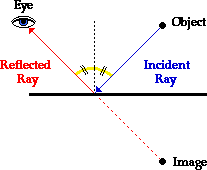
What is the angle of reflection (θr) in the image?

a)

56o

b)

90o

c)

124o

d)

34o

177.
What happens when an object is opaque?
a)
all light is able to pass through
b)
no light is able to pass through
c)
some light is able to pass through
d)
it is black
178.
Why do we see a GREEN leaf?
a)
because humans color it that color
b)
because it absorbs green and reflects all the other colors
c)
it absorbs every color except for green