
 Worksheets
Study Set-7th Grade Science 1st Semester Exam
Total questions: 67
Worksheet time: 34mins
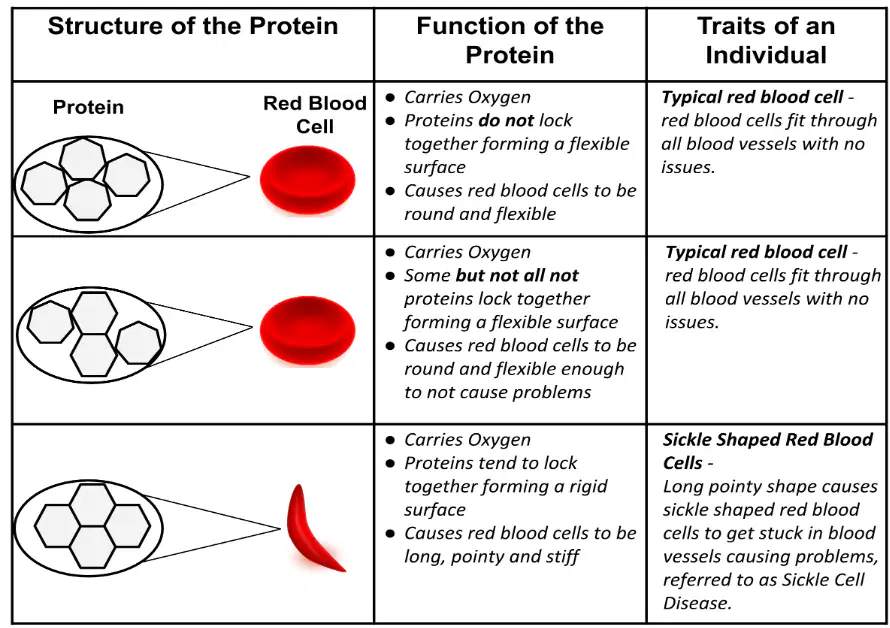
What shape do red blood cells take in individuals with Sickle Cell Disease?
Round and flexible
Long and curved, like a sickle
Square
Star-shaped
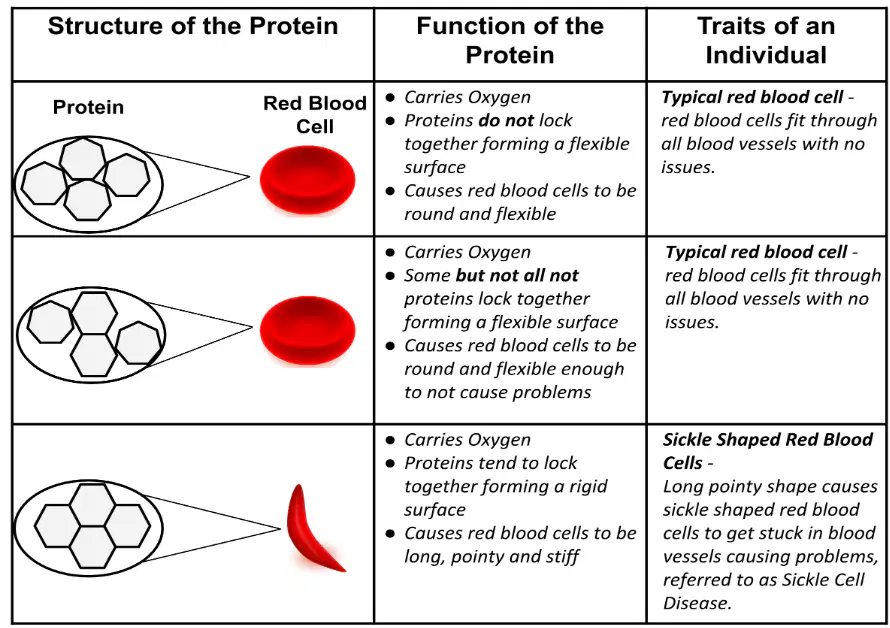
In Sickle Cell Disease, the shape of the red blood cell causes the cells to get stuck in blood vessels, causing problems. This shape is referred to as _________.
sickle shaped
round shaped
oval shaped
star shaped
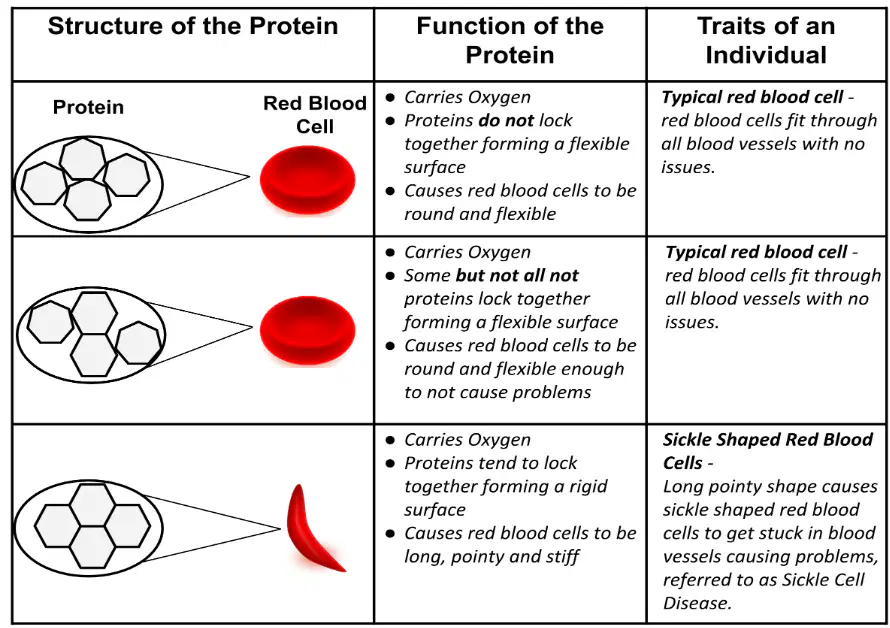
Sickle shaped red blood cells cause health problems in individuals with Sickle Cell Disease because:
They carry more oxygen than normal cells.
They can block blood flow in blood vessels.
They are larger than normal red blood cells.
They multiply faster than normal cells.
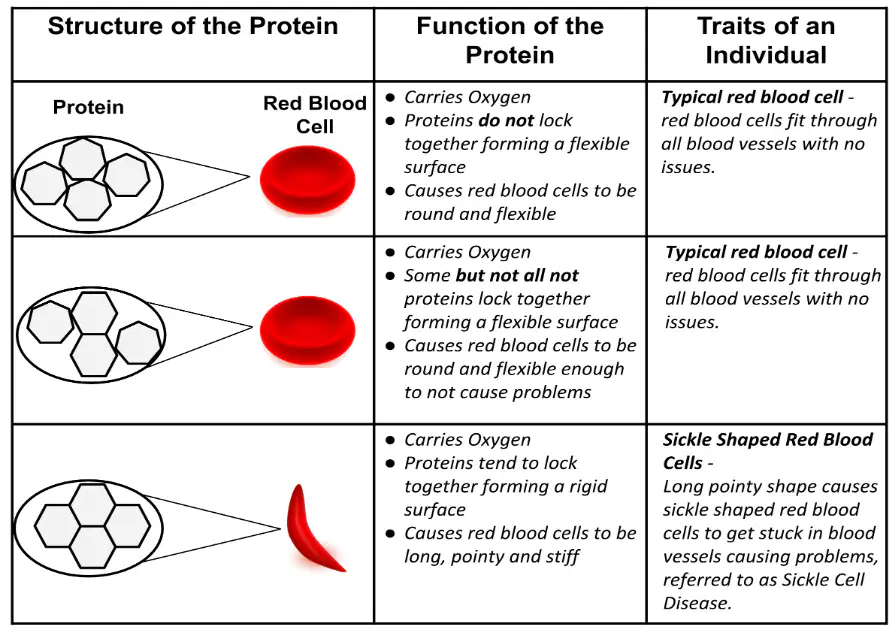
According to the table, what is the main function of red blood cells?
Carry oxygen
Fight infections
Produce hormones
Store fat
The function of the proteins that cover our red blood cells is caused by the ________
traits of an individual.
size of the cells.
shape/structure of the proteins.
color of the cells.
What is the main cause for sickle cell disease?
Wrong blood type
Funny shape of red blood cells
Not enough blood produced
Bone structure differences
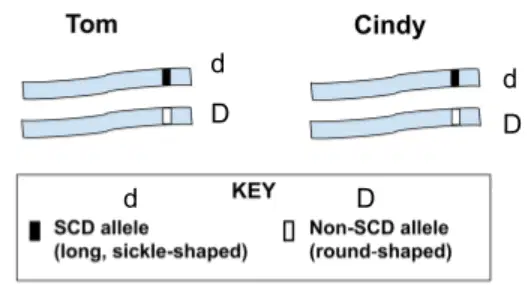
How many alleles for the Sickle Cell Disease trait does Tom have?
1
2
3
0
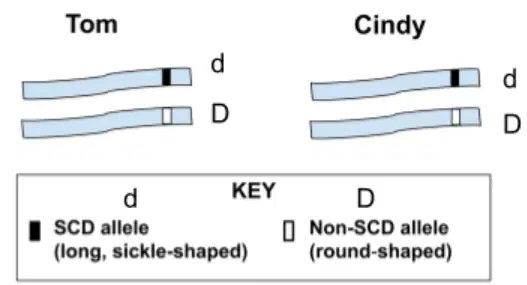
How many alleles for the Sickle Cell Disease trait does Cindy have?
1
2
3
0
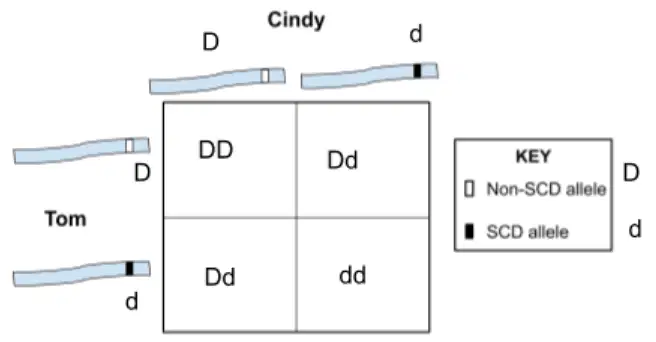
What percentage would be homozygous recessive?
25%
50%
75%
100%
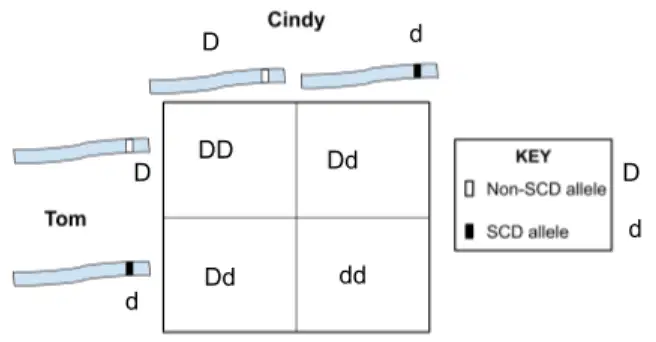
What percentage would be homozygous dominant?
25%
50%
75%
100%
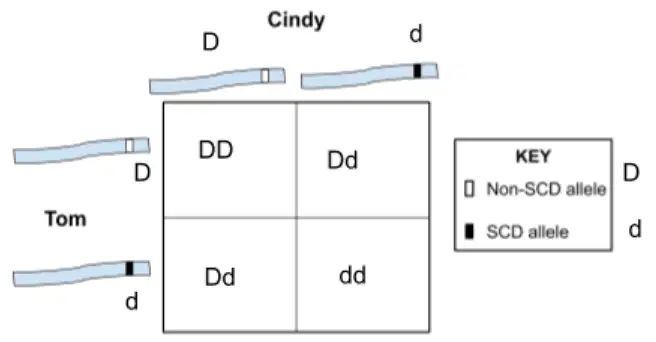
What percentage would be heterozygous?
25%
50%
75%
100%
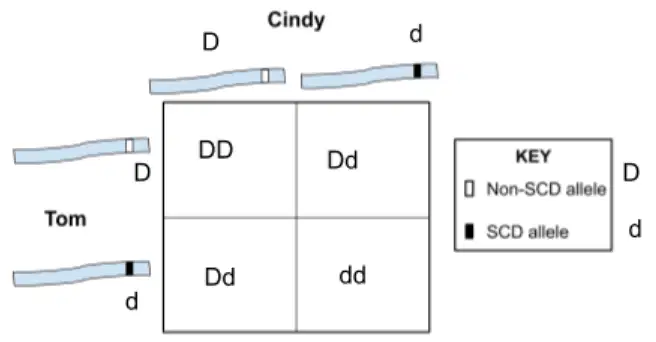
What is the percentage chance of one of Tom and Cindy’s kids inheriting sickle cell disease?
25%
50%
75%
100%
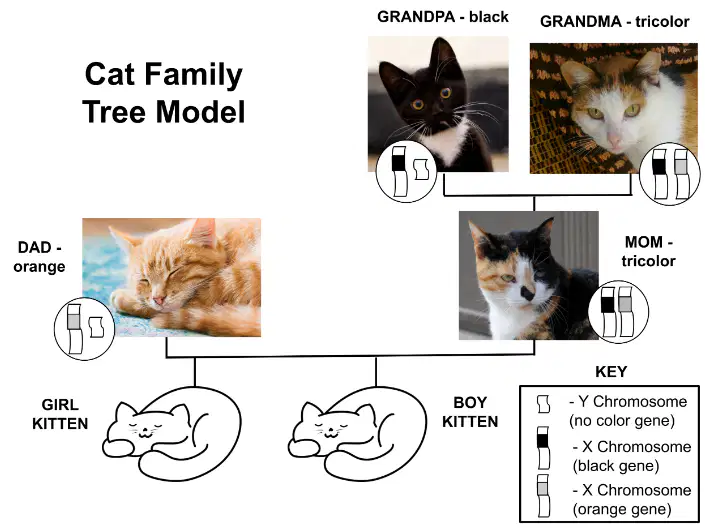
Based on the Cat Family Tree Model, which chromosomes does the Dad cat have?
Two X chromosomes (black and orange)
One X chromosome (orange) and one Y chromosome
Two Y chromosomes
One X chromosome (black) and one Y chromosome
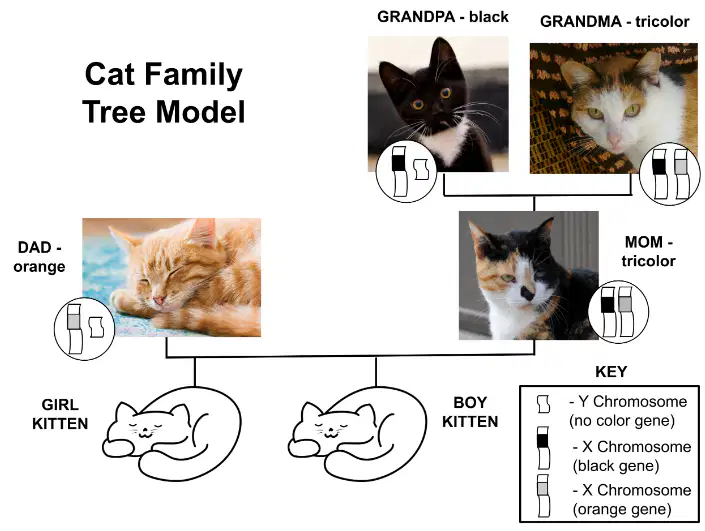
According to the Cat Family Tree Model, what is the fur color of the Grandpa cat?
Tricolor
Orange
Black
White
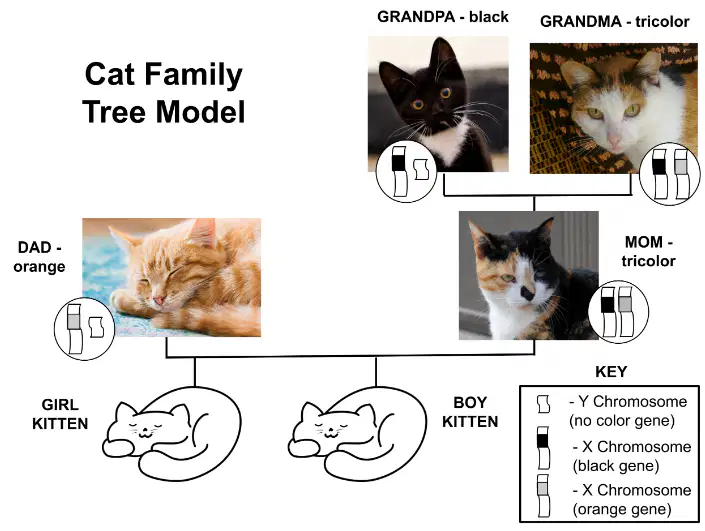
Using the Cat Family Tree Model and your understanding of X-linked inheritance, fill in the blank: Girl kittens can inherit _______ fur colors from their parents.
tricolor, black, or orange
only black
only orange
only tricolor
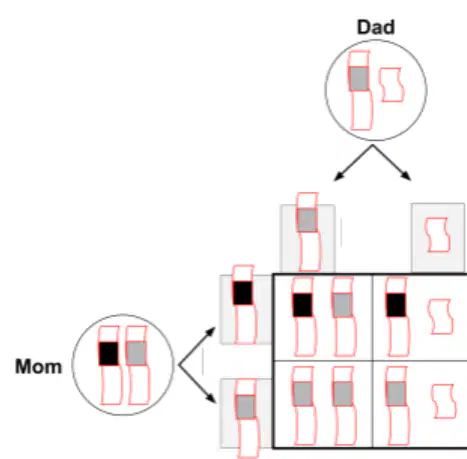
Based on the Chromosome Punnett Square Model above, how likely is it that Mom and Dad Cat will have a tri colored kitten? Choose one answer below.
They will always have a tricolor kitten.
They will almost always have a tricolor kitten.
They will sometimes have a tricolor kitten, but not always.
They will never have a tricolor kitten.
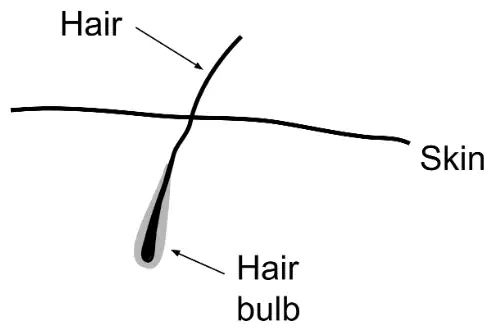
Several students were studying how humans get different colors of hair. The students discovered that hair is a type of protein that grows from the “hair bulb” cells that are located just under the surface of the skin (image below). The students found that hair itself is made only of protein and does not contain cells. Therefore, the genes that affect hair color are found in (choose one answer below):
the hair itself but not the hair bulb cells.
the hair bulb cells but not the hair itself.
neither the hair itself nor the hair bulb cell
What is the main function of a gene? Choose one answer below.
A. A gene causes sexual reproduction.
B. A gene produces one specific type of protein.
C. A gene produces two proteins.
D. A gene produces many specific types of proteins
What's the difference between homozygous and heterozygous alleles?
Homozygous alleles have two identical forms, while heterozygous alleles have two different forms.
Homozygous alleles have two different forms, while heterozygous alleles have two identical forms.
Homozygous alleles are only found in recessive traits, while heterozygous alleles are only found in dominant traits.
Homozygous alleles are always inherited together, while heterozygous alleles are always separated during inheritance.
How many alleles does an organism get from each parent?
One allele from one parent
Two alleles from each parent.
Three alleles from each parent.
No alleles from each parent.
What sets dominant alleles apart from recessive alleles?
A. Dominant alleles always show their traits, while recessive alleles only show if there are no dominant alleles.
B. Dominant alleles are more common, while recessive alleles are less common.
C. Dominant alleles come from one parent, while recessive alleles come from both parents.
D. Dominant alleles hide the effects of recessive alleles when paired together.
What is the only way a recessive allele will be expressed?
When it is paired with another recessive allele
When it is paired with a dominant allele
When it is present in both parents
When it undergoes a mutation
Which of the following best describes the difference between genotype and phenotype?
Genotype refers to an organism's physical traits, while phenotype refers to its genetic makeup.
Genotype is the collection of observable traits, while phenotype represents the genetic information.
Genotype is inherited from parents, while phenotype is influenced by environmental factors.
Genotype determines the potential traits, while phenotype is the actual expression of those traits.
How do signals move through your body?
In your blood
By using muscles
Along nerves to the brain
Through your bones
What do special cells in your body help you do?
Grow faster
Sleep better
Sense things around you
Heal cuts
Why does the shape of a protein receptor matter?
It helps you grow
It makes the body warm
It helps it fit with the right signal
It changes your eye color
What happens if your protein receptor doesn’t fit a signal like PTC?
You will feel tired
You won’t taste PTC
Your body will change
You will lose the gene
What are different versions of the same gene called?
Proteins
Chromosomes
Alleles
Cells
What tells a protein what shape to be?
Your food
Your age
Your genes (genetic code)
Your exercise
Where do we find genes in a cell?
In the skin
In chromosomes
In muscles
In the heart
What is true about chromosomes in humans?
You only get them from your dad
You get pairs of chromosomes
Only animals have them
They float outside the cell
How much of your genes come from each parent?
All from mom
All from dad
Half from each
One-fourth from each
What tool helps you figure out what genes a baby might get?
A calculator
A microscope
A Punnett Square
A timeline
What does “homozygous” mean?
Two different genes
Two of the same gene
No genes at all
One missing gene
What does “heterozygous” mean?
Two different alleles of the gene
Two of the same gene
Only one gene
No genes
When will a recessive trait show up?
If one parent has it
If one strong gene is there
Only if both genes are recessive
All the time
What happens if a child has one strong (dominant) gene and one weak (recessive) gene?
Only the weak trait shows
The strong trait shows
Both traits mix
Neither shows
What is a phenotype?
The gene letters
The protein shape
The trait you can see
The cell’s job
When molten volcanic material crystallizes into solid rock, energy is ________. Choose one answer below.
not transferred
transferred from Earth’s surface to the interior
transferred from Earth’s interior to the surface
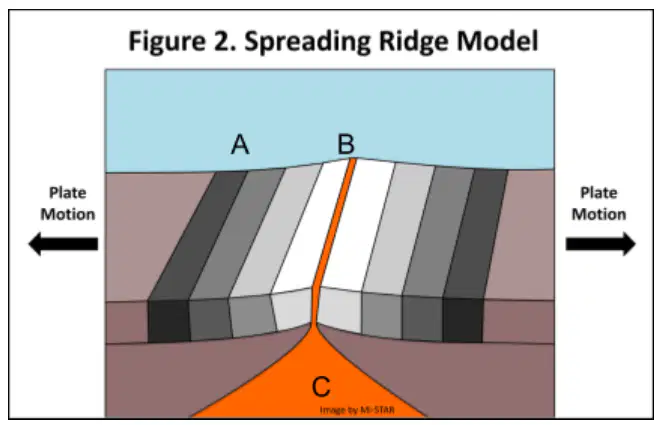
Figure 2 shows a partial 3D model of volcanic activity at a spreading ridge environment. Where is the oldest plate material found?
A
B
C
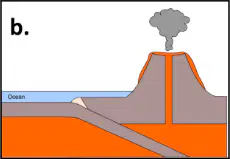
Which model below represents the tectonic activity that forms the Andes Mountains volcanoes? Circle one answer below.
[Image of a hotspot volcano]
[Image of subduction zone volcano]
[Image of spreading center volcano]
[Image of non-volcanic mountain]
Complete the Claim below, to describe why volcanic activity occurs in the Andes Mountains. “The Andes stratovolcanoes are caused by ________ tectonic activity.”
a region of no change
Hotspot
Spreading
subduction
Identify the Scientific Principle that is related to the Claim about the volcanic activity that formed the Andes Mountains. Choose one answer below.
Oceanic crust pulls apart and lava erupts out, creating new ocean seafloor.
Oceanic crust sinks into the hot mantle and is melted into magma which rises up through continental crust and forms volcanoes.
Volcanoes form within plates due to the motion of a tectonic plate over a hot mantle plume.
What is an eruption?
The formation of a mountain
The sudden cooling of lava
The release of material from a volcano, often explosively
A crack in the Earth's crust
What is a caldera?
A. A shield-shaped volcano
B. A crater formed by collapsing land after a massive eruption
C. A lava dome formed on a fissure
D. A mountain peak formed by magma
What best describes a shield volcano?
A small volcano with steep sides
A wide volcano with gently sloping sides
A volcano under the ocean
A volcano formed only at subduction zones
What is a stratovolcano?
A flat-topped underwater volcano
A steep-sided, cone-shaped volcano
A volcano formed only at hot spots
A volcano made of glassy crystals
What is a fissure vent?
A round hole that spews ash
A mountain peak made of solidified lava
A linear crack from which lava erupts
A vent found in calderas only
What is a crystal?
A. A type of volcanic gas
B. A shiny kind of liquid
C. A solid with a regular shape and shiny surfaces
D. A cooled layer of ash
What is crystallization?
The eruption of gas bubbles from magma
The formation of crystals from a liquid as it cools
The breaking of rocks into shiny fragments
The melting of lava
What is lava?
Molten rock inside the Earth
Hardened crystals in rock
Liquid rock that erupts from a volcano
A gas that escapes from magma
What does molten mean?
Solid and brittle
Soft and dusty
Made of gas
Liquefied by heat
What is Earth's crust?
A. A deep liquid layer
B. The molten layer just beneath volcanoes
C. The thin outer layer of solid rock
D. A thick part of the mantle
What is magma?
Rock that has cooled into a crystal
Molten rock inside the Earth
Rock formed on the ocean floor
Gas released from the mantle
What is the mantle?
The outermost shell of Earth
A cold layer near the crust
A thick, hot layer beneath the crust
What is melting in a geological context?
When lava becomes solid
When magma turns into a crystal
When solid rock becomes liquid due to heat
When tectonic plates break apart
What is a tectonic plate?
A volcano on the seafloor
A chunk of the Earth’s crust floating on the mantle
A piece of the atmosphere
A type of ocean trench
What is an ocean plate?
A thin layer of ice over the ocean
A tectonic plate made of light-colored rock
A plate under the ocean made of dark rock
A small volcano underwater
What is a continental plate?
A tectonic plate made of light rocks that forms continents
A plate under oceans
A flat plate in the mantle
A deep-sea trench boundary
What is a spreading ridge?
A mountain formed by magma
A location where tectonic plates separate
A place where plates collide
A feature found only in subduction zones
What is a subduction zone?
Where two plates move apart
A zone of frequent earthquakes only
Where one plate sinks beneath another
A place where new ocean crust is made
What is a hot spot?
A tectonic plate boundary
A cold region under the crust
An unusually hot area in the mantle causing volcanic activity
A collapsed caldera
What does frequency mean in relation to volcanoes?
How tall the volcano is
How far lava travels
How often major eruptions occur
The temperature of the eruption
What does magnitude refer to in volcanology?
The weight of lava
The sound a volcano makes
The volume of material erupted
The temperature of magma
What is an eruption period?
The time lava flows after eruption
How long a volcano remains dormant
The average number of years between eruptions
The time it takes for magma to rise
What is a divergent boundary?
Where two tectonic plates collide
Where a volcano collapses
Where two plates split apart and new crust forms
Where one plate slips past another
What is a convergent boundary?
Where new crust is formed
Where plates move away from each other
Where plates move towards each other and collide
Where a mantle plume cools

