
Font size
 Worksheets
Echinoderms
Total questions: 75
Worksheet time: 43mins
Some echinoderms have network of water-filled canals with thousands of tubes connected to it. This is called the
locomotion system
nervous system
water vascular system
digestive system

What is the function of the echinoderm's water vascular system?
To move and capture food
To sense for prey
To defend itself against predators
To create energy

By what process will some echinoderms regrow an limb that was removed by a predator?
Most species have ___ that allow them to eat plant material and animal matter.
Teeth
Tongue
Crop
Radula
What do sea urchins use for defense from predators?
Spines
Ink
Tube feet
Camouflage
Echinoderms are ___.
vertebrates
invertebrates
skeletal
non-porous
What type of symmetry do echinoderms have?
None
Radial
Bilateral
Pentagonal
What phylum do sea stars, sand dollars, and sea urchins belong to?
echinodermata
molluska
arthropoda
porifera
As a defense mechanism, a sea cucumber will
develop a hard outer shell of chitin
send its intestines out of its mouth
camouflage
turn its tube feet into spikes
An echinoderm with five rays (arms) arranged around a center point is called a(n)
sea cucumber
sea star
sand dollar
sea urchin
injecting poison into the prey
sending their stomach out of their mouth to digest prey
chewing their prey with strong jaws and teeth
grasping their prey with tube feet and injecting it with water

What does the term "echinoderm" mean?
What is the primary component of an echinoderm's endoskeleton?
chitin plates
calcium boron
hydrogen sulfide
calcium carbonate
through tracheal tubes
through respiratory glands
through gills
Which of the following is an example of an Asteroidea?
What organ can a sea star turn inside out when feeding?

What type of echinoderm is this?
The nerve that runs down each ray (arm) of a sea star is the ___.
spinal nerve
ampulla nerve
Echinoderms have no true head or brain, but still have a nervous system.
True
False
Which of the following is an example of an Ophiuroidea?

What type of echinoderm is this?
Which of the following is an example of an Echinoidea?
Sea stars often feed on
cnidarians like jellyfish
sea sponges
cephalopods like octopus and squid
mollusks like clams and mussels

What type of echinoderm is this?
sea star
sand dollar
sea urchin
brittle star

Sand dollars and sea urchins both have a feeding structure called
Plato's Mandible
Aristotle's Lantern
Socrates' Dentures
Democritus' Mandible
What structure allows water to enter the water vascular system?

What type of echinoderm is this?
sea star
brittle star
sea urchin
sand dollar
Which of the following is NOT an echinoderm?
Jellyfish
Sea cucumber
Sand dollar
Sea star
How many living classes of echinoderms are there?
6
7
5
20
What is the primary diet of sea urchins?
Coral
Seaweed
Algae
Bivalves
Which echinoderm is known for its flower-shaped body at the tip of an attached stalk?
Sea urchin
Sea cucumber
Sea star
Sea lily
What ecological role do echinoderms play in coral reefs?
All of the above
Controlling distribution of marine life
Providing oxygen at greater depths
Preventing algae growth
What is the primary habitat of most echinoderms?
Deep sea
Freshwater bodies
Desert
Tropical rainforests
Which of the following is a characteristic feature of echinoderms?
Presence of a backbone
Radial symmetry
Ability to fly
Warm-blooded
What is the primary method of reproduction in most echinoderms?
Sexual reproduction
Asexual reproduction
Both sexual and asexual reproduction
None of the above
Which class of echinoderms includes feather stars and sea lilies?
Crinoidea
Ophiuroidea
Asteroidea
Echinoidea
Which class of echinoderms includes sea stars and brittle stars?
Crinoidea
Ophiuroidea
Asteroidea
Echinoidea
Which echinoderm is known for its long, slender, flexible arms?
Sea urchin
Sea cucumber
Brittle star
Sea lily
Which class of echinoderms includes sea cucumbers?
Crinoidea
Ophiuroidea
Asteroidea
Holothuroidea
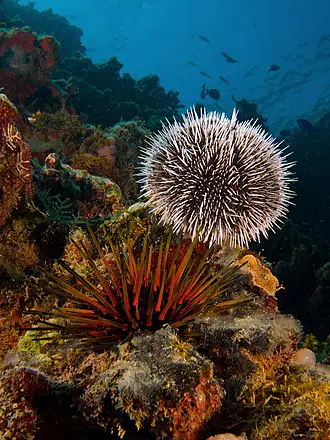
The echinoderms shown here are both
sea urchins
sea stars
sea spines
sand dollars
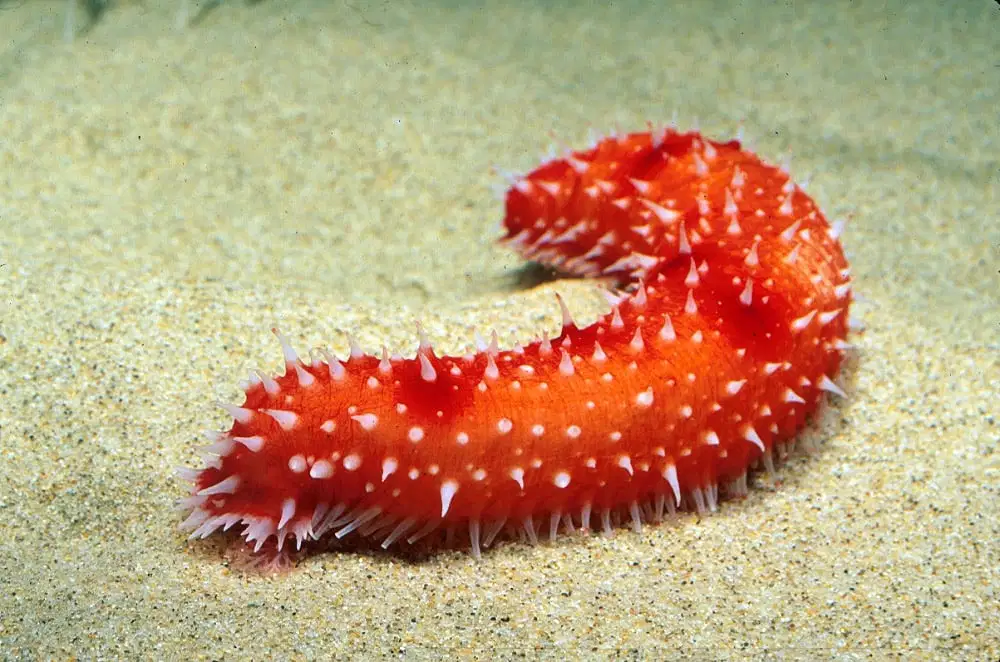
This echinoderm is known as
a sea cucumber
a sea slug
a mollusk
a sea urchin
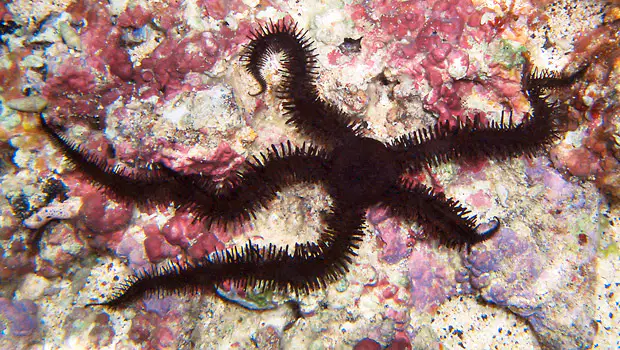
What type of echinoderm is shown here?
brittle star
leafy star
sea star
urchin star

This echinoderm is
a sea lily
a sea feather
a feather star
a brittle star

This echinoderm is known as
sea star
sea fish
star mollusk
feather fish
These structures resemble long suction cups, and are part of the water vascular system.
madreporite
radial canals
tube feet
ampullae
This structure is responsible for moving water in and out of the water vascular system.
ampullae
madreporite
ring canal
radial canals
Some sea urchins...
are large enough to eat cruise ships.
can't move.
are flat.
have venomous spines.
Sea urchins use their mouth structure to feed on...
whales.
algae.
the kraken.
sand dollars.
Which of the following lists the correct order in which water travels through the water vascular system?
tube feet, stone canal, madreporite, radial canal, ring canal, ampullae
stone canal, radial canal, ring canal, ampullae, tube feet, madreporite
ring canal, radial canal, ampullae, tube feet, stone canal madreporite
madreporite, stone canal, ring canal, radial canal, ampullae, tube feet
The outer skeleton of a sea urchin is
called a test
is on the outside of its body
is made of calcium carbonate
all of the above
The structure used by sea urchins to chew into rock or coral and to eat algae or kelp is called
radula

Which number(s) highlight the system of canals that circles the intestine and branches to each row of tube feet?
1, 3
3, 4
5, 6
7 only
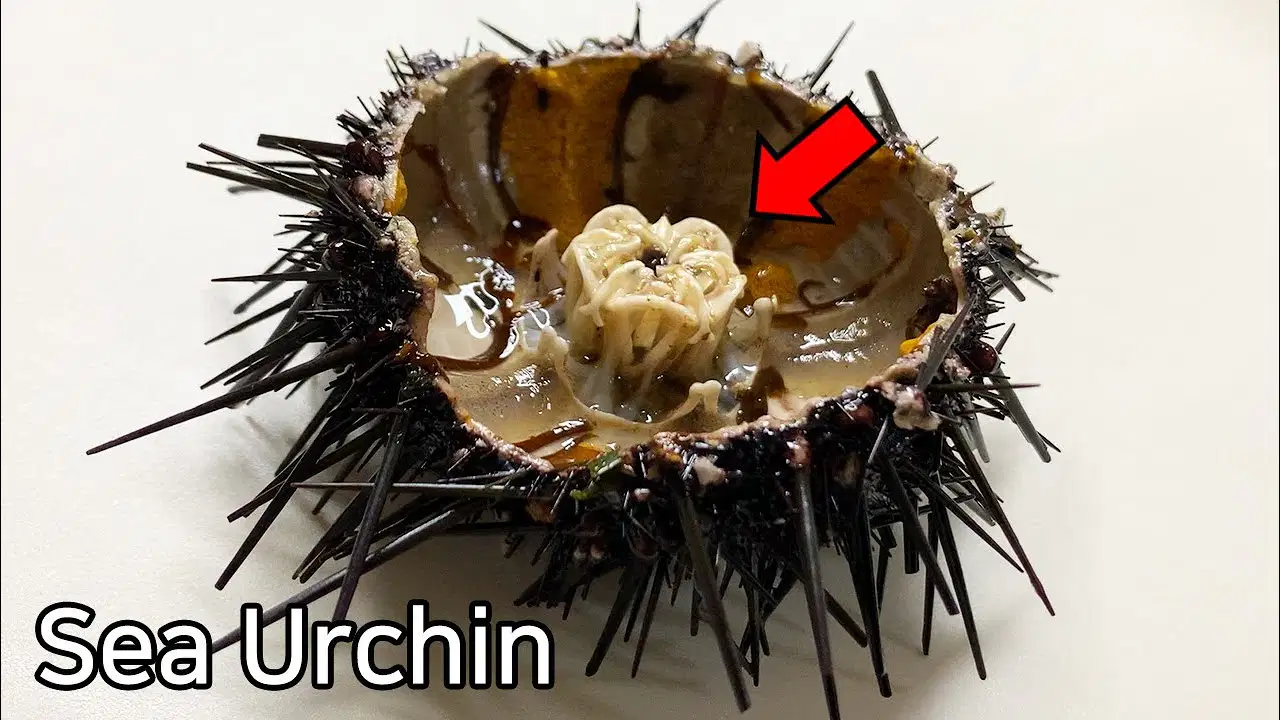
The image is showing the ___ which is responsible for ___.
Aristotle's lantern; scraping algae
madreporite; taking in water
tube feet; movement
gonads; releasing sperm or egg
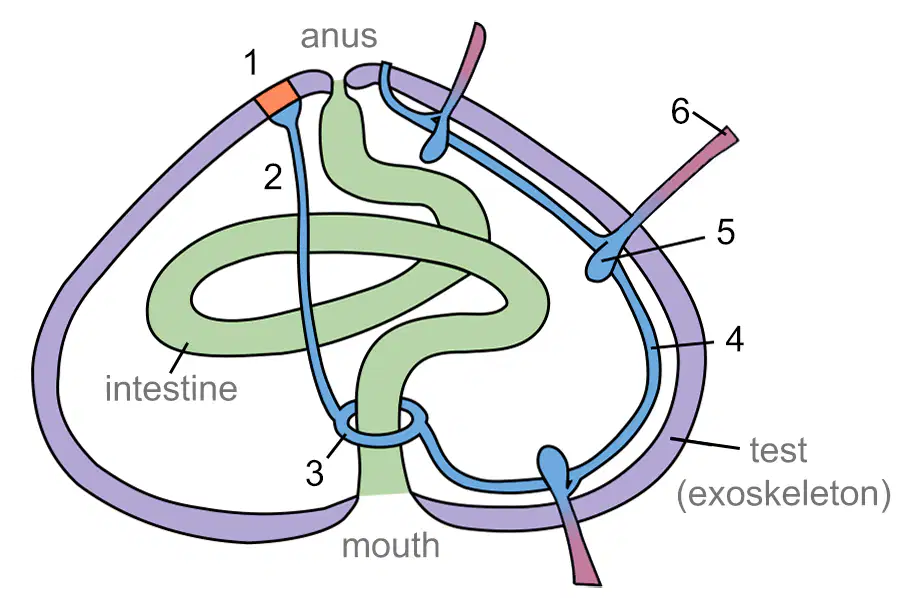
The structure labeled 6 is the
madreporite
Artistotle's lantern
spines
tube feet
The structure labeled 1 is the
madreporite
Artistotle's lantern
spines
tube feet

Identify structure E.
madreporite
esophagus
anus
intestine
Identify structure D.
Aristotle's lantern
esophagus
tube feet
stomach
Identify structure C.
Aristotle's lantern
spines
tube feet
stomach
Identify structure B.
Aristotle's lantern
esophagus
intestine
stomach
Identify structure A.
gonads
gills
intestine
stomach
The pathway of digestion in a sea urchin is
mouth, esophagus, crop, stomach, intestine, anus
mouth, esophagus, stomach, intestine, anus
Aristotle's lantern, crop, stomach, intestine, anus
mouth, stomach, esophagus, intestine, anus
Sea urchins have ___ which release sperm or egg into the ocean.
gonads
gills
ampulla
spines
How does water get into the sea urchin?
mouth
anus
madreporite
canals
___ is/are the main function(s) of the water vascular system. Select all that apply.
Movement
Breathing
Camouflaging
Feeding
The ___ side of the sea urchin has the madreporite.
oral
aboral
The ___ side of the sea urchin has the teeth.
oral
aboral
Select all that apply. The main characteristics of echinoderms include
water vascular system
marine inhabitants
spiny skin
muscular foot
incomplete metamorphosis
Which of the following best describes the symmetry of adult sea urchins?
bilateral
radial
asymmetrical
hexagonal
Sea urchins are members of which phylum?
Mollusca
Animalia
Arthropoda
Echinodermata

What is the purpose of the sea urchin spines?
To release poison into the ocean when threatened by predators
To hunt prey, to move, and to hold food
To take in water to the water vascular system
To protect themselves and to move their bodies

This echinoderm is a living
sand dollar
brittle star
sea star
urchin ray

