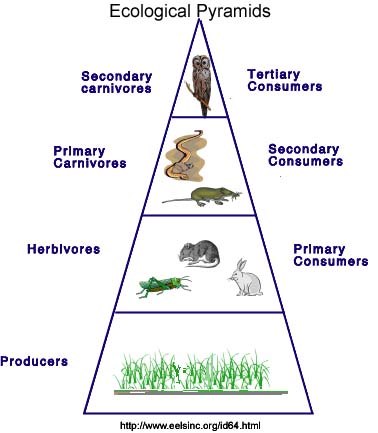
wayground logo

Free Printable Worksheets

Font size

S
M
L
XL
Worksheets

2026 Second Semester Biology Practice Final

Total questions: 164

Worksheet time: 2hrs 36mins

Name
Class
Date
1.

Nathan is curious about how animals, plants, water, and sunlight all affect each other in a forest. He wants to know what field of study would help him understand the interaction of the living and non-living parts of an ecosystem. What is this field called?

a)

the study of the interaction of animals with plants

b)

the study of plants

c)

the study of life

d)

the study of the interaction of the living and non-living parts of an ecosystem

2.
Phytoplankton require sunlight and nutrients, such as nitrogen and phosphorous, to produce food through photosynthesis. If a nearby farm uses an abundance of fertilizers, excess nitrogen and phosphorous will flow into waterways like the Chesapeake Bay. Which of the following local populations will NOT experience an immediate increase in density (number of organisms) after such an event? Use the food web below to help you answer the question.
a)
Bivalves (clams and mussels)
b)
Small planktivorous fish (fish that eat plankton)
c)
Benthic invertebrates (small organisms that lack a backbone)
d)
Gulls and Terns
3.

Lily is learning about the natural world in her science class. She wants to understand how living things are organized, from the largest group to the smallest. Which shows the levels of organization from largest to smallest?

a)

Biomes, Biosphere, Ecosystems, Communities, Populations, Organisms

b)

Biosphere, Ecosystems, Biomes, Communities, Populations, Organisms

c)

Biosphere, Biomes, Ecosystems, Communities, Populations, Organisms

d)

Organisms, Populations, Communities, Ecosystems, Biomes, Biosphere

4.
Bivalves are filter feeders, meaning that they filter nutrients and food out of the water surrounding them. As pollutants enter Chesapeake Bay, the bivalves take in these pollutants. Many bivalves are dangerous to eat from Chesapeake Bay because they contain high levels of pollutants. Which of the animals below are NOT affected by the contaminated bivalves? Use the food web below to help you answer the question.
a)
Herbivorous ducks
b)
Osprey
c)
Sea ducks
d)
Bald eagle
5.
Biological magnification is the increasing concentration of toxic substances in the tissues of organisms as trophic levels increase in a food chain or food web. As you move up the food chain the toxins get more and more concentrated. With biological magnification in mind, if bivalves in the Chesapeake Bay become contaminated from run-off, which organism will experience the highest level of contamination? Use the food web below to help you answer the question.
a)
Osprey
b)
Bald eagle
c)
Tundra swan
d)
Bivalves
e)
Sea duck
6.

Noah is studying the number of gazelle and lions in the savannah over time, as shown in the illustration below. Which claim is supported by the predator and prey illustration?

a)

More predators allowed for more prey to survive in a given area

b)

When there are more gazelles present there can be more lions present in the next few months

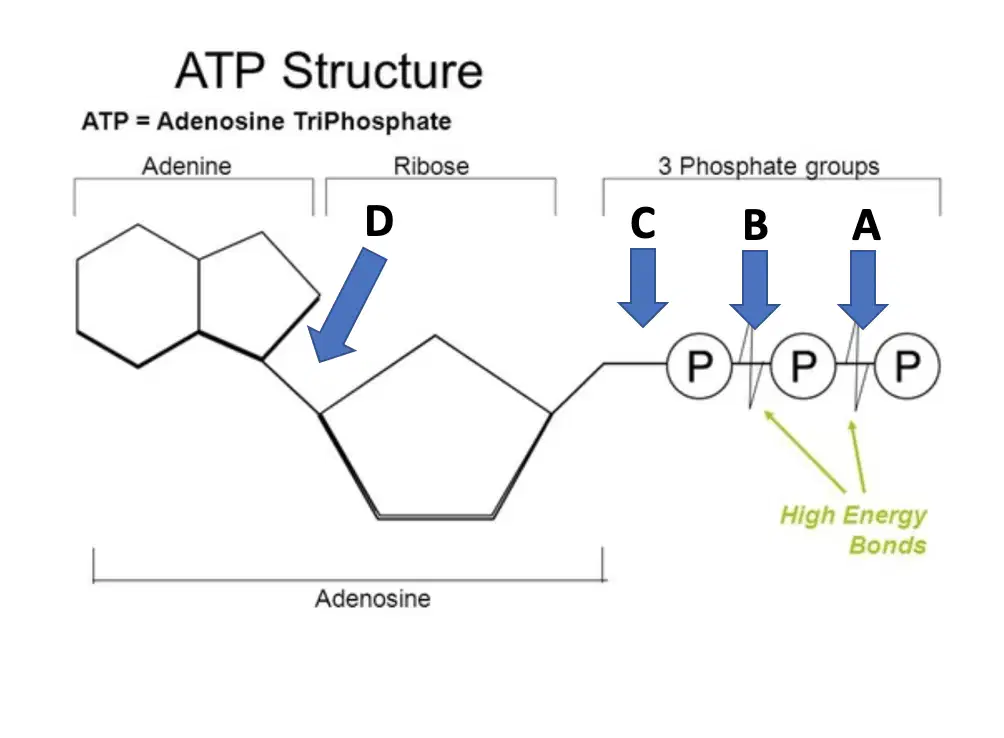
c)

The is no correlation (relationship) between predators and prey

d)

When there are more lions present there can be more gazelles present in the next few months

7.

Jessica is studying a local forest ecosystem for her biology project. She wants to find out the maximum number of deer that can be sustained by the forest without depleting its resources. The term for this maximum number is _____________.

a)

Density dependent limiting factors

b)

Biotic Capacity

c)

Carrying capacity

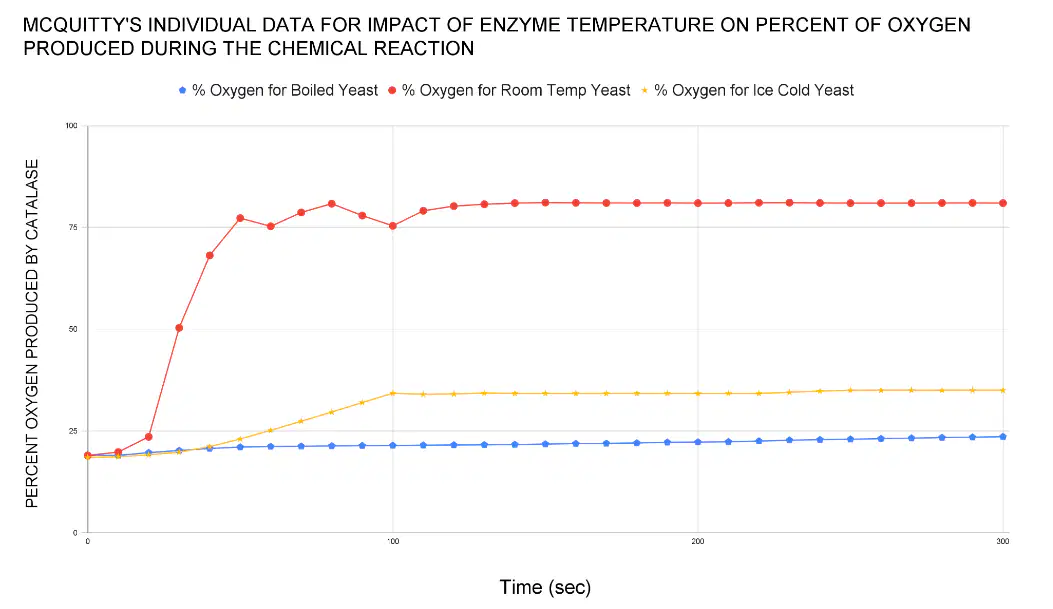
d)

A limiting factor

8.

Kelsey is studying a local ecosystem where owls eat mice and mice eat grass and grains. If the owl population suddenly grows, then most likely

a)

the number of mice will decrease and the amount of grass will not change.

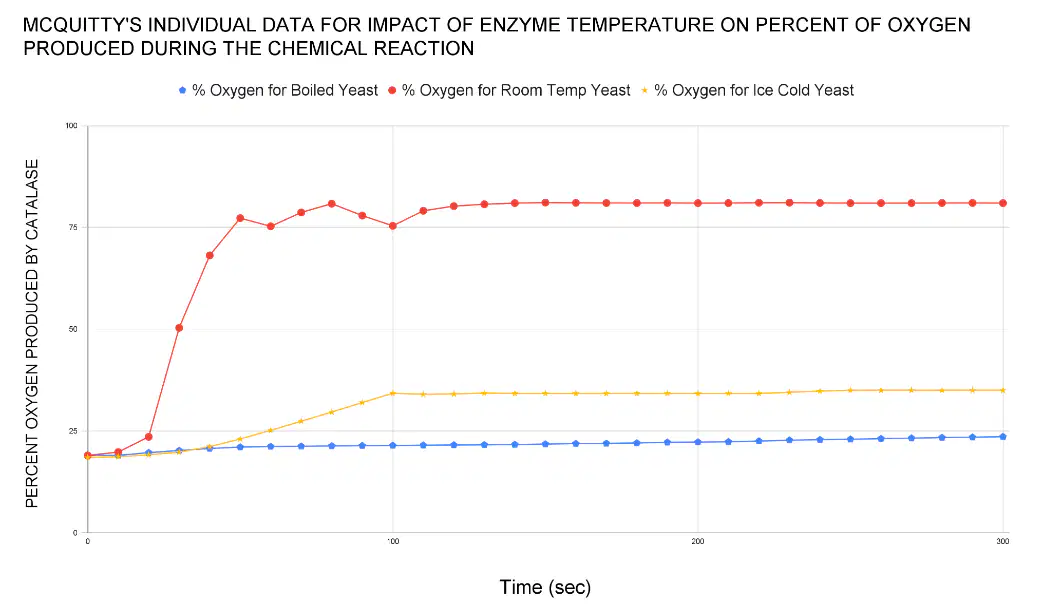
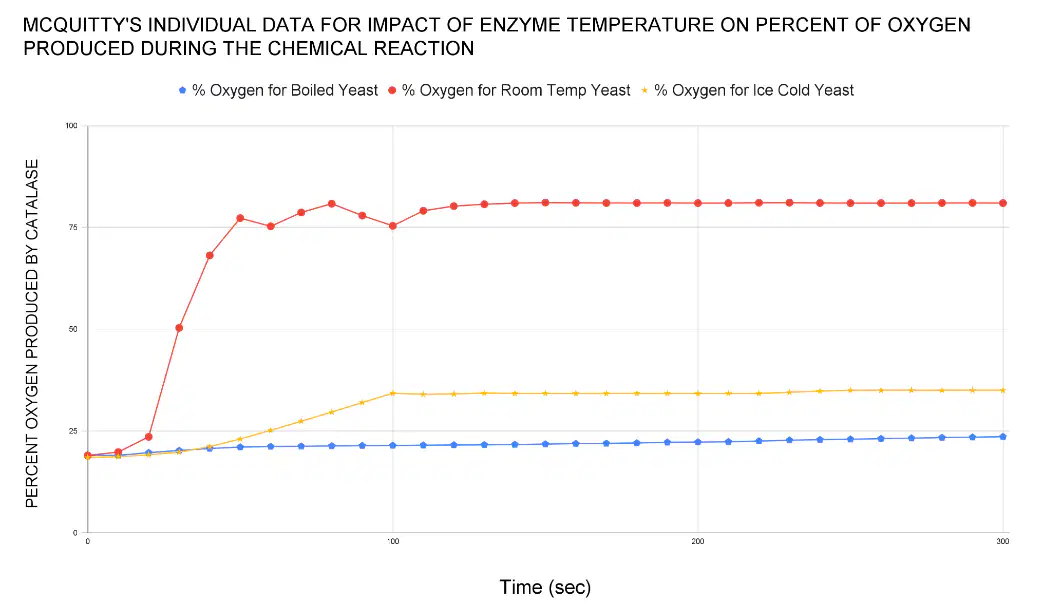
b)

the number of mice will increase and the amount of grass will not change.

c)

the number of mice will increase and the amount of grass will increase.

d)

the number of mice will decrease and the amount of grass will increase.

9.

Casper is studying two different areas in a forest. In area A, he observes that life starts on bare rock with no soil, and over many years, different plants and trees gradually appear. In area B, he notices that after a fire, grasses and small plants quickly grow back because the soil is still present, and eventually, the forest returns. What is the main difference between the two ecological concepts Jackson is observing?

a)

Both show primary succession and the gradual changes that occur when climate changes

b)

Both types of succession shown happens after a man made disturbance

c)

Primary succession in picture A is different from secondary succession in B because it lacks soil and takes longer than secondary succession to occur

d)

Primary succession in picture B is different from secondary succession in A because it lacks soil and takes longer than secondary succession to occur

10.

Henry is studying an energy pyramid in his science class. He notices that as energy moves from the grass to the rabbits, then to the snakes, and finally to the hawk, some energy is transferred while some is lost at each step. About how much energy is transferred to each trophic level and how much energy is lost?

a)

90% transferred and 10% lost

b)

10% transferred and 90% lost

c)

0% lost and 100% transferred

d)

50% transferred and 50% lost

11.

Liam is studying world population trends for his science project. In 2023, he notes that the current human population is ABOUT 8 billion people. According to the figures below, what type of population growth do humans show and is that type of growth sustainable for the human population (in other words can the human population keep growing like that)?

a)

Humans show a logistic growth curve and have sustainably reached their carrying capacity

b)

Humans show an unsustainable exponential growth curve

c)

Humans show an exponential growth curve and have sustainably reached their carrying capacity

d)

Humans show a sustainable exponential growth curve

12.

Zoe and Sam are investigating the relationship between human population density and biodiversity. The amount of forest cover was used as a measure of biodiversity in an area. The students averaged human population density and forest cover from locations with a range of population densities. The graph shows the students’ results. Based on the graph, if the population density increases from 1 to 500 people/km2, the forest cover will likely

a)
Double
b)
Decrease by 25%
c)
Increase by 25%
d)
Decrease by 50%
13.

Eli is studying how different animals are related by looking at the hemoglobin protein, which helps transport oxygen in red blood cells. He finds a table showing the number of amino acid differences in hemoglobin between humans and three other species. Which statement is supported by evidence in the data table below?

a)

Humans are more closely related to species A since that species has the least number of amino acid differences.

b)

Species C is more closely related to humans since it has the most number of amino acid differences.

c)

Humans are more closely related to species B since there are only 17 amino acid differences.

d)

Species A and C are more closely related since they only have 31 amino acid differences.

14.

Sereen is studying a chart that compares amino acid sequences in hemoglobin from eight different mammals. She notices that each column in the chart is labeled with a number. What do these numbers represent on the chart?

a)

Location of each nucleotide in a DNA sequence

b)

It does not mean anything to a molecular biologist it is just simply a place holder

c)

Location of the amino acid in the polypeptide

d)

Location of the fatty acids in the lipids of the organisms

15.

Hudson is studying a chart that compares the hemoglobin sequences from eight different mammals. The chart uses LETTERS to represent certain components in the sequences. What do the LETTERS represent on the chart below?

a)

Nucleotides

b)

Monosaccharides

c)

Amino acids

d)

Fatty Acids

16.

Juan Pablo is studying a chart that shows the amino acid sequences in hemoglobin from eight different mammals. What is Juan Pablo comparing on the chart below?

a)

The cytochrome-c protein between species

b)

The hemoglobin protein within a population

c)

The hemoglobin protein between species

d)

The cytochrome-c protein within a population

17.

Archer is studying the genetic relationships between different animals for his biology project. He wants to know: In this example, which organism would be MOST related to the human?

a)

Bear

b)

Chimpanzee

c)

Mouse

d)

Shrew

18.

A certain species of rabbit exhibits a lethal condition when the individual carries 2 recessive alleles (think naked Mr. Bigglesworth). If a male rabbit is a heterozygous carrier for a lethal recessive disorder, and a female rabbit is also a hybrid for the trait, what are the chances that their offspring will exhibit (show) the lethal condition?

a)

0%

b)

25%

c)

50%

d)

100%

19.

In a forest, a population of rabbits shows differences in fur color, ear length, and running speed. Why is it ADVANTAGEOUS for this population of rabbits to have such variation?

a)

Variation means the organisms are better able to hide in different areas of their habitat.

b)

Variation makes it easier for organisms to recognize members of their own families.

c)

Variation increases the likelihood that at least some individuals will survive if there is a change in the environment.

d)

Variation in a population provides males with a wider selection of females when mating.

20.

Charli is visiting a natural history museum and sees an exhibit comparing the embryos of different vertebrates, like fish, salamanders, tortoises, chickens, pigs, cows, rabbits, and humans. She reads that embryological comparisons show that:

a)

gorillas begin life as a fish and then develop into gorillas.

b)

as they develop into fetus stage they look more similar showing evidence of common descent

c)

all vertebrate embryo’s look alike in their early stages, and provide evidence for descent with modification

d)

rabbit embryos look like adult fish.

21.

Matthew is visiting a natural history museum and sees an exhibit comparing the evolutionary relationships between different animals. He wonders: Which two organisms are the LEAST closely related?

a)

Human and a Macaque

b)

Human and a chicken

c)

Human and a frog

d)

Human and a lamprey

22.

Eisley is studying a phylogenetic tree in her biology class. She wonders what this tree shows about the evolutionary relationship between all the organisms in the tree. What does the phylogenetic tree reveal?

a)

The close relationship between vertebrates (having a backbone) and invertebrates (not having a backbone)

b)

It shows the evolutionary relationships of living things that have derived (come) from a common ancestor (common descent).

c)

It shows that all vertebrates have hair

d)

All fish have jaws

23.
Beak depth of a finch population from 1976 to 1978. During this time frame the finch population experienced a drought. The depth (thickness) of the bird beaks in this population changed due to the change in availability of food in their environment. During the drought, larger seeds became prevalent (more common) in the environment. What type of selection does the data illustrate (show)?
a)
Stabilizing selection
b)
Sexual selection
c)
Directional selection
d)
Disruptive selection
24.

During a study at a local farm, Aiden observed a population of bunnies over several generations. He tracked the frequency of two alleles in the gene pool. What happened to the allele frequency of the alleles in the gene pool?

a)

The dominant allele frequency increased while the recessive allele frequency decreased in the population

b)

The dominant allele frequency decreased while the recessive allele frequency increased in the population

c)

Both alleles decreased in the population

d)

The allele frequency did not change during the simulation

25.
In the breeding bunnies activity, imagine that this population of bunnies no longer lived in a cold climate, predict what would happen to the population’s allele frequencies if the climate changed and it was warm year round. Remember the equation for Hardy Weinberg is : P^2 + 2Pq + q^2= 1 Which bunnies would have a selective advantage if the climate changed?
a)
The allele frequency could shift toward the q allele and naked bunnies could have a selective advantage in a warm climate
b)
The allele frequency will not change since naked bunnies are less fit in a cold climate
c)
The allele frequency will shift toward zero and all bunnies will go extinct since rabbits do not live in warm climates
d)
The allele frequency will not change since furred bunnies will always have a selective advantage
26.

Miles and Boone are breeding rabbits as part of a genetics experiment. Both of their rabbits have the genotype Ff, where the combination ff results in a lethal condition. What fraction of their offspring will exhibit the lethal condition?

a)

100%

b)

75%

c)

50%

d)

25%

27.

Lucy and Audrey are breeding rabbits as part of a science project. They have a pair of rabbits with the genotype Ff (where F represents furred and f represents naked). What are the phenotype ratios for this genetic cross?

a)

3/4 Furred bunnies, ¼ naked bunnies

b)

2/4 furred rabbits, 2/4 naked rabbits

c)

¼ FF, 2/4 Ff, ¼ ff

d)

3/4 FF , ¼ ff

28.

Graelyn and Madi are breeding their pet rabbits, both of which have the genotype Ff for fur. What are the genotype ratios for this genetic cross?

a)

3/4 Furred bunnies, ¼ naked bunnies

b)

2/4 furred rabbits, 2/4 naked rabbits

c)

¼ FF, 2/4 Ff, ¼ ff

d)

3/4 FF , ¼ ff

29.

In a population of rabbits, some individuals leave behind more living offspring than others, showing a greater reproductive success. These rabbits would be considered to have a high degree of ____________.

a)

Overproduction of offspring

b)

Sexual Selection

c)

Fitness

d)

Genes

30.

In a population of rabbits, natural selection acts on the _____________ rather than on gene combinations that produce that trait.

a)

Genotype

b)

Recessive genotype

c)

Phenotype

d)

Mutations

31.
Women often have complications during labor while giving birth to very large babies, whereas very small babies tend to be underdeveloped and not survive. This situation results in which kind of selection on birth weight?
a)
Directional selection
b)
Disruptive selection
c)
Sexual Selection
d)
Stabilizing selection
e)
Artificial Selection
32.
Beak depth of a finch population from 1976 to 1978. During this time frame the finch population experienced a drought. The depth (thickness) of the bird beaks in this population changed due to the change in availability of food in their environment. During the drought, larger seeds became prevalent (more common) in the environment. Which claim (hypothesis) is supported by evidence in the two graphs BELOW?
a)
The average weight of the finch population increased from 1976 to 1978.
b)
The average beak depth increased in the finch population from 1976 to 1978.
c)
Birds with larger beaks ate larger seeds and survived.
d)
The average beak depth decreased in the finch population from 1976 to 1978
33.

In a population of rabbits living in a forest, what is the ULTIMATE cause of variation among the rabbits?

a)

asexual reproduction

b)

sexual reproduction

c)

mutation to genes

d)

the cell cycle

34.

Quinne is organizing a massive library of books and wants to categorize them from the broadest group down to the most specific. She wonders: which taxon level would include all levels of classification?

a)

Family

b)

Domain

c)

Kingdom

d)

Genus

e)

Species

35.

Abigail is exploring a tide pool and discovers an unusual organism attached to a rock. She observes that it is eukaryotic, multicellular, and strictly heterotrophic. The organism filters food from the water around it, lacks cell walls, and remains anchored to the sea floor. Abigail learns that it can reproduce by fragmentation but usually reproduces sexually, and that these organisms are often hermaphrodites, with eggs remaining inside the body while sperm is released into the water. Based on these characteristics, to which kingdom does this organism belong?

a)

Animalia

b)

Eubacteria

c)

Archaebacteria

d)

Plantae

e)

Fungi

36.

Carson is studying a tiny organism he found in the digestive tract of chickens and lizards. He observes that it is strictly unicellular, has cell walls made of peptidoglycan (protein-sugars), lacks a nucleus, and contains circular DNA. He also notices the presence of plasmids, which can help the organism resist antibiotics. Based on these characteristics, to which kingdom does this organism belong?

a)

Eubacteria

b)

Animalia

c)

Plantae

d)

Fungi

e)

Protista

37.

Kaiya is examining a sample under the microscope in her biology class. She observes that the organism is multicellular, eukaryotic, and has cell walls made of cellulose. She also notes that it is strictly photoautotrophic and will die without a source of carbon, water, and light energy. Which kingdom does this organism belong to?

a)

Plantae

b)

Animalia

c)

Fungi

d)

Protista

e)

Archaebacteria

38.

Jaylyn is organizing her collection of living things and wants to group them so that each group contains only one specific type of organism. At which taxon level would Abigail find that each group includes only one type of organism?

a)

Family

b)

Domain

c)

Kingdom

d)

Genus

e)

Species

39.

Ruby is observing a sample under the microscope in her biology class. She notices a unicellular organism that has a nucleus, organelles, and performs photosynthesis. The organism also has a flagella, which allows it to swim into the light and evade predators. Based on these characteristics, to which kingdom does this organism belong?

a)

Protista

b)

Animalia

c)

Plantae

d)

Fungi

e)

Archaebacteria

40.

Elliott is a scientist studying organisms that live in extremely salty environments. She discovers a unicellular organism that is prokaryotic and has cell walls without peptidoglycan (protein-sugars). Interestingly, this species can cause waterways to become pink. Based on this information, to which kingdom does this organism belong?

a)

Archaebacteria

b)

Animalia

c)

Plantae

d)

Fungi

e)

Protista

41.

Emily is working in a biology lab and observes the organism shown in the images above under a microscope. She notes that this organism is unicellular, but learns that the kingdom it belongs to also includes multicellular organisms. It is strictly a eukaryotic heterotroph with a cell wall made of chitin. Grace also discovers that these unicellular organisms can reproduce both sexually and asexually. Based on this information, to which kingdom does this organism belong?

a)

Fungi

b)

Animalia

c)

Plantae

d)

Protista

e)

Archaebacteria

42.

Andi is studying how different types of cells are produced in animals. She learns that somatic cells are normal body cells like skin cells and liver cells, while sex cells are the egg and sperm. She discovers that sex cells are only produced in specific locations, but somatic cells are produced everywhere else in the body. In animals, ___________ are produced by mitosis and ________ are produced by meiosis.

a)

gametes , somatic cells

b)

clones , somatic cells

c)

somatic cells , gametes

d)

body cells, zygotes

43.

Emma noticed that her family members have different eye colors, even though they are all related. What are the different versions of a gene that cause these variations called, and where do they come from?

a)

homozygous dominant due to crossing over

b)

homologous chromosomes due to fusion of egg and sperm

c)

alleles due to mutations during DNA replication

d)

sister chromatids due to succession

44.

Cooper is learning about genetics in school. His teacher explains that the sequence (order) of ________ codes for his traits. What is Cooper learning about?

a)

the sugar phosphates

b)

nucleotides

c)

fatty acids

d)

phosphates only

45.

Justine is building a model of a DNA ladder for her science project. She wants to know: what are the sides, the "backbone" of the DNA ladder made up of?

a)

Sugar and nitrogenous bases

b)

Nitrogenous bases and phosphates

c)

Phosphates and proteins

d)

Sugar and phosphates

46.

Julianne is helping her younger brother with his biology homework. She shows him the DNA image below and asks, "Do you remember the complementary base pairing rules?

a)

Adenine always bonds with Guanine

b)

Adenine always bonds with Cytosine

c)

Adenine always bonds with Thymine

d)

Guanine always bonds with Cytosime

47.

Emme is helping her younger sister with her biology homework. She shows her a diagram of a DNA strand, where one of the bases is labeled 'G'. Emma asks, "According to the complementary base pairing rule, which base should pair with 'G'?" What should G base pair with?

a)

Guanine always bonds with Cytosine

b)

Guanine always bonds with Adenine

c)

Guanine always bonds with Thymine

d)

Adenine always bonds to Thymine

48.

Alyse has two pea plants in her garden. She knows the genetic makeup (genotype) of each plant. What is the relationship between the genotype and the physical appearance (phenotype) of these pea plants?

a)

Genotype determines the phenotype of an organism

b)

Phenotype determines the genotype of an organism

c)

There is no relationship

d)

Phenotype are the traits that you can see

49.

Cade and his wife are planning to have a child, they are both heterozygous for the trait in the pedigree. The pedigree below illustrates an autosomal recessive inheritance pattern in their family. What is the probability that they will have a child with the recessive trait?
a)

0/4 chance

b)

1/4 chance

c)

2/4 chance

d)

3/4 chance

e)

4/4 chance

50.

Colt and Gertrude are a married couple. Their family pedigree shows an autosomal dominant inheritance pattern for a certain trait. What must the genotypes of Colt (#1) and Gertrude (#2) be in the first generation and why?

a)

#1 = Dd. and # 2 = dd because they have children who have the trait and who don't have the trait

b)

#1 = dd. and # 2 = dd because both parents have the trait

c)

#1 = Dd. and # 2 = Dd because they have at least one child that does not have the dominant trait

d)

You can not know their genotype since it is an autosomal recessive inheritance pattern
51.
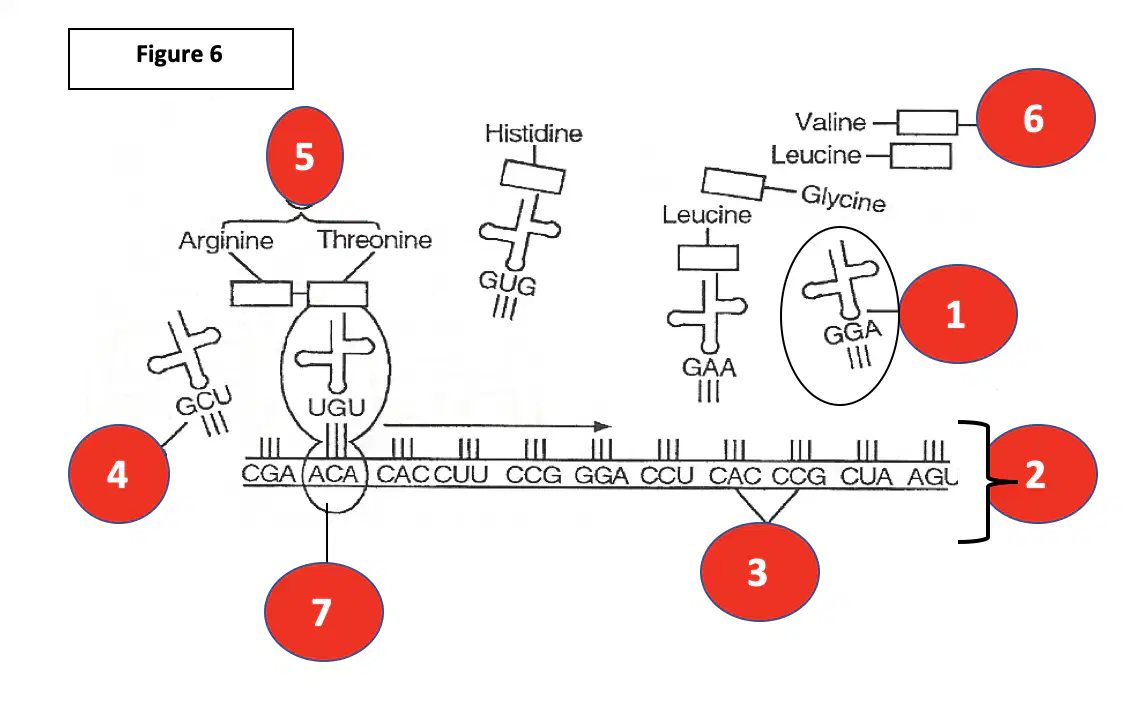
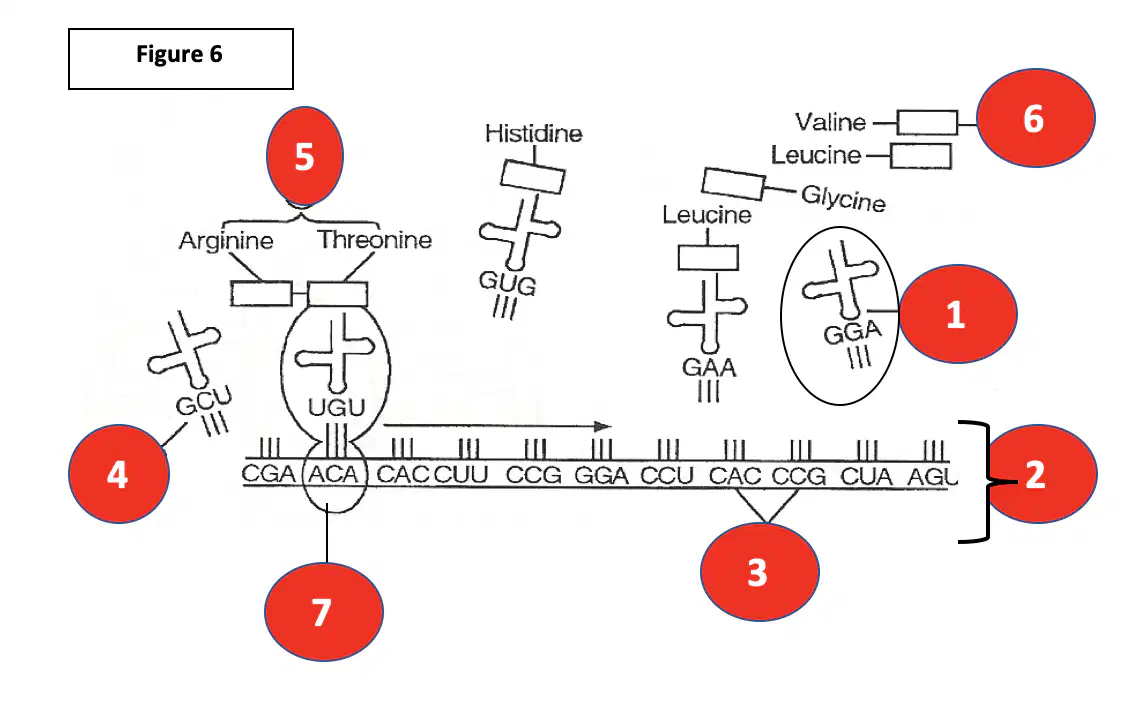
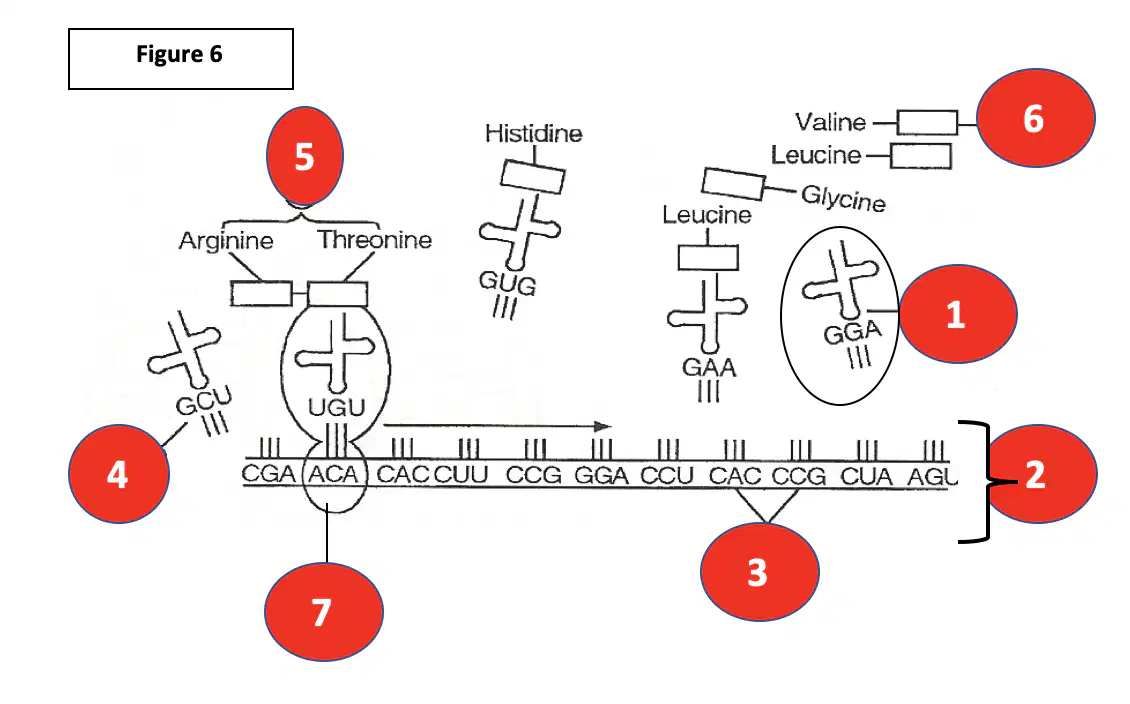
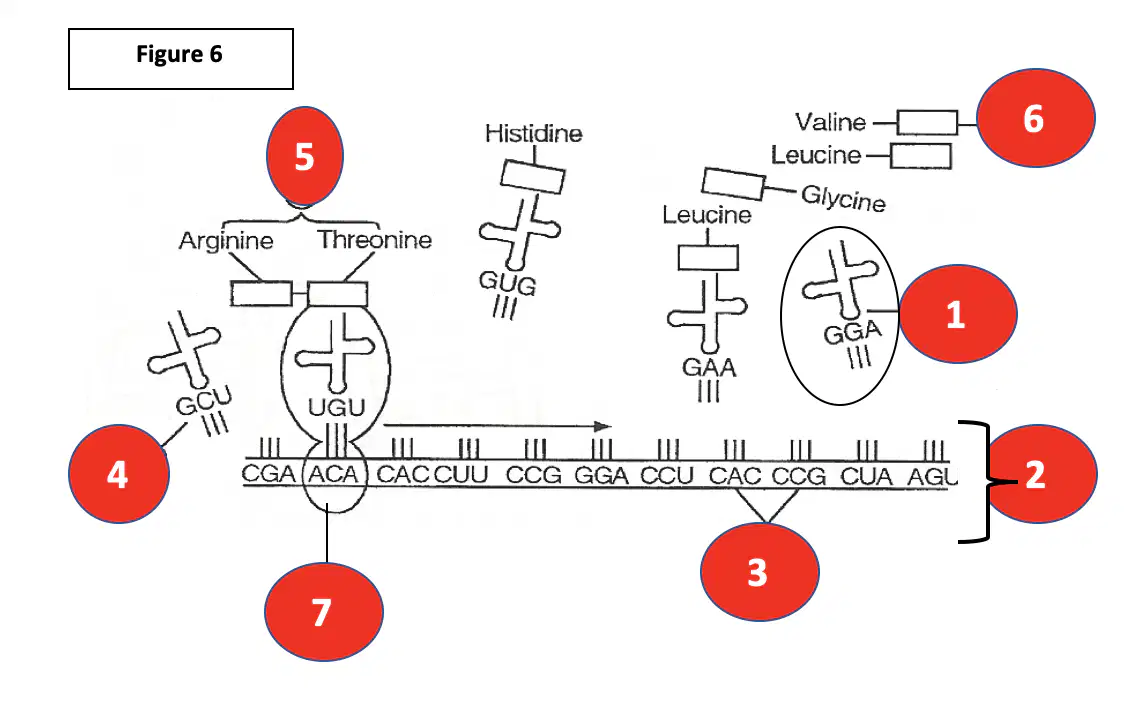
Translation is happening in Figure 6 below, #1 is pointing to a molecule of ________.
a)
DNA
b)
messenger RNA (mRNA)
c)
transfer RNA (tRNA)
d)
ribosomal RNA (rRNA)
52.
Translation is happening in Figure 6 below, #4 will attach to which bases on mRNA?
a)
CGU
b)
CGT
c)
CGA
d)
GGU
53.
In Figure 6, The chain of amino acids that is forming in #5 is called a
a)
Fatty acid chain
b)
Polypeptide (Protein)
c)
Carbohydrate
d)
Nucleic Acid
54.
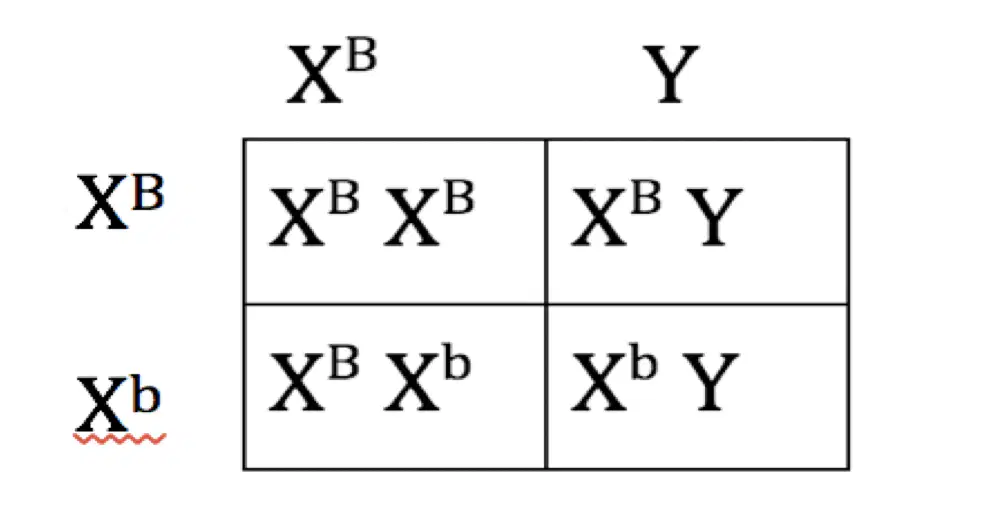
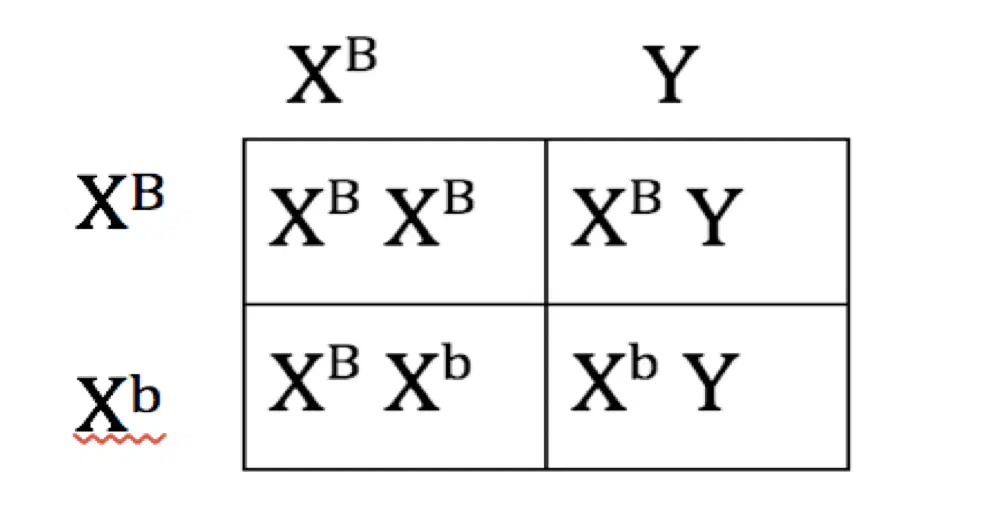
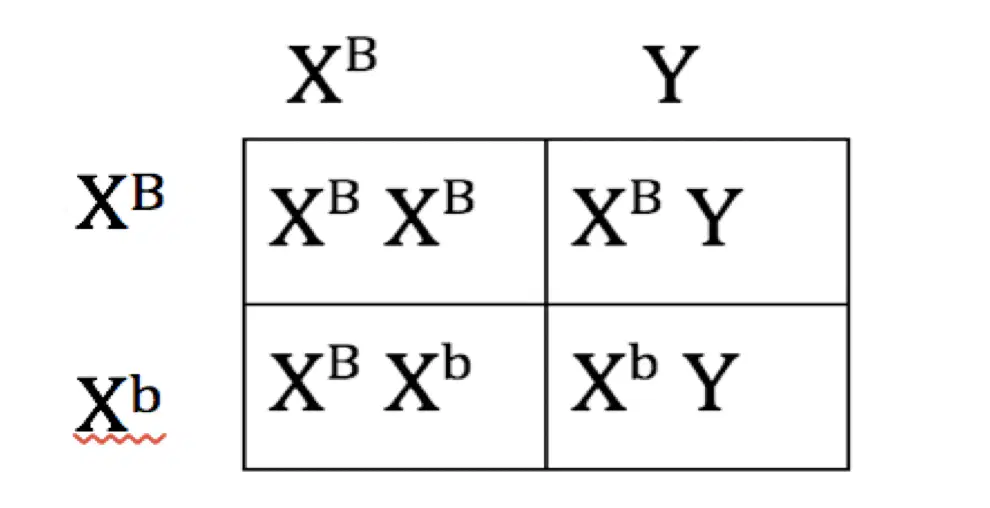
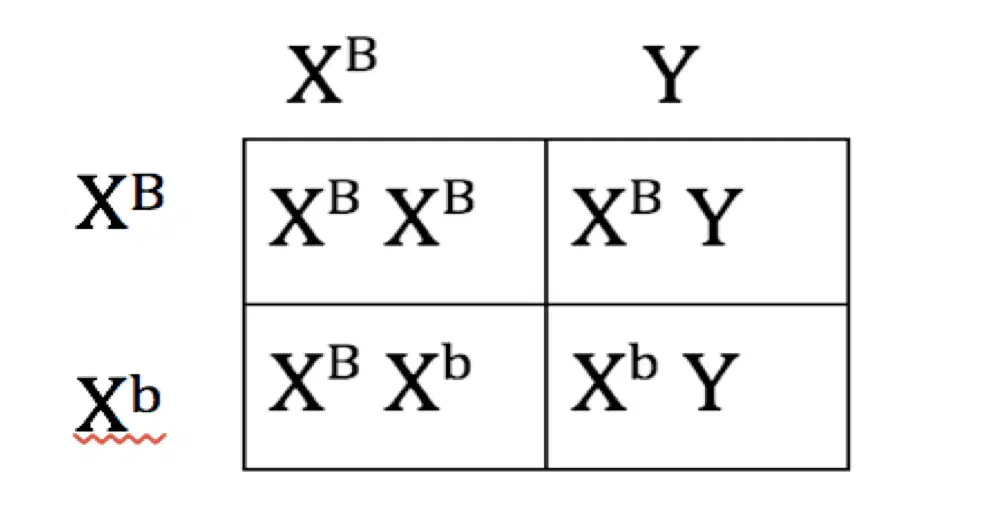
The colorblindness trait is found on the sex chromosomes. Why does the father NOT have color blindness in the example below? B = normal vision b= colorblindness
a)
He does not have the recessive allele.
b)
He has an X chromosome.
c)
He has two recessive alleles.
d)
He is missing the X chromosome.
55.
What do the letters on the OUTSIDE of the Punnett square represent? B = normal vision b= colorblindness
a)
offspring’s genotype
b)
parent’s genes inside egg and sperm
c)
parent’s genes inside their body cells
d)
the offspring’s egg and sperm
56.
What do the letters on the INSIDE of the Punnett square represent? B = normal vision b= colorblindness
a)
The possible genotype of offspring
b)
The parent’s genes inside egg and sperm
c)
The parent’s genes inside their body cells
d)
The the offspring’s egg and sperm
57.
What type of inheritance pattern is illustrated in the Punnett square? B = normal vision b= colorblindness
a)
Autosomal Dominant
b)
Autosomal Recessive
c)
Codominant
d)
Sex-linked
58.
Which of the following is the job of #2 in Figure 6?
a)
It carries the amino acid to the ribosome.
b)
It carries the genetic code from DNA to the ribosome to make a protein.
c)
It is part of the ribosome.
d)
It carries amino acids.
59.
Which two amino acids do #3 code for? (*Hint: Use the amino acid codon chart)
a)
Valine and Glycine
b)
Histidine and Arginine
c)
Histidine and Proline
d)
Glutamine and Proline
60.
Mutations within a DNA sequence are
a)
natural processes that produce genetic diversity
b)
natural processes that always affect the phenotype
c)
unnatural processes that always affect the phenotype
d)
unnatural processes that are harmful to the genetic diversity
61.
Are dominant traits better, stronger and more common than recessive traits?
a)
Yes! Dominant traits mask recessive traits so they must be the better trait
b)
No! Dominant only means that if you inherit a dominant allele it will show up in the organism's phenotype
c)
Yes! Recessive traits mask dominant traits so they must be the better trait
d)
No! Recessive traits show up when there are two recessive alleles so they are the better trait
62.
Which letter(s) would represent the process(es) that AUTOTROPHS can perform?
a)
E + F
b)
D + C
c)
ONLY E
d)
Only F
e)
i
63.
Which letter(s) would represent the process(es) that HETEROTROPHS can perform?
a)
Only F
b)
D + C
c)
ONLY E
d)
E + F
e)
i
64.
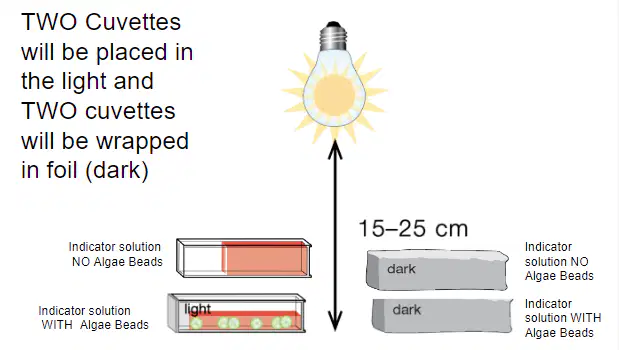
In this experiment we are testing the question: How does Algae Beads exposure to light impact the pH of the CO2 indicator solution? What is the independent variable in the experiment?
a)
Change in pH
b)
Change in Carbon Dioxide concentration
c)
The amount of light the algae beads are exposed to
d)
Change in color of the indicator solution
e)
The amount of algae beads in the solution
65.

Des and Owen were performing a lab to test the relative rate of photosynthesis in spinach plants. They set-up their experiment like the three cups pictured below, and wanted to know the effect of carbon on the rate of photosynthesis. They repeated this process 10 times and shared their data (the number of leaf chads that rose to the surface/min) with other groups. Why was sodium bicarbonate needed in the leaf lab? THINK ABOUT THE REACTANTS OF PHOTOSYNTHESIS.

a)
to provide sodium for photosynthesis
b)
to provide carbon for cellular respiration
c)
to provide glucose for cellular respiration
d)
to provide carbon for photosynthesis
66.

Autumn and Makayla were performing a lab to test the relative rate of photosynthesis in spinach plants. They set-up their experiment like the three cups pictured below, and wanted to know the effect of carbon on the rate of photosynthesis. They repeated this process 10 times and shared their data (the number of leaf chads that rose to the surface/min) with other groups. What was the most likely reason the spinach disks start floating to the surface of the water in cup 2?

a)
the carbon dioxide produced in photosynthesis caused the spinach to float
b)
the oxygen produced in photosynthesis caused the spinach to float
c)
the water produced in photosynthesis caused the spinach to float
d)
the leaves never floated to the surface
67.

Jenni and Gabi were performing a lab to test the relative rate of photosynthesis in spinach plants. They set-up their experiment like the three cups pictured below, and wanted to know the effect of carbon on the rate of photosynthesis. They repeated this process 10 times and shared their data (the number of leaf chads that rose to the surface/min) with other groups. Which cup(s) would be the control group(s) for this experiment?

a)
Cup 1
b)
Cup 1 and Cup 3
c)
Cup 1 and 2
d)
Cup 2
68.

Jacob and Auden were performing a lab to test the relative rate of photosynthesis in spinach plants. They set-up their experiment like the three cups pictured below, and wanted to know the effect of carbon on the rate of photosynthesis. They repeated this process 10 times and shared their data (the number of leaf chads that rose to the surface/min) with other groups. Why didn’t the spinach leaf chads rise to the surface in cup 3?

a)
There was no sodium bicarbonate for photosynthesis
b)
There was no light for cellular respiration and so no gasses were produced by the chad
c)
The lack of light did not allow photosynthesis to happen so no gasses were produced by the chad
d)
The leaf chads were defective and should have risen to the surface since there was carbon present
69.

Cyerra and Taylor were performing a lab to test the relative rate of photosynthesis in spinach plants. They set-up their experiment like the three cups pictured below, and wanted to know the effect of carbon on the rate of photosynthesis. They repeated this process 10 times and shared their data (the number of leaf chads that rose to the surface/min) with other groups. Remember in an experiment a constant are the factors that remain the same between the test subjects. What would need to stay constant in this experiment? (check off TWO that apply)

a)
The amount of solution in each cup
b)
The amount of spinach used in the cup
c)
The amount of sodium bicarbonate in each cup
d)
It doesn't matter if there are constants in a controlled experiment
70.

Britany and Ellie were performing a lab to test the relative rate of photosynthesis in spinach plants. They set-up their experiment like the three cups pictured below, and wanted to know the effect of carbon on the rate of photosynthesis. They repeated this process 10 times and shared their data (the number of leaf chads that rose to the surface/min) with other groups. What is the independent variable in this experiment? (Think about what they are actually testing in this experiment)

a)
The amount of light each cup was exposed to
b)
The amount of spinach chads/disks in each cup
c)
The amount of sodium bicarbonate in each cup
d)
The number of leaf chads that rose to the surface of the cup
71.

Dylan and Micah were performing a lab to test the relative rate of photosynthesis in spinach plants. They set-up their experiment like the three cups pictured below, and wanted to know the effect of carbon on the rate of photosynthesis. They repeated this process 10 times and shared their data (the number of leaf chads that rose to the surface/min) with other groups. What is the dependent variable in this experiment?
a)
The amount of light each cup was exposed to
b)
The amount of spinach chads/disks in each cup
c)
The amount of sodium bicarbonate in each cup
d)
The number of leaf chads that rose to the surface of the cup
72.
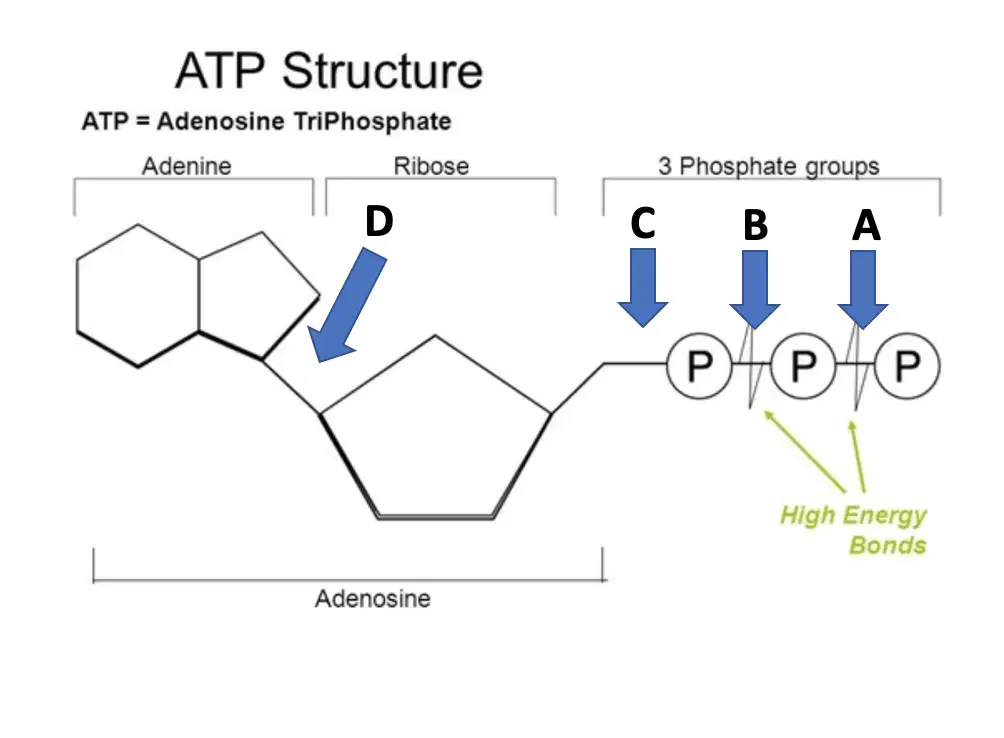
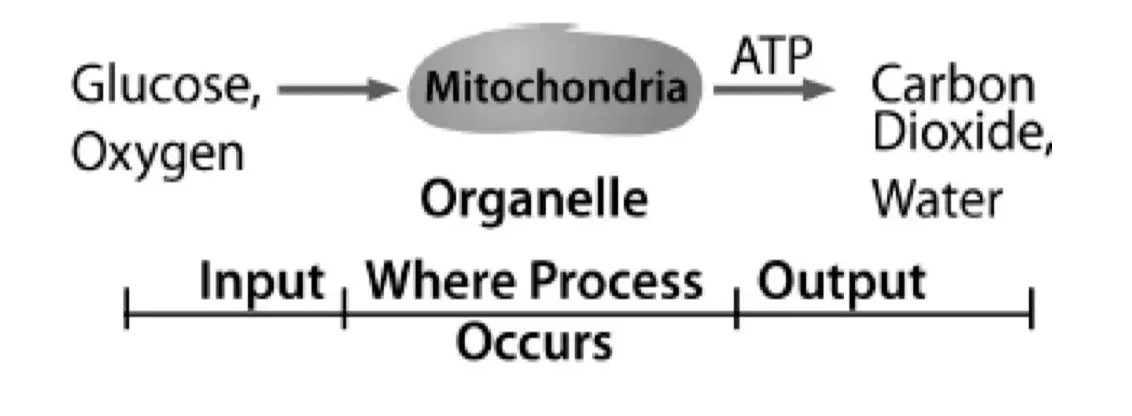
In the figure below, what is the importance of this molecule to living organisms?
a)
It is used as energy for animal cells can make sugar molecules
b)
It is a reusable energy molecule that can be used as a fuel to do work in any cell type
c)
Only plants have this energy molecule to fuel their cells
d)
It is made during cellular respiration to do work in the cell
73.
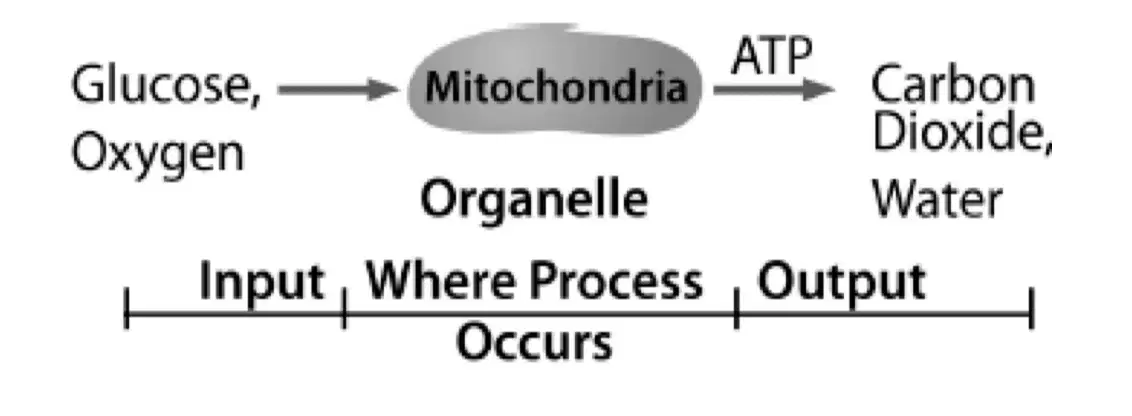
What is the purpose of this process?
a)
to use energy for cellular movement
b)
to transform energy into proteins
c)
to convert stored energy (glucose) into ATP
d)
to make glucose
e)
to make carbon dioxide for animals
74.
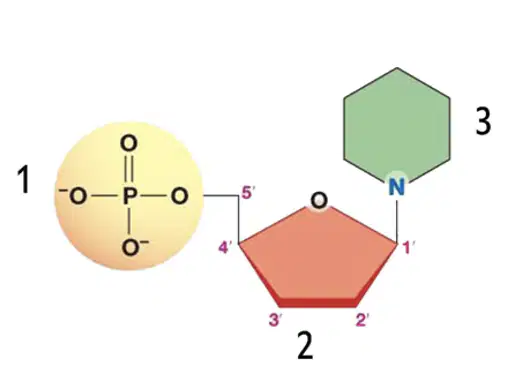
BELOW IS A MONOMER OF AN ORGANIC COMPOUND: Identify which organic compound it belongs to
a)
Carbohydrates
b)
Lipids
c)
Proteins
d)
Nucleic Acids
75.
A monomer is
a)
multiple building blocks put together
b)
a building block
c)
only found in lipids
d)
two subunits put together
76.
A polymer is
a)
multiple repeating subunits covalently bonded together
b)
a subunit of a monomer
c)
a substance that consists of one molecule
d)
a substance that indicates for the presence of organic compounds
77.
A male fruit fly has 4 chromosomes in each of its sex cells. How many would be present in its body cells?
a)
2
b)
4
c)
8
d)
16
78.
A human zygote should have _____ chromosomes inside.
a)
23
b)
46
c)
92
d)
12
79.
What happens if the cell cycle does not work properly and cells ignore checkpoints in the cycle? (WINK WINK...CHECK OFF TWO ANSWERS)
a)
Nothing cells are always able to cope with it and repair themselves
b)
Cancer/ uncontrolled cell growth
c)
Apoptosis / Cell death
d)
Cells enter Go and stop dividing.
80.
There are two microscope pictures of red onion cell shown below. What happened to the red onion cells in the hypertonic solution.
a)
the cells were turgid and the large central vacuole was completely full of water
b)
the cells were flaccid and the large central vacuole was completely full of water
c)
the cells experienced plasmolysis because the large central vacuole shriveled
d)
the cells experienced plasmolysis because the entire cell burst
81.
One characteristic of life is organization. Select the levels of organization from LARGEST to SMALLEST (not all levels are listed)
a)
cells, organs, organisms, tissues
b)
Organism, tissues, cells, organelles
c)
Tissues, organ systems, organisms
d)
organelles, cells, organ systems, tissues
82.
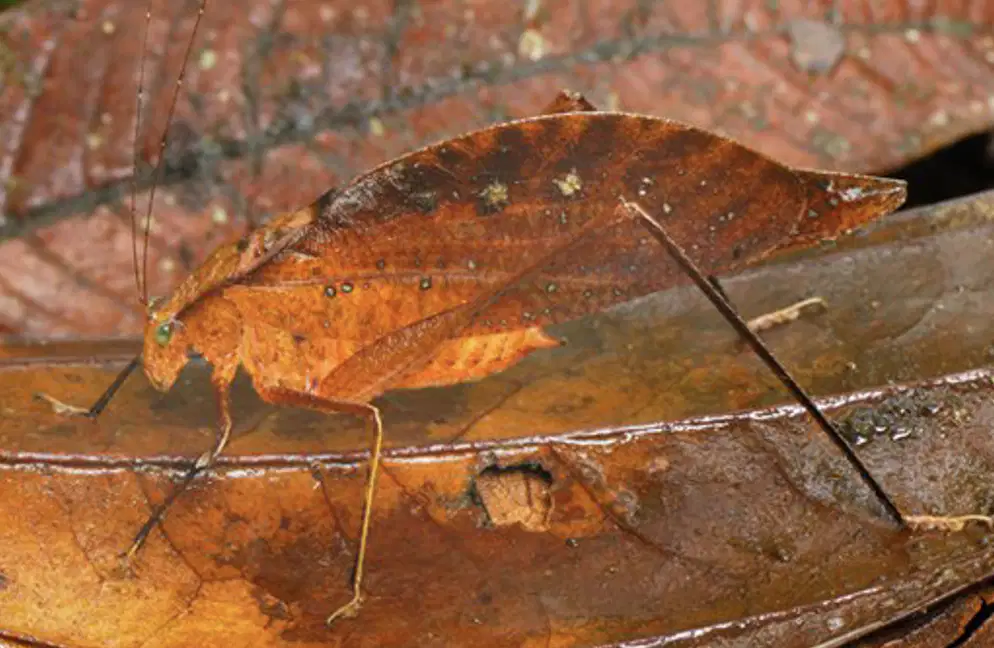
Camouflage is an example of which characteristic of life?
a)
Made of one or more cells
b)
Reproduction
c)
Adaptations evolve over time
d)
Uses energy
83.
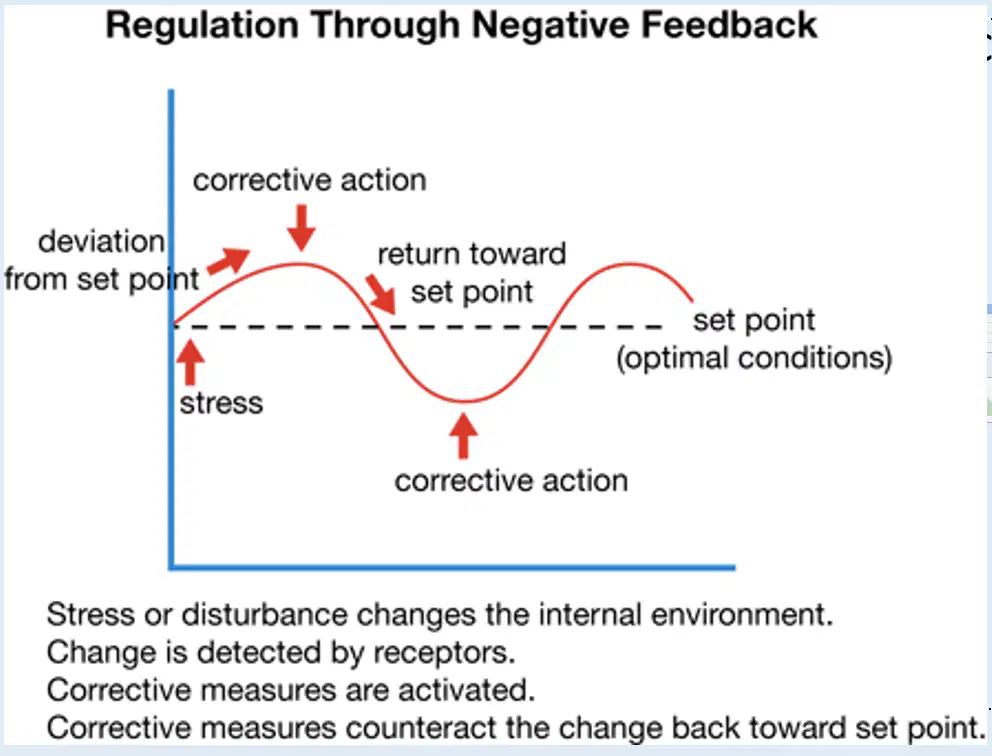
This diagram represents ________________ which is one of the eight characteristics of life. For example, a cell must maintain an internal balance of water and solute levels. If the external environment changes and becomes hypertonic, the cell will respond and try to pump solutes into the cell to maintain water balance. The cell is trying to maintain __________.
a)
Reproduction
b)
Growing and Developing
c)
Made of one or more cells
d)
Homeostasis
e)
Uses energy
84.
Chemical Reactions: A student wanted to test the impact of temperature on a yeast catalase enzyme. Catalase's job is to break down the build-up of hydrogen peroxide inside cells. Hydrogen peroxide (H2O2) potentially can destroy cells thus this enzyme breaks the toxic substance into oxygen gas (O2), water (H2O), and heat energy. Is this chemical reaction considered exothermic or endothermic and what evidence supports your claim?
a)
The chemical reaction is endothermic because heat energy is given off as a product of the chemical reaction
b)
The chemical reaction is endothermic because heat energy is absorbed the chemical reaction
c)
The chemical reaction is exothermic because heat energy is absorbed the chemical reaction
d)
The chemical reaction is exothermic because heat energy is given off as a product of the chemical reaction
85.
Chemical Reactions: A student wanted to test the impact of temperature on a yeast catalase enzyme. Catalase's job is to break down the build-up of hydrogen peroxide inside cells. Hydrogen peroxide (H2O2) potentially can destroy cells thus this enzyme breaks the toxic substance into oxygen gas (O2), water (H2O), and heat energy. What is the substrate for this enzyme catalyzed chemical reaction?
a)
Catalase
b)
Oxygen
c)
Water
d)
Hydrogen peroxide
e)
Heat
86.
Experimental Design: A student wanted to test the impact of temperature on yeast catalase enzyme. The student put 1 g of yeast catalase in a container with 100 mL of hydrogen peroxide and measured percent oxygen produced using a probe for five minutes. The student did a test with the experimental set-up in 22 degrees Celsius (room temperature), in 5 degrees Celsius (ice water bath), and 100 degrees Celsius (Boiling water bath). Identify the independent variable of the experiment
a)
Time in seconds
b)
Temperature of the enzyme in degrees Celsius
c)
Percent oxygen produced
d)
Percent oxygen produced each minute
87.
Experimental Design: A student wanted to test the impact of temperature on yeast catalase enzyme. The student put 1 g of yeast catalase in a container with 100 mL of hydrogen peroxide and measured percent oxygen produced using a probe for five minutes. The student did a test with the experimental set-up in 22 degrees Celsius (room temperature), in 5 degrees Celsius (ice water bath), and 100 degrees Celsius (Boiling water bath). Identify the dependent variable(s) of the experiment
a)
Time in seconds
b)
Temperature of the enzyme in degrees Celsius
c)
Percent oxygen produced
d)
Water produced during the chemical reaction
88.
Experimental Design: A student wanted to test the impact of extreme temperatures on yeast catalase enzyme. The student put 1 g of yeast catalase in a container with 100 mL of hydrogen peroxide and measured percent oxygen produced using a probe for five minutes. The student did a test with the experimental set-up in 22 degrees Celsius (room temperature), in 5 degrees Celsius (ice water bath), and 100 degrees Celsius (Boiling water bath). Identify the experimental group(s) of the experiment. Check off all that apply.
a)
Yeast in 22 degrees Celsius temperatures
b)
Yeast in 100 degree Celsius temperatures
c)
Yeast in 5 degree Celsius temperatures
d)
Yeast in 0 degree temperatures
89.
Experimental Design: A student wanted to test the impact of extreme temperatures on yeast catalase enzyme. The student put 1 g of yeast catalase in a container with 100 mL of hydrogen peroxide and measured percent oxygen produced using a probe for five minutes. The student did a test with the experimental set-up in 22 degrees Celsius (room temperature), in 5 degrees Celsius (ice water bath), and 100 degrees Celsius (Boiling water bath). Identify the control group(s) of the experiment. Check off all that apply.
a)
Yeast in 22 degrees Celsius temperatures
b)
Yeast in 100 degree Celsius temperatures
c)
Yeast in 5 degree Celsius temperatures
d)
Yeast in 0 degree temperatures
90.
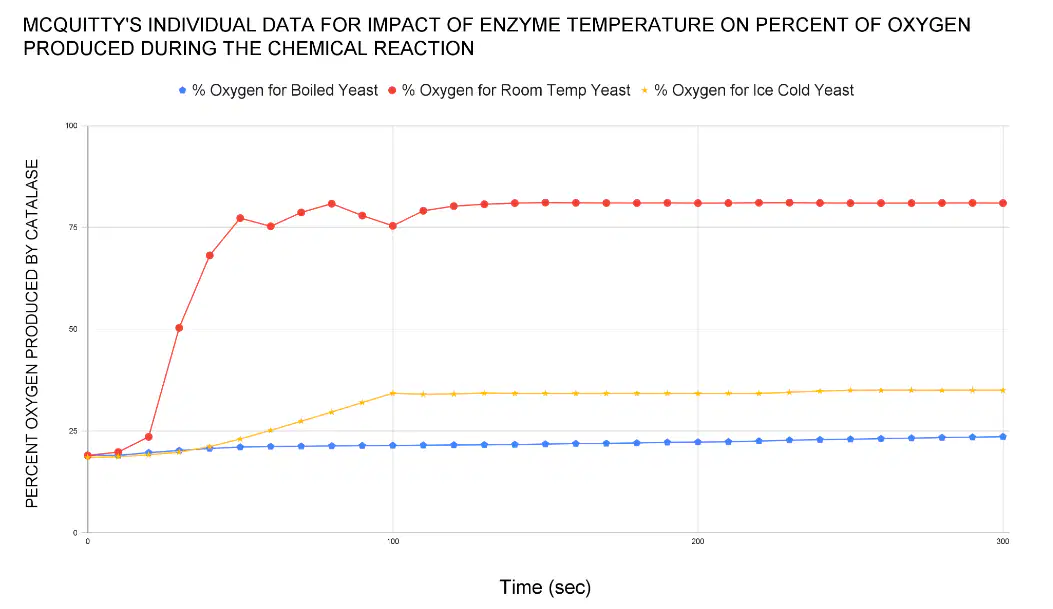
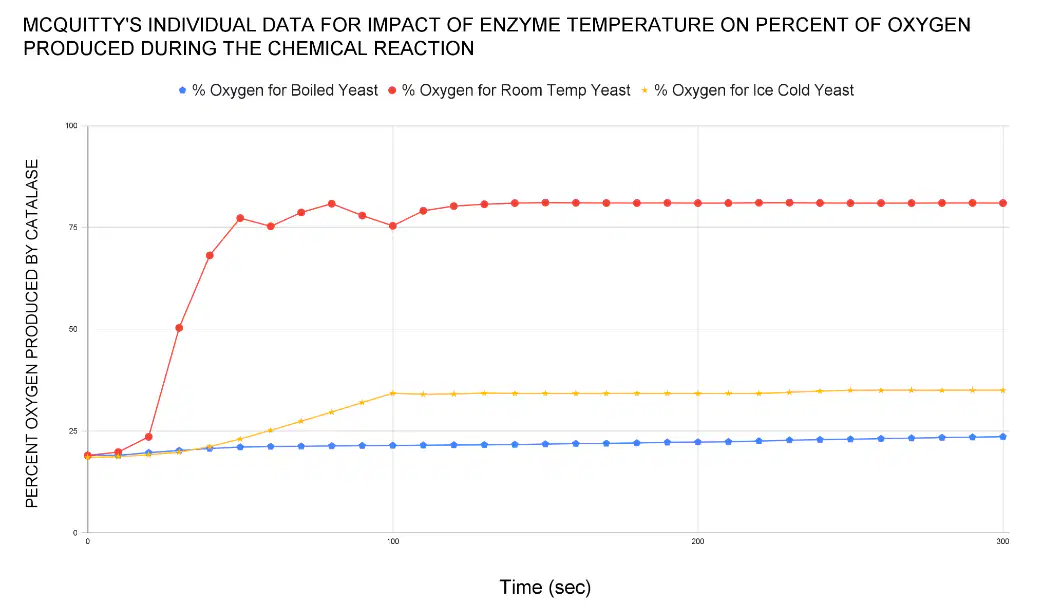
Experimental Design: A student wanted to test the impact of extreme temperatures on yeast catalase enzyme. The student put 1 g of yeast catalase in a container with 100 mL of hydrogen peroxide and measured percent oxygen produced using a probe for five minutes. The student did a test with the experimental set-up in 22 degrees Celsius (room temperature data is the top line), in 5 degrees Celsius (ice water bath data is the middle line), and 100 degrees Celsius (Boiling water bath data is the bottom line). Make a claim as to why boiling temperatures (line at the bottom closest to the x axis) caused the data shown in the graph?
a)
The catalase enzyme experienced ideal conditions and produced a constant amount of oxygen throughout the 5 minute period
b)
The catalase enzyme denatured and changed shape so the substrate could no longer fit in the active site
c)
The hydrogen peroxide denatured and changed shape so the substrate could no longer fit in the active site
d)
The catalase enzyme was able to catalyze the maximum number of substrates as possible
91.
Experimental Design: A student wanted to test the impact of extreme temperatures on yeast catalase enzyme. The student put 1 g of yeast catalase in a container with 100 mL of hydrogen peroxide and measured percent oxygen produced using a probe for five minutes. The student did a test with the experimental set-up in 22 degrees Celsius (room temperature data is the top line), in 5 degrees Celsius (ice water bath data is the middle line), and 100 degrees Celsius (Boiling water bath data is the bottom line). Make a claim as to why cold temperatures (line in the middle) caused the data shown in the graph?
a)
The catalase enzyme experienced reduced kinetic energy so the substrates did not bounce into the active site as often as in room temperature
b)
The catalase enzyme denatured and changed shape so the substrate could no longer fit in the active site
c)
The catalase enzyme experienced increased kinetic energy so the substrates were able to bounce into the active site as often as in room temperatures
d)
The catalase enzyme denatured and had less interactions with the substrate
92.
In a controlled experiment, the researcher can have multiple independent variables.
a)
True
b)
False
93.
In a controlled experiment, the researcher can have multiple dependent variables.
a)
True
b)
False
94.
BELOW IS A MONOMER OF AN ORGANIC COMPOUND: Identify which organic compound it belongs to and what its primary function is
a)
Polysaccharide; used to create cell walls in plants
b)
Polypeptide; used to create enzymes that speed up chemical reactions in the cell
c)
Polynucleotide; used to create long strands of DNA
d)
Lipids; it is a phospholipid that makes up most of the plasma membrane
95.
A monomer is
a)
multiple building blocks put together
b)
a subunit of a polymer
c)
only found in lipids
d)
two subunits put together
96.
A polymer is
a)
multiple repeating subunits covalently bonded together
b)
a subunit of a monomer
c)
a substance that consists of one molecule
d)
a substance that indicates for the presence of organic compounds
97.
Identify which organic compound is shown and what is the main function of the picture on the left
a)
Polysaccharide; contains the information to make cell wall in plants
b)
Lipids; contains the information to make membranes
c)
Polypeptide; contains the directions to make proteins
d)
Polynucleotide; contains genetic information that code for the traits of organisms
98.
In the figure below, what is the importance of this molecule to living organisms?
a)
It is used as energy for animal cells can make sugar molecules
b)
Only plants have this energy molecule to fuel their cells
c)
It is a reusable energy molecule that can be used as a fuel to do work in any cell type
d)
It is made during cellular respiration to release heat into the environment
99.
Organic Compounds like the ones we studied in class (AKA Carbon Compounds and Macromolecules) ALL contain the elements __________.
a)
C only
b)
C, H only
c)
C, H, O
d)
C, H, O, and N
e)
C, H, O, N, and P
100.
The main job of a lysosome is
a)
to make proteins
b)
to store the cell's DNA
c)
to make food for the cell
d)
to digest worn out cell parts, food, or foreign invaders like bacteria
101.
The clear, jelly-like material that has dissolved salts and substances and supports/cushions structures inside the cell
a)
cytoplasm
b)
nucleus
c)
mitochondria
d)
cell membrane
102.
Made of microtubules and provides structural support (framework) for the inside of the cell. It is responsible for moving organelles around in the cell with the help of motor proteins.
a)
cytoplasm
b)
cytoskeleton
c)
vesicles
d)
vacuoles
103.
Made of loosely coiled DNA and controls all functions and traits of a cell.
a)
Chromatin
b)
Cell membrane
c)
Nucleus
d)
Nuclear membrane
104.
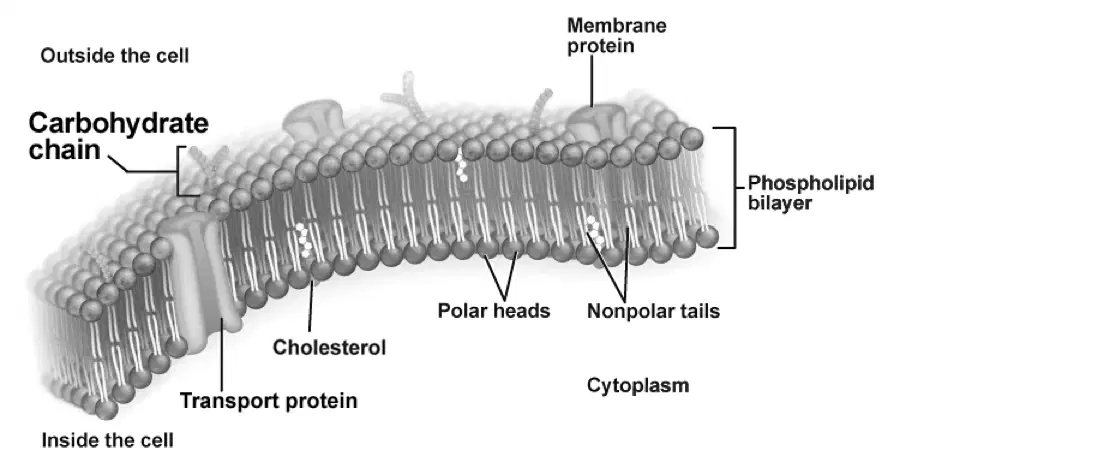
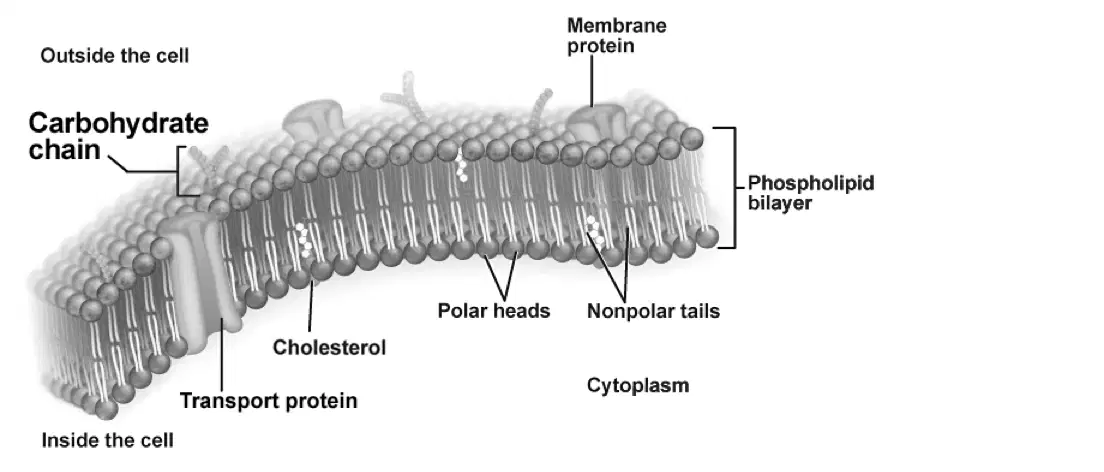
The plasma (Cell) membrane is called a fluid mosaic model because (be careful and read all answers...)
a)
it is a flexible lipid bilayer that has different substances like proteins and carbohydrates connected to it
b)
it is a flexible lipid bilayer
c)
it is made up of different materials
d)
it is a rigid lipid bilayer made up of carbohydrates, proteins, and lipids
105.
Which of the following is NOT a fundamental (main) idea of the cell theory?
a)
All organisms contain prokaryotic cells.
b)
Cells arise only from previously existing cells.
c)
Cells are the basic unit of structure for all living organisms.
d)
All living organisms are composed of one or more cells.
106.
The basic unit of life would be ______ since it is the smallest living that can show all 8 common characteristics of life.
a)
Ribosome
b)
DNA
c)
Cells
d)
Viruses
107.
Which is not a part of the Cell Theory
a)
New cells come from non-living matter
b)
All living things are made up of cells
c)
Cells are the building blocks of all life
d)
New cells are produced from existing cells
108.
Why do eukaryotic cells require specialized organelles?
a)
They are larger in size and materials can not diffuse very quickly throughout the cell
b)
They are smaller in size and materials can not diffuse very quickly throughout the cell
c)
They do not have organelles
d)
They have ribosomes that need extra compartments to store proteins
109.
In Passive Transport,
a)
substances tend to move from high concentration to low concentration and does not require energy
b)
substances tend to move from low concentration to high concentration and does not require energy
c)
substances tend to move from high concentration to low concentration and require energy
d)
substances tend to move from low concentration to high concentration and require energy
110.
In Active Transport,
a)
substances tend to move from low concentration to high concentration and does not require energy
b)
substances tend to move from high concentration to low concentration and does not require energy
c)
substances tend to move from high concentration to low concentration and require energy
d)
substances tend to move from low concentration to high concentration and require energy
111.
The plasma (Cell) membrane is called a fluid mosaic model because (be careful and read all answers...)
a)
it is a rigid lipid bilayer made up of carbohydrates, proteins, and lipids
b)
it is made up of different materials
c)
it is a flexible lipid bilayer
d)
it is a flexible lipid bilayer that has different substances like proteins and carbohydrates connected to it
112.
The plasma (cell) membrane is mostly made up of
a)
a protein bilayer where the nonpolar tails face toward each other avoiding contact with water
b)
a lipid bilayer where the nonpolar tails face toward each other avoiding contact with water
c)
a lipid bilayer where the polar tails face toward each other avoiding contact with water
d)
a carbohydrate bilayer where the nonpolar tails face toward each other avoiding contact with water
113.
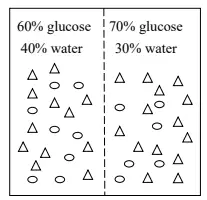
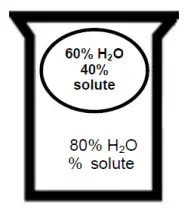
The dashed line in the picture represents the cell membrane. If the membrane is impermeable to glucose molecules which molecules could move across the membrane and in what direction?
a)
sugar molecules flow toward the right
b)
sugar molecules flow toward the left
c)
water molecules flow toward the right
d)
water molecules flow toward the left
114.
The dashed line in the picture represents the cell membrane. If the membrane is permeable to BOTH glucose and water molecules, what will happen over time?
a)
sugar molecules flow toward the right and water molecules flow toward the left and over time an isotonic solution will develop
b)
sugar molecules flow toward the left and water molecules flow toward the right and over time an isotonic solution will develop
c)
sugar molecules flow toward the left and water molecules flow toward the right and over time a hypertonic solution will develop
d)
sugar molecules flow toward the left and water molecules flow toward the right and over time a hypotonic solution will develop
115.
The plasma (cell) membrane has transport channels that allow
a)
diffusionof tiny nonpolar molecules like carbon dioxide
b)
diffusion of polar molecules through the nonpolar part of the membrane
c)
active transport of molecules from high concentration to low concentration
d)
endocytosis of large nonpolar molecules like fats
116.
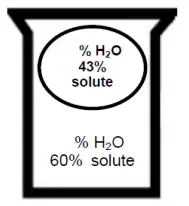
What would happen to a plant cell in this solution?
a)
Plasmolysis and most likely die
b)
It would become turgid
c)
It would most likely live
d)
It would become flaccid and die
117.
What would happen to a plant cell in this solution?
a)
Plasmolysis and most likely die
b)
It would become turgid (full of water) but not experience cell lysis since it has a cell wall
c)
It would not thrive in this condition since it would wilt
d)
It would become flaccid and die
118.
Which taxon level would only include one type of organism?
a)
Family
b)
Domain
c)
Kingdom
d)
Genus
e)
Species
119.
Why are classification systems important to scientists?
a)
They help organize and give everyone a common language to identify and discuss living organisms
b)
They make it easy to folllow recipies
c)
It makes naming organisms more complex and hard to study
d)
It does not help scientists
120.
All living organisms are uniquely named by their
a)
Domain and Kingdom
b)
Family and Genus
c)
Genus and Species
d)
Phylum and Class
121.
LUCA is most closely like a ___________ (hmmm...look at the tree of life)
a)
Eukaryote
b)
Animal
c)
Plant
d)
Prokaryote
122.
Which taxon level would include all levels of classification?
a)
Family
b)
Domain
c)
Kingdom
d)
Genus
e)
Species
123.
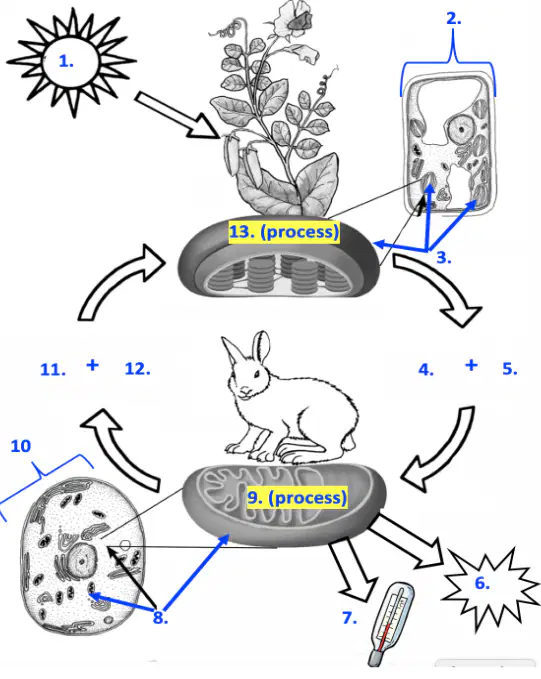
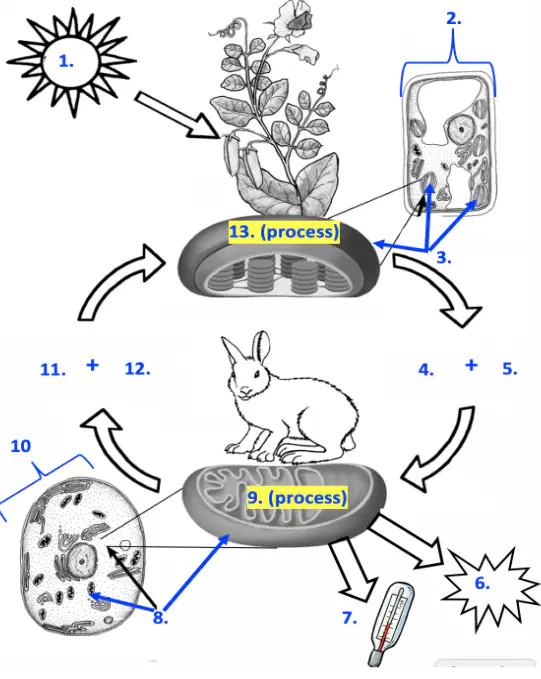
Use the illustration to identify the reactants of Cellular Respiration (check off all that apply)
a)
O2 Oxygen
b)
C6H12O6 Glucose
c)
CO2 Carbon Dioxide
d)
H2O Water
e)
ATP and Heat energy
124.
Use the illustration to identify the reactants of Photosynthesis (check off all that apply)
a)
CO2 Carbon Dioxide
b)
H2O Water
c)
Sunlight
d)
O2 Oxygen
e)
C6H12O6 Glucose
125.
Use the illustration to identify the CATABOLIC process in the cycle
a)
F
b)
D and C
c)
K
d)
E
e)
G and H
126.
Use the illustration to identify the ANABOLIC process in the cycle
a)
E
b)
D and C
c)
K
d)
F
e)
G and H
127.
Use the illustration to identify the Products of Photosynthesis (check off all that apply)
a)
O2 Oxygen
b)
C6H12O6 Glucose
c)
CO2 Carbon Dioxide
d)
H2O Water
e)
ATP and Heat energy
128.
Use the illustration to identify the Products of Cellular Respiration (check off all that apply)
a)
CO2 Carbon Dioxide
b)
H2O Water
c)
ATP and Heat energy
d)
O2 Oxygen
e)
C6H12O6 Glucose
129.
What are considered waste products of the process that happens in #9? Check off all that apply
a)
Heat energy
b)
Carbon Dioxide
c)
Water
d)
ATP
e)
Oxygen
130.
What is the relationship between 13 and 9?
a)
They allow animals to live
b)
They form a cycle by using most of each other's products as reactants in their chemical reactions
c)
Each process is independent of each other and does not have a relationship
d)
The reactants and products are exactly the same just in reverse
131.
Which letter(s) would represent the process(es) that AUTOTROPHS can perform?
a)
E + F
b)
D + C
c)
ONLY E
d)
Only F
e)
i
132.
Which letter(s) would represent the process(es) that HETEROTROPHS can perform?
a)
Only F
b)
D + C
c)
ONLY E
d)
E + F
e)
i
133.
What is the purpose of this process?
a)
to use energy for cellular movement
b)
to transform energy into proteins
c)
to convert stored energy (glucose) into ATP
d)
to make glucose
e)
to make carbon dioxide for animals
134.

What is the definition of 'Biosphere'?

a)

consists of all life on Earth and all parts of Earth in which life exists

b)

is the layer of gases that surrounds the planet

c)

is the solid outer section of Earth, including the crust and upper mantle

d)

is the sum of all water on, under, and above the surface of the Earth

135.

What is the definition of 'Biome'?

a)

are regional climate communities on land. Biomes are described in terms of abiotic factors and biotic factors.

b)

are small water bodies found in deserts.

c)

are single species living in isolation.

d)

are only found in the ocean.

136.

What are examples of things that prevent populations from growing like disease, predators, and competition, and depend on how big the population is?

a)

Density-dependent limiting factors

b)

Abiotic factors

c)

Carrying capacity

d)

Random events

137.

What are examples of things that limit a population like drought and floods, but do not depend on how big the population is?

a)

Density-independent limiting factors

b)

Density-dependent limiting factors

c)

Carrying capacity

d)

Biotic potential

138.

What is the gradual change that starts from bare rock and once soil develops by pioneer species, leads to a climax community?

a)

Primary Succession

b)

Secondary Succession

c)

Ecological Restoration

d)

Deforestation

139.

What is it called when communities or ecosystems that already have soil gradually regrow after an event like fire or flooding?

a)

Secondary Succession

b)

Primary Succession

c)

Ecological Evolution

d)

Habitat Fragmentation

140.

What is the maximum number of individuals of a species that an environment can support called?

a)

Primary succession

b)

Biosphere

c)

Density-independent factor

d)

Carrying capacity

141.
symbiotic relationship in which both organisms benefit
a)
competition
b)
Mutualism
c)
nitrogen fixation
d)
energy pyramid
142.
In the energy pyramid below, which organism has the least amount of energy available?
a)
Producers
b)
Herbivores
c)
Carnivores
d)
Top Predator
143.
In the energy pyramid here, which organisms have the most energy available?
a)
Producers
b)
Carnivores
c)
Herbivores
d)
Top Predator
144.
If there is 1000 Kcal available in the producers in trophic level 1, how much energy is available in the herbivores in trophic level 2?
a)
10 Kcal
b)
1 Kcal
c)
100 Kcal
d)
1000 Kcal
145.
The largest group of organisms found in a food web would be:
a)
Primary Consumers
b)
Producers
c)
Decomposers
d)
Tertiary Consumers
146.
Biodiversity is 
a)
the variety of species within an ecosystem
b)
a large number of the same species in an ecosystem
c)
an abundant amount of the same primary consumers 
d)
the ability to have an abundant source from the same species
147.

Which graph depicts exponential growth in a population?

a)
b)
c)
d)
148.

What is a community?

a)

A habitat with abiotic factors

b)

A very small habitat

c)

All the abiotic factors in a specific area

d)

All the different populations that live together in an area
149.
Organisms that leave behind more living offspring and shows a greater reproductive success would be considered to have a high degree of ____________.
a)
Overproduction of offspring
b)
Sexual Selection
c)
Fitness
d)
Genes
150.

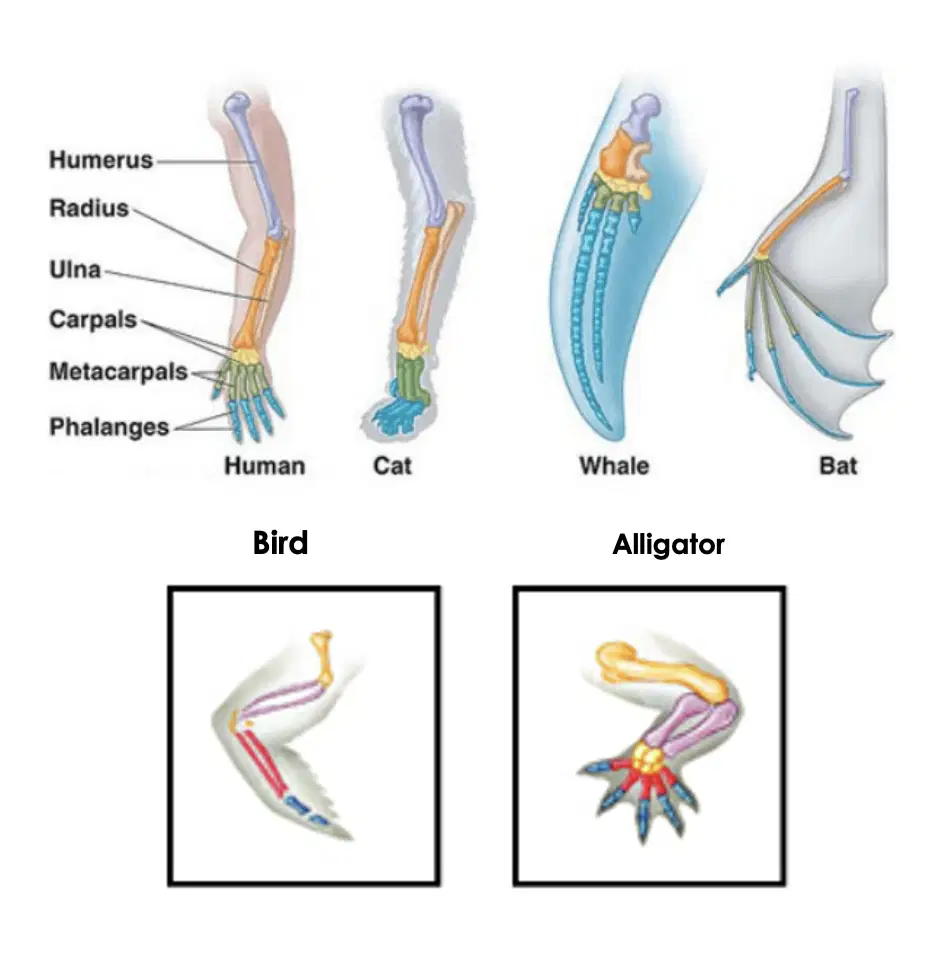
______(A)______ is evidence that supports the theory of evolution. An example would be looking at the forelimbs of vertebrates like birds and alligators. The wing of a bird and the foreleg of an alligator have the same structure and are considered_____(b)_______structures.

a)

(A) Comparative anatomy , (B) homologous

b)

(A) Comparative biochemistry , (B) homologous

c)

(A) Comparative biochemistry , (B) vestigial

d)

(A) Comparative anatomy , (B) vestigial

e)

(A) Comparative embryology , (B) homologous
151.
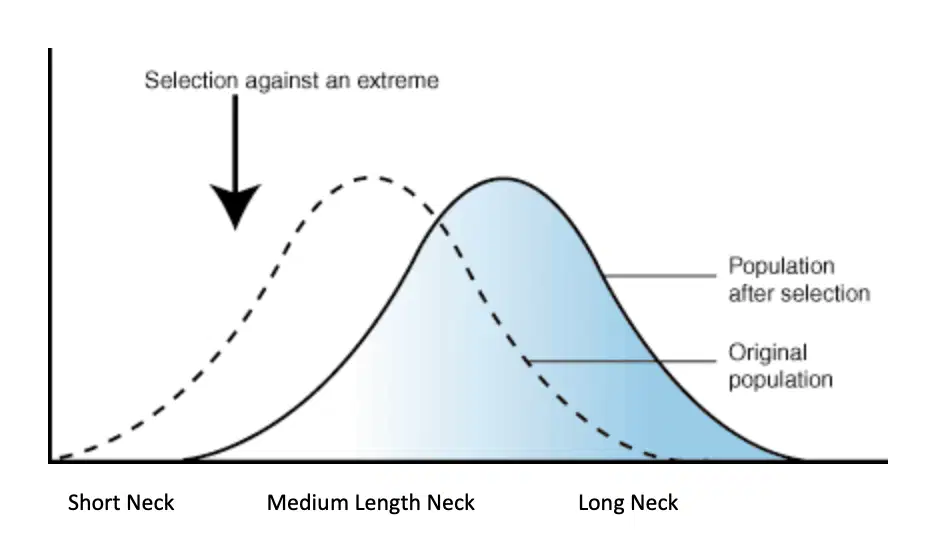
Long, as opposed to short, necks make it easier for giraffes to reach leaves high on trees, while also making them better fighters in “neck wrestling” contests. In both cases, which kind of section appears to have made giraffes the long-necked creatures they are today? The shift toward longer necks for food sources would be due to __(a) __ selection while neck wrestling is a form of __(b)__ selection since it helps the giraffes win more mates.
a)
(a) Stabilizing (b) sexual
b)
(a) Disruptive (b) artificial
c)
(a) Directional (b) sexual
d)
(a) Sexual (b) directional
e)
(a) Artificial (b) directional
152.
What does DNA stand for?
a)
DeNatured Acid
b)
DomiNant Acid
c)
DeoxyriboNucleic Acid
d)
DiriboNucleic Acid
153.
How many chromosomes are in human cells after they have completed meiosis?
a)
10
b)
23
c)
46
d)
16
154.
What kinds of cells undergo meiosis?
a)
Somatic cells
b)
Neurons
c)
Skin cells
d)
Reproductive cells
155.
What is the name for DNA when it is in a compressed state in preparation for cell division?
a)
Chromatin
b)
Chromosome
c)
RNA
d)
Microtubule
156.

Which of the following is contributing to an INCREASE in carbon dioxide in the atmosphere?

a)

deforestation

b)

photosynthesis

c)

oceans

d)

all of the above

e)

the loss of animal species

157.

The main human activity that releases greenhouse gases is

a)

using public transportation and there by reduce the affects of greenhouse gases.

b)

burning fossil fuels

c)

texting on cellphones

d)

eating meat

158.
Increased carbon dioxide may cause global warming by trapping more ____________ in the atmosphere.
a)
water
b)
gases
c)
heat
d)
water vapor
159.
What is one way that carbon enters the atmosphere?
a)
Sunlight
b)
Vehicle emissions/Exhaust
c)
Ocean uptake
d)
Rain
160.

What are examples of renewable energy sources?

a)

Solar

b)

Wind

c)

Coal

d)

Gas

161.

What are examples of non-renewable energy sources?

a)

Geothermal

b)

Coal

c)

Oil

d)

Hydro

162.

In the 1800's why did CO2 levels increase significantly?

a)

New factories were being built that caused more pollution

b)

The civil war caused more pollution

c)

Scientists figured out how to clean up pollution in the air

d)

It did not increase

163.

Viruses can be treated with antibiotics.

a)

true

b)

false

164.

Bacterial infections can be treated with antibiotics.

a)

true

b)

false