
 Worksheets
Chemistry Grade 11 Final 2025
Total questions: 112
Worksheet time: 2hrs 45mins

This image shows the bonding between Lithium and Fluorine. What does the red arrow show?
electrons being shared
electrons being transferred to Fluorine
electrons being transferred to Lithium
electrons being destroyed
An ionic bond is the attraction between: (Select ALL that apply)
oppositely charged ions
similarly charged ions
metals and nonmetals
neutral atoms
cations and anions
When ionic compounds form what is the overall charge?
neutral
positive
negative
What is responsible for bringing cations and anions together?
the size of the ions
the opposite charges are attracted to one another
the similar charges are attracted to one another
depends on what period they're in
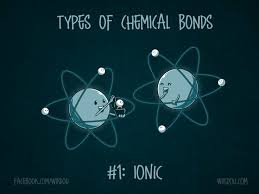
An ionic bond forms when
Valence electrons are shared
a sea of mobile electrons surround the cations
valence electrons are transferred between atoms
none of the above
What is another name of an ionic compound
salt
cation
anion
polyatomic ion
Which of the following is NOT a step in forming an ionic bond?
One atom shares its electrons with another one
Opposite charged ions form due to the transfer of electrons
One atom gives electrons to another one
Oppositely charged ions attract
Which of the following is the correct formula for these two ions: Al+3 & S-2
AlS3
Al2S3
Al3S2
Al3S
If I had a cation with a charge of 2+ how would you describe the formation of that ion?
gained 2 electrons
lost 2 electrons
gained 4 electrons
lost 4 electrons
If I had an anion with a charge of 3- how would you describe the formation of that ion?
gained 2 electrons
lost 2 electrons
gained 3 electrons
lost 3 electrons

Looking at the periodic table, when the alkali metals form an ion what charge do they have?
1-
1+
2-
2+
3-
Looking at the periodic table, when the alkaline earth metals form an ion what charge do they have?
1-
1+
2-
2+
3-
Looking at the periodic table, when the halogens form an ion what charge do they have?
1-
1+
2-
2+
3-

Nitrogen, N, will form which of the following ions?
N
N-3
N-5
N+5
In the compound aluminum oxide, which is the cation?
[ Al ] +3
Al
[ O ] -2
O
Which is the correct name for CaBr2?
Calcium Bromine
Bromine Calcium
Calcium Bromide
Bromine Chloride
Calcium Bromate
What is the name for CsBr?
Cesium Bromide
Calcium Bromine
Calcium Bromide
Cesium Bromine
Bromine Ceside
Which of the following is the correct formula for Potassium Sulfide
K2S
KS2
K3S
K2S3

When assigning ionic charge it is always written as a...
superscript
subscript
coefficient
script
Which of the following could NOT form an ionic compound? Check all that apply.
Li+ and Cl-
F- and O2-
Ba2+ and Ag+
Mg2+ and S2-
Which of the following best describes an ionic bond?
A) A bond formed by the sharing of electrons between atoms
B) A bond formed by the transfer of electrons from one atom to another
C) A bond formed by the sharing of protons between atoms
D) A bond formed by the transfer of protons from one atom to another
What is the result when a sodium atom loses an electron?
A) It becomes a negatively charged ion
B) It becomes a positively charged ion
C) It becomes a neutral atom
D) It becomes a molecule
Which of the following compounds is formed by ionic bonding?
A) H2O
B) CO2
C) NaCl
D) CH4
In an experiment, a student observes that a compound dissolves in water and conducts electricity. What type of bond is likely present in the compound?
A) Covalent bond
B) Metallic bond
C) Ionic bond
D) Hydrogen bond
Which of the following statements is true about the formation of ionic bonds?
A) Ionic bonds form between two metals
B) Ionic bonds form between a metal and a nonmetal
C) Ionic bonds form between two nonmetals
D) Ionic bonds form between two noble gases

Sodium and Bromine will make a _____ bond.
ionic
covalent
metallic
Generally, atoms form bonds so that _______________.
Each atom loses its electrons
Each atom has a stable electron configuration
Each atom has an unstable electron configuration
Each atom gains electrons
Generally high melting & boiling points
Ionic compounds
Covalent compounds
Always a solid at room temperature
Ionic compounds
Covalent compounds
Valence electrons are transferred
Ionic bonds
Covalent bonds
MgO
ionic
covalent
metallic
Ionic bonds form between
A metal & a nonmetal
2 metals
2 nonmetals
A cation has a __________ charge
positive
negative
neutral
A cation is formed by:
losing electrons
gaining electrons
losing protons
gaining protons
An anion has a _________ charge
positive
negative
neutral
An anion is formed by
losing electrons
gaining electrons
losing protons
gaining protons
In an ionic bond electrons are
shared EQUALLY
shared UNEQUALLY
transferred
Which of the following pairs of elements is most likely to form an ionic bond?
Carbon and Oxygen
Sodium and Chlorine
Hydrogen and Nitrogen
Silicon and Sulfur
What is the primary characteristic of ionic compounds in terms of electrical conductivity?
They conduct electricity in solid state
They do not conduct electricity in any state
They conduct electricity when dissolved in water
They conduct electricity only at high temperatures
In the formation of an ionic bond, what happens to the valence electrons of the metal atom?
They are shared equally with the non-metal atom
They are transferred to the non-metal atom
They remain unchanged
They are shared unequally with the non-metal atom

What is this called?
anion change
ion charge change
Criss-cross method
cation change
What is this called?
anion change
ion charge change
Criss-cross method
cation change
What is the criss-cross method used for in chemistry?
To balance chemical equations
To determine the formula of ionic compounds
To predict the shape of molecules
To calculate molar mass
Using the criss-cross method, what is the formula for a compound formed between aluminum (Al) and oxygen (O)?
AlO
Al2O3
Al3O2
Al2O
Which of the following steps is involved in the criss-cross method for writing chemical formulas?
Balancing the charges of ions
Swapping the charges of ions
Adding subscripts to balance mass
Using coefficients to balance atoms
What is the charge on the sulfate ion used in the criss-cross method?
+1
-1
-2
+2
Using the criss-cross method, what is the formula for a compound formed between calcium (Ca) and nitrate (NO3)?
CaNO3
Ca2(NO3)2
Ca(NO3)2
Ca3(NO3)2
In the criss-cross method, what happens if the resulting subscripts are the same for both elements?
The subscripts are reduced to their simplest form
The subscripts are doubled
The subscripts are left unchanged
The compound is considered unstable
Using the criss-cross method, what is the formula for a compound formed between magnesium (Mg) and chloride (Cl)?
MgCl
Mg2Cl3
MgCl2
Mg3Cl2
Which of the following compounds can be correctly written using the criss-cross method?
Na2O
NaO2
Na2O2
NaO
Using the criss-cross method, what is the formula for a compound formed between iron (III) (Fe) and sulfate (SO4)?
Fe2(SO4)3
Fe3(SO4)2
FeSO4
Fe2SO4
What is the primary purpose of the criss-cross method in chemistry?
To determine the solubility of compounds
To predict the color of compounds
To write the correct formula for ionic compounds
To calculate the density of compounds
Using the criss-cross method, what is the formula for a compound formed between potassium (K) and phosphate (PO4)?
K3PO4
KPO4
K2PO4
K3(PO4)2
In the criss-cross method, what is the significance of the charges on ions?
They determine the color of the compound
They are used to balance the equation
They are used to determine the subscripts in the formula
They indicate the state of matter
Using the criss-cross method, what is the formula for a compound formed between barium (Ba) and carbonate (CO3)?
BaCO3
Ba2(CO3)2
Ba2CO3
Ba3(CO3)2
Which of the following is a limitation of the criss-cross method?
It cannot be used for covalent compounds
It requires knowledge of molecular geometry
It is only applicable to organic compounds
It cannot predict the physical state of compounds
What is the rule for the Criss Cross method?
The charge of the anion is the amount on anions needed in a formula
The charge of the cation is the amount of cations needed in a formula
The charge of one ion is the amount you need of the other ion
None of these are correct
What is the Criss Cross method used for in chemistry?
Balancing chemical equations
Determining molecular geometry
Writing chemical formulas for ionic compounds
Predicting reaction rates
In the Criss Cross method, what do you do with the charges of ions?
Add them together
Subtract them
Cross them over to become subscripts
Ignore them
Which of the following compounds can be written using the Criss Cross method?
H2O
NaCl
CaCl2
C6H12O6
Using the Criss Cross method, what is the formula for a compound formed between Al3+ and O2− ?
AlO
Al2O3
Al3O2
Al2O2
What is the first step in the Criss Cross method?
Write the symbols of the elements
Determine the charges of the ions
Balance the equation
Predict the product
Which of the following is a correct application of the Criss Cross method?
Mg2+ and Cl− form MgCl
Na+ and S2− form Na2S
K+ and O2− form KO2
Ca2+ and N3− form Ca3N2
What is the purpose of the Criss Cross method in writing chemical formulas?
To balance chemical equations
To determine the number of atoms in a molecule
To ensure the compound is electrically neutral
To predict the physical state of a compound
Using the Criss Cross method, what is the formula for a compound formed between Fe3+ and S2− ?
FeS
Fe2S3
Fe3S2
Fe3S3
Which ions would you use the Criss Cross method for?
Covalent compounds
Ionic compounds
Metallic compounds
All of the above
What is the result of applying the Criss Cross method to Ba2+ and N3− ?
Ba2N3
Ba3N2
BaN
Ba3N3
In the Criss Cross method, what happens if the charges are the same?
They are added
They are subtracted
They cancel each other out
They are multiplied
Using the Criss Cross method, what is the formula for a compound formed between Pb4+ and O2− ?
PbO2
Pb2O4
Pb4O2
Pb2O2
What is the Criss Cross method primarily used for?
Naming compounds
Writing chemical formulas
Balancing equations
Predicting reactions
Using the Criss Cross method, what is the formula for a compound formed between Cu2+ and Cl− ?
CuCl2
Cu2Cl
CuCl
Cu2Cl2
What is the correct formula for a compound formed between Zn2+ and S2− using the Criss Cross method?
Zn2S2
ZnS
Zn2S
Zn3S2
Using the Criss Cross method, what is the formula for a compound formed between Ag+ and NO3− ?
AgNO3
Ag2NO3
AgNO2
Ag3NO3
What is the result of applying the Criss Cross method to Ca2+ and PO43− ?
Ca3(PO4)2
Ca2(PO4)3
CaPO4
Ca3PO4
Using the Criss Cross method, what is the formula for a compound formed between NH4+ and SO42− ?
(NH4)2SO4
NH4SO4
NH4(SO4)2
(NH4)2(SO4)2
What is the Criss Cross method used for in ionic bonding?
To determine bond angles
To find the empirical formula
To balance charges
To predict solubility
Using the Criss Cross method, what is the formula for a compound formed between K+ and CO32− ?
K2CO3
KCO3
K3CO3
K2(CO3)2
What is the result of applying the Criss Cross method to Li+ and O2− ?
Li2O
LiO2
Li2O2
LiO
Using the Criss Cross method, what is the formula for a compound formed between Sr2+ and Br− ?
SrBr2
Sr2Br
Sr2Br2
SrBr
What is the result of applying the Criss Cross method to Al3+ and S2− ?
Al2S3
Al3S2
AlS
Al3S3
Using the Criss Cross method, what is the formula for a compound formed between Ni2+ and OH− ?
Ni(OH)2
NiOH
Ni2OH
Ni2(OH)2

Choose the 3 particles that make up an atom
Proton
Neutron
Electron
Matter
What are valence electrons?
Electrons in the innermost orbital
Atoms that are on the outside
The particles that are all around the nucleus
Electrons in the outermost orbital
Which particle is involved with bonding?
Proton
Neutron
Electron
None of these
What is an atom?
The smallest unit of mater that makes up a chemical element
A positive or negative atom
A negatively charged particle on the outermost orbital of an atom
Holds the protons and neutrons in the center
Which particle can I remove from an atom without changing an atom's charge?
Proton
Neutron
Electron
None of these
Choose the 2 types of elements that will form an ionic compound
Non-metal
Metal
Metalloid
None of these
Which method do you use to find the chemical formula of ionic compounds?
Criss-cross method
Connect-the-dots method
Prefix method
None of these
Name this compound: KBr
(hint: this is an ionic compound. Name the first chemical normally and the second ending with -ide).
Potassium bromine
monopotassium monobromide
potassium monobromide
Potassium bromide
Name this compound: Ca3N2
(hint: this is an ionic compound. Name the first chemical normally and the second ending with -ide).
(a)
What is the chemical formula for potassium sulfide?
(hint: this is an ionic compound, use the criss-cross method)
KS
K1S2
KS2
K2S
List the 4 steps of the criss-cross method
Which types of elements will bond to form a covalent compound?
Non-metals
Metals
Metalloids
None of these
How do you name a covalent compound?
Exactly like how you'd name an ionic compound
Both chemicals are named normally
Exactly like how you'd name an ionic compound but with prefixes too
You are not allowed to name a covalent compound
What is the chemical formula for a carbon atom bonding to 4 hydrogen atoms?
(a)
What is the name for NH3?
Prefixes: mono-1, di-2, tri-3
(hint: the first chemical NEVER uses 'mono')
mononitride trihydride
nitrogen hydride
nitrogen trihydride
You can't name a covalent compound
What is the purpose of the connect-the-dots method?
For fun
For ionic bonding
For both covalent and ionic bonding
To show how bonding happens and to write the chemical formula for covalent compounds
What is a reactant?
Chemical(s) you start with before a chemical reaction (on the left side of the arrow)
Chemical(s) that you end with after a chemical reaction (on the right side of the arrow)
What is a product?
Chemical(s) you start with before a chemical reaction (on the left side of the arrow)
Chemical(s) that you end with after a chemical reaction (on the right side of the arrow)
Choose the correct types of chemical reactions
Decomposition reaction
Single replacement
Bubbling
Synthesis
Combustion
Choose the 2 chemical reactions that are synthesis reactions.
H2CO3 --> H2O + CO2
Na + Cl2 --> NaCl
KBr + Ag --> AgCl3 + K
Br2 + H2 --> HBr
Identify which of these reactions are decomposition reactions
CaCO3 --> CaO + CO2
Ca(OH)2 + HCl --> CaCl2 + H2O
PbO2 --> Pb + O2

