
Font size
 Worksheets
12/24
Total questions: 88
Worksheet time: 56mins
Batas sellar apa yang salah?
Posteriornya clivus
Anterior sphenoid
Bagian superior terdapat diafragma sella
Bagian dasar adalah tulang etmoidalis
Seorang pasien hemiparese 2 jam lalu dengan durasi 30menit kemudian membaik sempurna. dilakukan angiogram terdapat severe stenosis MCA. Tatalaksana?
Konsul neurovascular untuk tindakan angioplasty
Aspirin + CPG
Aspirin
Gambar jejas di sekitar clavicula dan dada, ada gambar vascular doppler. diagnosa?
A. Vertebral Dissection
lupa
lupa
lupa
Gambar MRI axial tumor CPA, di tunjuk artery di bagian medialnya agak besar, apa itu?
SCA
AICA
PICA
Operasi skullbase fosa media, dura dielevasi, landmark superior sircular cannal apa?
Arcuate Iminens
Lupa
Lupa
A 65-year-old female develops slurred speech and mild right arm weakness. Her husband calls emergency medical services, and the patient is transported to a nearby Primary Stroke Center as a stroke alert. Her last known normal was 2 hours ago. In accordance with the hospital's stroke alert protocol, the patient undergoes non-contrast head CT and CT angiography, which demonstrate an area of suspected ischemia in the territory of a small branching vessel of the left middle cerebral artery. There is no evidence of hemorrhage or large vessel occlusion. The patient has no contraindication to intravenous (IV) tPA if indicated. Which of the following are the most appropriate treatment and disposition? (BCR) (kalau ga salah soalnya di ganti jika tidak LVO)
(Tidak ada kunci)
Administer IV tPA and admit the patient to the hospital's stroke unit
Initiate IV tPA and transfer to a Comprehensive Stroke Center for admission
Initiate IV tPA and transfer to a Comprehensive Stroke Center for mechanical thrombectomy
Transfer the patient to a Comprehensive Stroke Center immediately without starting IV tPA
Faktor apakah yang paling mempengaruhi terjadi nya sakit kepala setelah lumbal fungsi?
(Tidak ada kunci)
Kecepatan aliran lumbal pungsi
Kurang hidrasi pasca lumbal pungsi
lupa
lupa
Gambaran MRi axial, kontusio di brainstem anterolateral . struktur apa yg kena?
tidak ada kunci
Spinothalamic tract
Kortikospinal tract
lupa
Gambar mri coronal ada lesi kistik sellar, gangguan visus unilateral pituitari terdorong kemana?
(tidak ada kunci)
Anterolateral kanan
Posterlateral kanan
Inferolateral kanan
Superolateral kanan
Superolateral kiri
Gambar mri coronal ada lesi kistik sellar, ditunjuk bagian atas pituitari itu struktur apa? (gambar sama dengan no. 10)
tidak ada kunci
Acom
Stalk
Laki-laki usia 45 tahun menjalani operasi dengan pendekatan subtemporal untuk kasus tumor dengan elevasidura dari lantai fossa media dan tulang petros (?) reseksi tumor. Tindakan apa yang dapat membantu ahli bedah menyelesaikan masalah ini?
Identifikasi segitiga Trautman, dan ekspos ke arah medial dari landmark ini
Drilling lebih lanjut arcuate eminence
Drilling lebih lanjut dari segitiga Glasscock
Ekspos tambahan melalui kawase quadrilateral
Modifikasi pendekatan dengan, mengutilisasi koridor presigmoid
Manakah dari berikut ini yang paling akurat mengenai penempatan pedicle screw torakal?
Entry poin dari titik prosesus transversus bertemu dengan posesus artikularis superior sedikit medial dari pars interarticularis
Bervariasi luas tergantung dari level
Pars interarticularis merupakan landmark yang kurang bermanfaat
Trajektori Straight-head screw paralael ke joint facet
Trajektori screw anatomi sepanjang axis panjang dari pedikel
Sel apa yg paling banyak di cns
(tidak ada kunci)
Astrocit
Neuron
Microglia
Ependym
Oligodendroglia
Sel apa yg paling banyak di cns
Astrocit
Neuron
Microglia
Ependym
Oligodendroglia
Keberhasilan fusi pada anak kecil ap, kecuali?
Tidak ada kunci
laminectomy 1-2 level
...
Gambar quadranopsia superior dextra, struktur apa yg terkena?
Tidak ada kunci
meyer loop
optic trac
occipital
thalamus
Stimulation in what peri-Sylvian region would most likely cause speech arrest during awake speech mapping?
Gyrus angularis
Gyrus supramarginalis
Pars opercularis
Pars orbitalis
Pars triangular
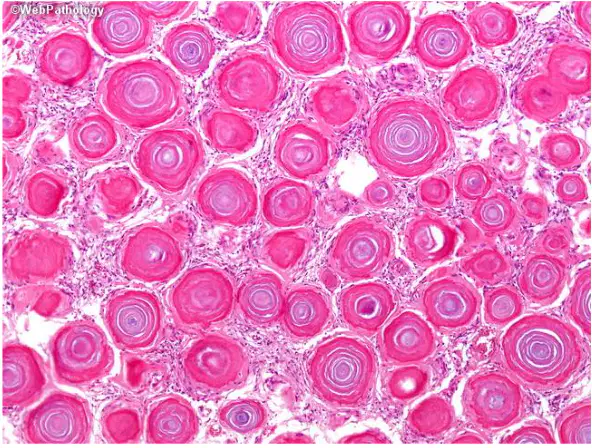
(Gambar PA tidak ada keterangan klinis)
WHO Gr I
WHO Gr 1-2
WHO Gr 2-3
WHO Gr 3-4
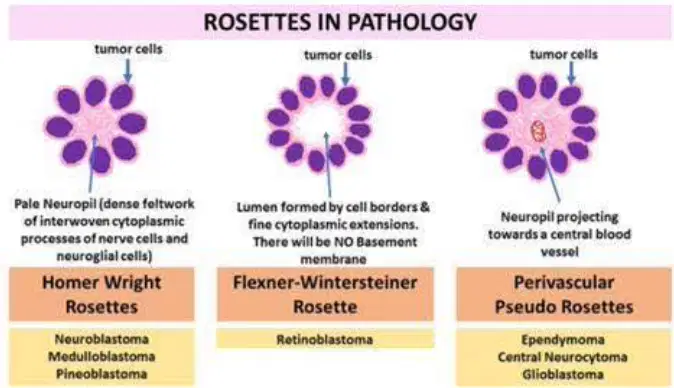
Materi ini masuk dalam dua soal CBT. Membahas tentang PA bentuk rosette
Jawabannya
- Esthesioneuroblastoma
- terapi surgery dan radiasi
Translabyrinthine, trautmann triangle batas"nya kayaknya pilihannya
(tidak ada kunci)
foramen Magnum
jugular vein
lateral --> sinus sigmoid
vidian artery
petrous nerv
Yolk sac tumor, true ?
(tidak ada tumor)
AFP (+)
B-hCG (+)
schiller duval bodies
PLAP (+)
Ada tumor letaknya di daerah meckel cave T1 hiperintense, T2 hiperintense, ADC hiperintense
tidak ada kunci
cholesterol granuloma
trigeminal schwannoma
Berdasarkan denis yg paling tidak stabil kerusakan pada mana :
tidak ada kunci
Anterior half of the bodies
Posterior longitudinale lig.
Anterior lobgitudinale lig.
Ligamentum Flavum
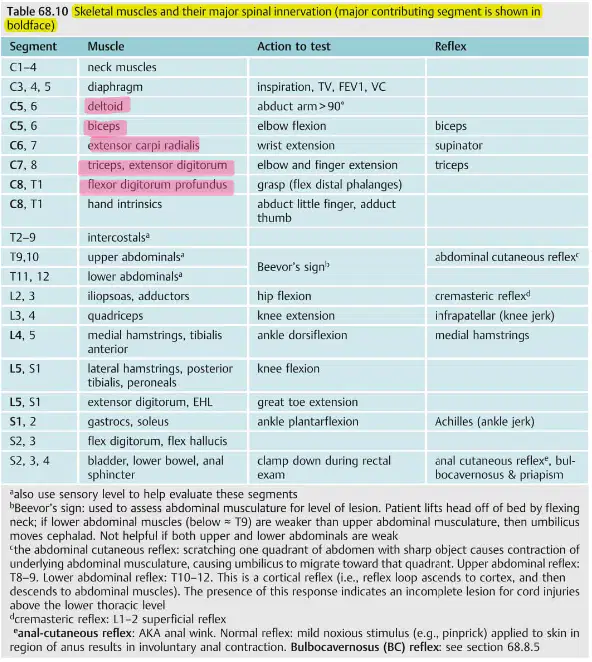
Ada soal tentang Saraf innervasi otot, gerakan, dan refleks juga.
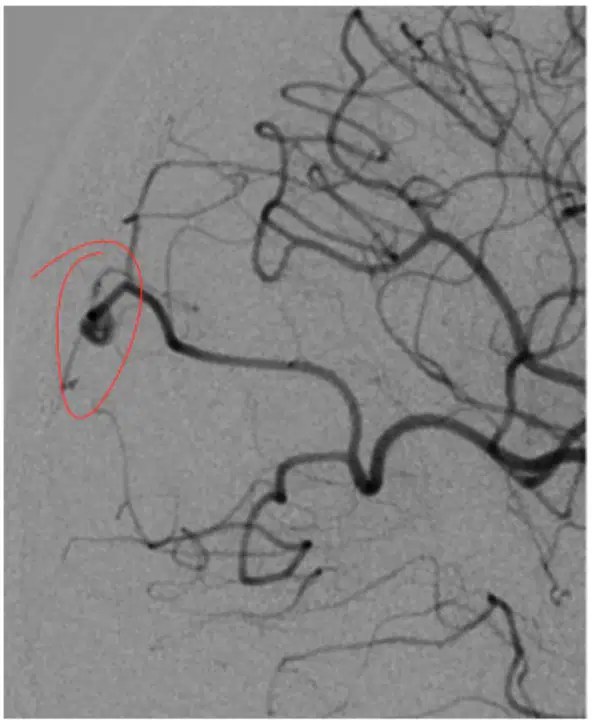
A frontal DSA foloowing right carotid artery injection is shown in this image. What is the likely etiology of the lesion demonstrated?
Endocarditis
Atherosclerosis
Immune vasculitis
Congenital
Pasien laki-laki, kecelakan bermotor, pasien sadar, gada nyeri, ga ada defisit neurologis, pemeriksaan paling minimal apa yang dilakukan?
No Radiological study
CT scan cervical potongan tipis
Xray Cervical AP/Lat
Neurophysiological monitoring during translabrynthine resection of a vestibular schwannoma with minimal extension into the cerebellopontine angle includes which of the following?
BAER and IX, X, XI nerve
SSEP and VII nerve
BAER and VII nerve
BAER and SSEP
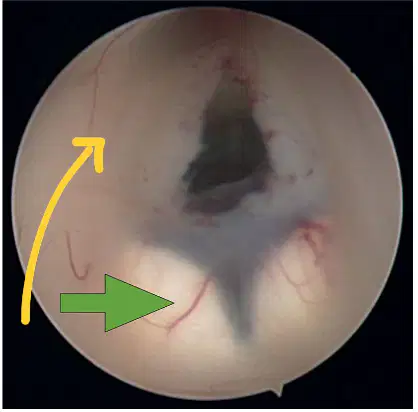
(Gambar intraoperasi ETV, tampak lamina terminalis sudah jebol) Struktur yang ditunjuk panah kuning?
Hipothalamus
Mammilary body
Thalamus
Head of caudate nucleus
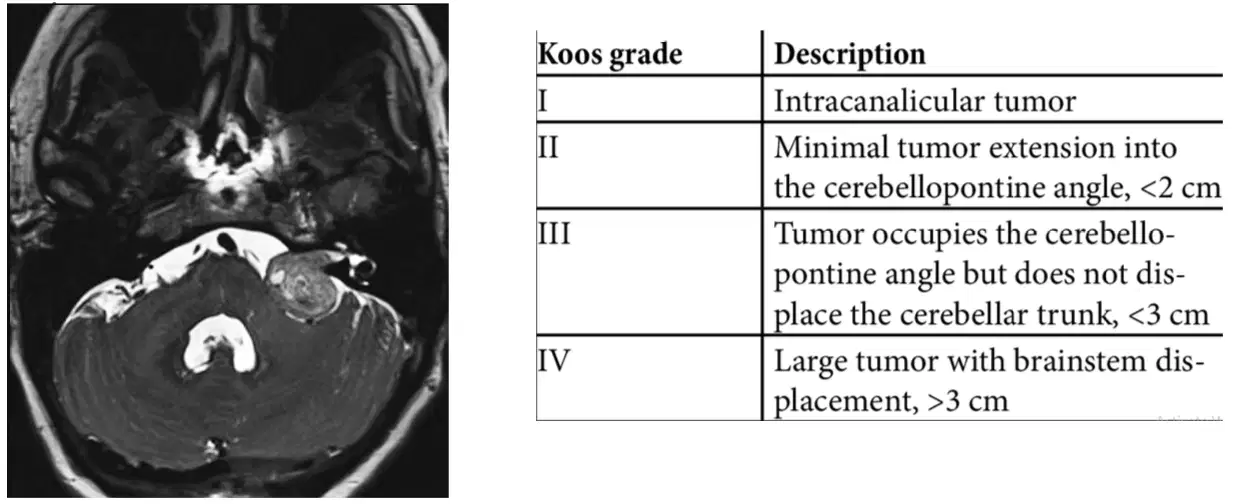
Vestibular schwannoma, ada pembuluh darah diantara basilar dan tumor , yang ditanyakan grading koos (III) (Gambarnya beda)
A 53-year-old male had a left acoustic neuroma resected 5 months ago and has had severe, throbbing left-sided headaches that began the week of the resection. He rarely had headaches before surgery. His headaches are without associated symptoms and are not positional. The only relief he gets is from opioid analgesics. What is the next best step in management?
Psychiatric referral
Physical examination
Change to a different opioid analgesic
MRI of the brain with contrast
A 28-year-old left-handed female who is 14 weeks pregnant presented to the emer-gency department with worsening headache, vomiting and drowsiness. CT head scan showed a large right frontal tumor with sig-nificant edema. After 48 h of dexamethasone her headache has improved but she still has a mild left-sided arm weakness. Which one of the following would be most appropriate?
(tidak ada kunci)
Permit gestational advancement to second trimester
Craniotomy and tumor resection followed by chemoradiotherapy
Cesarean section followed by neuro-surgery
Iatrogenic termination followed by neuro-surgery
Radiotherapy alone until fetal maturity established
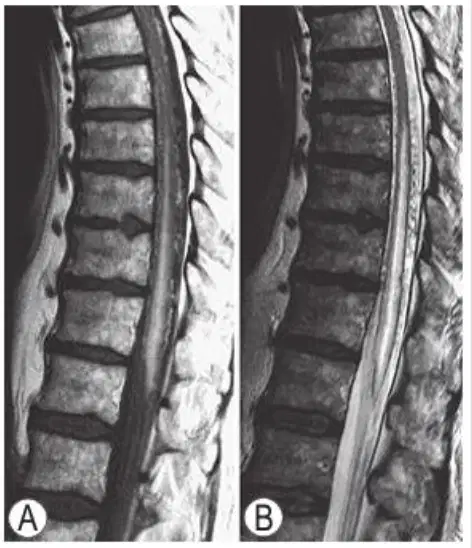
A 55-year-old male presents with progressive gait disturbance and impotence. Coronal Magnetic resonance angiogram and angio-grams are shown in the lumbar spine. There is no evidence of hemorrhage. VHL screen is negative. Which one of the following diag-noses is most likely?
Aneurysm of artery of Adamkiewicz
Cavernoma
Hemangioblastoma
Type I Dural AVF
Type II intramedullary glomus AVM
An 82-year-old woman presents to the neurosur-gery clinic with typical trigeminal neuralgia. She has substantial medical comorbidities and would like to avoid surgery. The patient opts for stereo-tactic radiosurgery. What factor would predict a favorable outcome?
Absence of atypical pain
Using a radiation dose less than 60 Gy
Prior successful surgical microvascular decompression
Decreased sensation in the affected nerve prior to treatment
Trigeminal neuralgia related to multiple sclerosis
How much of the superior sagittal sinus can be sacrificed without a high risk of inducing venous infarctions?
Anterior two thirds
No more than one third of any portion
Anterior one third
Entire sinus as long as the cortical bridging veins are left intact
None of the sinus but all of the cortical bridg-ing veins can be sacrificed without risk of venous infarctions.
What is the most common location for dural arteriovenous fistulae to drain?
Superior sagittal sinus
Junction of the transverse and sigmoid sinus
Cavernous sinus
Inferior petrosal sinus
Junction of the sigmoid sinus and jugular vein
During an endonasal transsphenoidal approach, what structure limits the working space and ma-neuverability of the instruments?
Inferior turbinate
Middle turbinate
Superior turbinate
Anterior nasal septum
A 58 year-old right handed male presents with bifrontal headaches and a partial left ophthalmoplegia. MRI results are shown. Biopsy revealed this tumor to be a chordoma. An extensive subtotal skull-based resection was performed. Which is the best choice for adjuvant therapy regimen?
Proton beam radiotherapy
Brachytherapy
Stereotactic radiosurgery
Conventional fractionated radiotherapy
Procarbazine, CCNU and vincristine (PCV) chemotherapy
Parkinsonian tremor can be diminished by high frequency stimulation of:
Globus pallidus externa
Subcaudate white matter
ViM thalamus
Cingulate bundle
Dorsomedial thalamus
What is conraindication for posterior foraminotomy as a treatment for cervical radiculopathy due to disc herniation?
Degenerative changes at other level
Ipsilateral vocal cord palsy
Khypotic neck deformity
Associated osteophyte formation
Central disc herniation
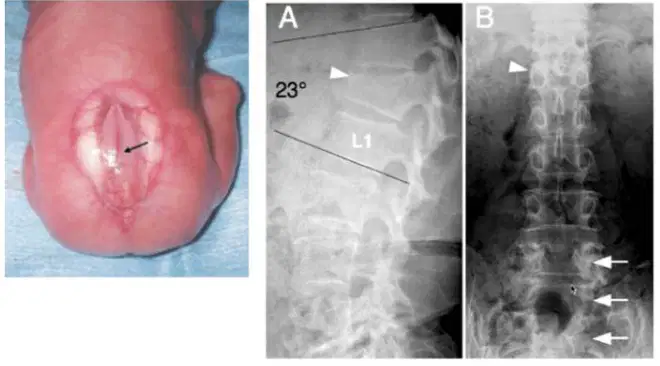
Pasien anak laki laki, lahir secara pervaginam, didapatkan klinis seperti pada gambar. bagaimana kemungkinan
Ambulasi independen
Berdiri tidak bisa ambulasi
bukan salah satu diatas
Ambulasi dengan ortose atau alat bantu berjalan
Ambulasi dengan kursi roda
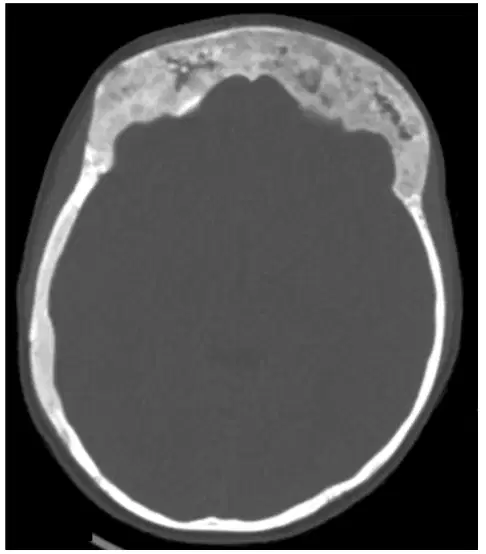
Gambaran MRI Fibrous dysplasia os frontal udh operasi. Tumbuh lagi. Tatalaksananya, kecuali (pertanyaannya kalo ga salah kontraindikasinya)
observation
re surgery
radioterapi
Kemoterapi
Imunoterapi
A 45 yeard old male undergoes a subtemporal approach for tumor resection with elevation of the dura from the middle fossa floor and petrous bone.
Post operatively the patient has decrease lacrimation on ipsilateral side. What is etiology problem?
geniculate ganglion injury
Lesser petrosal nerve injury
Greater petrosal nerve injury
Chorda tympani injury
Injury of Jacobson nerve
A 76-year-old female is undergoing microsurgery
clipping of anterior communicating artery (ACOM) aneurysm. Intraoperatively, there is an inadvertent injury to the recurrent of Huebner (RAH). However, other perforators are well. The postoperative CT image, however, shows hypodens involving the caudate head, anterior limb of the internal caudate well as putamen. What is the most likely cause of the radiology findings?
Diffuse vasospasm
Seizure
Rete communication of RAH with other lenticulostriate from ACA and MCA
Injury to parent ACA vessel
A 30-year-old woman presents for her 1 month follow up after bilateral optic nerve sheath fenestration for malignant pseudotumor cerebri syndrome. Her incisions are healing well, and her orbital edema is resolving, and her eye movements are full. However, her visual fields appear to be worsening despite the apparent improvement of her optic nerve edema clinically and by optical coherence tomography. She continues on 500 mg of PO acetazolamide twice a day but continues to have headaches with pulsatile tinnitus. What is the most likely cause of her symptoms despite the improvement of her edema?
Residual orbital edema that can be observed for now
Development of orbital pseudomeningoceles requiring re-fenestration of the nerves to relieve pressure
Continued intracranial pressure elevation causing optic nerve compression and axonal loss producing optic atrophy
Functional vision loss from stress related her recent diagnosis and surgery
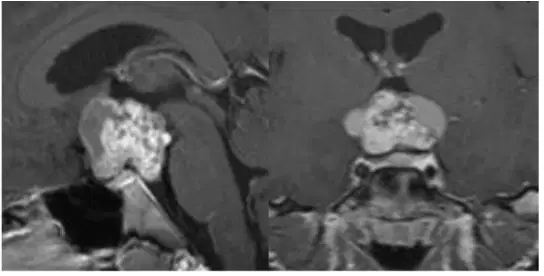
Seorang anak laki-laki berusia 12 tahun mengeluhkan kehilangan penglihatan mata kiri dan sakit kepala sesekali. Evaluasi endokrin menunjukkan adanya diabetes inspidus ringan dan hipotiroidisme. Gambaran MRI ditunjukkan pada Gambar dibawah. Anda merekomendasikan upaya reseksi tumor secara total. Komplikasi apa yang paling mungkin terjadi?
Hydrocephalus
Kebutaan
Gangguan kejang
Pan-hipopituitarism
Mutisme
A 67-year-old woman presents to the emergency room following a motor vehicle collision with a large right-sided subdural hematoma and uncal herniation seen on CT. The Glasgow Coma Scale score is 5. She has a dilated and nonreactive right pupil. She has flexor posturing on the left side and is hemiplegic on the right side. What is the most likely explanation for her right-sided hemiplegia?
Uncal compression of the right midbrain
Compression of the left midbrain
Diffuse axonal injury involving the right internal capsule
Spinal cord injury
Left-side Duret hemorrhages in the pons

A 32-year-old recent immigrant from Southeast Asia presents with back pain and a new kyphotic deformity after tripping up in his flat. T1and T2 WMRI are shown. Which one of the following is most likely diagnosis?
Ankylosing spondylitis
Discitis
Multiple myeloma
Pyogenic vertebral osteomyelitis
Spinal tuberculosis
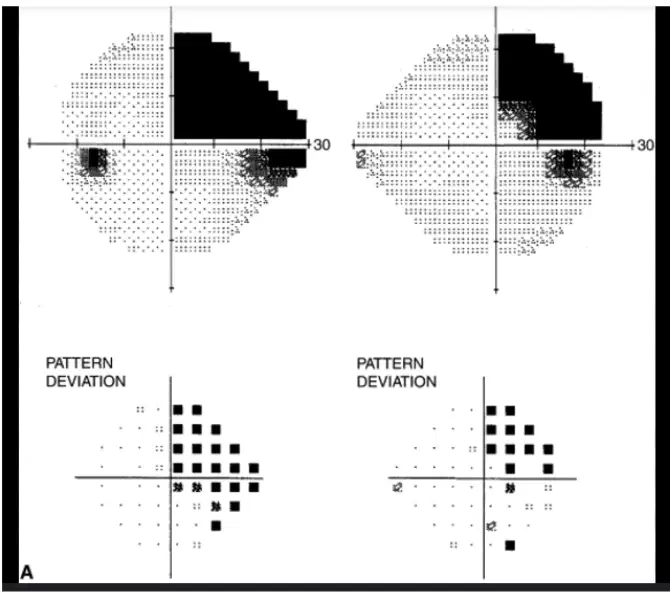
pertanyaannya lupa, gambarnya kira2 seperti ini (lesi dimanakah ini?)
Meyers loop
Optic tract
Chiasma
Primasy visual cortex
A surgeon decides to utilize an infratentorial supra cerebellar corridor to approach a pineal region mass. What blood vessel is frequently cauterized and divided for better exposure of the posterior surface of the tumor during this approach?
Vein of galen
Ipsilateral basal vein of Rosenthal
Posterior cerebral artery
Precentral cerebellar vein
Superior petrosal sinus
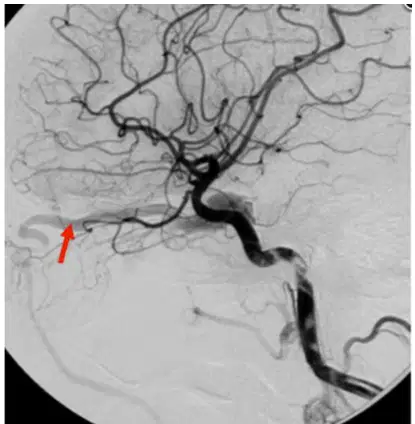
What structure does the arrow point to in the figure?
Superior ophthalmic vein
Superior petrosal sinus
Inferior petrosal sinus
Avernous sinus
Internal jugular vein
Gambaran DSA ECA tampak feeder tumor (Convexity meningioma Frontal kiri) Ditanya feeder tumor
tidak ada kunci
ACA + MMA
STA + ACA
STA + ethmoidal artery
Gambaran DSA blush tumor, feeder bernasconi dan cassinary artery, yang ditanya diagnosis?
tidak ada kunci
Tentorial menignioma
--
--
Gambaran MRI pada anak MRI nya beda sama sans
(a)
SANS
(a)
SANS, pungsi lumbal
(a)
Apa komplikasi paling umum dari anterior cervical discectomy and fusion (ACDF)?
Suara serak
Radikulopati baru
Sindrom Horner
Disfagia
Cedera duktus toraks
Soal tentang central tegmental tract
(a)
Gambar DSA, drainase basal vein rosentral
(a)
SANS. contraindikasi? Central disc herniation
(a)
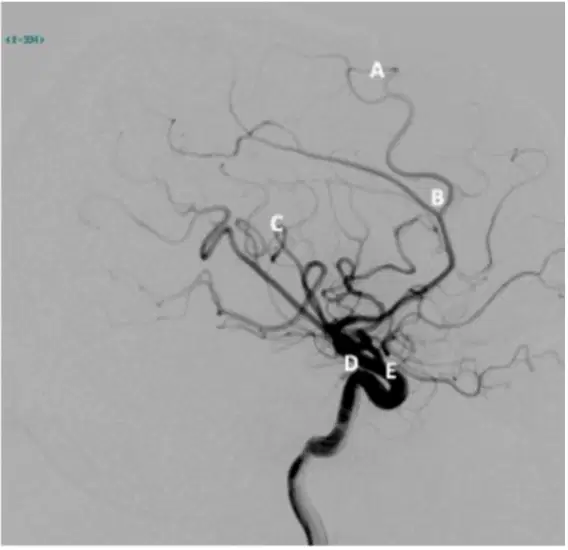
A pericallosal aneurysm would be found at which location on the lateral projection angiogram shown?
A
B
C
D
E
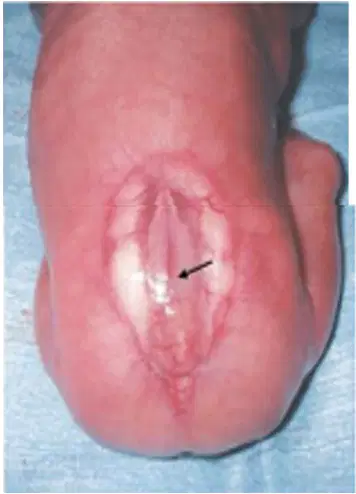
Pasien anak laki-laki lahir secara pervaginam didapatkan klinis seperti gambar. Bagaimanakah penatalksaan yang tepat?
penutupan defek dalam 24 jam
penutupan defek dalam 72 jam
penutupan defek segera
penutupan defek efektif saat usia 3 bulan
Konservatif
Foto klinis pasien asli dengan cele di nasal, MRI protusi brain melalui sinus ethmoid masuk ke nasal, CT scan defek di sinus ethmoid. Jawaban?
(a)
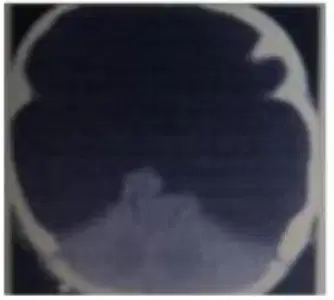
Dari gambar berikut, dx apa yang paling mungkin?
Hydranencephaly (Gangguan migrasi seluler)
Alobar Holoprosencephaly
Lobar Holoprosencephaly
Anencephaly
Severe hydrocephalus
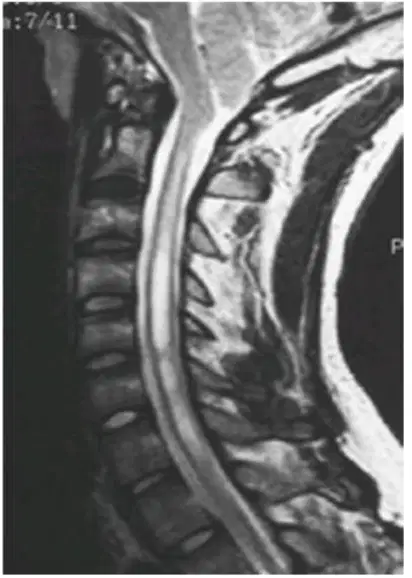
You plan to perform a foramen magnum decompression on the patient shown below. Which one of the following investigations may be helpful?
CSF flow study
CT cisternography
CT cervical angiogram
Flexion / extension X-Rays
Nerve conduction studies
Soal anak2 dgn VSD post tindakan penutupan defek, setelah beberapa hari mengeluh lumpuh. Gambaran MRI ada lesi extradural mixintense (mirip EDH spinal)
tidak ada kunci
Epidural hematoma
Spinal lipomatosis
Lainnya lupa
Efek peningkatan pCO2?
(a)
MRI HNP lumbal L4-5, potongan axial herniasi posterolateral kanan (keliatannya belum masuk foraminal)
Tidak ada kunci
Exiting L4
TransversingL4
Exiting L5
Transversing L5
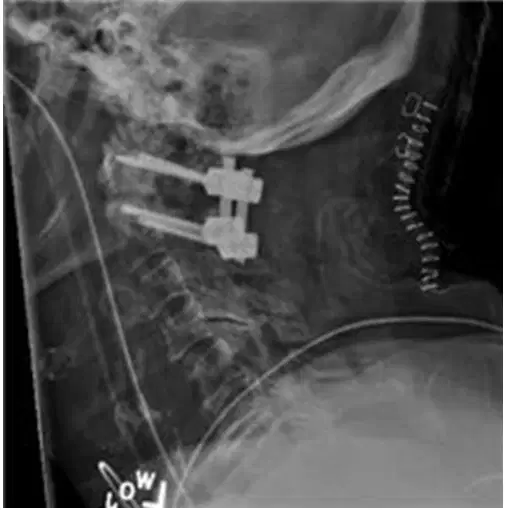
A 58-year-old male who sustained traumatic fractures to the upper cervical spine following a motor vehicle accident. After a detailed evaluation of the fracture characteristics and imaging studies, you recommend posterior instrumentation and fusion from the occiput to C2. The patient asks you how would this affect his range of motion. You should inform him that he would probably experience which one of the following?
A decrease in cervical spine rotation of 50%.
A decrease in cervical spine flexion-extension of 50%.
Decrease of cervical spine rotation of 50% and a decrease of cervical spine flexion-extension of 50%.
Decrease of cervical spine rotation of 50% and a decrease of cervical spine flexion-extension of 10%.
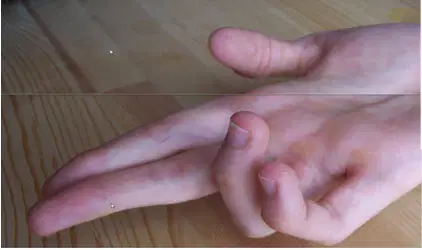
Pasien laki-laki usia 50 tahun Riwayat kecelkaan lalu lintas 2 bulan yang lalu. Pasien mengalami fraktur humerus dan dilakukan operasi ORIF. Saat ini pasien... lokasi penyebab kelainan tersebut?
Aponeurosis muskulus biseps
Transverse ligament pada carpal tunnel
Arcade of struthers
Ligamentum pada guyon canal
Aponeurosis fasia pada cubital tunnel
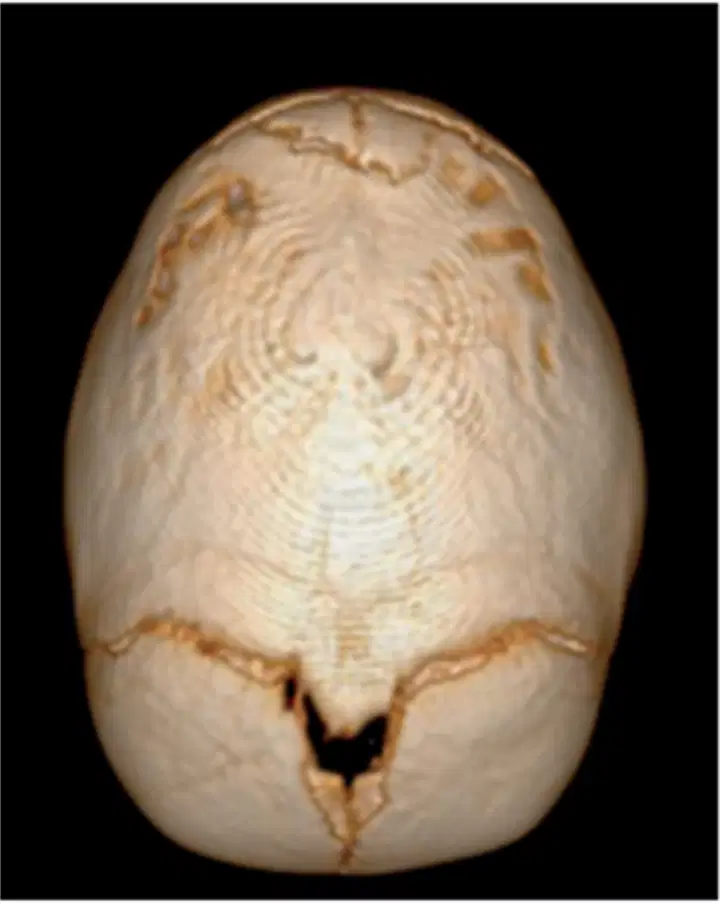
An endoscope-assisted strip craniectomy procedure for an infant with sagittal craniosynostosis, shown in this image, followed by helmet therapy will have the best cosmetic outcome if it is performed at what age?
18 Months
12 Months
9 Months
6 Months
3 Months
Which of the following are the cardinal motor symptoms of Parkinson disease (PD) that are most amenable to treatment with deep brain stimulation (DBS)?
Dystonia, dyskinesia and tremor
Dyskinesia, bradykinesia and rigidity
Freezing of gait, rigidity and tremor
Dyskinesia, dystonia and freezing of gait
Bradykinesia, rigidity and tremor
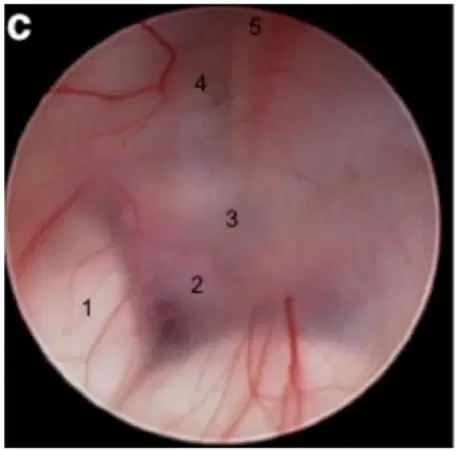
Berikut adalah tampilan endoskopi (ETV). Lokasi melakukan ventrikulostomi ventrikel III terletak pada
2
1
3
4
5
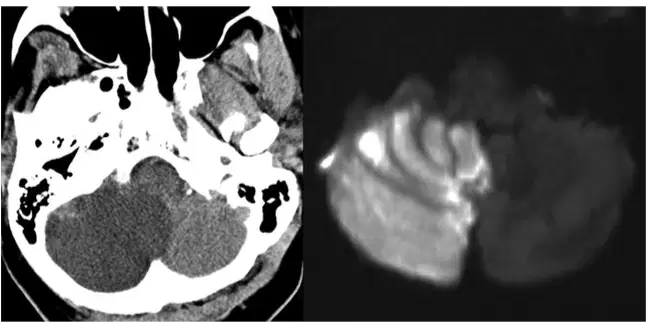
A 74-year-old woman presents to the emergency room complaining of vertigo and nausea increasing in severity over the past several hours. CT and MRI studies were performed, and representative images are shown here. This lesion likely represents a(n):
Primary neoplasm
Acute infarction
Metastatic disease
Arachnoid cyst
Epidermoid cyst
Gambaran klinis yang PALING umum dari kejang lobus temporal mesial adalah?
Gerakan bersepeda iktal.
Automatisme oral iktal.
Aura visual.
Postur distonik ipsilateral
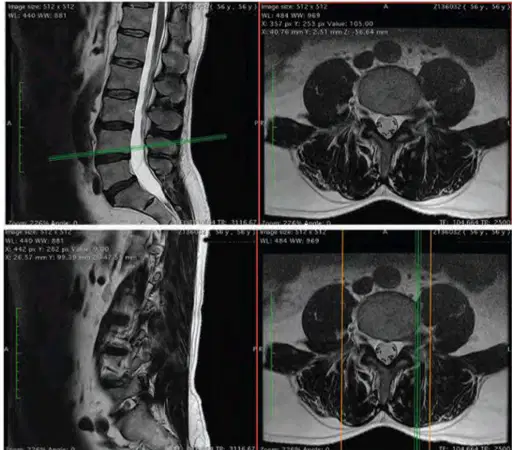
Otot mana yang lemah pada hasil pemeriksaan radiologi ini?
Gastrocnemius
Tibialis anterior
Extensor hallucis longus
Iliopsoas
None of above
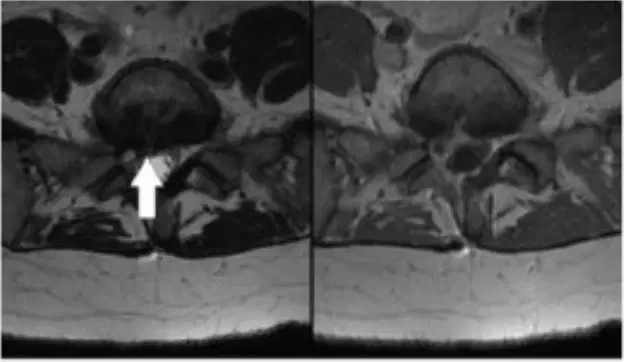
Axial T2 and postcontrast T1-weighted imaging of the lumbar spine are shown in these images. To what does the abnormality indicated by the arrow correspond?
Disk protrusion
Epidural scar
Disk extrusion
Epidural abscess
Sequestered disk
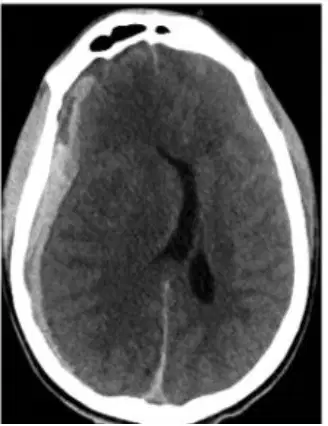
What is a characteristic of the lesion depicted in this CT image?
Limited by sutures
Usually crosses the midline
Most commonly due to an arterial injury
Occurs between the inner and outer layers of the dura
Limited by dural reflections
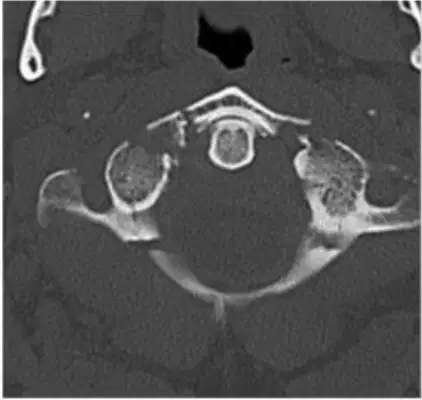
What is a characteristic of the injury shown on this CT scan?
Combined offset of the lateral C1 masses relative to C2 greater than 6 mm, which suggests disruption of the alar ligaments
Frequently associated with diving head first into shallow water
High frequency of neurologic injury
Most commonly occurs in infants and young children
Most commonly occurs in infants and young children
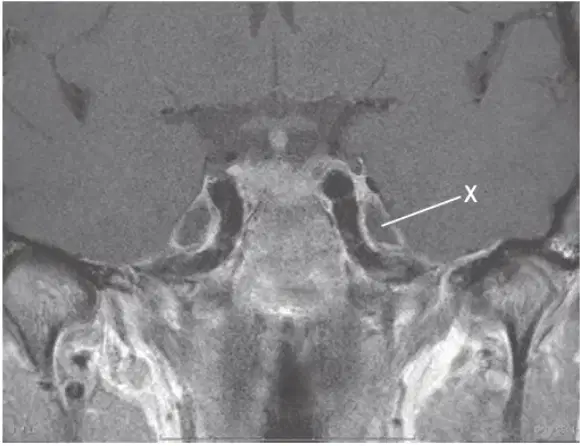
Which one of the following is labeled X in the image below?
Ophthalmic division of the trigeminal nerve
Meckel’s cave
Oculomotor nerve
Maxillary division of trigeminal nerve
Abducens nerve
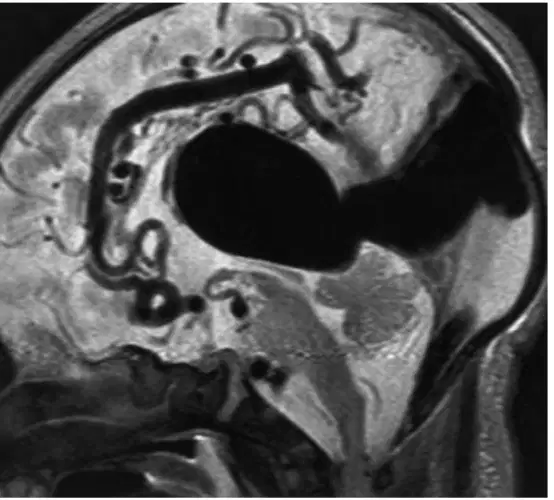
Which one of thef ollowing is most likely in a child with the below MRI appearance pre- senting with increasing head circumference and shortness of breath?
Cavernous malformation
Developmental venous anomaly
Dural AV fistula
Tentorial AVM
Vein of galen malformation
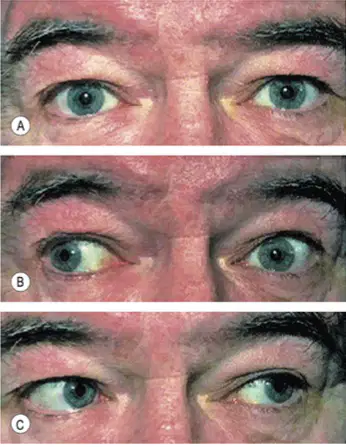
A 50-year-old man complains of 2 days' double vision. Has abducting nystagmus in the right eye and vertical gaze is preserved bilaterally. Which one of the following is most likely?
Left internuclear ophthalmoplegia
Orbital apex syndrome
Left incomplete oculomotor palsy
Superior orbital fissure syndrome
Left one-and-a-half syndrome
Which of the following structures represents a potential site of ulnar nerve entrapment?
Bicipital aponeurosis
Supinator muscle
Pronator teres muscle
Osborne ligament
Struther ligament
A 37-year-old man was diagnosed at age 25 when he had his first generalized tonic-clonic seizure while bowling. He was then noted to have complex partial seizures during which he would repeatedly respond by saying “what” to all questions, lip smack, and throw up his right arm. He was unaware of any auras and was amnestic for his seizures. Most of his seizures were from sleep with a frequency of about 2 per week. He had been involved in sev- eral car accidents secondary to seizures. Which one of the following is most likely?
Absence seizure
Complex partial seizure
Focal motor seizure
Generalized tonic-clonic seizure
Simple partial seizure
Examination of which of the following movements is most helpful in distinguishing an L4 radiculopathy from a femoral neuropathy?
Ankle plantar flexion
Knee extension
Hip flexion
Knee flexion
Thigh adduction
Which of these treatments influences the incidence of chronic subdural hematoma (cSDH) recurrence?
Tranexamic Acid
Burr hole drainage
Amount of irrigation
External subdural drain
Craniotomy
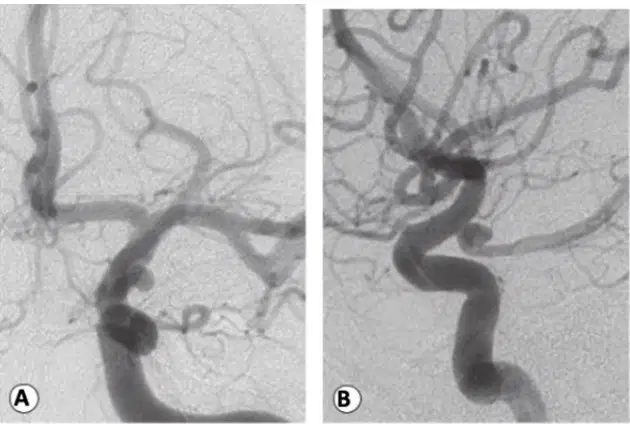
Which one of the following clinical findings would you look for in this patient?
Abducens palsy
Absent corneal reflex
Bitemporal hemianopia
Oculomotor palsy
Pituitary dysfunction
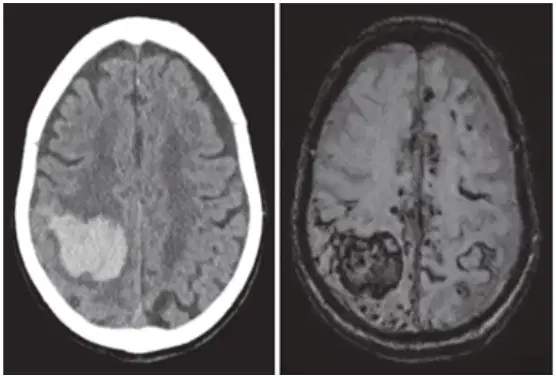
A 75-year-old man with a history of recent memory impairment is admitted with headache, confusion, and a left hom- onymous hemianopsia. There is no history of hypertension or malignancy. Non- contrast CT scan and GRE MRI are shown. Which one of the following is the most likely cause of this patient‘s symptoms and signs?
Multi-infarct dementia
Mycotic aneurysm
Amyloid angiopathy
Undiagnosed hypertension
Gliomatosis cerebri
A 40-year-old male without a significant past medical history presents with a severe headache that started about 14 hours ago. The patient was asleep when his headache started. The patient denies any head trauma and a family history of stroke or sudden death. CT brain without contrast is negative. On physical examination, blood pressure is 200/115 mm Hg, respiratory rate is 25/minute, pulse rate 100/minute, and oxygen saturation is 99% on ambient air. The patient is awake, alert, oriented, and can move all extremities. Which of the following is the best next step in management?
CT angiography head and neck
Magnetic resonance angiography head and neck (MRA)
Lumbar puncture
Digital subtraction angiography
CT Head contrast

