
 Worksheets
Final Exam Study Guide
Total questions: 76
Worksheet time: 38mins
Which of the following lists the correct steps of the scientific method?
Observation, Hypothesis, Experiment, Analysis, Conclusion
Hypothesis, Observation, Experiment, Conclusion, Analysis
Experiment, Observation, Hypothesis, Analysis, Conclusion
Observation, Experiment, Hypothesis, Conclusion, Analysis
Which of the following best defines 'observation' and 'inference' with an example?
Observation: Using senses to gather information; e.g., seeing a plant is green. Inference: Drawing a conclusion based on observations; e.g., the plant is healthy because it is green.
Observation: Making a guess about something; e.g., the plant is healthy. Inference: Using senses to gather information; e.g., the plant is green.
Observation: Drawing a conclusion based on data; e.g., the plant is healthy. Inference: Using senses to gather information; e.g., the plant is green.
Observation: Ignoring evidence; e.g., assuming the plant is healthy. Inference: Recording data; e.g., the plant is green.
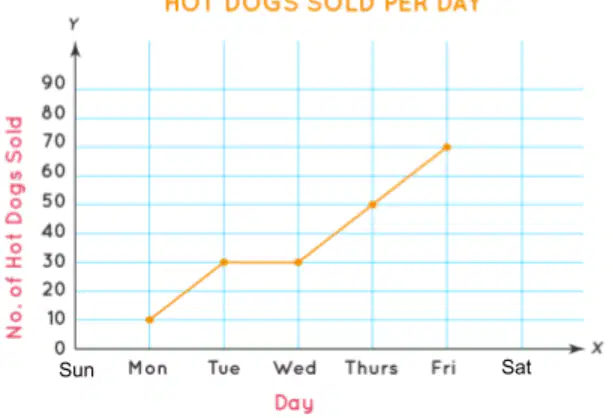
How many hot dogs were sold on Thursday?
50 hot dogs were sold on Thursday.
40 hot dogs were sold on Thursday.
75 hot dogs were sold on Thursday.
90 hot dogs were sold on Thursday.
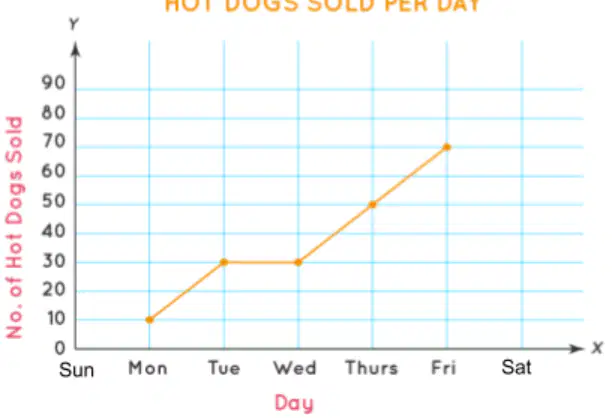
How many do you predict will be sold on Saturday based on the information in the graph?
90 hot dogs (prediction based on the trend in the graph).
60 hot dogs (prediction based on the trend in the graph).
120 hot dogs (prediction based on the trend in the graph).
30 hot dogs (prediction based on the trend in the graph).
Which of the following correctly defines the terms hydrosphere, biosphere, atmosphere, and geosphere?
Hydrosphere: water; Biosphere: living things; Atmosphere: air; Geosphere: land
Hydrosphere: air; Biosphere: water; Atmosphere: land; Geosphere: living things
Hydrosphere: land; Biosphere: air; Atmosphere: water; Geosphere: living things
Hydrosphere: living things; Biosphere: land; Atmosphere: water; Geosphere: air
The Earth can be described in terms of its location in the solar system, atmosphere, hydrosphere, biosphere, and geosphere as:
The third planet from the Sun with a life-supporting atmosphere, abundant water, diverse life forms, and a solid rocky surface.
The closest planet to the Sun with no atmosphere or water.
A gas giant with no solid surface and no biosphere.
A planet with only a thin atmosphere and no hydrosphere.
If 2 inner planets had similar landform structures like mountains on their surfaces, what would it tell us?
They may have similar geological processes.
They are the same planet.
They have no atmosphere.
They are made entirely of gas.
What land feature was formed by running water on Mars?
Volcanoes
Canyons
Sand dunes
channels
The channels on Mars formed when:
water flowed over the surface and eroded the soil
wind blew dust into grooves
volcanoes erupted and created cracks
meteors struck the surface
What landscape feature could be found at the end of the flowing water toward the end of the table?
Delta
Mountain
Valley
Plateau
When 2 plates pull apart (divergent boundary), what happens to the surface of Earth?
Mountains form
A rift or new crust forms
Earthquakes stop
Volcanoes disappear
What happens to the surface of Earth when 2 plates come together (convergent or subduction boundary)?
Mountains or trenches form
Earth's surface becomes flat
Oceans dry up
Volcanoes disappear
Fossils of the same organism wound up so far apart on different continents because:
The continents were once joined together and later drifted apart.
The organisms could fly across oceans.
People moved the fossils to different continents.
The fossils formed independently on each continent.
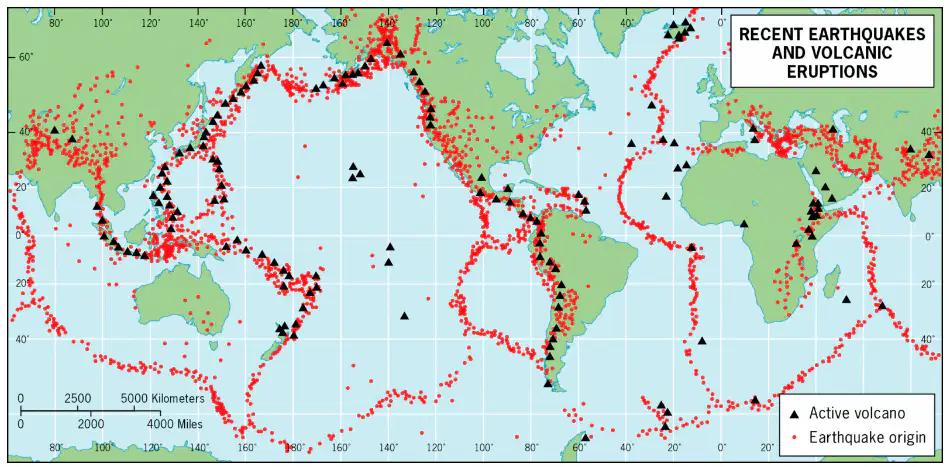
This map tells us:
The location of earthquakes and volcanoes
The population density of a city
The locations of major rivers
The average temperature of a country
The crust of Earth is made of:
Iron and nickel
Silicon and aluminum
Hydrogen and helium
Carbon and oxygen
The large pieces of crust that cover the surface of the Earth are called:
Continents
Plates
Islands
Mountains
The large pieces of crust on Earth’s surface move by:
floating on water
sliding past each other
moving due to convection currents in the mantle
remaining completely stationary
The breakup of Pangea occurred over which of the following time spans?
A few thousand years
A few million years
A few hundred years
A few decades
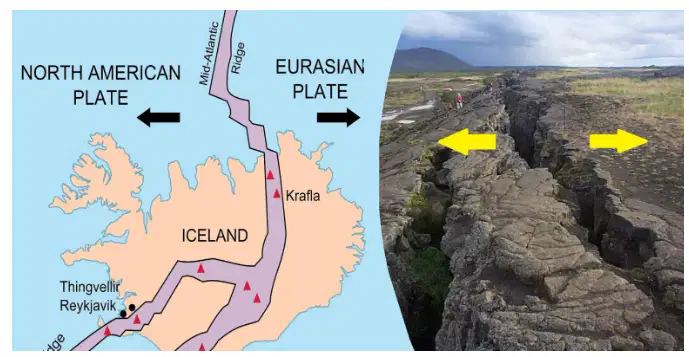
What will happen to the size of Iceland if the plates continue to move in the direction they are currently moving?
Iceland will get larger.
Iceland will get smaller.
Iceland will stay the same size.
Iceland will disappear.
Rocks are classified into 3 different groups based on:
their color
their size
how they are formed
their location
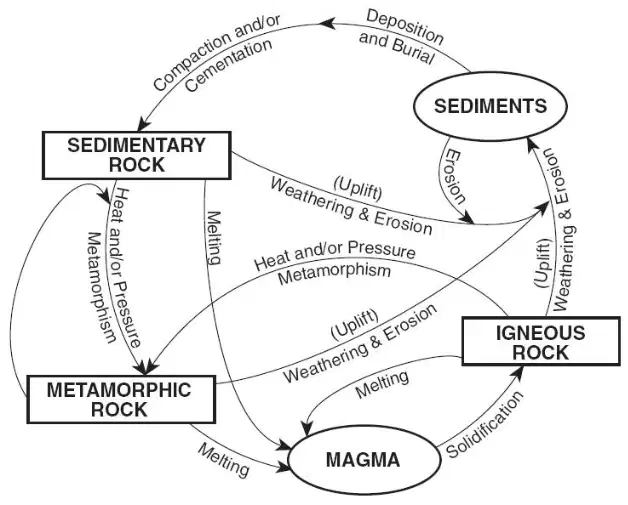
Using the diagram below, name the 2 processes that must occur to change an igneous rock into a metamorphic rock.
Heat and/or pressure (metamorphism)
Melting and solidification.
Compaction and cementation.
Cooling and crystallization.
The process that causes the breakdown of rocks into smaller pieces or changes their shape is called:
Erosion
Weathering
Deposition
Compaction
The 3 types of rocks form in which of the following ways?
By melting and cooling, by heat and pressure, and by compaction and cementation
By freezing, evaporation, and condensation
By erosion, weathering, and deposition
By photosynthesis, respiration, and transpiration
Energy plays a role in the formation of rocks by:
Driving the processes of melting, cooling, and pressure changes
Providing color to the rocks
Making rocks lighter
Preventing rocks from forming
What process could transport fossils of organisms that lived deep in the sea to mountaintops?
Erosion
Volcanic eruption
Plate tectonics
Weathering
Using the rock cycle diagram on the last page, which two processes create sediment and which four processes change sediment into sedimentary rock?
Weathering and erosion; compaction, cementation, deposition, burial
Melting and cooling; compaction, cementation, deposition, burial
Weathering and deposition; melting, cooling, compaction, cementation
Erosion and melting; deposition, burial, cooling, cementation
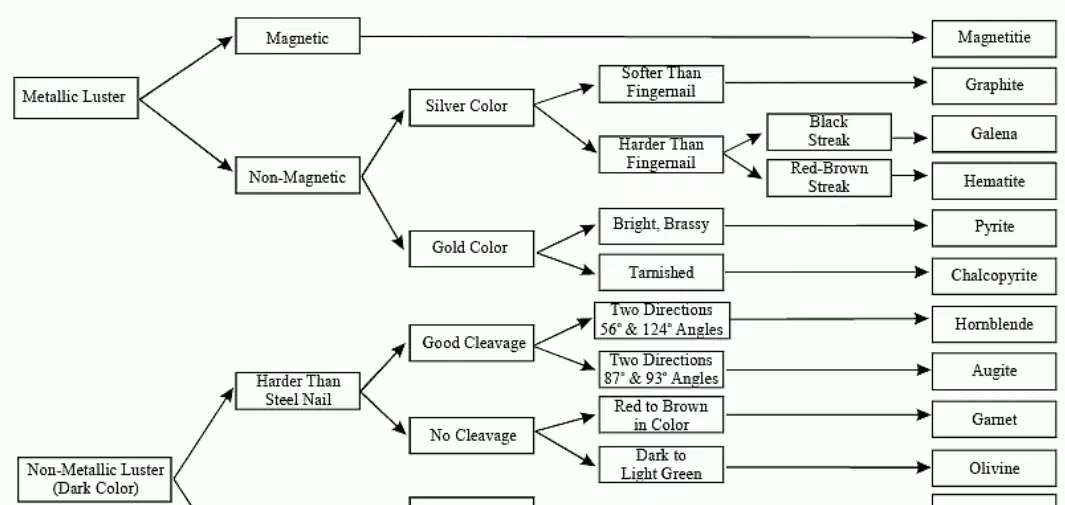
Use the following flow chart to determine the name of these minerals. a. Non-metallic luster (dark color), harder than a steel nail, no cleavage, red to brown in color.
Garnet
Biotite
Hematite
Hornblende
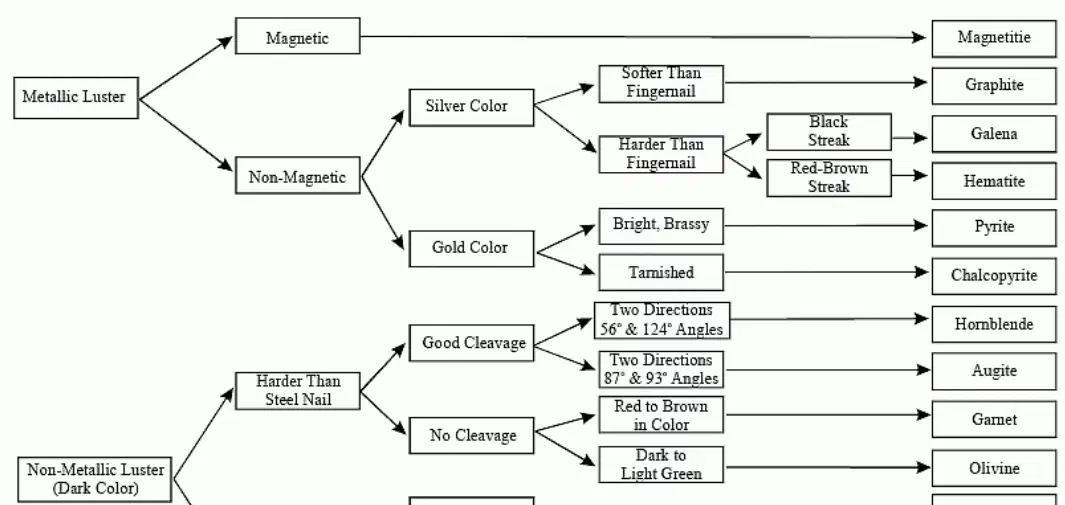
Use the following flow chart to determine the name of these minerals. Non-metallic color (light color), softer than a fingernail, no cleavage, slippery feeling, pure white.
Talc
Gypsum
Quartz
Calcite
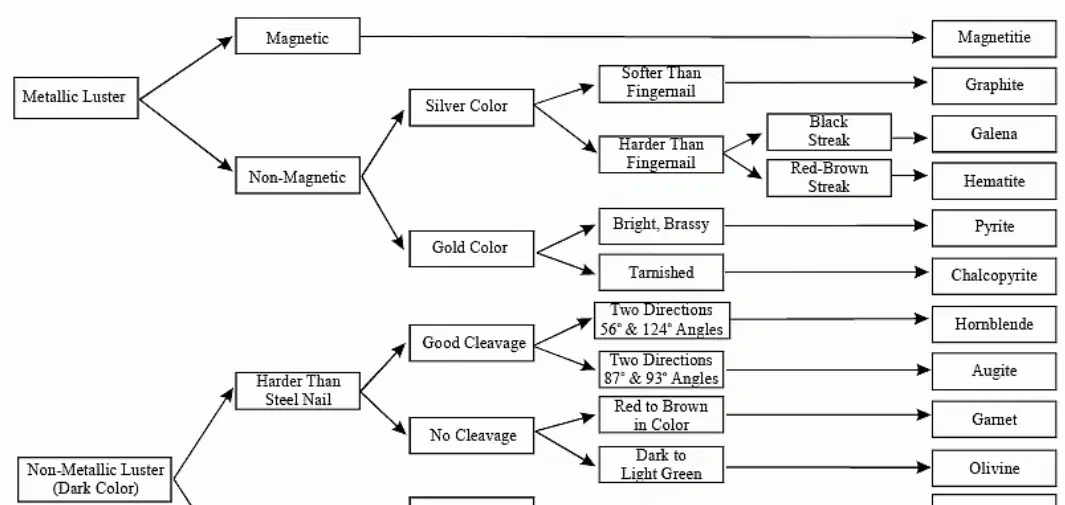
Use the following flow chart to determine the name of these minerals. c. Metallic luster, non-magnetic, silver color, harder than a fingernail, black streak.
Galena
Pyrite
Hematite
Magnetite
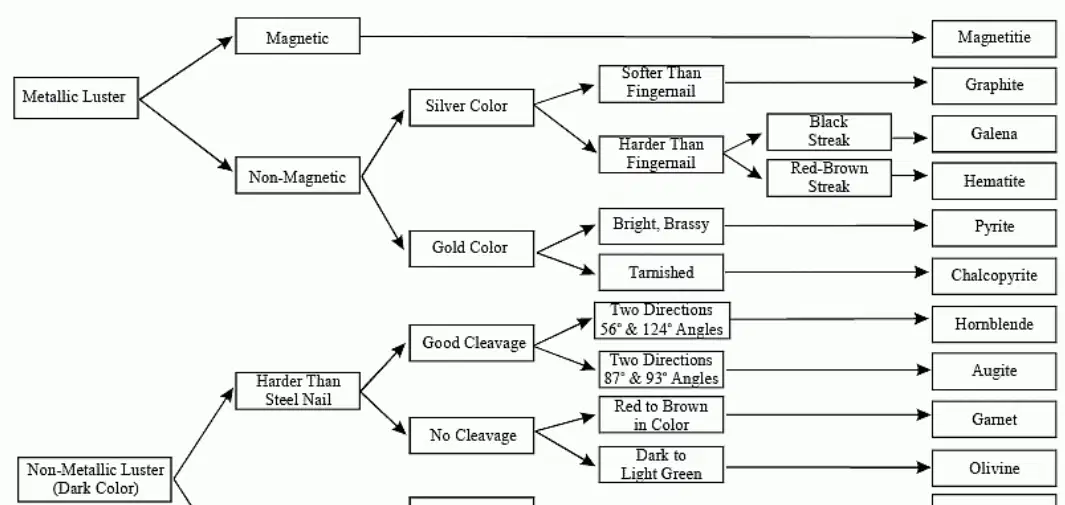
Use the following flow chart to determine the name of these minerals. Non-metallic luster, softer than steel nail, no cleavage, green streak.
Olivine
Quartz
Gypsum
Calcite
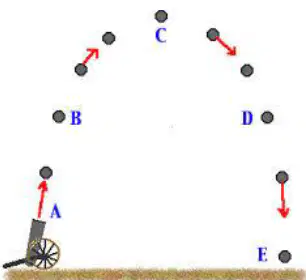
At what position will the cannonball have the greatest kinetic energy?
The cannonball will have the greatest kinetic energy at position E.
The cannonball will have the greatest kinetic energy at position A.
The cannonball will have the greatest kinetic energy at position B.
The cannonball will have the greatest kinetic energy at position C.
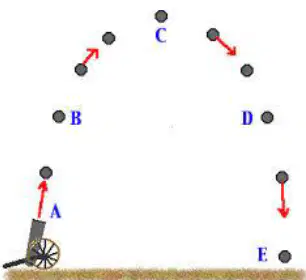
What is the change in energy that occurs as the ball travels from position A to Position C?
As the ball travels from position A to C, potential energy is converted to kinetic energy.
As the ball travels from position A to C, kinetic energy is converted to potential energy.
There is no change in energy as the ball travels from position A to C.
As the ball travels from position A to C, both kinetic and potential energy remain constant.
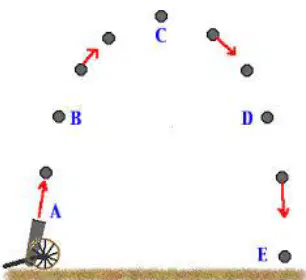
What is the change in energy that occurs as the ball travels from position A to E?
As the ball travels from position A to E, potential energy increases and then decreases
As the ball travels from position A to E, most of the kinetic energy is converted to potential energy.
As the ball travels from position A to E, both potential and kinetic energy remain constant.
As the ball travels from position A to E, energy is lost and not converted to any other form.
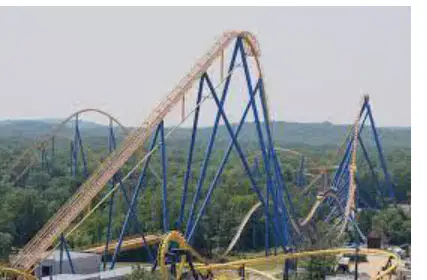
What happens to the amount of gravitational potential energy as the car rolls down the tallest hill of the roller coaster?
The gravitational potential energy decreases as the car rolls down the hill.
The gravitational potential energy increases as the car rolls down the hill.
The gravitational potential energy remains the same as the car rolls down the hill.
The gravitational potential energy disappears completely as the car rolls down the hill.
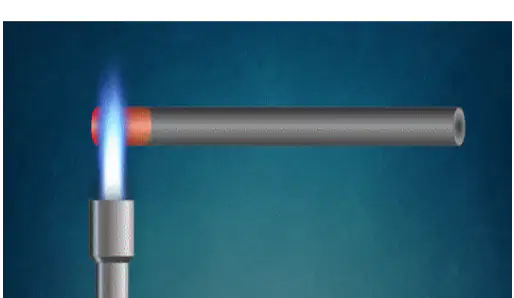
In which direction does heat move?
Heat moves from a hotter object to a colder object.
Heat moves from a colder object to a hotter object.
Heat moves only in a vacuum.
Heat does not move at all.
What happens to the speed of molecules as the temperature increases or decreases?
The speed increases with increasing temperature and decreases with decreasing temperature.
The speed decreases with increasing temperature and increases with decreasing temperature.
The speed remains the same regardless of temperature changes.
The speed becomes zero at higher temperatures.
What is the difference between a physical and a chemical change?
A physical change alters the form of a substance, while a chemical change alters its composition.
A physical change creates new substances, while a chemical change does not.
A chemical change is always reversible, while a physical change is not.
A physical change involves energy release, while a chemical change does not.
Compare the speed of motion of molecules in solids, liquids, and gases.
Molecules move slowest in solids, faster in liquids, and fastest in gases.
Molecules move fastest in solids, slower in liquids, and slowest in gases.
Molecules move at the same speed in solids, liquids, and gases.
Molecules do not move in solids, liquids, or gases.
Which of the following correctly defines the processes: melting, freezing, evaporation, and condensation?
Melting is changing from solid to liquid, freezing is liquid to solid, evaporation is liquid to gas, and condensation is gas to liquid.
Melting is changing from liquid to gas, freezing is gas to liquid, evaporation is solid to liquid, and condensation is liquid to solid.
Melting is changing from gas to liquid, freezing is liquid to gas, evaporation is solid to gas, and condensation is liquid to solid.
Melting is changing from solid to gas, freezing is gas to solid, evaporation is liquid to solid, and condensation is gas to liquid.
What is an energy transformation? Give an example.
An energy transformation is the change of energy from one form to another. For example, a battery converting chemical energy to electrical energy.
An energy transformation is the process of storing energy. For example, a battery storing energy.
An energy transformation is the loss of energy. For example, heat escaping from a machine.
An energy transformation is the destruction of energy. For example, burning fuel.
The 3 types of energy transfer are:
Conduction, Convection, Radiation
Conduction, Reflection, Refraction
Convection, Absorption, Transmission
Radiation, Reflection, Diffusion
Moving objects eventually come to a stop on Earth because of:
friction
gravity
magnetism
electricity
Objects move in certain directions because of:
Friction
Gravity
Forces
Temperature
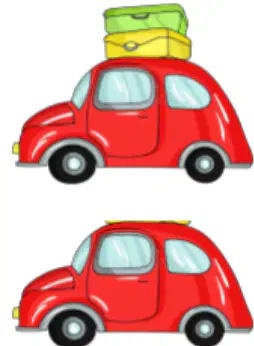
If the same amount of force was applied to each of these cars, which one would accelerate faster?
The car with less mass
The car with more mass
Both would accelerate equally
Neither would accelerate
The purpose of a seat belt in a car or bus is:
To keep passengers safe during sudden stops or accidents
To make the seat more comfortable
To help the driver drive faster
To reduce fuel consumption
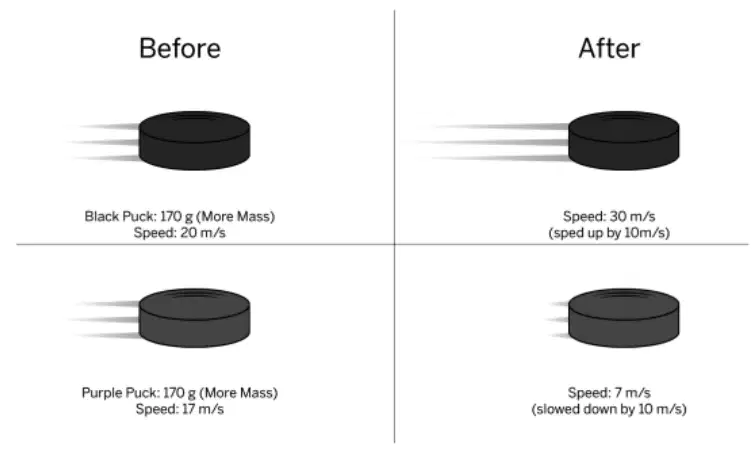
The puck that experienced the stronger force when hit is:
top puck
bottom puck
Both experienced the same force
Cannot be determined
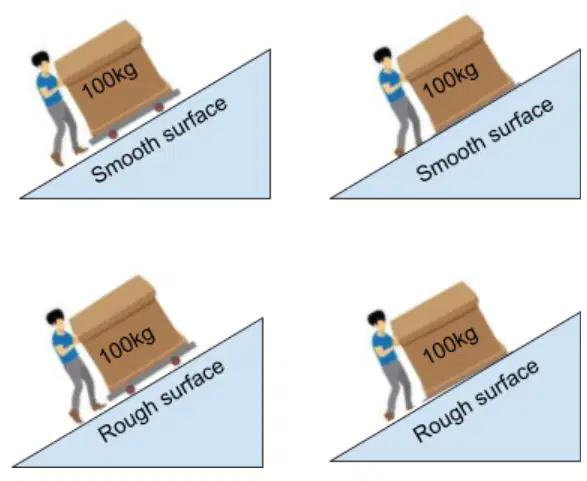
Which of the following ramps would be hardest to push the box up?
rough with no wheels
rough with wheels
smooth with wheels
smooth with no wheels
How much of the moon’s surface is lit up by the sun at any given time?
About half
About one quarter
All of it
None of it
We see different phases of the moon because of the changing positions of the Earth, Moon, and Sun. What is the length of time for one complete moon phase cycle?
About 7 days
About 14 days
About 29.5 days
About 365 days
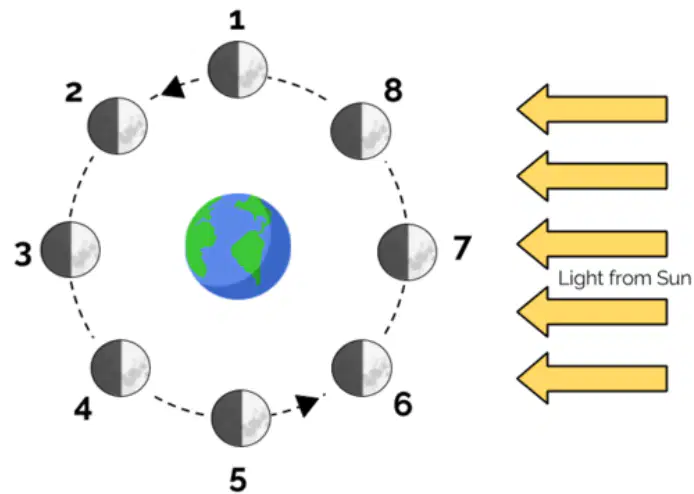
The numbered position of the moon that would cause a dark, new moon that could not be seen from Earth is:
Position 7
Position 2
Position 3
Position 4
The tilt of the Earth at the start of each season in the Northern Hemisphere is:
23.5 degrees relative to its orbit
0 degrees relative to its orbit
45 degrees relative to its orbit
90 degrees relative to its orbit
What are the positions of the sun, Earth, and moon for a solar and lunar eclipse?
For a solar eclipse: Sun - Moon - Earth; For a lunar eclipse: Sun - Earth - Moon
For a solar eclipse: Earth - Sun - Moon; For a lunar eclipse: Moon - Sun - Earth
For a solar eclipse: Sun - Earth - Moon; For a lunar eclipse: Sun - Moon - Earth
For a solar eclipse: Moon - Earth - Sun; For a lunar eclipse: Earth - Moon - Sun
The seasons of the year are determined by the Earth’s position around the sun. Which of the following is NOT a season of the year?
Spring
Autumn
Monsoon
Winter
Proof that the Earth rotates on its axis and revolves around the sun includes:
The changing seasons and the Foucault pendulum
The phases of the moon and tides
The existence of mountains and valleys
The presence of clouds and rain
A galaxy is a large system of stars, gas, and dust held together by gravity. What is the name and shape of our galaxy?
Andromeda, elliptical
Milky Way, spiral
Triangulum, irregular
Sombrero, ring-shaped
A leap year occurs every 4 years because:
The Earth takes exactly 365 days to orbit the Sun.
The Earth takes about 365.25 days to orbit the Sun.
February has 30 days every 4 years.
It is a tradition started in ancient Rome.
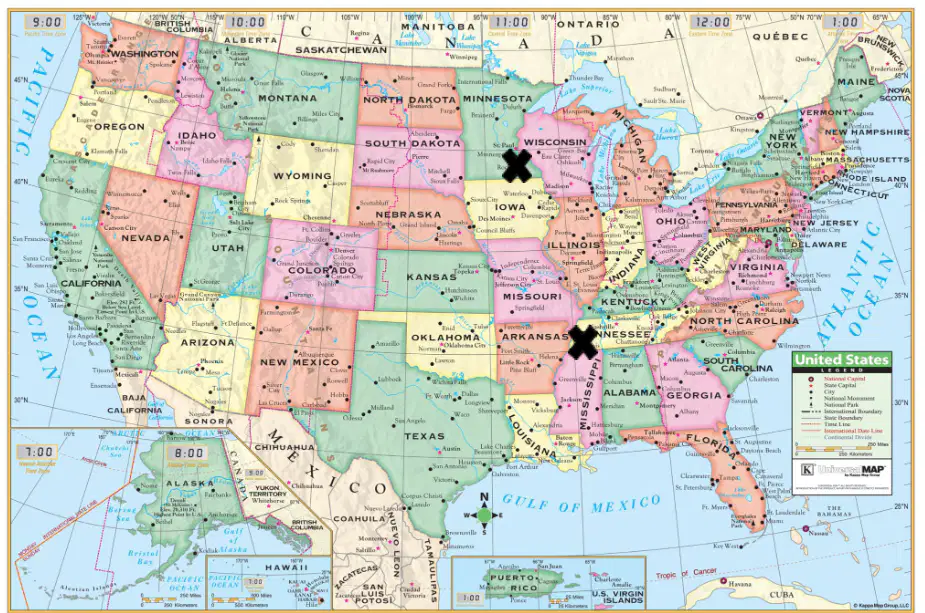
St. Paul, Minnesota is 45°N of the equator and Memphis, Tennessee is 35°N of the equator. Which location has a warmer temperature and why?
St. Paul, because it is farther north.
Memphis, because it is closer to the equator.
Both have the same temperature because they are in the United States.
St. Paul, because it is at a higher latitude.
The source of energy for the Earth is:
The Sun
The Moon
The Stars
The Clouds
What causes water droplets to form on the outside of a cold bottle of water that is left on a table for a period of time?
Evaporation of water from the bottle
Condensation of water vapor from the air
Melting of the bottle material
Sublimation of ice inside the bottle
Which of the following lists correctly describes the different air masses that can affect the weather in the United States, including their temperature and moisture characteristics, and their regions of origin?
Continental Polar (cold, dry, from Canada), Maritime Tropical (warm, moist, from Gulf of Mexico), Continental Tropical (hot, dry, from Southwest U.S.), Maritime Polar (cool, moist, from North Pacific and North Atlantic)
Continental Tropical (cold, moist, from Canada), Maritime Polar (hot, dry, from Gulf of Mexico), Continental Polar (warm, moist, from Southwest U.S.), Maritime Tropical (cool, dry, from North Pacific)
Maritime Polar (hot, dry, from Southwest U.S.), Continental Polar (cool, moist, from North Pacific), Maritime Tropical (cold, dry, from Canada), Continental Tropical (warm, moist, from Gulf of Mexico)
Continental Polar (warm, moist, from Gulf of Mexico), Maritime Tropical (cool, dry, from North Pacific), Continental Tropical (cold, dry, from Canada), Maritime Polar (hot, dry, from Southwest U.S.)
The role of carbon dioxide in the atmosphere is:
To provide oxygen for breathing
To trap heat and regulate Earth's temperature
To form clouds
To block sunlight completely
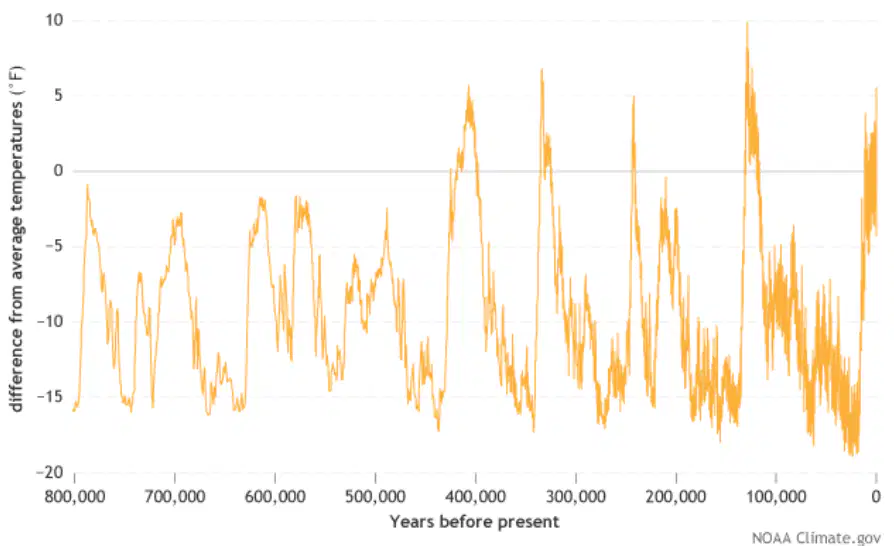
What conclusion about ice ages can be determined by looking at this graph?
Ice ages occur at regular intervals.
Ice ages have become less frequent over time.
Ice ages only occurred in the distant past.
Ice ages have no pattern.
Which of the following activities can produce carbon dioxide that enters the atmosphere?
Photosynthesis
Respiration and burning fossil fuels
Absorption by oceans
Formation of rocks
The amount of carbon dioxide or methane in the atmosphere affects the energy in the Earth’s system and the amount of energy absorbed by Earth by:
Increasing greenhouse gases traps more heat, raising Earth's temperature.
Decreasing greenhouse gases cools the Earth by reflecting sunlight.
Greenhouse gases have no effect on Earth's energy balance.
Greenhouse gases only affect the ozone layer, not energy absorption.
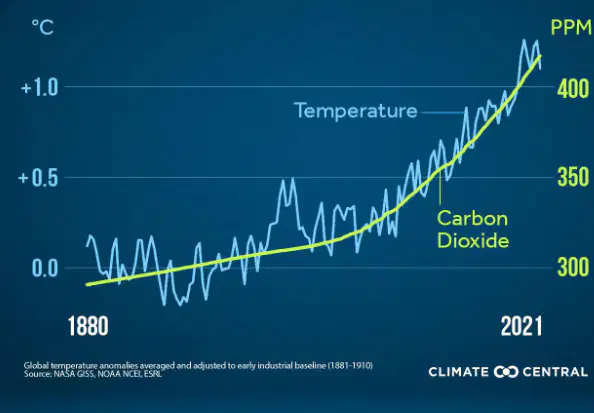
What is the relationship between carbon dioxide levels and air temperature as seen in the graph?
There is no relationship between carbon dioxide levels and air temperature.
As carbon dioxide levels increase, air temperature decreases.
As carbon dioxide levels increase, air temperature increases.
Air temperature increases only when carbon dioxide levels decrease.
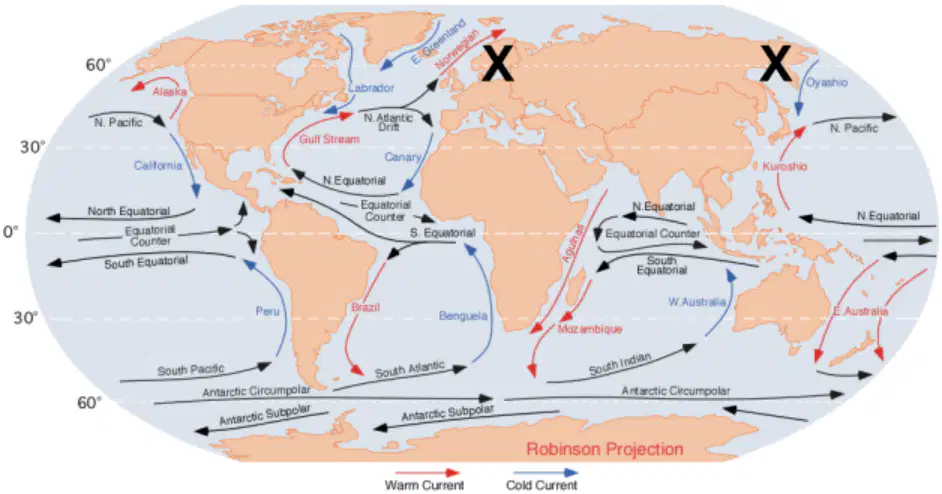
The air temperature of Oslo is:
higher than Kamchatka
lower than Kamchatka
the same as Kamchatka
cannot be determined
Areas of low pressure have clouds and rain because:
They cause air to rise, cool, and condense into clouds.
They cause air to sink and warm up.
They block sunlight completely.
They are always warmer than high pressure areas.
Wind blows in which direction?
From high pressure to low pressure
From low pressure to high pressure
Only from north to south
Only from east to west
The relationship between air temperature and density, and air pressure and density, is that:
As air temperature increases, density decreases; as air pressure increases, density increases.
As air temperature increases, density increases; as air pressure increases, density decreases.
Both air temperature and air pressure increase density.
Both air temperature and air pressure decrease density.
The Coriolis Effect is:
the apparent deflection of moving objects due to Earth's rotation
the warming of Earth's surface by the atmosphere
the process of water evaporating from oceans
the movement of tectonic plates
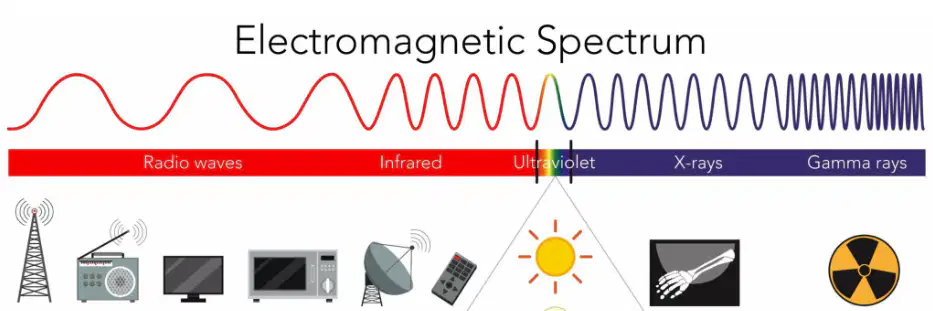
What wavelength of radiation has the longest wavelength? What color of visible light has the longest wavelength?
Gamma rays; Violet
Radio waves; Red
Ultraviolet; Green
Infrared; Blue
The difference between all of the different forms of radiation on the electromagnetic spectrum is:
Their wavelengths
Their atomic numbers
Their chemical composition
Their mass
Which of the following lists the main gases in Earth’s atmosphere along with their approximate percentages?
Nitrogen (78%), Oxygen (21%), Argon (0.93%), Carbon Dioxide (0.04%)
Oxygen (50%), Nitrogen (30%), Carbon Dioxide (10%), Argon (10%)
Nitrogen (60%), Oxygen (30%), Argon (5%), Carbon Dioxide (5%)
Oxygen (78%), Nitrogen (21%), Argon (0.04%), Carbon Dioxide (0.93%)
The purpose of Earth’s atmosphere is:
To provide oxygen and protect life on Earth
To generate earthquakes
To create mountains
To produce electricity
Which of the following best describes the appearance of molecules of oxygen, ozone, carbon dioxide, and methane?
Oxygen is O2 (two atoms), ozone is O3 (three atoms), carbon dioxide is CO2 (one carbon and two oxygens), and methane is CH4 (one carbon and four hydrogens).
Oxygen is O3, ozone is O2, carbon dioxide is CH4, and methane is CO2.
Oxygen is a single atom, ozone is two atoms, carbon dioxide is three carbons, and methane is two carbons.
Oxygen and ozone are the same, carbon dioxide and methane are the same.
Where do you find objects with different densities in a beaker of water?
At the same level
At different levels
Only at the bottom
Only at the top

