
Font size
 Worksheets
Final Exam Review Packet - Multiple Choice: Plants
Total questions: 96
Worksheet time: 48mins
Which of the following is TRUE in the alternation of generations?
Meiosis produces 2n spores
Meiosis produces 1n spores
Fertilization produces a 1n zygote
Fertilization produces a 2n spore
None of the above
Which of the following is incorrectly matched with its definition?
Lateral meristem: include vascular cambium and cork cambium
Intercalary meristem: found at the base of internodes in monocot shoots
Secondary growth: growth in a radial direction
Polar nuclei: a 3n structure found in the ovule of plants
None of the above
Which of the following is NOT a characteristic shared with plants and algae (charophyceans)?
Photosynthetic
Multicellular
Stomata
Cellulose cell walls
Chlorophyll a and b
Which of the following is not a seedless nonvascular plant?
Liverworts
Hornworts
Mosses
Lycophytes
None of the above
Which of the following are seedless vascular plants?
Lycophytes and Monilophytes
Monilophytes and Bryophytes
Bryophytes and Lycophytes
Lycophytes and Anthophyta
Anthophyta and Coniferophyta
Which of the following phyla only has one species?
Anthophyta
Coniferophyta
Ginkgophyta
Gnetophyta
Anthocerophyta
Which of the following is incorrectly matched with its definition?
Gametophyte: haploid multicellular organism
Sporophyte: diploid multicellular organism
Antheridia: sperm
Microphyll: branched vascular tissue
None of the above
Which of the following is incorrectly matched with its definition?
Megaspores: produce a female gametophyte (eggs)
Microspores: produce a male gametophyte (sperm)
Homosporous spore production: produces only one kind of spore that is not bisexual
Heterosporous spore production: produces two different kinds of spores
None of the above
Which of the following are not lycophytes?
Quillworts
Club Moss
Horsetails
None of the above
For the following questions (10-13), choose the best answer about which generation is the dominant generation. 10. Mosses’s dominant generation is the…
Gametophyte generation
Sporophyte generation
Angiosperm’s dominant generation is the…
Gametophyte generation
Sporophyte generation
Fern’s dominant generation is the…
Gametophyte generation
Sporophyte generation
Gymnosperm’s dominant generation is the…
Gametophyte generation
Sporophyte generation
Which of the following is NOT a derived characteristic of seed plants?
Pollen grains
Heterospory
Reduced gametophytes
Dominant gametophytes
None of the above
The stamen includes all but which of the following structures?
Anther
Stigma
Filament
None of the above
All but which of the following are true about the xylem?
Transports water and minerals
Contains sieve-tube members
Contains tracheids
Secondary xylem is also known as wood
Which of the following is TRUE?
Monocot stems have a pith
Dicot roots have a pith
Monocot roots do not have a pith
Dicot stems have a pith
Which of the following is not a characteristic of a xerophyte plant leaf?
Thick cuticle
Numerous trichomes
Sunken stomata
Multilayered epidermis
Decreased xylem
Which of the following is true for eudicots?
They contain parallel leaf veins
They have a fibrous root system
Have vascular cambium and cork cambium for secondary growth
One cotyledon
None of the above
Which of the following is true?
The ovule in the female gametophyte contains 7 cells but 8 nuclei
Microsporangium produce microspores that are 2n
Microsporocytes produce 2 microspores
Mitosis creates a megaspore from an ovule
None of the above
Which meristem gives rise to primary growth in monocot shoots?
Lateral meristem
Vascular cambium
Apical meristem
Intercalary meristem
Which tissue gives rise to the outer bark in woody plants?
Vascular cambium
Cork cambium
Apical meristem
Ground tissue
In a gymnosperm seed, to which generation does the food source belong?
Sporophyte generation
Gametophyte generation
Megaspore generation
Pollen generation
In a gymnosperm seed, to which generation does the integument belong?
Sporophyte generation
Gametophyte generation
Microspore generation
Conifer generation
What is the arrangement of vascular tissue in the monocot stem?
Circle of vascular bundles surrounding a pith
Circle of vascular bundles within an endodermis
Central grouping of vascular tissue with X-shaped phloem
Scattered dispersal of vascular bundles
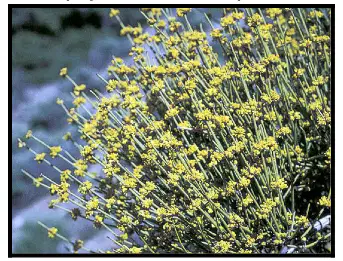
What phylum does this plant belong to?
Gnetophyta
Cycadophyta
Coniferophyta
Ginkgophyta
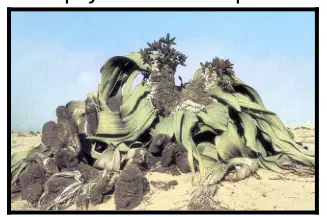
What phylum does this plant belong to?
Gnetophyta
Cycadophyta
Coniferophyta
Ginkgophyta
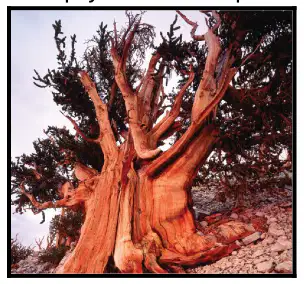
What phylum does this plant belong to?
Gnetophyta
Cycadophyta
Coniferophyta
Ginkgophyta
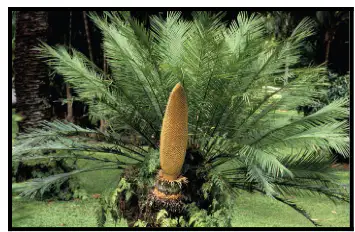
Identify the plant shown in the image:
Gnetophyta
Cycadophyta
Coniferophyta
Ginkgophyta
A plant germinates using a hypocotyl hook. The cotyledons:
Remain underground
Form the coleoptile
Emerge from the soil
Become the endosperm
What type of fruit is a raspberry?
Aggregate
Simple dry
Accessory
Multiple
What type of fruit is a pineapple?
Aggregate
Simple dry
Accessory
Multiple
What type of fruit is an apple?
Aggregate
Simple dry
Accessory
Multiple
After double fertilization, the central cell is __________ and the embryo is __________.
endosperm and the embryo is zygote.
zygote and the embryo is endosperm.
seed coat and the embryo is cotyledon.
cotyledon and the embryo is seed coat.
What is the male gametophyte of an angiosperm?
Microspore
Pollen grain
Anther
Stamen
The leaves of a monocot plant are:
Palmately compound
Sessile
Pinnately compound
Simple
What is the arrangement of vascular tissue in a dicot root?
Circle of vascular bundles surrounding a pith
Circle of vascular bundles within an endodermis
Central grouping of vascular tissue with X-shaped xylem
Scattered dispersal of vascular bundles
What type of roots do monocots have?
Taproot system
Apical meristems
Fibrous roots
Vascular cambium
Branch roots originate from the:
Pericycle
Endodermis
Pith
Intercalary meristem
Which of the following elements is a micronutrient?
Calcium
Magnesium
Manganese
Nitrogen
Mycorrhizal associations are associations between ________ and ________.
fungi and roots
bacteria and leaves
algae and stems
viruses and seeds
Which of the following should you do in order to grow a bushier shrub?
Spray it with gibberellins
Lay a ripe banana in the shrub to release ethylene gas
Apply auxin to its roots
Prune its apical buds
Palisade parenchyma is living ground tissue with thin cell walls, found just inside the upper leaf epidermis. What role is it best suited for?
Photosynthesis
Structural support
Gas exchange
Barrier against dehydration
Which of the following will increase water potential?
Addition of solutes to a solution
Evaporation from the surface of a solution
Physical compression of a solution
What is the primary benefit of double fertilization?
Allows the male plant to contribute both of his alleles for each gene to his offspring
Synchronizes the development of the embryo and its food source
Creates two separate embryos to give rise to independent root and shoot systems
In what environment would you expect to find a plant with large air pockets in its spongy mesophyll + stomata on the upper surface of its leaves?
Temperate deciduous forest
Arid desert with limited rainfall
Marsh with frequent flooding
Which statement about the alternation of generations life cycle is correct?
Haploid gametophytes give rise to gametes by meiosis
Diploid sporophytes give rise to gametes by meiosis
Haploid gametophytes give rise to spores by mitosis
Diploid sporophytes give rise to spores by meiosis
50. Which statement correctly describes a monocot seed?
It has one cotyledon.
It has two cotyledons.
It has three cotyledons.
It has no cotyledons.
Which of the following is a characteristic of monocot seeds?
Transfers nutrients from the endosperm to cotyledons before entering dormancy
Hypocotyl forms a hook that emerges from the soil prior to the shoot tip
Uses a coleoptile sheath to protect the emerging shoot
Contains a pair of cotyledons, or embryonic leaves
Which is a feature of all dicot species?
Leaves exhibit parallel venation
Root vascular tissue forms a central ring around a pith
Stem vascular tissue forms a peripheral ring
Floral parts develop in multiples of three
In what environment would you expect to find a plant with a thick, waxy epidermis and sunken stomata on the underside of its leaves?
Temperate deciduous forest
Arid desert with limited rainfall
Marsh with frequent flooding
Which of the following events would cause the stomata to close?
Low internal concentration of CO2
Water loss
High internal concentration of CO2
B and C
What is the role of auxin in the acid growth hypothesis?
Auxin directly binds to expansins, which cleave cellulose crosslinks
Auxin promotes water uptake by the cell, increasing its size
Auxin stimulates H+ pumps, making the cell wall acidic
Auxin directly releases protons into the cell wall, making it acidic
How would a root obtain a molecule of sulfate (SO42-) from soil?
Absorb along with water
Form a mutualism with bacteria
Release H+ ions to displace ions from soil particles
None of the above
How would a root obtain a molecule of magnesium (Mg2+) from soil?
Absorb along with water
Release oxygen to attract Mg2+
Convert Mg2+ to Mg metal before absorption
Absorb only during photosynthesis
In flowers, which part of the carpel is haploid/part of the gametophyte generation?
Stigma
Embryo sac
Ovule
Ovary
In flowers, which part of the stamen is haploid/part of the gametophyte generation?
Anther
Filament
Microsporocyte
Pollen grain
What is the major difference between mosses and other plant groups?
Flagellated sperm
Release of spores from sporangia
Antheridia and archegonia on gametophyte
Lack of xylem and phloem
What is the main difference between the kingdoms Animalia and Fungi?
Fungi are autotrophs, and animals are heterotrophs
Animals typically ingest and then digest food, while fungi do not
Fungi have the ability to reproduce asexually, and animals do not
Animals are multicellular, and fungi are not
Which of the following is not a feature that all animals possess?
Animals have nervous tissue
Animals are multicellular
Animals are heterotrophs
Animals are eukaryotes
64. A hydra is:
a unicellular organism
a multicellular organism
a type of fungus
a type of algae
Which of the following best describes the symmetry of the organism?
Asymmetrical
Radially symmetrical
Bilaterally symmetrical
Choanoflagellates are:
Early animals
Protists
Prokaryotes
Protostomes
Collar cells
In what environment can sponges be found?
Tidal zones
Ocean floor
Lakes
All of the above
A and B
How can sponges reproduce?
A, B, and C
Sexually
Fragmentation
Budding
Regeneration
What sponge cell type is responsible for digesting and distributing material?
Collar cells
Spicules
Amoebocytes
Gemmules
Can a diploblastic animal, such as a cnidarian, have a coelom?
Yes, diploblasts have body cavities
No, diploblasts do not have mesoderm-lined body cavities
Yes, diploblasts have mesoderm-lined body cavities
No, diploblasts do not have body cavities
Coral and anemones only exist in the ____________ stage.
c. Polyp
a. Medusa
b. Larva
d. Adult
What method of reproduction do gastropods use?
Gastropods are hermaphroditic
Gastropods use internal fertilization
Gastropods use external fertilization
All of the above
Animals produce gamete cells through mitosis.
True
False
Physiology is the study of how animals work.
True
False
Which of the following is NOT a defining characteristic of animals?
Lack cell walls
Have Hox genes
Lack structural proteins
Possess nervous and muscular tissue
What is the name of the step in the animal developmental process in which the different layers of embryonic tissues form?
Blastula
Gastrulation
Gastrula
Cleavage
What are the germ layers found in a triploblastic animal?
Endoderm
Ectoderm
Mesoderm
All of the above
A and B only
What are the germ layers found in a diploblastic animal?
Endoderm and ectoderm
Endoderm and mesoderm
Ectoderm and mesoderm
Endoderm, mesoderm, and ectoderm
You find an organism in the wild and need to determine what it is. After careful observation you find that it is multicellular, ingests and digests its food, stationary and lacks cell walls. Is it an animal?
Yes, All of the characteristics of the unknown organism match to the animalia kingdom
No, animals are absorptive
No, Animals must move at some point in their life cycle
No, animals have a cell wall
You do not have enough information to determine what kingdom this organism belongs to.
You find another organism in the wild and need to determine what it is. After careful observation you find that it is multicellular, heterotrophic and has a digestive track. Is it an animal?
Yes, it is possible, the characteristic processed by this organism are found in the animal kingdom
No, animals are not heterotopic
No, not all animals can digest their food
No, some animals are multicellular
You do not have enough information to determine what kingdom this organism belongs to.
What type of development do rotifers exhibit?
Spiral and determinate
Spiral and indeterminate
Radial and determinate
Radial and indeterminate
None of the above
Which phylum consists of coelomates?
Porifera
Rotifera
Cnidaria
Mollusca
Platyhelminthes
Cnidaria and Platyhelminthes differ in which of the following ways?
Cnidaria have radial symmetry, while Platyhelminthes have bilateral symmetry.
Both have bilateral symmetry.
Platyhelminthes have stinging cells, while Cnidaria do not.
Both have radial symmetry.
How do Sponges and Platyhelminthes differ?
Body cavity
Symmetry
Germ layers
Development
All of the above
How do Rotifera and Mollusca differ?
Body cavity
Symmetry
Germ layers
Development
All of the above
Which feature is unique to cephalopods among molluscs and supports a predatory lifestyle?
Muscular appendages
Visceral mass
Closed circulatory system
Toothy radula
Members of which of the following animal groups have only an open circulatory system that transports hemolymph?
Arthropoda
Annelida
Nematoda
A and C
All of the above
In which environment can an animal be an osmoconformer?
Freshwater
Marine
Terrestrial
Throughout the amphibian life cycle, how do habitat and respiratory tissues change?
They remain the same from larva to adult.
Larvae live in water and use gills; adults live on land and use lungs/skin.
Both larvae and adults use only lungs.
Larvae live on land and use lungs; adults live in water and use gills.
The keratin in our skin is an adaptation to conserve water in a terrestrial habitat. In which invertebrate phylum has a similarly impermeable exterior enhanced evolutionary success?
Mollusca
Annelida
Arthropoda
Echinodermata
In which group does an animal with a hard exoskeleton, antennae, 3 pairs of legs, and a tracheal system belong?
Cheliceriformes
Crustacea
Hexapoda
Myriapoda
Which cell type will be found in high numbers in the defensive polyps of a hydrozoan colony?
Contractile cells
Nerve cells
Cnidocyte cells
Gonad cells
Which germ layer typically forms muscle and connective tissue?
Ectoderm
Endoderm
Mesoderm
Archenteron
Which of the following is a difference between the plant and animal life cycles?
Animals have a single-celled haploid stage, plants have a multicellular haploid stage
Animals are multicellular eukaryotes as adults
Animals reproduce sexually
None of the above
List the three different types of leaves.
Simple, Compound, and Needle-like
Broad, Narrow, and Curved
Green, Yellow, and Red
Large, Small, and Medium
The three different types of leaves are:
Simple, Compound, and Needle-like
Broad, Narrow, and Round
Green, Yellow, and Red
Thick, Thin, and Curved
Which of the following lists the three different types of leaves and describes what xylem and phloem look like in all of these plants?
Simple, compound, needle-like; xylem and phloem appear as vascular bundles in all types.
Broad, narrow, lobed; xylem is only present in broad leaves.
Simple, compound, scale-like; phloem is absent in needle-like leaves.
Needle-like, scale-like, broad; xylem and phloem are only found in compound leaves.
The theory that causes water to move up the plant, and sugars down the plant, is known as:
Transpiration-cohesion theory
Pressure-flow hypothesis
Osmosis theory
Capillary action theory
What is the difference between symplastic flow and apoplastic flow?
Symplastic flow is regulated through a membrane, and then can travel cell to cell through plasmodesmata. Apoplastic flow is diffusion between the cell walls and the extracellular space between the cell walls.
Symplastic flow occurs only in animal cells, while apoplastic flow occurs only in plant cells.
Symplastic flow involves active transport, while apoplastic flow involves only passive transport.
Symplastic flow is movement through xylem vessels, while apoplastic flow is movement through phloem tubes.

