wayground logo

Free Printable Worksheets

Font size

S
M
L
XL
Worksheets

24-25 BMS Biology Semester 1 Review

Total questions: 91

Worksheet time: 2hrs 18mins

Name
Class
Date
1.

Cellular Respiration occurs in what cell organelle?

a)

chloroplast

b)

cytoplasm

c)

mitochondria

d)

animal

2.

Cellular Respiration release energy.

a)

True

b)

False

3.

6CO2 + 6H20 + energy ------> C6H12O6 + 6O2 is the equation for ?

a)

Cellular Respiration

b)

Photosynthesis

4.

The reactants in cellular respiration are ?

a)

6C02 and 6H2O

b)

C6H12O6 and 6O2

5.

The products of photosynthesis are ?

a)

C6H12O6 and 6O2

b)

6CO2 and 6H2O

6.
What are the products of photosynthesis?
a)
water and carbon dioxide
b)
oxygen and glucose
c)
oxygen and carbon dioxide
d)
oxygen and water
7.
What is the organelle that contains the chlorophyll used in photosynthesis ?
a)
mitochondria
b)
ribosome
c)
chloroplast
d)
nucleus
8.
The purpose of photosynthesis is ...
a)
to make glucose
b)
to break glucose
c)
to capture energy from the sun
d)
to change carbon dioxide
9.
The purpose of cellular respiration is to
a)
make glucose
b)
break glucose
c)
capture the energy in sunlight
d)
change carbon dioxide
10.
How are photosynthesis and cellular respiration related?
a)
They have opposite equations
b)
they have the same equation
c)
they both produce carbon dioxide
d)
they both produce oxygen
11.
What are the products in cellular respiration?
a)
water and carbon dioxide
b)
water and glucose
c)
carbon dioxide and oxygen
d)
glucose and oxygen
12.
ATP is...
a)
A form of energy the cell can use that is produced by cellular respiration
b)
A kind of sugar produced in photosynthesis
c)
A battery
13.

Which organelle holds the DNA?

a)

Nucleus

b)

Cell membrane

c)

Cell wall

d)

Mitochondria

14.

Which organelle allows things into and out of the cell?

a)

Mitochondria

b)

Ribosome

c)

Cell membrane

d)

Cell wall

15.

Which organelle gives the cell structure and support?

a)

Vacuole

b)

Cell wall

c)

Nucleus

d)

Chloroplast

16.

Which organelle stores water?

a)

Vacuole

b)

Mitochondria

c)

Chloroplast

d)

Ribosome

17.

Which organelle is responsible for the process of photosynthesis?

a)

Ribosome

b)

Chloroplast

c)

Cell membrane

d)

Cell wall

18.

Which organelle makes ATP (energy)?

a)

Cell membrane

b)

Cell wall

c)

Mitochondria

d)

Ribosome

19.

Which organelle is larger in plants than in animals?

a)

Vacuole

b)

Mitochondria

c)

Chloroplast

d)

Nucleus

20.

What organelle is present in all cells?

a)

Cell membrane

b)

Cell wall

c)

Mitochondria

d)

Chloroplast

21.

Which organelle is found only in plant cells?

a)

Cell wall

b)

DNA

c)

Cell membrane

d)

Chloroplast

22.

Which of the following types of cells DO NOT have a nucleus?

a)

Prokaryotes

b)

Eukaryotes

c)

Plants

d)

Animals

23.

Prokaryotes are always...

a)

Plants

b)

Animals

c)

Bacteria

d)

Eukaryotes

24.

The diffusion of WATER across a selectively permeably membrane is called

a)

Osmotic pressure

b)

Osmosis

c)

Pinocytosis

d)

Active Transport

25.

Which means of particle transport requires input of energy from the cell?

a)

Diffusion

b)

Osmosis

c)

Facilitated diffusion

d)

Active Transport

26.

Molecules moves from high to low concentration in ______.

a)

down hill racing

b)

up hill racing

c)

passive transport

d)

active transport

27.

Which is used in an active transport?

a)

ATP

b)

CAR

c)

CART

d)

ARTS

28.

Which type of transport does NOT require energy?

a)

osmosis

b)

passive transport

c)

diffusion

d)

All are correct

29.
A state of biological balance
a)
homeostasis
b)
hypertonic
c)
hypotonic
d)
hippocampus
30.
The picture is an example of...
a)
active tranport
b)
passive transport
c)
diffusion
d)
osmosis
31.

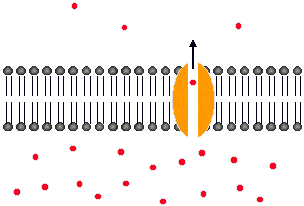
What is this an example of?

a)

Active Transport

b)

Exocytosis

c)

Passive Transport

d)

Easy Transport

32.
Equal percentage of solutes inside and out. 
Concentration of substances is the same. 
a)
hypotonic
b)
isotonic
c)
nucleus
d)
hypertonic
33.
Particles are too large to enter the membrane.
Need help from channel proteins. No energy required.
a)
active transport
b)
passive transport
c)
facilitated diffusion
d)
osmosis
34.
Engulfs large molecules and moves them inside the membrane.
Uses energy.
a)
exocytosis
b)
endocytosis
c)
protein channel 
d)
diffusion
35.
Engulfing a large substance from the inside of the cell to move it outside of the cell. 
Uses energy. 
a)
exocytosis
b)
endocytosis
c)
photosynthesis
d)
diffusion
36.
Cell is placed into a concentration of water that has the same makeup as the cell. The cell will 
a)
Explode
b)
Shrink
c)
Stay the same
d)
None of the above
37.
A cell in a hypotonic solution will
a)
swell
b)
shrink 
c)
stay the same size
d)
impossible to tell
38.
When a cell is placed in a hypertonic solution water
a)
moves from the inside of the cell to the solution
b)
moves from the solution to the inside of the cell
c)
moves equally in and out of the cell
d)
none of these
39.

Hydrophilic heads are water ​ (a)   , so it will arrange on the ​ (b)   of the membrane.

Hydrophobic tails are water ​ (c)   , so it will arrange on the ​ (d)   of the membrane.

Choose from the below words
loving
outsides (in contact with water)
fearing
insides (hiding from the water)
40.

In active transport, the molecules are moving _____ its concentration gradient.

a)

with

b)

against

c)

both against and with

41.
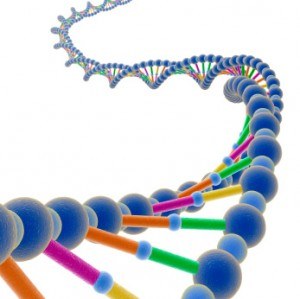
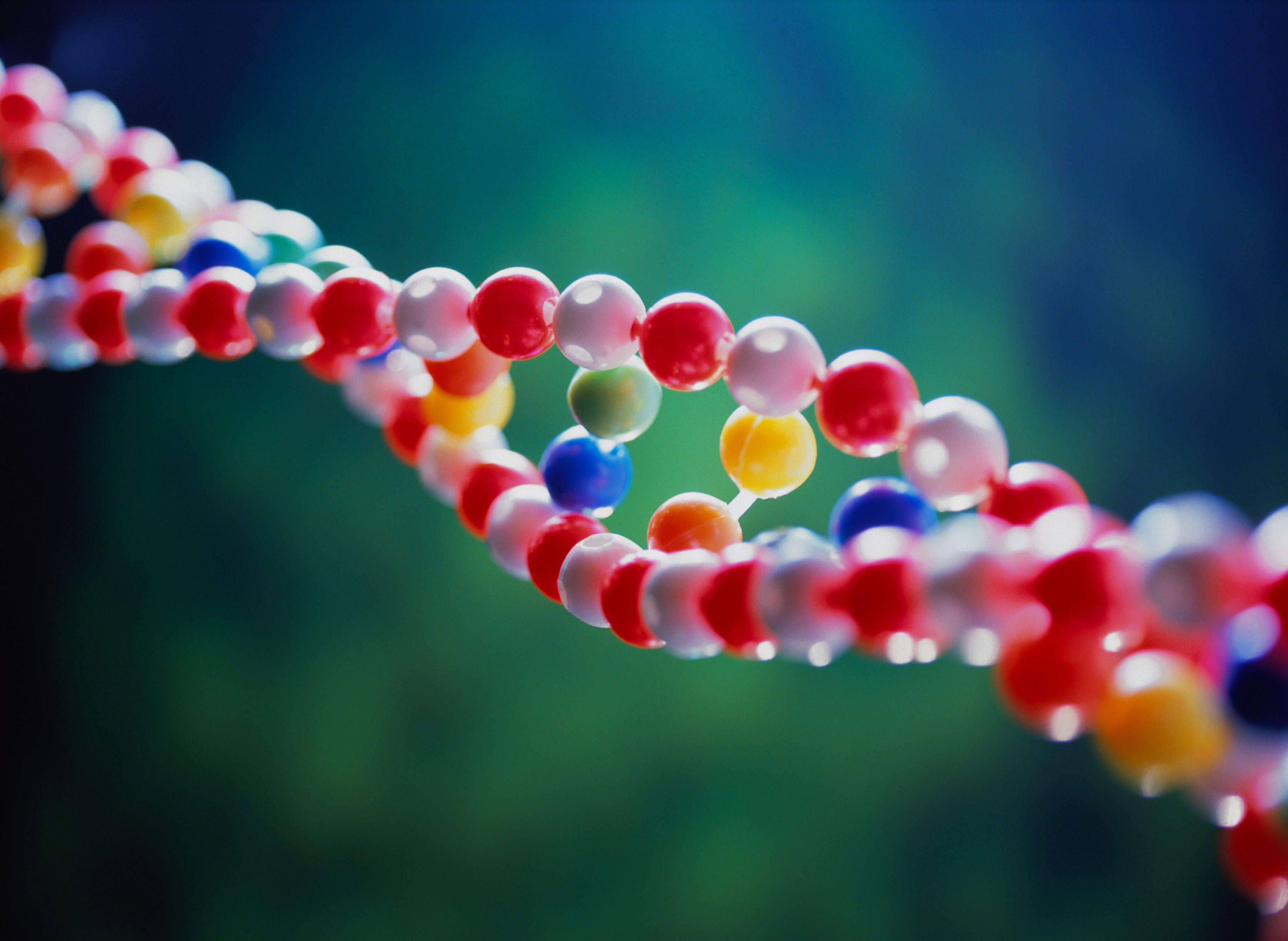
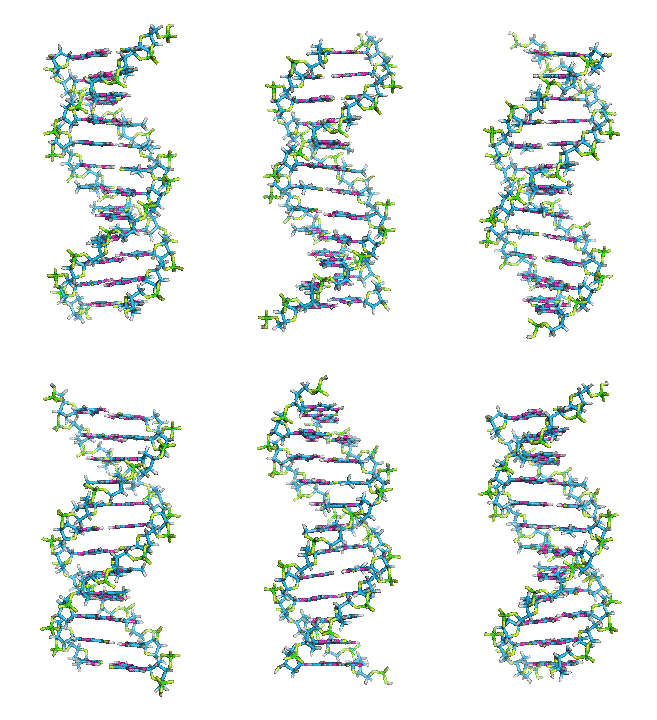
Which of the following best describes a DNA molecule?
a)
double helix
b)
contains ribose
c)
made of amino acids
d)
contains Uracil
42.
Why is DNA important?
a)
it is very small and very complicated
b)
it's in everything
c)
it serves as the blueprint for traits of all living things
d)
because we eat it every day for energy
43.
Which 2 molecules form the sides (backbone) of the DNA ladder?
a)
deoxyribose sugar and adenine
b)
deoxyribose sugar and a hydrogen bond
c)
deoxyribose sugar and the nucleus
d)
deoxyribose sugar and phosphate
44.
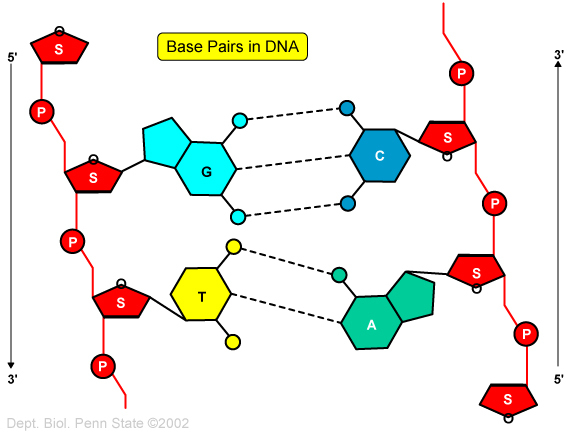
Nitrogenous bases are joined by which type of bond?
a)
polar bonds
b)
ionic bonds
c)
covalent bonds
d)
hydrogen bonds
45.
What are the three components of a nucleotide?
a)
sugar, hydrogen, nitrogen base
b)
sugar, oxygen, nitrogen base
c)
sugar, phosphate, nitrogen base
d)
sugar, phosphate, protein
46.
Cytosine always pairs with
a)
Adenine
b)
Thymine
c)
Uracil
d)
Guanine
47.
Guanine bonds with ______________.
a)
Adenine
b)
Guanine
c)
Cytosine
d)
Thymine
48.
What is the complement to the DNA strand below:
5'-ATGCCAT-3'
a)
5'-TACGGTA-3'
b)
3'-TACGGTA-5'
c)
3'-ATGGCAT-5'
d)
5'-ATGGCAT-3'
49.
What is the significance of the sequence (order) of the Nitrogen Bases in DNA?
a)
The order of the Nitrogen Bases determines the number of chromosomes present in an organism.
b)
The order of the Nitrogen Bases determines the traits that an organism will possess (have).
c)
The order of the Nitrogen Bases determines the gender of an organism.
d)
The order of the Nitrogen Bases determines whether an organism is abiotic biotic.
50.

Label the Nucleotide

51.
Which sequence of DNA bases would pair with this partial strand
ATG TGA CAG
a)
ATG TGA CAG
b)
TAC ACT GTC
c)
GTA AGT GAC
d)
CAT TCA CTG
52.
DNA replication results in two DNA molecules,
a)
each one with two original strands
b)
each one with two new strands
c)
each one with one new strand and one original strand
d)
one with two new strands and the other with two original strands
53.
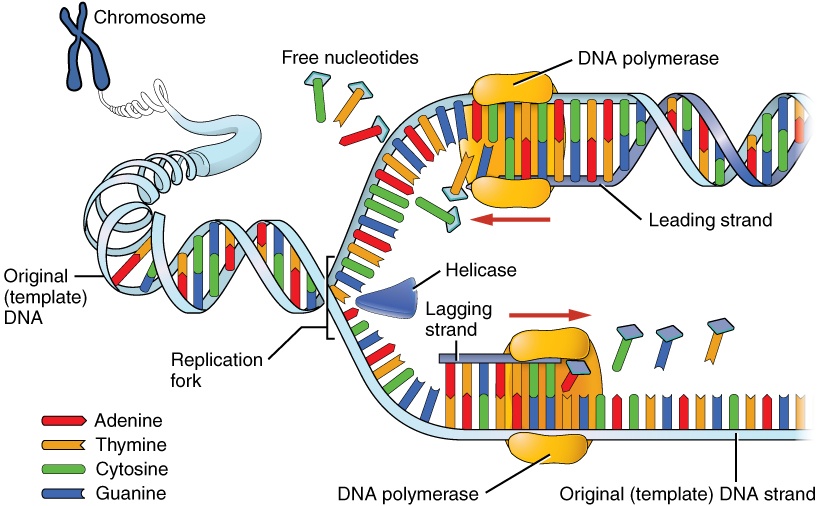
Which enzyme is responsible for adding nucleotides ("The Builder")?
a)
Topoisomerase
b)
DNA Polymerase
c)
Ligase
d)
Primase
54.
Why is it crucial that living things are able to replicate their DNA?
a)
Each cell must have its own DNA
b)
Less copies of DNA are needed when a new cell is created
c)
A cell needs multiple copies of DNA
d)
Only muscle cells need DNA 
55.
The DNA is found in the nucleus of what type of organisms?
a)
Bacteria
b)
Eukaryotes
c)
Prokaryotes
d)
Viruses
56.

The two strands of DNA are

a)

Parallel

b)

Antiparallel

c)

Perpendicular

d)

At Right Angles

57.

DNA polymerase moves in the _________ to ____________ direction

a)

3' to 5'

b)

easiest

c)

5" to 3"

d)

9 to 5

58.

Enzyme that connects the DNA to the backbone (glues)

a)

Ligase

b)

Polymerase

c)

Helicase

d)

Primase

59.

Enzyme that breaks hydrogen bonds (unzips)

a)

Ligase

b)

Polymerase

c)

Primase

d)

Helicase

60.
Which biomolecule is this a picture of? (Hint: it is made of amino acids)
a)
Proteins
b)
Nucleic Acids
c)
Lipids
d)
Carbohydrates
61.
Which biomolecule is made of nucleotides and include your DNA? (Hint: they carry genetic information)
a)
Carbohydrate
b)
Lipids
c)
Protein
d)
Nucleic Acid
62.
Which biomolecule is responsible for insulation and LONG term energy storage?
a)
Proteins
b)
Nucleic Acids
c)
Lipids
d)
Carbohydrates
63.
Which biomolecule group includes fats, oils, and waxes?
a)
Proteins
b)
Nucleic Acid
c)
Lipids
d)
Carbohydrate
64.
The monomer (building block) of a nucleic acid is
a)
Monosaccharide
b)
Amino Acid
c)
Nucleotide
d)
Polysaccharide
65.
ALL polymers (large molecules) are made up of...
a)
monosaccharides
b)
monomers
c)
proteins
d)
None of these
66.
Which of the following is NOT a biomolecule?
a)
Water
b)
Nucleic Acid
c)
Protein
d)
Lipid
67.
Lipids can be digested into what smaller subunits?
a)
nucleic acids
b)
amino acids
c)
fatty acids
d)
glucose
68.
What is the function of nucleic acids?
a)
Stores energy
b)
Stores genetic information
c)
Movement
d)
Physical structure
69.
Which biomolecule is made of amino acids?
a)
Nucleic Acid
b)
Carbohydrate
c)
Protein
d)
Lipid
70.
Which biomolecule is your main source of quick energy?
a)
Nucleic Acid
b)
Protein
c)
Lipid
d)
Carbohydrate
71.
Which biomolecule is your main source of quick energy?
a)
Nucleic Acid
b)
Protein
c)
Lipid
d)
Carbohydrate
72.

What part of a virus houses the genetic material (DNA/RNA)?

a)

tail

b)

nucleus

c)

capsid

d)

lipid

73.
All viruses contain-
a)
nucleic acids
b)
ribosomes
c)
mitochondria
d)
cytoplasm
74.
Which best describes the basic structure of a virus?
a)
nucleic acid strand surrounded by a protein coat
b)
a tail surrounded by a protein coat
c)
a tail surrounded by a carbohydrate coat
d)
nucleic acid strand surrounded by a carbohydrate coat
75.
Which statement regarding viruses is true?
a)
a virus can only reproduce inside of a living cell
b)
viruses do not contain DNA
c)
viruses are unicellular
d)
viruses are generally larger than cells
76.

What are some reasons that viruses are considered to be nonliving?

a)

They are not cellular

b)

They cannot reproduce on their own

c)

They cannot make proteins

d)

all of the above

77.
Viruses are cells. 
a)
True 
b)
False
78.

Which of these are viruses?

a)
b)
c)
d)
79.
The basic unit of structure and function in the human body is the....
a)
organ
b)
organ system
c)
cell
d)
tissue
80.

A plant growing towards a light source is an example of which of the following?

a)

attracting a mate

b)

destroying infectious germs

c)

responding to a stimuli

d)

obtaining moisture from the air

81.

Choose the statement(s) TRUE for ALL organisms

a)

have cells

b)

can move

c)

grow or develop

d)

use sunlight to make food

e)

have features that help them respond and adapt

82.

Categorize the words or phrases based on whether they describe prokaryotes only, eukaryotes only, or can describe both prokaryotes and eukaryotes.

Categorize the following

lack a discrete nucleus

generally small (less than 2 um)

multicellular

have true nucleus

unicellular

DNA located in the cytoplasm

genetic material

membrane-bound organelles

ribosomes

plasma membrane

has a greater amount of DNA than the other type of cell.

DNA is located in the nucleus

DNA is contained in multiple chromosomes

DNA is contained in one circular chromosome

Prokaryotes
Eukaryotes
Both
83.

Select all of the items that are found in both eukaryotic and prokaryotic cells.

a)

DNA

b)

mitochondria

c)

cell membrane

d)

nucleic acids

e)

ribosomes

84.
Which type of cell?
a)
Prokaryote
b)
Eukaryote
85.
Which type of cell?
a)
Prokaryote
b)
Eukaryote
86.
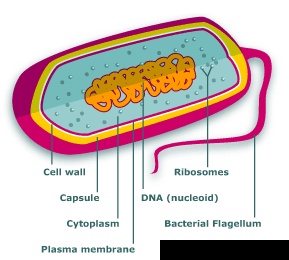
Where is the DNA found in a prokaryotic cell? 
a)
floating around in the cytoplasm 
b)
in the nucleus 
c)
in the ribosomes
d)
attached to the cell membrane
87.
DNA molecule segment is : TTACGCAAG
The mutated DNA segment is TTCGCAAG. This is an example of ___ mutation.
a)
Substitution
b)
Deletion
c)
Insertion
d)
Inversion
88.
Normal-
GAG-CTC-GAC-AGA
Mutant
GAG CTC-CAC-AGA
a)
no mutation
b)
substitution
c)
insertion
d)
deletion
89.
Original: ATC CAT
Mutation: ATC GCAT
What mutation occurred?
a)
deletion
b)
insertion
c)
silent
d)
transverse
90.
What is the definition of DNA mutation? 
a)
The original DNA strand
b)
The strand with four pairs 
c)
A change in the DNA strand
d)
The strand in a double helix 
91.

Original DNA: CAT GAT CCA

New DNA: CAT TGA TCC A

What mutation occurred? (one has been added)

a)

deletion

b)

substitution

c)

tranverse

d)

insertion