wayground logo

Free Printable Worksheets

Font size

S
M
L
XL
Worksheets

Meiosis

Total questions: 86

Worksheet time: 1hrs 1mins

Name
Class
Date
1.
The cells produced via meiosis are called:
a)
sex cells
b)
somatic cells
c)
body cells
d)
skin cells
2.

A human usually has xx amount of chromosomes.

a)

6

b)

23

c)

4

d)

46

e)

92

3.
This produces 2 identical cells.
a)
mitosis
b)
meiosis
4.
What phase is  shown in the picture?
a)
anaphase 1
b)
anaphase 2
c)
metaphase 1
d)
telophase 1
5.
Meiosis makes sperm and egg cells. In humans, sperm and egg cells each have _____ chromosomes. Therefore a fertilized human egg cell (sperm and egg cell combined) would create a cell with _____ chromosomes.
a)
23, 46
b)
46, 23
c)
2, 4
d)
50, 100
6.
What causes genetic variation in meiosis?
a)
chromosomes lining up
b)
crossing over of chromosomes
c)
separation of chromosomes
d)
chromosomes pulling apart
7.
Goes through P.M.A.T two rounds 
a)
Mitosis
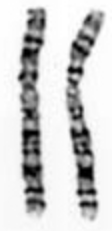
b)
Meiosis
c)
Osmosis
d)
Transcription
8.
If the Diploid number of Carrots is 18, the haploid number is
a)
18
b)
9
c)
27
d)
36
9.
If a somatic cell in a butterfly contains 24 chromosomes, a butterfly egg would contain
a)
3
b)
6
c)
12
d)
24
10.
When homologous chromosomes match up, they form a structure call a ___________.
a)
tetrad
b)
triad
c)
diploid
d)
gamete
11.
A male shark has 40 chromosomes in each of its sex cells. How many would be present in its body cells?
a)
20
b)
40
c)
80
d)
160
12.
Chromosomes exchange genetic material during 
a)
crossing over
b)
replication
c)
synthesis
d)
translation
13.
What kind of cells are made in MEIOSIS?
a)
Haploid cells
b)
Diploid Cells
c)
Skin Cells
d)
Liver Cells
14.
Diploid Cells are represented by
a)
2n
b)
n
c)
4n
d)
1/2 n
15.
What causes genetic variation in meiosis?
a)
chromosomes lining up
b)
crossing over of chromosomes
c)
separation of chromosomes
d)
chromosomes pulling apart
16.
If the Diploid number of Carrots is 18, the haploid number is
a)
18
b)
9
c)
27
d)
36
17.
The process of crossing over occurs in what phase of meiosis?
a)
anaphase 1
b)
prophase 1
c)
prophase 2
d)
telophase 1
18.
The chromosomes that pair up during meiosis, are called __________ chromosomes.  
a)
homozygous 
b)
asexual
c)
homologous
d)
genes
19.
When homologous chromosomes match up, they form a structure call a ___________.
a)
tetrad (pair of chromosomes, one from mom and one from dad)
b)
triad
c)
diploid
d)
quad (group of 4 replicated chromosomes, 2 from mom and 2 from dad)
20.
Crossing over creates
a)
male genotype
b)
genetic variation (differences)
c)
DNA replication
d)
mitosis
21.
Which cellular process is shown?
a)
meiosis
b)
endocytosis
c)
mitosis
d)
phagocytosis
22.
Which of the following best describes meiosis?
a)
It is carried out in all tissues theat require cell replacement
b)
It occurs only in cells in the reproductive structures of an organism
c)
It happens in all of the tissues except the brain and spinal cord
d)
It is the first stage of mitosis
23.
What phase is represented?
a)
metaphase 1
b)
metaphase 2
c)
anaphase 1
d)
anaphase 2
24.
What phase is  shown in the picture?
a)
metaphase 2
b)
anaphase 2
c)
metaphase 1
d)
telophase 1
25.
products of meiosis are genetically
a)
different
b)
identical
26.
A human zygote should have _____ chromosomes inside.
a)
46
b)
23
c)
92
d)
64
27.
Which of the following represents chromosome # during fertilization?
a)
n+n=2n
b)
n=n
c)
2n=n+n
d)
2n=2n
28.
How many daughter cells does Meiosis create?
a)
2
b)
4
c)
8
d)
1
29.
Identify the phase.
a)
Metaphase I
b)
Metaphase II
c)
Anaphase I
d)
Anaphase II
30.
Identify the process.
a)
Mitosis
b)
Meiosis I
c)
Meiosis II
d)
Interphase
31.
After meiosis II the daughter cells will contain ____ chromosomes if the original cell contained 78.
a)
78
b)
39
c)
23
d)
46
32.
Which of the following cells is a gamete?
a)
egg
b)
bone
c)
heart
d)
muscle
33.
The pair of chromosomes that contain the same genes (but may be coded differently) and are inherited from a male and female parent are termed ___.
a)
gametes
b)
alleles
c)
zygote
d)
homologs
34.
The fertilized egg is termed a/an _____.
a)
gamete
b)
allele
c)
homolog
d)
zygote
35.
In mitosis cells are genetically _______, but in meiosis cells are genetically ______.
a)
diverse, identical
b)
identical, diverse/different
36.

Is the following cell diploid or haploid?

a)

Diploid

b)

Haploid

37.
When does replication of chromosomes occur in animal cell meiosis?
a)
Before Meiosis I and Meiosis II
b)
Before Meiosis II Only
c)
Before Meiosis I Only
d)
During Prophase I and Prophase II
38.
Identify the phase.
a)
Telophase I
b)
Telophase II
c)
Metaphase I
d)
Metaphase II
39.
Meiosis is the _____.
a)
 nuclear division of gametes
b)
nuclear division of body cells
c)
division of body cells
d)
division of sex cells
40.
In sexual reproduction, chromosome reduction is necessary to ___.
a)
ensure that all offspring have the correct diploid number of chromosomes
b)
ensure that all offspring have the correct haploid number of chromosomes
c)
ensure that all daughter cells are identical
41.

1n indicates that the cell is ____.

a)

Diploid

b)

Haploid

42.

This type of asexual reproduction has the offspring growing off of the parent.

a)

Budding

b)

Regeneration

c)

Runner

d)

Binary Fission

43.

This type of asexual reproduction occurs when pieces of the parent divide to form new organisms.

a)

Regeneration

b)

Binary Fission

c)

Budding

d)

Runner

44.

Is this a normal human karyotype?

a)

YES

b)

NO

45.

Is this karyotype for a male or female?

a)

MALE

b)

FEMALE

46.

Mitosis makes sure that all daughter cells are _____.

a)

genetically identical, diploid

b)

genetically identical, haploid

c)

genetically diverse, diploid

d)

genetically diverse, haploid

47.

A human body (somatic) cell usually has how many chromosomes?

a)

6

b)

22

c)

4

d)

46

48.
Why do we need meiosis?
a)
To double the number of chromosomes going into sex cells
b)
To halve the number of chromosomes going into sex cells
c)
To triple the number of chromosomes going into sex cells
d)
To not change the number of chromosomes going into sex cells
49.
The result of meiosis is:
a)
two diploid cells
b)
two haploid cells
c)
four diploid cells
d)
four haploid cells
50.
What process, and which type of resulting cells are represented?
a)
mitosis, gametes
b)
mitosis, body cells
c)
meiosis, gametes
d)
meiosis, body cells
51.

The products of meiosis are genetically...

a)

different.

b)

identical.

52.
Human eggs and sperm are _____, and each has ____ chromosomes.
a)
diploid, 23
b)
diploid, 46
c)
haploid, 23
d)
haploid, 46
53.

How many daughter cells are produced from mitosis?

a)

10

b)

6

c)

4

d)

2

54.

Identify a purpose of meiosis. Select all that apply.

a)

Produce gametes for reproduction.

b)

Repair damaged or dead cells.

c)

Reduce the chromosome number.

d)

Growth of organisms from birth to adulthood.

55.

What are homologous chromosomes?

a)

Pairs of chromosomes with different genes on each.

b)

Pairs of chromosomes with the same genes on each.

c)

Pairs of chromosomes with no genes.

d)

Pairs of chromosomes with the wrong genes on each.

56.
Determine the sex of the individual whose karyotype is displayed in the image.
a)
female
b)
male
57.
When chromosomes fail to separate correctly during anaphase of meiosis, what can occur?
a)
extra chromosomes are found in the sex cell
b)
chromosomes of the sex cell are doubled
c)
chromosomes of the sex cell are halved
d)
meiosis never completes
58.
Nondisjunction can result in 
a)
trisomy conditions
b)
monosomy conditions
c)
additional sex chromosomes
d)
all of these
59.
A pair of identical chromosomes shown in a karyotype, one inherited from mom, and one inherited from dad are called
a)
sister chromotids
b)
centromeres
c)
homologous chromosomes
d)
autosomes
60.
A sperm contains
a)
Both an X and a Y chromosome
b)
Two X chromosomes
c)
An X OR a Y chromosome
d)
only a Y chromosome
61.
An egg contains
a)
22 autosomes and an X chromosome
b)
22 autosomes and an Y chromosome
c)
44 autosomes and 2 X chromosomes
d)
44 autosomes and an X and a Y chromosome
62.
What makes this individual's karyotype not normal?
a)
An extra sex chromosome
b)
An extra autosome
c)
A missing sex chromosome
d)
A missing autosome
63.
What is the sex of this individual?
a)
female
b)
male
64.
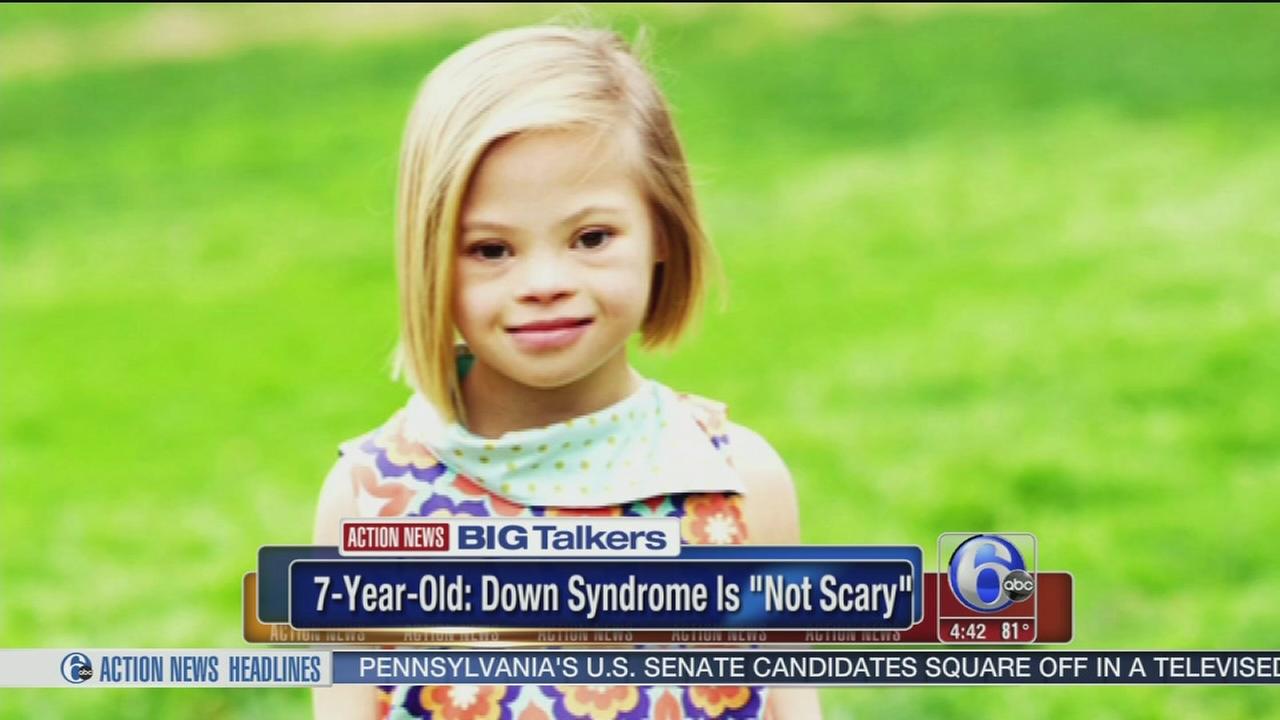
Down's syndrome occurs because of a(n)
a)
missing sex chromosome
b)
extra sex chromosome
c)
additional 21st chromosome
d)
additional 18th chromosome
65.
Turner's Syndrome has a karyotype notation of
a)
47XX+21
b)
47XXY
c)
45XO
d)
44XX
66.
Klinefelter's Syndrome has the karyotype notation of 
a)
47XX+21
b)
47XXY
c)
45XO
d)
44XX
67.
Chromosome pairs 1-22 are referred to as
a)
sex chromosomes
b)
sister chromatids
c)
a karyotype
d)
autsomes
68.
Which would be considered a somatic cell?
a)
Sperm cell
b)
Egg Cell
c)
Skin Cell
d)
All of these
69.
A diploid cell of a normal male human contains 
a)
22 autosomes and two Y-chromosomes.
b)
22 pairs of autosomes and two Y-chromosomes.
c)
22 pairs of autosomes, one X and one Y-chromosome
d)
22 autosomes and two X-chromosomes
70.
In humans, mitosis produces____ chromosomes and _____ chromosomes after Meiosis
a)
46, 46
b)
92, 46
c)
46, 23
d)
23, 23
71.
What chromosome is affected by Down's Syndrome?
a)
23
b)
18
c)
13
d)
21
72.
Which of the following would be considered a Gamete cell?
a)
Egg Cell
b)
Sperm Cell
c)
Both of these
d)
None of these
73.
A person with Turner syndrome has only one X chromosome. This means one of their gametes was missing a chromosome.
Which of the following is why gametes sometimes lack a complete chromosome?
a)
Incomplete dominance
b)
Nondisjunction
c)
Inversion mutation
d)
Substitution mutation
74.
Meiosis goes through _______________.
a)
PMAT twice.
b)
PMAT four times.
c)
Nondisjunction twice.
d)
Nondisjunction four times.
75.

How many pairs of homologous chromosomes are found in each (body) cell?

a)

46

b)

23

c)

72

d)

10

76.

Which chromosomes are shown in the image?

a)

Sex Chromosomes

b)

Autosomes

c)

Trisomy

d)

Monosomy

77.

A karyotype is:

a)

A tool scientists use to analyze chromosomes

b)

A tool scientists use to predict the potential genotypes / phenotypes of offspring

c)

A tool scientist use to identify genes in the human genome

d)

A tool scientists use to identify criminals & find relatives

78.

Identify the tool in the image:

a)

Karyotype

b)

Gel Electrophoresis

c)

DNA Fingerprint

d)

Gene Analysis

79.

XX

a)

Female

b)

Male

80.

XY

a)

Female

b)

Male

81.

This person's sex is:

a)

Female

b)

Male

82.

SELECT ALL THAT APPLY: Sex Chromosomes:

a)

Pair #23

b)

Determine whether you're male / female

c)

Pairs #1-22

d)

Every chromosome except sex chromosomes

83.

Trisomy:

a)

Missing 1 chromosome

b)

3 chromosomes (instead of a pair)

c)

Chromosomes are normal

84.

Monosomy:

a)

Missing 1 chromosome

b)

3 chromosomes (instead of a pair)

c)

Chromosomes are normal

85.

SELECT ALL THAT APPLY:

a)

Male

b)

Female

c)

No chromosomal abnormalities

d)

Trisomy 21

86.

SELECT ALL THAT APPLY:

a)

Male

b)

Female

c)

No chromosomal abnormalities

d)

Trisomy 21