
 Worksheets
Classification and Evolution
Total questions: 96
Worksheet time: 5hrs 39mins
What is binomial nomenclature?
system of 3 names
system of 2 names
the names of the kingdoms
the levels of classification
Who created the 2 name system?
Linnaeus
Edison
Darwin
Einstein
The 3 domains are Eukarya, Archaea, and
Fungi
Plantae
Animalia
Bacteria
What two levels make up a scientific name?
genus and order
genus and species
domain and kingdom
family and genus
What level comes after order?
genus
kingdom
family
species
What level comes before class?
phylum
domain
order
family
The _________ levels that 2 organisms share, the more similar they are to each other.
fewer
more
The 4 eukaryote kingdoms are Animals, Plants, Fungi, and
Bacteria
Archaea
Humans
Protists
All living things are made of
cells
prokaryotes
autotrophs
heterotrophs
Scientists place organisms into domains and kingdoms based on cell type, number of cells, and
if they are able to grow.
if they drink water.
if they have the ability to make food.
if they are able to move.
Where are bacteria found
in very few places
only in the air
all over the place
only in cow intestines
Which of these is a fungus?
bacteria
mushroom
algae
seaweed
What is the study of classification?
taxonomy
biology
botany
microbiology
What is a prokaryote?
an organism that has nuclei in its cells
an autotroph
a heterotroph
an organism without a nucleus in its cells
Which of these is a eukaryote?
bacteria living in your digestive system
archaea
bacteria living in food
mold
A heterotroph
cannot make its own food.
is able to make its food.
Which of these is an autotroph?
mushroom
rose
seal
tiger
What is the correct order of classification?family
kingdom, domain, phylum, class, order, family, genus, species
domain, kingdom, phylum, class, order, family, genus, species
domain, phylum, class, order, kingdom, family, genus, species
species, genus, family, phylum, order, class, domain, kingdom
What is the proper way to write a scientific name?
Symbion pandora
Symbion Pandora
symbion Pandora
symbion pandora
Which kingdom has the following characteristics: prokaryote, unicellular, autotroph, heterotroph, or chemotroph, found in extreme habitats
archaebacteria
eubacteria
protist
fungi
plant
Which kingdom has the following characteristics:
prokaryote, unicellular, autotroph or heterotroph, found everywhere, can help or harm other organisms
Archaebacteria
Eubacteria
Protist
Fungi
Animal
Which kingdom has the following characteristics: eukaryote; can be unicellular, multicellular, or colonial; can be autotroph or heterotroph or both; plant-like, animal-like or fungus-like
Archaebacteria
Eubacteria
Protist
Fungi
Plant
Which kingdom has the following characteristics: eukaryote, most multicellular, one unicellular, heterotroph, cell walls made of chitin
Archaebacteria
Eubacteria
Protist
Fungi
Plant
Which kingdom has the following characteristics: eukaryote, multicellular, autotroph, cell walls of cellulose
Animal
Plant
Protist
Fungi
Which kingdom has the following characteristics: eukaryote, multicellular, heterotroph, no cell walls
Animal
Plant
Fungi
Archaebacteria
Which is an animal?
Moss
Grass
Worm
Protist
E. coli is an example from which kingdom?
Archaebacteria
Eubacteria
Fungi
Protist
Which two kingdoms are prokaryotes? Check two.
Archaebacteria
Protist
Eubacteria
Fungi
An organism living in a boiling hot spring, ice, or extremely salty lake would be a member of which kingdom?
Archaebacteria
Eubacteria
Fungi
Protist
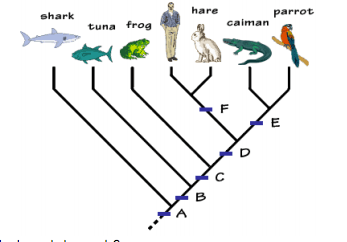
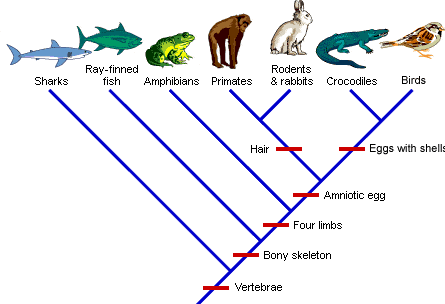
On the cladogram, which organism is the closest relative of the parrot?
Frog
Hare
Caiman
Parrot
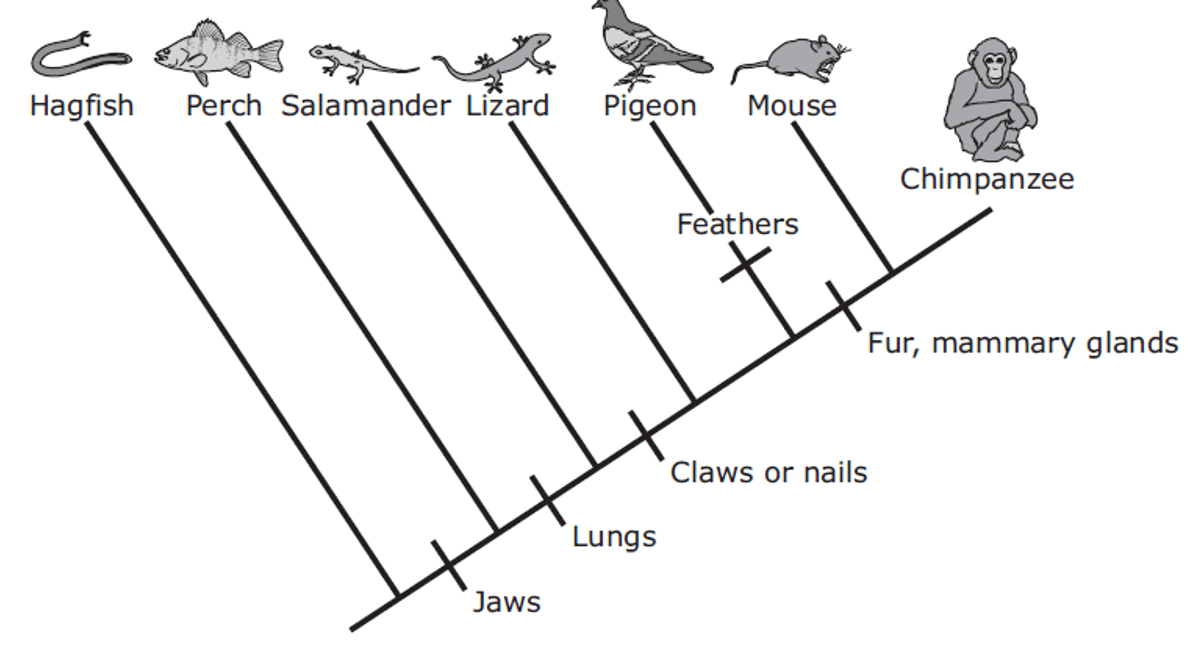
All the animals to the right of the salamander would have the common characteristic of...
Fur
Claws or nails
Lungs
Jaws
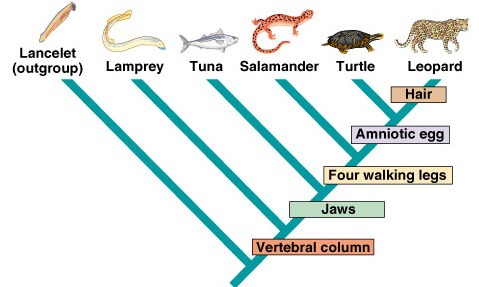
Which is the newest trait?
Amniotic egg
Walking legs
Jaws
Hair
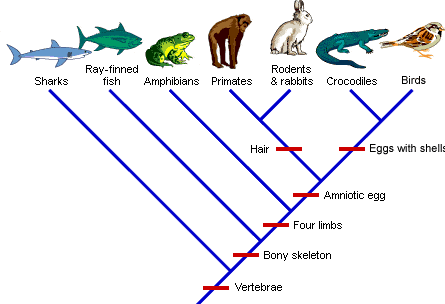
According to this cladogram, sharks are MOST closely related to which organism?
Amphibians
Ray finned fish
Crocodiles
Birds

What characteristic do all the organisms on this cladogram share?
Being bi-pedal & having language
Complex brains
Fully binocular vision
Partial binocular vision & opposable thumbs





takes over the cell's functions.


The flu is caused by a virus.


The protein coat of a virus is known as the __________.
capsid
genome
cell membrane
envelope
Which viral life cycle kills its host cell by breaking it open?
lytic
lysogenic
The ___________ cycle allows replication of the phage genome without destroying the host.
lysogenic
lytic


Darwin's theory of evolution suggests that....
species change over time
different species can interbreed
extinct species are not related to living species
animals that look alike are most closely related

The Galapagos finch species are an excellent example of.....
stabilizing selection
genetic equilibrium
speciation
selection on single-gene traits
Which statement about evolution in the Galapagos finches is true?
Natural selection on beak size and shape is driven by food.
Mate choices likely plays no role in their evolution.
Stabilizing selection has favored an intermediate beak type.
None of the finch species is reproductively isolated

All the genes of all members of a particular population make up the population's........
relative frequency
genotype
phenotype
gene pool

The situation in which allele frequencies of a population remain constant.
evolution
genetic equilibrium
genetic drift
natural selection

In genetic drift, allele frequencies change because of....
mutations
natural selection
genetic equilibrium
chance

When a farmer breeds only his or her best livestock, the process involved is.......
natural selection
artificial variation
artificial selection
survival of the fittest

Darwin's theory of evolution explains all of the following EXCEPT.......
how species became extinct
how species change over time
how inherited traits are passed from parent to child
how evolution takes place in the natural world

Which BEST describes natural selection?
natural variation is found in all populations
changes in the inherit characteristcs of a population
unrelated but similar species live in different areas
struggle for existence by all living things

When lions prey on antelopes, some are killed and some survive. Darwin explained this by........
acquired characteristics
survival of the fittest
reproductive isolation
descent with modification

Darwin called the ability of an organisms to survive and reproduce in its environment........
diversity
adaptation
fitness
evolution

According to Darwin's theory of natural selection, individuals that tend to survive.......
got characteristics from their parent through use and disuse
have the least number of offspring
have characteristics that breeders value
have variations best suited to their environment
Which of the following is an example of natural selection?
Bald Eagles are hunted until near extinction, population recovers.
Small group of iguanas floats to an island, starts a new population.
Red fox pups are more likely to survive in a snowy environment if they are born white.
Farmer chooses seeds from largest apples to plant next year. This results in larger apples from year to year.


Which of the following is the collection of life's remains found in sedimentary rock?
natural selection
homologous structures
Charles Darwin
the fossil record
Similar structures with different purposes found in different species are known as _____
vestigial structures
DNA
homologous structures
the fossil record

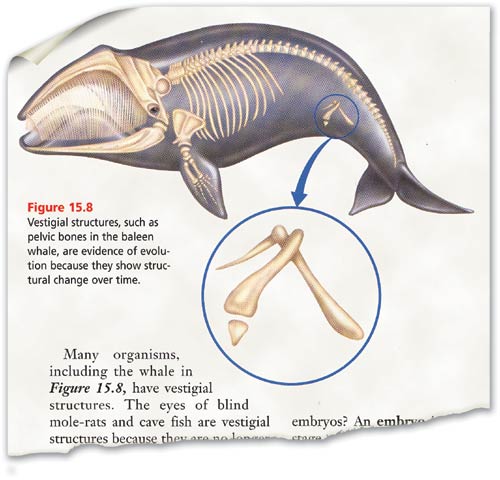
The picture shows a/an ___________
homologous structure
vestigial structure
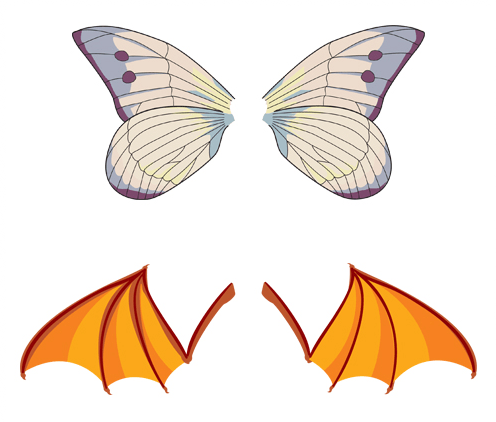
What is this an example of?
Homologous structure
Analogous structure
Vestigial organs
Functional adaption
The appendix, which is not needed to survive, is conisdered to be a
Homologous Structure
Analagous Structure
Vestigial Structure
Homology

Similarities in bone arrangements, like those in the picture, support the hypothesis that...
these organisms are not well adapted
these organisms share a common ancestor
these organisms all share the same DNA sequences
these organisms are members of the same species

