
Font size
 Worksheets
Structure and Function of Earth Systems
Total questions: 95
Worksheet time: 48mins
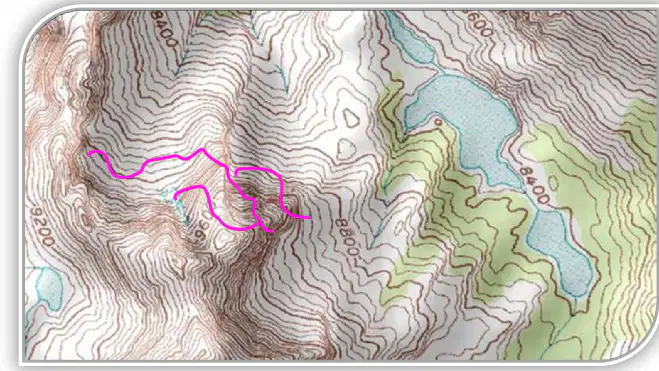
Fill in the blank: A Topographic Map shows _______ of an area.
elevation
temperature
population
vegetation
What do satellite images help us see?
Changes in landforms from far above Earth
The weather on Earth
The color of the ocean
The temperature of the land
Fill in the blank: Constructive forces are responsible for ________ landforms.
building up
breaking down
eroding
flattening
Which of the following is NOT an example of a landform created by constructive forces?
Mountains
Islands
Deltas
Weathering
Destructive forces are responsible for ________ landforms.
breaking down
building up
preserving
expanding
Which of the following is an example of a destructive force?
Sand dunes
Weathering
Islands
Deltas
What is weathering? Fill in the blank: Weathering is the ________ of material into smaller pieces.
breaking down
heating up
melting
coloring
Which of the following are forces that cause weathering?
Gravity, wind, water, chemicals
Light, sound, heat, electricity
Plants, animals, sunlight, temperature
None of the above
What is erosion? Fill in the blank: Erosion is when the weathered products are ________ to a new location.
transported or moved
broken down
heated
dissolved
Fill in the blank: ___% of water on Earth is saline.
97%
50%
10%
75%
Fill in the blank: ___% of water on Earth can be used for human consumption.
1%
10%
25%
50%
Fill in the blank: ___% of water on Earth is in polar ice caps & glaciers.
2%
10%
50%
0.5%
Which water source is formed by tectonic movements, glaciation, and erosion or sediment deposition? The chemical components of this water source, like salinity and nutrient concentrations, depend on their watersheds.
Lakes
Rivers
Oceans
Groundwater
Which water source seeps through pores in soils and rocks and accumulates in aquifers? Contamination and overuse are large problems related to this water source.
Groundwater
Surface water
Rainwater
Desalinated water
Which water source deposits sediment and minerals into oceans and lakes, sometimes creating agriculturally rich alluvial plains in the process? This water source is also used for transportation as well as hydroelectric energy.
Rivers
Oceans
Glaciers
Groundwater
Which water source is the largest source of water on earth, is critical in affecting climates, and provides food, minerals, and routes of transportation for the nations of the world?
Oceans
Lakes
Rivers
Glaciers
What percentage of the Earth's atmosphere is composed of Nitrogen?
78%
21%
50%
10%
What percentage of the Earth's atmosphere is composed of Oxygen?
21%
78%
10%
0.03%
Which of the following is a greenhouse gas?
Nitrogen
Oxygen
Carbon Dioxide
Argon
Which of the following is a greenhouse gas?
Nitrogen
Methane
Oxygen
Helium
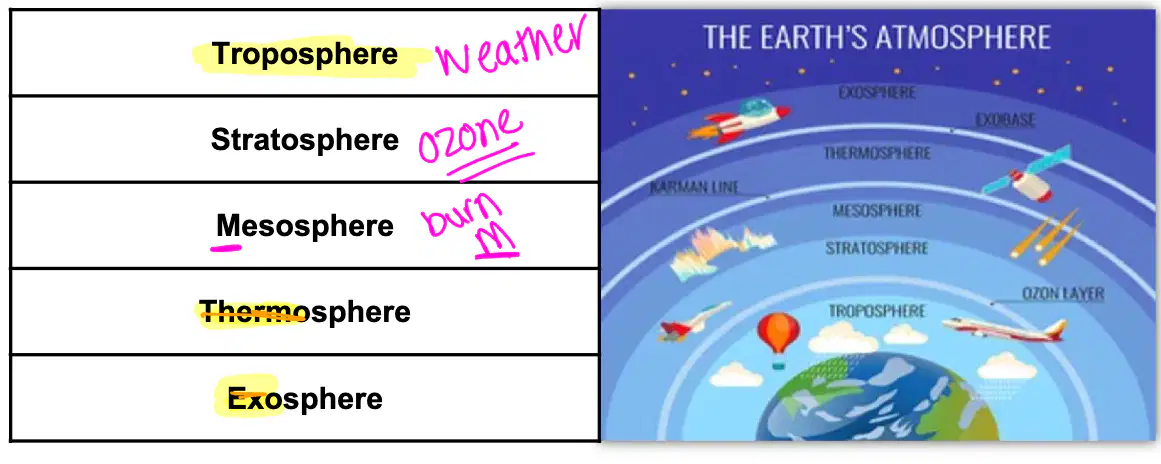
Which layer of the Earth's atmosphere is associated with weather?
Troposphere
Stratosphere
Mesosphere
Thermosphere
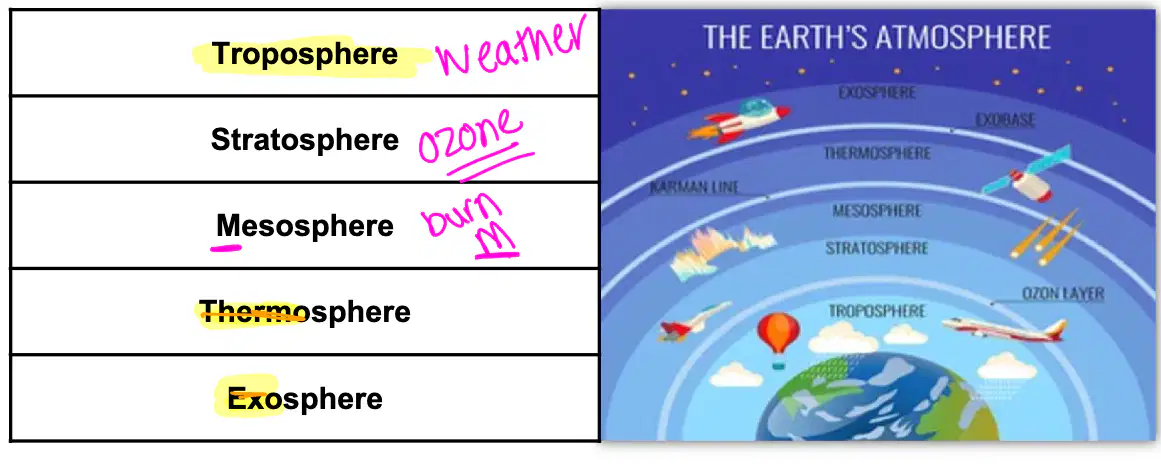
Which layer of the Earth's atmosphere contains the ozone layer?
Stratosphere
Troposphere
Mesosphere
Thermosphere
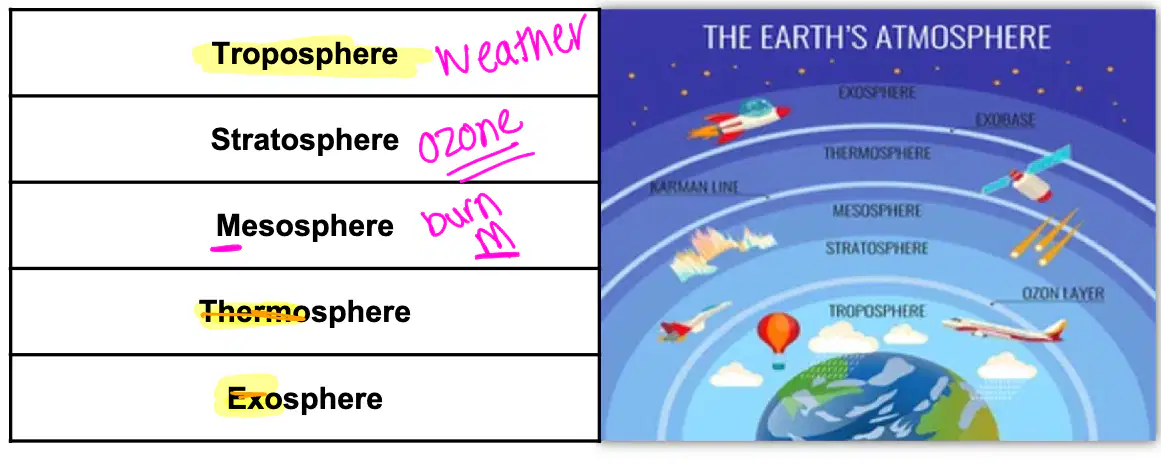
In which layer of the Earth's atmosphere do meteors burn up?
Mesosphere
Troposphere
Stratosphere
Thermosphere
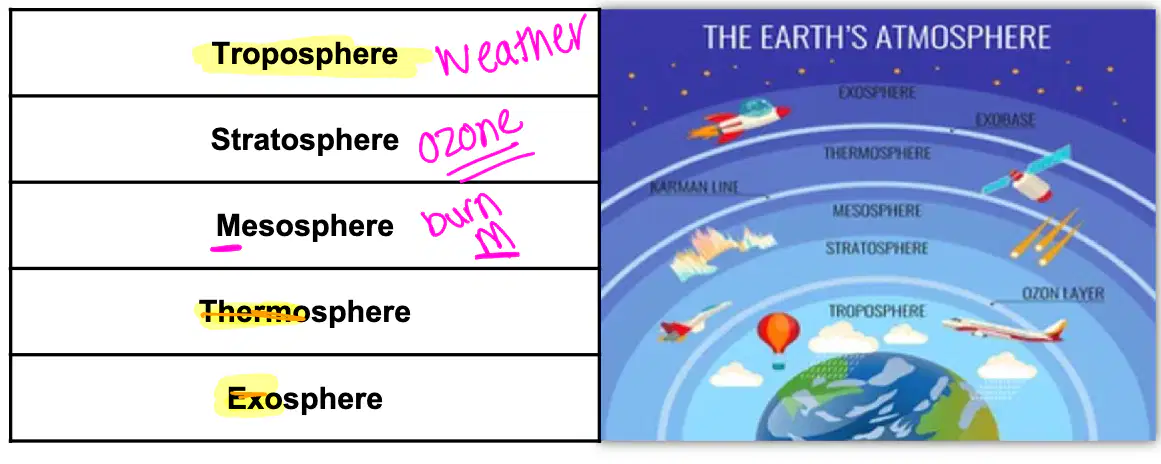
What is the outermost layer of the Earth's atmosphere?
Exosphere
Troposphere
Stratosphere
Mesosphere
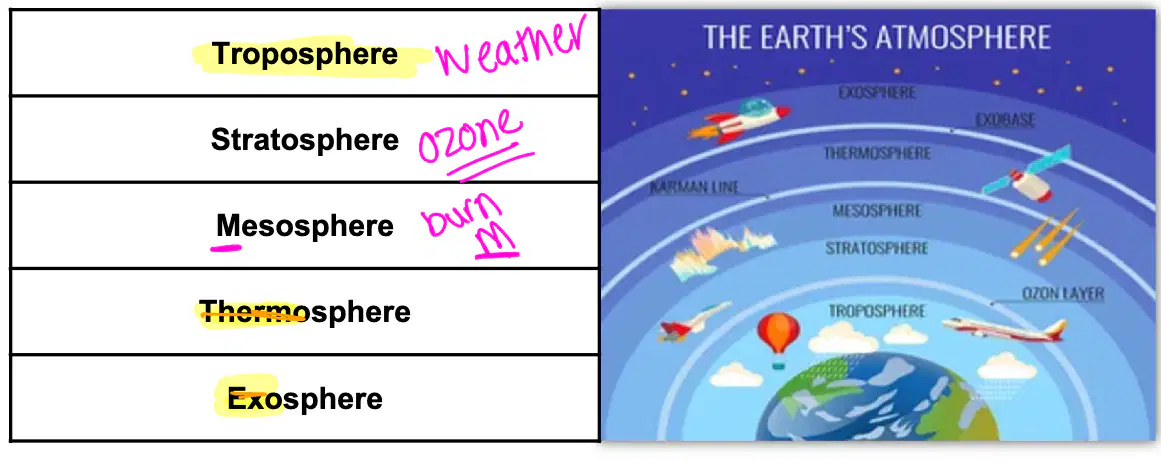
Which layer of the Earth's atmosphere is located between the Mesosphere and Exosphere?
Thermosphere
Stratosphere
Troposphere
Ionosphere
What is the Biosphere? Fill in the blank: The Biosphere consists of ________.
living things
rocks and minerals
water bodies only
atmospheric gases
What is the Cryosphere? Fill in the blank: The Cryosphere consists of ________, which is solid H2O.
ice
sand
oxygen
carbon
What is the Hydrosphere? Fill in the blank: The Hydrosphere consists of ________ water (H2O).
liquid
solid
gaseous
frozen
What is the Atmosphere? The Atmosphere consists of ________.
gas
liquid
metal
rock
What is the Geosphere? Fill in the blank: The Geosphere consists of ________/earth.
land
water
air
plants
What is the transfer of heat from movement of fluids or gases called?
Conduction
Convection
Radiation
What is the transfer of heat from one surface to another through direct contact called?
Conduction
Convection
Radiation
What is the transfer of heat through electromagnetic rays called?
Conduction
Convection
Radiation
Fill in the blank: In convection, hot air ______ and cold air falls.
rises
sinks
freezes
evaporates
Which type of heat transfer is demonstrated by touching a burner?
Conduction
Radiation
Evaporation
Convection
Which type of heat transfer is demonstrated by the Sun heating the earth?
Radiation
Conduction
Convection
Insulation
What was the name of the huge landmass that originally connected all continents?
Gondwana
Laurasia
Pangaea
Eurasia
Scientists have found fossils of dinosaurs and plants on which coasts?
Northern and southern
Eastern and western
Central and southern
Western and northern
Fill in the blank: Originally, continents were connected as a huge landmass called ________.
Pangaea
Atlantis
Laurasia
Gondwana
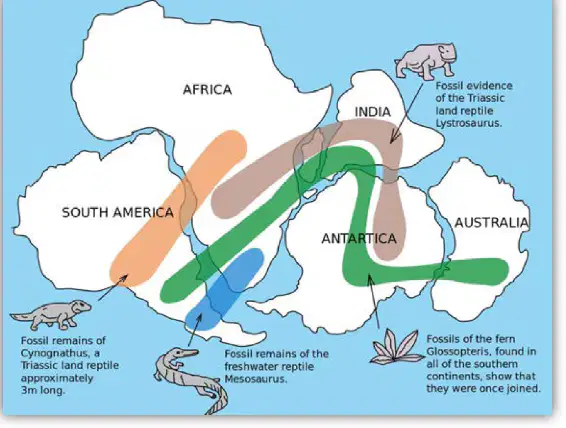
According to the diagram, which type of evidence supports the theory of continental drift?
Fossil evidence
Volcanic eruptions
Ocean currents
Mountain ranges
What does the shifting and moving of plates affect?
A) Earth's surface and appearance
B) The moon's orbit
C) The sun's temperature
D) Ocean tides
Plate boundaries are where the ______ of the plates meet.
edges
centers
surfaces
cores
Which of the following best describes what happens at plate boundaries?
Plates move across, collide, overlap, or move past each other
Plates stay still
Plates melt
Plates disappear
Which type of plate boundary is described as 'Collide together'?
Convergent
Divergent
Transform
Which type of plate boundary is associated with 'Mountains, Volcanos, earthquakes'?
Convergent
Divergent
Transform
Which type of plate boundary is described as 'Move apart'?
Convergent
Divergent
Transform
Which type of plate boundary is associated with 'Mid-Ocean Ridges, valleys'?
Convergent
Divergent
Transform
Which type of plate boundary is described as 'Slide past each other'?
Convergent
Divergent
Transform
Which type of plate boundary is associated with 'Faults, earthquakes'?
Convergent
Divergent
Transform
Fill in the blank: Geological Time is a time scale organized according to when certain ________ lived on Earth.
organisms
continents
mountains
oceans
Based on the appearance or disappearance of life-forms, what is used to define geological time?
The appearance or disappearance of life-forms is used to define geological time.
The movement of tectonic plates is used to define geological time.
The amount of rainfall is used to define geological time.
The color of rocks is used to define geological time.
All fossils are considered sedimentary rock.
True
False
What type of rock consists of particles of other rocks that have been broken down by weathering, transported by erosion, deposited, and cemented together?
Igneous Rock
Sedimentary Rock
Metamorphic Rock
Magma
Which of the following is NOT an example of a sedimentary rock?
A) Limestone
B) Fossils
C) Sandstone
D) Marble
Metamorphic Rock forms from sediments through extreme pressure and temperature.
True
False
Sandstone can change into _______ through the process of metamorphism.
quartz
marble
granite
basalt
Limestone can change into _______ through the process of metamorphism.
marble
granite
sandstone
slate
Igneous Rock is formed when molten material, called ______, cools and hardens.
magma
lava
sediment
clay
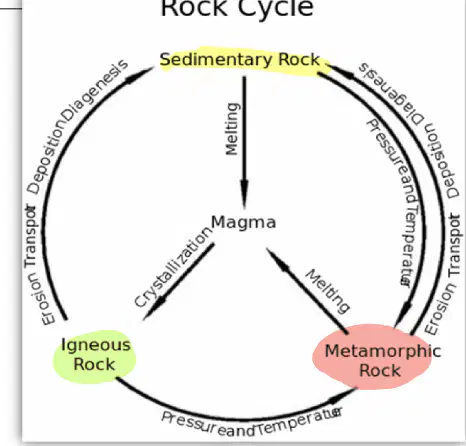
Which process leads to the formation of sedimentary rock from other rocks?
Melting
Erosion, Transport, Deposition/Diagenesis
Crystallization
Pressure and Temperature
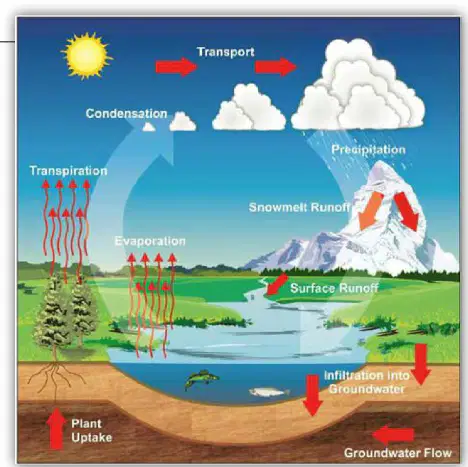
What is the process called when water changes from a liquid to a vapor through heating?
Evaporation
Condensation
Precipitation
Sublimation
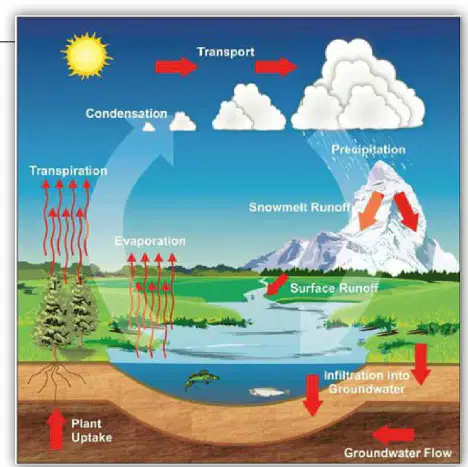
What is the process called when a plant releases water vapor into the air?
Transpiration
Photosynthesis
Respiration
Condensation
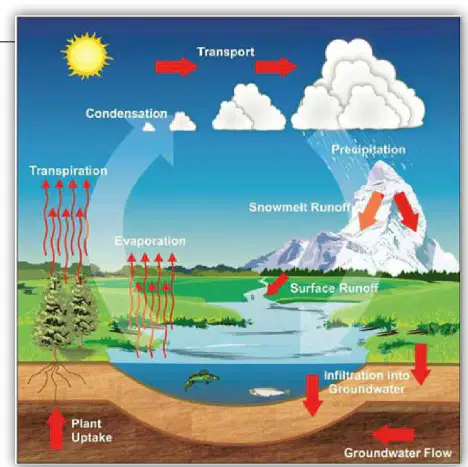
What is the process called when gas changes into a liquid through cooling?
Condensation
Evaporation
Sublimation
Melting
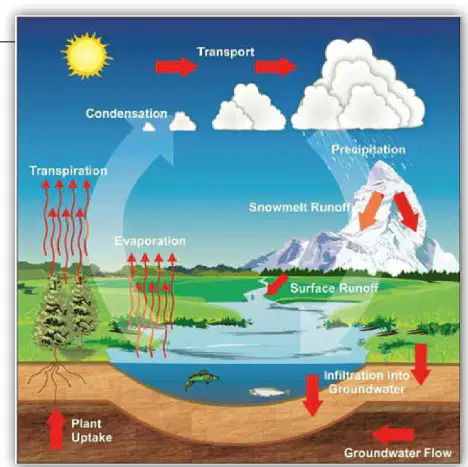
What is the process called when water droplets in the clouds get large and heavy and fall from the sky?
Precipitation
Evaporation
Condensation
Transpiration
According to the passage, water cycles among its three states over Earth's surface and within Earth's upper crust. Which of the following is NOT mentioned as a part of Earth's upper crust?
Atmosphere
Hydrosphere
Lithosphere
Cryosphere
Water is a major component of Earth's ________, and many weather events and climate are characterized by the presence or absence of measurable water.
atmosphere
core
crust
mantle
Which of the following is NOT a form of measurable water mentioned in the passage?
Rain
Snow
Humidity
Ice
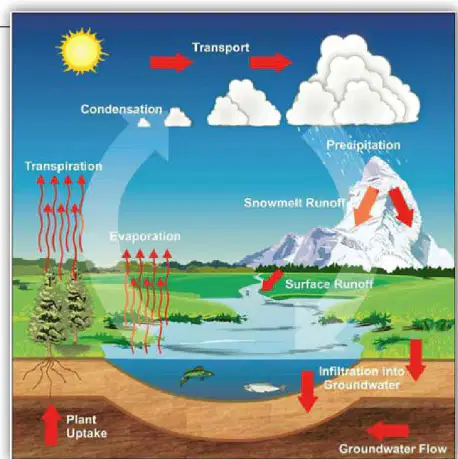
What process is responsible for water vapor rising from plants into the atmosphere?
Evaporation
Transpiration
Condensation
Precipitation
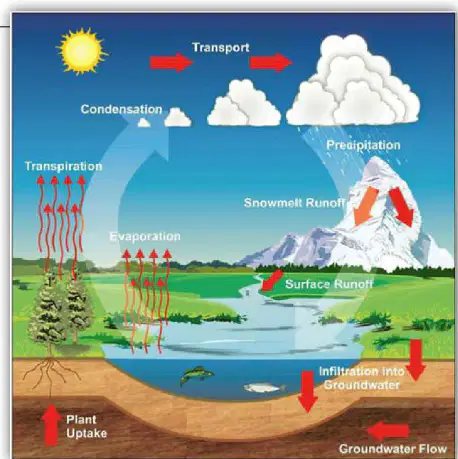
What is the process called when water moves from the surface into the ground?
Infiltration into Groundwater
Evaporation
Condensation
Transpiration
Our atmosphere is made up of ___% Nitrogen.
78%
21%
50%
10%
What element makes up 78% of our atmosphere?
Oxygen
Nitrogen
Carbon Dioxide
Hydrogen
We need nitrogen for our DNA and proteins, but we cannot breathe it in like Oxygen. Therefore, how do we absorb nitrogen?
We absorb it in our food.
We absorb it through our skin.
We absorb it by breathing it in.
We absorb it from sunlight.
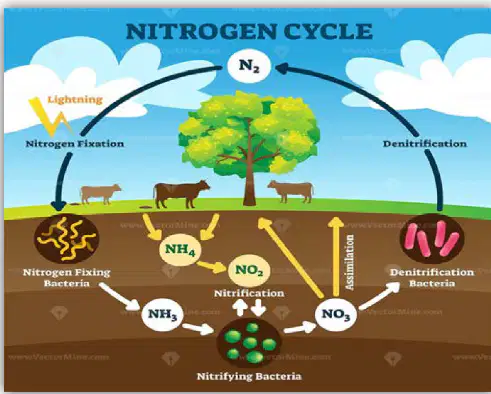
Which process converts atmospheric nitrogen (N2) into a form usable by plants?
Denitrification
Nitrogen Fixation
Assimilation
Nitrification
What is the sequence of the nitrogen cycle as described in the image? Fill in the blanks: Atmosphere → ____ → animals (repeats)
soil
water
sunlight
clouds
How does nitrogen get into the soil according to the image?
Precipitation
Photosynthesis
Evaporation
Transpiration
What role do bacteria at the roots of plants play in the nitrogen cycle?
Bacteria help process nitrogen in the soil, including nitrogen fixation, assimilation, and denitrifying.
Bacteria absorb sunlight to produce food for the plant.
Bacteria provide water directly to the plant roots.
Bacteria release oxygen into the soil for plant use.
What is Nitrogen fixation?
Nitrogen fixation is the process where nitrogen combines with hydrogen to make ammonia (lightning can also do this process).
Nitrogen fixation is the process where nitrogen is converted into oxygen by plants.
Nitrogen fixation is the process where nitrogen is broken down into carbon dioxide in the soil.
Nitrogen fixation is the process where nitrogen is absorbed directly by animals from the air.
What is Assimilation in the nitrogen cycle?
Assimilation is when ammonia goes through chemical changes until plants can absorb the nitrogen.
Assimilation is the process where nitrogen gas is converted directly into ammonia by bacteria.
Assimilation is the release of nitrogen from dead organisms back into the atmosphere.
Assimilation is the process of nitrogen being fixed by lightning.
What does Denitrifying mean in the nitrogen cycle?
Denitrifying is when bacteria release nitrogen into the atmosphere.
Denitrifying is when plants absorb nitrogen from the soil.
Denitrifying is when animals convert nitrogen into proteins.
Denitrifying is when nitrogen is fixed by lightning.
Humidity is a measure with a ________ of the amount of moisture in the air.
hygrometer
thermometer
barometer
anemometer
Relative humidity is a measure of the actual amount of moisture in the air compared to how much moisture the air could hold based on its ________.
temperature
pressure
altitude
wind speed
Warm air is able to hold more moisture than cold air.
True
False
Wind speed is measured with an ________.
anemometer
barometer
thermometer
hygrometer
Air pressure is measured in "bars" with a ________.
barometer
thermometer
anemometer
hygrometer
High-pressure air is air that is ________.
compressed
heated
filtered
humidified
Low-pressure air is ________ (less compressed).
expanded
condensed
heated
solidified
Changes in pressure, temperature, wind speed, and humidity indicate an impending change in the weather.
True
False
What happens to air molecules and air pressure as temperature rises?
A) Air molecules move less and exert less pressure - low pressure.
B) Air molecules move more rapidly and exert an increase in pressure - high pressure.
C) Air molecules stop moving.
D) Air molecules move at the same speed regardless of temperature.
What happens to air molecules and air pressure as temperature drops?
Air molecules move more rapidly and exert an increase in pressure - high pressure.
Air molecules move less and exert less pressure - low pressure.
Air molecules stop moving.
Air molecules move at the same speed regardless of temperature.
Fill in the blank: As temperature rises, air molecules move more rapidly and exert an ________ pressure - high pressure.
increase
decrease
constant
zero
Fill in the blank: As temperature drops, air molecules move less and exert ________ pressure - low pressure.
less
more
equal
constant
Fill in the blank: Weather is happening _____
NOW
YESTERDAY
TOMORROW
LATER
Fill in the blank: Climate is the _____ of the daily changes of weather over a long period of time in a particular area.
average
summary
result
opposite
Which of the following is an example of weather?
Today it is rainy
Summer in Houston is hot.
Winter in Alaska is cold.
The desert is dry all year round.
Which of the following is an example of climate?
Today it is rainy
Summer in Houston is hot.
It is snowing right now
It is windy this afternoon.
What is the purpose of weather charts?
To predict what the weather will be like in the future and document weather trends or changes over time
To show only the current temperature
To display advertisements
To measure earthquakes

