
 Worksheets
G8 Integrated Science: Year in Review Quiz - Coordi-Regula 1
Total questions: 186
Worksheet time: 3hrs 44mins


What is a nerve cell?
axon
neuron
dendrite
myelin
Which 2 are parts of the central nervous system?
brain
nose
spinal cord
left big toe
The brain is covered in a membrane called:
choroid plexus.
meninges.
ventricles.
cerebral aqueduct.
What part of the brain deals with appetite and temperature control?
Cerebellum
Cerebrum
Hypothalamus
Brain stem
The part of the brain in charge of involuntary actions such as breathing and heartbeat.
cerebrum
medulla
cerebellum
neuron
Which part of the neuron transmits impulses to other neurons?
axon
cell body
dendrite
node
Dopamine and Serotonin are examples of _______________
Axon
Neurotransmitters
Somatic Nerves
Autonomic Nerves
Neurotransmitters are ______________ that travel across the ______________ to another cell.
electrical signals; receptors
electrical signals; synapse
chemicals; receptors
chemicals; synapse
The branch like figures that receive impulses & conducts them to the cell body
Dendrite
Axon
Cell Body
Myelin Sheath

What is number 3 pointing at on the neuron?
Dendrite
Axon
Myelin Sheath
Soma

What part of the neuron is number 4 pointing at?
Dendrite
Axon Terminal
Axon
Myelin Sheath

Which part of the Neuron is number 1 pointing at?
Dendrite
Cell body
Axon
Nucleus

Which best describes myelin?
it is a neurotransmitter that triggers muscle contraction
it is a protein that builds the axon
it is a fat that speeds the message along the axon
it is a fat that helps the neuron "hear" messages

Name structure 3
thalamus gland
pineal gland
cerebellum
corpus callosom

As organisms get more complex, cells become specialized to perform specific functions in the body. What is the function for the cell shown?
contract and shorten movement
provide coverage and protection
carry impulses around the body
connects parts together
The human brain is made of 100 billion neurons. Each neuron has a nucleus that contains genes. Many neurons bind together to form a nerve.
tissue
system
organ
cell
Which cell relays messages from one tissue to another?
Red Blood Cell-RBC
White Blood Cell-WBC
Neuron
Tissue
Neurons are primarily composed of this cell?
heart
skin
brain
skull
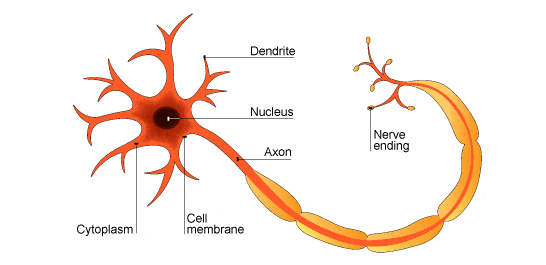
What level of structure is represented by the diagram?
organ
organ system
cell
tissue
The function of sneezing is to expel mucus containing foreign particles from the nasal cavity. A person sneezes when foreign particles pass through the nasal hair which triggers the release of chemical that activates body system causing sneezing. What body part is activated?
circulatory system
digestive system
nervous system
excretory system
Humans feel hungry when their empty stomachs contract and glucose levels in their body drop. Both of the situations stimulate neurons that send messages to the brain which are interpreted as hunger. What body systems are involved in this process as described?
digestive, muscular, integumentary, and respiratory
digestive, excretory, integumentary, and skeletal
circulatory, excretory, nervous, and skeletal
circulatory, digestive, muscular, and nervous
Which system is responsible for the overall control of all the internal processes that occur in the body?
muscular system
nervous system
digestive system
skeletal system
The urinary bladder is a muscular organ of the excretory system that collects urine excreted by the kidney. How does the nervous system help the urinary system in excretion?
it signals the urinary bladder to absorb more water from the urine.
It signals the urinary system to collect waste from the different parts of the body.
It signals the urinary bladder to hold and release urine at appropriate times.
It signals the urinary bladder to allow more urine to flow from the ureters.
The brain has 3 major sections that send and receive signals to control all the activities that keep a person functioning efficiently. Which major section controls breathing and heart beat?
cerebellum
cerebrum
brain stem
cortex
Which 2 body systems interact and initiate movement?
muscular and nervous system
skeletal and muscular system
respiratory and nervous system
circulatory and nervous system
The muscles in the wall of the blood vessels contract or relax to vary the blood flow. Which body system regulates the contraction and relaxation of the muscles?
digestive system
excretory system
skeletal system
nervous system
brain and spinal cord
cranial and spinal nerves
sensory and motor neurons
sympathetic and parasympathetic systems

Match the structures with their number on the digram
Dendrites
1
Soma
2
Axon
3
Node of Ranvier
4
Axon terminal
5
Which best describes myelin?
it is a neurotransmitter that triggers muscle contraction
it is a protein that builds the axon
it is a fat that speeds the message along the axon
it is a fat that helps the neuron "hear" messages
Motor/efferent
Motor/afferent
Sensory/afferent
Sensory/efferent
What do motor/efferent neurons do?
carry messages from the brain and spinal cord to muscles and glands
carry impulses from the skin and sends to the spinal cord and brain
carry impulses from sensory neurons to motor neurons
store messages
Type of neuron located only in the brain and spinal cord that pass impulses from one neuron to another.
Motor Neuron
Interneuron
Sensory Neuron
Which body system coordinates all of the systems by controlling every activity that takes place?
The Nervous System
The Digestive System
The Endocrine System
The Circulatory System
The Immune System

Which organ is represented by letter B?
Brain
Spinal Cord
Nerves
Which organ is represented by letter A?
Brain
Spinal Cord
Nerves
Which organ is represented by letter C?
Brain
Spinal Cord
Nerves
This is the control center of the nervous system controlling both voluntary and involuntary processes.
Central Nervous System
Peripheral Nervous System
The nerves that coordinate messages from the brain and spine to all other parts of the body.
Central Nervous System
Peripheral Nervous System
Digestion, Heartbeat, and Reflexes are examples of
Voluntary Processes
Involuntary Processes
Speaking, Running, and Karate Chopping are examples of
Voluntary Processes
Involuntary Processes
The Brain is made of a large mass of
Muscular Tissue
Neurons
Red Blood Cells
While Blood Cells
Glands

Letter B represents the
Cerebrum
Cerebellum
Medula
Letter C represents the
Cerebrum
Cerebellum
Medula
Which brain structure is responsible for balance and is involved with movement?
Cerebellum
Cerebrum
Medulla
Which brain structure controls all voluntary activities and is responsible for thought, memory, emotions, and reasoning?
Cerebellum
Cerebrum
Medulla
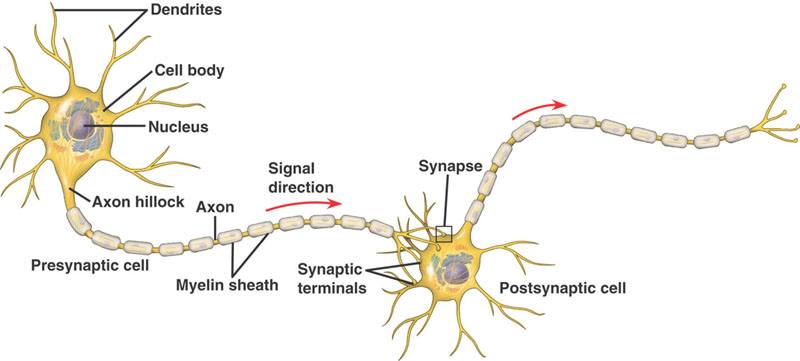
What contains the nucleus of the neuron?
Terminal Bouton
Cell Body
Axon Hillock
Myelin Sheath


What is the spinal chord?
The main pathway for information connecting the brain and peripheral nervous system
The part of our nervous system that gives the rest of the body structure
A series of bones that are made up of vertebrae and cartilage
A small organ that stretches from the brain to the base of the neck


Where does the reflex start?
Receptor
Sensory Neuron
Integration
Motor Neuron
Effector
Where does the reflex end?
Receptor
Sensory Neuron
Integration
Motor Neuron
Effector

Which lobe is D?
Frontal
Occipital
Temporal
Parietal
Which lobe is C?
Frontal
Occipital
Temporal
Parietal
Which lobe is B?
Frontal
Occipital
Temporal
Parietal
Which lobe is C?
Frontal
Occipital
Temporal
Parietal

Which is the medulla oblongata?
A
B
C
D
E
Which is the mid brain?
A
B
C
D
E
Which is the pons
A
B
C
D
E
Neuron
a nerve cell with a unique structure for receiving and passing on information
a signal that causes an animal to react in some way
found in the brain and spinal cord and allow sensory and motor neurons to communicate
Motor neurons
the animal’s reaction to the stimulus
found in the brain and spinal cord and allow sensory and motor neurons to communicate
nerve cells that detect stimuli
nerve cells that carry response information to muscles and other organs
Sensory Neurons
the animal’s reaction to the stimulus
nerve cells that detect information from outside the body
nerve cells that carry response information to muscles and other organs
Spinal cord injury symptoms include:
Inability to move
Progressive memory loss
Digestive distress
Convulsions
What are the senses that the nervous system receives messages from? (mark all that apply)
Vision
Hearing
Smell
Taste
Touch
Which of the following is the nervous system?


What type of neuron is A?
Sensory
Inter
Motor
What type of neuron is C?
Sensory
Inter
Motor

Name an effector in this diagram.
A
B
D
E
F

Select two examples of effectors.
Neuron
Gland
Muscle
Receptor
Which statement best describes a reflex?
Slow response that you have to think about
Rapid response to protect body from harm

_____ neurons carry messages away from the central nervous system and out to muscles or glands. The RED neuron in diagram.
sensory
motor
inter
central
Which type of neuron causes a muscle to contract in a reflex arc?
Motor Neuron
Sensory Neuron
Interneuron
Effector

Where would the nerve impulse start in this reflex arc?
A
C
D
E
What type of neuron is A?
Sensory
Inter
Motor
Which is the correct order of neurons in a reflex arc?
Sensory neuron, motor neuron, relay neuron
Relay neuron, sensory neuron, motor neuron
Sensory neuron, relay neuron, motor neuron
What is the final component of a reflex arc?
Effector
Receptor
Afferent Pathway

Which number represents the stimulus?
1
2
3
4
Which number represents the effector?
4
5
6
7
Which number represents the sensory neuron?
3
4
5
7
Which numbers represents the neurons in a reflex arc?
3
4
5
7
In a reflex arc, the sensory neuron leads to the ___________ and the motor neuron leads to the __________
Spinal cord, CNS
CNS, muscle
Spinal cord, muscle
Muscle, CNS
Reflex actions are important because
They provide a quick, involuntary response
They prevent injury
They are essential to the survival of organisms
All of the above
What does TSH: stand for:
(a)
Where is the Pancreas
Near the kidneys
Near the Liver
Near the Voice box
Near the brain
What is the main function of the endocrine system?
It creates chemicals, or hormones, that are sent around the body to maintain homeostasis.
It creates electrical messages that are sent around the body to maintain homeostasis.
It maintains the correct level of oxygen in the body to maintain homeostasis.
It releases waste from the body to maintain homeostasis.
These release testosterone, which controls changes in a male's body and regulates sperm production.
Ovaries
Target Cells
Parathyroids
Testes

What is the main function of the endocrine system?
It creates chemicals, or hormones, that are sent around the body to maintain homeostasis.
It maintains the correct level of oxygen in the body to maintain homeostasis.
It creates electrical messages that are sent around the body to maintain homeostasis.
It releases waste from the body to maintain homeostasis
Which of the following are chemicals that travel in the blood and cause changes in different parts of the body?
hormones
glands
adrenal glands
parathyroid
Symptoms often associated with diabetes are
excessive thirst
fatigue
frequent urination
all of these
Feedback loops are important because they allow organisms and the environment to
change based on new inputs
fall apart
change based on new outputs
maintain balance
What hormone stimulates the thyroid gland?
ADH
ACTH
TSH
GH
What hormone prolongs and intensifies the sympathetic response during stress by increasing heart rate and raising blood glucose?
Epinephrine
Glucocorticoid
ADH
T3 & T4
What hormone lowers blood glucose levels?
glucocorticoids
glucagon
aldosterone
insulin
Growth Hormone goes with?
posterior pituitary
anterior pituitary
pineal gland
thymus
Produces male sex characteristics
ovaries
testes
hypothalamus
thymus
How do the hormones get around the body?
Through the skeletal system
Through the digestive system
Through the circulatory system
Through the respiratory system
Which of the following best fits the hypothalamus?
influenced by TSH
influenced by LH
serves as the body's link between the nervous & endocrine system
stimulates melanocytes
Which best describes how the endocrine system maintains homeostasis?
never wants to use feedback mechanisms
uses ovaries or testes to balance
By signaling for more adreanline
By signaling the body to respond to internal and external stimuli and by using feedback mechanisms.
Endocrine glands secrete _
Hormones
Neurotransmitters
Chemical Substances
Saliva
What is the main function of the endocrine system?
It creates chemicals, or hormones, that are sent around the body to maintain homeostasis.
It creates electrical messages that are sent around the body to maintain homeostasis.
It maintains the correct level of oxygen in the body to maintain homeostasis.
It releases waste from the body to maintain homeostasis.
The "master gland" is known as the __________________.
thyroid gland.
adrenal gland.
pancreas.
pituitary gland.
The adrenal glands release adrenaline to help the body regulate _________________.
diseases
body temperature.
stress.
hormones.
When insulin is not being produced or when insulin cannot be used properly, glucose builds up in the blood is known as:
Cancer
Diabetes
Stress
Kidney Failure
A word that describes the normal, balanced, steady way your body works:
Hormones
Glands
Homeostasis
Melatonin
Most glands DO NOT depend on the pituitary gland to tell them when to release hormones.
True
False
Adrenalin can speed up your heart rate, help you get more oxygen and widen your pupils so you can see better?
True
False
This gland releases hormones that control your metabolism:
Hypothalamus
Thyroid
Pituitary
pancreas
How you feel about things:
Emotions
Cells
Hormones
Glucose
Which system does the pancreas help to break down food?
Circulatory
Respiratory
Nervous
Digestive
Endocrine
This gland helps fight disease:
Pituitary
Thymus
Hypothalamus
Pineal
What gland controls all of the other glands?
Pituitary gland
Adreanal gland
Pineal gland
pancreas
Too little human growth hormone in children causes _____________________.
dwarfism
acromegaly
gigantism
short syndrome
What is the location of pituitary gland?
at the base of the under the thalamus
at the base of the brain under the hypothalamus
Releasing hormones are secreted from?
Thalamus
Hypothalamus
Pituitary
Infundibulum
Where are hormones secreted?
In the Body cavities
Inside the cells
Inside the blood stream
Inside the Stomach
TSH stands for
Thyroid Stimulating hormone
Thymus Stimulating hormone
Thyroid Secreting hormone
Thymus Secreting hormone
hormones are released by
Endocrine glands
Exocrine glands
Heterocrine gland
apocrine glands
What mechanism regulates the amount of a hormone in the blood?
adaptation
diffusion
feedback mechanism
secretion
Which is true about insulin?
It is secreted by the thyroid gland
It is an enzyme
It is involved in fight-or-flight response
It regulates the high blood sugar level
A speeding car suddenly approaches you. Which of your endocrine glands will most likely function to release a hormone?
adrenal gland
pineal gland
pituitary gland
thyroid gland
A speeding car suddenly approaches you. Which of your endocrine glands will most likely function to release a hormone?
adrenal gland
pineal gland
pituitary gland
thyroid gland
What hormones control the proper functioning of the male reproductive system?
Progesterone
Testosterone
Estrogen
Adrenaline
What hormones control and regulate the proper functioning of the female reproductive system?
Insulin and Glucagon
T3 and T4
Estrogen and Testosterone
Progesterone and Estrogen
What do you call the condition results in the overproduction of thyroid hormones?
Hyperthyroidism
Hypothyroidism
Dwarfism
Gigantism
How many types of diabetes are there?
1
2
3
4
What are glands?
Very large cells in our bodies
Small organs that give off hormones
Small bones in our feet
None of the above
Which body parts receive messages from hormones?
Only the parts for which the hormone's message is directed
All body parts get every hormone's message
The brain gets every message
A and B are correct
What is the pititary gland's nickname?
Boss gland
Master gland
Commander gland
Organ talker
What is the name of the process in which our body burns and uses calories?
Digestion
Circulation
Respiration
Metabolism
What chemical is released when a person is frightened or stressed?
Growth hormone
Calcium
Insulin
Adrenaline
What psychological response is triggered when you get scared and your body releases adrenaline?
Ignightor Response
Flighter Response
Fight or Flight Response
Scared Stiff Response
What is the largest gland in your endocrine system?
Adrenal Gland
Parathyroid Glands
Pancreas
Thymus
What does insulin do?
Controls how the body uses and stores glucose or sugar
Creates growth hormone
Controls body temperature
Both B and C are correct
Which endocrine gland controls the use of sugar?
Adrenal Glands
Pancreas
Pituitary
Thyroid Glands
What do we call the cells that are specially designed to receive messages from hormones?
Receiver cells
Communicator cells
Hormone chipped cells
Target cells
What is the job of these special proteins that attach to hormones as they travel to target cells?
Fight infections
Create red blood cells
Control the amount of hormones target cells can use
Control the level of sugar in the body
Which gland is primarily responsible for metabolism?
Hypothalamus
Pituitary
Thyroid
Adrenal glands
What is another name for female gonads?
Ovaries
Testies
Eggs
Sperm
What is another name for female gonads?
Ovaries
Testies
Eggs
Sperm
What are the adrenal glands attached to?
Liver
Kidneys
Pancreas
Gonads
What does the thymus gland in the middle of the chest control?
Urine production
I don't honestly know. Maybe fights infections?
Hormone secretions
Heart palpitations

This feature connects the left eye to the right brain and vice-versa. Aids in binocular and stereoscopic vision.
medulla
optic chiasma
olfactory bulbs
fornix

This receives information from the sensory system and then regulates motor movements
pituitary
pons
cerebrum
cerebellum

The master gland, secretes hormones into your bloodstream and can affect other glands.
thyroid
pituitary
pineal
parathyroid

These increase the surface area of the cerebral cortex allowing for more neurons to be packed in for increased ability.
gyri and sulci
gyros and souvlaki
hills and valleys
fossae and ganglia

Here, neural inputs from odors are detected.
left ventricle
olfactory bulb
sulcus
optic chiasma

Integrates motor sensory and cognitive performances between the cerebral cortex on both sides of the brain
corpus callosum
cerebellum
pons
brain stem

Electrical currents travel up and down this major structure of the central nervous system allowing different parts of the body to communicate with the brain.
cerebellum
cerebrum
spinal cord
thalamus

This area is vital for the processing of information for the five Fs: fever, feeding, fighting, fatigue, and fornication. Produces oxytocin and
medulla
corpus callosum
hypothalamus
pituitary

This controls communication between different parts of the brain and other sensory information like hearing, taste, and balance.
hypothalamus
pons
optic chiasma
thalamos

Helps regulate breathing and autonomic functions like breathing, heart and blood vessel functions: respiration and circulation
medulla oblongata
cerebrum
cerebellum
sulcus
Which part of the nervous system is responsible for transmitting signals between the brain and the rest of the body?
Digestive System
Peripheral Nervous System
Respiratory System
Endocrine System
What is the function of myelin sheath in a neuron?
To insulate the axon and speed up nerve impulses
To connect neurons to muscles
To receive signals from other cells
To transmit impulses to other neurons
Which lobe of the brain is primarily responsible for processing visual information?
Parietal lobe
Frontal lobe
Temporal lobe
Occipital lobe
This part of the brain controls automatic functions
brain stem
Cerebellum
Cortex
nose
Without your ___________, you could not stand upright.
Cerebellum
Cortex
Brain Stem
Nose
Executive functions control your ability to ________.
Predict
Decide
Interact socially
All of these
The two halves of the brain that meet in the forehead is the ______.
Microorganism
Neurotransmitter
Synapse
Frontal cortex
How do the Damasio's study "modern day Phineases"?
X-rays of the skull
CT and MRI scans of the brain
Daguerreotype photographs
Surgery on the cortex
Where was the damage to Phineas' brain located?
cerebellum
brain stem
occipital lobe
frontal lobe
Why was Phineas' closest companion an iron rod?
He traveled too frequently.
He was determined to work with metal.
He loved horses and animals.
He lost the ability to be social.
What part of Phineas Gage's brain was affected by the tamping iron?
occipital lobe
frontal lobe
medulla oblongata
cerebellum
What were the immediate effects of the injury to Phineas Gage's brain?
No noticeable changes
Immediate changes in personality and behavior
Loss of memory
Improved cognitive function
How did Phineas Gage's personality change after the accident?
His personality became more organized and disciplined.
His personality became more introverted and shy.
His personality became more outgoing and sociable.
His personality became more impulsive, irritable, and unpredictable.
What were some of the long-term personality changes observed in Phineas Gage?
Enhanced decision-making skills
Improved memory and cognitive function
Increased impulsivity, irritability, and difficulty in decision-making
Decreased impulsivity and irritability

