
 Worksheets
Science
Total questions: 60
Worksheet time: 1hrs 13mins
The first step in an scientific investigation is...
asking questions
making predictions
testing the hypothesis
making conclusions
To make sure a test is accurate it needs to be...
accurate
fair
done quickly
After the results are analysed, you form...
a hypothesis
an evaluation
a conclusion
a prediction
How can we make an experiment fair?
by keeping all the factors same.
by keeping all the factors different
by keeping all the factors same except one
by keeping all the factors same except two
What is the other name of prediction?
Hypothesis
Test
Conclusion
Observation

What is the independent variable in this experiment?
the height of the plant
the type of pot
the amount of water
the type of plant

Which drink do the kids like the most?
coke
diet coke
sprite
cherry coke
What the scientist is measuring in the experiment is the...
Conclusion
Controlled Variable
Independent Variable
Dependent Variable
Joe wants to determine the effect of fertilizer on the growth of grass. What is the dependent variable?
Amount of fertilizer
Type of plant
Time
Height of grass
An experiment is performed on plants to see how different liquids affect plant growth. Each plant in the experiment is given a different liquid. Each plant has the same amount of soil, sunlight, and listens to the same music. In this investigation, the independent variable is ...
Type of plant
Amount of sunlight
Type of liquid
Type of music
Which statement is true?
Incisor is to tear food
Canine is to break and grind food
Molar is to cut food
Milk teeth set are 20 teeth in total
How many permanent teeth does an adult have?
20
28
32
46
What is the function of incisors?
bite
chew
grind
swallow
The molars teeth are use to
tear food
cut food
grind food
What is the function of canines?
Tearing
Cutting
Grinding
All of the above
Which micro organisms cause communicable diseases?
Pathogens
Pathogerms
Partitions
_________ are diseases that can be transmitted from one person to another
Non communicable diseases
Communicable diseases
Goiter
The following are ways diseases spread except __________
By direct contact
By insects
By being friendly
Diseases can be classified into two types, ___________ diseases and ________ diseases
Pathogens and Microorganisms
Communication and non communication
Communicable and non communicable
Any disturbance in the working of the body is called ______________
disease
hygiene
pathogen
Has a definite shape, mass, and volume
solid
liquid
gas
matter
Has a definite mass and volume, but not a definite shape
solid
liquid
gas
ice
Has neither a definite shape or volume
solid
liquid
gas
water

Particles of ___ which can move freely.
Solid
Liquid
Gas

Particles of _____ which are tightly packed together.
Solid
Liquid
Gas

Particles of ______ which can easily flow than solid particles.
Solid
Liquid
Gas

What is happening in this picture?

Water turning into ice is an example of?
Condensation
Freezing
Melting
Evaporation

When your glasses get foggy is an example of?
Freezing
Melting
Condensation
Evaporation

Identify the highlighted muscle.
Gluteus Maximus
Hamstrings
Quadriceps
Pectorals

Which of the following is a good conductor of electricity?
newspaper
copper wire
glass plate
plastic bottle
What are the components of simple electric circuit?
battery, light bulb
battery, light bulb, wire
battery, light bulb wire and switch
battery, light bulb, switch

Name the symbol in the picture
battery
switch
light bulb
wire

Name the symbol in the picture
battery
switch
light bulb
wire

Name the symbol in the picture
battery
switch
light bulb
wire

What is the name of this component?
fuse
cell
motor
lamp

What is the name of this component?
fuse
cell
bell
lamp

What is the name of this component?
fuse
cell
motor
lamp

This symbol represents a ..............
valve
voltmeter
Voltage
Vacuum


Birds have
fur
scales
feathers
moist skin
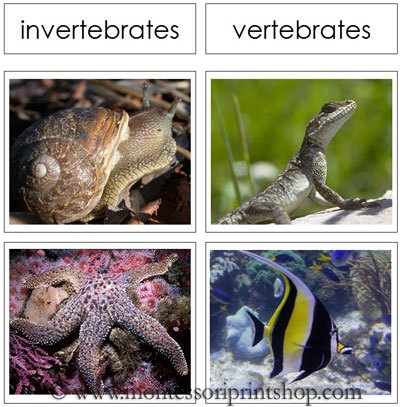
Which of these animals are vertebrates? (Select all that apply.)
penguin
fox
alligator
snake
crab

What are animals WITHOUT backbones?
vertebrates
invertebrates
mammals

Based on the food chain illustrated below, what effect would be the most likely direct result of increasing the number of fish?
Beetles would have trouble finding food.
There would be more kinds of plants.
The population of beetles would decrease.
Plants would no longer survive in this habitat.

Which of these completes the food chain correctly?
a rock
a fox
a plant
an egg
A ______ _______ is the way food energy passes from one organism to another in an ecosystem.
Chain food
Food chain
Organism chain
Ecosystem chain

Look at this food chain. Is the roadrunner a predator or prey? Remember, some organisms are both.
Predator
Prey
Predator and Prey
Neither

Look at this food chain. Is the grasshopper a predator or prey? Remember, some organisms are both.
Predator
Prey
Predator and Prey
Neither
When you heat a pot on a stove, the handle gets warm. Which type of heat transfer is responsible?
Conduction
Radiation
Convection
All of the above


What stage of the water cycle is at letter A?
evaporation
condensation
collection
precipitation

Which stage of the water cycle is at letter B?
evaporation
precipitation
collection
condensation

#5 shows what stage in the water cycle?
Precipitation
Collection
Evaporation
Condensation

