
 Worksheets
science 5th uil 18-19
Total questions: 127
Worksheet time: 1hrs 26mins
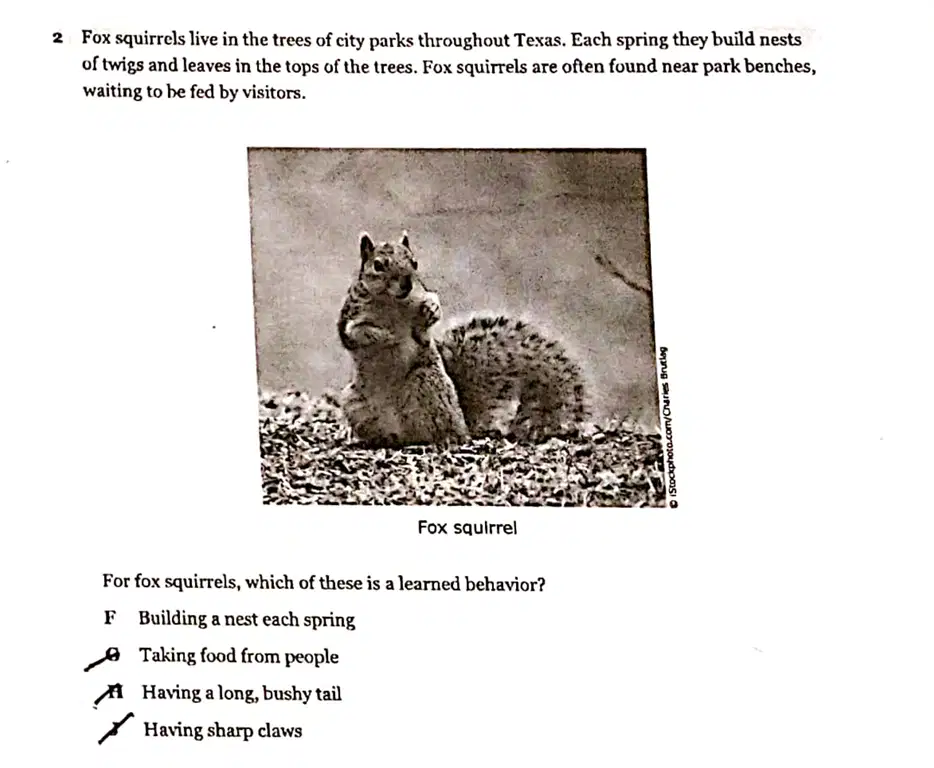
For fox squirrels, which of these is a learned behavior?
Building a nest each spring
Taking food from people
Having a long, bushy tail
Having sharp claws

A spider making a web is an example of a .........
stimulus
genetic behavior
fixed action patern
learned behavior

Which of these will most likely happen when prairie dogs are removed from an area?
A. The population of predators that eat prairie dogs will decrease.
B. The population of plants that prairie dogs eat will decrease.
C. The nutrients in the soil will increase.
D. The number of underground tunnels will increase.
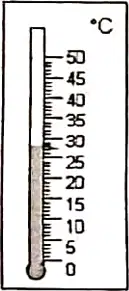
The starting temperature of a beaker of water is 19 degrees Celsius. The thermometer shows the temperature of the same beaker of water after being heated on a hot plate. How much warmer was the water after it was heated?
9 degrees Celsius
11 degrees Celsius
19 degrees Celsius
28 degrees Celsius
When a substance is cooled, the density of its molecules
Increases
Decreases
Stays the same

This diagram shows a substance that has undergone a change. What caused this change?
(a)
Solid to Liquid
Melting
Liquid to Gas
Evaporation
Solid to Gas
Sublimation
Liquid to Solid
Freezing
Gas to Liquid
Condensation
Which way does thermal energy flow?
From cold to warm
From top to bottom
From warm to cold
From left to right
What is the term for the measurement of average kinetic energy of the particles of a substance?
(a)
Solid
Fixed volume, fixed shape
Liquid
Fixed volume, takes shape of container
Gas
No fixed volume, no fixed shape

Which of the following have the most thermal energy?
A gallon of water at 75°C
A cup of water at 75°C
A pint of water at 75°C
An tablespoon of water at 75°C
Two solid blocks are heated to the temperatures shown. The blocks are placed so they touch.
Which diagram shows the direction heat will flow?


All of these are possibilities

Two identical blocks are heated to different temperatures. The blocks are placed so that they touch, and heat begins to flow between the blocks. The pair of blocks is insulated, so no energy escapes.
Later, the temperature of each block is measured again. Which pair of temperatures is possible?


All of these are possible

In class, we have drawn models of what is occurring at each of these locations. Select the image below that BEST models what this looks like at location A.


In class, we have drawn models of what is occurring at each of these locations. Select the image below that BEST models what this looks like at location B.
In class, we have drawn models of what is occurring at each of these locations. Select the image below that BEST models what this looks like at location C.

In class, we have drawn models of what is occurring at each of these locations. Select the image below that BEST models what this looks like at location D.

This photograph shows a beach on a partly sunny day. Which of the following is an interaction between the sun and the ocean that results in clouds forming near the beach?
A. Energy from the sun causes precipitation over the ocean.
B. Energy from the sun causes water to evaporate from the ocean.
C. Light from the sun reflects off the surface of the ocean.
D. Light from the sun decreases the amount of water vapor in the air over the ocean.

Heat transfer is really neat! It always goes from
hot to cold
cold to hot
top to bottom
bottom to top
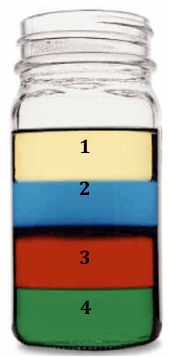

How does an alluvial fan form?
It forms where a stream enters an ocean or lake, slows down, and deposits sediments there over time.
It forms where part of a meandering stream is cut off.
It forms where a stream reaches a flat area of land, slows down, and deposits sediments there over time.
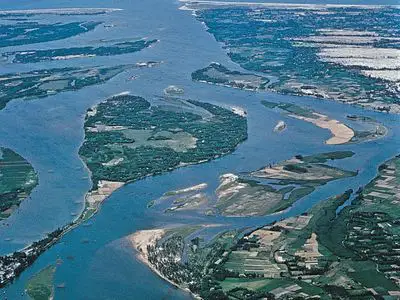
What is a mass of material deposited in a triangle or fan shape at the mouth of a river or stream? It is different from when materials are deposited at the bottom of a slope.
alluvial fan
delta
barrier island
dune

New deposition seals off the ends and the cut-off becomes an ________________ that will eventually dry up.
Oxbow Lake
Kidney scar
Flood Plain
Meander
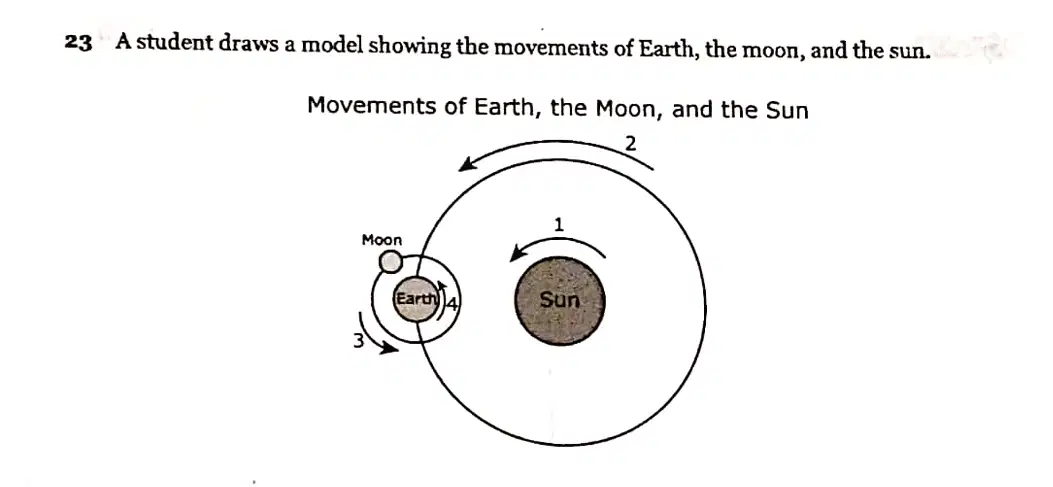
A student draws a model showing the movements of Earth, the moon, and the sun. Which arrow shows the movement that causes day and night on Earth?
Arrow 1, because it shows the rotation of the sun
Arrow 2, because it shows the orbit of Earth around the sun
Arrow 3, because it shows the orbit of the moon around Earth
Arrow 4, because it shows the rotation of Earth
Which of the following examples most closely represents what it means to be an element?
A gum ball machine with many different colors and sizes of candy inside.
A fish tank holding a large variety of fish.
A salad made of lettuce, tomatoes, cucumbers, and dressing.
A brick wall made from many identical bricks.
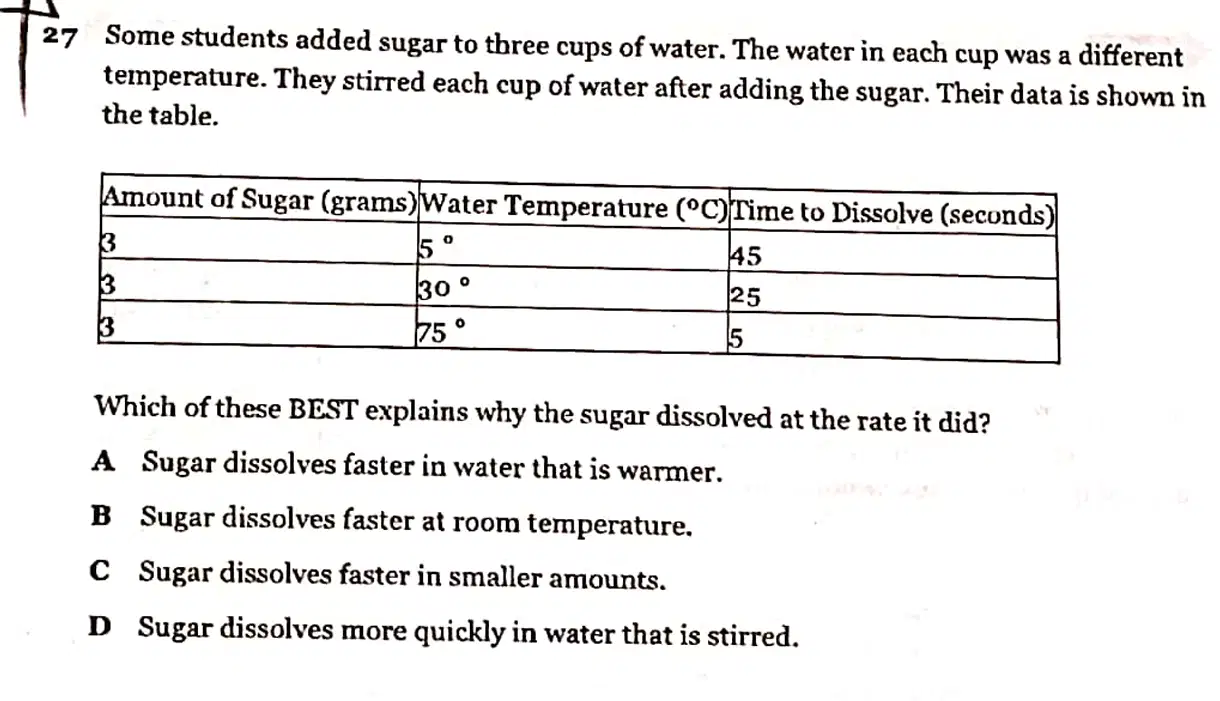
Some students added sugar to three cups of water. The water in each cup was a different temperature. They stirred each cup of water after adding the sugar. Their data is shown in the table. Amount of Sugar (grams) | Water Temperature (°C) | Time to Dissolve (seconds) 3 | 5° | 45 3 | 30° | 25 3 | 75° | 5 Which of these BEST explains why the sugar dissolved at the rate it did?
Sugar dissolves faster in water that is warmer.
Sugar dissolves faster at room temperature.
Sugar dissolves faster in smaller amounts.
Sugar dissolves more quickly in water that is stirred.
Three students tested how quickly salt dissolved in water at different temperatures. They used the same amount of salt each time. Their results are shown below.
Amount of Salt (grams) | Water Temperature (°C) | Time to Dissolve (seconds)
3 | 10° | 60
3 | 40° | 30
3 | 70° | 10
What conclusion can be drawn from this experiment?
Salt dissolves faster in warmer water.
Salt dissolves faster if more is added.
Salt dissolves at the same rate in all temperatures.
Salt dissolves faster in colder water.
A group of students wanted to find out how temperature affects the rate at which a solid dissolves in water. They added the same amount of baking soda to three cups of water at different temperatures and stirred each cup. Which variable did they change in their experiment?
The temperature of the water.
The size of the cups.
The amount of baking soda.
The type of solid used.
Based on the data below, which statement is MOST accurate?
Amount of Sugar (grams) | Water Temperature (°C) | Time to Dissolve (seconds)
3 | 20° | 35
3 | 50° | 15
3 | 80° | 4
Sugar dissolves more quickly as the temperature of the water increases.
Sugar dissolves more slowly as the temperature of the water increases.
Sugar dissolves at the same rate in all temperatures.
Sugar does not dissolve in hot water.

A student is performing an experiment to see if temperature has an effect on the rate of solubility. Is his setup correct?
yes, because the temperature of the cups is different
no, because the amount of sugar is the same
yes, because the amount of sugar is the same
no, because the temperature of the cups should be the same
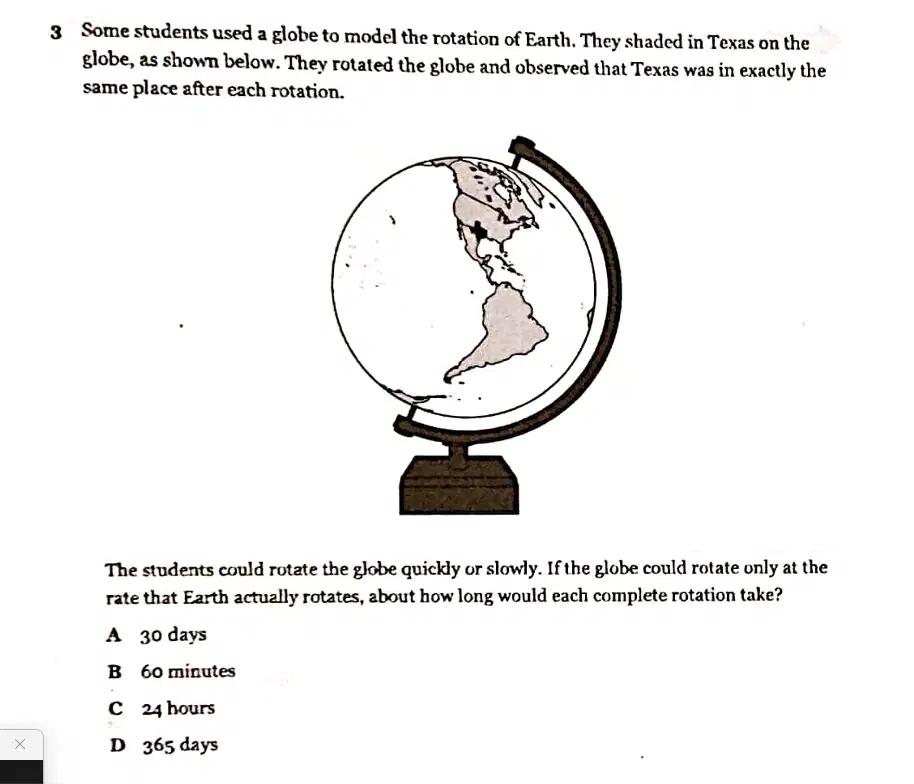
Some students used a globe to model the rotation of Earth. They shaded in Texas on the globe, as shown below. They rotated the globe and observed that Texas was in exactly the same place after each rotation. The students could rotate the globe quickly or slowly. If the globe could rotate only at the rate that Earth actually rotates, about how long would each complete rotation take?
30 days
60 minutes
24 hours
365 days
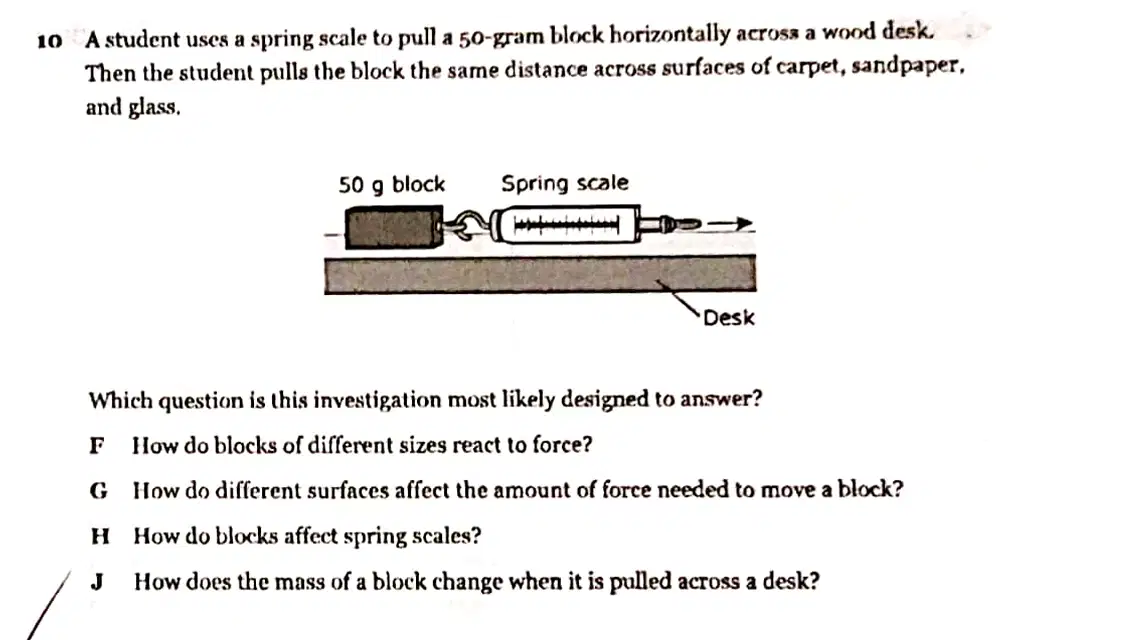
A student uses a spring scale to pull a 50-gram block horizontally across a wood desk. Then the student pulls the block the same distance across surfaces of carpet, sandpaper, and glass.
How do blocks of different sizes react to force?
How do different surfaces affect the amount of force needed to move a block?
How do blocks affect spring scales?
How does the mass of a block change when it is pulled across a desk?
A student uses a spring scale to pull a 100-gram block across a tile floor. The student repeats the experiment using surfaces of rubber, metal, and plastic.
How does the length of the spring scale change with different surfaces?
How does the block's shape affect the spring scale reading?
How does the type of surface affect the force required to move the block?
How does the color of the block affect the force needed?
A student pulls a wooden block with a spring scale across a smooth marble surface and then across a rough concrete surface.
Which surface will require more force to move the block the same distance?
Which block will move faster on the concrete surface?
How does the spring scale measure the block's speed?
How does the block's color affect the force needed?
A student uses a spring scale to pull a block across four different surfaces: wax paper, felt, cardboard, and aluminum foil.
How does the spring scale change the block's mass?
How does the block's temperature affect the force needed?
Which block will be the heaviest on the spring scale?
Which surface will likely require the least force to move the block?
What is force?
The ability to do work
A push or pull on an object
The speed of an object
The distance an object travels
Which of the following is NOT a type of force?
Gravity
Friction
Magnetism
Color
What is motion?
The direction an object faces
The color change of an object
The change in position of an object
The smell of an object
What does gravity do?
Pushes objects apart
Pulls objects together
Makes objects change color
Makes objects square
If you slide a hockey puck on ice, it eventually stops because of:
Gravity
Magnetism
Friction
Air resistance
Which unit is used to measure force?
Kilogram
Meter
Newton
Joule
What is inertia?
The tendency of an object to resist changes in its motion
The speed of an object in motion
The force that pulls objects to the ground
The force that moves objects in a circular path
Which of the following would require more force to stop quickly?
A fast-moving bicycle
A slow-moving car
A fast-moving skateboard
A slow-moving scooter

The speed of the marble is increasing because the force of gravity causes objects to (a) towards the center of Earth.
The image shows a flatbed tow truck towing a car. Which arrow represents the force the flat bed is exerting on the car?

This object weighs
(a)

This object weighs
(a)

This object weighs
(a)

This object weighs
(a)

This object weighs
(a)

What force is being measured on this spring scale?
8.0 N
9.2 N
7.6 N
10.0 N
9.1 N
What is the maximum amount of force that our spring scales will measure
5 grams
5 Newtons
500 grams
.5 Newtons
Two cities recorded temperatures of 21 degrees Celsius, winds of 15 km/hr, and 3 cm of rain. What could still be different when comparing the cities?
They could have different temperatures.
They could have different climates.
They could have different wind speeds.
They could have different types of precipitation.

A worker built a sidewalk and pressed some large salt particles into the concrete while it was still wet. When the concrete was dry, the worker washed the sidewalk with water. The picture below shows the sidewalk after it was washed. What most likely happened to the salt?
It evaporated into a gas.
It turned into concrete.
It dissolved in the water.
It turned into a solid.
What would most likely happen if sugar crystals were pressed into wet concrete and then the sidewalk was washed with water after drying?
The sugar would dissolve in the water.
The sugar would turn into concrete.
The sugar would evaporate into a gas.
The sugar would remain unchanged on the surface.
After washing a sidewalk where salt was pressed into wet concrete, what evidence would you expect to see if the salt dissolved?
White salt crystals left on the surface.
No change to the sidewalk.
Holes or pits where the salt was.
The concrete turning blue.
Why does salt disappear from the surface of concrete when water is poured over it after the concrete dries?
Because salt reacts with concrete to form a new solid.
Because salt evaporates with the water.
Because salt dissolves in water and is washed away.
Because salt turns into a gas when wet.

What is a solution?
a roller coaster
have tons of volume and matter
2 liquids that can't be separated

A student draws diagrams of her house and the location of the sun in the sky. Which diagram below does NOT correctly represent the location of the sun at the time indicated?
F: (Diagram of sun directly above house, labeled 12:05 P.M., West/East)
G: (Diagram of sun to the right/east of house, labeled 10:15 A.M., West/East)
H: (Diagram of sun to the left/west of house, labeled 8:45 A.M., West/East)
J: (Diagram of sun to the left/west of house, labeled 7:00 P.M., West/East)

A student was standing outside at recess and noticed his shadow.
The sun was at (a) if his shadow appeared as it does below.
¿En qué posición está el sol a las 3:00 P.M.?

Based on the sun's current position in the diagram, it was closet to position (a) 1 hour earlier and it will be closest to position (b)
¿En qué posición estará el Sol a las 3:00 P.M.?
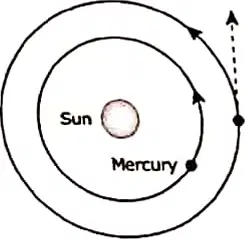
What force causes Venus to travel along a curved path instead of moving in a straight line as indicated by the dashed line in the diagram?
Electromagnetic attraction between the sun and Venus
Gravitational attraction between the sun and Venus
Electromagnetic attraction between Mercury and Venus
Gravitational attraction between Mercury and Venus
The diagram to the right is a satellite orbiting Earth. Arrow a is representing the effect of
the satellite path
inertia
gravity
Why does the earth stay in orbit around the sun instead of drifting away from it into space?
(a)
Electric force between the Sun and Earth
Magnetic force between the Sun and Earth
All of these are related to the formation of oil or natural gas EXCEPT—
decomposed animals
decayed plants
sedimentary rocks
active volcanoes
Which of the following is NOT a necessary condition for the formation of natural gas?
Presence of organic matter
Millions of years of time
High pressure
Exposure to sunlight
Oil and natural gas are most commonly found in which type of rock?
Volcanic rocks
Igneous rocks
Sedimentary rocks
Metamorphic rocks
Which process is primarily responsible for converting dead plants and animals into fossil fuels?
Condensation
Evaporation
Decomposition under heat and pressure
Photosynthesis
A flow chart of the formation of fossil fuels is shown below.
Complete the graphic organizer using the terms shown. Not all terms will be used.
Melting
Buried
Heat and Pressure
Condensation
Dissolving

Coal is formed from (a) environments being (b) long, long ago. The decaying organisms were buried in layers of rock. Coal is formed through time, heat and (c) .
5.10B- A flow chart of the formation of fossil fuels is shown below.
Complete the graphic organizer using the terms shown. Not all terms will be used.
Melting
Buried
Heat and Pressure
Condensation
Dissolving
It takes (a) for fossil fuels to form.
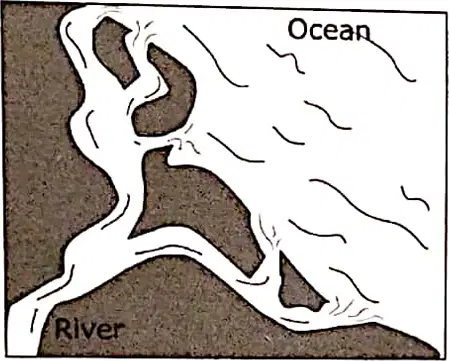
The picture below shows a river delta. The river is flowing into the ocean. (Refer to the diagram of the river delta and ocean.) How do river deltas change over time?
More and more sediments build up around the delta. The river develops more branches.
Water erosion continues. The ocean wears away the land, and the coastline recedes.
Water erosion continues. Smaller river branches disappear, and the main branch becomes deeper.
Fewer sediments are deposited into the river system. The river valley dries up, and vegetation dies out.

(a) form at the end of (b) where (c) materials drop out of suspension is a form of (d) .
Click the feature on the diagram where you would expect to find sediment deposited where a river meets an ocean.
Match the following models with the correct landform or process.
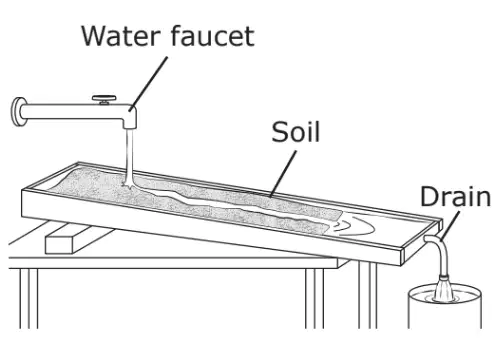
Canyon and delta formation
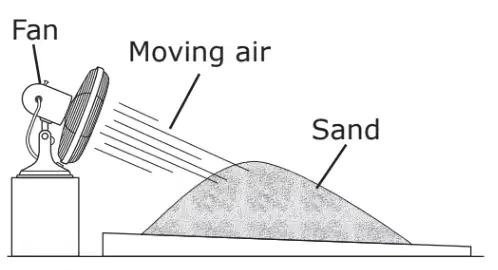
Dunes
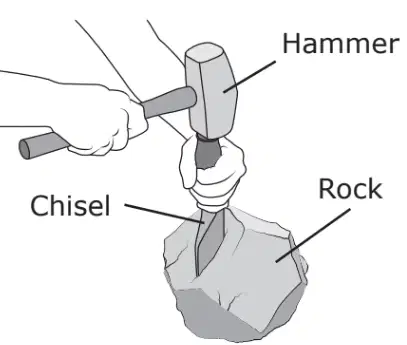
Weathering by Ice Wedging

What is a deposit of sediment laid down to rest at the mouth of a river called?
Sinkhole
Coastline
River Delta
Cavern

What is a body of saturated underground rock containing water?
Sinkhole
Cavern
Aquifer
Lake
This landform is made as pressure compacts snow to form an ice sheet.
Glacier
Mountain
Dune
Sinkhole
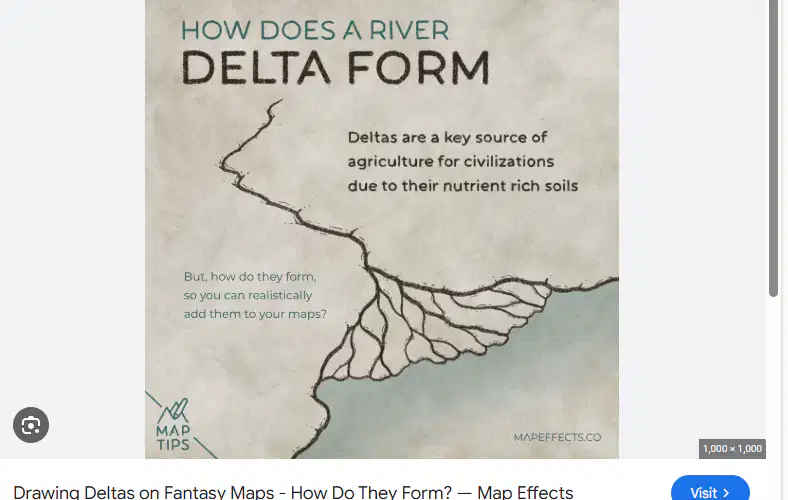
what is this
glacier
canyon
delta
mountain
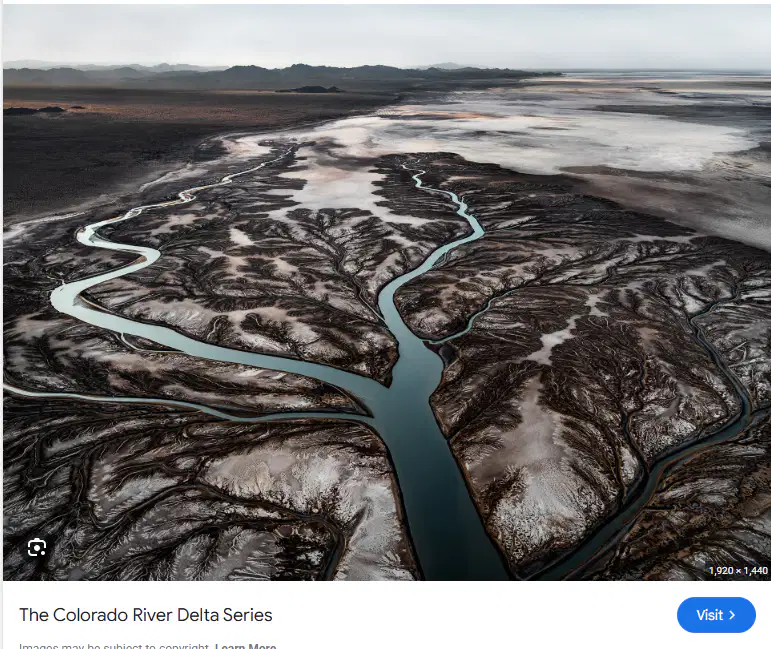
name this picture
river delta
glacier
cave
canoyn
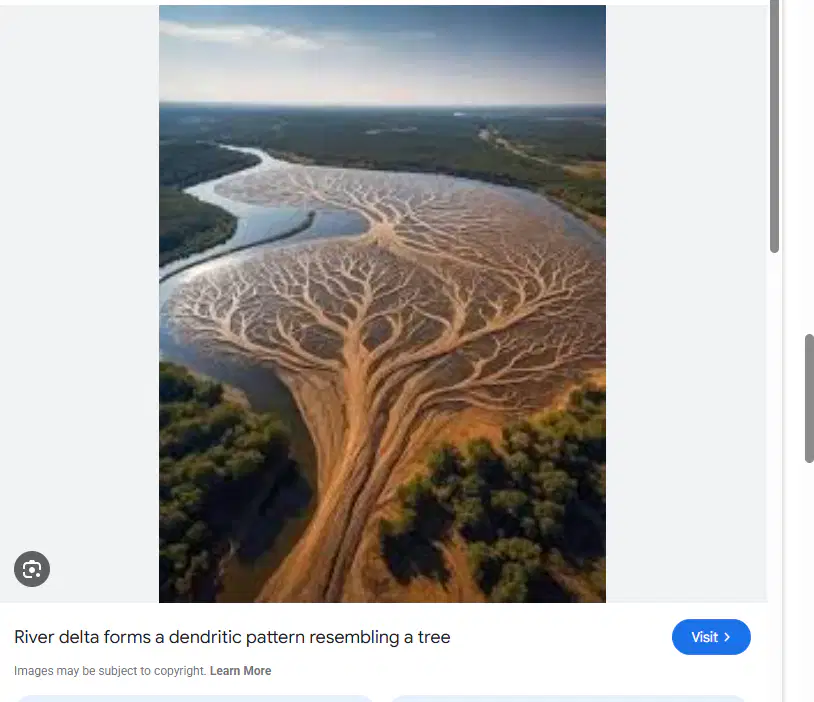
name
canyon
river
river delta
glacier
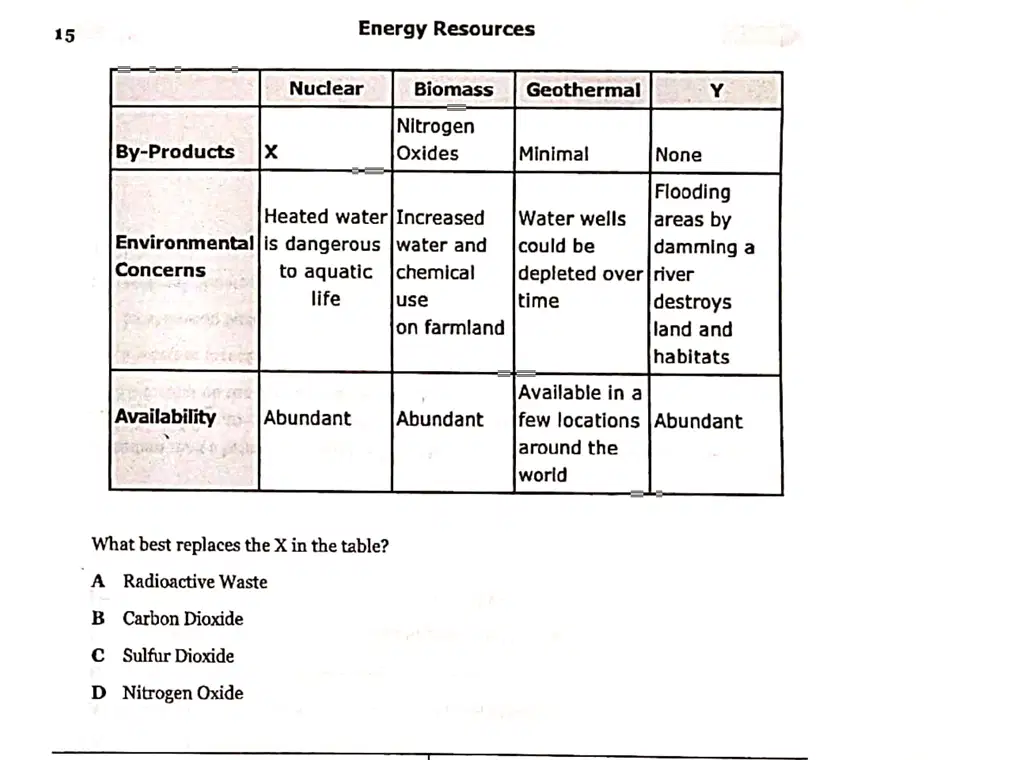
Refer to the table on Energy Resources. What best replaces the X in the table?
Radioactive Waste
Carbon Dioxide
Sulfur Dioxide
Nitrogen Oxide

A
B
C
D
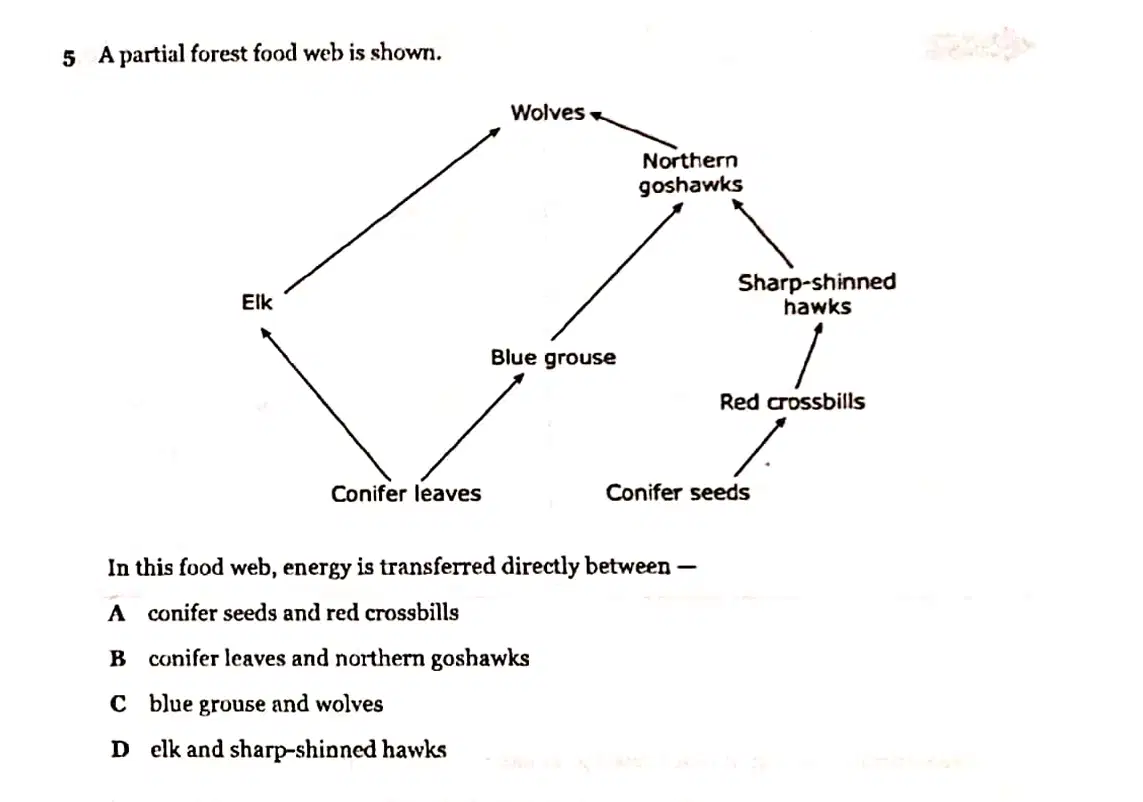
A partial forest food web is shown. In this food web, energy is transferred directly between —
conifer seeds and red crossbills
conifer leaves and northern goshawks
blue grouse and wolves
elk and sharp-shinned hawks
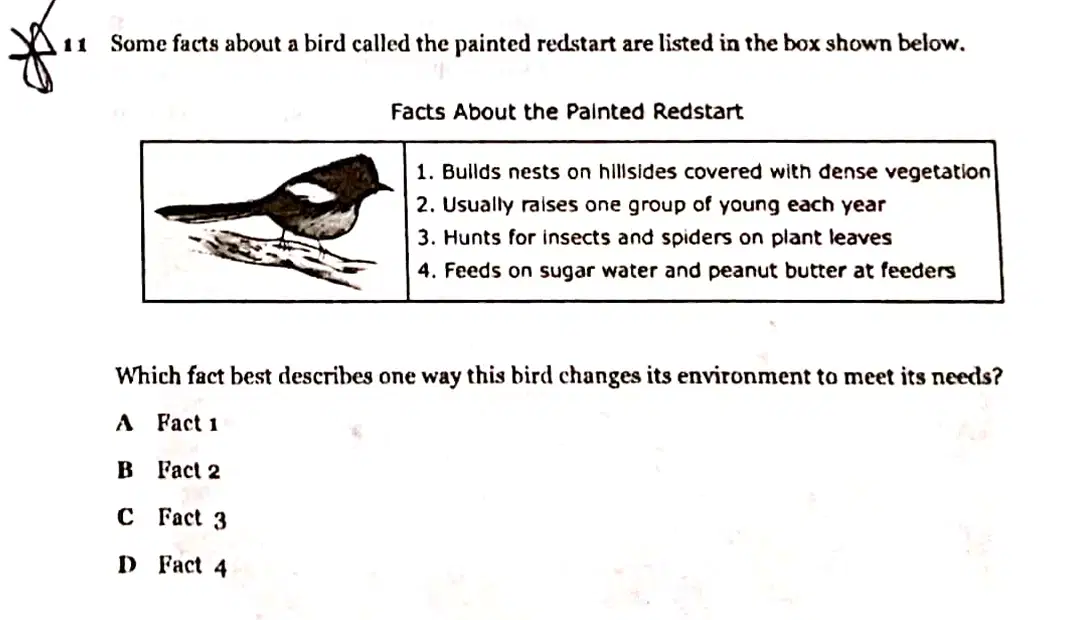
Which fact best describes one way this bird changes its environment to meet its needs?
Fact 1
Fact 2
Fact 3
Fact 4
How does this bird modify its surroundings to help it survive?
By flying long distances
By singing loudly
By building nests in trees
By eating seeds
What is one way this bird changes its habitat to fulfill its needs?
It migrates to warmer areas
It flaps its wings to stay cool
It drinks water from ponds
It uses twigs to construct a nest
Which action shows how this bird adapts its environment for survival?
Fact A
Fact B
Fact C
Fact D

An adaptation can be explained as (a) .
all animals can live anywhere
how an organism grows
traits that allow for survival
Mimicry and camouflage are examples of (a)
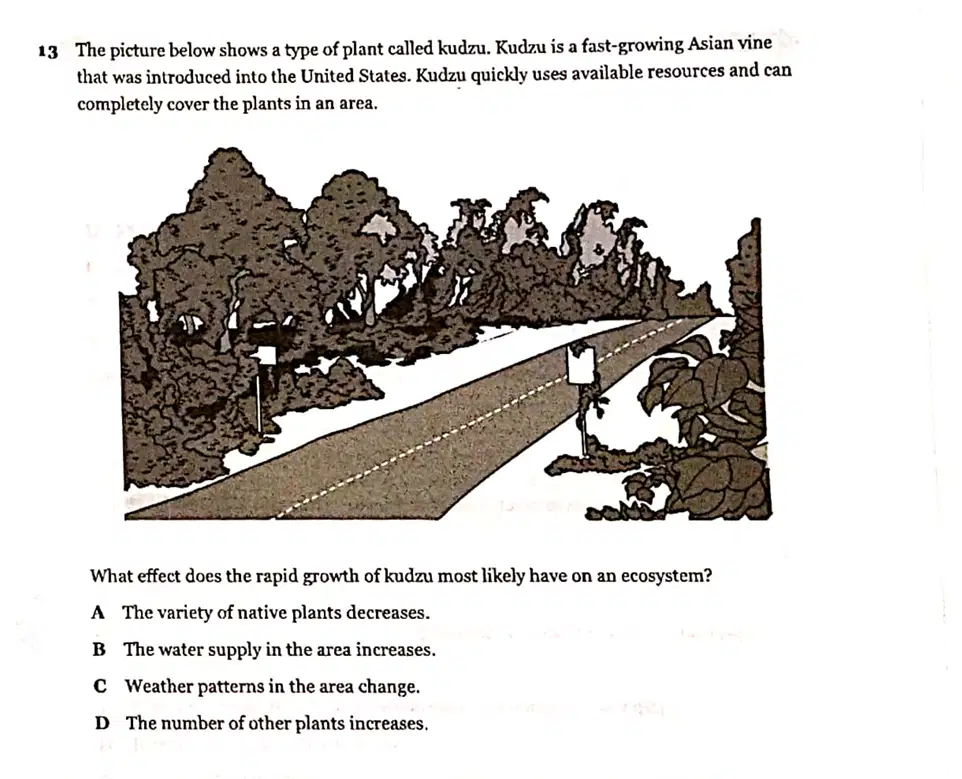
What effect does the rapid growth of kudzu most likely have on an ecosystem?
The variety of native plants decreases.
The water supply in the area increases.
Weather patterns in the area change.
The number of other plants increases.
Which of the following is a likely consequence of introducing an invasive plant species like kudzu into a new environment?
All plant species grow at the same rate.
Rainfall in the area increases.
The soil becomes more fertile for all plants.
Native animal populations may decline.
How does the spread of kudzu typically affect the biodiversity of an ecosystem?
Biodiversity remains unchanged.
Biodiversity decreases as kudzu outcompetes native plants.
Biodiversity increases as new animal species arrive.
Biodiversity increases due to more plant growth.
What is one reason why kudzu is considered a threat to native plant species?
It increases the amount of rainfall in the ecosystem.
It provides food for all native animals.
It improves the growth of all plants in the area.
It grows rapidly and blocks sunlight from other plants.

An invasive species is a plant or animal that is ________ to an ecosystem.
not native
just visiting
beneficial
not friendly

Kudzu is an invasive plant species in the southern part of the United States. It is a fast growing vine that can cover fields and trees. The image provides evidence of kudzu's rapid growth in an area.
How does kudzu's rapid growth impact native plant populations?
Kudzu can harm native plant populations because it blocks them from receiving sunlight.
Kudzu can harm native plant populations because it causes more rainfall in the area.
Kudzu can help native plant populations because it protects them from overheating.
Kudzu can help native plant populations because it attracts new animals to the area.
Why do the populations of invasive species grow so quickly?
Invasive Species are native to an area.
Invasive species are prey to many animals.
Invasive species have no natural predators.
Invasive species keep the ecosystems in equilibrium.


Some students are using samples of different substances for a lab investigation. They plan to observe the physical properties of each substance and record their observations in a table like the one below. Data Table Sample | Substance | Observations 1 | S | 2 | N2O4 | 3 | Fe | 4 | O2 | 5 | LiF | 6 | Sr | 7 | Al | Which of the substances observed are elements?
S, Fe, O2, Sr, and Al
S, O2, and LiF
N2O4, O2, and LiF
N2O4, Fe, Sr, and Al
When there is one type of atom
Element
Compound
Homogeneous Mixture
Heterogeneous Mixture
When there is 2 or more atoms combined together
Element
Compound
Homogeneous Mixture
Heterogeneous Mixture


In which mixture can you see all of the parts?
homogeneous
heterogeneous
In which mixture can you not see all of the parts?
homogeneous
heterogeneous
A student read a brochure about the Piney Woods of Texas and learned the average annual rainfall is 40-52 inches (100-150 cm) each year and the humidity is typically high. The information the student read is called —
a weather forecast
local erosion factors
regional climate data
last year's weather data

A wide U-shaped valley is shown in the photograph below. This valley was most likely formed by —
flash flooding
a glacier
a hurricane
melting snow
Which of the following landforms is most likely created by the movement of glaciers?
Sand dunes
Delta plains
U-shaped valleys
Volcanic craters
What is the primary process responsible for carving out U-shaped valleys in mountainous regions?
River flooding
Earthquakes
Glacial erosion
Wind erosion
Which feature would you expect to find in an area that was once covered by glaciers?
V-shaped valley
U-shaped valley
Sandbar
Sinkhole
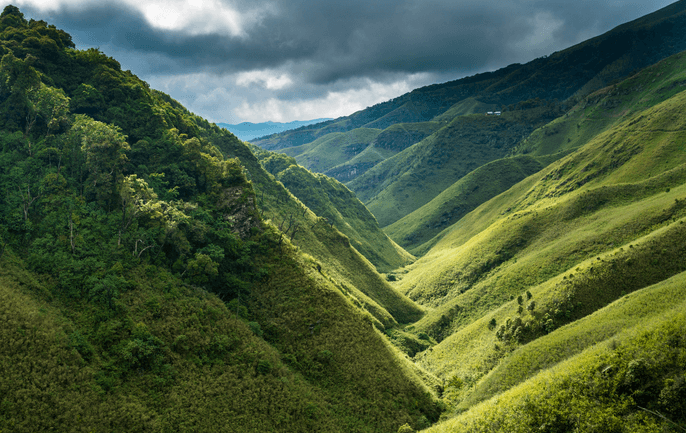
What is the place between two mountains called?
canyon
valley
river

Sally grew 4 different types of plants in an enclosed greenhouse. She placed each plant in the same size planter and used the same type of potting soil. Each plant was placed in a corner of the greenhouse and received the same amount of water and fertilizer. Each day, Sally was careful to keep the greenhouse sealed and the temperature at the same level. As the plants grew, Sally recorded her observations in the table above. Plant 1 did not produce any seeds. What is the most likely reason?
This plant was not healthy enough to produce seeds.
This plant relies on insects to produce fruit and seeds.
Plant 1 is an example of a type that does not make seeds.
Plant 1 produced too many leaves to make seeds.
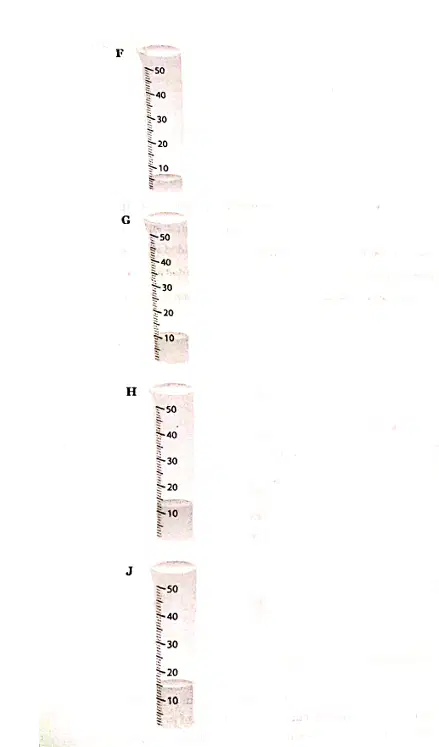
Look at the graduated cylinder labeled 15 ml
F
G
H
J

Refer to the diagram of the Prickly Pear Cactus. Which two traits best help a cactus conserve water in the dry conditions of a West Texas desert ecosystem?
Large flowers and sweet fruit
Sweet fruit and sharp spines
Sharp spines and waxy stems
Waxy stems and large flower
(a) carries water throughout the plant, while (b) carries sugar.
Xylem transports (a) and minerals to parts of the plant and leaves for photosynthesis while phloem transports (b) made from photosynthesis to the rest of plant.
Match the following.
transport water
xylem
take in CO2 and release O2
stomata
organelle that absorb the light
chloroplast
transport Glucose
phloem
organ in a plant that is the site of photosynthesis
leaves
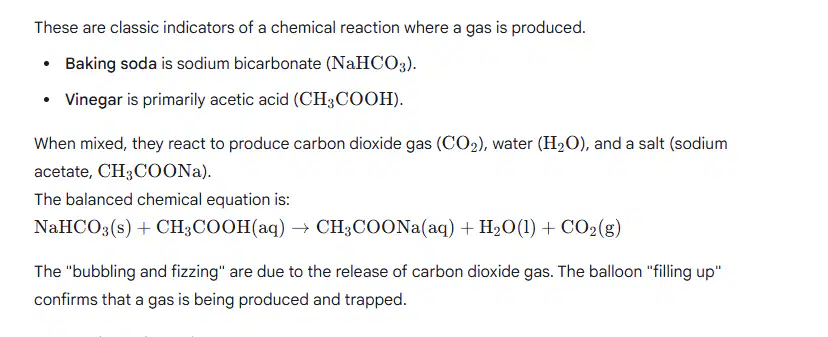
Shelley has a balloon with a small amount of baking soda in it. She fits the open end of the balloon over a graduated cylinder containing some vinegar. As she lifts the end of the balloon, the baking soda pours into the vinegar causing bubbling and fizzing to occur. Marie observes the balloon begin to "fill" up. Based on these observations, which of these can Marie determine about the new substance formed by mixing baking soda with vinegar?
No chemical reaction took place.
Only a physical change happened.
A chemical reaction occurred, producing a solid.
A chemical reaction occurred, producing a gas.

