
 Worksheets
Chapter 18 Study Guide
Total questions: 100
Worksheet time: 50mins
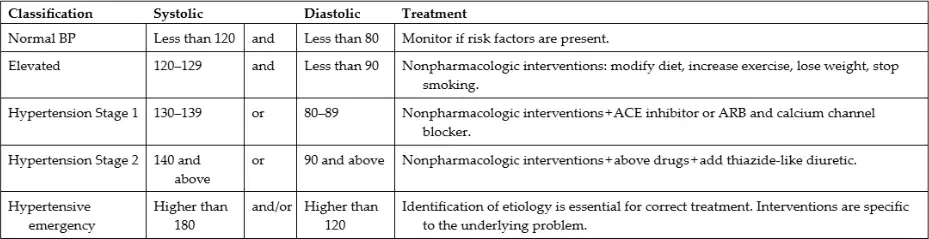
According to the Blood Pressure Classification table, what is the systolic and diastolic range for Hypertension Stage 1?
Less than 120 and less than 80
120–129 and less than 90
130–139 or 80–89
Higher than 180 and/or higher than 120
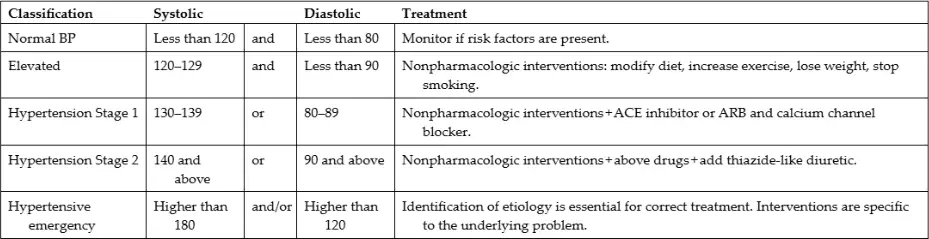
Fill in the blank: The treatment for Elevated blood pressure includes nonpharmacologic interventions such as modifying diet, increasing exercise, losing weight, and _________?
stop smoking
increase salt intake
reduce water consumption
skip breakfast
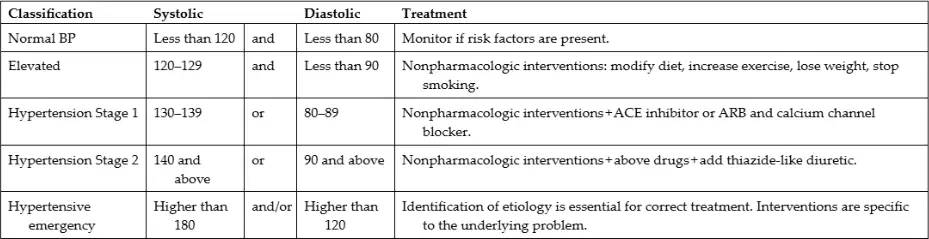
Which classification requires identification of etiology for correct treatment according to the Blood Pressure Classification table?
Normal BP
Hypertensive emergency
Hypertension Stage 1
Hypertension Stage 2
What is the primary cause of Primary Hypertension?
No identifiable cause; related to genetics and environment.
High salt intake only.
Chronic kidney disease.
Excessive alcohol consumption.
Secondary Hypertension is caused by which of the following?
Genetics and environment
Conditions (renal, endocrine, vascular) or substances (NSAIDs, MAOIs, hormones, nicotine)
High sodium diet
Family history
Which of the following is a nonmodifiable risk factor for hypertension?
Obesity
Diet
Age
Smoking
Non-Hispanic Blacks have the highest incidence of hypertension.
True
False
Fill in the blank: BP = ________ × Systemic Vascular Resistance.
Cardiac Output
Stroke Volume
Heart Rate
Blood Volume
Which system's overactivity contributes to increased blood pressure in hypertension?
Digestive system
Sympathetic nervous system and renin-angiotensin system
Respiratory system
Muscular system
Which of the following is an early clinical manifestation of hypertension?
Headache
Often asymptomatic ("silent killer")
Chest pain
Blurred vision
Which organs are commonly affected by target organ damage in hypertension?
A) Kidneys, brain, heart, eyes
B) Liver, pancreas, stomach, intestines
C) Lungs, skin, bones, muscles
D) Thyroid, spleen, gallbladder, bladder
Fill in the blank: Late clinical manifestations of hypertension include headache, dizziness, ________, chest pain, and fatigue.
blurred vision
hearing loss
nausea
rash
Which of the following is NOT a diagnostic method for hypertension?
BP readings (office + home or ambulatory)
Eye exam for retinal damage
ECG, echocardiogram, stress tests for heart damage
Blood glucose test
What is the target blood pressure (BP) for treatment goals in hypertension?
≤ 130/80 mm Hg
≤ 140/90 mm Hg
≤ 120/70 mm Hg
≤ 150/95 mm Hg
Which lifestyle modification is recommended for managing hypertension?
High sodium diet
DASH diet
Sedentary lifestyle
Increased alcohol intake
Which of the following is a class of medication used to treat hypertension?
Antibiotics
Diuretics
Antivirals
Antifungals
Assessment in nursing management of hypertension includes identifying risk factors and monitoring BP in how many positions?
3 positions (supine, sitting, standing)
2 positions (sitting, standing)
4 positions (supine, sitting, standing, prone)
1 position (sitting only)
What is the emergency blood pressure value for a hypertensive crisis with organ damage?
BP >180/120
BP <120/80
BP 140/90
BP 160/100
Which of the following is a long-term complication of hypertension?
Stroke
Diabetes
Asthma
Appendicitis
Arteriosclerosis is defined as the ________ of arteries with aging.
hardening/thickening
narrowing/weakening
dilation/softening
blockage/rupture
Atherosclerosis involves plaque buildup inside arteries.
True
False
Which of the following is NOT a risk factor for atherosclerosis?
Diabetes
High BP
High cholesterol
Low calcium
Peripheral Vascular Disease (PVD) commonly affects which of the following areas?
Heart
Brain
Arms, legs, abdomen
Lungs
Narrowing or obstruction in Peripheral Vascular Disease leads to ________ function.
decreased
increased
normal
enhanced
Consequences of Peripheral Vascular Disease include claudication, ulcers, and ________.
gangrene
hypertension
asthma
jaundice
What should patients do to reduce the risk of orthostatic hypotension?
Rise slowly
Drink less water
Exercise vigorously immediately after standing
Skip meals
Patient Teaching & Safety: True or False: Patients should avoid OTC meds without provider approval.
True
False
What is recommended for annual screening to promote vascular health?
Annual BP screening
Annual vision screening
Annual dental screening
Annual hearing screening
Peripheral Vascular Disease (PVD) Overview: Which of the following is an arterial cause of peripheral vascular problems?
A) Venous thrombosis
B) Embolus
C) Thrombophlebitis
D) Defective valves in veins
Peripheral Vascular Disease (PVD) Overview: Which of the following is a venous cause of peripheral vascular problems?
A) Aneurysms
B) Trauma
C) Venous thrombosis
D) Embolus
What two conditions should be managed to prevent peripheral vascular disease?
Atherosclerosis and arteriosclerosis
Diabetes and hypertension
Asthma and bronchitis
Osteoporosis and arthritis
What is the most common cause of Peripheral Arterial Disease (PAD)?
Hypertension
Atherosclerosis
Diabetes mellitus
Vasoconstriction
Nicotine causes ________, which leads to increased BP and reduced blood flow.
vasoconstriction
vasodilation
bronchodilation
hypotension
Peripheral Arterial Disease (PAD) can be acute due to ________.
embolism
atherosclerosis
hypertension
diabetes
Common sites for PAD include ________ and ________.
Leg arteries, carotid arteries
Renal arteries, pulmonary veins
Coronary arteries, jugular veins
Brachial arteries, femoral veins
Which of the following is a sign or symptom of PAD?
Intermittent claudication
Increased BP in affected limb
Hair loss
None of the above
Decreased BP in affected limb in PAD is measured using ________.
Ankle-Brachial Index (ABI)
Electrocardiogram (ECG)
Pulmonary Function Test (PFT)
Echocardiogram
Normal aging may cause which of the following?
Hair loss
Increased BP
Decreased blood flow to extremities
Ischemic changes
What is the normal value for the Ankle-Brachial Index (ABI) in the diagnosis of PAD?
1.0
0.5
1.5
0.7
The Ankle-Brachial Index (ABI) indicates equal systolic pressure at which sites?
Ankle and brachial sites
Wrist and brachial sites
Ankle and carotid sites
Brachial and femoral sites
Which imaging studies are used in the diagnosis of PAD?
Radiographic studies and Ultrasound Doppler
Electrocardiogram and Spirometry
Endoscopy and Colonoscopy
EEG and EMG
Which of the following is NOT a treatment goal for PAD?
Increase blood flow
Prevent clot formation
Decrease tissue oxygenation
Avoid amputation
What is the purpose of exercise therapy in non-pharmacologic treatment of PAD?
Walk to claudication, rest, repeat—goal is 45–60 min/day
Increase dietary fiber intake to reduce cholesterol
Apply heat packs to affected limbs daily
Perform only upper body exercises to avoid leg pain
Which dietary supplement is mentioned as supporting muscle recovery in PAD patients?
L-Carnitine (especially propionylcarnitine)
Vitamin C
Glucosamine
Fish oil
Dry eschar should be left in place unless debrided by a professional.
True
False
Which drug class does Aspirin belong to?
Platelet inhibitors
Antiplatelets
Thrombolytics
Cholesterol-lowering drugs
What is the purpose of Clopidogrel (Plavix)?
Prevent platelet aggregation
Used with/without aspirin to reduce clot risk
Dissolve existing clots in acute ischemia
Improve walking distance, increase blood flow
Fill in the blank: Pentoxifylline (Trental) and Cilostazol (Pletal) are used to ________ walking distance and ________ blood flow.
improve; increase
reduce; decrease
limit; restrict
worsen; lower
Which of the following is a cholesterol-lowering drug?
Alteplase (tPA)
Atorvastatin (Lipitor)
Clopidogrel (Plavix)
Pentoxifylline (Trental)
What is the main purpose of thrombolytics such as Alteplase (tPA) and Tenecteplase (TNKase)?
Prevent platelet aggregation
Dissolve existing clots in acute ischemia
Lower LDL and increase HDL
Improve walking distance
Medications used for PAD, especially thrombolytics and antiplatelets, increase the risk of bleeding.
True
False
Which of the following should be reported immediately when using PAD medications?
Unusual bruising
Hematuria
Bleeding after IV/needle stick
All of the above
PTA (Angioplasty) is a procedure where a ________ catheter opens the artery and may place a stent to prevent collapse.
balloon
laser
suction
rotary
What does an atherectomy procedure do?
Opens artery with a balloon
Removes plaque using cutting/laser/abrasion
Prevents platelet aggregation
Dissolves clots in acute ischemia
What is the purpose of an aortoiliac or femoropopliteal bypass?
To remove blood clots
To restore flow using a synthetic graft that bypasses occlusion
To cure PAD
To prevent infection
Which of the following is NOT a surgical risk of aortoiliac or femoropopliteal bypass?
Bleeding
Graft failure
Thrombosis
Hypertension
Post-op care for aortoiliac or femoropopliteal bypass includes monitoring _________
distal pulses
blood glucose levels
lung sounds
cranial nerve function
PAD is chronic and not curable, but manageable.
True
False
What is the main goal in managing PAD?
Cure the disease
Maintain perfusion and prevent tissue loss
Increase blood pressure
Reduce cholesterol only
Surgery and intervention for PAD are ________, not curative.
palliative
preventive
aggressive
experimental
What is the most modifiable risk factor for PAD?
A) Age
B) Smoking
C) Gender
D) Genetics
During assessment for PAD, extremities should be checked every 4 hours for all of the following EXCEPT:
Warmth
Paresthesia
Pain
Fever
Which of the following is a nursing diagnosis for PAD?
Altered tissue perfusion
Hypertension
Diabetes
Hyperthyroidism
One of the goals in the care of PAD is to ________ pain.
reduce
increase
ignore
cause
What are some recommended implementations for patients with aneurysms?
Keep warm and avoid constrictive clothing
Lower legs below heart unless edema is present
Encourage daily walking/swimming
Smoking cessation referral
All of the above
Which of the following is NOT a risk factor for aneurysms?
A. Smoking
B. Male gender
C. Hypertension
D. Female gender
Fill in the blank: The most common etiology of aneurysms includes ________, hypertension, and genetic predisposition.
atherosclerosis
diabetes
hyperthyroidism
hypokalemia
Aneurysms are often asymptomatic.
True
False
Which symptom is most associated with abdominal aortic aneurysm (AAA)?
Substernal pressure
Back pain and abdominal pulsation
Breathing issues
Sudden, excruciating pain
Thoracic aneurysms may present with which of the following symptoms?
Substernal/tracheal pressure
Abdominal pulsation
Renal dysfunction
None of the above
Fill in the blank: Dissection of an aneurysm is characterized by ________, excruciating pain, diminished pulses, and hypotensive shock.
sudden
gradual
mild
intermittent
Which diagnostic tools are used for aneurysms?
Ultrasound
CT
MRI
X-ray
All of the above
What is the primary treatment for large or symptomatic aneurysms?
Medication only
Surgical repair (graft or stent)
Physical therapy
Observation only
Fill in the blank: Nursing management for aneurysms includes assessing distal pulses and ________ function post-surgery.
renal
hepatic
pulmonary
neurological
Which of the following is NOT part of nursing management for aneurysms?
Assess for pulsation and family history
Monitor for pain changes or shock symptoms
Pre/post-op teaching
Ignore changes in pulses
What is the etiology of Thromboangiitis Obliterans (Buerger Disease)?
Bacterial infection
Inflammatory occlusion, linked to smoking
Genetic mutation
Viral infection
Which of the following is NOT a symptom of Thromboangiitis Obliterans (Buerger Disease)?
Numbness
Tingling
Intense pain
Fever
Fill in the blank: The key treatment for Thromboangiitis Obliterans (Buerger Disease) is ________ cessation.
smoking
alcohol
caffeine
sugar
Which of the following is a nursing role in managing Thromboangiitis Obliterans (Buerger Disease)?
Education on smoking cessation
Prescribing antibiotics
Administering vaccines
Physical therapy only
Which of the following is a symptom of Raynaud Disease/Phenomenon?
High fever
Color changes: white → blue → red
Persistent cough
Joint swelling
Fill in the blank: Treatment for Raynaud Disease/Phenomenon includes avoiding ______ and stress.
cold
heat
light
noise
Which medication is used in the treatment of Raynaud Disease/Phenomenon?
Antibiotics
Calcium channel blockers
Insulin
Antivirals
Which of the following is NOT a symptom of Raynaud Disease/Phenomenon?
Numbness
Prickly sensation
Decreased sensation
High blood pressure
Which of the following is NOT a risk factor for Deep Vein Thrombosis (DVT)?
Immobility
Surgery
Dehydration
Exercise
Which symptoms are commonly associated with Deep Vein Thrombosis (DVT)?
A) Pain, swelling, warmth, redness
B) Fever, cough, headache
C) Nausea, vomiting, diarrhea
D) Rash, itching, sneezing
Deep Vein Thrombosis (DVT) may be asymptomatic.
True
False
What are the diagnostic methods for Deep Vein Thrombosis (DVT)?
Ultrasound, D-dimer
ECG, Chest X-ray
Liver function test, Urinalysis
Spirometry, Peak flow measurement
Which of the following is a recommended treatment for Deep Vein Thrombosis (DVT)?
Heparin drip and oral anticoagulants
Antibiotics
Insulin therapy
Antihistamines
List two nursing management steps for a patient with Deep Vein Thrombosis (DVT).
Monitor leg size, warmth, color, pulses; Educate on medication use, leg elevation, fluid intake, smoking cessation; Monitor for pulmonary embolism.
Encourage vigorous leg massage and early ambulation; Restrict fluid intake.
Apply cold compresses to the affected leg; Advise complete bed rest for several weeks.
Administer high doses of vitamin K; Avoid all forms of exercise.
Which of the following should be avoided in the treatment of Deep Vein Thrombosis (DVT)?
Early ambulation
Compression stockings
Prolonged sitting/standing
Oral anticoagulants
What should nurses monitor for as a sign of pulmonary embolism in patients with DVT?
Dyspnea, chest pain, low SpO₂, anxiety
Bradycardia, hypertension, blurred vision
Abdominal pain, jaundice, pruritus
Polyuria, polydipsia, weight gain
Which lifestyle modifications should be taught to patients as part of nursing interventions for DVT?
Teach warm dressing, stress management, avoid tobacco/caffeine
Increase sugar intake
Reduce water intake
Encourage prolonged bed rest
What are the symptoms of Carotid Artery Disease? (List any two)
Bruit, vision loss, syncope, extremity weakness, stroke-like signs
Fever, cough, chest pain, rash
Abdominal pain, diarrhea, jaundice, weight gain
Nasal congestion, sneezing, itchy eyes, sore throat
What is the treatment for Carotid Artery Disease if stenosis is greater than 70%?
Endarterectomy or stenting
Aspirin only
Lifestyle modification only
Beta-blockers only
What should be monitored for in post-op care of Carotid Artery Disease? (List any two)
Monitor for bleeding, hoarseness, neuro changes; Watch for airway compromise
Monitor for increased appetite and weight gain; Encourage early ambulation
Monitor for skin rash and itching; Increase fluid intake
Monitor for joint pain and muscle cramps; Restrict salt intake
What is the etiology of Varicose Veins?
Incompetent valves leading to blood pooling
Excessive calcium deposition in veins
Bacterial infection of the venous wall
Congenital absence of arteries
Which of the following is NOT a symptom of Varicose Veins?
A) Aching
B) Heaviness
C) Twisted veins
D) Fever
Name two treatments for Varicose Veins.
Compression stockings, elevate legs, avoid standing long, exercise (walking/swimming)
Antibiotics and bed rest
Chemotherapy and radiation
High sugar diet and minimal movement
Which of the following is a surgical option for Varicose Veins?
Endarterectomy
Sclerotherapy
Stenting
Blood transfusion
Which of the following is NOT a symptom of chronic venous insufficiency and venous stasis ulcers?
Itching
Brownish skin
Ulcers
Swelling
High fever

