
 Worksheets
13.3 Electromagnetic Radiation in Communication
Total questions: 69
Worksheet time: 35mins
How fast do electromagnetic waves travel in a vacuum/air?
Electromagnetic waves travel at the speed of light, approximately 3 x 10^8 meters per second, in a vacuum/air.
Electromagnetic waves travel at the speed of sound, approximately 3 x 10^2 meters per second, in a vacuum/air.
Electromagnetic waves travel at the speed of 1 x 10^6 meters per second in a vacuum/air.
Electromagnetic waves travel at the speed of 3 x 10^5 meters per second in a vacuum/air.
Name some important systems of communications that rely on electromagnetic radiation.
Mobile phones, wireless Internet, Bluetooth, and optical fibres.
Steam engines, water wheels, and windmills.
Mechanical clocks, abacuses, and sundials.
Pneumatic tubes, conveyor belts, and escalators.
What is the difference between a digital signal and an analogue signal?
A digital signal has discrete values (often two, such as 0 and 1), while an analogue signal varies continuously.
A digital signal varies continuously, while an analogue signal has only two values.
Both digital and analogue signals have only two values.
A digital signal is always stronger than an analogue signal.
Can a sound be transmitted as a digital or an analogue signal?
Yes, a sound can be transmitted as either a digital or an analogue signal.
No, a sound can only be transmitted as an analogue signal.
No, a sound can only be transmitted as a digital signal.
No, sound cannot be transmitted as a signal at all.
Explain the benefits of digital signaling.
Digital signaling is less susceptible to noise and interference, allows for easier data compression and encryption, and enables more reliable and efficient communication.
Digital signaling increases noise and interference, making communication less reliable.
Digital signaling makes data compression and encryption impossible.
Digital signaling is only used for analog data transmission.

What do remote controllers, optical fibres, mobile phones, wireless Internet and Bluetooth have in common? Fill in the blank: They are important parts of the communication systems that we have today. They all rely on ________, which enables fast communication.
electromagnetic radiation
chemical reactions
mechanical energy
gravitational force
What is the speed of all electromagnetic waves in a vacuum?
3×10⁸m/s
1.5 × 10^6 m/s
3 × 10^6 m/s
1×10⁸m/s
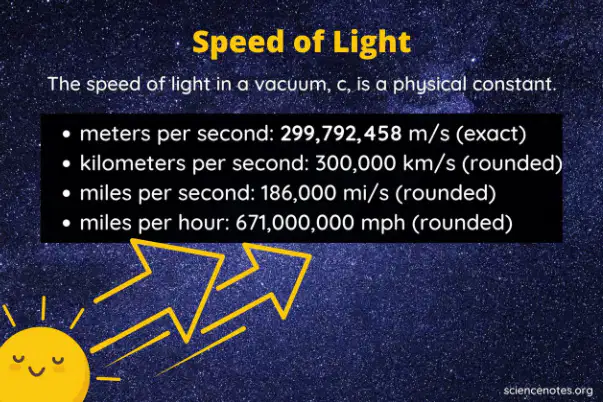
The speed of light in a vacuum is approximately ______ meters per second (rounded).
300,000,000
150,000,000
30,000,000
3,000,000
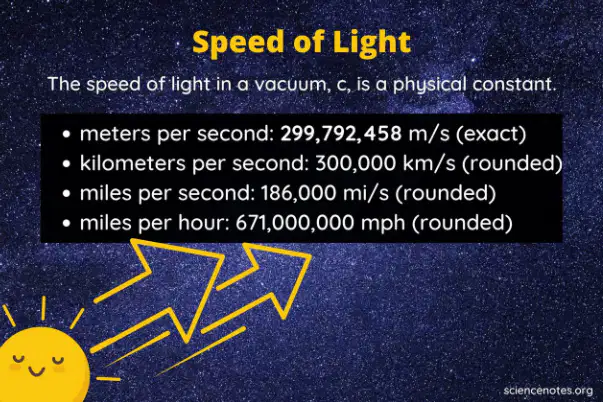
The speed of light in a vacuum is approximately ______ kilometers per second (rounded).
300,000
150,000
1,000,000
30,000
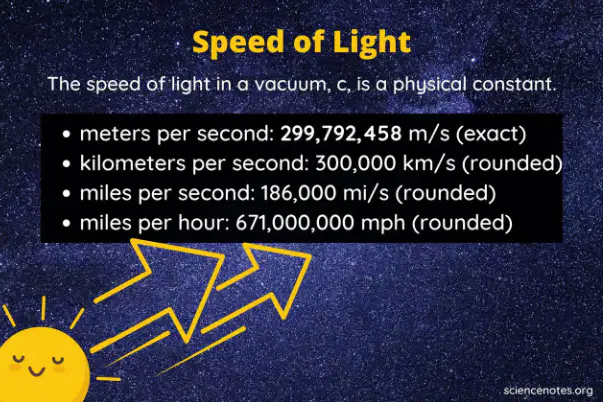
The speed of light in a vacuum is approximately ______ miles per hour (rounded).
671,000,000
186,000
1,000,000,000
299,792
If you travel at the speed of light, how long would it take to get to the Moon?
1.3 seconds
10 seconds
0.01 seconds
5 minutes
If you travel at the speed of light, how long would it take to get to the Sun?
8.3 minutes
1.2 seconds
2 hours
30 days
If you travel at the speed of light, how long would it take to get out of the Milky Way?
2000 years
2 years
20,000 years
20 years
If you travel at the speed of light, how long would it take to get to the edge of the observable universe?
90 billion years
1 million years
100 thousand years
9 trillion years
The speed of light is:
300,000 kilometers per second
150,000 kilometers per second
1,000,000 kilometers per second
30,000 kilometers per second
The channel changes immediately when you click the remote controller because electromagnetic waves travel at what speed?
The speed of light
The speed of sound
Slower than sound
The speed of electricity in wires
The infrared signal (or wave) travels from the remote controller to the receiver on the television at approximately _________
3×10⁸ m/s
3 × 10^6 m/s
3×10⁵ m/s
3×10⁴ m/s
Microwave signals travel to and from our mobile phones at approximately _________.
3×10⁸ m/s
3 × 10^6 m/s
3×10⁵ m/s
3 × 10^7 m/s
How long does it take a microwave signal to travel from Earth to a geostationary satellite 36 000 km away and back? (Total distance = 36 000 km + 36 000 km = 72 000 km or 72 72×106m; Speed of microwaves in air/vacuum = 3.0 ×10⁸m/s) Time taken for microwave signal to travel is:
0.24 s
0.12 s
2.4 s
0.072 s
Fill in the blank: Microwave signals travel to and from our mobile phones at approximately _______ m/s.
3×10⁸
3×10⁶
3×10⁵
3×10⁷
Fill in the blank: The total distance for a microwave signal to travel from Earth to a geostationary satellite 36 000 km away and back is _______ km or _______ m.
72 000 km or 72 72×106m
36 000 km or 36 × 10^6 m
18 000 km or 18 18×106 m
54 000 km or 54 ×106 m
How do wireless communication rely on electromagnetic radiation? What type of waves are used for wireless communication?
Sound waves
Radio waves and microwaves
Light waves
Water waves
How do wireless communication rely on electromagnetic radiation? Microwaves for mobile phones and wireless internet can pass through some _____?
walls
water
metal
wood
How do wireless communication rely on electromagnetic radiation? Radio waves and microwaves can pass through some walls but can be _____. Thus, there will be poor connection if devices are in different rooms.
weakened
strengthened
multiplied
reflected
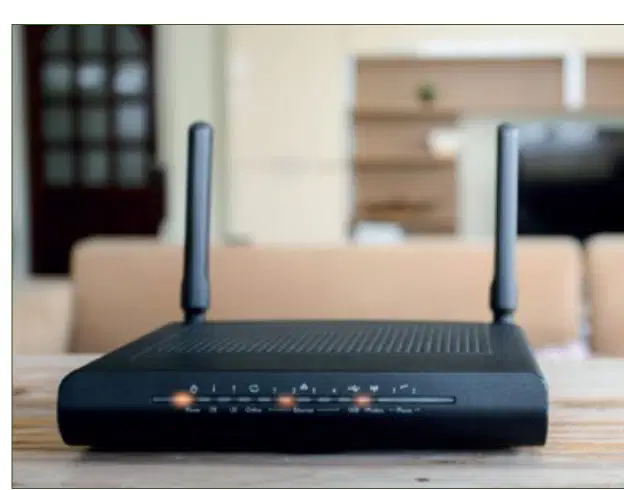
How do wireless communication rely on electromagnetic radiation?
microwaves
ultrasound
visible light
infrared
How do wireless communication rely on electromagnetic radiation? Rods on the aerial: _______ and receive electromagnetic signals of a certain wavelength (λ).
Transmit
Reflect
Absorb
Block
To ensure a good reception, what should be the length of the rods on the aerial?
Equal to the wavelength (λ) of the signals
Double the wavelength (λ) of the signals
Half the wavelength (λ) of the signals
Unrelated to the wavelength (λ) of the signals
Which type of electromagnetic wave has a shorter wavelength: microwaves used in mobile phones or radio waves used for TV and radio broadcast?
Microwaves used in mobile phones
Radio waves used for TV and radio broadcast
Infrared waves used in remote controls
Visible light waves
A mobile phone only requires a short aerial for transmission and reception.
True
False
What is the wavelength (λ) of radio waves at 90 MHz?
3.3 m
0.33 m
33 m
0.093 m
What is the wavelength (λ) of mobile phone microwaves at 1800 MHz?
0.17 m or 17 cm
1.8 m or 180 cm
0.018 m or 1.8 cm
0.017 m or 1.7 cm
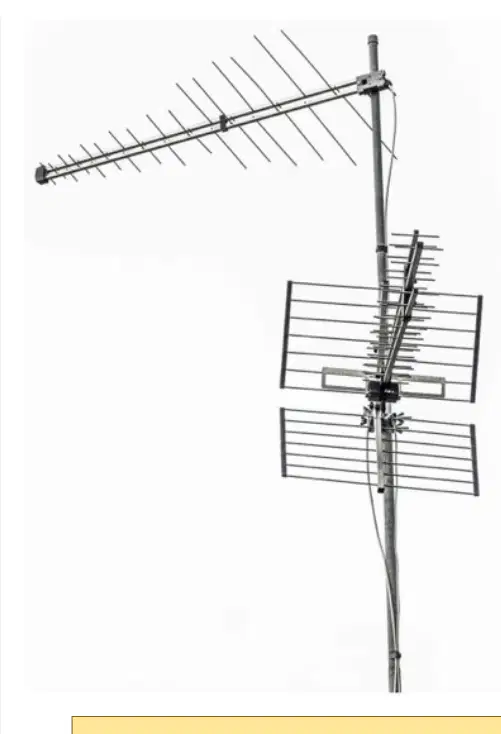
What is the purpose of having different lengths of rods on the aerial?
To receive signals of different wavelengths
To increase the weight of the aerial
To make the aerial look attractive
To reduce the cost of the aerial
Bluetooth technology uses ________ waves for wireless communication.
radio
infrared
ultraviolet
microwave
What type of waves does Bluetooth technology use for wireless communication?
Sound waves
Light waves
Radio waves
Water waves

What is the function of Bluetooth technology as shown in the image?
Two devices can be connected wirelessly over short distances using Bluetooth.
Bluetooth is used to increase the speed of wired internet connections.
Bluetooth is primarily used for charging electronic devices.
Bluetooth is used to print documents directly from a computer without any software.
In wireless communication, information is transported without the need of free space.
True
False
Wireless connection is strongest when the transmitter and the receiver are in view of each other.
True
False
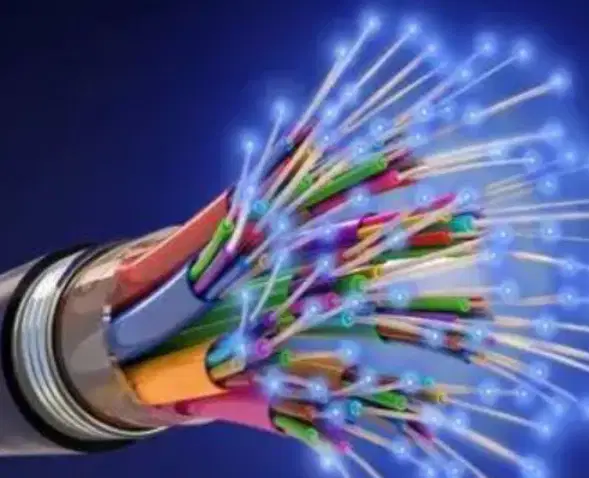
What makes optical fibres more advantageous compared to copper wires for cable television and high-speed broadband Internet access?
They are cheaper
They can carry and transmit light over long distances
They are easier to install
They are made of metal
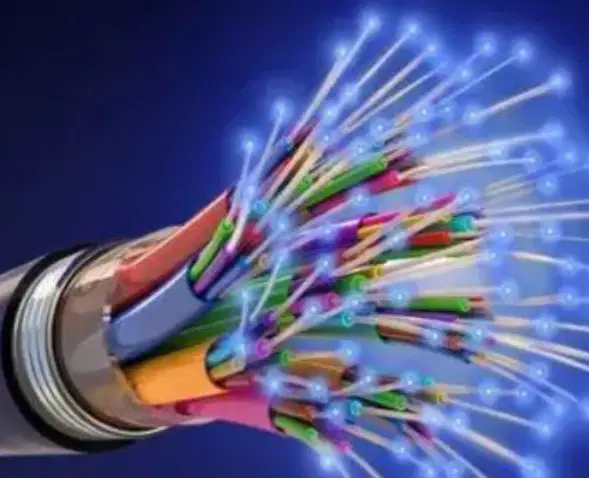
Fill in the blank: Optical fibres are long thin glass fibres that can carry and transmit light over _________
long distances
short distances
high temperatures
low voltages

Which type of light undergoes total internal reflection in optical fibres and travels from one end to the other with little loss in energy?
Ultraviolet light
Visible light
Infrared light
X-rays

Infrared waves with wavelengths slightly longer than red light can also pass through glass.
True
False

Fill in the blank: Optical fibres can transmit both ________ and invisible short wavelength infrared pulses.
visible light
ultraviolet light
microwaves
gamma rays

Why are optical fibres able to carry high rates of data?
Because the wavelengths of visible light and infrared used in optical fibres are very short (between 650 nm to 1600 nm), the frequencies of the waves are very high, and many pulses can be transmitted in short time intervals.
Because optical fibres are made of metal, which conducts data faster.
Because optical fibres use radio waves, which travel faster than light.
Because optical fibres are thicker than copper wires, allowing more data to pass through.

The wavelengths of visible light and infrared used in optical fibres are ________ (between 650 nm to 1600 nm).
very short
very long
moderate
extremely high

The frequencies of the waves used in optical fibres are: Choose the correct option.
Very low
Medium
Very high
Constant

Many pulses can be transmitted in short time intervals in optical fibres.
True
False
What are the two ways electromagnetic radiation can be used to communicate?
Analogue signaling and digital signaling.
Reflection and refraction.
Absorption and emission.
Polarization and diffraction.
Analogue signal: Has (a) values in time.
continuous
fixed
random
binary
Digital signal: Has (a) values, for example, it can have two values of 1 and 0.
continuous
fixed
random
infinite
In an analogue signal, information is transmitted using (a) with varying frequencies and amplitudes.
pulses
waves
numbers
codes
In a digital signal, the information is transmitted as 'on' and 'off' pulses. The 'on' pulses have a value of __ and the 'off' pulses have a value of __.
The 'on' pulses have a value of 1 and the 'off' pulses have a value of 0.
The 'on' pulses have a value of 0 and the 'off' pulses have a value of 1.
The 'on' pulses have a value of 2 and the 'off' pulses have a value of 1.
The 'on' pulses have a value of 1 and the 'off' pulses have a value of 2.
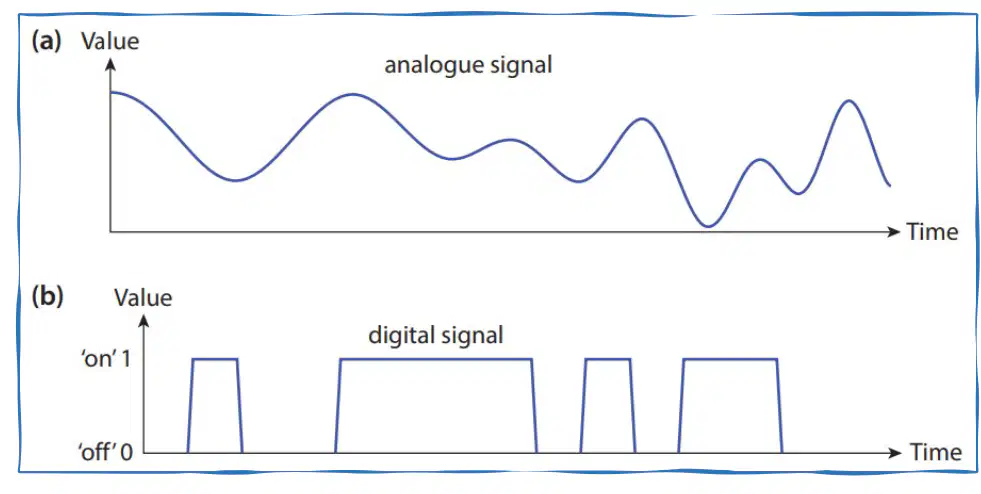
Which signal shows continuous variation over time?
Analogue signal
Digital signal
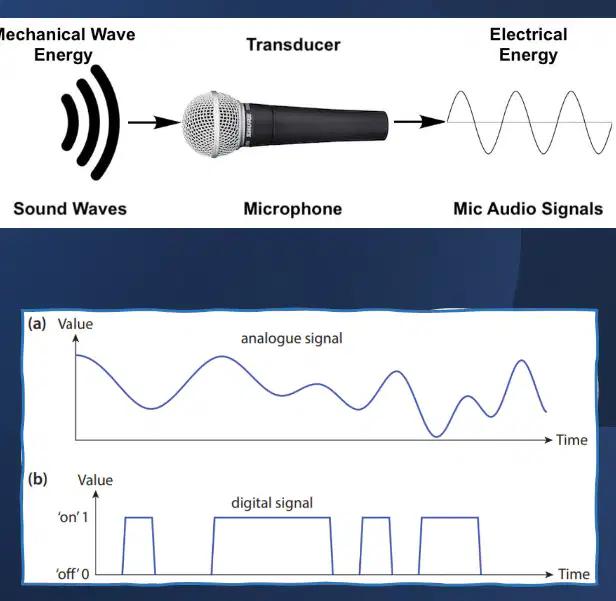
What device is used to convert sound into electrical signals?
Speaker
Microphone
Amplifier
Radio
Preferred method of sound transmission: The converted signals from a microphone are called ______ signals.
analogue
digital
mechanical
optical
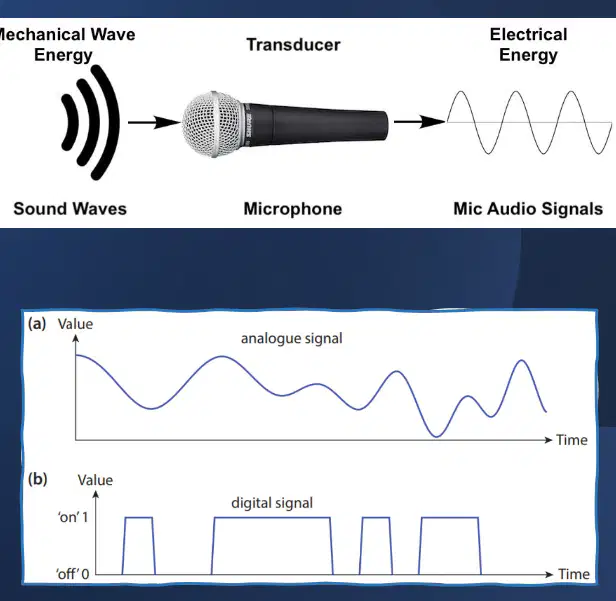
Preferred method of sound transmission: Which type of signal is shown in diagram (a)?
Analogue signal
Digital signal
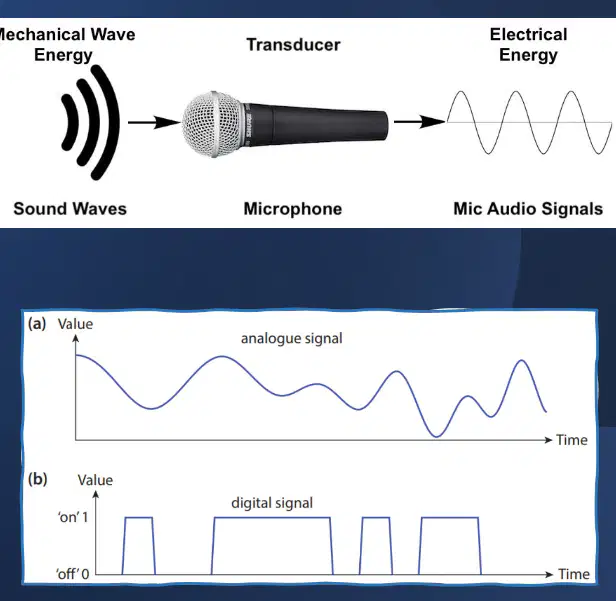
Preferred method of sound transmission: Which type of signal is shown in diagram (b)?
Analogue signal
Digital signal
Preferred method of sound transmission: True or False: Analogue sound signals can be converted into digital signals before transmission.
True
False
What is the preferred method of sound transmission?
Analogue signals
Digital signals
Mechanical waves
Light waves
Preferred method of sound transmission: When you speak into a mobile phone, your continuous sound signals are converted into ______ signals.
digital
mechanical
optical
thermal
Preferred method of sound transmission: The phone encodes digital signals and transmits the signals as _______.
microwaves
visible light
infrared waves
sound waves
What is one benefit of digital signals regarding the amount of data that can be transmitted?
More data can be transmitted.
Less data can be transmitted.
Data transmission is always slower.
Digital signals cannot transmit data.
How does the rate of data transmission change when using digital signals?
The rate of data transmission is increased.
The rate of data transmission is decreased.
The rate of data transmission remains the same.
The rate of data transmission becomes unpredictable.
What is the quality of video and sound transmitted digitally compared to analogue transmission?
Video and sound transmitted digitally have higher quality.
Video and sound transmitted digitally have lower quality.
There is no difference in quality between digital and analogue transmission.
Video and sound transmitted digitally are always delayed.
For digital signals, only 'on' and 'off' (e.g. 1's and 0's) values are expected. If the noise is not too big, what can be done to the signals?
The signals can be regenerated (created again, reproduced) accurately.
The signals will be lost completely.
The signals will become analog.
The signals cannot be transmitted.
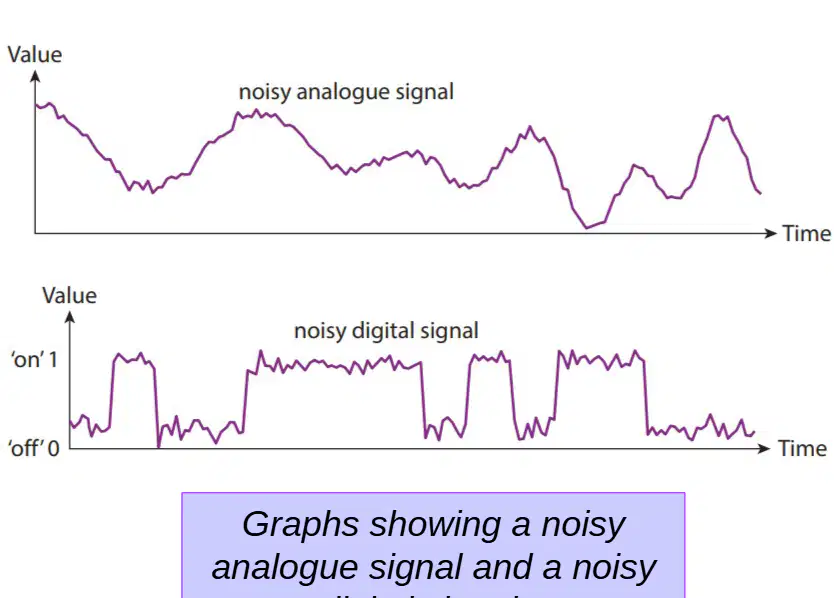
Compare the graph of the noisy digital signal to the graph of the noisy analogue signal in the figure. What is a key difference in how the 'on' and 'off' values can be distinguished?
The 'on' and 'off' values of a noisy digital signal can still be distinguished, while it is harder to distinguish values in a noisy analogue signal.
The 'on' and 'off' values of a noisy analogue signal can still be distinguished, while it is harder to distinguish values in a noisy digital signal.
Both signals have equally distinguishable 'on' and 'off' values in the presence of noise.
Noise makes it impossible to distinguish 'on' and 'off' values in both digital and analogue signals.
What is the main reason why regenerating signals accurately is important when signals are transmitted over long distances?
Signals gain power
Signals lose power
Signals become digital
Signals become analogue
Amplifiers are used to increase the strength of ________ signals. However, in the process, noise is also increased, resulting in poor quality signals.
analogue
digital
binary
optical
For digital signals, what device is used along the transmission path to recover and retransmit the signal?
Amplifier
Repeater
Modulator
Transformer
Repeaters are used for digital signals to accurately regenerate and transmit signals over very long distances.
True
False

