
 Worksheets
Chapter 35 Endocrine System
Total questions: 91
Worksheet time: 46mins
The location of each endocrine gland is:
Scattered throughout the body in specific regions
Only in the digestive system
Exclusively in the brain
Found only in the limbs
The principal actions and target tissues for hormones of the hypothalamus and pituitary, parathyroid, adrenal, and pancreas glands include:
Regulation of metabolism, growth, stress response, calcium balance, and blood glucose levels in various tissues such as bones, kidneys, liver, and muscles.
Only controlling voluntary muscle movement in the limbs.
Exclusively regulating heart rate and blood pressure.
Producing digestive enzymes for the stomach only.
The effects of the thyroid hormones can be summarized as:
Increasing metabolic rate and promoting growth and development
Decreasing metabolic rate and inhibiting growth
Suppressing the immune system and reducing energy production
Causing muscle atrophy and lowering body temperature
Care for common diagnostic tests for the endocrine system involves which of the following?
Monitoring for signs of hypoglycemia or hyperglycemia
Administering antibiotics before the test
Restricting all fluids for 24 hours
Avoiding all physical activity for a week
Fill in the blank: One clinical practice objective is to assess for specific ______-related changes of the endocrine system in an older adult.
age
gender
diet
exercise
Fill in the blank: One clinical practice objective is to teach patients about the ______ tests that might be performed for symptoms of endocrine disorders.
diagnostic
nutritional
surgical
recreational
Fill in the blank: One clinical practice objective is to perform a focused ______ on a patient who possibly has an endocrine disorder.
assessment
surgery
prescription
diagnosis
Fill in the blank: One clinical practice objective is to distinguish appropriate nursing diagnoses and ______ for problems common to patients with endocrine disorders.
interventions
medications
diagnoses
procedures
Which of the following is an organ of the endocrine system?
Pituitary gland
Liver
Stomach
Kidney
Which of the following glands is part of the endocrine system?
Thyroid gland
Spleen
Gallbladder
Appendix
Which of the following is an organ of the endocrine system?
Parathyroid glands
Lungs
Esophagus
Bladder
Which of the following glands is part of the endocrine system?
Adrenal glands
Tonsils
Colon
Ureter
Which of the following is an organ of the endocrine system?
Pancreas (Beta cells)
Large intestine
Trachea
Rectum
Which of the following is part of the endocrine system?
A) Ovaries and testes
B) Kidneys
C) Bladder
D) Liver
Which of the following glands is part of the endocrine system?
Pineal gland
Prostate
Cecum
Uvula
Which of the following is an organ of the endocrine system?
Thymus gland
Appendix
Duodenum
Gallbladder
Which of the following is part of the endocrine system?
Heart
Pancreas (Alpha cells)
Spleen
Kidney
Fill in the blank: The ______ is an organ of the endocrine system that has both anterior and posterior glands.
Pituitary gland
Thyroid gland
Adrenal gland
Pineal gland
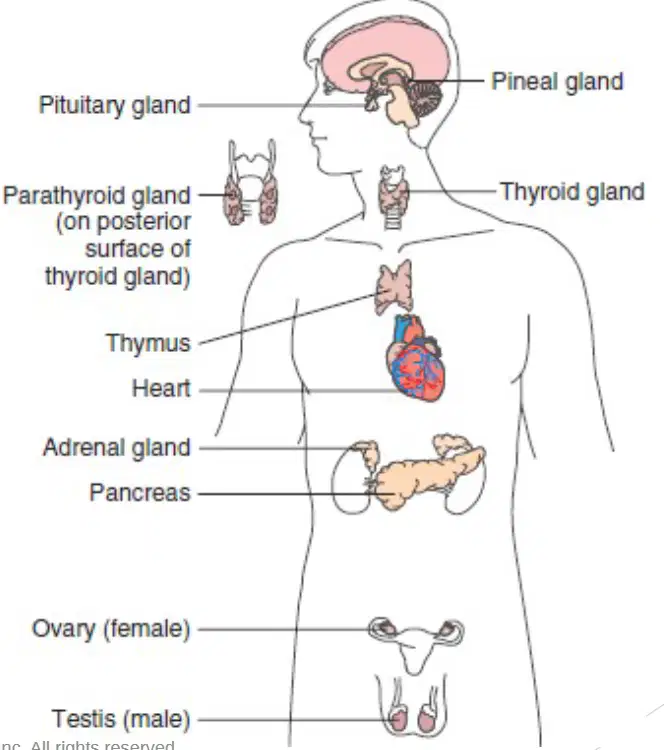
Refer to the diagram of Major Endocrine Glands. Which gland is located at the base of the brain?
Thyroid gland
Pituitary gland
Adrenal gland
Pancreas
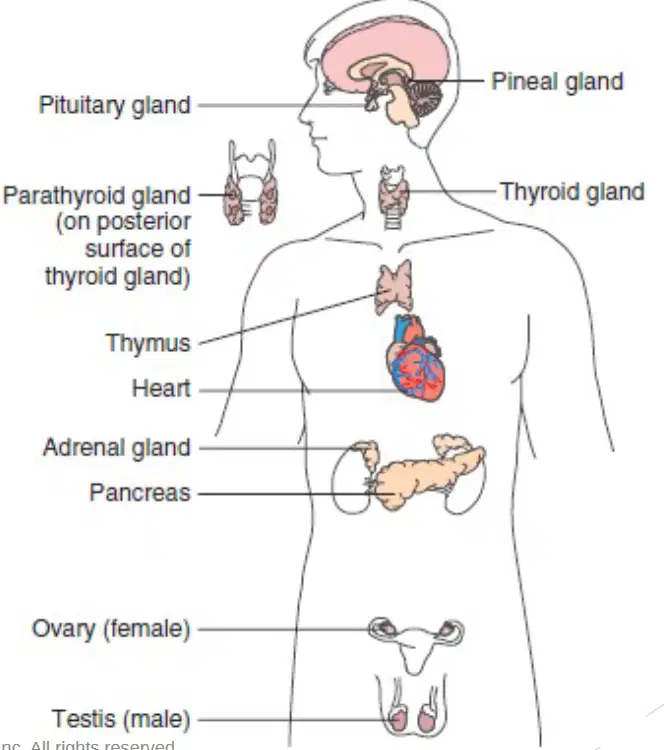
Refer to the diagram of Major Endocrine Glands. The gland located on the posterior surface of the thyroid gland is called the ________.
Parathyroid gland
Pituitary gland
Adrenal gland
Pineal gland
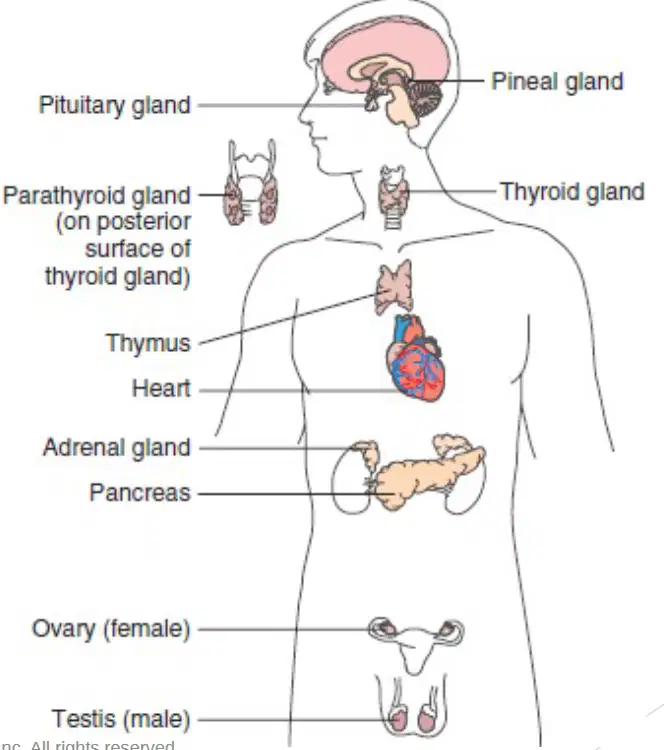
Refer to the diagram of Major Endocrine Glands. The gland responsible for producing insulin is the ________.
Pancreas
Thyroid gland
Adrenal gland
Pituitary gland
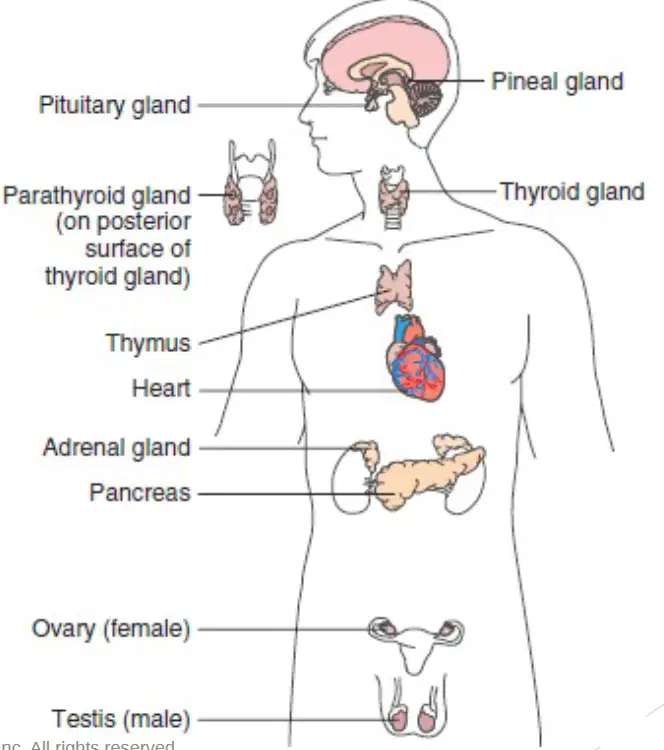
The thymus is located in the chest, above the heart.
True
False
Fill in the blank: The primary function of the endocrine system is to release ________ directly into the bloodstream to targeted cells/tissues.
hormones
enzymes
neurotransmitters
antibodies
Which of the following is a function of the endocrine system?
Alter chemical reactions and control the rates at which chemical activities take place within cells
Provide structural support to bones
Aid in digestion of food
Transport oxygen in the blood
Fill in the blank: The endocrine system changes the ________ of cell membranes and selects the substances that can be transported across cell membranes.
permeability
temperature
color
shape
Which body processes does the endocrine system control that occur slowly?
A) Cellular growth and reproduction
B) Muscle contraction
C) Reflex actions
D) Blood clotting

Fill in the blank: In negative feedback, when a hormone is in short supply, the body will _______.
synthesize & release hormone
stop all hormone production
increase hormone breakdown
ignore the shortage

Fill in the blank: In negative feedback, when the target tissue's hormone need is satisfied, hormone production/secretion is _______.
inhibited
stimulated
unchanged
accelerated

Which of the following is a step in the negative feedback mechanism?
Hormone in short supply
Hormone in excess
No change in hormone levels
Hormone destroyed

Fill in the blank: In negative feedback, when hormone production/secretion is inhibited, it means the _______ is satisfied.
target tissue hormone need
blood sugar level
enzyme activity
nervous system response
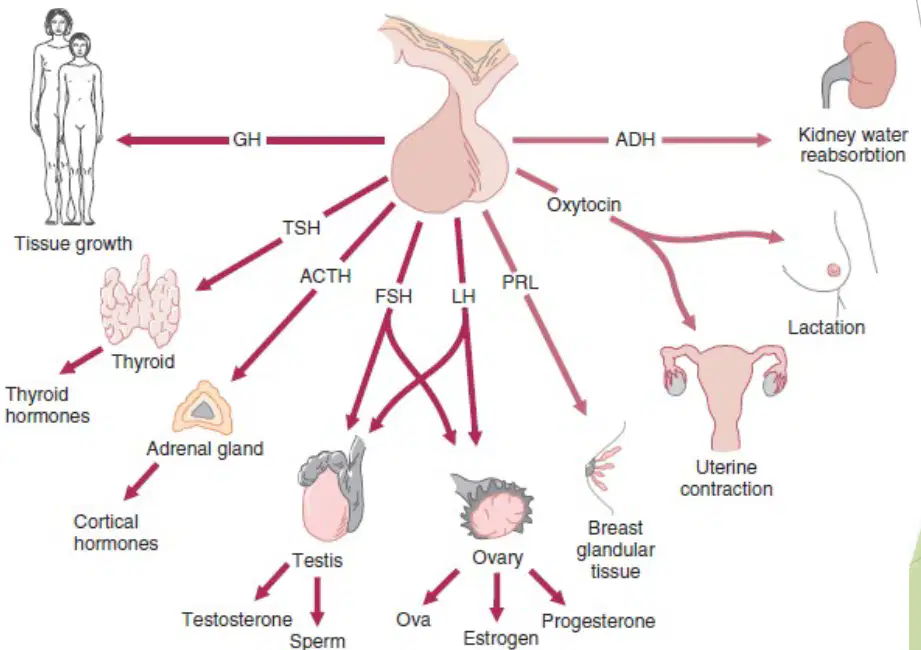
Fill in the blank: The hormone responsible for tissue growth is _______.
GH (Growth Hormone)
Insulin
Thyroxine
Adrenaline
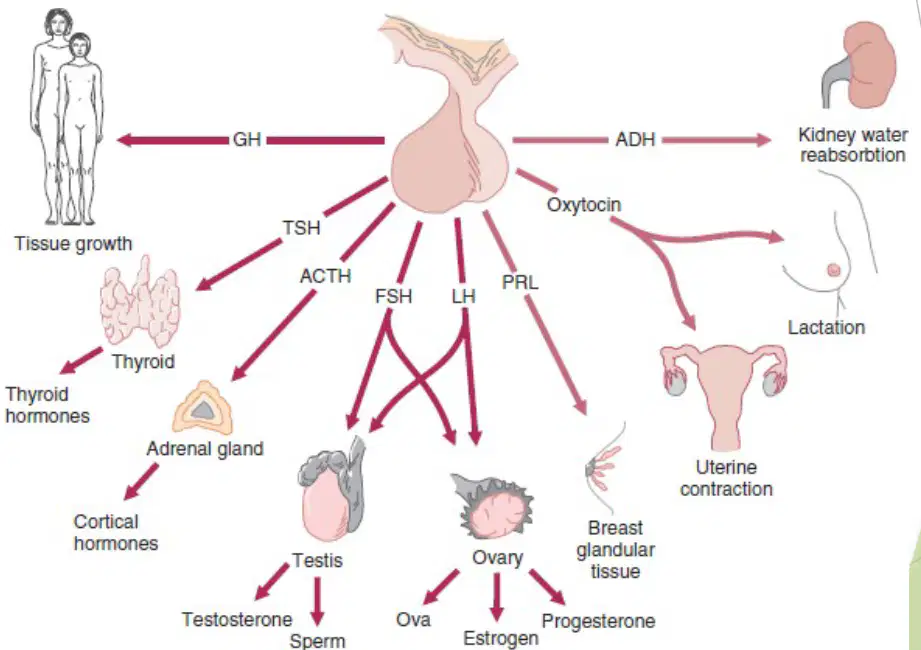
Fill in the blank: The hormone that stimulates the thyroid to produce thyroid hormones is _______.
TSH (Thyroid Stimulating Hormone)
ACTH (Adrenocorticotropic Hormone)
FSH (Follicle Stimulating Hormone)
LH (Luteinizing Hormone)
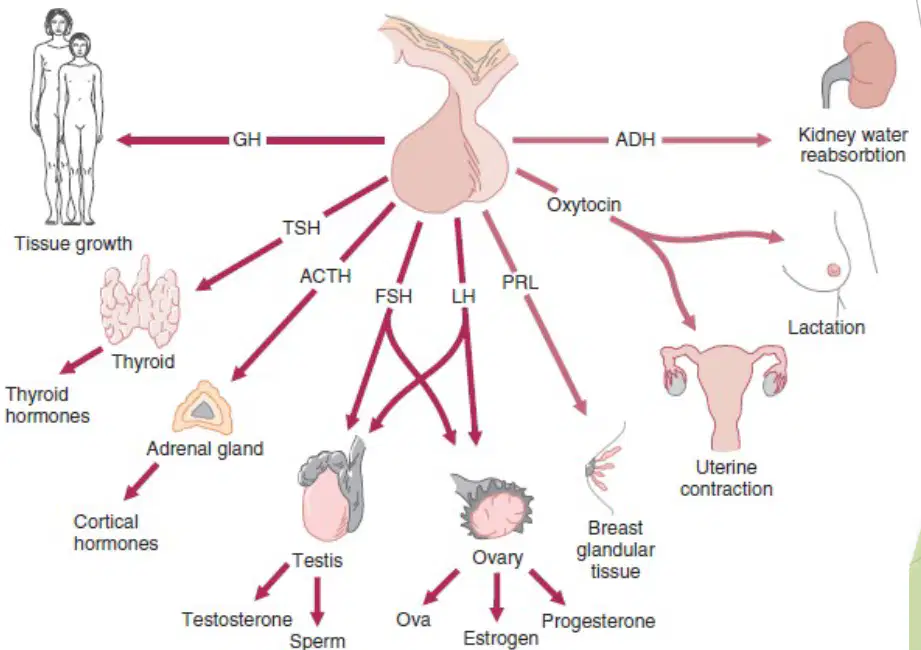
Fill in the blank: The hormone that stimulates the adrenal gland to produce cortical hormones is _______.
ACTH (Adrenocorticotropic Hormone)
TSH (Thyroid Stimulating Hormone)
FSH (Follicle Stimulating Hormone)
GH (Growth Hormone)

Fill in the blank: The hormone that stimulates the testis to produce testosterone and sperm is _______.
FSH (Follicle Stimulating Hormone)
LH (Luteinizing Hormone)
TSH (Thyroid Stimulating Hormone)
ACTH (Adrenocorticotropic Hormone)
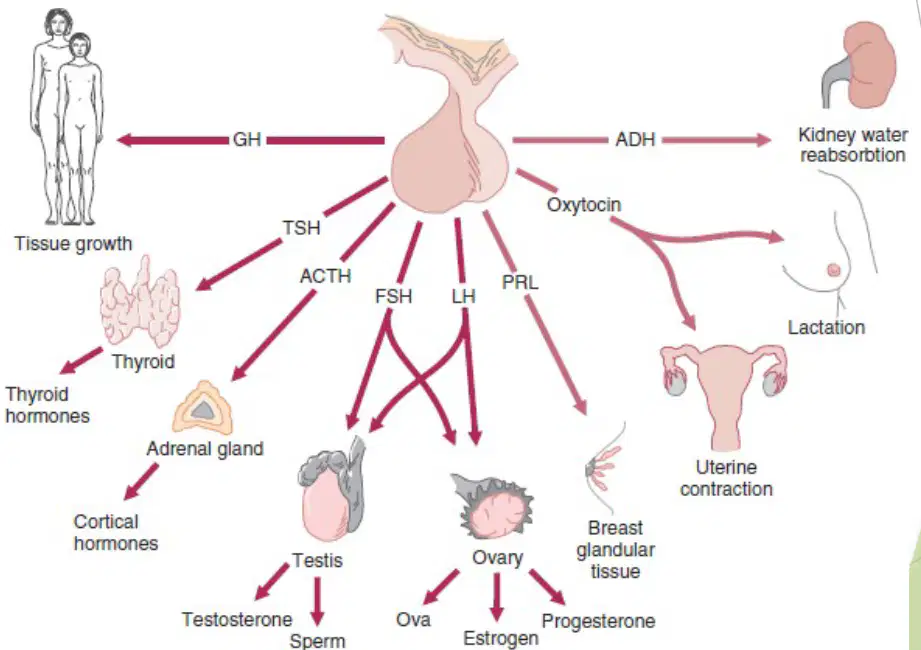
Fill in the blank: The hormone that stimulates the ovary to produce estrogen, progesterone, and ova is _______.
LH (Luteinizing Hormone)
FSH (Follicle Stimulating Hormone)
TSH (Thyroid Stimulating Hormone)
ACTH (Adrenocorticotropic Hormone)
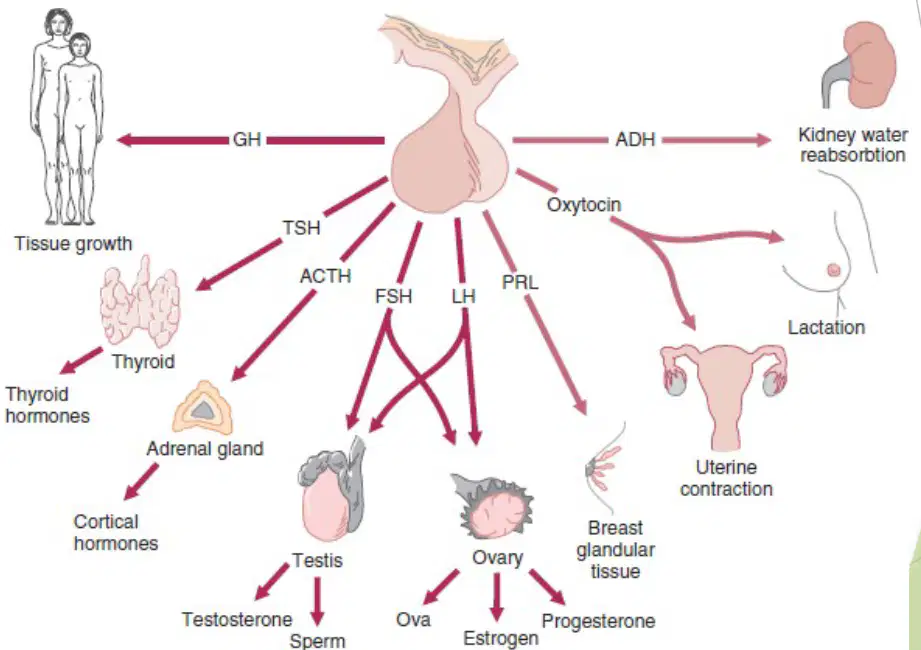
Fill in the blank: The hormone responsible for breast glandular tissue and lactation is _______.
PRL (Prolactin)
TSH (Thyroid Stimulating Hormone)
ACTH (Adrenocorticotropic Hormone)
FSH (Follicle Stimulating Hormone)
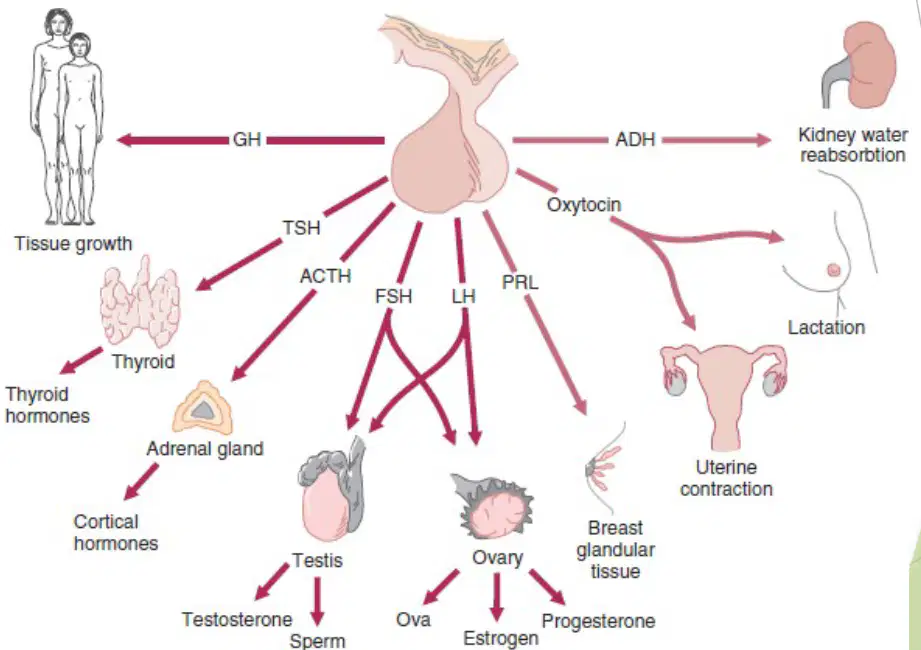
Fill in the blank: The hormone responsible for kidney water reabsorption is _______.
ADH (Antidiuretic Hormone)
Insulin
Thyroxine
Adrenaline
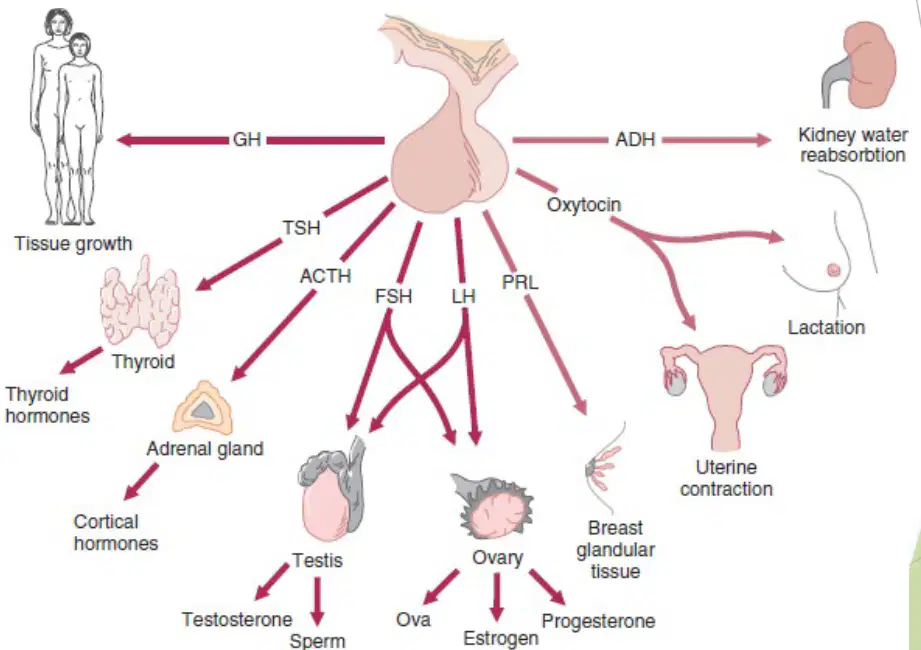
Fill in the blank: The hormone responsible for uterine contraction is _______.
Oxytocin
Insulin
Adrenaline
Thyroxine
The posterior pituitary gland does not produce hormones, it stores and then releases _______ and ADH which are produced in the hypothalamus.
oxytocin
insulin
thyroxine
prolactin
Which of the following hormones are stored and released by the posterior pituitary gland?
Oxytocin and ADH
Insulin and Glucagon
Thyroxine and Calcitonin
Estrogen and Progesterone
Antidiuretic Hormone (ADH) targets the ________.
kidney
liver
lungs
stomach
Which hormone increases water reabsorption?
Oxytocin
Antidiuretic Hormone (ADH)
Insulin
Glucagon
ADH deficiency causes ________.
Diabetes Insipidus
Diabetes Mellitus
Addison's Disease
Graves' Disease
Excessive secretion of ADH causes ________.
SIADH
Diabetes insipidus
Addison's disease
Graves' disease
Oxytocin targets the ________ and mammary glands.
Uterus
Kidneys
Liver
Lungs
Which hormone increases uterine contractions?
Antidiuretic Hormone (ADH)
Oxytocin
Prolactin
Insulin
Oxytocin stimulates the ejection of ________ from the mammary glands.
milk
blood
saliva
urine
Fill in the blank: The thyroid gland secretes the hormones thyroxine (T4), triiodothyronine (T3), and ________.
thyrocalcitonin
insulin
adrenaline
glucagon
Which of the following is NOT a function of thyroid hormones?
Activate the cellular production of heat
Stimulate protein and lipid synthesis
Inhibit the manufacture of coenzymes from vitamins
Stimulate the degradation (breakdown) of proteins and lipids
Fill in the blank: Thyroid hormones regulate many aspects of ________ metabolism and affect tissue response to epinephrine and norepinephrine.
carbohydrate
lipid
protein
mineral
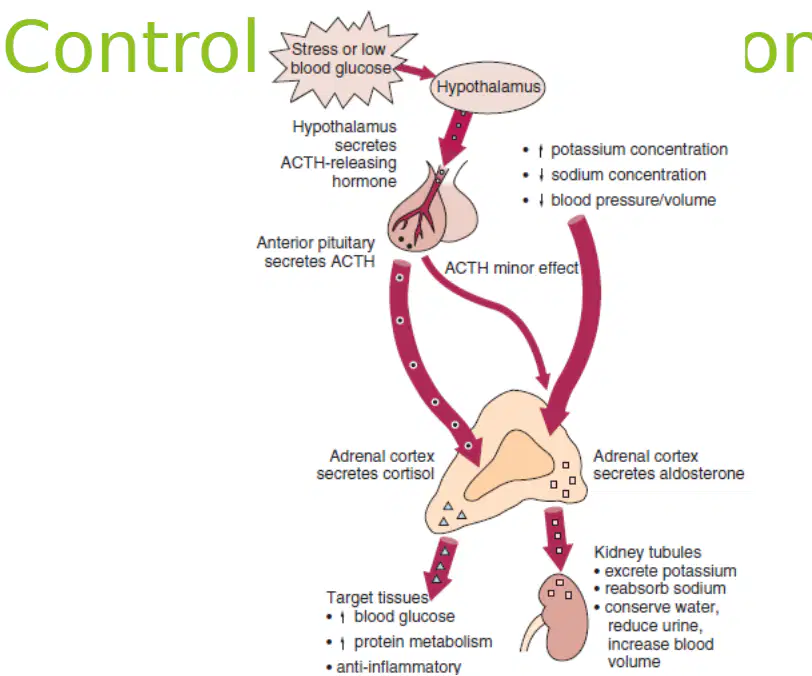
What hormone does the hypothalamus secrete in response to stress or low blood glucose?
ACTH-releasing hormone
Cortisol
Aldosterone
Insulin
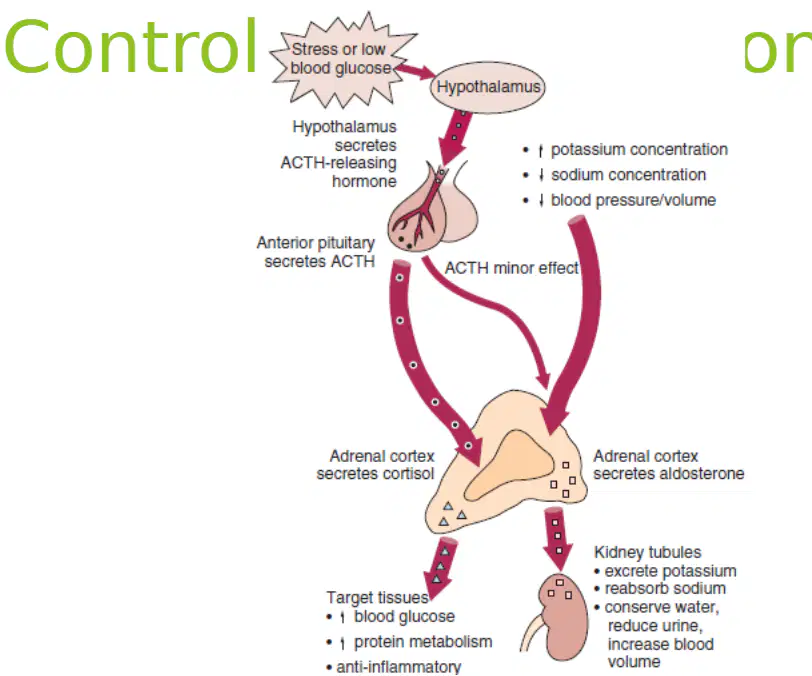
What is the effect of ACTH on the adrenal cortex?
Secretes cortisol
Secretes aldosterone
Secretes insulin
Secretes glucagon
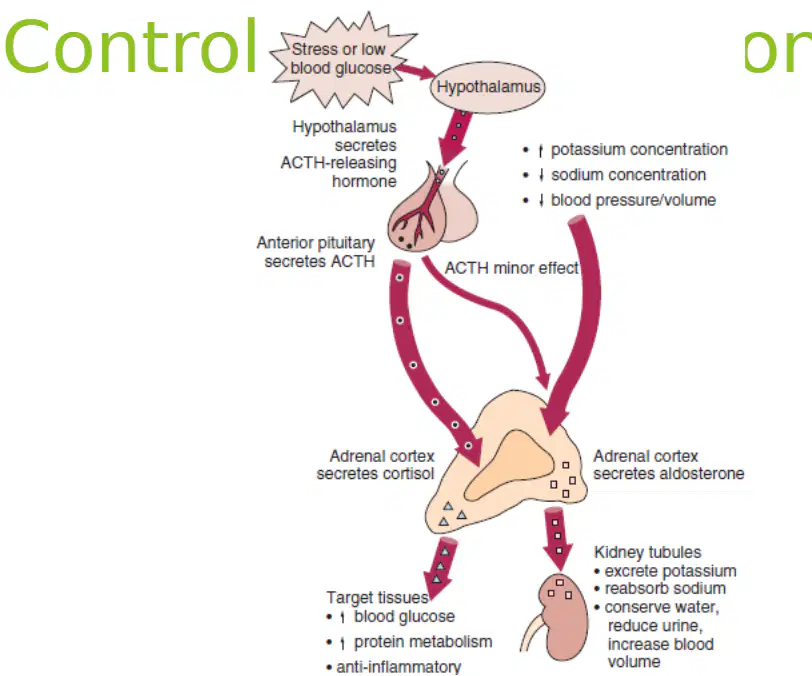
The anterior pituitary secretes ______ in response to ACTH-releasing hormone from the hypothalamus.
ACTH
TSH
GH
FSH
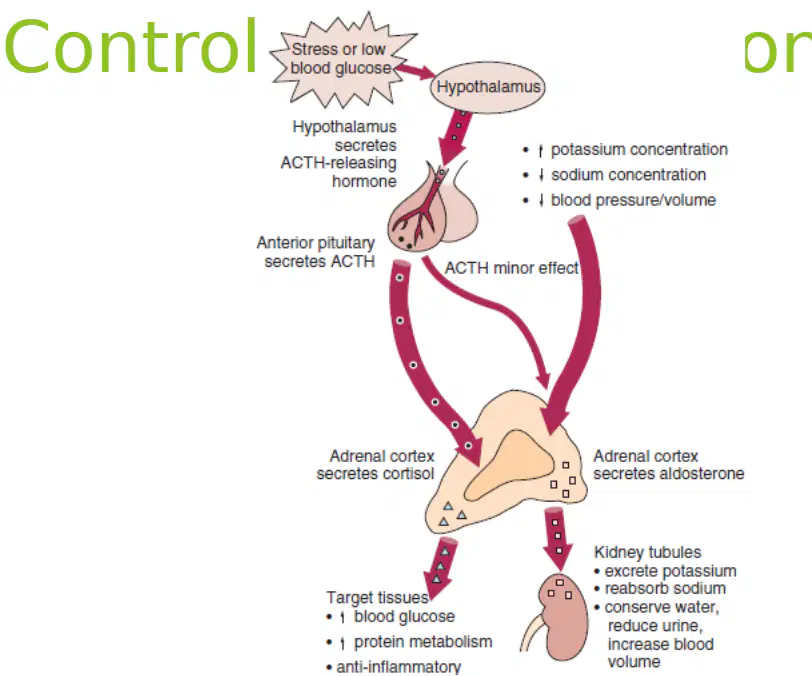
Refer to the diagram showing the effects of epinephrine and control mechanisms. Which of the following is NOT an effect of cortisol on target tissues?
Increase blood glucose
Increase protein metabolism
Anti-inflammatory
Increase potassium concentration
Which hormone targets most body cells?
Thyroxine & Triiodothyronine
Insulin
Adrenaline
Glucagon
Which hormone increases metabolic rate?
Thyroxine & Triiodothyronine
Insulin
Cortisol
Oxytocin
Which hormone is essential for normal growth and development?
Thyroxine & Triiodothyronine
Insulin
Adrenaline
Glucagon
Which hormone targets the bone?
Calcitonin
Insulin
Adrenaline
Glucagon
Which hormone decreases blood calcium by inhibiting bone breakdown and release of calcium?
Calcitonin
Parathyroid hormone
Aldosterone
Cortisol
Calcitonin is antagonistic to which hormone?
Parathyroid hormone
Insulin
Thyroxine
Adrenaline
What is goiter?
An overgrowth of the thyroid
A deficiency of calcium
A type of heart disease
A lung infection
Goiter may be prevented by sufficient intake of _______.
iodine
calcium
iron
vitamin C
Which of the following is NOT a diagnostic method for goiter?
Thyroid panel
Parathyroid function—serum calcium and phosphate levels
Adrenal gland function—electrolyte panels, glucose levels, hormone levels, and 12-lead electrocardiogram (ECG)
Blood pressure measurement
Which diagnostic test checks the function of the parathyroid in goiter diagnosis?
Serum calcium and phosphate levels
Blood pressure
X-ray
Urine test
What hormone is produced and secreted by the parathyroid glands?
Calcitonin
Parathormone (parathyroid hormone)
Insulin
Thyroxine
Parathormone targets which of the following systems?
Bones, kidney, and digestive system
Respiratory and nervous system
Muscular and integumentary system
Circulatory and reproductive system
Calcitonin, released by the thyroid gland, is the balance to which hormone?
Parathormone (parathyroid hormone)
Insulin
Adrenaline
Thyroxine
The parathyroid glands help regulate the plasma level of ________.
calcium
glucose
potassium
cholesterol

According to the diagram, high calcium levels inhibit the release of parathormone.
True
False
Fill in the blank: The adrenal medulla (middle portion) secretes two hormones, _______ and norepinephrine, in response to stimulation from the sympathetic nervous system.
epinephrine
insulin
cortisol
glucagon
Fill in the blank: The hormones secreted by the adrenal cortex are called _______ corticosteroids.
adrenal
pituitary
thyroid
pancreatic
Which of the following are hormones secreted by the adrenal cortex?
Catecholamines
Mineralocorticoids and glucocorticoids
Insulin
Thyroxine
What is the main target organ of aldosterone?
Liver
Kidneys
Lungs
Heart
Aldosterone increases the reabsorption of which ion?
Potassium (K+)
Sodium (Na+)
Calcium (Ca2+)
Chloride (Cl-)
Aldosterone increases Na reabsorption and K+ _______.
excretion
absorption
storage
dilution
Cortisol targets most body tissues.
True
False
Which hormone increases blood glucose and inhibits inflammation and immune response?
Aldosterone
Cortisol
Insulin
Glucagon
What is the endocrine function of the pancreas?
To produce the hormones insulin and glucagon.
To secrete digestive enzymes into the small intestine.
To absorb nutrients from digested food.
To filter toxins from the blood.
Which cells are responsible for producing and secreting insulin?
The beta cells.
The alpha cells.
The delta cells.
The acinar cells.
Insulin is needed for the cells of the body to be able to use ______ as fuel.
glucose
protein
fatty acids
oxygen
What do the alpha cells release, which stimulates the liver to change glycogen to glucose?
Glucagon
Insulin
Somatostatin
Cortisol

What is the normal blood glucose level in humans?
40-60 mg/100 mL
70-100 mg/100 mL
120-150 mg/100 mL
200-250 mg/100 mL

When glucose levels increase after eating, which cells are stimulated to secrete insulin?
Alpha cells
Beta cells
Delta cells
Gamma cells
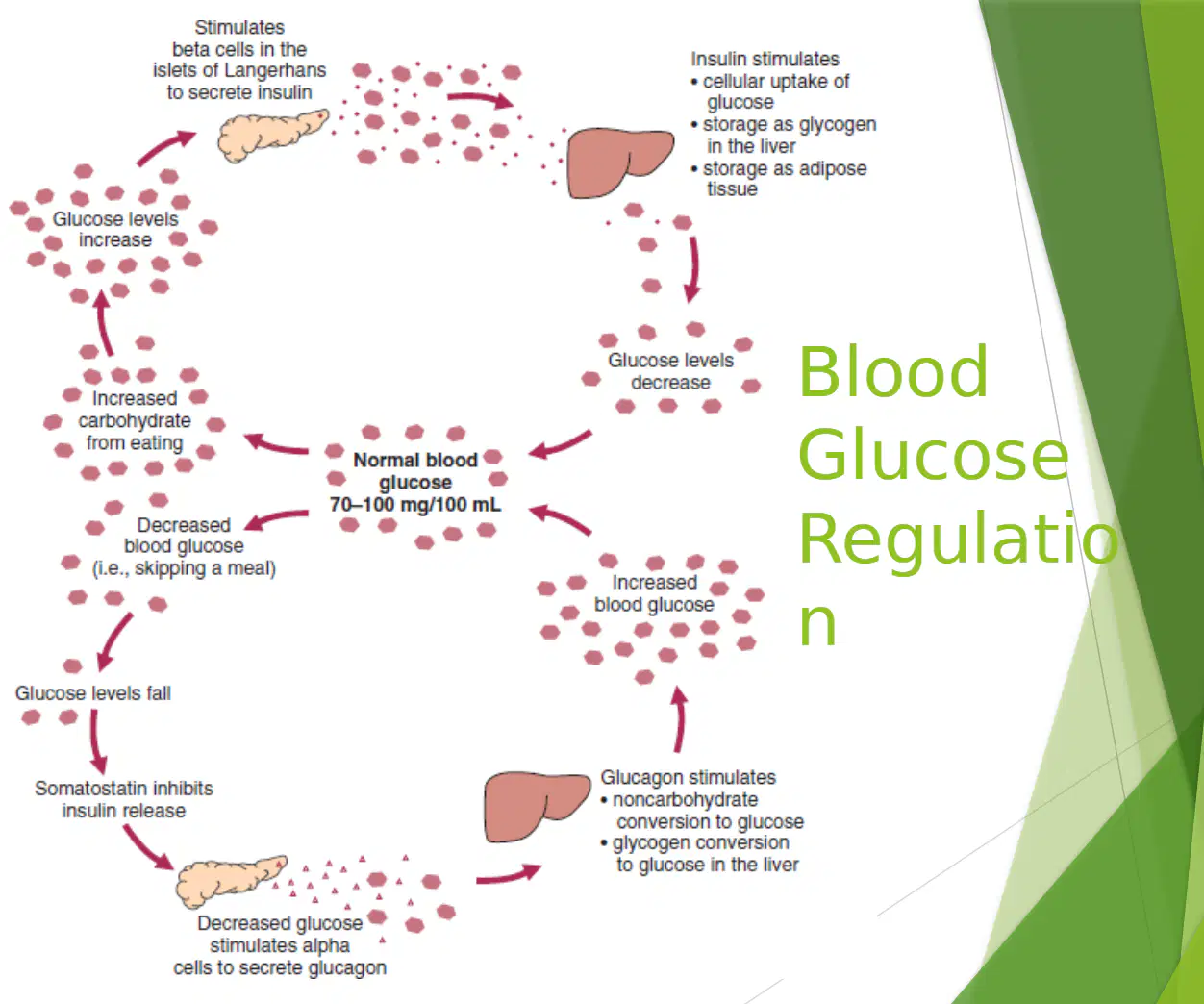
Insulin stimulates which of the following?
Cellular uptake of glucose
Storage as glycogen in the liver
Storage as adipose tissue
All of the above

Fill in the blank: When blood glucose levels fall, _______ inhibits insulin release.
Somatostatin
Glucagon
Adrenaline
Cortisol

Which hormone is secreted by alpha cells when glucose levels are low?
Glucagon
Insulin
Somatostatin
Cortisol

Glucagon stimulates the conversion of glycogen to glucose in the liver.
True
False

What happens to blood glucose levels after increased carbohydrate intake from eating?
Blood glucose levels increase.
Blood glucose levels decrease.
Blood glucose levels remain unchanged.
Blood glucose levels drop to zero.
According to the criteria for the diagnosis of Diabetes Mellitus, which of the following random blood glucose levels indicates diabetes?
Less than 100 mg/dL
Greater than or equal to 200 mg/dL
Greater than or equal to 126 mg/dL
Less than 70 mg/dL
According to the criteria for the diagnosis of Diabetes Mellitus, what is the fasting blood glucose level that indicates diabetes?
Greater than or equal to 200 mg/dL
Less than 100 mg/dL
Greater than or equal to 126 mg/dL
Less than 70 mg/dL
According to the criteria for the diagnosis of Diabetes Mellitus, what is the postprandial (2 hours after 75g glucose) blood glucose level that indicates diabetes?
Less than 100 mg/dL
Greater than or equal to 126 mg/dL
Greater than or equal to 200 mg/dL
Less than 70 mg/dL

