
Font size
 Worksheets
Final Exam
Total questions: 95
Worksheet time: 50mins
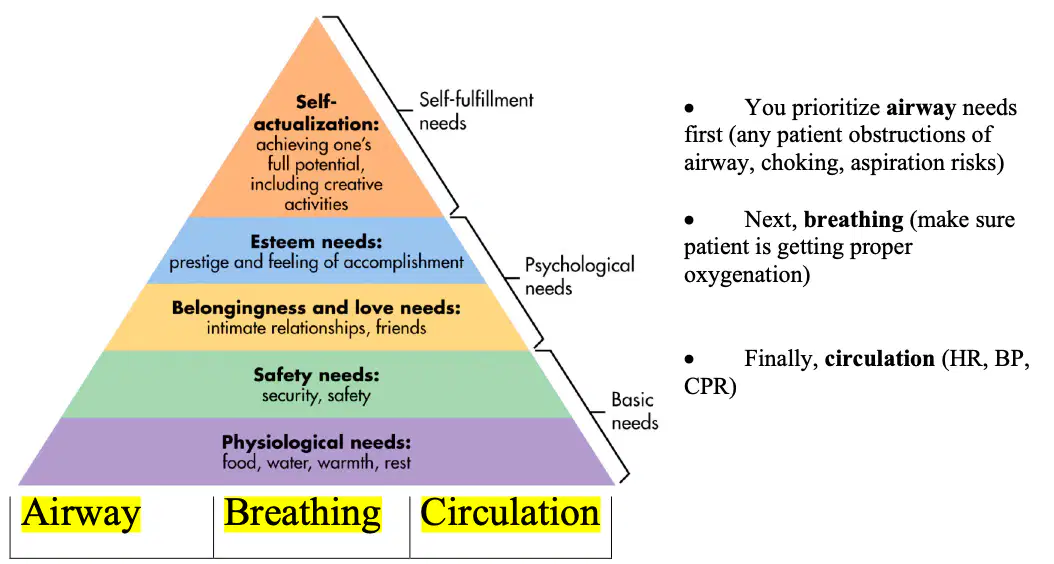
According to Maslow's hierarchy of needs, which of the following is the most basic need?
Esteem needs
Self-actualization
Physiological needs
Belongingness and love needs
In patient care, what should you prioritize first?
Circulation
Airway
Breathing
Nutrition
Fill in the blank: After ensuring the airway is clear, the next priority in patient care is ________.
breathing
circulation
medication
transport
Which of the following is NOT a recommended therapeutic communication technique?
Ask open ended questions
Make fake promises
Ask for permission before touching the patient
Use a translator for non-English speaking patients
You should use a family member as a translator for patients who do not speak English.
True
False
Fill in the blank: In therapeutic communication, you should always maintain _______ contact with the patient.
eye
hand
verbal
physical
Which of the following is an example of an open-ended question?
Are you hungry?
Tell me more about your dietary preferences.
Do you want water?
Are you tired?
Which of the following tasks can a Practical Nurse (PN) perform?
Monitoring findings as input to the RN’s ongoing assessment
Administering enteral feedings
Inserting Urinary catheter
All of the above
Which of the following is NOT allowed for a Practical Nurse (PN)?
Administering medication
NO IV push
Suctioning
Reinforcing client teaching
Which activities are included in the role of Assistive Personnel (AP)?
Activities of daily living (ADLS) such as bathing, grooming, feeding
Routine tasks like bed making, specimen collection, intake & output
Vital signs for stable clients
All of the above
Fill in the blank: Assistive Personnel (AP) can take vital signs for ______ clients.
stable
critical
unconscious
postoperative
According to the worksheet, you use ISBARR to report any problems with the patients while calling another doctor or facility.
True
False
After giving a recommendation using ISBARR, what should you do next?
Read-back
Ignore the response
End the conversation immediately
Wait for further instructions
Repeat the recommendation
What does PCA stand for in nursing?
Patient-controlled analgesia
Primary Care Assistant
Professional Clinical Advisor
Personal Care Attendant
A PCA pump contains pain medication connected directly to a patient's intravenous (IV) line. How often should it be checked?
Every four hours as needed.
Once a day.
Every 12 hours.
Only when the patient complains of pain.
Which of the following is NOT one of the 5 Rights of Delegation?
Right Task
Right Worker
Right Medication
Right Direction and Communication
Delegation should NOT occur when:
Patient is stable
Task is within worker’s job description
There is an unpredictable outcome
You’ve planned how to monitor
According to the PQRS pain assessment, what does the 'P' in PQRS stand for?
Pain: What provokes the pain? What makes it better or worse?
Position: Where is the pain located?
Pulse: Is there a change in pulse rate?
Pressure: Does applying pressure change the pain?
According to the PQRS pain assessment, what does the 'Q' in PQRS stand for?
Quality: Is it sharp, dull, stabbing, crushing, burning?
Quantity: How much pain is there?
Quickness: How fast did the pain start?
Quietness: Is the pain silent or loud?
According to the PQRS pain assessment, what does the 'R' in PQRS stand for?
Radiates: Does it radiate? Or does it stay in one place?
Rate: How severe is the pain on a scale?
Relief: What relieves the pain?
Rebound: Does the pain return after relief?
According to the PQRS pain assessment, what does the 'S' in PQRS stand for?
Severity: How severe is the pain on a scale of 0-10? (7 is severe)
Site: Where is the pain located?
Sensation: What does the pain feel like?
Schedule: When does the pain occur?
According to the PQRS pain assessment, what does the 'T' in PQRS stand for?
Time/Treatment: Time pain started? How long did it last? What works?
Temperature: Is the area warm or cold?
Texture: Is the skin rough or smooth?
Tension: Is there muscle tightness?
Which pain scale is used for children aged 3-7 years old?
Wong Baker FACES
Numeric Pain Scale
Visual Analog Scale
FLACC Scale
What is the correct order for putting on PPE?
1. Gown 2. Mask 3. Goggles 4. Gloves
1. Gloves 2. Mask 3. Goggles 4. Gown
1. Mask 2. Gown 3. Gloves 4. Goggles
1. Goggles 2. Gown 3. Mask 4. Gloves
What is the correct order for taking off PPE?
1. Gloves 2. Goggles 3. Gown 4. Mask
1. Mask 2. Gown 3. Goggles 4. Gloves
1. Gown 2. Gloves 3. Mask 4. Goggles
1. Goggles 2. Mask 3. Gloves 4. Gown
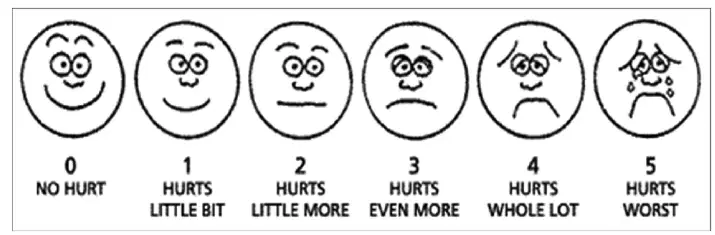
What number corresponds to 'HURTS WHOLE LOT'?
Which diseases require Airborne precautions?
Measles, Pulmonary/Laryngeal TB, Varicella
Influenza, Rubella, Mumps
Herpes, Shigella, MRSA
Scarlet fever, Meningococcal Pneumonia
What type of mask is required for Airborne precautions (Negative Pressure)?
Surgical Mask
N95 Mask
Cloth Mask
Face Shield
If splashing or spraying is a possibility during Airborne precautions, what should you wear?
Full face protection
Surgical gloves only
Regular eyeglasses
Cloth mask
Which diseases require Droplet precautions?
Measles, Varicella
Sepsis, Influenza, Rubella, Strep Pneumonia, Mump, Streptococcal Pharyngitis, Influenza B, Scarlet fever, Mumps, Mycoplasma Pneumonia, Meningococcal Pneumonia and sepsis
Herpes, Shigella, MRSA
Tuberculosis
What type of mask is required for Droplet precautions?
N95 Mask
Surgical Mask
Cloth Mask
No mask needed
Which diseases require Contact precautions?
Measles, TB
Sepsis, Influenza
Herpes, Shigella, Wound Infections, Scabies, Impetigo, MRSA, C. Diff, VRE
Scarlet fever
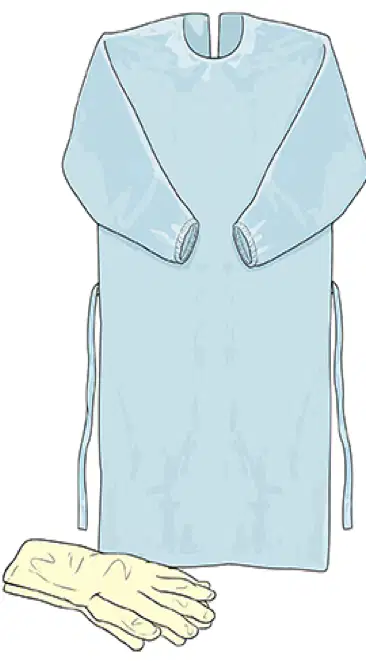
What protective equipment is required for Contact precautions?
Gown and Gloves
N95 Mask
Face Shield
None
If a wound is draining during Contact precautions, what additional protection should be worn?
Wear goggles
Remove gloves
Skip hand hygiene
Wear sandals
Medical Asepsis requires just cleanliness. (Lysol, kills 99.9%)
True
False
Surgical Asepsis is the absolute removal and killing of bacteria and pathogens.
True
False
How long should you wash your hands according to the guidelines?
15 - 20 seconds (happy birthday twice)
5 seconds
1 minute
2 minutes
Inside of sterile glove is considered ______, outside is _______.
clean, sterile.
sterile, clean.
dirty, sterile.
sterile, dirty.
What is a Hospital Acquired Infection?
Infection acquired during hospital visit
Infection acquired from food at home
Infection acquired from outdoor air
Infection acquired from animal bites
What does the S1 (lub) heart sound indicate?
Ventricular systole (Contraction)
Atrial diastole (Relaxation)
Ventricular diastole (Relaxation)
Atrial systole (Contraction)
What does the S2 (dub) heart sound indicate?
Ventricular diastole (relaxation)
Atrial systole (contraction)
Ventricular systole (contraction)
Atrial diastole (relaxation)
Which heart sound is known as the ventricular gallop and is commonly heard in children and young adults?
S3 (ventricular gallop)
S1 (first heart sound)
S2 (second heart sound)
S4 (atrial gallop)
Which heart sound is associated with atrial contraction?
S4 (atrial contraction)
S1 (mitral and tricuspid closure)
S2 (aortic and pulmonary closure)
S3 (ventricular filling)
Which heart sounds are considered normal?
S1, S2
S3, S4
S2, S4
S1, S3
Which heart sounds are considered abnormal?
S3, S4
S1, S2
S1, S3
S2, S4
If you hear S3 in the heart, you will hear crackles.
True
False
S4 in the elderly is normal.
True
False

Name the five areas for listening to the heart as shown in the diagram.
Aortic, Pulmonic, Erb's Point, Tricuspid, Mitral
Aortic, Pulmonic, Carotid, Tricuspid, Mitral
Aortic, Pulmonic, Erb's Point, Bicuspid, Mitral
Aortic, Jugular, Erb's Point, Tricuspid, Mitral
If your patient is at possible risk for aspiration, which cranial nerves should you assess for?
CN 5 and 7
CN 9 and 10
CN 3 and 4
CN 11 and 12
If medication to remove mucus is given, what should you teach the patient to do to promote thin mucus?
Avoid fluids
Drink fluids
Eat solid foods
Exercise
When suctioning a patient, you should always give ______ before you begin suctioning.
O2
IV fluids
Glucose
Antibiotics
Suction attempts should be limited to no longer than ______ seconds to avoid hypoxemia and vagal response.
10-15
20-25
5-8
30-35
During a seizure, what is the correct action to take?
Put something in the patient's mouth
Remove everything around the patient
Hold the patient down
Give the patient water
Which of the following is included in the correct order of abdominal assessment?
Inspection, Palpitation, Percussion, Auscultation
Inspection, Auscultation, Percussion, Palpitation
Auscultation, Inspection, Percussion, Palpitation
Percussion, Palpitation, Inspection, Auscultation
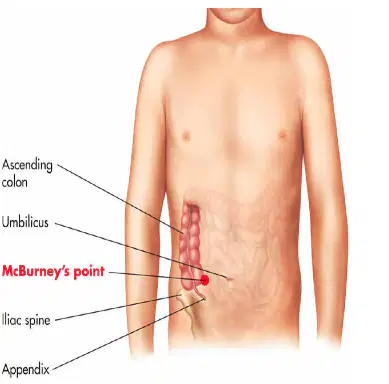
Fill in the blank: McBurney’s Point pain and tenderness is associated with _________
Appendicitis
Cholecystitis
Pancreatitis
Gastritis

Which of the following conditions is commonly found in the right upper region of the abdomen?
Gallstones
Duodenal Ulcer
Biliary Colic
Diverticular Disease

The left lower region of the abdomen is commonly associated with diverticular disease and pelvic pain (Gynae).
True
False
If bowel sounds are not heard, how long should you wait in each quadrant before concluding absence of sounds?
5 minutes
30 seconds
1 minute
2 minutes
What is considered a hyperactive bowel sound frequency?
>5
<35
>35
<5

Which of the following is NOT a condition associated with the left upper region of the abdomen?
Stomach Ulcer
Duodenal Ulcer
Gallstones
Biliary Colic

What is the main purpose of creating an ostomy?
To allow fecal matter to pass
To allow urine to pass
To remove gases from the stomach
To administer medication

Where do stools get formed in the case of an ostomy?
Small intestine
Large intestine
Stomach
Esophagus
Reasons for ileostomy include (IBS) Crohn's disease and _________?
Ulcerative colitis.
Appendicitis.
Peptic ulcer disease.
Diverticulosis.

Which of the following is NOT a correct ostomy care instruction?
The stoma should appear moist, shiny, pink/red
Use mild soap & water to cleanse skin
Change the bag every day
Make sure skin is not irritated & no fungi is present

You should change the ostomy bag only when it is half full, not every day.
True
False
Fill in the blank: The cut opening for an ostomy bag should be _______ cm (1/18 – 1/8 in) larger.
0.15-0.3
0.5-1.0
1.0-1.5
0.01-0.05
Which of the following is NOT an indication for using an NG tube?
Decompression
Feeding
Lavage
Blood transfusion
Compression
What should you check during the assessment of a patient with a feeding tube?
Lung sounds, abdomen, nares
Heart rate and blood pressure
Skin turgor and capillary refill
Pupillary response
Must report dark coffee ground or blood streaked in the suctioning because that is signs of ________.
bleeding
infection
dehydration
allergy
What is the normal color of stomach contents during suctioning?
Red
Greenish-yellowish
Brown
Clear
Normal acidity of the stomach is ______ at most. If not within this range, possibility it is in the lungs!
1-5
6-8
9-12
13-15
Kangaroo pump is for feeding ________.
FORMULA
WATER
BLOOD
OXYGEN
If you leave the kangaroo pump outside for too long, what can happen?
It grows bacteria and causes GI infection
It becomes more effective
It cools down
It increases formula absorption
How often should you monitor the intake and output and glucose when using a kangaroo pump?
Every 2 hours
Every 4 hours
Every 6 hours
Every 12 hours
The maximum volume of gastric residuals that is considered a problem during enteral nutrition feeding is:
100 mL
200 mL
500 mL
50 mL

Cologuard is a noninvasive colon cancer screening test that identifies altered DNA and/or blood in stool, which are associated with the possibility of colon cancer or precancer with a ______ accuracy rate.
90%
60%
75%
50%
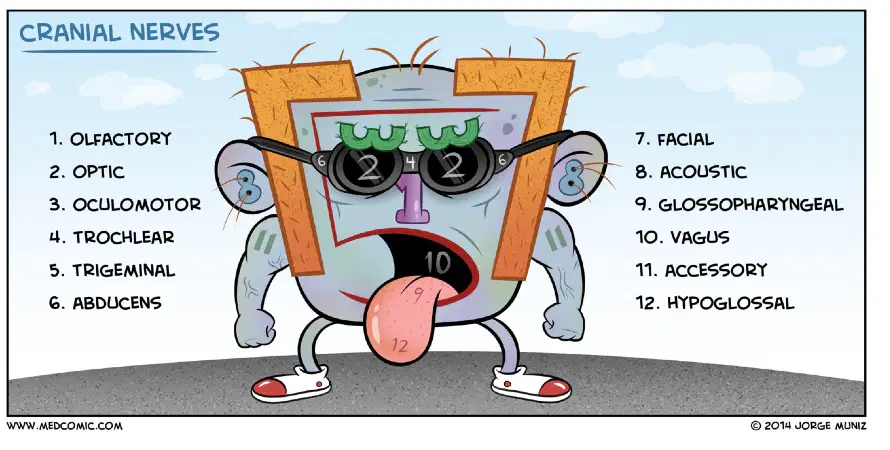
Which cranial nerve is responsible for the sense of smell?
Optic
Olfactory
Trigeminal
Facial
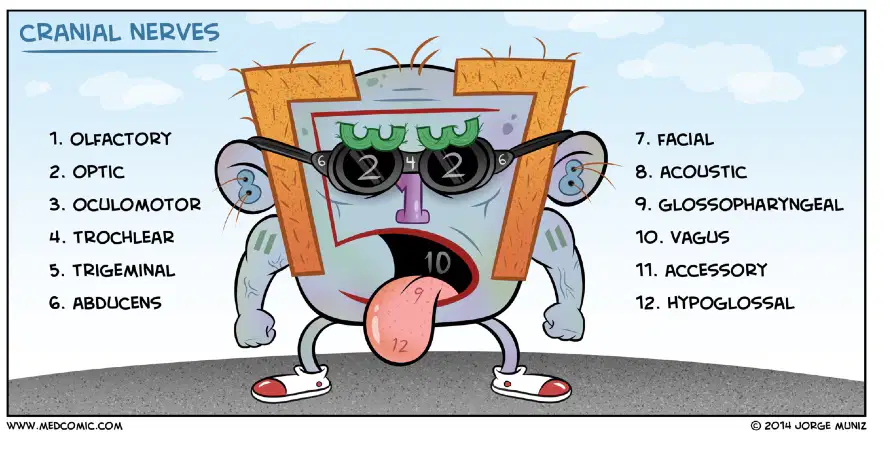
What is the function of the Optic nerve?
Smell
Vision
Moves eye
Hearing
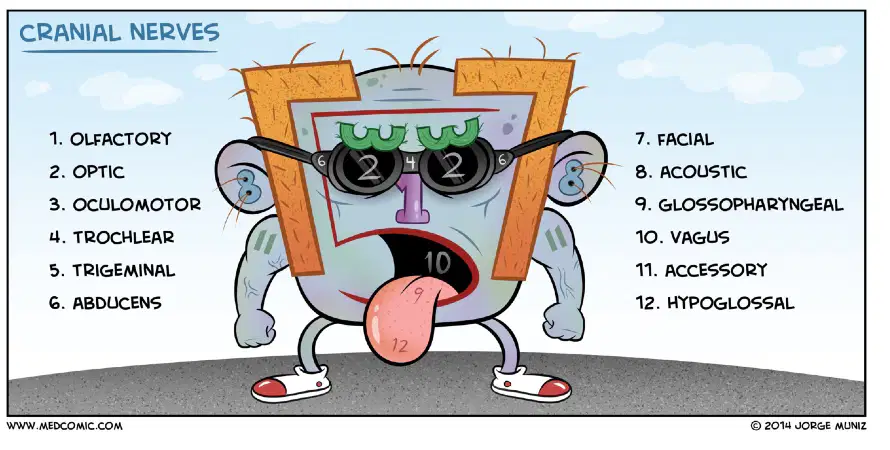
The Oculomotor nerve is mainly responsible for _________?
Most eye movement
Hearing
Taste sensation
Facial expression
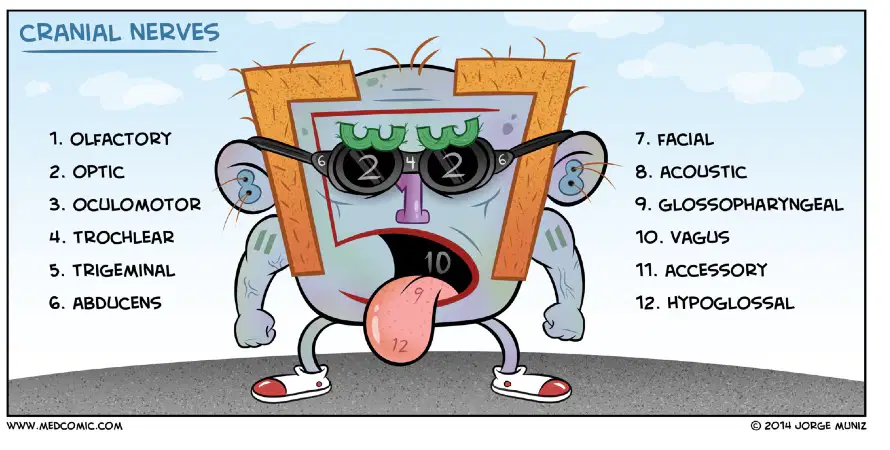
Which cranial nerve moves the eye downward and inward?
Trochlear
Abducens
Accessory
Vagus
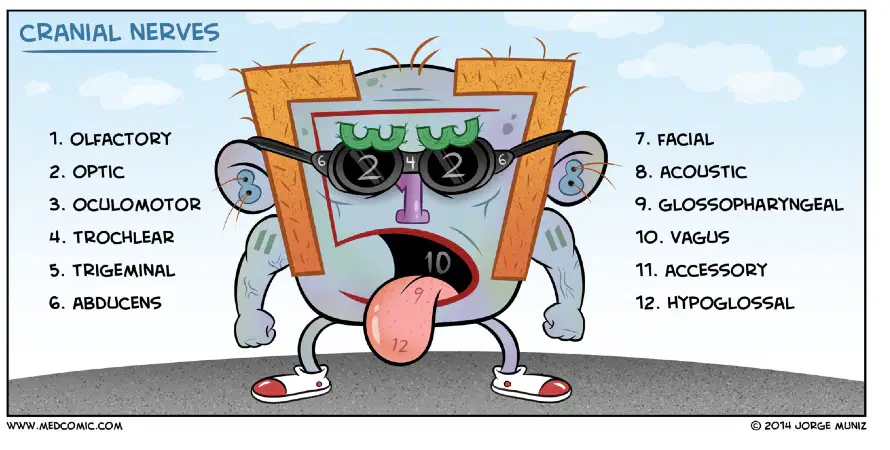
The Trigeminal nerve is responsible for which of the following?
Hearing
Face sensation, mastication
Vision
Swallowing
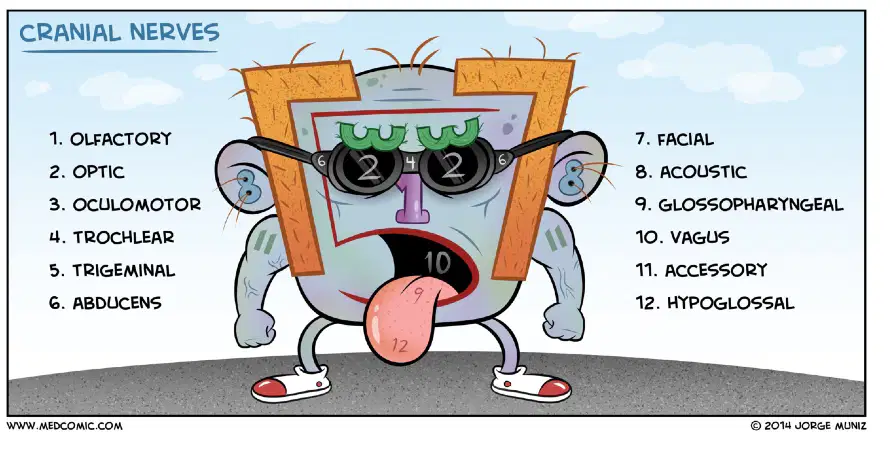
Which cranial nerve abducts the eye?
Oculomotor
Abducens
Trochlear
Facial
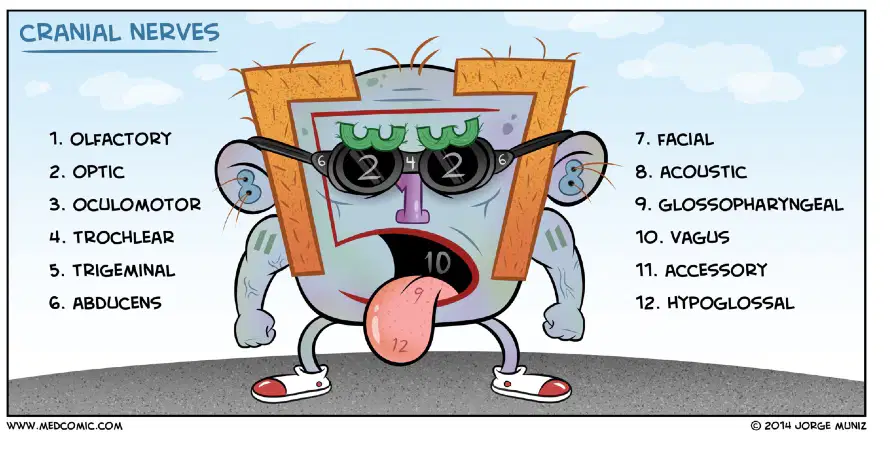
The Facial nerve is involved in facial expression and _______.
taste
hearing
vision
smell
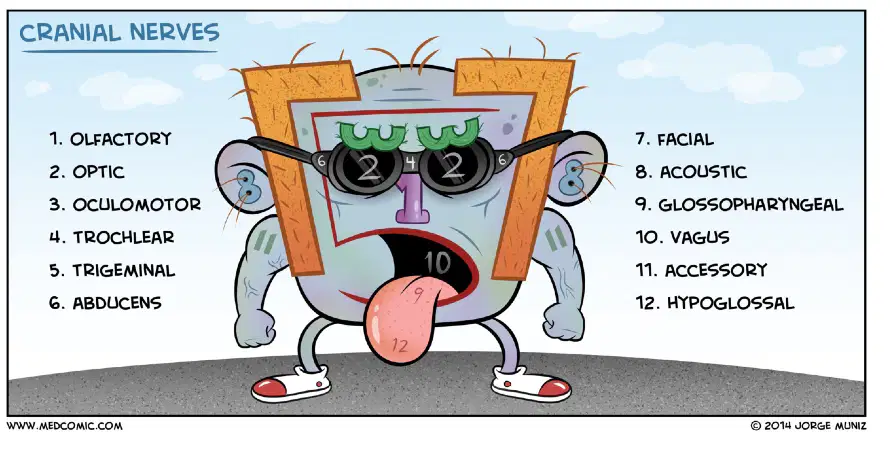
Which cranial nerve is responsible for hearing and balance?
Vestibulocochlear
Glossopharyngeal
Vagus
Accessory
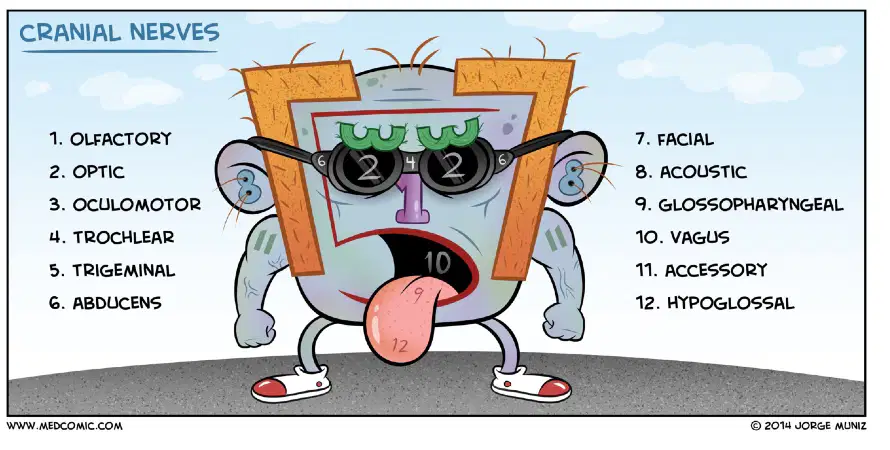
The Glossopharyngeal nerve is responsible for taste and _______.
gag reflex
hearing
vision
balance
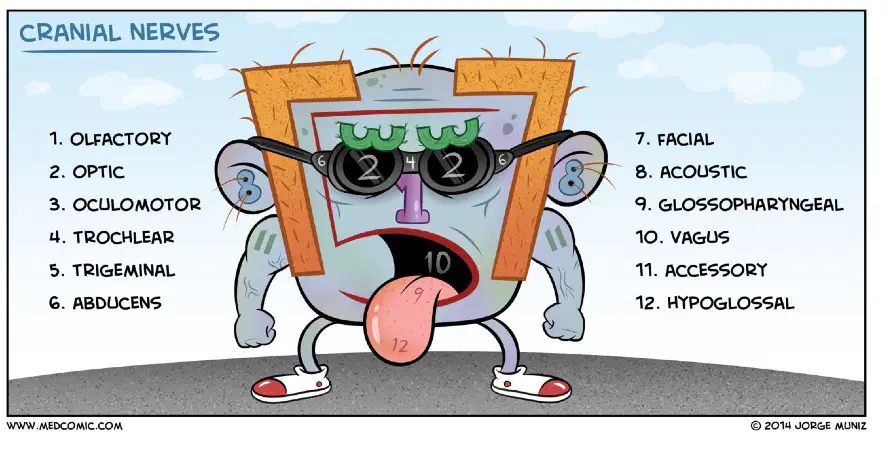
Which cranial nerve is involved in gag reflex and parasympathetic innervation?
Vagus
Accessory
Hypoglossal
Trigeminal
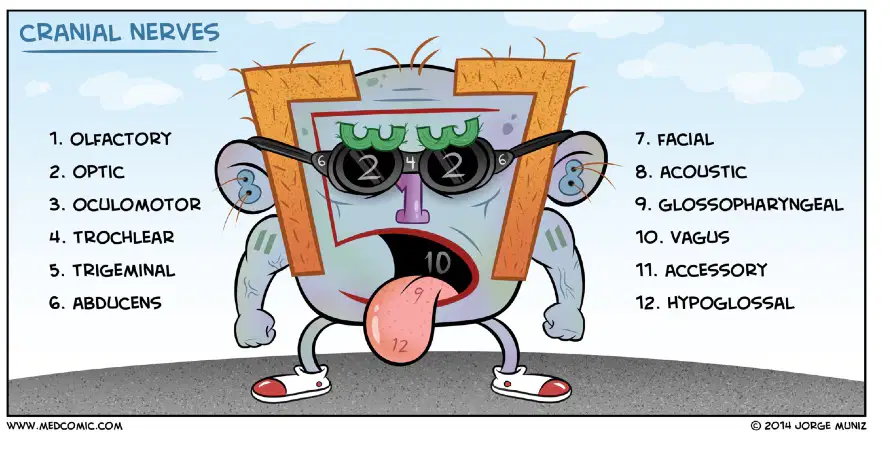
The Accessory nerve is responsible for ________ shrug.
Shoulder
Neck
Elbow
Wrist
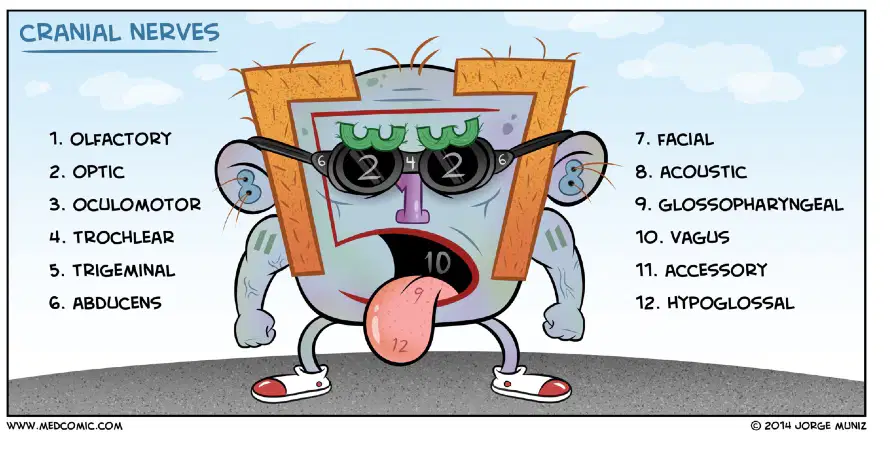
Which cranial nerve is responsible for swallowing and speech?
Olfactory
Hypoglossal
Facial
Vestibulocochlear
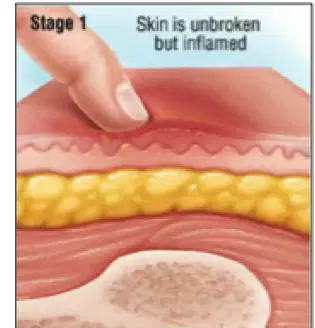
Which stage of pressure ulcers is characterized by nonblanchable erythema of intact skin, where the tissue is swollen but not broken?
Stage one
Stage two
Stage three
Stage four
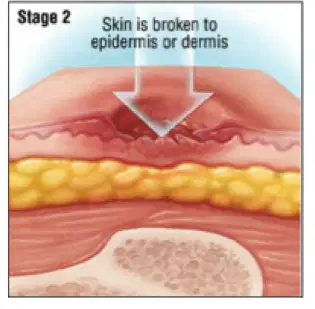
In which stage of pressure ulcers does partial-thickness skin loss with exposed dermis occur, often accompanied by a blister that is either intact or ruptured?
Stage one
Stage two
Stage three
Stage four
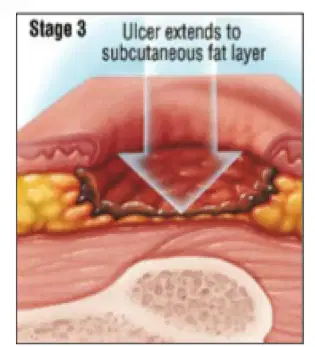
Stage three pressure ulcers are characterized by ________ skin loss, possible undermining or tunneling, and the beginning of necrosis.
full-thickness
partial-thickness
superficial
minimal
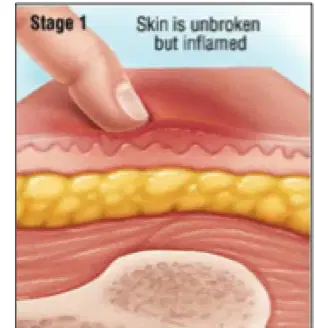
In stage one pressure ulcers, the skin is unbroken but inflamed.
True
False
Which of the following terms describes a dry, dark scab or falling away of dead skin, which may be present in stage three pressure ulcers?
Slough
Eschar
Epibole
Necrosis
Fill in the blank: In stage two pressure ulcers, the skin loss is ________-thickness with exposed dermis.
partial
full
superficial
deep
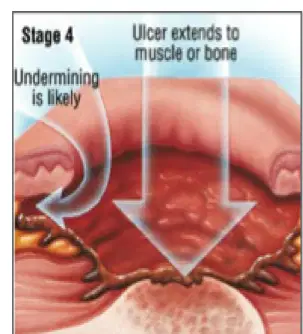
Which of the following is a characteristic of a Stage Four pressure ulcer?
Partial thickness skin loss
Full thickness skin & tissue loss
Only redness present
No bone exposure

