
 Worksheets
9-Lead American Motor Connections Quiz
Total questions: 99
Worksheet time: 50mins

What type of motor connection is shown in the diagram provided in the learning material?
High voltage wye-connected, 9-lead American motor
Low voltage delta-connected, 6-lead European motor
High voltage delta-connected, 12-lead American motor
Low voltage wye-connected, 3-lead European motor
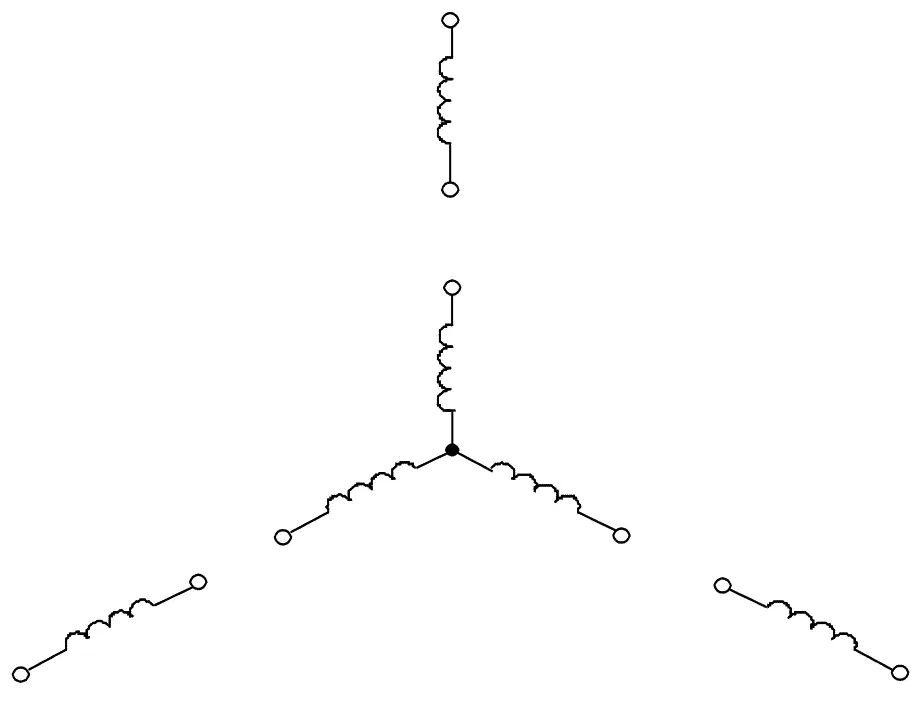
Which of the following is a key characteristic of a wye connection in a 9-lead American motor?
All windings are connected at a common point
Each winding is connected end-to-end in a loop
Only two windings are used at a time
The motor operates only on single-phase power
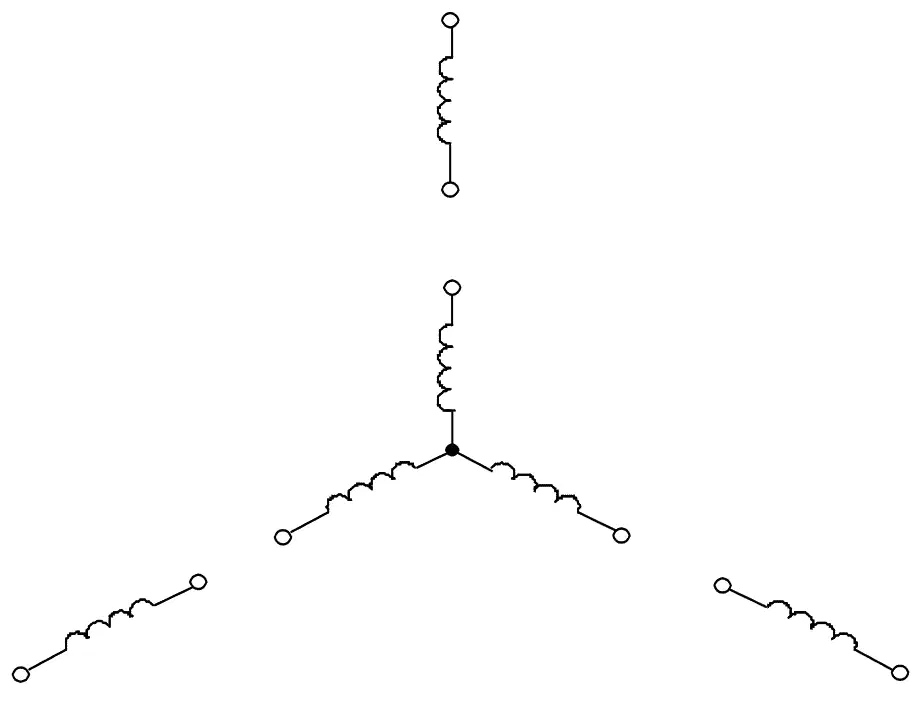
If you were to connect a 9-lead American motor for high voltage operation, which connection method would you use based on the diagram?
Wye connection
Delta connection
Series-parallel connection
Open circuit connection
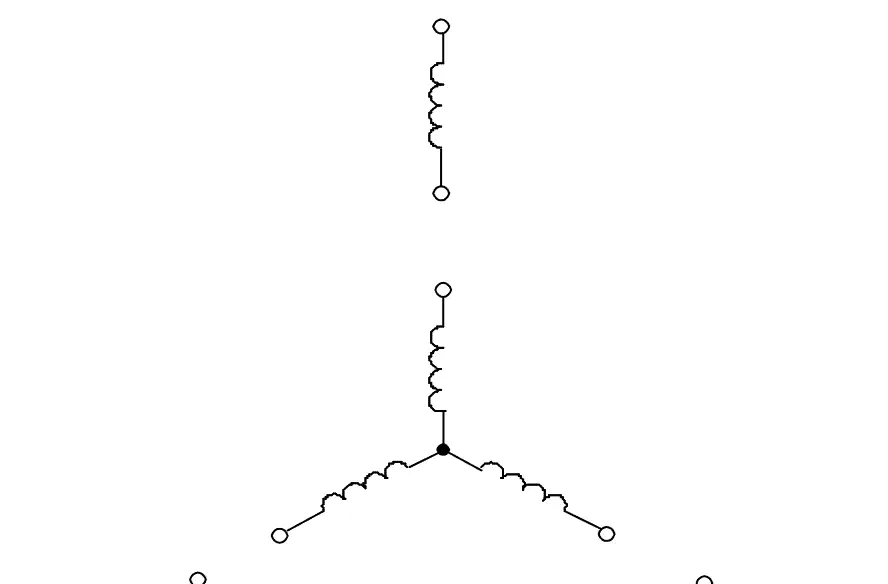
What type of motor connection is shown in the diagram provided in the learning material?
Low voltage wye-connected, 9-lead American motor
High voltage delta-connected, 6-lead European motor
Low voltage delta-connected, 12-lead American motor
High voltage wye-connected, 3-lead Asian motor
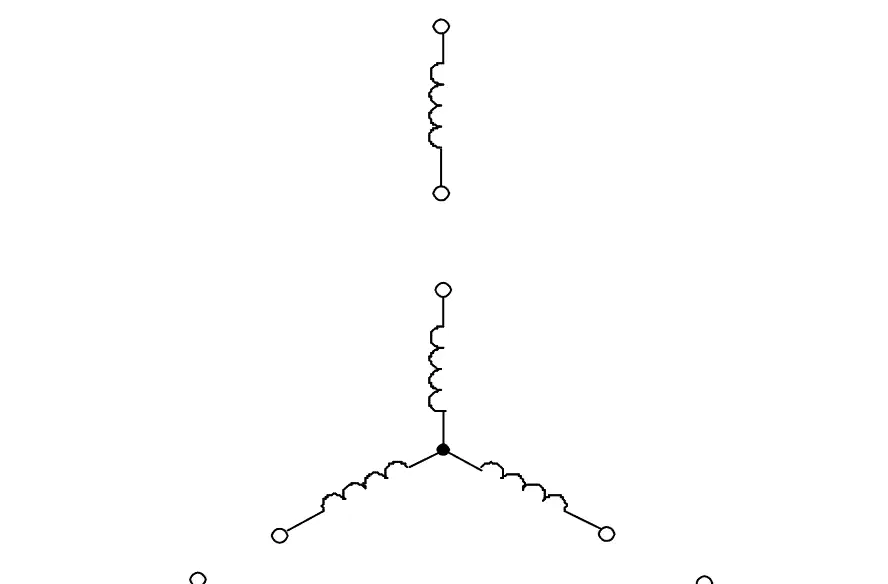
Which of the following is a key characteristic of a wye-connected motor as shown in the diagram?
All windings are connected at a common point
All windings are connected in a closed loop
Each winding is connected to a separate power source
The motor has only three leads
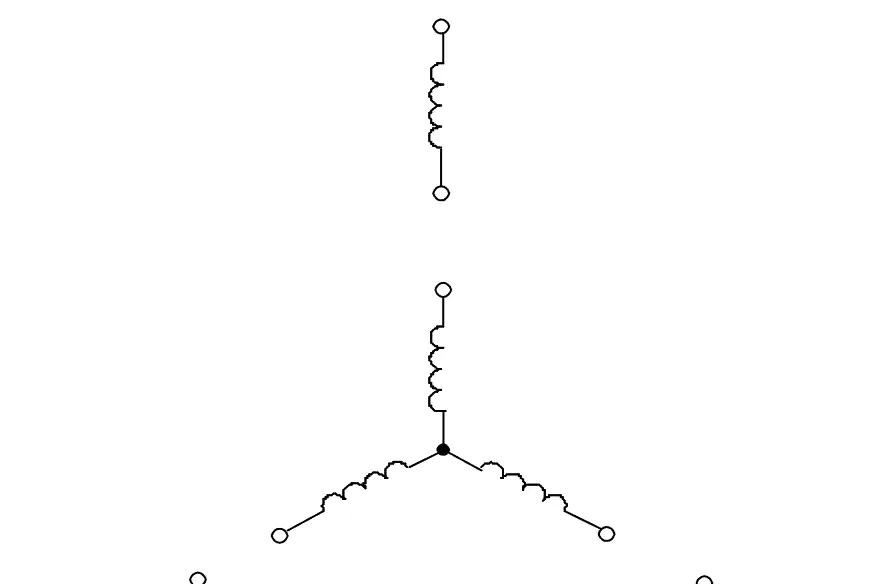
If you were to connect a 9-lead American motor for low voltage operation, which connection type would you use based on the diagram?
Wye connection
Delta connection
Series connection
Parallel connection

Which connection method is used for high voltage operation in a delta-connected, dual-voltage induction motor?
Series connection of two sections of each phase
Parallel connection of two sections of each phase
Star connection of all windings
Direct connection of all terminals
How are the nine external leads numbered for a delta-connected motor, starting at the top corner of the delta?
T1, T2, T3, then T4, T5, T6, T7, T8, T9
T1, T2, T3, then T4, T2 to T5, T3 to T6, T4 to T7, T5 to T8, T6 to T9
T1, T2, T3, then T4, T5, T6, T7, T8, T9 in a clockwise order
T1, T2, T3, then T4, T2 to T5, T3 to T6, T4 to T7, T5 to T8, T9

What is the main difference between the high voltage and low voltage connections in a delta-connected, dual-voltage induction motor?
High voltage uses parallel connection, low voltage uses series connection
High voltage uses series connection, low voltage uses parallel connection
Both use only series connections
Both use only parallel connections
If a technician needs to connect a delta-connected motor for high voltage operation, what should they do with the two sections of each phase?
Connect them in parallel
Connect them in series
Connect them to ground
Leave one section unconnected
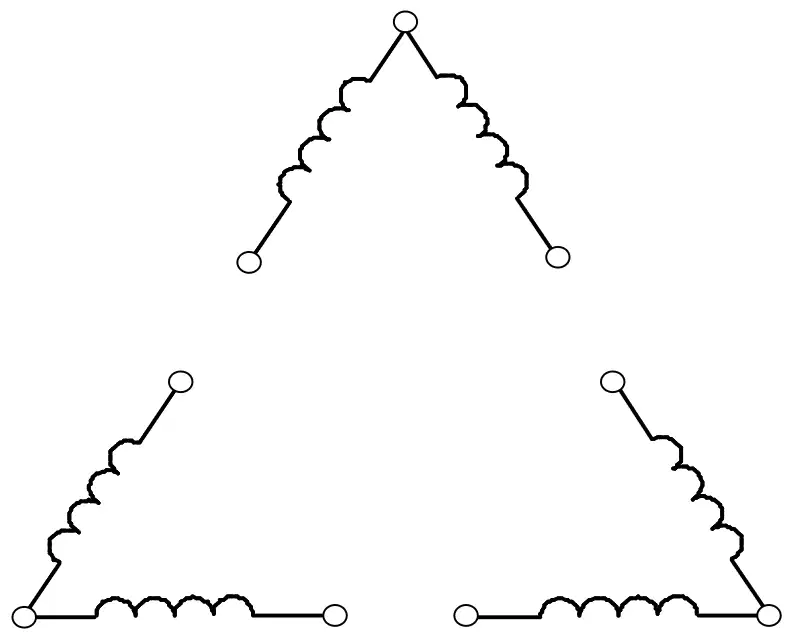
What type of motor connection is shown in the diagram provided in the learning material?
High voltage delta-connected, 9-lead American motor
Low voltage star-connected, 6-lead European motor
High voltage star-connected, 12-lead American motor
Low voltage delta-connected, 3-lead European motor
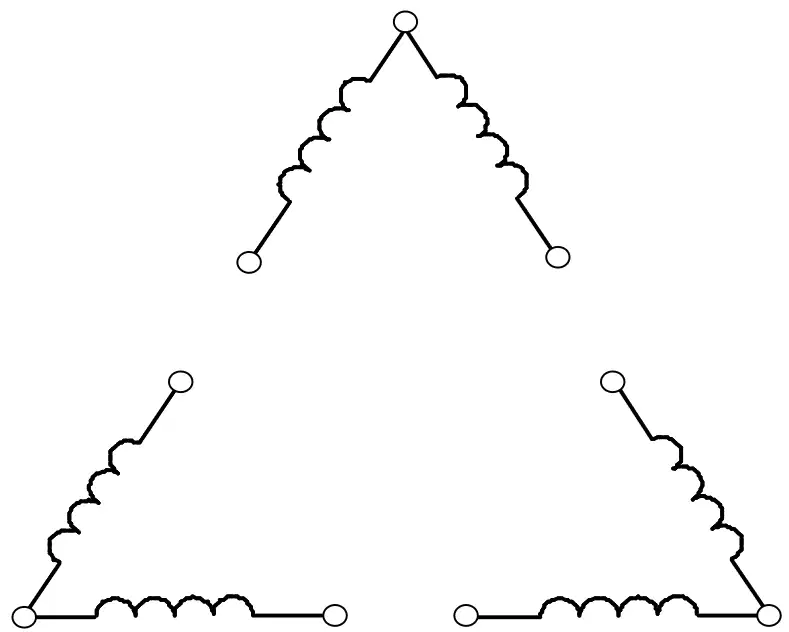
Which of the following is the primary purpose of the diagram shown in the learning material?
To practice the connections for a high voltage delta-connected, 9-lead American motor
To demonstrate the wiring of a low voltage star-connected motor
To illustrate the assembly of a mechanical gear system
To show the layout of a residential electrical panel
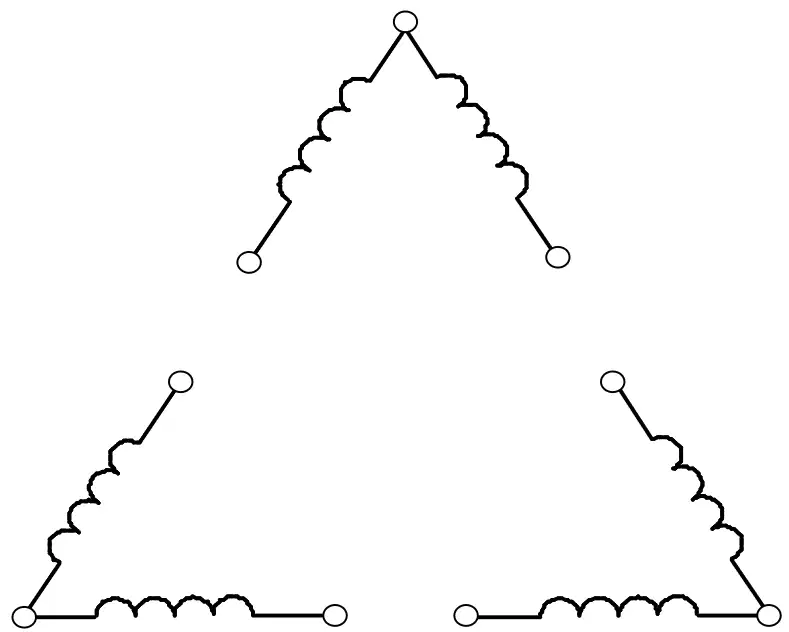
If you were to connect a 9-lead American motor for high voltage operation, which type of connection would you use based on the diagram?
Delta connection
Star connection
Series-parallel connection
Open-delta connection
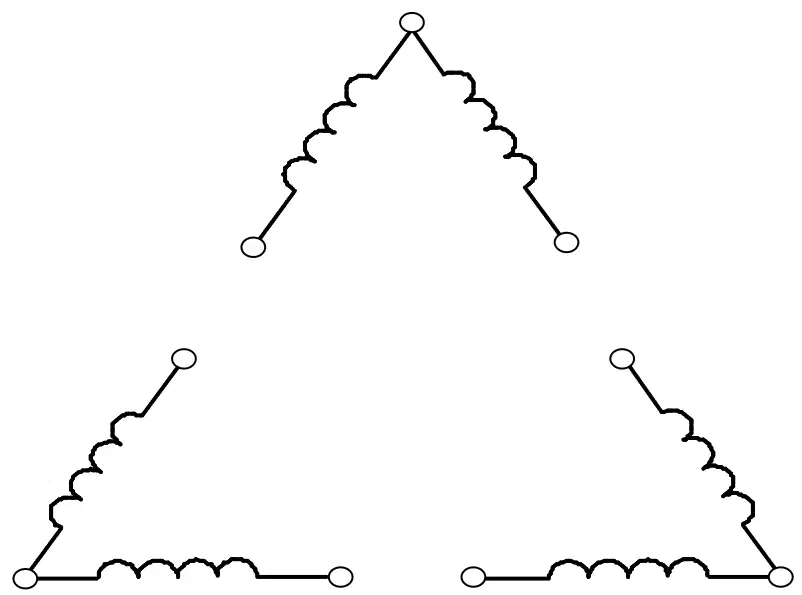
What type of motor connection is shown in the diagram provided in the learning material?
Low voltage delta-connected, 9-lead American motor
High voltage wye-connected, 6-lead European motor
Low voltage wye-connected, 12-lead American motor
High voltage delta-connected, 3-lead American motor
Which of the following is a key characteristic of a delta connection in a three-phase motor?
Each phase winding is connected end-to-end to form a closed loop
Each phase winding is connected to a common neutral point
Only two windings are used at a time
The motor operates on single-phase power
Why is it important to practice the connections for a low voltage delta-connected, 9-lead American motor using a diagram?
To ensure correct wiring and avoid motor damage
To increase the voltage rating of the motor
To convert the motor to single-phase operation
To reduce the number of leads required
Which connection is used for high voltage in European motors?
Delta connection
Wye connection
Star connection
Parallel connection
What is the typical design voltage for European motors as mentioned in the document?
480V or 240V
380V or 220V
120V or 240V
600V or 400V
What happens to European motors when they are rewound for 480 volts?
They become dual voltage motors
They have only three terminal wires
They operate at a lower frequency
They are used for low voltage only
Why will the nameplate rpms of a European motor not be correct when used in the U.S.?
The voltage is different
The frequency is different
The wiring is different
The number of coils is different
Explain why a European motor designed for 50 Hertz may not operate as intended in the U.S. (60 Hertz). What impact does this have on the motor's performance?
The motor will run slower, and the nameplate rpms will be higher than actual
The motor will run faster, and the nameplate rpms will be lower than actual
The motor will not start at all
The motor will overheat immediately
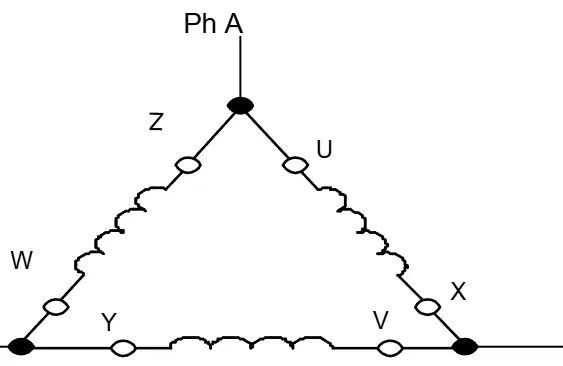
Which type of three-phase connection is illustrated in the provided diagrams?
Delta (Δ) connection
Star (Y) connection
Open-delta connection
Zig-zag connection
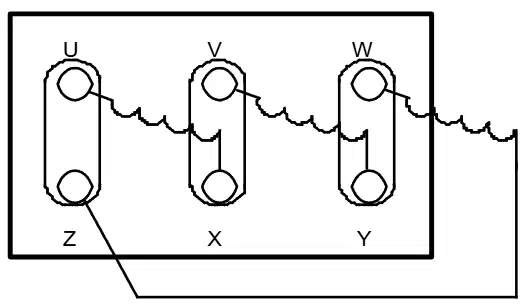
In the terminal box diagram, which terminals are connected together to form one phase winding?
U and X, V and Y, W and Z
U and Z, V and X, W and Y
U and V, W and X, Y and Z
U and W, V and Z, X and Y
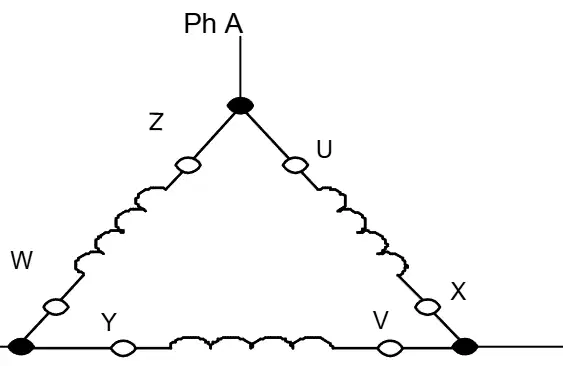
If you were to connect the three-phase supply lines to the points labeled Ph A, Ph B, and Ph C in the first diagram, what type of load connection would you be creating?
Series connection
Parallel connection
Delta (Δ) connection
Star (Y) connection
Which type of environment are oil tight push button control stations specifically designed for?
Areas with high dust concentration
Areas with presence of oil, coolant, and other noncorrosive industrial liquids
Areas with high temperature only
Areas with only dry air
What is the primary purpose of the neoprene gasket in oil tight push button control stations?
To provide electrical insulation
To enhance the appearance of the station
To seal the enclosure and prevent liquid ingress
To reduce the weight of the station
Which of the following best describes the contact type commonly used in oil tight push button control stations?
Single-break contacts
Double-break contacts
Triple-break contacts
No contacts are used
What is a key advantage of using high strength phenolic in the construction of contact plungers for double circuit blocks?
It increases electrical conductivity
It resists cracking and warping
It reduces the cost of production
It makes the block more flexible
Why might several contact blocks be stacked behind the push button operator in a control station?
To increase the size of the station
To allow for multiple circuit arrangements and functions
To reduce the number of push buttons needed
To make the station waterproof
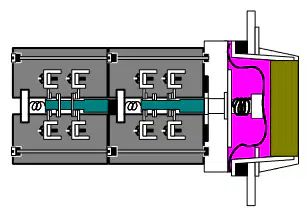
What does the diagram illustrate in relation to oil tight push button control stations?
The wiring of a single circuit
The stacking of several contact blocks behind the push button operator
The use of a single contact block only
The external appearance of the control station

Which type of push button station has steel bases and steel wraparound covers to exclude dirt and dust?
General-purpose stations
Watertight and dust tight stations
Corrosion-resistant stations
Hazardous location stations
What feature distinguishes watertight and dust tight push button stations from general-purpose stations?
Stainless steel enclosure with a gasket between the cover and base
Steel wraparound covers
Nonmetallic material enclosure
Machined surface between cover and base
Why are corrosion-resistant push button stations used in certain applications?
They are suitable for hazardous gas locations
They protect against corrosive fumes or liquids
They are easier to install
They are less expensive
A push button station with a machined surface between the cover and base is most suitable for which environment?
General-purpose locations
Watertight locations
Hazardous gas and dust locations
Outdoor locations only
Which material is used for the enclosure of corrosion-resistant push button stations?
Steel
Stainless steel
Nonmetallic material
Aluminum
Explain why synthetic rubber boots are used in corrosion-resistant push button stations.
To improve the appearance of the station
To protect the push buttons from corrosive substances
To reduce the cost of manufacturing
To make the station lighter
Which of the following best describes a heavy-duty push button station?
A device used only in household applications
A station with approximately twice the current rating of a standard-duty station, used in industrial applications
A station that only contains pilot lights
A device that cannot be used with selector switches
What is the current and voltage rating for a heavy-duty push button unit with A-C contacts at 120 Volts?
3 Amps, 240 Volts
1.5 Amps, 480 Volts
6 Amps, 120 Volts
1.2 Amps, 600 Volts
Which of the following is NOT a type of head available for heavy-duty push buttons?
Flush
Extended
Mushroom
Toggle
A heavy-duty push button unit with D-C contacts is rated at 0.2 Amps at which voltage?
120 Volts
230 Volts
550 Volts
240 Volts
Explain why heavy-duty push button stations are preferred in industrial applications over standard-duty stations.
They are less expensive
They have a higher current rating and can accommodate various control devices
They are smaller in size
They are only available with momentary contacts
If you need a push button station with maintained contacts and a mushroom head, which type of station would you select based on the provided information?
Standard-duty push button station
Heavy-duty push button station
Only selector switches
Only pilot lights
What is the primary function of a push button station in a control system?
To provide control of a motor with the pressing of the appropriate push button.
To measure the speed of a motor.
To supply power to the entire control system.
To monitor temperature changes in the system.
Which of the following best describes the difference between standard-duty and heavy-duty push buttons?
Standard-duty and heavy-duty refer to the contact capacity of the push button in making and breaking ability.
Standard-duty push buttons are only used for lighting circuits.
Heavy-duty push buttons are always larger in size than standard-duty.
Standard-duty push buttons are waterproof, while heavy-duty are not.
According to the document, what is a common use for auxiliary push buttons?
To control the motor from remote points.
To increase the voltage of the circuit.
To replace the main power supply.
To measure current flow.
Which of the following is NOT a typical contact rating for a standard-duty push button unit for pilot duty?
2.0 Amperes, 120 volts
3.0 Amperes, 120 volts
1.5 Amperes, 240 volts
0.75 Ampere, 480 volts
Why must push buttons be ruggedly constructed?
To withstand operator and mechanical abuse, and exposure to oils, coolants, chemicals, dusts, and various foreign elements.
To improve the speed of the motor.
To reduce the cost of the control system.
To increase the size of the control panel.
A teacher wants to ensure the "stop" button on a push button station cannot be accidentally released. What feature should be added?
A padlocking attachment to lock the "stop" button in the depressed position.
A larger button for easier access.
A light indicator above the button.
A timer to delay the release.
Explain why the terms standard-duty and heavy-duty do not refer to the service conditions or frequency of operation of push buttons.
Because they only describe the contact capacity of the push button in making and breaking ability, not the environmental or operational conditions.
Because they refer to the color of the push button.
Because they indicate the manufacturer of the push button.
Because they describe the size of the push button.
What are the two main parts that each unit usually consists of?
Operator and contact block
Button and spring
Locking ring and washer
Nameplate and insulator
What material is commonly used for the operating buttons in push button stations?
Aluminum
Molded plastic
Synthetic rubber
Steel
What is the primary function of synthetic rubber washers in the unit?
To provide electrical insulation
To create an oil tight seal between the panel and operator
To prevent rust
To lock the button in place
Which type of push button head is usually used as an E-stop button?
Flush button
Extended button
Mushroom head
Keyhole button
What is the purpose of a keyhole "dust cover" in cylinder lock type push button operators?
To prevent the button from being pressed
To prevent dirt and other foreign matter from entering
To lock the button in place
To indicate the function of the button
A teacher wants to ensure students understand the application of push button stations. Which feature allows a stop button to remain in the depressed position for safety?
Pilot lights
Padlocking attachment
Flexible diaphragm
Double break contacts
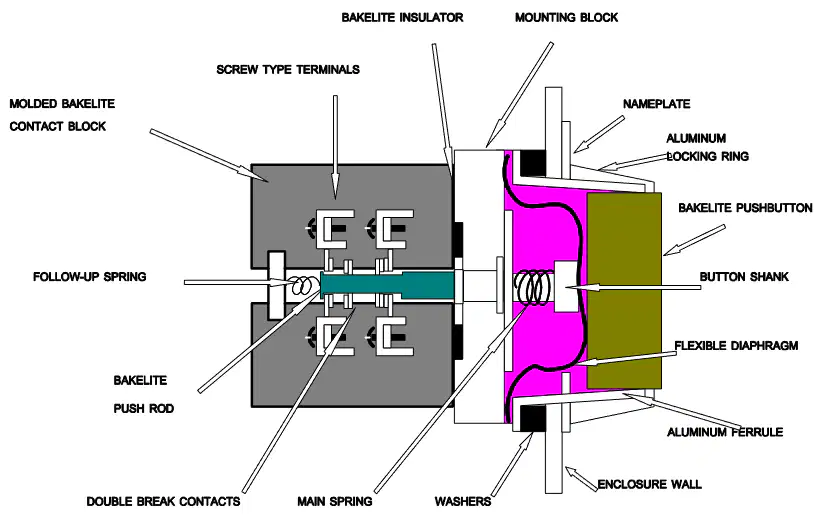
This question contains a diagram. Which statement best describes what the diagram shows?
This diagram shows the internal structure of a push button operator.
This diagram shows the wiring of a control panel.
This diagram shows the assembly of a motor.
This diagram shows the layout of a circuit board.
Which of the following best describes the function of selector switch operators?
They are used to illuminate circuits from all angles.
They actuate contact blocks using cams in the operator sleeve.
They provide only spring return contact operation.
They are used exclusively for key locking features.
What is the main additional feature of a key operated selector switch compared to a normal selector switch?
It provides illumination from all angles.
It has a key locking feature to prevent unauthorized changes.
It can only be used in two-position types.
It does not provide maintained contact operation.
Which of the following is NOT a type of lever shown for selector switch operators in the diagram?
Standard Lever
Extended Lever
Key Operator
None of the above
Illuminated push buttons combine which two functions in a single unit?
Selector switch and key operator
Push button operator and indicating light
Circuit breaker and transformer
Key locking and spring return
Which component is NOT mentioned as part of the oil tight assembly for illuminated push buttons?
Rubber diaphragm
Rubber lens gasket
Rubber panel gasket
Metal spring
Why might a designer choose an illuminated push button over separate push button and indicator units?
It requires more space.
It provides only one function.
It requires only half the space of two separate units.
It cannot be used for circuit control.
Which of the following best explains the advantage of having a variety of operating cams and contact blocks in selector switches?
It limits the number of circuit combinations.
It allows for many circuit combinations.
It prevents the use of spring return operation.
It eliminates the need for key operators.
What is the primary function of indicating lights in a machine?
To provide power to the machine
To indicate if everything is ready or operating smoothly
To control the speed of the machine
To cool down the machine
Which of the following is NOT a feature of standard indicating lights?
They can have a transformer built in to change the voltage
They are only available for AC voltages
They are available in color with plastic or glass lenses
The lamps can be rated for the exact voltage
Why is it important that indicating lights function accurately?
They are used to decorate the machine
They alert the attendant of the next operation for their machine
They increase the machine's speed
They reduce the machine's weight
How can the press-to-test type indicating lights be useful?
They can test if the lamp is burned out
They can change the color of the light
They can increase the voltage automatically
They can cool the lamp

Which component in the diagram is responsible for covering and protecting the bulb?
Name plate
Mounting base
Lens
Panel

What is the function of the push button in the press-to-test indicating light?
To change the color of the lens
To test if the lamp is burned out
To increase the brightness of the bulb
To secure the mounting base
What is the primary function of a limit switch in a mechanical or electrical system?
To interlock a mechanical motion or position with an electrical circuit.
To increase the speed of a machine.
To provide power to the entire system.
To measure temperature changes.
Which of the following best describes where limit switches are typically used?
In the control circuit to start or stop a machine's motion.
In the power supply to increase voltage.
In the cooling system to regulate temperature.
In the lubrication system to reduce friction.
Why are limit switches often included in safety devices?
To protect both personnel and equipment.
To increase the speed of production.
To reduce the size of the machine.
To improve the color of the machine.
What are the main differences between types of limit switches?
The mechanical design and the means by which the switch is actuated.
The color and size of the switch.
The brand and price of the switch.
The location and temperature of the switch.
What role does an actuator play in the operation of a limit switch?
It detects the mechanical movement of the machine and actuates an internal mechanism.
It supplies electrical power to the switch.
It cools down the switch during operation.
It records the data from the switch.
A factory wants to ensure that a conveyor belt stops automatically when it reaches the end of its path. Which device would be most appropriate to use for this purpose?
A limit switch
A temperature sensor
A pressure gauge
A fuse
Explain how the selection of a limit switch involves both electrical application requirements and mechanical placement. Why is this important for system design?
Because the switch must be compatible with the circuit and physically fit where it will detect motion.
Because the switch must be colorful and attractive.
Because the switch must be the cheapest available.
Because the switch must be the largest component.
Which of the following is NOT listed as an example of an actuator in the provided material?
Roller lever
Forked arm
Adjustable length roller lever
Pneumatic piston
What is the main function of the devices shown in the provided material?
To store electrical energy
To act as actuators in mechanical systems
To measure temperature
To transmit wireless signals
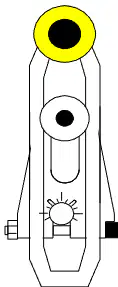
Which actuator type from the material is specifically designed to allow for length adjustment?
Forked arm
Adjustable length roller lever
Spring lever
Rod
Compare the "Spring Rod Lever" and "Spring Lever" actuators. What is a key difference in their design or function based on their names?
The "Spring Rod Lever" includes both a spring and a rod, while the "Spring Lever" only includes a spring.
The "Spring Lever" is electrically powered, while the "Spring Rod Lever" is not.
The "Spring Rod Lever" is used for temperature control, while the "Spring Lever" is not.
The "Spring Lever" is larger in size than the "Spring Rod Lever."
Which of the following is an advantage of proximity sensors compared to mechanical limit switch contacts?
Rapid speed of operation
High power consumption
Sensitivity to humid surroundings
Slow response time
Which of the following types is NOT a type of proximity sensor mentioned in the material?
Optical
Inductive
Capacitive
Ultrasonic
Proximity sensors are insensitive to which of the following environmental conditions?
Humid or damp surroundings
High temperatures
Dusty environments
Vibrations

What do the abbreviations N.O. and N.C. stand for in proximity sensor symbols?
Normally Open and Normally Closed
New Operation and Normal Condition
Neutral Output and Negative Current
Non-Operational and Non-Contact
Explain why proximity sensors might be preferred over mechanical limit switch contacts in certain industrial environments.
They operate rapidly and are not affected by humid or damp conditions.
They are more expensive and complex to install.
They require frequent maintenance.
They are less reliable in dry environments.
What is the primary function of an inductive proximity sensor?
To detect the presence of metal objects by generating and monitoring changes in an electromagnetic field.
To measure temperature changes in the environment.
To detect the color of objects passing by.
To measure the speed of moving objects.
Which component in an inductive proximity sensor is responsible for generating the electromagnetic field?
Coil
Output circuit
Trigger-signal level detector
Solid-state output
What happens to the amplitude of oscillation when a metal object enters the field of an inductive proximity sensor?
The amplitude decreases due to energy loss from eddy currents.
The amplitude increases due to energy gain.
The amplitude remains unchanged.
The amplitude fluctuates randomly.
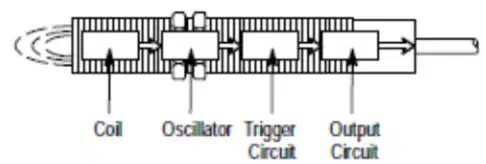
Which of the following best describes the sequence of operation in an inductive proximity sensor when a metal target approaches?
The coil generates a field, the oscillator is affected by eddy currents, the detector senses amplitude change, and the output state changes.
The output circuit generates a field, the coil senses amplitude, the oscillator detects the target, and the detector changes state.
The trigger circuit generates a field, the output circuit senses the target, the coil detects amplitude, and the oscillator changes state.
The oscillator generates a field, the output circuit senses amplitude, the coil detects the target, and the detector changes state.
When does the solid-state output of an inductive proximity sensor turn “ON” or “OFF”?
When the detector circuit recognizes a specific change in amplitude.
When the coil is disconnected from the circuit.
When the sensor is exposed to light.
When the temperature exceeds a certain threshold.
A metal target is approaching an inductive proximity sensor. What effect does this have on the oscillator and output state?
The energy drain stops the oscillator and changes the output state.
The oscillator increases its frequency and the output state remains unchanged.
The output state is unaffected, but the oscillator continues to run.
The oscillator and output state both remain unchanged.
Why are eddy currents important in the operation of inductive proximity sensors?
They cause energy loss in the target, which is detected as a change in amplitude.
They increase the sensitivity of the sensor to non-metallic objects.
They help the sensor detect changes in temperature.
They stabilize the output voltage of the sensor.
What is the active face of an inductive proximity switch?
The surface where a high-frequency electro-magnetic field emerges
The back of the sensor
The power supply connection
The mounting bracket
According to the standard, what is the recommended thickness of a mild steel square target for an inductive proximity sensor?
1 mm
5 mm
10 mm
0.5 mm
Which of the following is generally preferable when selecting the shape of a target for inductive proximity sensors?
Flat targets
Rounded targets
Irregular targets
Hollow targets
How does using nonferrous materials as targets typically affect the sensing distance for all-metal sensing models?
It usually reduces the sensing distance
It increases the sensing distance
It has no effect on the sensing distance
It doubles the sensing distance
If a target is smaller than the sensing face of an inductive proximity sensor, what is the likely effect on the sensing distance?
The sensing distance is typically reduced
The sensing distance is increased
The sensing distance remains unchanged
The sensor stops working
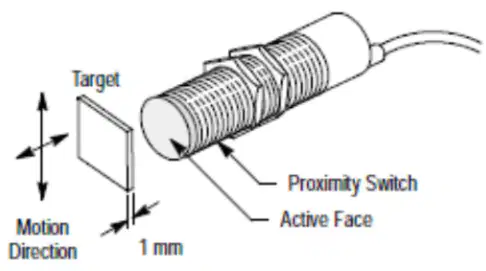
A student is designing a system using inductive proximity sensors. If they want to maximize the sensing distance, which of the following should they consider based on the guidelines?
Use flat targets and foils, and ensure the target is larger than the sensing face
Use rounded targets and nonferrous materials
Use targets smaller than the sensing face
Use thick, irregularly shaped targets
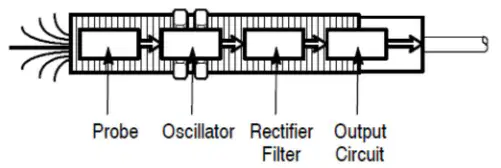
Which of the following components is NOT part of the internal workings of a capacitive proximity sensor?
Capacitive probe
Oscillator
Transformer
Output circuit

