
 Worksheets
Intro to Anatomy and Physiology Test
Total questions: 48
Worksheet time: 25mins
Anatomy is the study of the ______ of the human body.
structure
function
growth
movement
Which of the following is NOT a way to study anatomy?
A) Development
B) Embryology
C) Surface (with our eyes)
D) Photosynthesis
What is physiology?
The study of the structure of the human body
The study of the function of the human body
The study of diseases
The study of plants
Which of the following is a way to study physiology?
Systematic (by body systems)
Historical (by time periods)
Chemical (by reactions)
Environmental (by surroundings)
Gross (large)/Macroscopic physiology studies the ________.
organs
cells
tissues
molecules

What is the smallest level of organization in living things?
Cell
Tissue
Organ
Organism
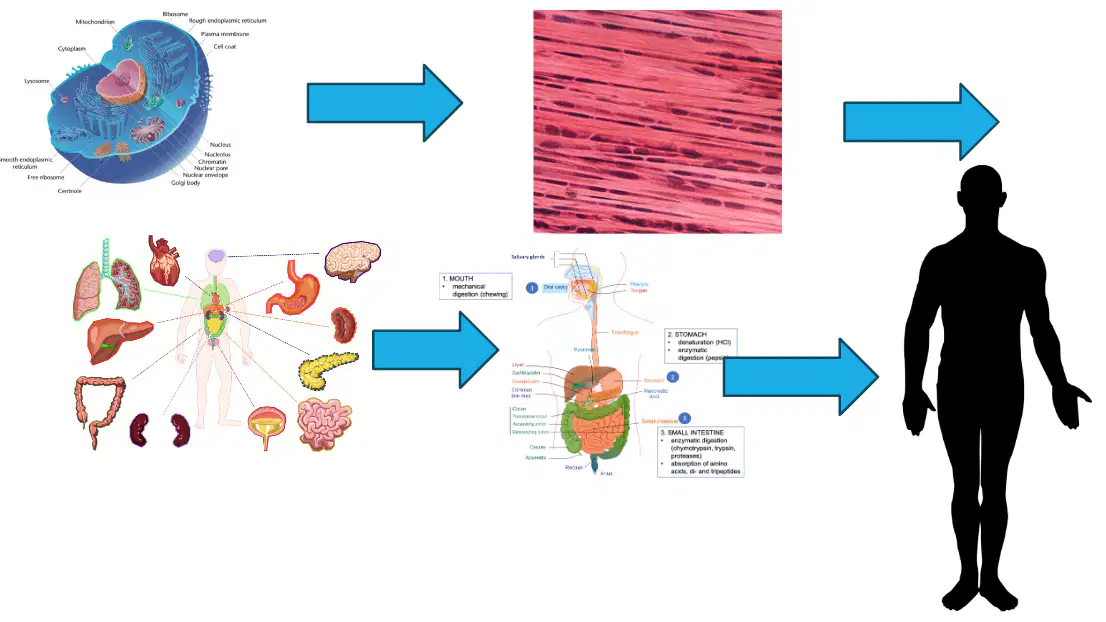
Which level of organization is described by many cells working together?
Tissue
Organ
Organism
Molecule
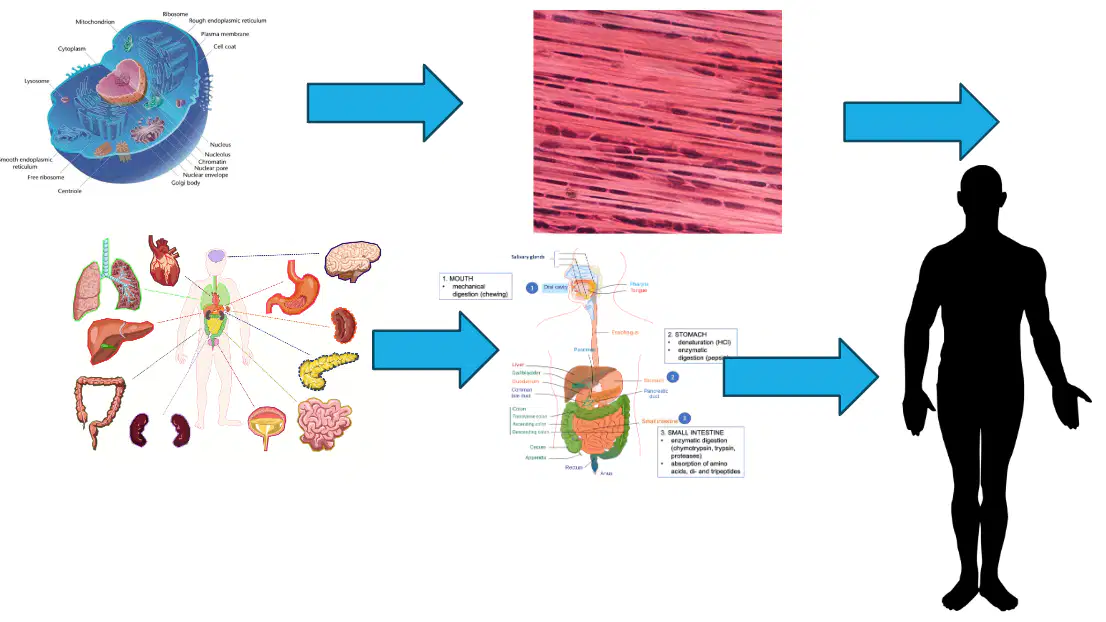
Which level of organization is made up of tissues working together?
Organ
Cell
Organism
Organ system
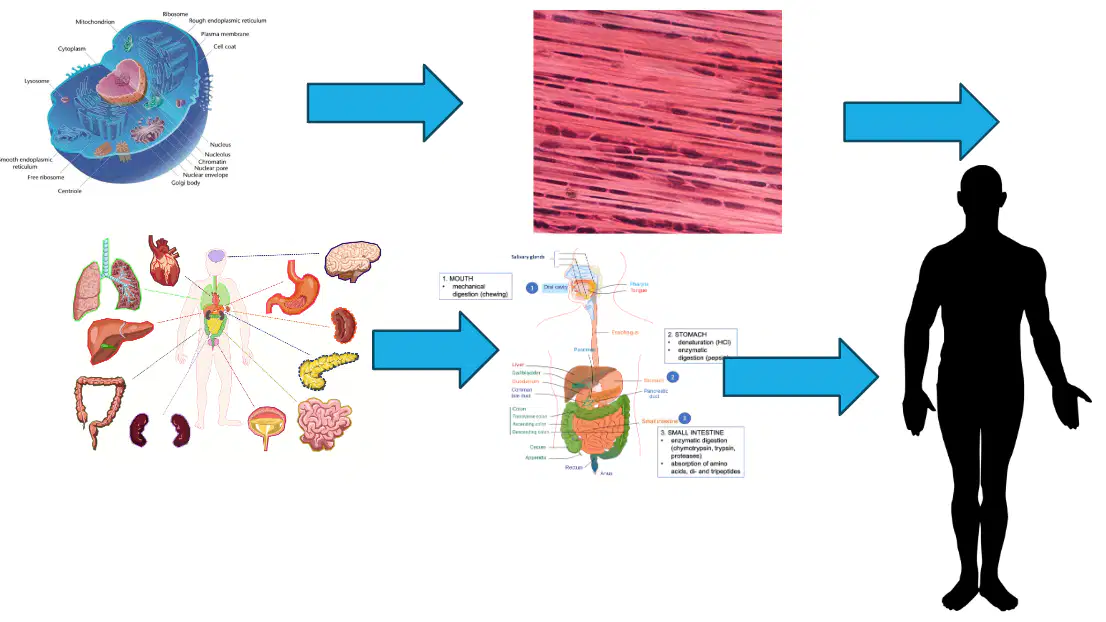
Which level of organization consists of organs working together to perform a function?
Organ System
Cell
Tissue
Organ
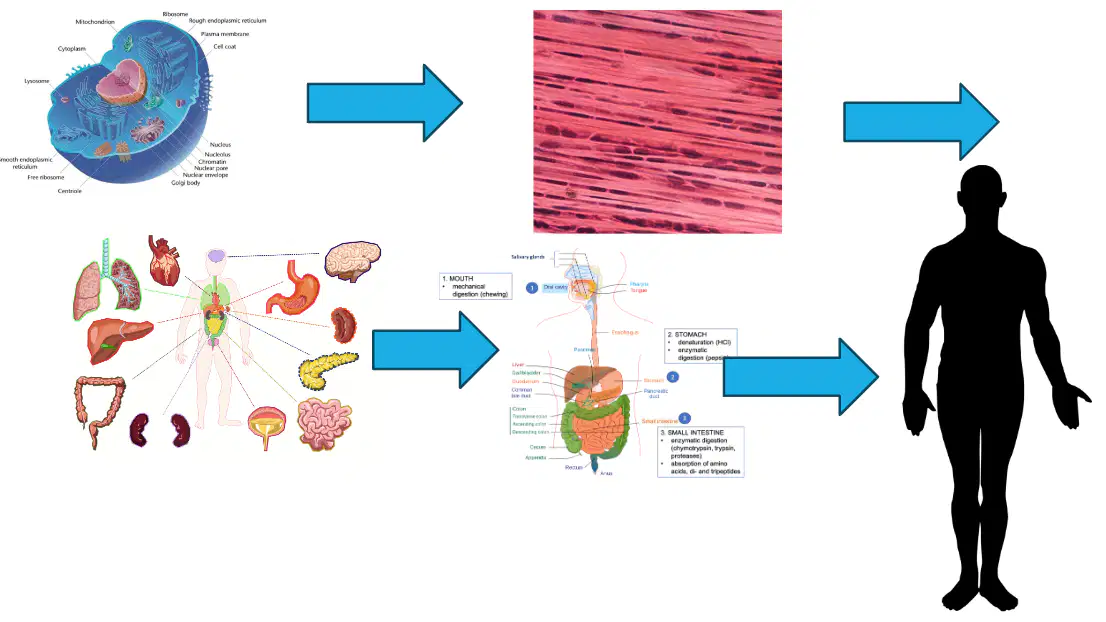
What is the largest level of organization in living things?
Organism
Cell
Tissue
Organ

Which body system provides support, protection, and shape?
Skeletal
Digestive
Respiratory
Circulatory
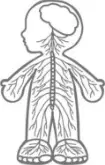
Which body system acts as the control center and detects impulses from the senses?
Nervous
Digestive
Respiratory
Circulatory
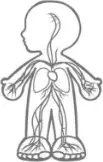
Which body system transports nutrients and gases?
Cardiovascular (Circulatory)
Digestive
Nervous
Muscular
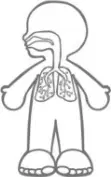
Which body system exchanges gases, oxygen (O2) and carbon dioxide (CO2)?
Respiratory
Digestive
Nervous
Skeletal
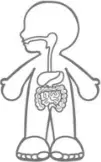
Which body system breaks down and absorbs food?
Digestive
Respiratory
Nervous
Skeletal
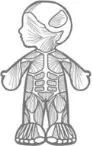
Which body system provides movement?
Muscular
Digestive
Respiratory
Nervous
Which body system is responsible for protection, regulation of temperature, and prevention of water loss?
Integumentary
Digestive
Respiratory
Skeletal
Which body system fights infection and provides cellular fluid?
Lymphatic
Digestive
Respiratory
Skeletal
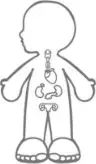
Which body system removes wastes from the body?
Excretory
Respiratory
Circulatory
Nervous
Which body system secretes hormones?
Endocrine
Digestive
Respiratory
Skeletal
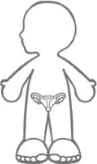
Which body system produces sex cells (sperm and eggs)?
Reproductive
Digestive
Respiratory
Nervous
Fill in the blank: Since the right side of the human body generally mirrors the left side, humans are ________ symmetric.
bilaterally
radially
asymmetrically
spherically
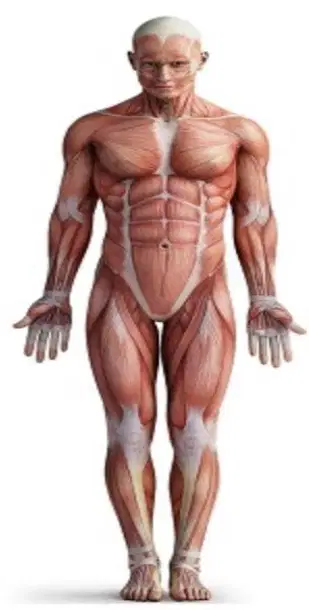
Anatomical Position: The palms are facing ________ with thumbs pointing away from the body.
forward
backward
downward
sideways
When directional terms are used, you should always assume the body is in anatomical position.
True
False
Fill in the blank: The term that means 'towards the head' is ________. (ex. the shoulders are ________ to the hips)
Superior
Inferior
Anterior
Posterior
Fill in the blank: The term that means 'towards the feet' is ________. (ex. the knees are ________ to the elbows)
Inferior
Superior
Anterior
Lateral
Fill in the blank: The term that means 'towards the side' is ________. (ex. the hands are ________ to the head)
Lateral
Medial
Distal
Proximal
Fill in the blank: The term that means 'towards the midline' is ________. (ex. the umbilicus (bellybutton) is ________ to the hands)
Medial
Lateral
Distal
Superior
What does the anatomical term 'Distal' mean?
Towards the center of the body
Towards the extremities
Away from the body surface
Towards the body surface
What does the anatomical term 'Proximal' mean?
Towards the extremities
Towards the center of the body
Away from the body surface
Towards the back of the body
What does the anatomical term 'Deep' mean?
Towards the body surface
Towards the front of the body
Away from the body surface
Towards the back of the body
What does the anatomical term 'Superficial' mean?
Towards the body surface
Towards the center of the body
Away from the body surface
Towards the back of the body
What does the anatomical term 'Anterior' mean?
Towards the back of the body
Towards the front of the body
Towards the extremities
Away from the body surface
What does the anatomical term 'Posterior' mean?
Towards the front of the body
Towards the center of the body
Towards the back of the body
Towards the body surface
What is the Median (Midsagittal) plane?
A) A horizontal plane that divides the body into upper and lower parts
B) A vertical plane that divides the body into right and left halves
C) A plane that divides the body into front and back parts
D) A diagonal plane that divides the body into unequal parts
What does the Frontal (Coronal) plane do?
A) Divides the body into left and right segments
B) Divides the body into anterior (front) and posterior (back) segments
C) Divides the body into upper and lower segments
D) Divides the body into diagonal segments
What does the transverse plane divide the body into?
A) Anterior and posterior segments
B) Superior (upper) and inferior (lower) segments
C) Left and right segments
D) Medial and lateral segments
Which body cavity is the space within the skull that houses the brain and other related structures?
Cranial Cavity
Thoracic Cavity
Abdominal Cavity
Pelvic Cavity
Which body cavity is a bony structure formed by the vertebrae that houses and protects the spinal cord (continuous with the cranial cavity)?
Vertebral
Thoracic
Abdominal
Pelvic
Which body cavity is the chest cavity, space in the chest that houses heart, lungs and major blood vessels?
Thoracic Cavity
Abdominal Cavity
Pelvic Cavity
Cranial Cavity
Which body cavity is within the stomach area (behind the umbilicus) that houses organs such as the stomach, intestines, liver, etc?
Abdominal Cavity
Thoracic Cavity
Cranial Cavity
Pelvic Cavity
Which body cavity is a bony cavity located below the abdominal cavity and houses the urinary bladder, colon and reproductive organs?
Pelvic Cavity
Thoracic Cavity
Cranial Cavity
Abdominal Cavity
What is the combination of the abdominal and pelvic cavities called?
Abdominopelvic Cavity
Thoracic Cavity
Cranial Cavity
Vertebral Cavity
Which cavity is a thin fluid filled cavity that lines the thoracic cavity (lungs and chest wall)?
Pleural Cavity
Pericardial Cavity
Abdominal Cavity
Cranial Cavity
Which region in the chest cavity is located between the lungs and houses the trachea, esophagus, and major blood vessels?
Superior Mediastinum
Pleural Cavity
Pericardial Cavity
Inferior Mediastinum
Which cavity is a fluid filled space that surrounds the heart?
Pericardial Cavity
Pleural Cavity
Abdominal Cavity
Cranial Cavity
What is the double-layered membrane that lines the ventral (front) body cavities called?
Serosa
Meninges
Pericardium
Synovium


