
 Worksheets
Unit 2- Cells
Total questions: 66
Worksheet time: 1hrs 6mins
I’m a real “powerhouse.”
That’s plain to see.
I break down food
To release energy.
Who am I?
mitochondria
golgi body
nucleus
ribosome
I’m full of holes,
Flexible, and thin.
I control what gets out
As well as what comes in.
Who am I?
cell membrane
cell wall
cytoplasm
DNA
My organelles are abundant
I am much more complex
I'm larger and I made up
The first trees and the t-rex
Who am I?
eukaryote
prokaryote
vacuole
cell
I'm microscopic,
made up of organelles
I make up all living things
like elephants and gazelles
Who am I?
cells
cytoplasm
cell membrane
organism
My structure is simple
Unlike more advanced cells
I am much smaller
and have no organelles
Who am I?
prokaryote
eukaryote
unicellular
cell membrane
takes over the cell's functions.

Organisms with cells that have a nucleus are called . . .
Archaea
Bacteria
Eukaryotes
Prokaryotes
Which of the following is an example of prokaryote?
Plant
Animal
Fungi
Bacteria
Which is an organelle that would be found only in plant cells, but not animal cells?
Mitochondria
Rough ER
Smooth ER
Chloroplast
Prokaryote
A large, organic molecule such as carbohydrates, lipids, proteins, and nucleic acids
A microscopic single-celled organism that has neither a distinct nucleus with a membrane nor other specialized organelles. include the bacteria and cyanobacteria.
Atoms or small molecules that bond together to form more complex structures such as polymer
Organisms whose cells contain a nucleus and other membrane-bound organelles.
Are made from monomers linked by chemical bonds
Eukaryote
A microscopic single-celled organism that has neither a distinct nucleus with a membrane nor other specialized organelles. include the bacteria and cyanobacteria.
Organisms whose cells contain a nucleus and other membrane-bound organelles.
A large, organic molecule such as carbohydrates, lipids, proteins, and nucleic acids
Atoms or small molecules that bond together to form more complex structures such as polymer
Are made from monomers linked by chemical bonds
No Membrane Bound Organelles
Prokaryote
Both
Eukaryote
Generally Smaller
Prokaryote
Both
Eukaryote
No Nucleus
Prokaryote
Both
Eukaryote

Features of plant cells that clearly make them different from animal cells are -
larger and fewer chromosomes.
rigid cell wall and chloroplasts.
more cytoplasm and smaller vacuoles.
changing size and indefinite shape.


Which organelle allows things into and out of the cell?
Mitochondria
Ribosome
Cell membrane
Cell wall
Which organelle stores water?
Vacuole
Mitochondria
Chloroplast
Ribosome

What organelle is called the "powerhouse" of a cell because it breaks down food and converts it to energy.
Endoplasmic Reticulum
Nucleus
Mitochondria
Nucleolus

This organelles stores water, nutrients, and waste products
Vacuole
Mitochondria
Ribosomes
Cell Membrane

"Garbage collectors" of the cell that remove waste:
Cell Membrane
Centrioles
Lysosomes
Nucleus

Which organelle controls the movement of substances into and out of the cell?
nucleus
mitochondria
chloroplast
cytoplasm
cell membrane
cells without a nucleus and no membrane bound organelles
prokaryotic
eukaryotic
makes proteins
ribosomes
mitochondria
endoplasmic reticulum
these package proteins to be shipped out of the cell
proteins
ribosomes
golgi bodies
endoplasmic reticulum
the control center of the cell; it stores the DNA
golgi body
endoplasmic reticulum
cytoplasm
nucleus
the passageway for proteins; they transport the proteins
ribosomes
endoplasmic reticulum
gogli complex
mitochondria
Both Eukaryotic and Prokaryotic cells have __________.
ribosomes
nucleus
ribosomes and a nucleus.
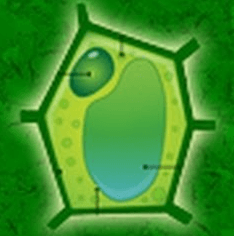


Which organelle is the control center of the cell.?
nucleus
cell membrane
ER
ribosomes
gel-like substance that surrounds the organelles of a cell
Cytoplasm
Mitochondria
DNA
Chloroplasts
The nucleus
Controls what enters and leaves the call
Contains genetic material
Makes proteins for the cell
Makes food for the cell

Which organelle makes lipids?
Cell membrane
smooth endoplasmic reticulum
nucleus
rough endoplasmic reticulum
The ____________ packages and processes small molecules before it exports out of the cell.
Vacuoles
mitochondria
Golgi bodies
nucleus
The major function of ribosomes is to
Make fats
Make proteins
Digest protein
Make sugars
Which organelle is the "brain" of the cell and holds its DNA?
Ribosome
Nucleus
Mitochondria
Lysosome

