
Font size
 Worksheets
States of Matter Review
Total questions: 62
Worksheet time: 1hrs 8mins

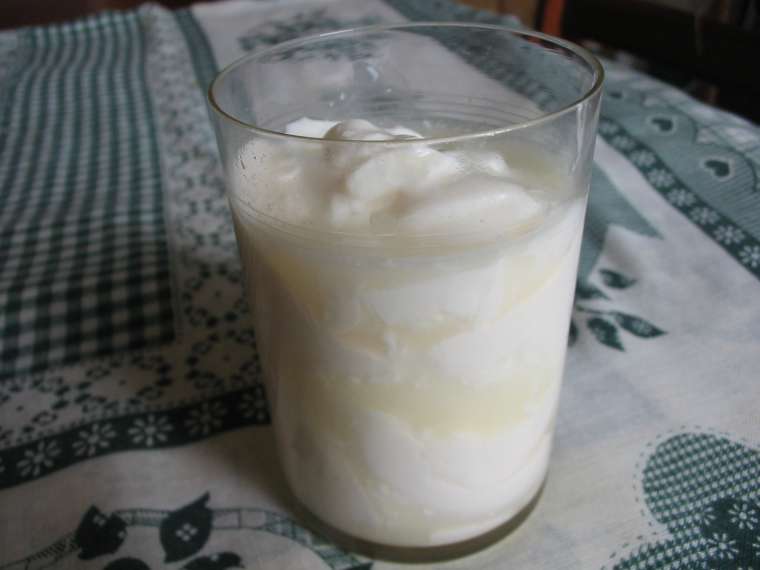
The ability to hammered into a thin sheet or be bent is
Ductility
Solubility
Density
Malleability

Glass breaking
Physical Change
Chemical Change
A rusting bicycle
Physical Change
Chemical Change
Melting butter for popcorn
Physical Change
Chemical Change
Freezing chocolate-covered bananas
Physical Change
Chemical Change
Separating sand from gravel
Physical Change
Chemical Change
Spoiling food
Physical Change
Chemical Change
Burning toast
Physical Change
Chemical Change


The melting point of the sample is
-60 ºC
-100 ºC
60 ºC
100 ºC

Given the heating curve of a solid being heated at a constant rate, what is the boiling point of this substance?
20°C
50°C
110°C
170°C

Given the heating curve for water, during which line segment could I find water in both the solid and liquid phase at the same time?
AB
BC
CD
DE
EF

This curve indicates what about the heat energy?
Heat energy is being added or absorbed
Heat energy is being released

In which region(s) of the graph would the substance be melting?
No melting occurs on this graph
Region C-E
Region E-G
Region G-I
Region I-K
What is the freezing point of the substance?
0oC
60oC
120oC
180oC
What is it called when a solid turns directly into a gas?

Where on the graph are phase changes taking place?
1
2
3
4
5

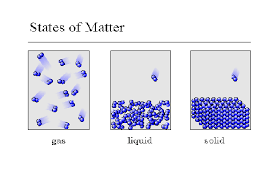

What state of matter is pictured?
Solid
Liquid
Gas
Plasma
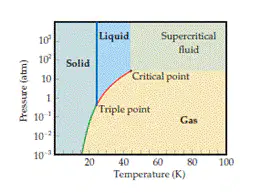
What is the boiling point temperature when the pressure is 10 atm?
15 Kelvin
25 Kelvin
40 Kelvin
45 Kelvin
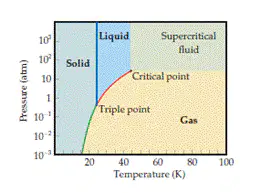
You have the substance at a pressure of 10 atm and a temperature of 35 degrees K, then lower the temperature to 5 degrees K. What do you observe happening to the substance?
Melting
Freezing
Boiling
Condensing
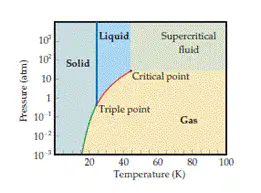
Could you boil the substance at a temperature of 20 degrees K?
Yes
No
There is not enough information to tell.
If you change the pressure.

