
 Worksheets
Biology Semester 1 Pre Test
Total questions: 57
Worksheet time: 57mins

Which of the following results from quantitative analysis of image 1?
The babies are cold.
There are 8 offspring.
There isn't enough food.
These are the first offspring these rabbits have had
I don't know.
Which of the following correctly sequences the steps of the scientific method?
Experiment, hypothesis, analyze data, conclusion, observe, question
Hypothesis, observe, experiment, analyze data, conclusion, question
Question, observe, experiment, hypothesis, analyze data, conclusion
Observe, question, hypothesis, experiment, analyze data, conclusion
I don't know
At your lab table you find a bottle of chemicals with no labels. You should:
Drink it
Give the bottle to the teacher
Sniff the chemicals in order to identify it
Throw the bottle away
I don't know
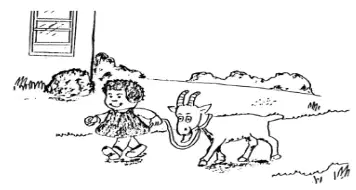
The girl likes to walk her goat.
Observation
Inference
I don't know
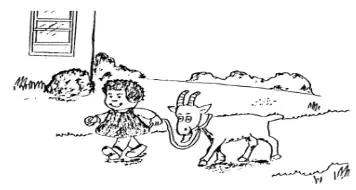
The goat has 2 horns.
Observation
Inference
I don't know
Plants contain chlorophyll. What color is this?
Red
Purple
green
Yellow
I don't know
An animal is a herbivore. What do they eat?
Plants
meat
bugs
Rocks
I don't know
Cytology is the study of ...
Life
Plants
Animals
Cells
I don't know
The mass of the egg is 34.21 grams.
Qualitative
Quantitative
I don't know
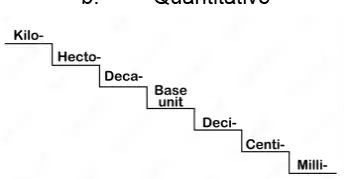
Convert the following: 35cm to m
0.35m
3500m
350m
3.5m
I don't know
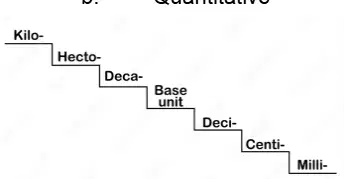
Convert the following: 21.0km to mm
0.000021 mm
210 mm
21000 mm
21000000 mm
I don't know

What is this piece of lab equipment called?
Thermometer
Test tube
Microscope
Beaker
I don't know
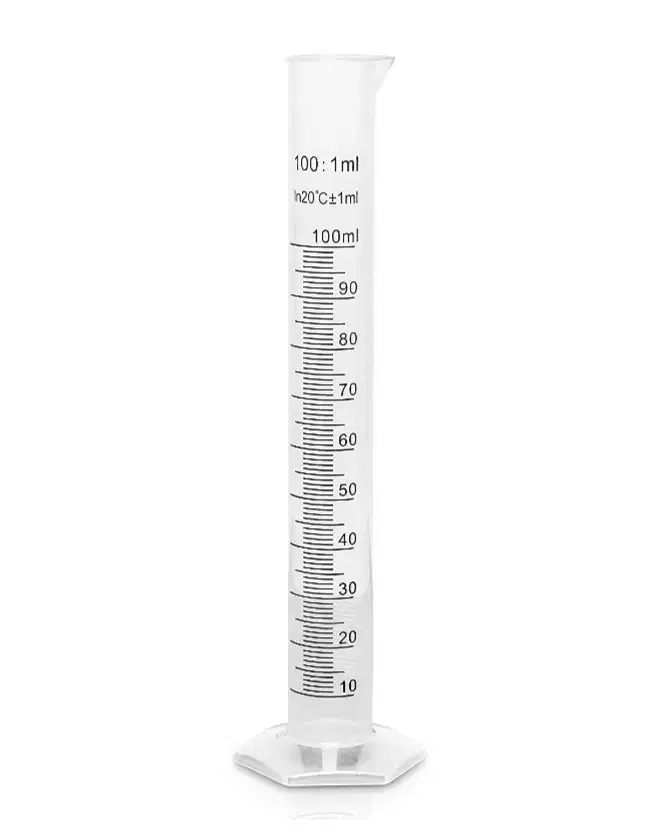
Identify the piece of lab equipment
Thermometer
Graduated Cylinder
Test tube
pipette
I don't know
A bug repellent was sprayed on one arm. On the other arm, the bug repellent was not sprayed. After 2 hours, the number of bug bites are recorded. What is the independent variable?
The type of bug repellent
Number of bug bites
If an arm was sprayed or not sprayed with bug repellent
2 hours
I don't know
Javier and his twin sister both have the same science exam. Javier sleeps for 9 hours the night before the exam and his sister sleeps for 6 hours. After they take the test, they both compare their test grades. What is the dependent variable?
The test grades
The science test
9 hours and 6 hours
Javier and his twin sister
I don't know
____ represents a formula for a chemical compound.
H2
P
C
CO2
I don't know
Which is the negatively charged particle located outside the nucleus of an atom?
electron
neuron
neutron
proton
I don't know
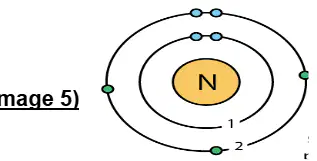
If an atom has a total of 7 electrons, how many electrons are located in the second energy level?
2
5
3
7
I don't know
A molecule of water (H2O) has which type bonds?
Covalent bond
Ionic bond
Van del Waal forces
Sticky bonds
I don't know
A florist places a bouquet of white carnations in water containing blue dye. After a time, the flowers turn blue. What process helped the carnations to change color?
Cohesion and adhesion
Surface tension
Adhesion
High specific heat
I don't know
Why does water move from the roots to the leaves of plants?
capillary action
pH
mass
density
I don't know
A solution with a pH of 2 is
Neutral
Basic
Acidic
Fun
I don't know
What macromolecule group is sugar/starch an example of?
carbohydrate
lipid
protein
nucleic acid
I don't know
Which macromolecule is essential for the composition of the cell membrane?
proteins
carbohydrate
lipid
nucleic acid
I don't know
What are the monomers, or building blocks, of a protein?
fatty acids
monosaccharides
amino acids
nucleotides
I don't know
Which of the following best summarizes the relationship between dehydration synthesis reactions and hydrolysis?
Dehydration synthesis assembles polymers; hydrolysis breaks polymers apart.
Dehydration synthesis eliminates water from membranes; hydrolysis adds water to membranes.
Dehydration synthesis and hydrolysis assemble polymers from monomers.
Hydrolysis creates polymers and dehydration synthesis creates monomers.
I don't know
Nucleic acids are polymers made up of which of the following monomers?
nucleotides
amino acids
sugars
nitrogenous bases
I don't know
An organism's genetic information is stored in which type of macromolecule?
protein
nucleic acid
lipid
carbohydrate
I don't know
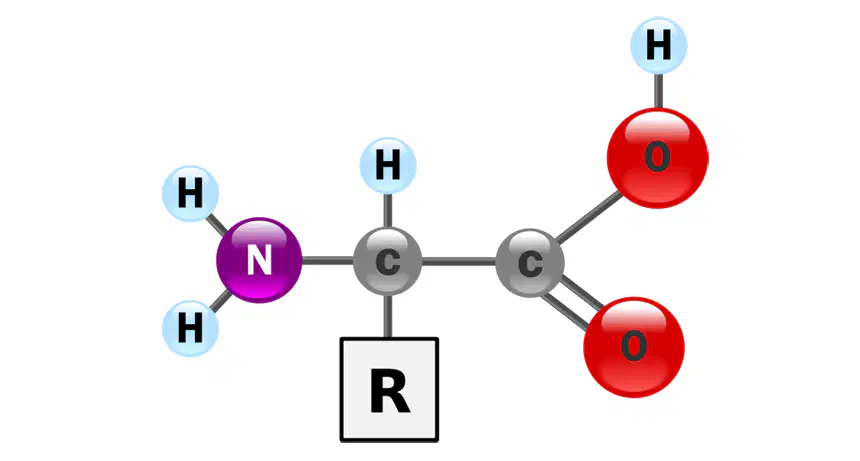
Which macromolecule is built from the following monomer (amino acids)?
Carbohydrates
Proteins
Lipids
Nucleic Acids
I don't know
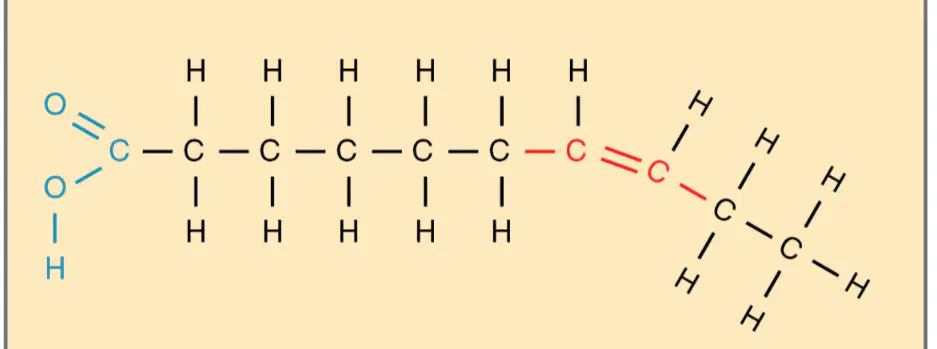
What type of lipid is shown in image 7?
Saturated
Unsaturated
Presaturated
Undersaturated
I don't know
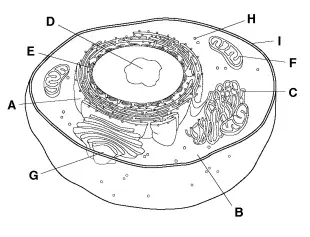
The structure labeled I in image 8 is a ______.
cytoplasm.
cell membrane.
cell wall
chloroplast
I don't know
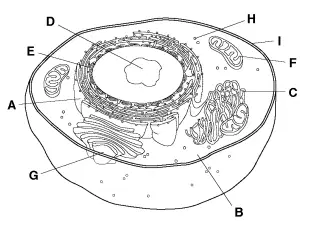
The structure labeled B in figure 6 is called the______.
golgi body
nucleolus
cytoplasm
mitochondria
I don't know
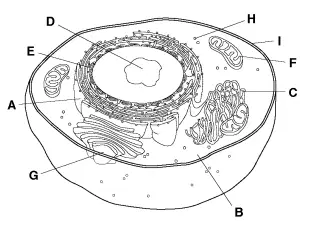
The structure labeled F in figure 6 is called the ______.
Golgi body
Endoplasmic reticulum (ER)
mitochondria
Chloroplast
I don't know
The cell membrane is a two-layer membrane made up of what?
proteins and phosphates
cellulose and oils
phospholipids and proteins
Skittles and butter
I don't know
Which of the following is a function of the cell membrane?
regulates which materials enter and leave the cell
keeps the cell wall in place
stores water, salt, proteins, and carbohydrates
Provides energy for the cell
I don't know
What type of cell has a cell membrane?
both plant and animal
neither plant or animal
Animal
rock
I don't know
A scientist at the polar ice cap was studying an ice sample from a hundred meters below the surface. While examining the ice, the scientist found some cells from many years ago. Using an electron microscope, the scientist identified these cell structures: large vacuole, mitochondrion, nucleus, cell wall, and ribosomes. What kind of organism did the scientist find?
animal
bacteria
plant
alien
I don't know
The basic unit of structure and function of all living organisms
Species
Cell
gene
atom
I don't know
What type of cell has a chloroplast?
both plant and animal
plant
animal
specialized
I don't know
What type of cell has a nucleus?
both plant and animal
plant and bacteria
animal and bacteria
bacteria
I don't know
What type of cell has a mitochondria?
neither plant or animal
both plant and animal
animal
bacteria
I don't know
Which statement is true about prokaryotic cells?
We are made of prokaryotic cells.
Their genetic material(dna) is not stored in a nucleus.
They have membrane-bound organelles.
A fungi is a prokaryotic cell
I don't know
Osmosis is the movement of water molecules from
an area of low concentration of water to an area of high concentration of water.
an area of high concentration of water to an area of low concentration of water
an area of equilibrium to an area of high concentration
all of the above
I don't know
What is a major difference between facilitated diffusion and active transport?
Active transport moves substances against the concentration gradient.
Active transport uses proteins in the process.
Facilitated diffusion moves molecules through the plasma membrane.
Facilitated diffusion requires large amounts of energy.
I don't know.
What type of macromolecules transport materials in and out of the cell membrane?
Carbohydrates
Lipids
Nucleic Acids
Proteins
I don't know
Which particle transport requires input of energy from the cell?
diffusion
osmosis
facilitated diffusion
active transport
I don't know
How do O2 and CO2 molecules travel in and out of the cell?
Facilitated Diffusion
Osmosis
Diffusion
Endocytosis
I don't know
What is exocytosis?
Occurs when the particles are moved outside of the cell
Occurs when the particles are moved inside of the cell
Occurs when particles stay within the cell
Occurs when particles stay outside of the cell
I don't know
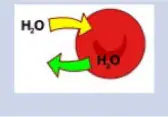
Identify the type of solution
Hypertonic
Hypotonic
Isotonic
Catatonic
I don't know
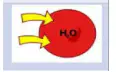
Identify the type of solution
Hypertonic
Hypotonic
Isotonic
Catatonic
I don't know
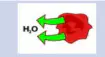
Identify the type of solution
Hypertonic
Hypotonic
Isotonic
Catatonic
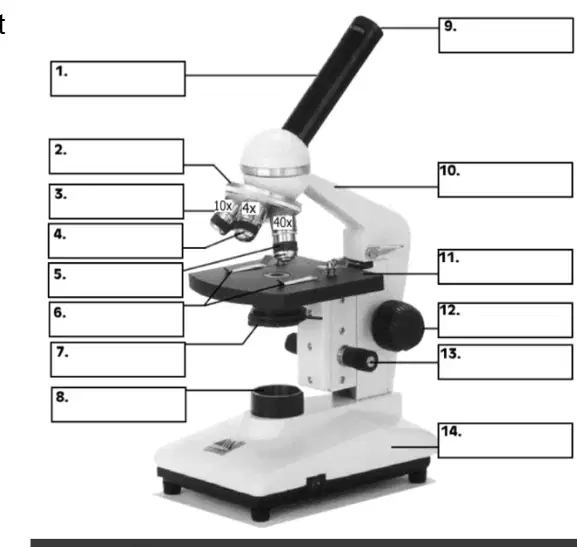
Identify number 9
Objective lens
Fine focus
base
eyepiece
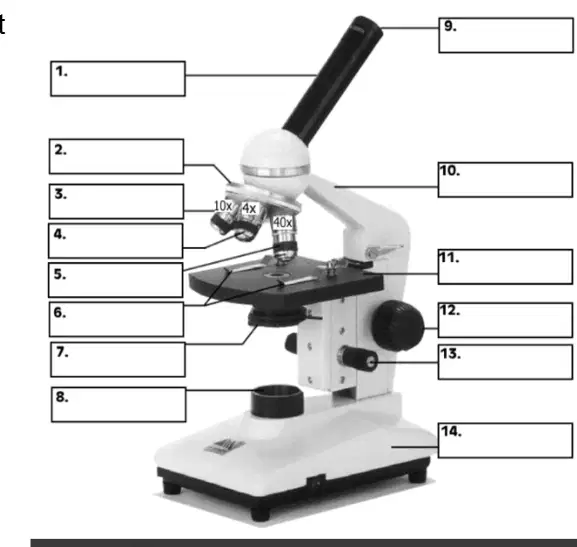
Identify number 13
Objective lens
Fine focus
base
eyepiece
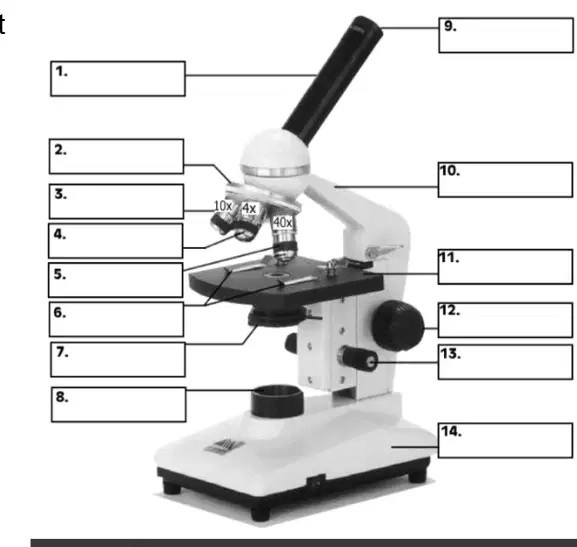
Identify number 3/4
Objective lens
Fine focus
base
eyepiece
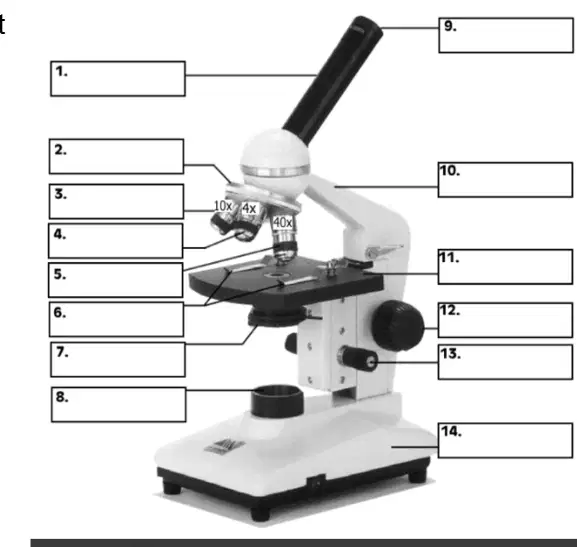
Identify number 14
Objective lens
Fine focus
base
eyepiece
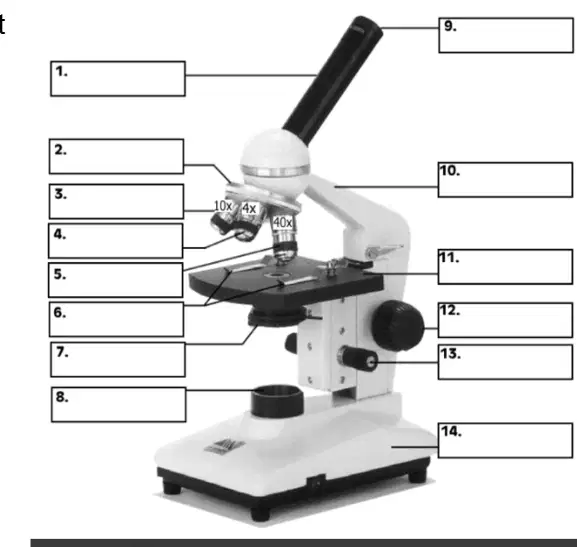
Which number on the microscope moves the stage and brings the slide into general focus?
12
13
10
6
If the eyepiece lens has a magnification of 20x and the objective lens has a magnification of 40x. What is the total magnification?
60x
20x
160x
800x

