
Font size
 Worksheets
Unit 0/1 Review
Total questions: 84
Worksheet time: 59mins
If a laboratory fire erupts, immediately _________.
Run for the fire extinguisher.
Notify your instructor.
Throw water on the fire.
Open the windows.
You are heating a substance in a test tube. Always point the open end of the test tube ________.
Toward yourself.
Toward your lab partner.
Toward another classmate.
Away from all people.
The following footwear is required in the lab ________.
Sandals.
Open-toe shoes.
Closed-toe shoes.
Shoes appropriate for the weather.
Hot glass looks the same as cold glass.
True
False

After completing an experiment, all wastes should be
taken home
tossed in the trash can
disposed of according to your teacher's directions
left out for someone else to clean

Approved eye protection devices (such as goggles) are worn in the laboratory
to avoid eye strain
to improve your vision
so that you look super cool
any time chemicals, heat or glassware are used
The following activity is permitted in the laboratory
chewing gum
eating
drinking
none of the above
in the lab, you should NEVER
taste substances being used
wear your goggles
pull your hair up if its long
wear close-toed shoes


funnel
test tube
balance
forceps
Identify the beaker:

Name the safety equipment shown in the picture.
Eyewash station
Safety shower
Faucet
Chemical washing station
Eyewash station and safety shower

A possible explanation to a problem that has not yet been tested.
data
theory
hypothesis
fact

This variable in an experiment is the one being deliberately changed by the scientist.
dependent variable
independent variable
data
control group

Should experiments be repeated over and over to see if the results are the same each time?
yes
no

There are two types of data. Which type of data involves numbers that are obtained by counting or measuring?
quantitative
qualitative

A series of steps used by scientists to solve a problem or answer a question.
scientific method
recipe
data collection
metric system

The part of the experiment that remains the same for the control and experimental group.
constants
control
independent
dependent

Mr. S. sets up an experiment to see how the mass of a ball affects the distance it rolls off a ramp. Identify the independent variable.
distance traveled by the ball
height of the ramp
mass of the ball
weight of the ball

Why do scientist use the scientific method?
To make sure they get credit for their discoveries.
To make sure their results are valid and can be performed by other scientists.
So that other scientist don't get mad at them


Defines relationships that are valid everywhere in the universe
Scientific Theory
Principle
Scientific Law
Fact
A conclusion reached on the basis of evidence and reasoning
Observation
Hypothesis
Principle
Inference
Information obtained through the senses.
Observation
Hypothesis
Principle
Inference
A well-tested explanation for a set of observations or experimental results
Scientific Theory
Principle
Scientific Law
Fact
The condition in an experiment that is observed or measured
Dependent Variable
Experimental Group
Independent Variable
Control Group
In an experiment the group that serves as a standard for comparison and receives no experimental treatment.
Dependent Variable
Experimental Group
Independent Variable
Control Group
In an experiment the group that receives the experimental treatment.
Dependent Variable
Experimental Group
Independent Variable
Control Group


An experiment is performed on plants to see how different liquids affect plant growth. Each plant in the experiment is given a different liquid; water, apple juice, or milk. Each plant has the same amount of soil, sunlight, and listens to the same music. In this investigation, the independent variable is ...
The type of plant
The amount of sunlight
The type of music
The type of liquid

Dependent variable means
the scientist controls what to test
educated guess
ask a question
what is being measured
___________a molecule that is present in all living cells and that contains the information that determines the traits a living thing inherits and needs to live.
Cell
Stimulus
Homeostasis
DNA
All living things grow and develop.
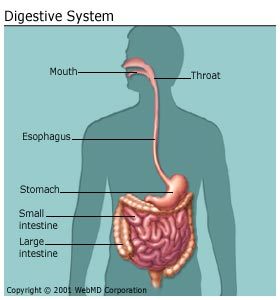
Match the following based on the scenario:
You are studying the impact of a new medication on patients with high blood pressure.
You randomly assign your patients to one of the three groups:
A low-dose experimental group
A high-dose experimental group
A placebo group (this group does not receive the medication)
The Independent variable is:
amount of medication received
The dependent variable is:
blood pressure
The control group:
the placebo group
Match the following
multi
many
bio
life
small
micro
air
aero
macro
large
Based on the suffix, organelles are:
miniature organs
large organs
non-living
many organs
Which of the following is NOT an example of an adaptation?
birds migrating during the winter months
the total sum of all the chemical reactions in your body
humans evolving the ability to digest lactose (sugar in milk)
the ability of dolphins to communicate in aquatic environments

Which of the following is a response?
a flashlight shined into the eye
a rubber band popping your hand
your pupils constricting when exposed to bright light
blood glucose levels drop significantly


Living things are based on a universal genetic
code. What molecule is responsible for that code?
RNA
Lipid
Protein
DNA
Identify the characteristic: a caterpillar hibernates in a cocoon and emerges as a butterfly.
All living things adapt to their environment
All living things use energy
All living things respond to their environment
All living things grow and develop

What characteristic is shown: A giraffe gives birth to a healthy
Reproduce
Genetic Code
Change Over Time
Acquire and Use Energy

What characteristic is shown: A bacteria cell divides itself in two.
Reproduce
Respond to a Stimulus
Homeostasis
Grow and Develop

Which characteristic is shown: An American alligator kills and eats a fish.
Change Over Time
Acquire and Use Energy
Grow and Develop
Made of Cells

Which characteristic is shown: A corn field absorbs sunlight to produce food.
Made of Cells
Respond to a Stimulus
Acquire and Use Energy
Genetic Code

Which characteristic is shown: A chocolate lab puppy becomes a fully grown dog.
Respond to a Stimulus
Grow and Develop
Homeostasis
Change Over Time

Which characteristic is shown: A deer runs from a dog after hearing barking.
Made of Cells
Respond to a Stimulus
Acquire and Use Energy
Homeostasis
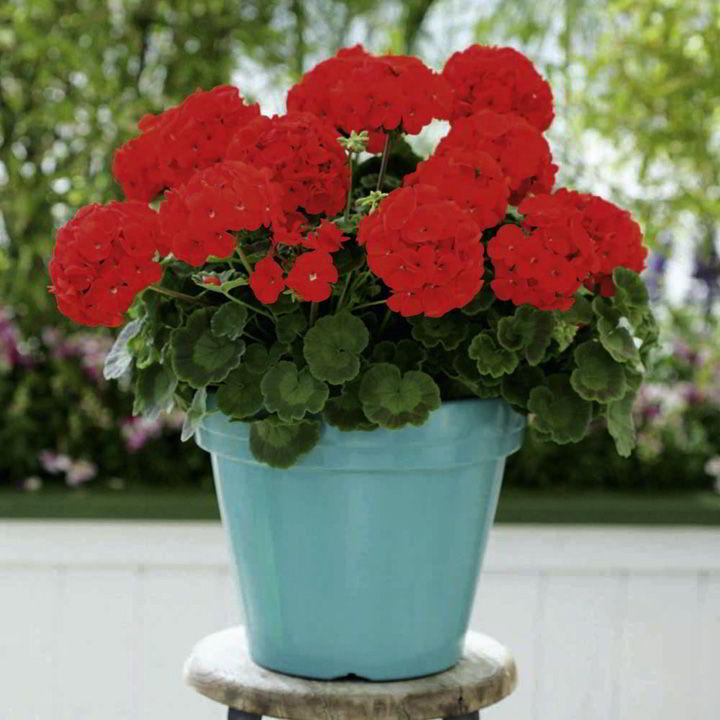
Susan said, “If I fertilize my geranium plants, then they will have more flowers.”
recognize a problem
test the hypothesis with an experiment
form a hypothesis
draw conclusions
Cindy wanted to find out how the amount of sunlight affects the growth of plants. She placed a tomato plant in 6 identical 10 inch pots with the same amount and type potting soil. She watered them ¼ cup each day. 3 plants were placed under a cardboard box and 3 plants were placed in the sunlight. She measured the growth of the plant each week for three weeks.
What is the independent variable?
Using the same type of plant
Each plant was placed in a 10 inch pot
The growth of the plant
3 plants in the sunlight and 3 plants under a box

Maya designed an experiment to answer the following question: How does the amount of water given to a lima
bean seed affect how tall it grows?
In this experiment, what variable should Maya CHANGE?
the amount of water
the kind of plant
the type of soil
the amount of sunlight it gets
Esther became interested in insulation while her parent’s new house was being built. She decided to determine which insulation transferred the least heat. She filled each of 5 jars half-full with water.
She sealed each jar with a plastic lid.Then she wrapped each jar with a different kind of insulation. She put the jars outside in the direct sunlight. Later, she measured the temperature of the water in each jar. What is the independent variable?
The type of insulation
The temperature of the water
Number of houses
The amount of sunlight
only 1
Thomas tests different types of liquids to see which will grow his plants the most. He has water, soda, milk, and no liquid at all. What is the control group?
the one with water
the one with soda
the one with milk
the one with no liquid

Erin is testing to see how different amounts of nitrogen infused in the soil will impact the height of her corn plants. She puts two corn plants into two pots. One is filled with nitrogen infused soil and the other is not. She puts the regular soil pot outside and the nitrogen infused plant in her bathroom. The corn in the regular soil grows to 7 feet tall and the corn in the nitrogen soil grows to 2 feet tall.
What is the dependent variable?
The regular soil
The nitrogen infused soil
The height of the plants
The plant in the bathroom

Using the picture, identify the control group.
Trial 1
Trial 2
Trial 3

The cooler the temperature, the louder the crickets chirp.
The crickets cannot chirp at temperatures lower than 10 degrees C.
The warmer the temperature, the more often crickets chirp.
The temperature and the chirping of crickets are not related.


Which characteristic is shown in the image?
Organisms grow and develop
Organisms react to stimuli
Organisms can adapt
Organisms use and obtain energy
Organisms are made up of cells

Which characteristic is shown in the image?
Organisms reproduce
Organisms react to stimuli
Organisms can adapt
Organisms use and obtain energy
Organisms are made up of cells


All the living parts of an ecosystem are called?
biotic factors
abiotic factors

